
Asia/Singapore Tuesday, 7th April 2026
Page 380

India hops on adventure tourism thrill ride

0

A long neglected segment in India, adventure tourism is finally being given new focus with the country’s Ministry of Tourism declaring 2018 the Year of Adventure Travel.

Apart from increasing arrivals, the move is expected to help change the perception of India as being a mere cultural destination, according to tourism stakeholders TTG Asia spoke to.

Shifting perceptions of India being mainly for culture tours; Himalayas in Jammu and Kashmir state pictured

“With India’s inbound arrivals growing by more than 10 per cent last year, we believe that focus on potential segments like adventure tourism can help India to double its inbound tourist arrivals in a couple of years,” said Swadesh Kumar, president, Adventure Tour Operators Association of India.

Though there are no official statistics available to show the size of the Indian inbound adventure tourism market, the industry estimates the segment is growing five to seven per cent yearly, with about half a million adventure travellers arriving in the country.

“At present the (perception of) India is a cultural destination, although 73 per cent of the Himalayas are in India. Our counterparts in key inbound markets like the US are promoting places like Nepal and Bhutan for active holidays while India is promoted majorly as a cultural destination,” observed Tejbir Singh Anand, managing director, Holiday Moods Adventures.

With the tourism ministry’s new-found focus on adventure, Tejbir expects more of India’s adventure travel offerings will be on showcase at roadshows and exhibitions.

India’s Ministry of Tourism is also taking steps to prop India up as a destination for adventure travel, such as allowing the use of satellite phones in far-flung areas – something the travel industry players have long called for – and introducing safety guidelines for adventure tourism.

“One of the big things in adventure travel is risk management, so with the government allowing adventure tour operators to use satellite phones in areas of wilderness will help us to improve our safety standards,” said Ajeet Bajaj, managing director, Snow Leopard Adventures.

Suman Billa, joint secretary at India’s Ministry of Tourism, commented: “We need to get some big events that showcase adventure travel to happen in India, which would ultimately help us to create a roadmap for future growth in the segment.”

To begin with, the tourism ministry has lent its support to India’s first-ever Adventure Sports Expo Asia & Awards 2018, which took place in New Delhi from January 27 to 29. The event saw the participation from 500 delegates, including 60 exhibitors, some of whom were adventure tour operators.
India lends ASEAN a helping hand in hospitality, tourism training

0

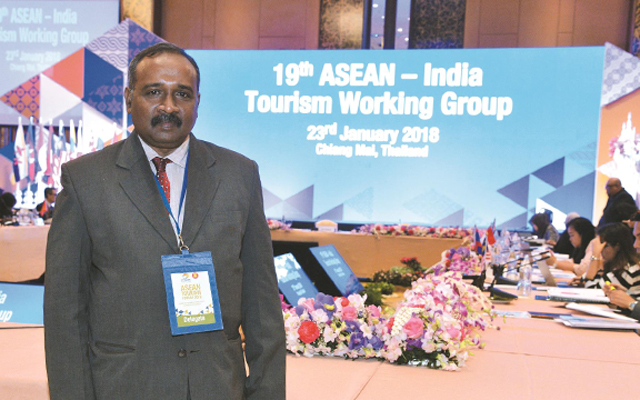
India is offering her extensive network of hospitality and tourism training to South-east Asian nations, in an effort to help the region’s tourism workers brush up their skills.

At an ASEAN NTO meeting on Tuesday, D Venkatesan, deputy director general of India’s Ministry of Tourism, said: “India has offered to carry out human resource development training for ASEAN, where the countries send people to us to use our extensive network of established hotel management and tourism schools, covering many sectors, as well as our wealth of experience.”

Exploring opportunities for collaboration in tourism training

He cited the Indian Institute of Skiing and Mountaineering, the Indian Institute of Tourism and Management Training, and the Indian Himalayan Centre for Adventure and Ecotourism as examples.

Added Venkatesan: “There is a lot of scope to collaborate.”

India is currently hammering out the final plans with Laos, which will be the first country from the ASEAN group to send staff to study. It is hoped this will take place this year, with other countries following suit.

Venkatesan told TTG Asia: “The finer details need to be worked out, such as how many people from each country and which category of people, and then we can get started.”

India is also pushing hard to establish direct flights with South-east Asian countries. He shared that Vietnam has submitted a proposal for a flight connecting Ho Chi Minh City with Delhi, with hopes it will launch this year.

Venkatesan added: “South-east Asia is a big market for India for Buddhist pilgrimages so more flights connecting us to Buddhist countries would be very welcome.”

Record 62.2 million passengers for Changi in 2017

0

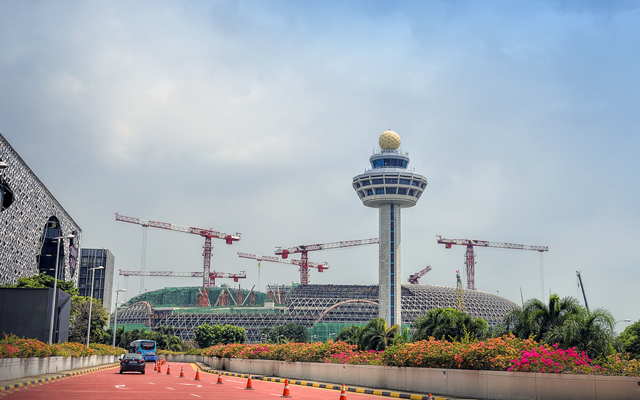
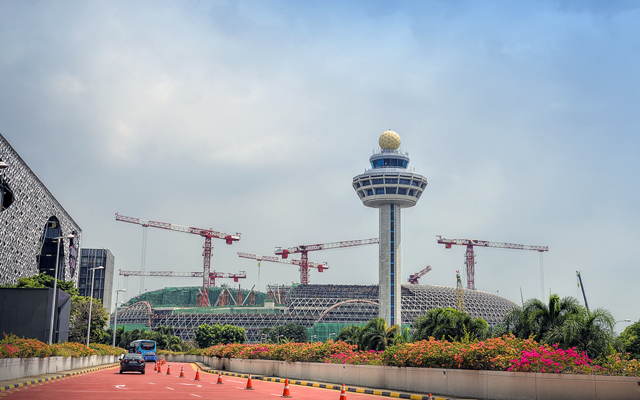
In 2017, Singapore Changi Airport handled a record 62.2 million passenger movements, up six per cent year-on-year, with landings and take-offs growing 3.5 per cent to reach 373,200.

Traffic across all regions saw positive growth, led by China and India which saw increases of 12 and 16 per cent respectively. South-east and North-east Asia contributed to about 70 per cent of total traffic.

Capacity expansion ongoing at Singapore Changi Airport

Connections to Kuala Lumpur grew seven per cent, replacing Jakarta as Changi’s top city link for 2017. Among Changi Airport’s top 20 destinations, Guangzhou was the fastest growing (+15 per cent), while Brisbane, Penang and Phuket recorded growth of at least six per cent.

December was once again the busiest month of the year, with nearly 5.9 million passenger movements (+3.3 per cent) and 32,960 aircraft movements (+3.1 per cent). The busiest day of the year was December 22, 2017 with 208,043 passengers passing through Changi’s terminals – a record for the airport.

During the year, Changi Airport welcomed three passenger airlines – Hebei Airlines, Norwegian and US-Bangla Airlines, joining over 100 airlines. Ten new passenger city links were also established, to China (Harbin, Shijiazhuang, Yantai), Greece (Athens), India (Madurai), Japan (Hiroshima, Okinawa), Malaysia (Bintulu), Sweden (Stockholm) and the US (Honolulu).

Also notable were the airport’s efforts to cater to the fly-cruise and fly-ferry markets, on top of continuing its courtship of MICE and transit segments. A new shuttle service was introduced last year to facilitate transfers between Changi Airport and Tanah Merah Ferry Terminal, and this has seen a ridership of close to 10,000 passengers in its seven months of operations.

To grow the fly-cruise market, the Changi Airport Group (CAG) has also signed various collaborations with cruise companies – which are expected to bring in more than 600,000 visitors over a four-year period.

“Looking ahead in 2018, we expect to see more developments in the longhaul segments to Europe. This includes Scoot’s non-stop service to Berlin, and LOT Polish Airlines’ service connecting Singapore and Warsaw. We will also welcome the return of Qantas’ Singapore-London route and an overall increase in seat capacity between Singapore and Australia, as well as Lufthansa’s resumption of its service to Munich,” said Lim Ching Kiat, CAG’s managing director, air hub development.

CAG will also continue efforts to strengthen connectivity to secondary cities in China and India – its fastest growing markets in 2017, Lim added.

Demand for air travel in Asia-Pacific is expected to triple in the next two decades. With the opening of Jewel Changi Airport and the completion of Changi’s Terminal 1 expansion in 2019, Changi Airport’s total handling capacity will increase to 85 million passengers per annum.

Hilton makes key appointments in India

0

Hilton has named Navjit Ahluwalia as senior vice president and country head, India and Jatin Khanna as vice president and head of operations, India.

Effective immediately, Navjit will oversee Hilton’s 33 hotels trading and under development, including the recently opened Conrad Bengaluru, while leading the company’s growth strategy in the country.

Hilton Bangalore Embassy GolfLinks Hotel

An Indian native, Navjit brings to Hilton 30 years of hospitality experience, including over 13 years at Marriott International where he held key leadership roles, the most recent being senior vice president responsible for expanding the company’s portfolio in South Asia.

Jatin, who assumes his position next month, takes over operations from Andre Gomez, who will be moving to a new role elsewhere in the company.

Also an Indian native, Jatin holds over 20 years of operations experience, including with both InterContinental Hotels Group and most recently Marriott International, where he managed the company’s full portfolio in Bengaluru city as vice president, Bengaluru and general manager for the Bengaluru Marriott Hotel.

Thailand in demand as Spanish longhaul bookings pick up

0

In Spain, intercontinental flight bookings for 1H2018 are 4.4 per cent ahead of where they were at the same time last year, with Indonesia and Thailand the South-east Asian destinations growing fastest in popularity, according to ForwardKeys.

Forecasting travel patterns based on forward booking data, ForwardKeys reported that interest in Indonesia is up 14.1 per cent, while Thailand is seeing a 13.7 per cent increase in demand from Spanish travellers. As well, Vietnam ranked the 10th fastest growing longhaul destinations for Spaniards, up 11.7 per cent. Other Asian destinations ranking in the top 10 fastest growing destinations are the Maldives (+29.1 per cent) and China (+25.3 per cent).

The longhaul destinations currently showing the greatest growth in bookings are Egypt (+60.6 per cent) which is recovering from a period of internal political unrest; the Dominican Republic (+48.8 per cent) which is benefitting from a new winter-season flights operated by Wamos Air; and Cuba (+42.6 per cent), which has been experiencing a tourism boom.
Specifically for the Easter holiday season (March 19-April 1), the longhaul destination currently most in demand among Spaniards is the US, which has a dominant 28 per cent share of the segment. The next most popular intercontinental destination is Thailand with a 10 per cent market share, followed by Cuba, Argentina and Japan, all with a four per cent share.

Overall, the flight data company expects growth in longhaul travel to be lifted by new routes from Barcelona and Madrid as well as greater enthusiasm for Cuba, Dominican Republic, Egypt and Thailand.

Commenting on the findings, CEO of ForwardKeys, Olivier Jager, said: “This is a healthy outlook. One has to be particularly pleased for Egypt, as it is a fabulous destination that has suffered greatly in recent years and, like Spain, is heavily dependent on tourism.

“Also, one cannot help but be impressed by Thailand’s and Cuba’s progress in attracting Spanish visitors, as both have significant shares of the market and are showing strong growth in forward bookings.”

Global air travel soars to new high in 2017: ICAO

0

The global aviation industry carried a record 4.1 billion passengers on scheduled services in 2017, a 7.1 per cent increase over 2016, according to preliminary figures released by the International Civil Aviation Organization (ICAO).

International scheduled passenger traffic expressed in terms of revenue passenger-kilometres (RPKs) grew by 8.0 per cent in 2017, up from the 7.8 per cent recorded in 2016.

Budget airlines push traffic to record 4.1 billion passengers

Asia-Pacific had the second largest share of international RPKs at 29 per cent (+9.6 per cent), after Europe with 37 per cent share (+8.1 per cent).

North America accounted for a 13 per cent share but remained the slowest growing region with an increase of 4.9 per cent.

Carriers in Latin America and the Caribbean made up four per cent of world international RPKs and saw the biggest improvement among all regions, showing the strongest growth at 10.0 per cent; while Africa, with the smallest share of 3 per cent, grew slightly faster than last year at 7.6 per cent.

The only region that experienced RPK slowdown was the Middle East, with ICAO attributing this to a combination of factors such as the competitive environment – competing hubs and more point to point services, low oil prices and the impact of a strong US dollar.

Looking at domestic air travel, Asia-Pacific saw strong growth (+10.6 per cent) owing to the strong demand in India and China, especially the former with over 20 per cent growth.

LCCs consistently grew at a faster pace compared to the world average growth, and their market share continued to increase, specifically in emerging economies. In 2017, LCCs carried an estimated 1.2 billion passengers, and accounted for approximately 30 per cent of the world total scheduled passengers.

Within the LCC market, carriers in Europe represented 33 per cent of total passengers carried, followed by Asia-Pacific and North America with 31 per cent and 26 per cent, respectively.

Meanwhile, industry capacity expansion outstripped the increase in travel demand. Total capacity offered by the world’s airlines in 2017, expressed in available seat-kilometres (ASKs), increased globally by around 6.4 per cent. As a result, overall passenger load factor improved by 0.9 percentage points and reached a record high of 81.2 per cent. The Middle East was the only region posting a decline in load factors, as being under pressure with the slowing trend in traffic growth.

In terms of financial performance, airlines were expected to maintain operating profit at nearly the same levels seen in 2016, with average jet fuel prices up about 25 per cent in 2017 coupled with improvement in traffic. ICAO estimated the year’s operating profit to total around US$60 billion, with operating margin of 8.0 per cent; and net profits of around US$36 billion.

Going ahead, ICAO expect continued growth in air travel demand growth has gained solid momentum, supported by the ongoing improvement in global economic conditions throughout the year.

Air India to be privatised, split into four units for sale

0

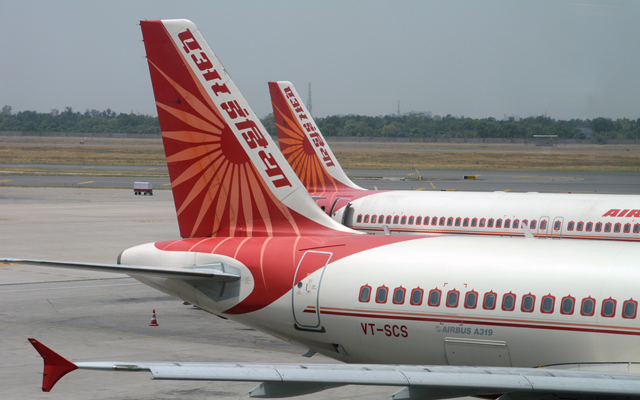
Uncertainty about the fate of India’s debt-laden flag carrier Air India continues to loom with the government reportedly divesting its stake in the airline by breaking it up into four units and offering at least 51 per cent of each for sale.

Bloomberg reports that as part of the divestment plan, Air India and its LCC arm Air India Express will be offered as one company; and its regional arm, ground handling and engineering operations will be sold separately. The whole process is expected to be completed by year-end.

Air India to be privatised (photo credit: Joe Ravi/Shutterstock.com)

Along with this came the decision that foreign entities will be allowed to own 49 per cent in the airline without need for government approval. Since this was announced, some reports have suggested that Singapore Airlines and the Tata Group are open to bidding. SIA and Tata Son, holding company of Tata Group, are joint owners of Indian domestic airline Vistara.

Meanwhile, the Economic Times of India reported that AirAsia India has ruled out plans to participate in the stake sale.

Hostel market booming in SE Asia: C9

0
Established hospitality chains moving into hostel markets

South-east Asia’s hostel market experienced “skyrocketing growth” in 2017, surging 32 per cent in bed inventory, according to the latest Hostel Market Update by C9 Hotelworks.

The surge brings the bed count in the region to 63,632 across 1,766 properties, led by Thailand with a 41 per cent share.

Thailand now has 722 hostels and 25,207 beds, up 28 per cent year-on-year. Other hostel market leaders in the region are Vietnam, with 221 hostels and 7,763 beds, a bed supply increase of 41 per cent year-on-year.

Top five hostel markets in the region

Bill Barnett, managing director of C9, observed “no sign of deceleration as investment is being embraced by an increasing number of hospitality groups and institutional investors”.

Indeed, the report shows conventional hotel companies investing in hostels, highlighted by Lub d, the region’s largest and fastest-growing hostel group.

Despite the influx of capital into branded hostels, independent hostels continue to dominate the regional market, with 1,532 properties representing 87 per cent of total supply.

C9 further reported that year-on-year market-wide ADR per bed (ADRB) declined with bed supply rising sharply. Singapore has the highest ADRB, followed by Myanmar and the Philippines.

Meanwhile, Barnett observed: “In past years, hostel developers maximised profits by developing properties with high bed inventory and no private rooms. However, micro-private rooms in hostels are becoming essential and impactful to rate yields. This can best be seen in the growth of hostels with private rooms in Indonesia, Thailand and Vietnam which now exceed 50 per cent of overall room inventory.

Going forward, C9 expects privacy will become more indispensible for hostels, prompting an exponential growth in private rooms.

C9 also foresees hostels will increasingly come under government scrutiny due to the growth of shared economy products such as Airbnb.

“Despite an elevated growth of supply, one considerable complication to the hostel market is the ambiguous rules and regulations; these have become a major concern in leading destinations such as Thailand, Malaysia and even Japan. While government regulation is starting to evolve, this remain a key sector issue,” Barnett said.

International tourists reach 1.3 billon, highest in seven years: UNWTO

0

International tourist arrivals grew by a remarkable seven per cent in 2017 to reach a total of 1.3 billion, well above the sustained and consistent trend of four per cent or higher growth since 2010 and representing the strongest results in seven years, according to the latest UNWTO World Tourism Barometer.

Asia-Pacific recorded six per cent growth to see 324 million international tourist arrivals in 2017. Arrivals in South Asia grew 10 per cent, eight per cent in South-east Asia, seven per cent in Oceania and three per cent in North-east Asia.

International travel saw strongest growth in seven years

The year was characterised by sustained growth in many destinations and a firm recovery in those that suffered decreases in previous years, in part driven by the global economic upswing and the robust outbound demand from many traditional and emerging source markets, particularly a rebound in tourism spending from Brazil and Russia.

Led by Mediterranean destinations, the mature region of Europe recorded 671 million international tourist arrivals in 2017, a remarkable eight per cent increase following a comparatively weaker 2016.

The Americas saw three per cent growth to welcome 207 million international tourist arrivals in 2017, with most destinations enjoying positive results (seven per cent for South America, and four per cent for Central America and the Caribbean). In North America (+two per cent), robust results in Mexico and Canada contrasted with a decrease in the US, the region’s largest destination.

Africa consolidated its 2016 rebound with an eight per cent increase to reach a record 62 million international arrivals.

Meanwhile, the Middle East recorded five per cent growth with 58 million international tourist arrivals in 2017.

This current strong momentum is expected to continue in 2018 at a rate of four to five per cent. This is somewhat above the 3.8 per cent average increase projected for the period 2010-2020 by UNWTO in its Tourism Towards 2030 long-term forecast. Europe and the Americas are both expected to grow by 3.5-4.5 per cent, Asia-Pacific by five to six per cent, Africa by five to seven per cent, and the Middle East by four to six per cent.

Dwindling Indian arrivals into Malaysia worries trade

0

Arrivals from India to Malaysia are continuing on the downward trend that began since 2015, despite Malaysian-based airlines adding routes to India in recent years.

Members of the Malaysian travel trade told TTG Asia that this is mainly due to the lack of an Indian-based airline flying to Malaysia since Air India Express and Jet Airways suspended services to Kuala Lumpur in 2017 and 2012 respectively.

Entrance to Hindu temple at Batu Caves, a popular tourist attraction in Selangor

Malaysian Indian Tour and Travel Association (MITTA) president, K Thangavelu, said: “Indian nationals from small cities in India will have to travel to metro cities and the main capitals of India to take a connecting flight to Malaysia on Malaysia Airlines, AirAsia and Malindo Air, the only three airlines currently connecting (the two countries).”

Such route options are not ideal for passengers as they tend to be costlier, he explained. “If it is on the same airline, passengers will benefit from better airfares.”

Arokia Das, senior manager at Luxury Tours Malaysia, added: “We are barely scrapping the volume of travellers from smaller cities due to the lack of air connectivity. Though visa requirements for Indian nationals have been relaxed, we are not attracting last-minute travellers from smaller cities as it is still a (hassle) to take a flight to a larger city and then connect to Malaysia.”

While Malaysian-based airlines are expanding their Indian network, this has not resulted in an increase in Indian arrivals, which saw a 11.6 per cent decrease in 2016 from 722,141 in 2015. From January-October 2017, 449,559 Indian tourists arrived in Malaysia, a decrease of 16.8 per cent compared with the same period in 2016.

AirAsia recently launched a new service from Johor Bahru to Kolkata in November 2017. But with arrival statistics for the whole of 2017 not available at press time, it remains to be seen if this will significantly boost outbound Indian traffic into Malaysia.