Asia/Singapore Tuesday, 7th April 2026
Page 378

Indian association connects members with new distribution technology

0

The Travel Agents Association of India (TAAI) has linked arms with travel technology provider, TP Connects, to launch a new initiative to digitally empower its membership base of about 2,500 across the country.

Launched on the sidelines of the last week’s TAAI Convention in Srinagar, TAAI Connect allows travel agents to have their own website, booking engine, mobile application, corporate booking tool and decide their commission directly with 39 suppliers integrated into their platform.

TP Connects free to use for TAAI members, says Narula

TAAI Connect will also allow agents to book directly with airlines using IATA’s New Distribution Capability (NDC), in addition to integrating content from GDSs as well as hotel suppliers, consolidators, car rentals and cruises, according to TAAI’s vice president Sanjay Narula.

“TAAI Connect will allow our member travel agencies to be able to research and compare on one particular platform, rather than multiple platforms which is happening currently,” he added.

Rajendran Vellapalath, CEO, TP Connects, declared: “Unfortunately at this stage all the GDS companies in the industry have a technology that is old. As we are using the latest technology, airlines will be able to push any particular offer to the customer through a travel agent using our channel.

He elaborated: “As a travel agent I don’t need to worry about what is going to happen in technological advancement in terms of maintenance, development or upgrade. These aspects will be taken care by TP Connects as a technological provider.”

The technology is offered free of charge to TAAI members but TP Connects will charge agents a fixed nominal amount per transaction.

Some 120 travel consultants have already signed up for TAAI Connect, with the technological solution finding favour especially among the SME agencies.

Neeraj Malhotra, CEO, Ganpati Travels, said: “TAAI Connect offers an opportunity to small travel agencies that can’t own an online booking portal to own one. Moreover, the platform offers more suppliers than any GDS companies. We expect to grow our business through TAAI Connect.”

Gurmeet Singh Vij, proprietor of Nagpur-based Nova Tours & Travels, added: “I operate from a tier-II city which means that we have to generally depend on our counterparts in metro cities for booking travel-related services and pay a mark up fees to them. With TAAI Connect we will be directly dealing with suppliers, thus it will result in cost benefit to us.”

Rebuilding Kashmir’s tourism through movies and golf

0

Travel stakeholders in Jammu and Kashmir are keen to reverse the sagging tourism fortunes of the state, which has been hit by the rise in insurgency for the last two years and corresponding negative media coverage.

As part of its endeavour to spread the message that the valley remains safe for tourism, the state tourism department is presently hosting the 64th annual convention of Travel Agents Association of India (TAAI), a major trade event being held in the state after a gap of 31 years.

International arrivals to Kashmir currently ‘minimal’

“We expect that post hosting of this convention, which has witnessed participation from agents (across) India, tourist arrivals will increase in the state multifold and dispel the myth that the destination is unsafe for tourists,” said Sunil Kumar, president of TAAI. “It is also a great opportunity for leading travel agents to get familiar with tourism products of the state.”

According to the government’s economic survey report, 7.3 million tourists visited the state in 2017, down from 8.4 million in 2016 and 9.2 million in 2015.

“The international tourist arrivals in Kashmir at present are minimal though there is an increase in demand from markets like Middle East, South-east Asia and Bangladesh,” said Zahoor Qari, chairman, Jammu & Kashmir chapter, TAAI. “However, the travel advisories issued by the US and Europe is the main challenge to attract tourist arrivals from these key source inbound markets.”

TAAI leadership and representatives from tourism ministry, Jammu and Kashmir addressing mediapersons

Film tourism has been identified as a key area that could bolster the travel sector in the Kashmir Valley, with chief minister Mehbooba Mufti having visited several Indian states last year along with industry stakeholders to hold meetings with tour operators, agents and movie stars.

“We plan to work closely with film production houses to attract more movie shootings in the state. We are looking at ways to incentivise production houses to promote the valley for film shots. It is part of our strategy to showcase tourist destinations here,” said Tasaduq Mufti, tourism minister, Jammu & Kashmir.

The state tourism department is also holding talks with Taipei Economic and Cultural Center in India to organise a roadshow later this year to showcase Kashmir as a golf destination for Taiwanese.

Said Rajan Sehgal, president, India Golf Tourism Association: “Kashmir boasts of world-class golf courses. If international golfing events are organised in the state, it will result in attracting many international golfers.”

According to Mehmood Shah, tourism director of Jammu & Kashmir, the state tourism department continues to participate in domestic as well as international tourism marts and roadshows, in addition to organising events and festivals like Kargil Marathon, Tosa Maidan Festival and Gurez Festival to attract tourists.

Tourism supports one in five jobs created in 2017

0

One in five of all new jobs created globally in 2017 are attributable to travel and tourism, according to new research from the World Travel & Tourism Council (WTTC).

WTTC’s annual Economic Impact Research shows that the industry was responsible for the creation of seven million new jobs worldwide. Overall, travel and tourism accounted for one in 10 jobs globally.

The report also showed that 2017 was a bumper year for the sector which grew at 4.6 per cent, 50 per cent faster than the global economy as a whole (three per cent growth during 2017). Travel and tourism also showed stronger growth than all other sectors, including manufacturing (4.2 per cent), retail and wholesale (3.4 per cent), agriculture, forestry and fisheries (2.6 per cent) and financial services (2.5 per cent).

Asian countries continue to drive global tourism growth, with North-east Asia growing at 7.4 per cent and South-east Asia at 6.7 per cent. China leads the way at 9.8 per cent.

One in 10 jobs globally can be traced to travel and tourism

WTTC projects that over the next 10 years over one third of absolute GDP growth and nearly half of employment growth will be generated by China and India.

Europe’s performance was better than previously expected with 4.8 per cent growth as longhaul demand recovered, accompanied by strong intra-regional travel thanks to the strength of the European economy.

Meanwhile, Latin America showed a decline of 1.4 per cent in tourism GDP, largely a result of a contraction in international spend to the largest Latin American economy, Brazil, of 18.1 per cent compared to 2016, and compounded by the ongoing political and economic problems in Venezuela.

Gloria Guevara, WTTC president and CEO, said: “2017 was the best year on record for the travel & tourism sector. We have seen increased spending as a result of growing consumer confidence, both domestically and internationally, recovery in markets in North Africa and Europe previously impacted by terrorism and continued outbound growth from China and India. This is great news for the millions of people who depend on our sector for their livelihoods.”

Last year, direct, travel & tourism’s indirect and induced impact accounted for US$8.3 trillion contribution to global GDP (10.4 per cent); 313 million jobs; US$1.5 trillion exports (6.5 per cent of total exports, 28.8 per cent of global services exports); and US$882 billion investment (4.5 per cent of total investment).

Forecasts for 2018 suggest that growth will continue, albeit at a slower rate than in 2017 as a result of higher oil prices.

Serious yoga, Ayurveda fans a transformative segment for India

0

India’s Ministry of Tourism is hoping to promote a new perception and better understanding of yoga and Ayurveda as a holistic way of life to attract more health-conscious, high-end travellers deeper into India.

In an interview with TTG Asia at the recent ITB Berlin, Alphons Kannanthanam, the minister of state for tourism, said: “There is already a strong fan base for yoga and Ayurveda, but there are misunderstandings that yoga is just a form of exercise and that Ayurveda is a spa treatment. If we are able to (correct) that misperception, we will be able to attract more health-conscious travellers to India and perhaps even more millennials, as this is a generation that greatly values a balanced way of life.”

Yoga and Ayurveda products can help disperse traffic from hotspots; pictured, meditation near Virupaksha temple in Hampi

B Venkatesh, senior general manager, inbound-sales, with Cox & Kings India, agrees, further explaining that yoga and Ayurveda on their own “can be practised anywhere in the world” but only when they are combined and recognised as a serious medical solution will they be strong magnets for health-conscious travellers.

Kannanthanam believes that yoga and Ayurveda will help drive international arrivals deeper into India, away from just the big cities, and bring much needed tourism spend to the rural communities. This is because “yoga and Ayurveda are often practised in quieter, rural districts”, he explained.

“Furthermore, as yoga and Ayurvedic retreats are often lengthy, running for a week or more, we will be able to keep travellers longer with us and have them spend more in the community for lodging, food, sightseeing and others,” he remarked.

The minister pointed out that these wellness retreats “don’t come cheap”, which fulfils India’s desire to attract higher yielding travel markets.

According to Biju George, director-overseas marketing, Somatheeram Ayurveda Group, a seven-night package inclusive of accommodation, treatments and full-board meals could cost from 875 euros (US$1,083) for a single standard room to 7,532 euros for a 14-night double deluxe suite.

Somatheeram Ayurveda Group is recognised as one of India’s leading Ayurveda specialist provider, offering five resorts in Kerala and treatments that are certified by the National Accreditation Board for Hospitals and Healthcare Providers.

Venkatesh noted that there are also ultra-luxury resorts in India that offer a combination of yoga and Ayurveda, such as Ananda in the Himalayas and Carnoustie Ayurveda & Wellness Resort, where treatments carry a hefty price tag of 9,000 euros and up per person for a week of stay and treatments.

“Wellness travellers are rarely price-sensitive, as their focus is on tuning their bodies and mind, and recovering from whatever that ails them,” he said.

While Cox & Kings India gets wellness demand from all over the world, Somatheeram Ayurveda Group sees Europe as its dominant market, making up 75 per cent of bookings.

Baby Mathew, chairman and managing director of Somatheeram Ayurveda Group, hopes to do more to court travellers from Asia where he has seen stronger interest in recent times.

“We will open our sixth resort this November, the five-star Somatheeram Amruth in Kerala. With more room inventory and treatment facilities, we will be better able to attract even more people,” Mathew said.

Aviation roundup: Air India, Citilink Indonesia and Hainan Airlines

0

Air India launches flights to Tel Aviv
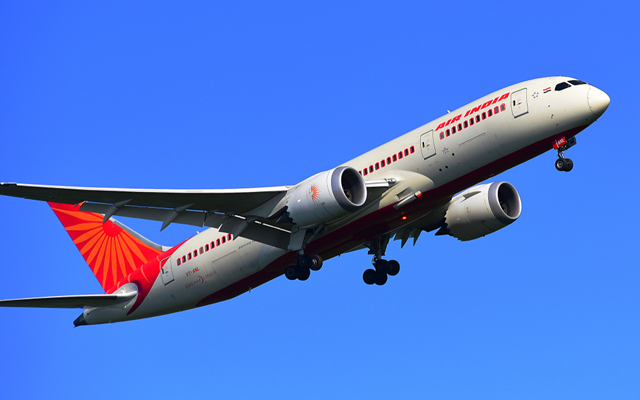
From March 22, Air India will begin thrice-weekly direct flights from New Delhi to Tel Aviv, Israel.

The outbound flight will depart New Delhi at 16.50 and arrive in Tel Aviv at 20.25. The return leg will depart Tel Aviv at 10.15 and arrive in New Delhi the following day at 09.00. Flight time is seven hours and 10 minutes one-way.

The route will utilise a Boeing 787 Dreamliner with 18 business class seats and 238 economy seats.


Citilink Indonesia flies to three new destinations in SE Asia
Budget airline Citilink Indonesia will soon be flying to Malaysia, Singapore, and Thailand.

On March 25, the low-cost offshoot of Garuda Indonesia will fly daily to Penang. Double-daily Jakarta-Singapore flights will launch later in April, and flights to Bangkok are slated to commence later this year.


New non-stop service between London and Changsha
Hainan Airlines will be launching a non-stop flight between London’s Heathrow Airport and Changsha Huanghua International Airport on March 23.

HU421 will depart Changsha at 11.20, and arrive in London at 16.30, while HU422 will depart London at 22.00, and land in Changsha at 16.25 the following day. The route will be serviced by a Boeing 787 deluxe wide-body aircraft.

This thrice-weekly service is Hainan Airlines’ second direct flight between the UK and China, having previously launched a Manchester-Beijing service.


Cathay Pacific and Air Astana become codeshare partners
Cathay Pacific and Air Astana will begin codesharing on each other’s flights on March 15, 2018.

Cathay Pacific will place its “CX” code on Air Astana’s non-stop flights between Hong Kong and Almaty, as well as on connecting services between Almaty and Astana, the Kazakh capital.

Air Astana currently flies twice weekly between Hong Kong and Almaty, on Tuesdays and Fridays, but will be upping frequency by adding a third service, on Mondays, from March 25.

Cathay Pacific will also codeshare on Air Astana’s five weekly services between Bangkok and Almaty (going daily from 25 March), and four weekly services between Seoul and Almaty.

Meanwhile, Air Astana will place its “KC” code on selected Cathay Pacific services operating between Hong Kong and Sydney, Melbourne, Perth and Singapore.

Mobile payment gains momentum for China’s tech-savvy travellers

0

As travel expenditure of Chinese tourists pick up, so too have mobile payments, with a recent survey showing 65 per cent of Chinese tourists using mobile payment platforms on their overseas travels, six times the number of non-Chinese tourists.

According to the Outbound Chinese Tourism and Consumption Trends: 2017 Survey, jointly issued by Nielsen and Alipay, Chinese tourists’ use of mobile payment during overseas trips saw greater increase compared to other payment methods compared to the last two years.

99 per cent of Chinese travellers surveyed have Alipay downloaded

On their most recent trip abroad, 99 per cent of Chinese tourists sampled have the Alipay App installed on their phones and 63 per used Alipay for their transactions, the survey showed. While shopping was the most common expense for which Alipay was used, Chinese tourists also utilised it to pay for sightseeing, accommodations, dining, transportation and recreation.

Over 90 per cent might purchase more goods or services at certain overseas merchants if they are able to accept mobile payment, the survey further revealed.

The study identifies the habit of using mobile payments in China, convenience of use, and additional discounts gained by using such platforms as key factors for Chinese travellers’ use of mobile payment overseas, while limited merchant coverage overseas is cited as the biggest obstacle.

The importance of mobile payment adoption in the travel industry is accentuated with the report stating that Chinese tourists exhibit stronger retail spending power than non-Chinese tourists. The former spent an average of US$762 per person on shopping alone based on their most recent trip. Non-Chinese tourists spent an average of US$486.

On average, Chinese tourists surveyed visited 2.1 countries or regions in 2016-2017 and are expected to visit an average of 2.8 in 2018.

New casino resort in Nepal bets on Indian market

0

Half a year into its opening, Tiger Palace Resort in Bhairahawa, Nepal – pegged as South Asia’s first integrated casino resort – is already looking at a sizeable expansion to cater to the growing demand for gaming in the Indian market.

A part of Australian-listed Silver Heritage Group, the 8.9ha Tiger Palace Resort with an investment value of U$52 million features 100 hotels rooms and two villas, a 2,500mgaming floor, six F&B outlets and a kid’s zone.

Tiger Palace Resort’s casino main floor

“We opened as a hotel in September 2017 and (added) the gaming portion just before the New Year. We see demand for at least 100 more rooms, an expanded VIP gaming area, more F&B options and an additional block of rooms in the budget category,” said Tim Shepherd, co-founder of Silver Heritage Group.

The group is also in talks with a few theme park operators to look at the potential of possibly opening a theme park at the resort.

The resort, a two hours’ drive from the Gorakhpur Airport in Uttar Pradesh, was purpose built for Indian gamers, unlike casinos in Macau that cater more to Chinese travellers, according to Shepherd.

“India is a very exciting market. At present we are reaching out to the market through Nepal, which is very investment friendly, while it is tough to open a gaming resort in India,” Shepherd commented.

A white paper by Global Market Advisors projects that India could become the next dominant force in Asian gaming, provided its growing population has easy access to the right number and mix of casino resorts, positioned throughout India’s major cities and borders.

Since opening, Tiger Palace Resort has seen growing demand from India, having hosted Indian weddings – including one with 900 guests – bachelor parties and casino goers.

“Our concern now is to create awareness about our resort in the Indian market,” said Shepherd. To raise awareness and boost guest numbers, the resort is working offline and online travel agencies in India.

Japan, Taiwan close in on Singapore as top non-OIC destinations for Muslim travellers

0

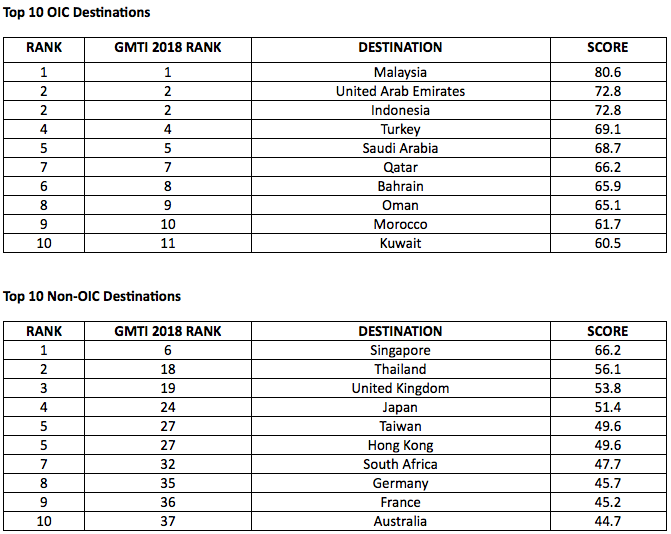
Japan and Taiwan have raced into the top five in a ranking of non-Organization of Islamic Cooperation (OIC) destinations in Asia for Muslim travellers, the latest MasterCard-CrescentRating Global Muslim Travel Index (GMTI) 2018 shows.

Malaysia and Singapore retain pole position in their respective categories on the index, while Indonesia has risen to second place in the OIC category, sharing the spot with the UAE.

Following behind Singapore in the non-OIC ranking are Thailand and the UK. Japan and Taiwan entered the top five for the first time since GMTI was released, in fourth and fifth place respectively.

“We are now starting to see the impact of investment and commitment by destinations across the world into the Muslim travel market which is reaping rewards including a real shift in the rankings. The concerted efforts of destinations such as Indonesia, Singapore, Japan and Taiwan using data and insights from the previous GMTI reports have to be commended as they are now closing the gap,” said Fazal Bahardeen, CEO of CrescentRating and HalalTrip.

All 130 destinations in GMTI2018 were scored based on criteria including access, communications (destination marketing), environment and services. New metrics were added to this year’s index, though these were not named in the joint statement from MasterCard and CrescentRating.

Muslim tourists sightseeing in Shibuya’s Hachiko Square

“This year we have revamped the criteria to better reflect the growth strategies implemented by destinations to welcome Muslim travellers resulting in positive movement across the index,” Bahardeen said.

According to a joint statement by MasterCard and CrescentRating, the Muslim travel market is on course to reach US$220 billion in 2020. It is expected to grow a further US$80 billion to hit US$300 billion by 2026.

In 2017, there were an estimated 131 million Muslim visitor arrivals globally – up from 121 million in 2016 – and this is forecasted to grow to 156 million visitors by 2020, representing 10 per cent of the travel segment.

Vietnam tourism bets on first India connection to lift numbers

0

Vietnam and India will be linked by direct flights for the first time when LCC Vietjet commences four-times-weekly services between Ho Chi Minh City and New Delhi on April 5, hailed a boon for Indian outbound travel to Vietnam.

With travellers from India currently having to connect through Kuala Lumpur or Bangkok to get to Vietnam, Yogesh Kumar, Asian Trails Vietnam business development manager for India, said the new route is the “best gift for tourism in Vietnam”.

Vietjet’s New Delhi-Ho Chi Minh City flights first to connect Vietnam and India

Pruthi Ranjan, market manager, Victoria Tour in India, added: “The lack of direct connectivity has been a big challenge for us. This has meant that a lot of Indians who otherwise would have travelled to Vietnam are opting for other regional destinations like Thailand. The lack of direct flights also makes the cost of overall tour package costly.

“We expect 30-40 per cent year-on-year growth once the direct air connectivity is in place,” he added.

Similarly, Trinh Nguyen Hung Dzung, chairman, TNK Travel Group, shared that despite the many requests for Vietnam among Indian clients, the lack of direct flights had posed a major inconvenience. “Indian tourists have to travel via Singapore or Bangkok to get to Vietnam, so they’d rather choose other destinations. If we have direct flights we can (better compete with) other destinations in the region.”

The new connection is expected to unlock the tremendous potential of the Indian outbound market for Vietnam and its neighbouring destinations, according to Karan Anand, head, relationships, Cox & Kings.

“These flights will open up the possibility of moving large groups from India to Vietnam and beyond, namely Cambodia and Laos. This will open up new regions for the ever-growing Indian outbound travel market, which is estimated at 23 million as of 2017,” Karan said.

“The adventure seekers – those who are interested in history, culture and cuisine – are expected to benefit. Within the incentive segment, small groups of between 10-250 pax will also be catered for. Many Indians have visited a lot of places in the East and this new flight connectivity will help open up new markets and segments,” he added.

In Vietnam, Fusion Resorts plans to ride the recent developments to target the Indian wedding market with its all-inclusive wellness offering.

Vietnam recently extended its e-visa scheme to India, and bilateral trade between the two countries is on growing, noted Akshay Moza, commercial manager at Fusion Resorts.

Hue Nguyen, Diethelm Travel Vietnam’s marketing business manager, predicted the new flights will help “foster cooperation between the two countries” particularly in the area of tourism.

The new connection could be a prelude to larger improvements in connectivity between India and Vietnam, with Vietjet expected to commence flights to other Indian cities like Mumbai after gauging the success of New Delhi connection.

Vietnam Airlines also plans to open flights to India later this year. This includes to Buddhist pilgrimage site Bodh Gaya, which Nguyen predicts will be popular for Vietnamese Buddhist travellers.

  • additional reporting by Marissa Carruthers

India’s tourism ministry trims overseas presence

0

India’s Ministry of Tourism is trimming the number of overseas offices from 14 to just eight, the restructure being part of an integrated marketing plan for the financial year 2018/19.

In an exclusive interview with TTG Asia, Rashmi Verma, secretary, Ministry of Tourism, revealed that a “hub and spoke model” will now be adopted for its overseas operations.

The tourism ministry will keep its offices in the US, Germany, the UK, Dubai, Russia, China and Singapore

She elaborated: “A hub will overlook the operation in the region. We will have eight offices in key and emerging markets, and they will be supported by our marketing representatives and PR agencies. We, in conjunction with Indian missions abroad, are in the process of appointing marketing representatives and PR offices.”

Countries where India tourism offices will remain include the US, Germany, the UK, Dubai, Russia, China and Singapore.

In the past, the viability of some India tourism offices were questioned due to several vacant posts.

The National Institution for Transforming India (NITI Aayog) had in its three-year action agenda for 2017-2020 called for the ministry to focus on digital marketing and social media tools for more efficient destination marketing, and to conduct cost-benefit analysis of its overseas offices. NITI Aayog is the premier policy think tank of the Indian government of India, providing both directional and policy inputs.

“We impressed upon the tourism ministry to (revamp rather than close) the overseas offices as they have been in operation for decades and are instrumental in creating a positive image of our destination. Even if some offices are being shuttered, the ministry should continue its participation in travel trade exhibitions in markets where there are no offices,” remarked Pronab Sarkar, president of the Indian Association of Tour Operators.