
Asia/Singapore Wednesday, 8th April 2026
Page 370

Parents with kids top staycationers in Singapore: Expedia

0

Singaporeans are nearly as enthusiastic about staycations as they are about overseas trips, found a new Expedia study, which identified parents with kids as being the most avid staycationers.

The study revealed that six in 10 Singaporeans had gone on at least one staycation in the past 12 months.

Singaporean parents with kids are the most avid staycationers

It also showed that Singaporeans averaged 2.4 staycations over the past year, just under the three personal overseas flights they take in a year.

“Over the years, staycations have been growing in popularity among Singaporeans. Based on our historic data, we saw year-on-year increases of 25% in 2016, and 40% in 2017 for local hotel bookings by Singaporeans on Expedia.com.sg,” shared Simon Fiquet, managing director, global series markets, Brand Expedia.

“Not only does this underscore the growing appeal of Singaporeans being tourists in their own backyard, staycations have also become quick and easy alternatives for Singaporeans to take a short break without the need for detailed planning or extensive travelling.”

Comparing the staycation habits across various demographic groups – including single adults, adults who are married without kids, and parents with kids – Expedia found that Singaporeans who are married with kids emerged as the top staycationers in Singapore, with 68% of them having gone on a staycation in the past 12 months.

This was followed by those who are married with no kids (66%) and the singles (58%).

Corresponding to this trend, the months of June and December also came up tops as the most popular staycation periods.

Forty-one percent of staycationers go on a staycation in December, 32% in June, 18% in November and 17% in March.

In addition, 70% of staycationers who are married with kids typically go on a staycation in the school holiday months of June, November and December.

Besides being the most avid group of staycationers, the discretionary spending among those married with kids is also one of the highest among groups, with spending on staycations averaging S$238 (US$174) a night, second only to those who are married without kids.

Additionally, 45% of those who are married with kids stayed three to four nights on their last booked staycation and 68% of them went with three or more people on their last staycation.

With family-friendly facilities, proximity to tourist attractions, and easy access to complimentary Wi-Fi and breakfast, it came as no surprise that hotels are the preferred staycation option among Singaporeans.

Some 74% of staycationers booked a hotel for their staycation in the past 12 months. Among this group, 54% of staycationers who booked a hotel for their last staycation chose a four-star hotel, while 33% opted for a five-star hotel.

Notably, parents with kids stood out from the crowd with their preference for hotels, especially for five-star hotels. Nine in 10 (89%) staycationers who are married with kids booked a hotel for their last staycation. Out of that, 39% of chose a five-star hotel and 55% chose a four-star hotel.

In terms of activities that staycationers engage in, making use of hotel facilities (70%), visiting nearby attractions (62%), dining in (56%), going shopping and watching movies emerged as the five most popular activities among the respondents.

With seven in 10 (66%) of Singaporeans likely to book a staycation in the next 12 months, the study also uncovered insights into the key motivational factors for booking an upcoming staycation.

When asked about the consideration factors for selecting an accommodation for a staycation, 33% of Singaporeans indicated free breakfast as their top consideration, followed by 31% who indicated great deals and 29% who indicated convenience of locations.

However, among those who are married without kids, complimentary upgrades emerged as the top consideration factor. This reflects the tendency for this group of staycationers to prefer pampering experiences over convenience and cost savings, as compared to single staycationers, who displayed clear preferences for free breakfast and great deals.

Among Singaporeans who are married with kids, 32% indicated free breakfast and convenient locations as their top two considerations.


Discover more of Switzerland with all-in-one pass

0

The Swiss Travel Pass has been updated and expanded, and Indian tourists who purchase this all-in-one ticket will be able to use it for all rail, road and water travel in Switzerland.

This India-only offer also gives travellers an extra travel day on a four-day Swiss Travel Pass, and two extra travel days on the eight-day Swiss Travel Pass.

All travel by rail, road and waterways are covered, including panoramic trains such as the Glacier Express, Bernina Express, and Golden Pass Line. The pass also allows Indian travellers to travel free on public transportation in more than 90 Swiss cities, and allows free admission to more than 500 museums.

In addition, travellers can also travel free to Mt Schilthorn, Mt Rigi and Mt Schilthorn, and get a up to a 50 per cent discount on additional mountain railways. The pass also allows children under the age of 16 to travel free.

This offer can be bought from now until December 31, 2018, but travel must be completed by March 31, 2019.

For more information, or to book, visit www.Myswitzerland.com/specialoffers.

Weaker rupee will affect Indian outbound, but may boost SE Asia’s appeal

0

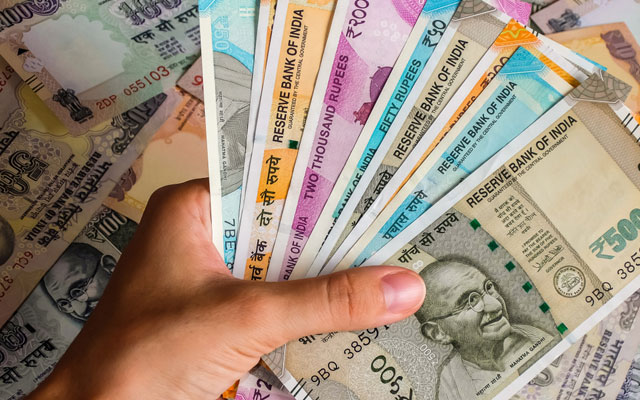
While the Indian outbound sector is likely to see the impacts of a weaker rupee for the upcoming holiday season, agents are expecting demand for destinations like South-east Asia to pick up as Indian travellers seek to make the most of their money.

The Indian rupee has been the worst performing Asian currency in 2018, having tumbled 13 per cent in value this year so far.

Agents think South-east Asia will be a popular holiday destination for India’s outbound travellers as it would allow them to make the most out of their money

“Rupee depreciation is a matter of concern for small- and medium-size agents. We are worried that there may be a decline of about 15 per cent in demand in this financial year,” Teddy Thomas, director, Oasis Xpress Travel & Tours, told TTG Asia on the sidelines of the TAFI Annual Convention 2018 in Abu Dhabi.

The weakening currency has affected bookings that span longer duration, like honeymoon travel, said Vikas Khanduri, CEO, Holiday Merchants.

“Rupee depreciation also means that besides the cost of land arrangements going up, it’s making cost of experiences like dining in a high-end restaurant or shopping dearer. So now honeymooning couples travelling to destinations like Australia and New Zealand, who may have the opportunity to in between stop at no extra cost on airfare at transit points like Singapore and Malaysia, will not take that option.”

With the rupee depreciation, some agents are expecting outbound demand for longhaul destinations like Europe to take the biggest hit.

“As longhaul holiday destinations will become more expensive, they are likely to be more affected. This may result in many Indian travellers opting for South-east Asian destinations. However, we are also seeing Indian tourists who otherwise would have chosen long-duration holidays in South-east Asian destinations, opting for short holidays,” said Pradip Lulla, managing director, Cupid Travel & Tours.

Lulla added that destinations like Turkey, where the currency depreciation against the dollar has been steeper than India, have an opportunity to tap the Indian outbound market.

“Travellers from India will now prefer international destinations where the value of the rupee is at par or not depreciated. Also, we do not expect travellers to reschedule or postpone their travel plans, however, they may look at budget accommodation options and other measures to reduce expenses during their stay,” said Aloke Bajpai, CEO & co-founder, Ixigo.

Massive hotel pipeline for APAC as development nears peak

0

In its fifth year of continuous growth, Asia-Pacific’s total construction pipeline, excluding China, is at an all-time high of 1,749 projects, or 369,045 rooms, according to a recent report by analyst Lodging Econometrics (LE).

Pipeline totals are up a remarkable 306% by rooms and 270% by projects from the cycle’s low of 473 projects (90,946 rooms) recorded in the first quarter of 2007 when LE first began tracking development in Asia.

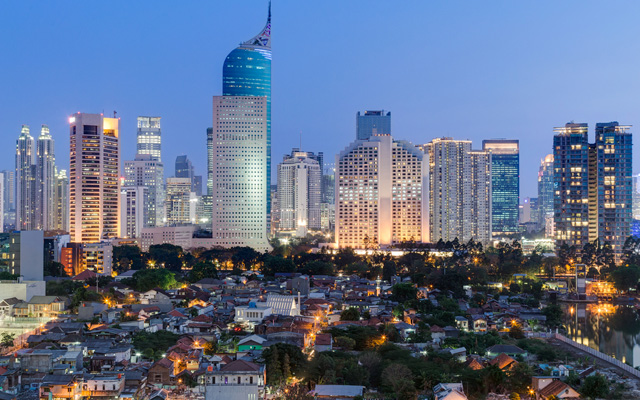
Cities with the largest construction pipeline in APAC include Jakarta (pictured), Seoul and Tokyo

Countries in the region are facing strong economic headwinds. Economies are slowing and many currencies compared to the dollar are falling, adversely affecting real estate investment. According to LE, this suggests that the pipeline peak may soon be near.

At the end of the second quarter, projects currently under construction soared to a record high of 968 projects (215,523 rooms), as developers rushed to get their projects in the ground.

Projects scheduled to start construction in the next 12 months stand at 379 projects (74,556 rooms) and projects in the early planning stage stand at 402 projects (78,966 rooms).

The Asia-Pacific region had 173 new hotels (30,332 rooms) open in the first half of the year, with another 187 new hotels expected to open in the second half, bringing the total forecast for new hotel openings to 360 by the end of 2018. The LE forecast anticipates new hotel openings to continue ascending with 385 new hotels expected to open in 2019 and 399 in 2020.

Top countries in Asia-Pacific’s construction pipeline, excluding China, continue to be led by Indonesia with 394 projects (66,759 rooms). India follows with 214 projects (33,535 rooms), then Japan with 206 projects (41,146 rooms). Next are Thailand with 142 projects (34,381 rooms) and Malaysia with 140 projects (37,332 rooms), both Thailand and Malaysia show construction pipeline counts at all-time highs.

Cities in the Asia-Pacific region with the largest construction pipelines include Jakarta with 101 projects (19,325 rooms); Seoul with 80 projects (15,490 rooms); Tokyo with 67 projects (15,322 rooms); Kuala Lumpur with 57 projects (14,974 rooms); and Bangkok with 52 projects (11,975 rooms).

The top four franchise companies, accounting for 40% of guest rooms in the total construction pipeline, are AccorHotels with 223 projects (47,221 rooms) and Marriott International with 210 projects (48,325 rooms). InterContinental Hotels Group (IHG) with 147 projects (33,616 rooms) follows along with Hilton Worldwide’s 86 projects (18,997 rooms). Both IHG and Hilton show double-digit pipeline growth year-on-year and their counts are at record highs.

Top brands in Asia-Pacific’s construction pipeline, excluding China, include AccorHotels’ Ibis brands with 74 projects (14,811 rooms) and Novotel with 46 projects (10,765 rooms). Marriott International’s Courtyard has 30 projects (5,927 rooms) and Sheraton has 27 projects (6,560 rooms). IHG’s Holiday Inn has 58 projects (14,288 rooms) and Holiday Inn Express has 34 projects (6,968 rooms), while Hilton Worldwide’s DoubleTree has 31 projects (6,474 rooms) and the full-service Hilton Hotel & Resort has 27 projects (6,719 rooms). IHG’s Holiday Inn and Hilton’s DoubleTree and full-service Hilton Hotel brands are also at record highs.

Malaysia beckons foreign airlines its way

0

Now in hot pursuit of foreign carriers, Malaysia Airports Holdings (MAH) is offering financial support for overseas airlines, as well as negotiating for the launch of flights along strategic routes.

Mohamed Sallauddin Mat Sah, general manager, airline marketing at Malaysia Airports, expressed hopes for Qatar Airways and one unnamed Indian airline to commence flights to Langkawi by this year-end.

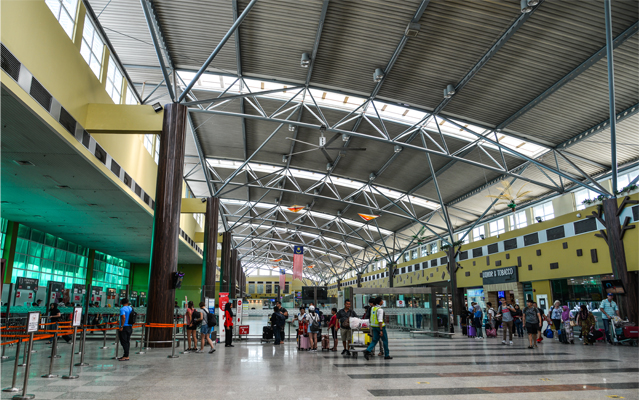
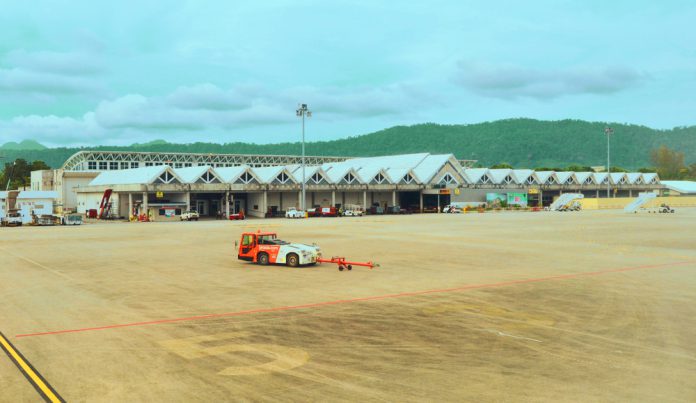
MAH is trying to get more Middle Eastern airlines to fly to Langkawi; Langkawi International Airport pictured

MAH is in talks with Qatar Airways on launching flights to Langkawi, although the return route to Doha has not yet been decided. For now, Qatar Airways could either fly direct from Langkawi to Doha, or via Penang (Langkawi-Penang-Doha).

Enticing Middle Eastern airlines to fly direct to the island destination of Langkawi is in line with Langkawi Development Authority’s ambitions of growing foreign arrivals and attracting more high-yield tourists from the Middle East.

Currently, foreign airlines flying to Langkawi are limited to only five cities – Singapore, Chengdu, Kunming, Guiyang, Guangzhou and Shenzhen.

Despite the lack of international air connectivity, Langkawi has proven a popular choice with travellers. In 2017, Langkawi International Airport registered 2.7 million passenger traffic movements with a 14.6 per cent increase in international passengers. From January to June 2018, international passenger traffic movements increased by 23.9 per cent compared with the same period in 2017.

There is also untapped potential in the Indian market. At present, no India-based airline flies to Malaysia, with existing routes served only by Malaysia Airlines, Air Asia and Malindo Air.

K Thangavelu, Grandlotus Travel Agencies managing director, believes that the destination as well as Indian travellers stand to benefit from having an Indian airline, with its strong domestic network, fly to Malaysia.

He said: “Passengers will benefit from better airfares if they take a connecting flight from the same airline. Currently, the Malaysia–India route is served by scheduled airlines from Malaysia flying to the main cities in India. Indians travelling from smaller cities will have to travel to metro cities and the main capitals of India to take these flights.”

To sweeten the deal for new foreign airlines, MAH has a support programme for new airlines flying to Malaysia which includes landing fee waiver for a year.

Furthermore, Malaysia Airports together with Tourism Malaysia will continue to offer funds supporting airlines’ promotion of Malaysia in overseas markets through the Joint International Tourism Development Programme. The programme, which was introduced this year, will be extended into 2019.

Correction: An earlier version of this article misstated that Qatar Airways was looking to commence flights to Malaysia by this year-end. The airline already has flights to including cities such as Kuala Lumpur and Penang. The story has been updated. 

Malaysia beckons foreign airlines its way

0

Now in hot pursuit of foreign carriers, Malaysia Airports Holdings (MAH) is offering financial support for overseas airlines, as well as negotiating for the launch of flights along strategic routes.

Mohamed Sallauddin Mat Sah, general manager, airline marketing at Malaysia Airports, expressed hopes for Qatar Airways and one unnamed Indian airline to commence flights to Langkawi by this year-end.

MAH is trying to get more Middle Eastern airlines to fly to Langkawi; Langkawi International Airport pictured

MAH is in talks with Qatar Airways on launching flights to Langkawi, although the return route to Doha has not yet been decided. For now, Qatar Airways could either fly direct from Langkawi to Doha, or via Penang (Langkawi-Penang-Doha).

Enticing Middle Eastern airlines to fly direct to the island destination of Langkawi is in line with Langkawi Development Authority’s ambitions of growing foreign arrivals and attracting more high-yield tourists from the Middle East.

Currently, foreign airlines flying to Langkawi are limited to only five cities – Singapore, Chengdu, Kunming, Guiyang, Guangzhou and Shenzhen.

Despite the lack of international air connectivity, Langkawi has proven a popular choice with travellers. In 2017, Langkawi International Airport registered 2.7 million passenger traffic movements with a 14.6 per cent increase in international passengers. From January to June 2018, international passenger traffic movements increased by 23.9 per cent compared with the same period in 2017.

There is also untapped potential in the Indian market. At present, no India-based airline flies to Malaysia, with existing routes served only by Malaysia Airlines, Air Asia and Malindo Air.

K Thangavelu, Grandlotus Travel Agencies managing director, believes that the destination as well as Indian travellers stand to benefit from having an Indian airline, with its strong domestic network, fly to Malaysia.

He said: “Passengers will benefit from better airfares if they take a connecting flight from the same airline. Currently, the Malaysia–India route is served by scheduled airlines from Malaysia flying to the main cities in India. Indians travelling from smaller cities will have to travel to metro cities and the main capitals of India to take these flights.”

To sweeten the deal for new foreign airlines, MAH has a support programme for new airlines flying to Malaysia which includes landing fee waiver for a year.

Furthermore, Malaysia Airports together with Tourism Malaysia will continue to offer funds supporting airlines’ promotion of Malaysia in overseas markets through the Joint International Tourism Development Programme. The programme, which was introduced this year, will be extended into 2019.

Correction: An earlier version of this article misstated that Qatar Airways was looking to commence flights to Malaysia by this year-end. The airline already has flights to including cities such as Kuala Lumpur and Penang. The story has been updated. 

Crazy Rich Asians movie spurs Singapore, Malaysia travel searches

0

Travel search volume for Singapore and Malaysia have seen massive spikes in recent weeks, which Expedia said was the “knock-on effect” of recently released Hollywood film Crazy Rich Asians.

Singapore tourism has hit jackpot with this blockbuster movie, which has already sparked a boost in tourism promotions and new tours to sell the island-state.

CHIJMES, a heritage building in Singapore that was first built as a Catholic convent in 1852, is one of the filming locations in the movie

When comparing the search volume for travel to Singapore across Brand Expedia sites in the two weeks before and after the movie was released, Brand Expedia’s Malaysia site (Expedia.com.my) saw the biggest increase, with search volume doubling over the comparison period. Brand Expedia’s Hong Kong site (Expedia.com.hk) also saw an increase of more than 90%, while its Taiwan (Expedia.com.tw) and US (Expedia.com) sites saw increases of nearly 50% over the same period.

When comparing the search volume for travel to Malaysia across Brand Expedia sites in the two weeks before and after the movie was released, Brand Expedia’s Hong Kong site (Expedia.com.hk) saw the biggest increase, with search volume increasing by almost 85% over the comparison period. Brand Expedia’s Singapore site (Expedia.com.sg) also saw a nearly 75% increase, while its Taiwan (Expedia.com.tw) and US (Expedia.com) sites saw increases of almost 45% and over 40% respectively over the same period.

“There are a few things in life that are certain to inspire you to travel, no matter who you are, and a good movie is most definitely one of them. Crazy Rich Asians has been an amazing hit for Singapore and Malaysia, both on the awareness and tourism standpoint,” Lavinia Rajaram, regional head of communications, Brand Expedia in Asia, said in a statement.

APAC dominates world’s busiest air routes by passenger numbers

0

In a new study published by Routes, organiser of aviation network development conferences and events, the Asia-Pacific dominates the top 100 busiest routes by passenger numbers, accounting for more than 70% of the world’s total.

Hong Kong – Taiwan Taoyuan is the busiest international route and features as the eighth most popular overall, with 6.7 million passengers flying the 802km journey in 2017. Hong Kong features in six of the top 10 international routes.

With more than 13.4 million people travelling on the shorthaul domestic service, the 450km journey from Seoul’s Gimpo Airport to the island of Jeju off the coast of the Korean Peninsula has once again claimed the title as the most in-demand air route in the world. The route has an average of 180 scheduled flights per day – one every eight minutes.

As well, a total of 13.5 million passengers flew between Seoul and Jeju in 2017, an increase of 9.4% on the previous 12 months when the route was also ranked as the busiest in the world. It carried a staggering 4.4 million more people than the second busiest, Melbourne – Sydney Kingsford Smith.

The study also found that the Thai domestic route of Bangkok Suvarnabhumi – Chiang Mai is the fastest-growing route in the top 100. Two-way passenger numbers grew by 36% year-on-year to almost 2.4 million.

Steven Small, brand director of Routes, said: “This research backs up forecasts that the Asia-Pacific region will be the biggest driver of passenger demand over the next 20 years.”

China’s outbound tourism market shows no signs of slowing

0

Online travel agent Ctrip and China Tourism Academy (CTA) have released a joint report on China’s outbound market for 1H2018.

In 1H2018, Chinese travellers made 71.3 million outbound trips, a 15% year-on-year increase.

A Chinese guide taking photos for Chinese tourists in Phi Phi Island in Thailand; Thailand is currently the largest outbound destination for Chinese tourists

The top 20 outbound travel departure cities are Shanghai, Beijing, Guangzhou, Chengdu, Chongqing, Shenzhen, Nanjing, Wuhan, Xi ‘an, Hangzhou, Kunming, Tianjin, Changsha, Zhengzhou, Nanchang, Guiyang, Jinan, Hefei, Nanning and Fuzhou.

The top 10 departure cities with the highest year-on-year growth were Xi’an (180%), Guiyang (175%), Nanchang (162%), Kunming (155%), Zhengzhou (146%), Taiyuan (123%), Chongqing (120%), Jinan (115%), Hefei (110%), Changzhou (107%).

The report also revealed that the average spent per person for outbound travel during 1H2018 was RMB5,200 (US$759). The top 10 cities where their residents spent the most are Changchun (RMB6,949), Wenzhou (RMB6,704), Beijing (RMB6,494), Dalian (RMB6,352), Shenyang (RMB6,303), Shanghai (RMB6,160), Harbin (RMB6,134), Xiamen (RMB6,036), Qingdao (RMB5,955) and Suzhou (RMB5,794).

Thailand is currently the largest outbound tourist destination for Chinese tourists, with Japan in second position. In 1H2018, more than four million Chinese tourists visited Japan, up 23.6%, according to the Japan Tourism Agency.

The other destinations in the top 10 list are Vietnam, South Korea, Singapore, Indonesia, Malaysia, Russia, the US and Cambodia.

The demographics of China’s outbound travellers were 53% female and 47% male, with the post-80s the backbone of outbound tourism at 31 per cent. The report also found that Chinese tourists are still keen on group travel, where 54% opted for Ctrip’s 4 diamond tour packages and 29% for 5 diamond tour packages.

However, a new trend has emerged, where the number of tourists signed up for Ctrip’s private and customised trips saw a 300% year-on-year increase.

HKTB, Cathay Pacific extend reach into tech-savvy India with Klook partnership

0

The Hong Kong Tourism Board (HKTB) and Cathay Pacific have partnered Klook, an in-destination travel booking platform giant, to woo Indian travellers.

This represents a significant step as the tourism players seek to gain more visibility with FITs in India’s smart tech-savvy populace. The country has an outbound market of around 23 million tourist departures.

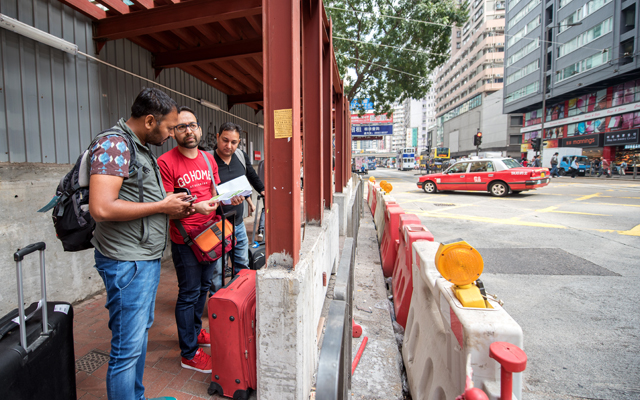
Indian tourists in Hong Kong

As part of the joint promotions, Klook is offering up to 60 per cent off on all Hong Kong products, ranging from attractions, tours, local transport, must-eats, and more.

Individuals can book through the free App (Android and iOS) or website, which is being made available till mid-October.

Travellers must book their flights with Cathay Pacific or Cathay Dragon, and use the booking number on the site to enable them to access discounts.

With the collaboration, Klook’s platform now houses a microsite featuring Hong Kong’s recent campaign theme – Discover Hong Kong Like A Local – where travellers can book experiences.

Puneet Kumar, senior manager, market development (India) of HKTB said: “Discover Hong Kong Like a Local focuses on promoting Hong Kong stories and experiences through authentic Indian voices to engage young and affluent Indian traveller… Our partnership with Klook and Cathay Pacific Airways allows Indian travellers to design their Hong Kong trip to explore Hong Kong like a local.

“This year we are introducing our living local culture through walking tours in rejuvenated districts like Old Town Central and Sham Shui Po, Great Outdoors through soft adventure activities such as hiking trails and cycling routes, dining & nightlife experience through roof top bars, Michelin star rated street food stalls, unique dining concepts and Hong Kong Wine & Dine Festival, etc.”

Commenting on the partnership, Anita Ngai, chief revenue officer of Klook, said: “Hong Kong continues to gain popularity and attract travellers from India. On Klook, 30 per cent of users (originate from) South-east & South Asia and have seen a tremendous growth from India where travellers are interested to experience different products that cater to their preferences.