

Cambodia is targeting up to 5.8 million international visitors in 2026, with a recovery in Chinese arrivals and new air links expected to support growth despite geopolitical and cost pressures

Cambodia has set a target of welcoming up to 5.8 million international visitors in 2026, with its Ministry of Tourism (MoT) banking on a rebound in visitors from China – a traditionally strong source market that has seen arrivals dwindle since the pandemic – to help boost arrivals.
According to the MoT, the country welcomed about 5.57 million international visitors in 2025, marking a 16.9 per cent year-on-year decrease. Of the total figure, more than 1.2 million were Chinese. This compares to approximately 2.3 million Chinese – one-third of international arrivals – in 2019.

“Cambodia is fully prepared and ready to welcome the return of Chinese tourists and investors,” the country’s tourism minister, Huot Hak, said. In line with this, Cambodia rolled out a pilot scheme that offers Chinese tourists multiple 14-day, visa-free stays from June 15 to October 15, 2026.
Sinan Thourn, chairman of IMCT Co and PATA Cambodia chapter, said if the scheme proved successful, he would like to see it extended to other countries, specifically Europe and the US.
For 2026, the MoT has set a target of attracting 5.6 to 5.8 million international visitors, which sits slightly above 2025’s figure. This is a revision of an early target of seven million due to tourism seeing a slowdown in the second half of 2025 as a result of the border conflict with Thailand. Subsequently, the tourism sector has been hit by the Middle East conflict and rising fuel prices.
The country was heavily impacted by the sudden halt of flights by Qatar, Emirates and Etihad, which carry the bulk of the country’s Western markets. According to Cambodia’s State Secretariat of Civil Aviation, Gulf hubs account for approximately 12,960 travellers to Cambodia a week.
Thourn said the disruption to flights, coupled with the fuel crisis, has had a major impact on travel costs and itinerary planning, with cost pressures rising in various service areas, from accommodation and food and beverage, to tours and transport.
He added that his outlook for 2026 is “cautiously optimistic”, shaped by both challenges and new opportunities. For example, arrivals from the country’s leading source market in 2024, Thailand, drastically declined in 2025 by 52.4 per cent to 1.02 million visitors.
Arrivals from South Korea have also dropped “significantly” due to travel advisories related to scam centre concerns. Thourn noted that while Vietnam remained Cambodia’s top source market in 2025, attracting 1.22 million visitors, arrivals from the country have also “softened”.
“On the other hand, Cambodia expects solid recovery and growth from longhaul and emerging markets, especially Europe, China, India and South Asia. With new airport infrastructure, improved connectivity and a stronger focus on quality tourism, 2026 will be a year of rebalancing and diversification.”
Catherine Germier-Hamel, founder and CEO of Millennium Destinations, believes it is the mounting focus on “quality over quantity” that will define Cambodia’s tourism landscape in 2026.
“What encourages me most is the growing focus on quality over quantity, with more conversations and concrete actions around service excellence, sustainability and visitor safety,” she said.
“Cambodia also appears to be gaining maturity in how it manages safety and reputation issues, while becoming more creative in diversifying its market segments, products, experiences and destinations.”
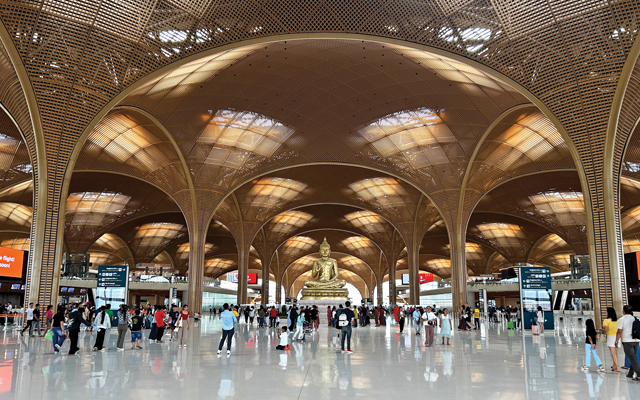
Hefty investment in infrastructure is expected to pay off, with the new Techo International Airport in Phnom Penh already attracting a raft of new connections, including a direct link to Abu Dhabi through Etihad Airways and Turkish Airlines’ direct flight to Istanbul, which launched in December.
“Investments in new and upgraded airport and transport infrastructure are sending positive signals, although their benefits are likely to materialise unevenly, with higher-quality products emerging first in established destinations and progressively in selected emerging areas that align with national tourism strategies,” Germier-Hamel said.