
Asia/Singapore Monday, 6th April 2026
Page 389

Asian hospitality sector the least disabled-friendly in the world: study

0

A NEW Travel Smarts study by Agoda has found that hotels in Asia are the least well-equipped in the world when it comes to inclusiveness.

Surveying over 600,000 hotels on the Agoda.com platform, the US came out tops with 77 per cent of hotels being accessible to the disabled. The UAE, Ireland and Portugal stood at 55 per cent.

The study found that pilgrimage destinations such as Fatima in Portugal, Huelva in Spain, and Lourdes in France have more hotels with facilities for handicapped travellers, while the building boom has seen Abu Dhabi ensure 90 per cent of all hotels are easily accessed.

On the other end of the spectrum, only one per cent of hotels in Laos were disabled-friendly. Cambodia registered eight per cent, on a par with Thailand, and Nepal, while Vietnam stood at nine per cent.

Singapore came in 18th on the international list with 40 per cent of hotels on Agoda offering facilities for the handicapped, the highest ranked Asian city.

But another such survey in 10 years could see a very different Asia.

Tour operator Blue Horizons Travel and Tours in the Philippines has just launched tour packages tailored to the needs of persons with disability, the first of its kind in the Philippines and featuring transport and hotels that have been carefully assessed. The rise of such tours could prompt the development of more accessible hotels across Asia.

Another promising development includes the Asia-Pacific Network on Accessible Tourism, headquartered in Malaysia and currently registering as an association.

It is aiming to establish country chapters throughout Asia-Pacific to champion barrier-free travel for people with disabilities in the region, heightening awareness of the needs and potential of this demographic for tourism.

Asia-Pacific tourists shore up inbound travel to Europe

0

ARRIVALS from Asia-Pacific were a key driver in travel to Europe in 2014 and forward bookings are indicating no let-up for the year ahead.

According to the Air Travellers’ Traffic Barometer, put together by European Cities Marketing and ForwardKeys, tourist inflows from Asia-Pacific and the Middle East helped Europe achieve 3.2 per cent year-on-year growth in arrivals for 4Q2014.

During the same period, Europe saw a sharp drop of 6.9 per cent in African arrivals partly due to the Ebola outbreak. The collapse of Russian and Ukrainian markets was largely accountable for the negative one per cent growth in intra-European travel, though this market still contributed a robust 67 per cent of arrivals in the winter season.

However, the steady rise of Asia-Pacific arrivals made up for said losses and forward bookings show that more travellers from Asia-Pacific and the Middle East are expected to visit Europe during 1Q2015 compared to the same quarter last year.

Asia-Pacific travel is forecast to leap 17.6 per cent while the Middle East is expected to show a 16.1 per cent improvement over the same quarter in 2014.

This could go some way to cover for intra-regional and African arrivals, with forward bookings showing drops of 0.3 per cent and 2.5 per cent respectively.

The report found that solo and couple travellers, last-month bookers and vacationers staying six to 13 nights took up the lion’s share of arrivals in 4Q, but the group travel and early booker segments posted breakneck growth at 32.7 per cent and 11.8 per cent accordingly.

‘Singaporeans knowledgeable, frequent travellers’

0

SINGAPOREANS are frequent flyers with almost all (91 per cent) surveyed in a study by DataSpark having gone overseas often either for business or leisure in the past year.

The study, which surveyed 1,694 Singaporeans’ travel habits, found them to be knowledgeable travellers who prioritise on enjoying their trip via shopping, food, rest and relaxation, as well as experiencing of the local culture.

Additionally, the study found a typical Singaporean traveller to be getting travel information from an average of 3.6 sources, with travel websites being the most popular at 66 per cent, and outdoor ads gaining the least attention at seven per cent.

kc_dataspark_1

5 hotel distribution trends to keep your eye on in 2015

0

HOTELIERS have much to lose by neglecting what big data is saying – up to 25 per cent of operation revenue, in fact. London-based eRevMax rounds up five specific trends in distribution to look out for this year.

The rise of big data, use of analytics, increasingly demand for personalisation, preference for mobile bookings, and cross-platform presences becoming the norm, are important tides sweeping the hospitality sector.

The mobile market is forecast to grow by 4.7 per cent to 4.8 billion users this year and another 3.9 per cent to reach five million in 2016, according to the distribution and business intelligence solutions provider. Online shoppers also use multiple devices in the path to purchase and travellers online keep at least two connected devices on them when on trips.

mktg_infographic_rev_trends-2015-02-25

How to grow brand loyalty among today’s travellers

0

TO SUCCESSFULLY woo this generation, travel companies must recognise a new breed of traveller and what they expect from their reward programmes, says a new report.

In The Grand Wanderluster, reward and loyalty programme technology provider Collinson Latitude outlines the characteristics of The Grand Wanderluster, a new class of traveller spawned by the digital boom.

Members of The Grand Wanderluster generation are defined not by age or gender but instead by their behaviours, characteristics and interests, and reward programmes are key to cultivating and retaining brand loyalty.

“The current accessibility and mass availability of travel means that traditional demographic based approaches to audience segmentation are a thing of the past,” said James Berry, e-commerce director at Collinson Latitude, which is part of The Collinson Group.

“Travel brands need to reinvent how they engage with the Grand Wanderluster generation or risk losing them to the competition.”

The report further breaks down The Grand Wanderluster into six separate personas based on their priorities during travel and advises how to attract each group.

The Aspirationals are today’s reinvented frequent flyers who want quick and easy online redemption. Travel brands should find out and offer rewards relevant to their interests.

The Balancers, believers of work-life balance, want the most value from their choices. To win them over, communicate more with a variety of non-travel related rewards.

Family-oriented Nesters will pay attention to online awards and redemptions that can be used to enhance family holidays, and communication is key for them.

Fourth, combine a personal touch and rewards featuring the diversity of activities they enjoy to get through to the high-earning Safeguarders.

The On-demanders are the career-oriented looking for instant gratification. Travel brands should make their reward programmes device-friendly and let them choose their own reward categories, including luxury products.

Lastly, the sceptical and disinterested Individualists are rarely the target of travel brands, reaching out to and giving them more ways to earn and redeem rewards is the first step to bringing them on board.

Research for this study was conducted by Vanson Bourne in October 2014, using a sample of 4,000 consumers from the UK, US, Middle East and Singapore.

The Lion City is South-east Asia’s dream destination

0

SINGAPORE is the stand-out favourite destination of South-east Asia, found this year’s MasterCard Consumer Purchasing Priorities survey, with the island nation consistently ranked among the top three most-desired destinations by travellers in the region.

Released last week, the survey has asked travellers from seven South-east Asian countries where they would go to in Asia-Pacific, Middle East and Africa (APMEA) if they were awarded an all-expenses paid holiday. Singapore trumped for Indonesia, Myanmar, Philippines and Vietnam.

When respondents were asked for their global dream destination, Indonesia, Myanmar and Vietnam still picked Singapore.

Malaysian travellers voted Dubai for APMEA and London for their global dream destination, while in Thailand Tokyo claimed first position on both counts.

As for Singaporeans, this travel savvy nation said they would choose Tokyo among APMEA destinations and Paris for a global dream holiday.

Denizens of the Lion City were rated the most well travelled of their South-east Asian peers, with 82 per cent having travelled internationally in the last 12 months. They are also the most travel-hungry – 87 per cent intend to go overseas in the next 12 months.

Malaysians were the next well-travelled at 67 per cent, followed by Thais at 65 per cent.

However, Thai people spent the most when overseas at approximately US$2,100. Singaporeans come next with US1,800 and Myanmar travellers take the third spot with US$1,750.

In terms of desire to travel, Malaysia is in second place at 84 per cent intending to make a trip in the next 12 months and Myanmar is third with 80 per cent.

The survey concluded that the strong desire for travel coincides with an upbeat consumer outlook in the region, where consumer sentiment in South-east Asia was registered at 77.7 index points or 6.4 points higher than in 2014, as reported by the MasterCard Index of Consumer Confidence.

Matthew Driver, president of South-east Asia, MasterCard, commented: “In tandem with economic progress, we are seeing a steady rise in the middle class with a higher disposable income which allows people to venture overseas more often for leisure travel.”

The MasterCard Consumer Purchasing Priorities survey was conducted among 2,865 respondents between the ages of 18 and 64 in seven South-east Asian markets over the period of October to November 2014.

Rouble rouble toil and trouble

0
jan16rainiThe impact will be far-reaching. Industry members who adopt a “it is not my problem because I don’t do Russia” may want to think twice.
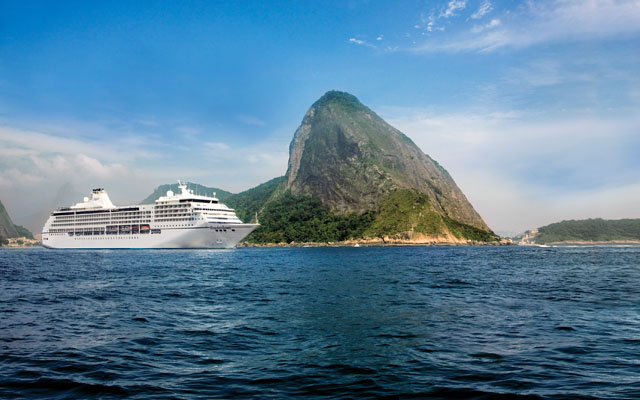
Russian travellers have fuelled (oops, no pun intended) demand for many destinations, but thanks to Vladimir Putin’s dependency on the energy industry – devastasting when oil prices whittled by half over six months – and sanctions on his economy following the Ukraine crisis, the rouble has all but collapsed and, along with it, a darling outbound travel market.

The impact will be far-reaching. Industry members who adopt a “it is not my problem because I don’t do Russia or have little exposure to it” may want to think twice.

The fact is, in its wake, there is a huge capacity that needs to be filled, considering that not only is Russia a volume market, its travellers have a healthy length of stay (in Thailand, an average of 11 nights – see page 7).

Already, a UK tour operator I spoke to said getting space in Thailand and southern Vietnam, two destinations that have focused on the Russian market, “is certainly much easier” now, and while hotels at present aren’t panicking with rate reductions due to a still-strong regional business in the first couple of months, he believes that from March onwards, “the hotels will have to be really aggressive and I fully expect the lower spring rates to kick in early in many places”.

As DMCs, hotels and destinations that have relied heavily on the Russian market scramble to find alternative volumes, protecting market share is the name of the game. Besides, it is not as if the pie is expected to grow by leaps and bounds. Japan is in a recession, the eurozone is trying hard to avert a deflation, China’s economic growth is slowing and Australia is struggling to rebalance its economy away from mining investment-led growth. It is also not as if there are new emerging markets to count on, the way Russia and China had saved the day for many players and destinations in recent past crises. Where are the new darlings? India and Indonesia are indeed promising but they will take some time still to bloom.

So, do expect the competition to be in full swing as soon as the first tradeshow of the year, the ASEAN Tourism Forum, opens next week in Myanmar. Do come prepared with a sound strategy.

South-east Asia itself needs to do more to gain market share. The region chalked up the smallest growth in international arrivals compared with other regions in the world in the first 10 months of 2014 over the same period in 2013, according to the latest UNWTO data. Its two per cent growth is below the five per cent growth in international arrivals overall.

But that’s another opinion.

Chinese travellers hungry for Japan travel

0

JAPAN is the destination of choice for travellers from China, Hong Kong and Taiwan in the year ahead, according to a recent consumer survey.

Travel deals publisher, Travelzoo Asia Pacific, conducted its annual member survey between November 2 and 30 last year among more than 4,300 participants from Australia, China, Hong Kong, Japan and Taiwan.

Some 40 per cent of Chinese members picked Japan as the travel destination they have the keenest interest in, for the second year running. The US was China’s second choice with 31 per cent of the vote, likely supported by the new visa agreement between China and the US.

The survey also found that Chinese travellers will travel the most this year for an average of 6.4 leisure trips and spend US$8,558 per trip.

Japan also topped Hong Kong at 49 per cent, followed by Australia at 31 per cent. The Taiwanese proved the most eager to visit Japan at 56 per cent. Switzerland ranked second with 22 per cent.

The survey also highlighted that travellers are now seeking a more immersive experience (52 per cent), with cultural experiences such as visiting festivals and learning local traditions being the most sought-after (36 per cent), while gastronomy and nature followed at 21 per cent and 20 per cent respectively.

Vivan Hong, president, Travelzoo Lu You Zu, commented in a release: “The survey shows that the Chinese travel appetite is changing dramatically. It also underscores the danger of stereotyping Chinese preferences, especially with their increasing preference for unique experiences.”

The Chinese also remain the most avid mobile Internet users – 78 per cent have made a travel-related purchase in the last 12 months, above the 55 per cent average; 97 per cent stay in touch with friends and family while on holiday, compared to 83 per cent of all respondents.

Thailand remains prime travel destination for Singaporeans

0

BANGKOK and other destinations in Thailand will enjoy continued popularity among Singaporean travellers in the year ahead, according to the latest data from Hotels.com.

Besides the shopping haven that is the nation’s capital, which gained the most searches for the month of December, other locales are increasingly coming under the spotlight.

Searches for Krabi spiked 67 per cent year-on-year to claim the top spot among Hotels.com’s top five destinations with the most search increases for December. Chiang Mai followed in second spot with 45 per cent.

Bangkok was also the most popular holiday haunt for Singaporeans between January and October, despite the political unrest this year.

Katherine Cole, regional director at Hotels.com, said: “Thailand has always been a destination close to the hearts of Singapore travellers and we expect to see even greater demand in the coming year, as local authorities increase their efforts to attract tourists back to the country post-coup.”

Sapporo, Taichung and Penang were also among the top five destinations with highest searches in December, recording increases of 36, 33 and 30 per cent respectively.

Hotels.com’s data also showed Singaporeans opting for vacations within the region instead of Europe. Eight of the top 10 most-searched destinations for January to October were found in Asia.

Interestingly as well, local hotels were the sixth most searched item for the second consecutive year.

Commenting on this statistic, Cole said: “2014 has seen the growing popularity of staycations and Singapore is at the fore of this trend. The republic is high on the radar as locals increasingly look to a nearby hotel for a quick weekend respite with family and friends. With numerous festive hotel promotions, year-end events and countdown parties in the pipeline, Singapore is the destination to be for Christmas and the New Year.”

Asia-Pacific leads in travel booking via mobile devices

0

TRAVELLERS from Asia-Pacific use mobile devices most compared to travellers from other regions when planning and purchasing travel, according to the Travel Flash Report released by Criteo.

The report examined the share and value of bookings generated from mobile devices for more than 1,000 travel websites worldwide including airlines, hotels, car rentals, cruises and apartments in 1H2014.

One of the key regional findings include Asia-Pacific being the leader with more than 20 per cent of travel bookings made on a mobile device. Brazil and Germany turned in less than 10 per cent.

Globally, smartphones and tablets accounted for 21 per cent of hotel bookings, while peer-to-peer apartment rentals saw the highest mobile penetration of 34 per cent.

Additionally, the value of mobile bookings increased in every area except accommodation – average booking value was 21 per cent higher for air travel and 13 per cent higher for car rentals, but 30 per cent lower for hotel bookings on mobile devices than desktop.

Jason Morse, vice president for mobile products at Criteo, said: “Mobile is the driving force behind the exponential growth in online travel booking and sales, and that’s only set to continue in the second half of this year and beyond.

“Travel marketers need to think strategically about developing a highly effective omni-channel marketing experience, ensuring the entire consumer experience – from the ads to shopping carts – is mobile optimised.

“Determining budget across desktop and mobile must be completely fluid because consumers are making decisions in real-time, requiring that the booking experience be streamlined and integrated with mobile-friendly payment systems to ease the all-important path to purchase.”

Criteo’s complete report can be downloaded at http://www.criteo.com/resources/travel-flash-report-online-travel-never-looked-so-mobile/