
Asia/Singapore Tuesday, 7th April 2026
Page 379

Europe to benefit from increase in Chinese airlift

0

Europe is expected to welcome more Chinese travellers on the back of increased flight capacity from China, the latest figures from ForwardKeys showed.

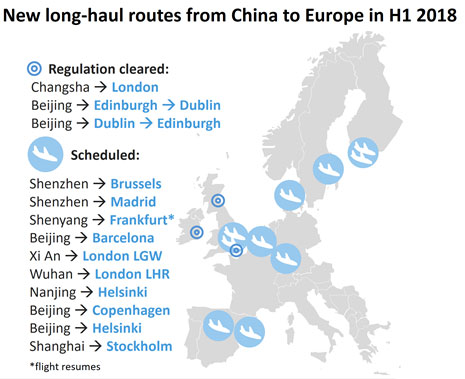
A total of nine new routes and one resumed route will start in 1H2018, plus a further three are in the pipeline. At least four China-Europe routes are already planned for 2H2018.

More Chinese travellers are expected to land in Europe thanks to direct flights

ForwardKeys’ statistics show that by June there will be an extra 30 flights a week from China to Europe. Based on an estimation of 200 seats per flight, that means 6,000 more seats will be available for Europe-bound Chinese travellers. Excluding Russia, the average total number of seats available each week last summer was 150,000.

Europe, with a 10 per cent market share of the outbound Chinese market, saw a 7.4 per cent increase in Chinese travellers during the recent New Year holiday period in January and February this year, revealed ForwardKeys. Turkey – recovering after terrorist attacks – surged 108.2 per cent, and Greece by 55.7 per cent, compared to the same period last year.
Travel in the opposite direction is set to increase too. At present, flight bookings to China, in the coming six months, from the rest of the world, are 11.8 per cent ahead of where they were at this time last year. The stand-out origin region is the Americas, which is responsible for 25 per cent of travel to China. Bookings from there are currently 24 per cent ahead.

ForwardKeys CEO and co-founder, Olivier Jager, said: “It seems that the EU-China Tourism Year is having a positive impact on travel in both directions. The Chinese have been growing in confidence for international travel for some time now and that trend is being reciprocated. Europe clearly has a lot to gain from this increased capacity because the Chinese are ready to spend money on luxury goods while on holiday, providing good opportunities for European retailers.”
Why Thailand’s 10 million travellers could be ‘the next big thing’ in APAC

0

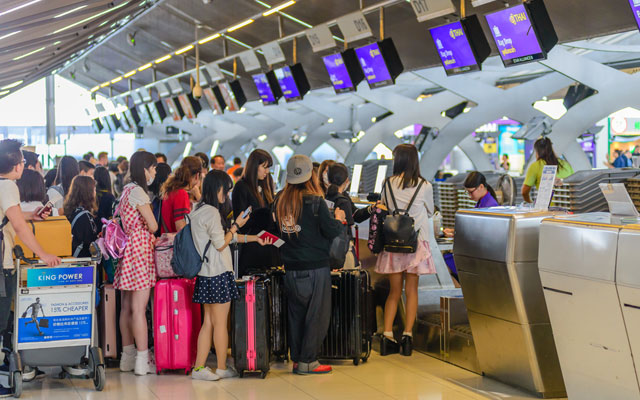
While outbound travel from Thailand is set to hit 10 million this year, some destinations are still lagging in marketing efforts and visa policies targeting the market, according to a report on The Next Big Thing in Asia-Pacific tourism by Imtiaz Muqbil, executive editor of Travel Impact Newswire.

The report shows that outbound travel from Thailand, including both Thai citizens and the thousands of middle-upper income expatriates, hit 8.2 million trips in 2016, almost double the 2011 figure.

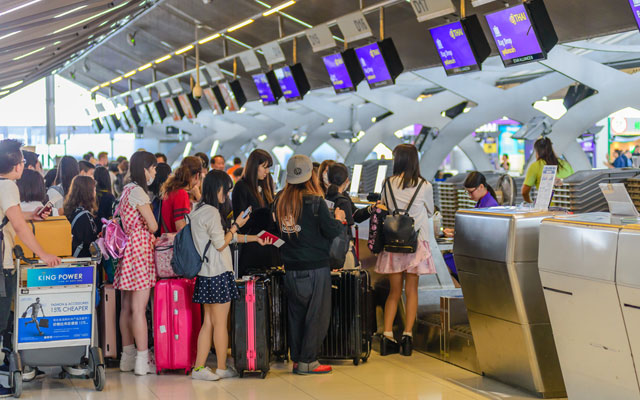
Outbound travellers at Thailand’s Suvarnabhumi Airport

The number is estimated to have crossed nine million in 2017 and is heading for 10 million in 2018, assuming that the global, regional and local geopolitical/economic situation remains stable.

Ease of access will become a major determinant of future destination choice. Japan, which eliminated visas for Thais in 2013, has become the fastest-growing destination for Thai travellers. The destination is followed by South Korea, Taiwan and Russia.

The report observes that these countries are stepping up marketing and promotional campaigns to narrow the significant gaps between the number of their tourists visiting Thailand and the number of Thais visiting their countries.

However, while most Thais know that they can get visa-free access to their neighbours in South-east Asia as as well as to North-east Asian destinations, they still do not realise they can get relatively easy access to several countries in Latin America and Africa, the report says. It hence urges countries on both distant continents to put more focus on marketing to Thai travellers.

The report also blasts the visa application processes for Europe, the UK, North America, Australia and New Zealand as being “insulting, offensive and expensive.”

“Nearly 90 per cent of the documentation required is identical, with complicated variations in the rules and regulations. Technologically, it should be possible for some kind of a single-visa system to be worked out. Aside from being a money-spinning profit centre, it is not clear what security or immigration threats these visa-requiring countries are hoping to alleviate,” the report remarked.

“Some of the questions asked in the application forms are totally irrelevant. The requirement for proof of financial support is also questionable in an era when thousands of well-off Thais are well-armed with credit cards and far better off financially than citizens of the visa-requiring countries.”

South Asian countries are also urged to clean up their visa policies. “South Asia as a whole gets dragged down because only the Maldives gives visa-free access to Thais. India, Pakistan, Bangladesh, Bhutan and Sri Lanka all require visas. Although India and Sri Lanka have online visas, cumulatively, the cost and time factors involved in getting visas reduces the appeal of these countries vis a vis competing countries.”

The report further notes the big gap between the number of airlines flying to Thailand (118 as of the winter 2017/2018 airline schedule) and the number of foreign NTOs having full-time or marketing representative offices in Thailand (only 12). A handful of other countries have separate arrangements such as through appointed GSAs.

Meanwhile, the report highlights the enormous promise of road travel as the completion of the Asian Highway allows Thailand to take advantage of its unique geographical location at the heart of South-east Asia, with strong overland connectivity to Myanmar, Laos, Cambodia and Malaysia.

Four travel tech trends to watch in 2018: Expedia

0

India’s hospitality sector ‘ignored’ in national budget

0

The Union Budget 2018-2019 announced earlier this month has left the Indian trade largely unimpressed, as members cite unmet demands and question the lack of hospitality undertakings.

“The hospitality sector has once again been almost entirely ignored in the union budget. Developments in ancillary sectors like infrastructure and aviation are certainly positive but that alone isn’t adequate,” said Dilip Datwani, president, Hotel and Restaurant Association of Western India (HRAWI). “Promoting and encouraging investments in hospitality can place India on the map of tourism destinations of the world.”

Finance minister Arun Jaitley proposed developing ten of the country’s prominent tourist sites

Hospitality associations in the country were expecting that one of their long-standing demands for the hospitality sector to be accorded infrastructure status would be considered in this year’s budget.

The associations had also requested the government to levy a uniform 12 per cent GST rate, irrespective of the room tariffs, for all hotel categories.

“Undoubtedly infrastructure development and improving connectivity will help the tourism sector, however with no specifics spelled out, we are not sure how it could benefit the hospitality sector. We were hoping to hear from the finance minister about tax reforms that would have made Indian tourism competitive with neighbouring tourism countries,” said Rishi Puri, vice president, Lords Hotels & Resorts.

He agreed that the budget has “fallen short of expectations for the hospitality segment”, adding that promoting the ease of doing business remained a “dormant subject” this year.

Meanwhile, several initiatives announced by the government are expected to bring benefits to the broader tourism industry.

In his budget speech, Indian finance minister, Arun Jaitley proposed to develop 10 prominent tourist sites with focus on infrastructure and skills development, technology, attracting private investments, branding and marketing. In addition, tourist amenities at 100 monuments of the Archaeological Survey of India will be upgraded to enhance visitor experience.

The finance minister further shared that the regional connectivity scheme of UDAN initiated by the government last year would connect 56 unserved airports and 31 unserved helipads across the country. Operations have already started at 16 such airports.

Vishal Suri, managing director at SOTC Travel, said these would give a “much-needed boost to domestic tourism”.

Tokyo dethrones Bangkok as top CNY destination for Asians

0

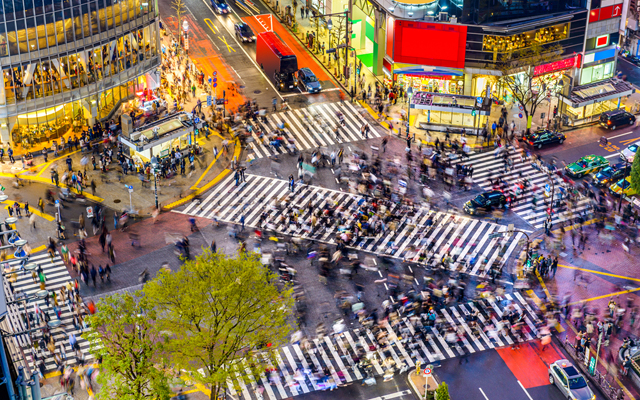
Tokyo has come out tops in a ranking of Chinese New Year (CNY) destinations for Asian travellers in 2018, overtaking Bangkok which has held the title for the last two years, according to agoda.

Other destinations that slipped down the rankings include Singapore and Chiang Mai, which respectively fell from third place in 2016 to eighth this year, and seventh to 12th.

Tokyo, Kyoto and Osaka made top 10

Japan took three of the top 10 spots, with Kyoto making an entry for the first time and Osaka moving up from ninth place in 2016 to third this year.

Although Tokyo is attracting the most travellers from across Asia, agoda’s booking data showed 70 per cent of Japanese choosing to go overseas for CNY, with Bangkok, Seoul and Pattaya their top overseas picks. Those choosing to travel locally are heading to Tokyo, Osaka and Okinawa.

Singaporeans favour nearby South-east Asian destinations, which make up eight of the top 10 destinations year on year. Batam Island, Bangkok and Johor Bahru have held the top three spots for CNY travel since 2016. Tokyo ranks seventh for Singaporeans, followed by Taipei in eighth place.

Looking at Malaysians travelling this CNY, agoda noted a marked preference for celebrating in their own backyard, with eight out of the top 10 hot spots domestic destinations. Kuala Lumpur, Malacca and Penang have held the top three spots since 2016.Thailand is the only foreign country to make the top 10 in 2018, with Bangkok and Hat Yai coming in fourth and fifth respectively.

Similarly, a majority of Indonesians (65 per cent) opt for holidays at home. The top three domestic destinations this year are Bandung, Bali and Yogyakarta. For those seeking adventure off-shore Kuala Lumpur, Singapore and Tokyo are the top international destinations.

Meanwhile, for mainland Chinese travellers, Hong Kong wrestles back the top spot from Bangkok which slipped to third place in the market this CNY. Thailand’s popularity among Chinese travellers is notable, with three destinations – Bangkok, Chiang Mai and Phuket – making an appearance in the market’s top five.

Marriott expands South Asia footprint with Samhi Hotels

0

Marriott International has signed a five-hotel conversion deal with Samhi Hotels to grow its upper-midscale tier Fairfield by Marriott brand in India.

The addition of these properties will add a combined total of 583 new rooms in Chennai, Pune, Goa, Delhi and Bengaluru.

Fairfield by Marriott Coimbatore, one of the properties currently operational under Samhi

“With the conversion of these five hotels to Fairfield by Marriott, Samhi Hotels will now have 14 hotels managed by Marriott International across a range of our brands in India as we look at further expanding across the country,” said Paul Foskey, Marriott International’s chief development officer in Asia-Pacific, in a statement.

Neeraj Govil, area vice president, South Asia for Marriott International added: “We (will) continue to focus on growing our portfolio of upper-midscale hotels in India as we foresee immense growth opportunity in this segment, fuelled by an increasing number of travellers opting for hotels positioned in this tier to cater to their business and leisure needs.”

The Fairfield by Marriott brand has nine hotels currently open across India since it debuted in 2013. In addition to 10 operational Fairfield Hotels in South Asia, there are an additional 13 in the pipeline, including these five conversions with Samhi, taking the total count to 23 Fairfield by Marriott hotels in the region.

Sri Lanka eager to double Indian arrivals

0

Aiming to double Indian arrivals in the next couple of years, the Sri Lanka Tourism Promotion Bureau (SLTPB) is looking to up the ante in India through a mix of digital marketing and B2B shows to capture market share from competing destinations in South-east Asia.

As part of its digital focus, the tourism bureau has invited bids for a US$700,000 digital advertising campaign for the Indian market which it expects to introduce in May this year.

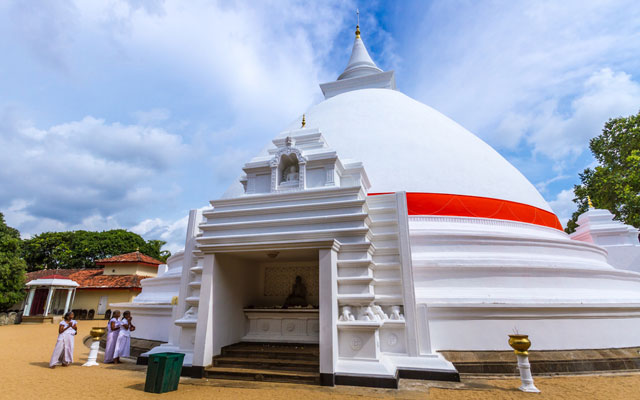
The Kelaniya Temple in Colombo, part of the Ramayana Trail.

“The digital advertising campaign in India will run for six months. In the past we have focused on electronic platforms to create a buzz but going ahead our impetus will be on digital marketing,” said Sutheash Balasubramaniam, managing director of SLTPB.

SLTPB is looking to push niche segments including golf, adventure and Ramayana trails – 50 sites mentioned in the Hindu epic.

“Nearly 25 of these sites are accessible. We have recently shot a high definition TV documentary to highlight stories related to these sites. We are working with scholars in India and Sri Lanka to develop literature that can present the right stories related to Ramayana. We will be educating Indian travel agents about the Ramayana trails through fam trips and roadshows,” said Balasubramaniam.

He added that the NTO expects to push the average length of stay of Indians, which is presently five to seven days, to 10 days by promoting lesser explored products like Ramayana trails.

The tourism board is also working to take on competition from South-east Asian destinations, including through the five or six roadshows it has planned for metro and non-metro cities.

“The number of Indian outbound travellers to Sri Lanka has increased over 17 per cent in the last six to seven years. Indian tourists have for a long time been visiting South-east Asian destinations while Sri Lanka is comparatively newer,” said Balasubramaniam.

Sri Lanka recorded about 385,000 Indian tourist arrivals in 2017, up 7.3 per cent over the previous year.

To better compete, the bureau is enhancing cooperation with private players to come up with packages, shared Viranga Bandara, SLTPB’s assistant director of marketing, India/SAARC region, adding that it brought 52 companies to the recently concluded SATTE 2018, up from 42 last year.

“We expect a lot of Indians considering the proximity and unique products like Ramayana Trail that are not present in any other regional competitors. We as a company handled about 2,000 pax from India last year, double the numbers over the previous year,” said Anton Perera, managing director, Relax Lanka Tours.

Chinese New Year travel bookings up 11 per cent: ForwardKeys

0

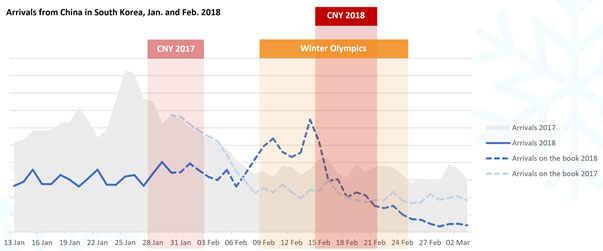
Asia-Pacific looks set to be the biggest beneficiary from the greater numbers of Chinese travelling abroad during the Lunar New Year, according to ForwardKeys.

Daily international departures are ahead 11 per cent on a comparable period last year, and ForwardKeys expects South-east Asia will experience additional uplift with the Chinese avoiding South Korea.

Japan, Thailand and Taiwan the top destinations for Chinese during the holidays

ForwardKeys further shows that Chinese travellers are making an early start from the beginning of their winter break at the end of January with figures already significantly ahead. Current bookings show that travellers will begin to peak from February 10 to February 14, ahead of the Chinese New Year (February 16) and the following Golden Week holiday.

Globally, Asia-Pacific is the top destination region. It has a market share of 76 per cent, ahead 13 per cent. But other parts of the world – the Americas, Europe and Africa & the Middle East, are showing steady, healthy growth, as the Chinese become increasingly attracted to international travel.

Japan, Thailand and Taiwan hold their positions as the top three destination countries. New Zealand tops the list of the fastest-growing destinations, ahead 30 per cent on last year; followed by Vietnam, ahead 22.5 per cent; and Hong Kong, ahead 18.3 per cent.

The pattern for Chinese travellers heading home after the celebrations tracks last year’s movement – peaking on February 21 at the end of Golden Week.

Two airports in Japan see the greatest increase in returning numbers – Sapporo, ahead 40 per cent, and Osaka, up 39 per cent. They are followed by Phuket and Dubai, ahead 34 per cent.

Chicago tops the list of those airports benefiting from Chinese homeward bound transfers.

Top hotel booking channels for Thailand in 2017

0

Research by global hotel cloud platform SiteMinder has unveiled that the top 15 booking channels that generated the highest revenue for Thailand hotels in 2017 spanned a wide distribution spectrum.

The lists are based on the 72 million hotel reservations that passed through SiteMinder’s channel management solution during the year to produce US$21.5 billion in gross revenue for the company’s 28,000 hotel customers around the world.

A mix of B2B and B2C channels made the top 15

The presence of both B2B and B2C platforms among the top-performing booking channels reaffirms the value of having a diversified hotel distribution strategy, stated SiteMinder’s managing director Mike Ford.

“These lists are testament to the incredible, material impact that a broad distribution strategy, which caters to a diverse business mix from various feeder markets, can have on a hotel’s bottom line,” commented Ford.

“They also prove the enormous – and growing – value of direct and corporate bookings, with hotel websites and GDSs featuring in almost every list this year. Additionally, we see that hotels continue to look to the wholesaler sector as an important provider of guests, with a number of the world’s leading bed banks featuring in every list globally.”

Notably, Ctrip has climbed one spot this year, showing the growing appeal of Thailand to Chinese travellers, pointed out Glenn Andrews, managing director – Asia at SiteMinder.

Meanwhile, Rakuten made its debut appearance on the list, a reflection of the growing value of Japanese travellers to the Thai hotel market, he added.

Thailand’s top 15 booking channels collectively contributed 87 per cent of all revenue that passed through SiteMinder’s channel manager for hotels in the country in 2017, proving their effectiveness in attracting, reaching and converting today’s consumer.

The top 15 revenue-generating booking channels for hotels in Thailand were:
1. Booking.com
2. Expedia
3. Agoda
4. Hotel websites (direct bookings)
5. GTA
6. Hotelbeds
7. Ctrip
8. Fusion Holidays
9. Traveloka
10. HotelTravel
11. Rakuten
12. Hostelworld Group
13. Flight Centre Travel Group
14. Asia Travel
15. HRS – Hotel Reservation Service

South Korea’s tourism woes to persist beyond Winter Olympics

0