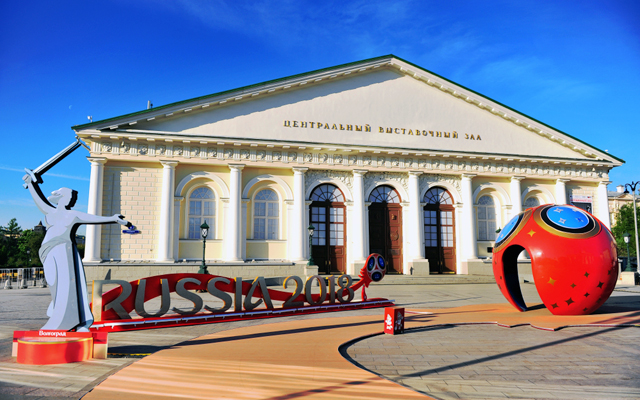
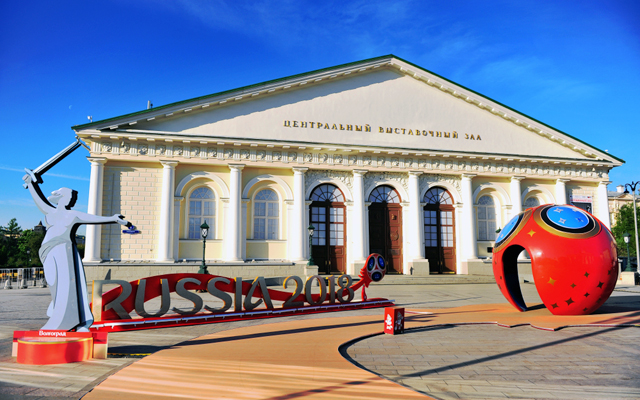
This will be the first FIFA World Cup to take place in Eastern Europe
For the upcoming FIFA World Cup in Russia (June 4 – July 15), Forwardkeys is reporting a 50.5% surge in visitors, with an uptick observed even from non-qualifying countries such as Hong Kong.
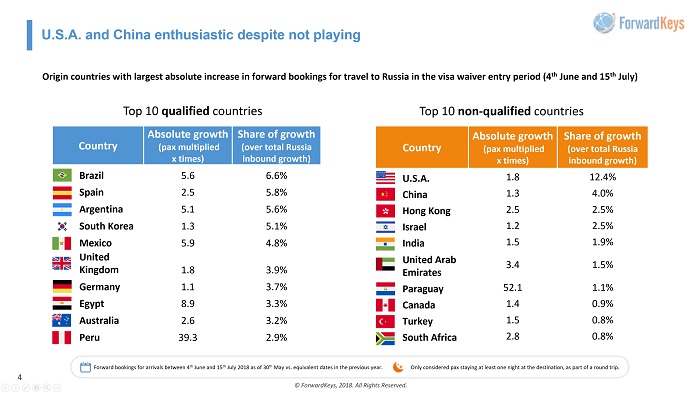
Non-qualifying countries showing the largest uplift are the US, China, Hong Kong, Israel, India, UAE, Paraguay, Canada, Turkey and South Africa.
Of the countries that have qualified, those with the greatest increase in visitors to Russia are, in order, Brazil, Spain, Argentina, South Korea, Mexico, UK, Germany, Australia, Egypt and Peru.
Source: Forwardkeys
In addition, with many Russians staying home for the tournament instead of going ahead with their usual holiday plans, outbound bookings from Russia are 12.4% behind the same period last year.
A notable feature of the booking profile is that the current upsurge peaks around the opening matches and, as of now, there is a limited advancement in bookings after the group stages of the tournament, according to Forwardkeys’ analysis.
However, once the outcome of the group stages become clear, Forwardkeys postulates it is possible for a subsequent surge in bookings for the later knockout rounds.
While the FIFA World Cup is bringing more visitors to Russia, Forwardkeys says further analysis of data suggests that many of these visitors’ “real interest is in football, much more than it is in Russia”. World Cup ticket holders being required to obtain a Fan ID, which grants them visa-free entry into Russia from June 4 to July 15, for stays until July 25, presumably allowing pass holders to remain in the country after the final on July 15. Yet, Forwardkeys says data shows that bookings for overnight stays fall sharply to normal levels after the final.
Forwardkeys further observed that major hub airports are other beneficiaries of the mini tourism boom to Russia, with over 40 per cent of visitors during the World Cup arriving via indirect flights.
Hub airports with the greatest number of passengers to Russia is Dubai, with forward bookings up 202%. This is followed in order by Paris, whose Russia (+164%), Frankfurt (+49%), Amsterdam (92%) London Heathrow (+236%) ahead, Istanbul (+148%), Helsinki (+129%), Rome (+325%), Munich (+60%) and Warsaw (+71%).
A new gateway to Phang Nga in Thailand is expected to open the destination up to a larger mainstream market, says C9 Hotelworks’ managing director, Bill Barnett.
“Without a doubt the biggest game changer going forward is the plan for a 60 billion baht (US$1.9 billion) airport in Khok Kloi Phang Nga. If it materialises, the travel time to the Khao Lak tourism area will be reduced to approximately one hour and in effect create a far broader mainstream tourism market,” Barnett remarked in the Khao Lak & Phang Nga Hotel Market Update June 2018.
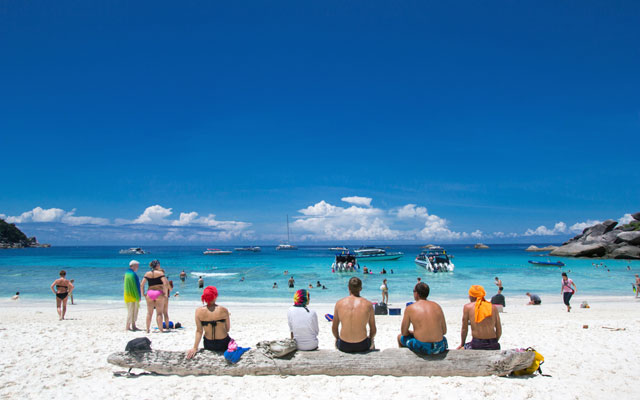
In 2017, visitor arrivals to Phang Nga totalled 4.6 million
The destination is already seeing strong arrivals growth. According to C9, visitor arrivals in 2017 totalled about 4.6 million, with a five-year compound annual growth rate of 24 per cent, due to increasing airlift at the gateway Phuket International Airport.
And while Western European visitors are typically the main market feeder for Khao Lak, accounting for 65 per cent of total international guests, there has been increasing demand in the MICE segment, comprising weddings from Europe, India, and Australia together with incentives from Singapore and Hong Kong.
Looking at hotel supply, C9 reported a rebound from the slight drop in 2016, with 2017 seeing a six per cent increase in inventory to 12,623 keys.
While a majority of the existing hotels are concentrated in the Khao Lak centre area which includes Khuk Kak Beach (29 per cent), Nang Thong Beach (17 per cent) and Bang Niang Beach (11 per cent), locations have been expanded to other beaches such as Pak Weep Beach (10 per cent).
In addition, more developments are being pushed to Bangsak and the pipeline footprint is continuing to grow northwards, C9 observed.
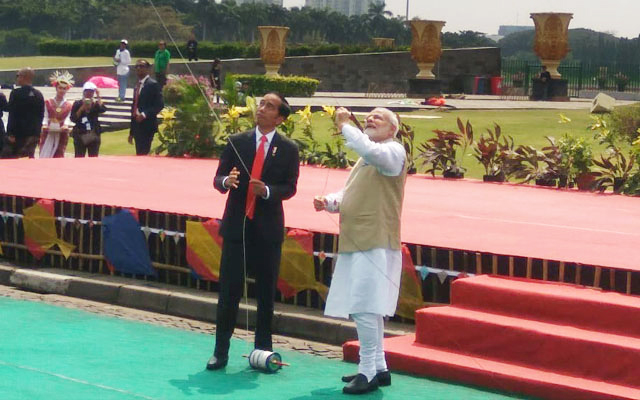
TTG Asia witnessed a rare playful side of Indonesian president Joko Widodo and Indian prime minister Narendra Modi during the Indian premier’s visit to Indonesia in conjunction with the celebration of the 70 years of diplomatic ties yesterday.
Both country leaders were flying kites carrying a logo depicting 70 years of bilateral relations during the opening of the Indonesia-India Kite Exhibition organised by Jakarta Kite Museum and the Ahmadabad Kite Museum at the National Museum in Jakarta.
Widodo (left) and Modi mark 70 years of Indonesia-India relations with a fun activity enjoyed in both countries (photo credit: Tiara Maharani)
The Indian prime minister was reported by the Times of India to have addressed an Indian diaspora at the Jakarta Convention Centre last night, saying: “Not only do the names of our nations rhyme but also there is a distinct rhythm in the India-Indonesia friendship.”
Modi’s visit is considered timely and could be said to be a prime “endorser” for Indonesia’s tourism as the country is focusing on boosting arrivals from India with a target of 30 per cent growth this year compared to last.
Changes in the mix of visitors to Phuket is reshaping the tourism landscape from a beach getaway to an “urban holiday destination”, according to C9 Hotelworks.
Phuket saw a 19 per cent year-on-year increase in passenger arrivals through its newly expanded international airport in the first four months of the year, with growth led by the mainland China market, which registered a 50 per cent year-on-year increase, followed by Russia at 47 per cent.
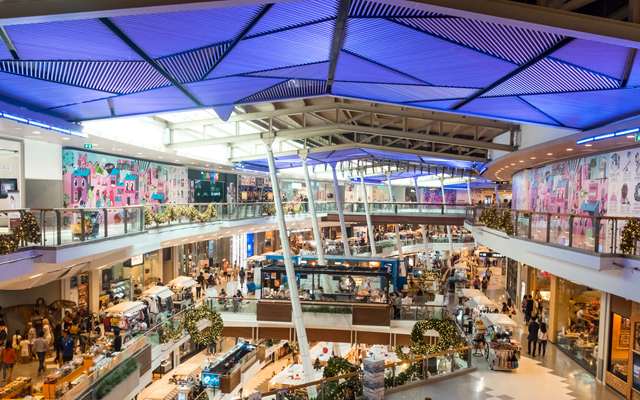
New attractions to be added to Phuket’s Central Festival mall extension
The increase has been attributed to what C9 refers to as “supercharged airlift”, with 23 new routes added to Phuket in May alone, 19 of which were from mainland China. Currently there are 33 cities in China that link to the destination.
C9 observed that a shift in geographic source markets over the past 10 years has brought with it rising demand for non-beach centric activities.
With the strong purchasing power of tourists, especially Chinese, Russians and Australians, more retail and tourism attractions are developing on the island. Resort-oriented retail is a rising force, with C9 data showing nearly 200,000m2 of Grade A net lettable area in the pipeline.
The mix of retail and tourism is most evident in the growth belt from Kathu to Patong, C9 stated.
Themed tourism attractions are also springing up in Phuket, including Vana Nava Water Park, Blue Tree Water and Entertainment Park, and Aquaria at the new Central Festival mall extension.
The changing mix of visitors is also reflected in the island’s hotel performance, with STR reporting that in 2018 upper midscale hotels have shown the highest demand growth of 10 per cent compared to the same period last year.
In the hotel sector, Phuket has a total of 1,744 tourist accommodation establishments with 84,427 keys as of 1Q2018. There are 36 new hotels in the pipeline with 27 properties affiliated with international hotel brands. Ten upcoming mixed-use properties will have hotel residences component, which accounts for 28 per cent of total incoming supply.
Projected to further fuel tourism diversification are plans for a second international airport to be added to the Greater Phuket region, with the Airports of Thailand set to invest an estimated US$1.8 billion in an airport just over the Sarasin Bridge in Phang Nga’s Khok Kloi area
Dubbing the second airport “a logical move”, as the current Phuket airport is already straining despite the addition of a new terminal last year. C9 expects the latest infrastructural development to create a broader Greater Phuket Tourism Triangle that includes Phang Nga Bay and the prime West Coast beach strip from Natai to Thai Muang on the mainland.
Work on the airport is reportedly set to start in 2019 and complete by 2025.
Thailand started the first four months of 2018 with international arrivals climbing 13.9% year-on-year to 13.7 million, led by growth from India and China.
Pongpanu Svetarundra, permanent secretary, Ministry of Tourism and Sports, shared at a press briefing that tourism income in January-April 2018 was 730.7 billion baht (US$22.8 billion), up 17.6% from the same period in 2017.
East Asia is the biggest source of arrivals for Thailand
The results in the first four months show growth coming from all regions except the Middle East, with declines in arrivals from the UAE, Saudi Arabia and Egypt.
Visitors from East Asia totalled about 8.9 million (+17.5%), Europe over three million (+9.8%), the Americas 599,431 (+3.6%), South Asia 607,379 (+15.2%), Oceania 296,741 (+0.3%), the Middle East 237,322 (-6.8%) and Africa 59,371 (+7.1%).
About 64.9% of total visitors originated from East Asia, making it the largest feeder region for Thailand. China, Thailand’s top source market, recorded 4.2 million.
South-east Asian countries generated over three million arrivals, with growth from Cambodia (+25.1%), Laos (+13.2%), Vietnam (+6.5%), the Philippines (+5.8%), Singapore (+4.4%), Indonesia (+3.7%) and Malaysia (+1.6%). The only declines were from Brunei (-9.2%) and Myanmar (-3%).
In Europe, Russia retained its status as the largest source market in the region with arrivals of 745,398, up 25%. Germany was the second highest source market with 386,951 (+7.7%), followed by the UK with 371,054 (+0.4%) and France with 342,825 (+3.7%).
Strong growth was also reported from East Europe (+14%) and Austria (+18.7%), Denmark (+8%), Finland (+8%), Italy (+7.7%) and the Netherlands (+7%); the exception was Sweden, which declined by 2.3%.
The main market in the Americas, the US, generated 396,330 arrivals (+7%). Arrivals from Canada were up 10.4% to 113,881. Declining source markets from Latin America include Brazil (-20.3%) and Argentina (-25.7%).
As for South Asia, India topped the list with arrivals up by 16.9% to 481,573. Other growing markets include Bangladesh (+19.4%), Pakistan (+2.7%) and Sri Lanka (+1.3%). Nepal (-0.4%) was the only market that saw a decline.
Small increases were seen from Oceania markets. Australian visitors were up 0.03% to 261,496; and arrivals from New Zealand increased 1.8% to 34,133.
Thailand started the first four months of 2018 with international arrivals climbing 13.9% year-on-year to 13.7 million, led by growth from India and China.
Pongpanu Svetarundra, permanent secretary, Ministry of Tourism and Sports, shared at a press briefing that tourism income in January-April 2018 was 730.7 billion baht (US$22.8 billion), up 17.6% from the same period in 2017.
East Asia is the biggest source of arrivals for Thailand
The results in the first four months show growth coming from all regions except the Middle East, with declines in arrivals from the UAE, Saudi Arabia and Egypt.
Visitors from East Asia totalled about 8.9 million (+17.5%), Europe over three million (+9.8%), the Americas 599,431 (+3.6%), South Asia 607,379 (+15.2%), Oceania 296,741 (+0.3%), the Middle East 237,322 (-6.8%) and Africa 59,371 (+7.1%).
About 64.9% of total visitors originated from East Asia, making it the largest feeder region for Thailand. China, Thailand’s top source market, recorded 4.2 million.
South-east Asian countries generated over three million arrivals, with growth from Cambodia (+25.1%), Laos (+13.2%), Vietnam (+6.5%), the Philippines (+5.8%), Singapore (+4.4%), Indonesia (+3.7%) and Malaysia (+1.6%). The only declines were from Brunei (-9.2%) and Myanmar (-3%).
In Europe, Russia retained its status as the largest source market in the region with arrivals of 745,398, up 25%. Germany was the second highest source market with 386,951 (+7.7%), followed by the UK with 371,054 (+0.4%) and France with 342,825 (+3.7%).
Strong growth was also reported from East Europe (+14%) and Austria (+18.7%), Denmark (+8%), Finland (+8%), Italy (+7.7%) and the Netherlands (+7%); the exception was Sweden, which declined by 2.3%.
The main market in the Americas, the US, generated 396,330 arrivals (+7%). Arrivals from Canada were up 10.4% to 113,881. Declining source markets from Latin America include Brazil (-20.3%) and Argentina (-25.7%).
As for South Asia, India topped the list with arrivals up by 16.9% to 481,573. Other growing markets include Bangladesh (+19.4%), Pakistan (+2.7%) and Sri Lanka (+1.3%). Nepal (-0.4%) was the only market that saw a decline.
Small increases were seen from Oceania markets. Australian visitors were up 0.03% to 261,496; and arrivals from New Zealand increased 1.8% to 34,133.
Amadeus has released its latest report – Journey of Me Insights: What Asia Pacific Millennial Travelers Want – which unveiled the behaviours and preferences of millennial travellers (18-35 years of age) across 14 markets in Asia-Pacific.
Millennials currently represent more than 45% of Asia-Pacific’s population, with 60% of the world’s millennials expected to live in Asia by 2020.
Conducted in collaboration with YouGov, the research surveyed 6,870 respondents, 45% of whom were millennials at the time the data was collected.
What does it take to win a millennial’s heart, mind, and wallet?
Embracing the new More so than the generations that have come before them, millennials are embracing new technology, experiences and ways of travelling. Forty-two per cent of millennials say they often use ride-sharing apps when they travel, and 35% frequently use sharing economy services for trip accommodation.
Millennials in India in particular have embraced the sharing economy more than their regional counterparts, with 75% using ride-sharing apps and 55% using home-sharing apps often or very often. On the other hand, millennial travellers in Japan are the least likely to use these services, with over 90% saying they never or seldom use these apps.
Targeting millennials’ desire for new experiences is a golden opportunity for travel providers. In fact, the research found that after recommendations that help them save money (37%), millennials are most interested in recommendations that expose them to new experiences (27%).
They are also open to travel providers sending them these recommendations or updates through alternative platforms. Twenty-three per cent of millennials say they prefer to be contacted via social media, which sits in second place behind e-mail (35%). However in countries like Thailand and Indonesia, social media comes up as the top choice for millennials, chosen by 50% and 34% of them respectively.
Karun Budhraja, vice president, corporate marketing & communications, Asia Pacific, Amadeus, said: “The millennial generation is indeed an extremely interesting generation. They grew up with the Internet and technology is second skin to them. They have an openness to new experiences and a willingness to rattle the status quo. They want different experiences in travel, so the industry must serve them differently.
“Travel providers will need to adopt new technology, new strategies, and above all, new mindsets if they want to secure millennial mind and market share. By understanding what drives Asia-Pacific millennials and what they value when they travel, businesses will be better placed to meet their needs.”
People over brands When asked who has the most influence over their travel planning, and where they receive the most relevant travel recommendations from, millennials choose family and friends, as well as traveller reviews.
Somewhat surprisingly, millennials ranked celebrities and social media influencers right at the bottom, even lower than brochures.
“While millennials may still look to influencers to curate trends, ideas and inspiration, I believe they are also becoming more sophisticated in how they evaluate them. With so many influencers becoming brands unto themselves, some of the authenticity that made them so appealing in the first place starts to get lost. ‘Real’ is more important than ‘perfect’, and that is an important lesson for the industry to understand,” added Budhraja.
Cautious or adventurous?
Millennials have long garnered a reputation for being bold and adventurous. The research finds this true in some areas, but less so in others.
Compared to older generations, millennials are less likely to avoid visiting a destination that has had a recent terror attack, political or social uprising, or the likelihood of a natural disaster like an earthquake. While 59% of baby boomers would avoid a destination where natural disasters are likely, only 51% of millennials say the same.
However, the research also finds that millennials are less open than older travellers to sharing their personal information with travel providers, in return for more relevant offers or personalised services. Meanwhile, 68% of baby boomers and 66% of Generation X travellers say they are open to sharing their information, while only 62% of all Asia-Pacific millennials say likewise.
The research further finds that Taiwanese (76%) and Indonesian (75%) millennials are the most open (76%), while Japanese (33%) and New Zealand millennials (45%) were the least open. This caution may be due to millennials being tech-savvy digital natives, and therefore more likely to be aware of security and privacy issues.
“While this research has highlighted a number of unique behaviours and preferences of APAC millennial travellers, it is also worth pointing out that there are just as many similarities between millennials and travellers from other generations. Personalisation is increasingly important, being real is key, and travellers want to be connected with the right content, through the right channel, and at the right time. What is certain is that the travel industry can only thrive if we put the traveller at the center of everything we do,” said Budhraja.
The Indian Hotels Company Limited (IHCL) will be relaunching its budget brand, Ginger, in the next few weeks, a move that follows its switchback to multi-brands in February.
Ginger, already a leading affordable hotel brand in India, would be given a new design and identity, and in its new phase could be a limited service, premium economy or a junior mid-scale hotel, said IHCL’s managing director and CEO, Puneet Chhatwal, during a Q&A moderated by this author at the South-east Asia Hotel Investors Summit in Bangkok on Tuesday. He believed the relaunch would help scale Ginger rapidly in the local market.
Scale is one of four reasons Chhatwal reversed a move made by his predecessor, Rakesh Sarna, early last year to concentrate everything under a single brand, Taj Hotels, Palaces, Resorts and Safaris.
Indian Hotels Company Limited’s Puneet Chhatwal being interviewed by TTG Asia’s Raini Hamdi at the South-east Asia Hotel Investors Summit, Bangkok; full interview here
When asked why he brought back the upper upscale Vivanta and the upscale Gateway, Chhatwal, who took up the IHCL mantle last November, said: “Scale cannot come only from luxury, and if you don’t have scale, you become irrelevant – even in your own home market. The growth, as per all studies, as per STR, is coming in the upscale and economy segments. Over and above that, we are present in all the luxury destinations – at least within the Indian sub-continent – with not one but multiple assets, so that would have meant the demise of growth.”
He added a one-size-fits-all approach does not work in a heterogeneous country like India, where there are “a lot of important secondary, tertiary and semi-tertiary markets and they can’t all afford to have luxury hotels like Taj”.
Third, margins are higher in limited service, which requires less resources. “So some of these brands help you drive margins and if your margins are higher, you’re less volatile, you’re a stronger company on the stock exchange, which we are,” he said.
Last but not least it’s about IHCL’s ‘honour’ culture. “You can’t just tell an owner with whom you’ve entered into an agreement for 20 years – ‘listen, now we have changed our strategy and we will do only one brand, thank you very much’ – I mean, there’s a legal obligation, there is a moral obligation, there is a collaboration obligation,” he said.
Chhatwal said the decision to revert to multi-brand was made by the entire management leadership, and that his predecessor must have had some reasons at the time to pursue the single-brand strategy. “At this cycle we’re in, we’re getting a little bit of tailwind; it makes sense to expand than contract,” he said.
When asked if his priority was to defend IHCL’s leadership in India or expand its international footprint, Chhatwal was clear the company would do the former but at the same time expand globally “slowly and carefully”, and in commercial capitals that have a strong connection with the Indian diaspora, citing cities such as Toronto, Manchester, Birmingham, Bangkok, Singapore and Kuala Lumpur as examples.
On hotel chain consolidation, he does not believe that legacy Taj will be acquired, though never say never. “Anything can happen anywhere in the world, but I do believe that Taj has a very special place in the hearts of the Tata Group. This was the second or third company that was launched and the story was, Mr (Jamsetji) Tata was refused entry into a hotel because he was not British (common across British India at the time). And that’s when he acquired Taj (Mahal Palace Mumbai in 1903) and named the company Indian Hotels Company Limited.
“I think there is culture, pride, legacy, sense of belonging. It’s a very strong name, one of the exceptions within the group that does not have a Tata name to it. So there must be some reasons for it,” said Chhatwal.
What about ICHL acquiring instead, in order to build scale? A source told TTG Asia that ICHL is in talks about an acquisition, but Chhatwal was only able to say: “We will always evaluate opportunities…”
During the session, Chhatwal also gave his take on the USPs Taj has when competing with the big boys for projects; on the fate of smaller hotel groups; on the need for smaller chains to collaborate, such as with the Taj and Shangri-La alliance; on how he’s taking the best of American, European and Asian styles of management into IHCL; on how IHCL builds loyal staff – watch the video here.
Indonesia’s Ministry of Tourism is refining its strategy to grow arrivals from India, with the market showing strong promise last year despite limited direct air connectivity.
Arief Yahya, Indonesia’s tourism minister, said in a statement: “India has become top five markets to Indonesia with the growth rate of 30 per cent, second highest growth rate after China (last year).”
Bali is currently popular but the ministry wants to help Indian agents promote other Indonesian destinations; pictured, Tanah Lot, a Hindu temple and tourist hotspot in Bali
Despite few direct air links between the two countries, arrivals from India last year totalled 485,000. In the first two months of this year, arrivals from India numbered 87,000, higher than the traditional markets of Japan (74,000 arrivals) and South Korea (63,000), according to the ministry’s data.
Commenting on the target of 700,000 arrivals from India this year, Nia Niscaya, deputy minister for tourism marketing development II (Asia, Africa, the Americas and Europe), said: “That is a high target to achieve. With limited seat capacity and direct service (Denpasar-Mumbai provided by Garuda Indonesia), we would like to optimise the available seats by making Singapore and Kuala Lumpur as hubs.”
The strategy to entice travellers to Singapore and Malaysia to extend their stays to Indonesia will be bolstered by the ministry’s Hot Deal packages to Batam-Bintam and Jakarta, as well as culture and heritage tours to Jogjakarta and beach resorts like Lombok.
In addition, the ministry is considering opening a Visit Indonesia Tourism Office (VITO) in Southern India, its third in the country after New Delhi and Mumbai.
Meanwhile, promoting destinations beyond Bali continues to be on the destination’s agenda.
“During our recent visit to India, major travel companies (Cox & Kings, Thomas Cook India, Yatra, MakeMyTrip and FCM Travel Solutions) told us Bali sold itself and asked us to come up with other destinations to promote. We plan to meet their needs,” Sigit Witjaksana, director of tourism marketing for Southern and Central Asia, Middle East and Africa, said.
Apart from participating at trade shows in India, the ministry intends to organise a sales mission to Mumbai, New Delhi, Calcutta, Chenai, Hyderabat and Ahmedabad in July.
Sigit said his department’s marketing budget was 17 billion rupiah (US$1.2 million). On top of that, the marketing communications department has three billion rupiah for digital marketing and ad placements for India.
Pandaw will late this year deploy the Orient Pandaw on an expedition along the Lower Ganges, its first cruise in India.
From December 23 to the end of April 2019, the Orient Pandaw will sail weekly from Kolkata to Farraka and back on a seven-night itinerary. It will re-commence the itinerary in July 2019 through to April 2020.
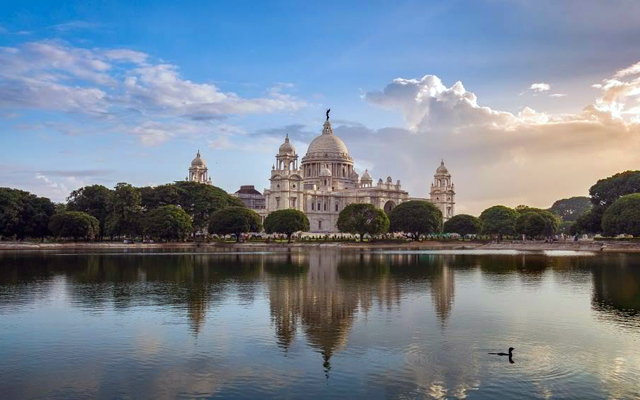
The Victoria Memorial in Kolkata, one of many monuments lining the Lower Ganges
Starting in Kolkata, the upstream itinerary will set sail at noon, passing the old Danish colony of Serampore to Barrackpore, with sights including the Semaphore Tower, Government House, the Temple of Fame and Flagstaff House.
Guests will on day two sail up to Chandernagore, a French possession until 1950, and visit the 18th century church and Dupleix’s House of the former Governor-General of French India.
On the third day, the ship visits Kalna, where guests will be taken by rickshaws to see some of Bengal’s terracotta temples, as well as the Shiva temple with concentric rings made up of 108 lesser shrines, before continuing on to the new ISKCON (International Society for Krishna Consciousness) temple in Mayapur.
After mooring near the brass-working village of Matiari, guests will start day four with a visit a charming riverside village, where they can interact with the locals and witness the process of beating out brass water pots and other vessels. Later, they will cruise on and visit the historic battlefield of Plassey.
Day five brings guests on a morning walk to the Khushbagh, a Mughal-style garden that encloses the tombs of Siraj-ud-Daulah – the last independent Nawab of Bengal – and his family.
The next morning, guests will experience rural India with a walk through the fields of the sleepy village of Baranagar to visit its three miniature terracotta temples.
Finally, on day seven, the ship will cruise to a mooring by the Farakka lock and guests will disembark and go on a full-day excursion by road to Gaur, near the town of Malda, or English Bazar.
The Orient Pandaw features thirty veranda staterooms on two decks, indoor dining, a deck bar, a movie and lecture theatre and a spa.
Prices for The Lower Ganges itinerary start from US$1,890 per person for a twin-sharing cabin. The price includes seven nights’ accommodation aboard the Orient Pandaw, local transfers, all excursions as stated on the itinerary, entrance fees, guide services (English language), main meals, jugged coffee, selection of teas and tisanes, local soft drinks, local beer, local spirits, mineral water, crew gratuities and cycling equipment.