Asia/Singapore Wednesday, 8th April 2026
Page 374

India’s visa waiver not enough to draw Indonesians amid destination knowledge gaps

0

India’s new visa-free policy granted to Indonesian travellers may not immediately translate into greater tourism interest from the market due to gaps in product knowledge, according to Indonesian outbound travel executives interviewed.

Putu Ayu Aristyadewi, group vice president marketing and communications of Smailing Tours & Travel, said that although India is familiar to Indonesians, information about the country as a tourist destination is still minimal, or even confusing.

“Most travellers only know the Taj Mahal. A question they frequently ask is ‘What’s after visiting the Taj Mahal?’” Putu Ayu shared.

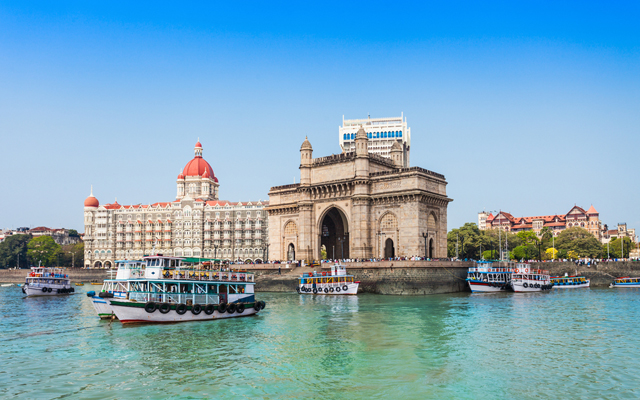
Gateway of India as seen from the Mumbai Harbour

What is needed now, she said, is tighter collaboration between the Indian NTO or the embassy in Jakarta and outbound travel companies in Indonesia.

Putu Ayu suggested: “The Indian NTO needs to give product knowledge to agents. They should discuss with us about their products, or better still host fam trips.”

Pauline Suharno, deputy secretary general of the Association of the Airline Ticketing Companies in Indonesia, who is also managing director of Elok Tour, expressed similar sentiments.

“It would help if agents could be educated about what can be done in India, e.g. destinations and attractions, best months to visit, what festivals are there,” she remarked.

Pauline and Putu Ayu recommended that education for agents has to be done consistently rather than occasionally, so that they can keep their products up-to-date.

Putu Ayu explained: “For example, India is currently promoting yoga and pilgrimage tours for Hindus. For pilgrimage tours, which is the best route? Are there any historic Hindu sites to visit? Such information should be (passed on) to agents.”

In addition to product knowledge, Tourism India also needs to bring together agents in Indonesia with DMCs in India, she added.

“We also need to meet local agents in India to take care of our guests. Honestly, our DMC contacts in India are still limited.”

Meanwhile, Edhi Sutadarma, director of Golden Rama Tours and Travel, perceives India as a new destination with huge adventure travel potential, having received several queries from millennials who were seeking adventure travel.

“Millennial travellers are more independent. They look for information, buy tickets and travel on their own. However, some of them come to us looking to buy land tours in India, I think this is for security reason, as travellers are concerned about safety and hygiene in India.”

Indonesia’s huge pool of youth travellers is a potential market segment for India, Edhi said. “If we educate these young travellers, I believe the market will grow. Millennials are looking for new things and India is a new destination (that is interesting to them).

He shared that the visa relaxation presents an opportunity to promote the destination in Indonesia.
As longhaul arrivals into Europe rebound, traditional destinations make comeback

0

Total international arrivals into Europe grew by 6.1% in 1Q2018, led by 12.5% growth seen from longhaul markets, according to the Air Travellers’ Traffic Barometer produced by European Cities Marketing and ForwardKeys.

Eastern destinations are “still growing at incredible rates” and traditional destinations such as Rome make a comeback, the report summarised.

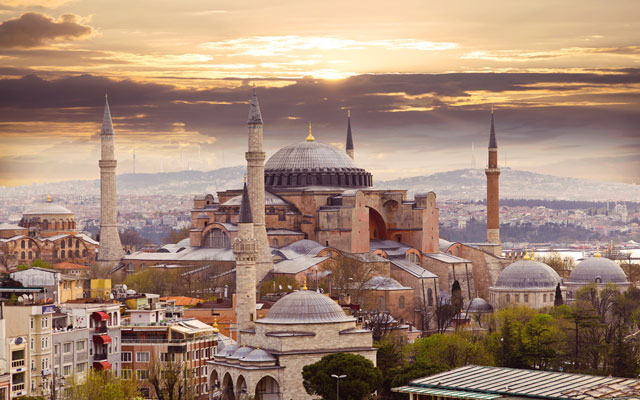
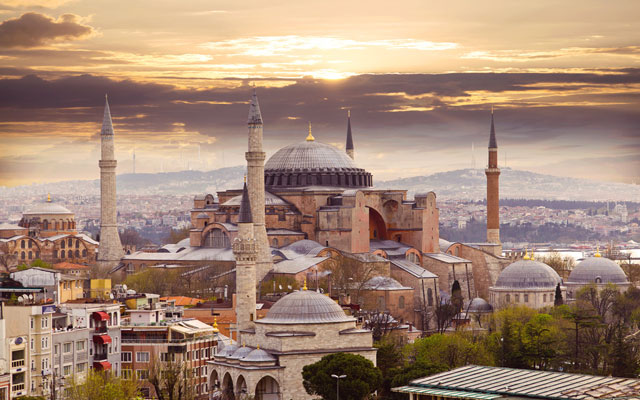
Istanbul (Hagia Sophia pictured) has jumped two percentage points to become third most popular longhaul destination

The top two destinations for longhaul travellers, London (18%) and Paris (16%), kept the same shares as in the previous quarter. Istanbul’s immense growth has led it to become the third top destination, with a share increase of two percentage points.

Overall, Seville jumped from a 18.2% increase in arrivals to 33.1%. New cities to the top 10 growing destinations compared to 4Q2017 include Rome, Budapest and Amsterdam, which mark a return to more traditional destinations.

Arrivals from most regions maintained growth rates above 10%. The Middle East (+18.1%) and Central & South America (+17.3%) are the regional markets leading in arrivals growth, while intra-European travel showed moderate growth.

The traveller profile of longhaul arrivals maintained a growing “leisure-related behaviour”, the study revealed. This is indicated by the larger pax per bookings growing the most, as well as lead times of greater than 120 days, increasing more than any other category.

In 2Q, although bookings for intra-European travel is seeing a decline of 3.6%, longhaul arrivals, ahead by 8.3%, are still making up for this.

The robust growth seen last quarter has slowed down, partly because the rebound from the terrorism-related crashes has ended. Istanbul (+50.5%) is again the most promising destinations in 2Q, appearing in both top 10 rankings by volume and by performance.

Swiss destinations Geneva and Zurich are new additions to the 10 fastest growing destinations in forward bookings, possibly thanks to the recent depreciation of the Swiss franc, making Switzerland a more affordable destination.

Niseko sees double-digit growth in foreign visitors: C9

0

Foreign visitor arrivals into Japan’s Niseko grew 17% year-on-year in 2017 on the back of growing direct connectivity from more cities, according to C9 Hotelworks’ Niseko Property Market Update 2018.

In terms of five-year CAGR, the destination saw an increase of 16%.

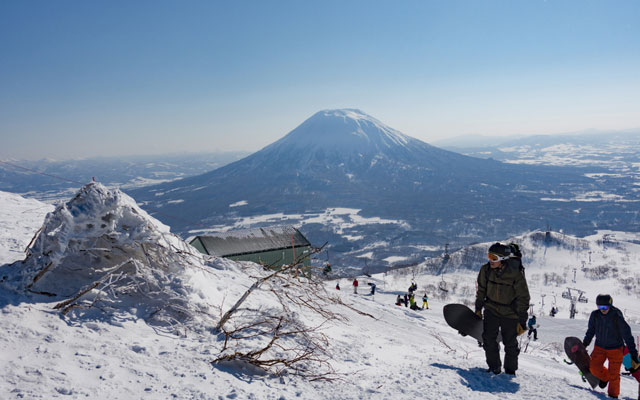
Niseko is a popular winter destination

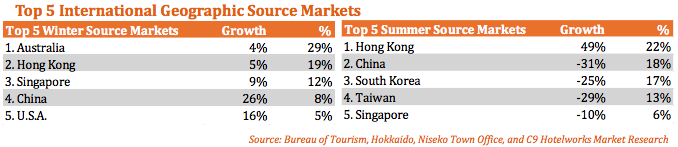
Last year, the summer season accounted for 48 per cent of total yearly visitors. Notably, the destination’s top five geographical source markets for summer travel are all from Asia – namely Hong Kong, China, South Korea, Taiwan and Singapore.

However, among the top summer source markets, Hong Kong was the only one that saw growth (+49%).

Despite China’s impressive five-year CAGR of 32 per cent – attributable to flights from eight Chinese cities to New Chitose Airport – the market saw the largest plunge among the top summer origin markets (-31 per cent) in 2017.

Looking forward, C9 projects the short-term impact of new Japanese legislation ‘minpaku’ for short-term residential rentals to ease and be favourable by the year end. Meanwhile, hospitality-led condominium development is expanding outside Niseko to nearby alpine resort areas in Kiroro and Rusutsu.

Marked increase in India’s visa fees could deter M’sians from visiting

0

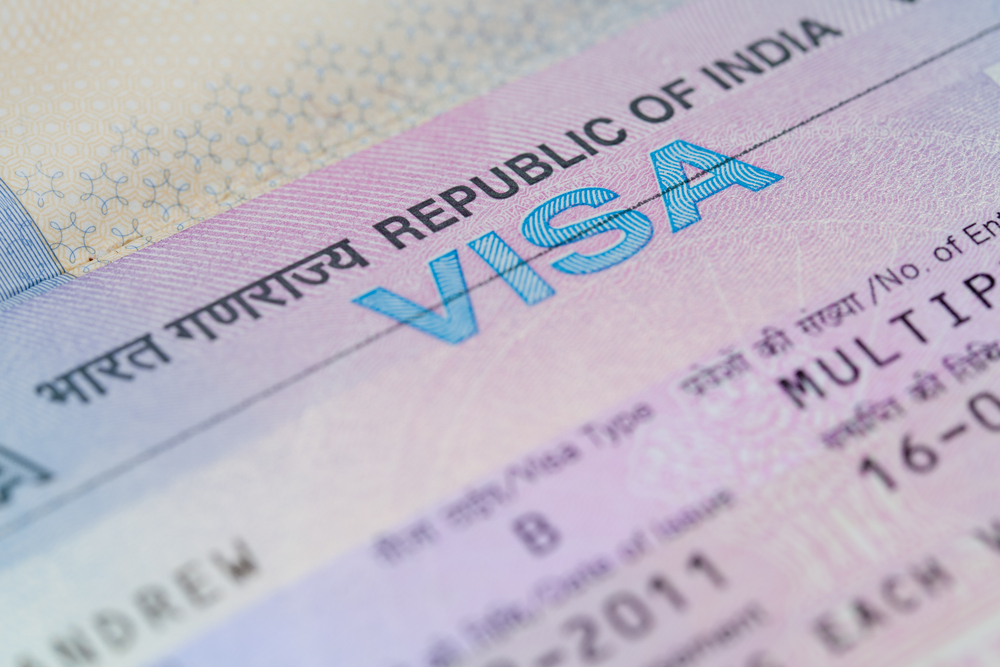
India has hiked the tourist visa fees for Malaysians to RM462.60 (US$156.30) since July 1, leading some trade members to speculate that leisure outbound interest to the destination may suffer.

The fee hike will also come with an increased stay period covered by the multi-entry visa, from the existing six months (at a price of RM194.60) to a year.

Malaysia’s outbound travellers may be more inclined to visit other countries in lieu of visa hike

On June 25, the eVisa fee was also increased from US$50 to US$80, valid for 120 days.

Anand Arun, development director at Anand Travels, said the sudden increase in visa fee caught the travel trade by surprise.

He shared: “It will definitely have an impact on Malaysian families travelling to India during the peak year-end travel period. Sri Lanka and Nepal stand to gain as their visa fees are much cheaper. It costs only RM95 for 15-day single-entry visa to Nepal.”

K Thangavelu, president, Malaysian Indian Tour & Travel Association (MITTA), expects the new visa application fee to deter Malaysians who intend to visit India once for sightseeing and who are not regular visitors.

He added: “Book early and you can get low-cost flights to Indian cities to Tiruchirappalli and Kochi for less than the visa price.”

Together with other travel associations in Malaysia, MITTA plans to meet with the Indian High Commissioner in Kuala Lumpur to request for the earlier fee of 194.60 ringgit to be reinstated.

The processing fee was raised to RM457 on April 1, 2017, Thangavelu shared, but after talks between MITTA and the Indian High Commissioner to Kuala Lumpur, the previous fee of RM194.60 was reinstated.

International tourism exceeds expectations, with APAC leading growth

0
International travel saw strongest growth in seven years

International tourist arrivals grew six per cent in the first four months of 2018, compared to the same period last year, exceeding UNWTO’s forecast for 2018.

Growth was seen in all regions, led by Asia-Pacific (+8%) and Europe (+7%). Africa (+6%), the Middle East (+4%) and the Americas (+3%) also recorded sound results. Earlier this year, UNWTO’s forecast for 2018 was between 4-5%.

Growth in Asia-Pacific was driven by South-east Asia (+10%) and South Asia (+9%), while the increase in Europe was pulled ahead by the destinations of Southern and Mediterranean Europe, as well as Western Europe (both +8%).

In the Americas, strongest results came from South America (+8%). The Caribbean (-9%) is the only sub-region to experience a decrease in arrivals during this period, weighed down by some destinations still struggling with the aftermath of the hurricanes of August and September 2017.

UNWTO commented that even with limited information coming from the Middle East and Africa, the results were signs of rebound in the former region and consolidation of growth in the latter.

“International tourism continues to show significant growth worldwide, and this translates into job creation in many economies. This growth reminds us of the need to increase our capacity to develop and manage tourism in a sustainable way, building smart destinations and making the most of technology and innovation”, said UNWTO secretary-general, Zurab Pololikashvili.

Meanwhile, confidence in global tourism remains strong according to the latest UNWTO Panel of Tourism Experts survey. The panel’s outlook for the May-August period is one the most optimistic in a decade, led by particularly upbeat sentiment in Africa, the Middle East and Europe.

With rising affluence, Asians travel farther and take longer trips

0

Rising affluence among a new generation of Asia-Pacific consumers is estimated to add nearly 90 million new travellers by 2025, with travellers more likely to take longhaul trips as income levels gradually rise, according to the Visa Business and Economic Insights Global Travel Study conducted with Oxford Economics.

“Travel patterns are changing among Asia-Pacific consumers. As household income growth continue to outpace economic growth in most countries in the region, overseas travel is not only becoming more common, people are also travelling more often and looking at further destinations such as Europe and the US,” said Glenn Maguire, principal Asia Pacific economist, Visa.

An Asian traveller on the Loma del Pliegue Tumbado trail in Patagonia, Argentina

In Visa’s analysis of 250 cities around the world, it was shown that once a city achieves critical mass of travelling-class household, the likelihood for increased overseas travel rises significantly.

Asia-Pacific households now account for one in three global travelling households, up from one out of four in 2006.

In the case of China, the number of cities reaching the tipping point in cross-border tourism is likely to double by 2025, adding nearly 80 million more households to the global travelling class.

Within the affluent in Asia-Pacific, Singapore travellers have the highest propensity (52%) for longhaul travel. Even among markets with growing middle-income households such as Indonesia (38%) and India (13%), regional travel destinations are becoming popular in line with income growth.

Maguire added: “As more Asia-Pacific consumers begin exploring beyond their national borders, these present opportunities as well as challenges for the tourism industry including travel providers and infrastructure operators including airports, hotels and attractions.

“Our analysis shows that China’s major cities have emerged as key Asia-Pacific destinations. This highlights the fact that China is becoming an increasingly important inbound market, as well as providing the majority of outbound tourist flows. This trend will continue as tourism infrastructure in China develops further.

Outside of Asia-Pacific, international destinations for Haj pilgrimage often marks the first international trip made by Asia-Pacific’s emerging travelling class, he continued.

India introduces free e-visa for Indonesians

0

India has rolled out free e-visas for Indonesians since June 18, the Indian Embassy in Jakarta says on its website.

This announcement follows Indian prime minister Narendra Modi’s visit to Indonesia last month to commemorate 70 years of bilateral relations between both countries, with tourism expected to be a beneficiary resulting from the event.

60-day e-visas now available to Indonesians visiting India

Indonesians may now apply for tourist, business or medical e-visas through the evisaindia.org website. Valid for 60 days from the arrival date, the e-tourist and e-business visas offer double entry, while the e-Medical allow for triple entry.

Visitors are required to have passports valid for at least six months from the date of arrival in India, and have either return or onward tickets to another destination.

Among the 25 airports and seaports that Indonesians can enter using e-visas are Jaipur, Kolkata, Delhi, Goa and Mumbai.

Bangkok’s Chinatown morphing from ethnic enclave to hip tourist hotspot

0

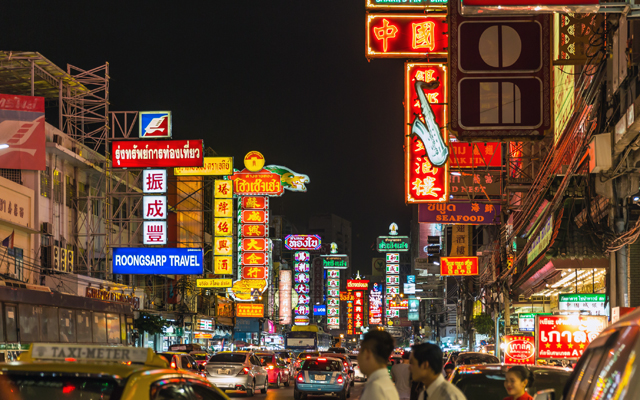
The rapid transformation of Bangkok’s Chinatown is turning it from “a centre of Chinese immigrants in Thailand” to “one of the hippest areas in Bangkok”, C9 Hotelworks’ managing director Bill Barnett notes in a blog post.

A sign of the pace of change, Barnett observed that a few years ago, millennials still viewed Chinatown as an “ancestor’s area where elders meet up and have their Asian breakfast”. While the traditional food scene still exists, the average age of visitors has dropped substantially and visitors now are becoming bar or café hoppers.

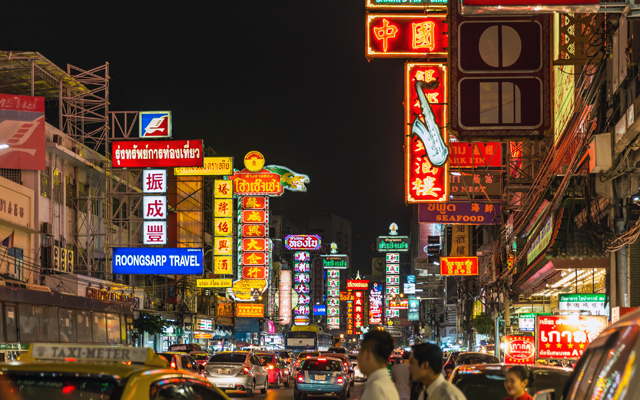
Yaowarat Road, also known as the main street of Bangkok’s Chinatown

It won’t be long before this transformation extends into tourism, with the boutique hotels, hostels, hip bars and cafes becoming increasingly prominent features of Chinatown.

Barnett wrote: “Based on our research and market interviews with hotels in the area, the number of tourists visiting Chinatown has sharply increased over the past few years. Thus, hoteliers in the area foresee that Chinatown will be reinvented over the next five years.”

The average daily rate (ADR) of boutique hotels in Chinatown ranges from 2,000 to 6,000 baht (US$62-187), with occupancy averaging over 75 per cent. But due to the constraints on development scale, hotel inventories for the existing hotels range from a handful up to 70 or 80 rooms.

There has not been an international hotel brand in Chinatown until recently, with a Holiday Inn Express expected to be completed by the end of this year.

Meanwhile, Thailand-based Burasari Group, which owns and manages Shanghai Mansion Bangkok, has signed an agreement to manage a new 128-key conversion property in Chinatown early this year, marking itself as a leading operator in the area.

While the hotel and lifestyle space shapes up, public transportation remains a “a key factor” weighing on tourism potential, according to Barnett. Scheduled to open to the public in mid-2019, Wat Mangkon MRT station is the nearest mass transit connection to Chinatown, sitting across from the upcoming Holiday Inn Express. Yet, “MRT does not carry the same clot as the BTS since many tourists are not familiar with the MRT”, Barnett pointed out.

Majority of Indian millennials merge altruism with travel

0

An overwhelming proportion of young Indians are motivated to make sustainable holiday choices and merge altruism with travel, according to a Cox & Kings study released in conjunction with World Environment Day.

The results of the study were derived from surveys carried out in key Indian cities including Delhi, Mumbai, Chennai, Kolkata, Bangalore, Ahmedabad and Thiruvananthapuram, with the 5,000 youth respondents aged between 20 and 35 years.

Young Indian travellers try to help the environment by curbing their carbon footprint and opting for sustainable holidays

While the service providers on one end are modifying business models to contribute positively, travellers are also becoming more conscious than ever, Cox & Kings observed.

Close to 72 per cent of the participants said they prefer to hire a bicycle or simply take a bus/train to explore while on holiday in Europe. While there is very little that can be done to contain the greenhouse emissions by air travel, millennials in India wish to compensate by choosing more environmentally-friendly ground transport modes.

Places to eat are chosen either through local or online research. About 67 per cent of respondents take more to restaurants that provide locally sourced food, and criteria such as minimal to no usage of single-use plastics.

The demand for green hotels and accommodation facilities is also on the rise. An impressive 89 per cent of respondents indicated they have chosen their stay post researching sustainable practices.

Be it for luxury or budget accommodations, the young Indian explorer chooses the one that prioritises local community, local procurement of resources, solar power usage, waste treatment facilities and technology-intervention to minimise carbon footprint.

Moreover, 59 per cent of survey participants mentioned they reused their bath towels and asked for a no replacement from the hotel staff.

Voluntourism, an emerging trend of travel linked to doing good while on the go is also a big hit. About 92 per cent of young Indians expressed interest in participating in plogging events (picking up trash and jogging), rural tours, farming trips, NGO visits, cause-based trips and sustainable treks/hikes.

For many, overtourism is a concerning phenomenon. About 74 per cent of respondents avoids destinations that are strained by mass tourism.

Spewing volcano in Hawaii deters visitors, save the Japanese

0

Following ongoing eruptions in recent weeks at Hawaii’s Kilauea volcano, ForwardKeys reported a slump in travel bookings from most of Hawaii’s top feeder markets in the month of May – with the exception of Japan, which bucked the trend with bookings up 10.6 per cent.

After the eruption on May 3, bookings for the period May 3-31 period slumped by 9.8%, with Canada down 23.2%, Australia down 32.2%, China down 39.8%, Germany down 47.7% and New Zealand down 27.5%.

Japan typically a crisis-sensitive travel market, but not in this instance

With Japan the one source market to buck this trend, ForwardKeys CEO and co-founder Olivier Jager said: “Normally, the Japanese market is super-sensitive to crisis situations and it is the first to cancel when any form of trouble occurs in a destination. Our hypothesis is that because Japan sits on the ‘Pacific Ring of Fire’ and has over a hundred active volcanoes, it is so used to earthquakes and volcanic eruptions that they cease to be newsworthy.

“Indeed, the situation in Hawaii has featured less in the news in Japan than it has elsewhere. An analysis of online news clips of the Kilauea eruption revealed that media exposure in Japan was just 0.2% of total exposure worldwide.”

While bookings in May suffered, over the coming five-month period to the end of October, forward bookings are still 2.2 per cent ahead of where they were at this time last year.

Bookings for June and July are just 0.5 per cent and 1.6 per cent behind and bookings for August, September and October are up 6.7 per cent, 7.9 per cent and 2.3 per cent respectively, which led ForwardKeys to suggest that the tourism outlook could be less worrying than might have been feared.

Analysing Hawaii’s most important forward bookings by origin market, Japan is 3.2% ahead, Australia 6.7%, Canada 3.1%, Germany 6.8% and New Zealand 27.0%.

A major driver of bookings from New Zealand has been a substantial increase in capacity, with nearly 60% more seats available in the June – October period.

The great disappointment is China, from where bookings are currently 18.9% behind for the period to the end of October.

Jager concluded: “Given the magnitude of media coverage, forward bookings to Hawaii are holding up surprisingly well. We are also aware that the vast majority of Japanese and other international visitors to Hawaii stay in Honolulu, which is on a different island from the one where Kilauea is erupting.”