Asia/Singapore Wednesday, 8th April 2026
Page 371

HKTB, Cathay Pacific extend reach into tech-savvy India with Klook partnership

0

The Hong Kong Tourism Board (HKTB) and Cathay Pacific have partnered Klook, an in-destination travel booking platform giant, to woo Indian travellers.

This represents a significant step as the tourism players seek to gain more visibility with FITs in India’s smart tech-savvy populace. The country has an outbound market of around 23 million tourist departures.
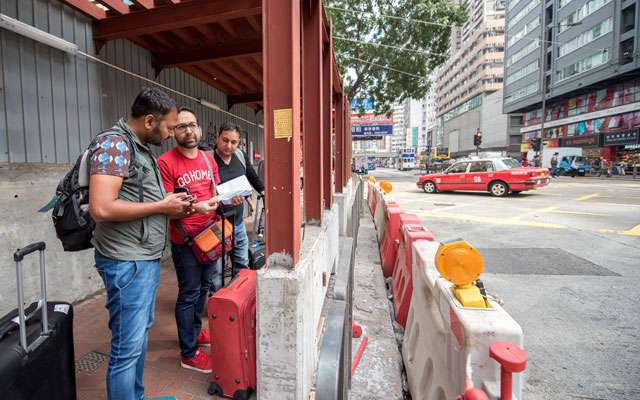
Indian tourists in Hong Kong

As part of the joint promotions, Klook is offering up to 60 per cent off on all Hong Kong products, ranging from attractions, tours, local transport, must-eats, and more.

Individuals can book through the free App (Android and iOS) or website, which is being made available till mid-October.

Travellers must book their flights with Cathay Pacific or Cathay Dragon, and use the booking number on the site to enable them to access discounts.

With the collaboration, Klook’s platform now houses a microsite featuring Hong Kong’s recent campaign theme – Discover Hong Kong Like A Local – where travellers can book experiences.

Puneet Kumar, senior manager, market development (India) of HKTB said: “Discover Hong Kong Like a Local focuses on promoting Hong Kong stories and experiences through authentic Indian voices to engage young and affluent Indian traveller… Our partnership with Klook and Cathay Pacific Airways allows Indian travellers to design their Hong Kong trip to explore Hong Kong like a local.

“This year we are introducing our living local culture through walking tours in rejuvenated districts like Old Town Central and Sham Shui Po, Great Outdoors through soft adventure activities such as hiking trails and cycling routes, dining & nightlife experience through roof top bars, Michelin star rated street food stalls, unique dining concepts and Hong Kong Wine & Dine Festival, etc.”

Commenting on the partnership, Anita Ngai, chief revenue officer of Klook, said: “Hong Kong continues to gain popularity and attract travellers from India. On Klook, 30 per cent of users (originate from) South-east & South Asia and have seen a tremendous growth from India where travellers are interested to experience different products that cater to their preferences.


Koh Samui’s measured approach to growth pays off in hotel performance: C9Despite recording strong growth in international passenger arrivals in recent years, C9 Hotelworks says the Koh Samui remains a “calm in the middle of a gathering storm” as most of Thailand’s resort destinations face an onslaught of mass tourism. A new report by C9 showed that international passenger arrivals at Koh Samui’s airport over five years doubled in 2016, rising another 15% in 2017 over the previous year. Two factors that come into play in the airlift is Bangkok Airways’ proliferation of codeshare agreements along multiplication of more regional direct routes, C9 says. [caption id="attachment_37999" align="alignnone" width="640"] Angthong national marine park, Koh Samui[/caption] C9 pointed out that while LCCs have tapped into Asia’s soaring consumer class in most destinations, creating dizzying growth numbers, the island’s privately-owned airport has allowed for poised and sustained development over the past five years. In Koh Samui, airlift, luxury hotel brands and a developing wellness sector are among the factors that are “boding well for a sustainable growth profile”, according C9. Citing figures from STR, C9 observes the domino effect of the various factors at play on the defined uptick in Koh Samui’s hotel performance over the past three years. Numbers from the Thai Hotels Association reflect a market-wide RevPAR increase as of the end of June of 7%, comparing year-on-year figures. C9 Hotelworks managing director Bill Barnett said the island’s appeal to upscale travellers stems from its barefoot luxury makings, complemented by global brands such as Four Seasons, W, Conrad, InterContinental and the recently opened Ritz-Carlton, but also a rising tide of wellness focused resorts. “According to market research, wellness properties such as Kamalaya, Samahita and Vikasa attract year-round visitors, have strong appeal overseas, and trade far less seasonally than many of the legacy properties,” he continued. “Not only is occupancy a strong point but a longer average length of stay, loyalty in terms of returning guests and direct booking are key attributes.” Looking ahead, C9’s research points out the growing influence of mainland China which is linked to Bangkok Airways plan to expand airlift to that region. This trend can be seen in airport international passenger arrivals that by the end of June this year saw Chinese grow by 58%. One of the traditional geographic source markets Germany also saw a year-on-year spike of 35% for the same period.

0

Despite recording strong growth in international passenger arrivals in recent years, C9 Hotelworks says the Koh Samui remains a “calm in the middle of a gathering storm” as most of Thailand’s resort destinations face an onslaught of mass tourism.

A new report by C9 showed that international passenger arrivals at Koh Samui’s airport over five years doubled in 2016, rising another 15% in 2017 over the previous year. Two factors that come into play in the airlift is Bangkok Airways’ proliferation of codeshare agreements along multiplication of more regional direct routes, C9 says.

Angthong national marine park, Koh Samui

C9 pointed out that while LCCs have tapped into Asia’s soaring consumer class in most destinations, creating dizzying growth numbers, the island’s privately-owned airport has allowed for poised and sustained development over the past five years.

In Koh Samui, airlift, luxury hotel brands and a developing wellness sector are among the factors that are “boding well for a sustainable growth profile”, according C9.

Citing figures from STR, C9 observes the domino effect of the various factors at play on the defined uptick in Koh Samui’s hotel performance over the past three years. Numbers from the Thai Hotels Association reflect a market-wide RevPAR increase as of the end of June of 7%, comparing year-on-year figures.

C9 Hotelworks managing director Bill Barnett said the island’s appeal to upscale travellers stems from its barefoot luxury makings, complemented by global brands such as Four Seasons, W, Conrad, InterContinental and the recently opened Ritz-Carlton, but also a rising tide of wellness focused resorts.

“According to market research, wellness properties such as Kamalaya, Samahita and Vikasa attract year-round visitors, have strong appeal overseas, and trade far less seasonally than many of the legacy properties,” he continued.

“Not only is occupancy a strong point but a longer average length of stay, loyalty in terms of returning guests and direct booking are key attributes.”

Looking ahead, C9’s research points out the growing influence of mainland China which is linked to Bangkok Airways plan to expand airlift to that region.

This trend can be seen in airport international passenger arrivals that by the end of June this year saw Chinese grow by 58%.

One of the traditional geographic source markets Germany also saw a year-on-year spike of 35% for the same period.

Growth in intended Thai travel spend leaps ahead of global average

0

Thais’ intended travel spend is growing faster than the regional and global average, according to Visa’s Global Travel Intentions Study, which also found that most travellers from the market are using cards rather than cash for their pre-trip payments.

The study examines international travel trends and behaviour of 17,500 travellers from 27 countries around the world.

Thai travellers favour credit cards

The study show that the intended travel spend of Thais have surged 51% ahead, compared to Asia-Pacific (46%) and global travellers (36%).

The average Thai traveller spends US$1,502 per trip and that is expected to increase to US$2,252 for future travel, based on respondent feedback. On average, Asia-Pacific and global travellers spend more, US$ 1,677 and US$1,793 respectively, but see lower movement in future travel expenditure.

Suripong Tantiyanon, country manager, Visa Thailand, said: “From our conversation with different players in the tourism industry, an increase in intended spending of Thai travellers can be attributed to the fact that there are more financial products today than ever before. They are more sophisticated and better suited to travellers’ needs, with added benefits and privileges. As a result, Thai travellers are more confident and willing to spend more.”

The study also revealed that the use of payment cards is prevalent especially during the pre-trip stage. Three in four (76%) Thai travellers reportedly prefer and use payment cards for pre-trip expenditures, such as flight and hotel reservation, compared to cash at 52%.

Respondents cited their preference towards payment cards are due to promotion, lower transaction fees, better rewards for international usage and higher security.

Despite the fact that cash is used by all Thai travellers at some point during their trip, credit cards are also heavily featured at 67%. A quarter of Thai travelers use a different card to their usual one whilst abroad, basing their decision on transaction speed, wider acceptability at international retailers, lower fees and better rewards.

Additionally, 26% of Thai travellers would have spent more with wider card acceptance.

Interestingly, the use of digital wallet is fast emerging, with a quarter of Thai travellers having used it at their destination. Solo and bleisure travellers, in particular, are the heavier users of digital wallets at 41%.

“It is exciting to see travellers willing to spend and venture overseas more and we believe that the payment industry continues to have an important role to play,” commented Suripong.

“That is why it is important they are not limited to a handful sources of fund or few ways to their payment will be accepted. Travellers’ needs and behaviours are inherently diverse therefore driving adoption and usage of payment form factors, including mobile application, QR code or plastic cards, which will be key to sustaining the growth of the industry in the long run.”

Club Med uncovers Asia-Pacific’s snow hunters

0

The snow holiday market has seen rapid growth in Asia-Pacific, and continues to be dominated by the higher-income travellers, according to the region’s first snow holiday report launched by Club Med.

The study, supported by market research specialist Insightzclub, sampled 5,500 respondents across 11 markets from China to Australia.

In the last three years, there were 238 million travellers in the region’s snow holiday market – and over half (138 million) were recorded in the last 12 months.

Japan is a top choice for a snow holiday in the region; Tateyama, Japan pictured

Top snow hunters in Asia-Pacific
Not surprisingly, China is the largest market of snow enthusiasts, followed by India and Japan.

However, markets with little or no snow such as Hong Kong, Singapore and Indonesia are showing strong growth, albeit from a smaller base, as they seek more experience-based holidays and fresh, clean air.

Currently snow holidays remain the preserve of the new affluent class and above. Some 85% of Asian snow holiday goers enjoy a household income of US$4,000 or more – 33% higher than the comparable general Asia-Pacific population.

While the average age of the snow holidaymaker is 38 years old, countries with large millennial populations such as China, Malaysia, Indonesia and India are a younger average age of 34 years old. Japan is the oldest average age of 45 in line with its national demographic.

Women hit the slopes
Notably, while holidays are traditionally male dominated, the report shows some markets pointing to a strong female bias and growing interest in outdoor snow adventures beyond skiing and snowboarding.

Hong Kong (57%), Singapore (56%), Malaysia (58%) and Australia (54%) led the ranking bias towards more female snow holidaymakers, while Japan (83%) and India (70%) were clear male strongholds.

Beyond winter sports
Unlike in North America and Europe markets which are very ski and snowboard centric, Asia-Pacific travellers are looking for a much more diverse snow experience, sometimes with no ski/snowboard practice at all.

With food at the heart of many Asian cultures, it is not a surprise to see eating local delicacies (53%) top the list, followed by spending time with family and friends (51%) and other mountain fun activities (50%) rounding off the top three.

Local attractions (47%) and contact with nature (47%) are also popular considerations. Spa makes into the top 10 activities for a well-rounded holiday with resorts expected to be well-equipped with access to all the necessary facilities.

Significantly, 29% also cited doing nothing as a reason to go to a mountain destination indicating a desire to just get away from it all and enjoy their environment.

Where snow hunters are going
Nine out of 11 markets reported Japan as their top choice for a snow holiday in the region.

Behind Hokkaido, resorts in South Korea were attractive across Asian markets, ranking second while the nascent Chinese snow holiday scene came in a strong fourth. With the conclusion of the Winter Olympics, PyeongChang in South Korea in 2018 and the Beijing Winter Olympics in 2022, interest in both these destinations continues to be fuelled.

The surprise came from Switzerland, ranking third regionally and first among longhaul destinations.

For Indian snow enthusiasts, Switzerland was the most popular destination, partly fuelled by the prominence of the country in its Bollywood movie scene. St Moritz in Switzerland was the top longhaul destination for Asians looking for a snow getaway.

IATA calls on India to address infrastructure constraints, policies

0

IATA has called on the government of India to maximise the potential contribution of aviation to India’s development by addressing infrastructure constraints and government policies that impose excessive costs on aviation.

Growth forecasts for India indicate a trebling of passenger demand by 2037 when some 500 million people are expected to fly to, from or within India. Already, aviation supports 7.5 million Indian jobs and Rs30 billion (US$419 million) of GDP (1.5 per cent of the economy).

Returning Indian travellers at Indira Gandhi International Airport

The financial struggles of India’s airline industry put the stable development of connectivity at risk, IATA stated, further pointing out that India’s carriers are suffering a “double-whammy” of steeply rising fuel costs and the decline in the value of the Indian rupee.

The rise in fuel costs is particularly acute for Indian carriers for which fuel makes up 34 per cent of operating costs — well above the global average of 24 per cent.

“While it is easy to find Indian passengers who want to fly, it’s very difficult for airlines to make money in this market. India’s social and economic development needs airlines to be able to profitably accommodate growing demand. We must address infrastructure constraints that limit growth and government policies that deviate from global standards and drive up the cost of connectivity,” said Alexandre de Juniac, IATA’s director general and CEO.

De Juniac’s remarks came during the opening address at the International Aviation Summit in Delhi, co-hosted by the Indian Ministry of Civil Aviation, the Airports Authority India and IATA to commemorate the approaching milestone of 50 running months of double-digit domestic growth for Indian aviation.

He called for work to develop a comprehensive and strategic masterplan for India’s airports, to open Navi Mumbai as quickly as possible as “urgent relief is needed for Mumbai’s severe capacity bottleneck”.

IATA also encouraged the Indian government to support the broad implementation of its One ID initiative, which uses biometric identification (similar to India’s Aadhar identity card) to save time by eliminating the need for repeated document checks in airports.

Another recommendation is for India to use military airspace to expand airspace capacity for civil operations, with IATA citing the success of a conditional airway opening through restricted airspace over Bhuj.

IATA also expressed its concerns on government proposals for concession contracts at newly developed greenfield airports. “Flexible parameters should be set that are regularly reviewed by a regulator. And we know from bitter experiences in Brazil, Australia and elsewhere that selecting the company that simply proposes the highest concession fee does not yield good long-term results,” said de Juniac.

In addition, the association encouraged the government to look at ways to improve India’s competitiveness such as by zero-rating GST for international travel in line with ICAO principles and international obligations.

And to create a more competitive market for jet fuel, IATA suggests that India adds domestic uplift to the GST framework with full input tax credit allowed, removes fuel throughput fees in line with global best practice, increases competition with common-use open-access infrastructure, among other means.

Indonesia tourism determined to expand air connectivity, outreach with India

0

After recording strong growth in tourist arrivals from the Indian market in the first eight months of 2018, Indonesia is now stepping up efforts to improve air connectivity between the two countries.

“We are working to renew the air services agreement between the two countries to have more flights. The negotiation for renewing air service agreement will begin this year. We are pushing for direct flights between New Delhi-Jakarta sector,” Sidharto Suryodipuro, Indonesian ambassador to India, said during the New Delhi leg of a sales mission organised by the Ministry of Tourism of Indonesia.

An additional frequency is expected to be added on Garuda’s Denpasar-Mumbai route, launched earlier this year

The ambassador shared that one major Indian private airline and another Indonesian carrier are looking to mount direct flights between the two countries. Presently, no Indian airline flies directly to Indonesia, although two Indonesian carriers operate flights to India.

Garuda Indonesia began its first direct flight between India and Indonesia, connecting Mumbai and Jakarta, in December 2016. The Indonesian flag carrier introduced thrice-weekly flights on the Denpasar-Mumbai route earlier this year, and is expected to add one more weekly flight on the sector this month.

Apart from Garuda Indonesia, Batik Airways is operating flights from Chennai to Medan and Chennai to Denpasar.

“As of last year, all 27 fights per week entitled to Indonesian carriers were utilised but Indonesia AirAsia stopped flying to India post the volcanic eruption in Bali. This left 10 slots per week vacant, so now we are looking at filling those vacant slots before extending our air service agreement with India to add more flights,” said Sidharto.

The Indonesian NTO recently concluded a multi-city sales mission covering Mumbai, New Delhi, Hyderabad and Bangalore. Furthermore, Badung, a regency in Bali with high concentration of tourism activities, also organised a sales mission in August with the Indonesian Ministry of Tourism to visit the cities of Chandigarh, Jaipur, Lucknow and Kolkata.

“We organised sales missions in India in the months of January or February. This time we organised additional sales mission in the month of August that saw participation from 21 Indonesian suppliers. We are planning to organise another one in November as well,” said Raden Sigit Witjaksono, director of marketing region III, Ministry of Tourism, Indonesia.

Indonesia’s target of 700,000 is a 40 per cent increase in its Indian tourist arrivals recorded in 2017. To achieve this target, the ministry recently also signed a strategic agreement with MakeMyTrip, one of India’s leading online travel companies to run promotional campaigns across its platforms to endorse Indian outbound to Bali, Jakarta and other regions in Indonesia.

Rajesh Magow, co-founder and CEO-India, MakeMyTrip said: “Indonesia, especially Bali, is one of the top favourite international destinations among Indian travellers and this partnership will help us tap into the massive potential.”

Nia Niscaya, deputy minister of tourism marketing, Ministry of Tourism, Indonesia, said: “The footfalls of Indian travellers holidaying in Indonesia have skyrocketed in the last couple of years. The ministry is taking additional steps to achieve incremental growth from India such as through our association with MakeMyTrip. We are also looking to extend partnership on the same lines with other major Indian travel companies like Cox & Kings in the near future.”

Thailand visitor arrivals, spending see double-digit growth

0
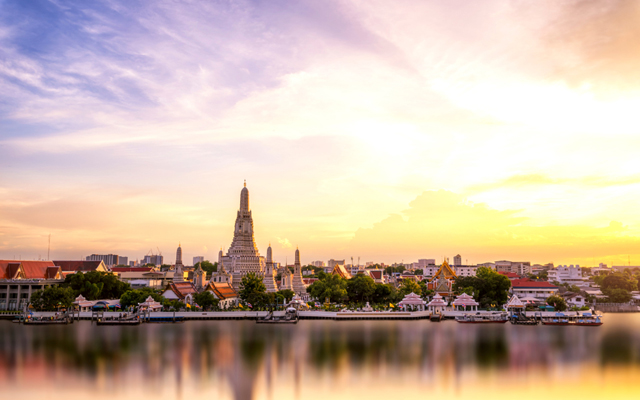
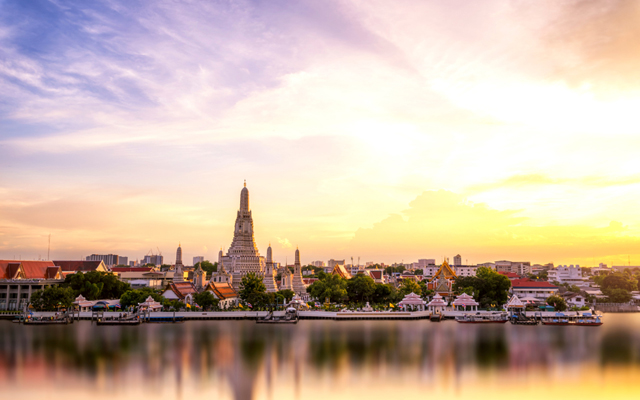
View of Wat Arun in Bangkok from across the river

Thailand welcomed nearly 22.7 million visitor arrivals in the January-July period this year, up 11% over the same period of 2017, according to preliminary figures tabulated by the Ministry of Tourism and Sports.

Estimated visitor expenditure also rose significantly, up 14.4 % to 1.2 trillion baht (US$36 billion).

The top 10 source markets of visitors were in order China (6.9 million, 21.4%); Malaysia (2.1 million, +6.8%); South Korea (1 million, +5.8%); Laos (991,679, +9.3%); India (919,130, +5.6%); Japan (908,059, +5.6%); Russia (900,712, +16.2%); the US (656,327, +5.8%); Vietnam (630,526, +7.8%) and Singapore (579,677, +3%).

Bookings to Indonesia tumble after Lombok quake

0

There has been a 26% decline in bookings to Indonesia since the August 5 earthquake in Lombok, according to ForwardKeys.

Prior to the devastating earthquakes, Forwardkeys said Indonesia’s tourism was having a good year – bookings from January 1 were up 10% on the equivalent period in 2017. That growth all but ceased after the first quake; and following the second, bookings fell 26%.

Bookings to Bali plummeted 42.9% since the August 5 quake in Lombok

The tourist trade has been particularly badly affected because bookings to the country’s top tourist destination, Bali, which is adjacent to Lombok, have fallen more drastically than bookings to Indonesia as a whole.

From January 1 until the first earthquake, bookings for Bali were up 15.2%. However, since the second quake, they have fallen by 42.9%.

According to WTTC, travel and tourism accounts for 10% of total employment in Indonesia but the figure is considerably higher in the tourism hotspots such as Bali and Lombok. By comparison the Indonesian capital Jakarta, which is a regional commercial centre, has fared much better, with bookings down by just 2.2%.

Indonesia’s most important source market is China, accounting for 14% of all visitors. Prior to the second earthquake, bookings were up 3% on the previous year, and afterwards suffered a 59% flop.

Bookings from Australia, Indonesia’s second most important market, were up 28% before the second quake but they have since plummeted 19% down.

Similar setbacks have been seen in bookings from Hong Kong and Singapore but bookings from India are still 16% up on 2017, although they were 38% up prior to the second quake.

Asian travellers lead the family travel surge: Agoda

0

New school semesters may already underway after the mid-year break, but that doesn’t mean families are packing away their travel gear just yet.

In fact, new research from Agoda revealed seven out of 10 families globally take at least two family vacations a year, with Asian travellers taking more than twice as many family trips as their Western peers (five trips a year versus two).

Asian families take more trips together compared to those in Europe, Agoda’s survey shows

The Agoda Family Travel Trends 2018 survey, conducted by YouGov, found that just 18% of travellers globally take only one family holiday a year, while over 34% have taken more than five family trips in the past year.

Asia dominates this multi-holiday trend with 77% of travellers from Thailand and 62% from the Philippines claiming to have taken five or more family breaks in the past year. Conversely, only 7% of British travellers took more than five family trips, with the UK also most likely (34%) to take only one.

A four- to seven-night stay is the most popular duration for family holidays globally but there are large variances across markets.

In the UK, a four- to seven-night stay made up 41% of family travel in the past year, compared to only 20% of family travel for Thais. Instead, family vacations of more than 14 nights are taken by almost a third of Thais but only 11% of Malaysians. Vietnamese, Malaysian and Chinese families are most likely of all travellers to take one- to three-night vacations.

The study also found that Asian travellers engage in more multi-generational and extended family trips. Thais (66%) and Indonesians (54%) were most likely to have included grandparents in their holiday plans. This trend is also reflected when looking at extended family members with Thais and Indonesians most likely to include siblings, cousins, aunts and uncles in their vacation plans.

While 35% of global travellers have taken a holiday with grandparents, respondents from the UK and Australia are the least likely to have done so, with only 13% and 20% of embarking on them respectively.

It is not just family members that the Americans, British, Australians and Chinese don’t travel with, they are also the least likely travellers to go away with other groups of friends, with only 22% of Americans, 23% of Brits, 26% of Australians and 27% of Chinese having done so in the past year.

Meanwhile, almost half (48%) of travellers from the Philippines tie up with a group of friends for some of their vacations, closely followed by Vietnamese and Malaysian family travellers at 43% and 40%.

Hotels are still the most popular accommodation for families, followed by holiday homes, B&Bs and all-inclusive resorts. Cost, safety and activities were the top global considerations for when planning family holidays compared to holidays with non-family or alone.

When it comes to travel motivation, travellers globally look forward to quality family time (68%) the most on family trips. Relaxation (66%) and trying new things (46%) came out as second and third preferences.

British and Singaporeans are the most adventurous on family trips. Exploring new cultures as a family travel experience is most popular among these two groups (48% and 46% respectively). Chinese and Thai travellers are the least likely to investigate new cultures on their trips, (both 29%).

When examining anxieties relating to family travel, concerns about falling sick (36%), the standard of accommodation (21%) and family disagreements (16%) ranked highest for family travellers globally.

Brits seemingly have the least worries when it comes to family holidays, with nearly a third (27%) saying that they have no concerns at all.

In Singapore, tourism receipts plateau despite growing arrivals

0

While international visitor arrivals into Singapore grew by 7.3% year-on-year to reach 4.6 million in 1Q2018, tourism receipts dipped marginally with declines seen in shopping, accommodation and F&B expenditure, according to the Singapore Tourism Board’s 1Q report.

The destination’s top five visitor-generating markets in the quarter were China (0.9 million), Indonesia (0.7 million), India (0.3 million), Malaysia (0.3 million) and Australia (0.3 million). Combined, they accounted for 54% of total arrivals.

Tourists spending less on shopping, F&B and accommodation

China (+10%), India (+22%) and Indonesia (+4%) registered the largest absolute year-on-year growth, while Germany (-7%), Australia (-3%) and the Philippines (-4%) posted the largest declines.

Tourism receipts for 1Q2018 were down 0.5% to S$6.7 billion (US$4.9 billion). While sightseeing, entertainment and gaming (+6%) and other tourism receipt components (+22%) grew, shopping (-9%), accommodation (-13%) and F&B (-16%) declined.

Gazetted hotel room revenue for 1Q2018 however was up 8.5%, coming in at an estimated S$1 billion. Average occupancy rate was 86.1%, a 1.4 percentage point increase.

Average room rate increased 2.3% to S$222 while revenue per available room increased 4% to reach S$191 in 1Q2018.