Kerala’s tourism players are working towards business recovery after experiencing what’s believed to be the sector’s poorest performing month to-date in August.
Access to many of the state’s tourism destinations like Munnar, Idukki and Periyar was severely affected after the state was battered by its worst floods in a century.
Thekkady lake in Periyar Tiger Reserve, Kerala, India
In the wake of the floods, the department of tourism of Kerala is participating in 12 international trade shows beginning with Saudi Arabia and Bahrain to aggressively promote the destination in international markets.
Restoring the damaged infrastructure is also an impetus.
“Some roads and bridges were damaged because of the floods. We are working with the public works department towards restoring connectivity to these places,” said Rani George, Kerala’s tourism secretary.
Amid recovery efforts, tourism and hospitality stakeholders are keeping their heads up.
“Kerala is recovering and we see the situation improving as the days go by. South Kerala has already recovered. Places like Munnar, Thekady and Periyar will take some time as these are interior places and the road connectivity needs to be strengthened,” said Karan Anand – head, relationships, Cox & Kings.
Anand further shared that the Kerala Travel Mart 2018, which took place in September, attracted a record number of domestic and international buyers, who travelled to the state to see the situation for themselves.
“Their inputs will encourage travellers to visit Kerala in large numbers, in time for the season that began this month (October),” Karan forecasted.
Moreover, the company has seen “considerable improvement” after constantly engaging with overseas partners on the situation in post-flood Kerala.
Meanwhile, Raja Gopaal Iyer, CEO, UDS Group of Hotels, said: “The market is slowly and surely recovering, but it will take some time to recover completely.”
The hotel sees good demand from German and Russian clients visiting for Ayurveda, staying a minimum of 14 days.
“We are seeing a lot of foreign tour operators who are coming to Kerala for finalisation of properties to work with,” said Iyer.
For a region known for its diversity, the same could be said of Asia’s LGBTQ (lesbian, gay, bisexual, transgender and queer) rights and acceptance. Taiwan, on one hand, has ruled that same-sex marriage is a constitutional right, paving the way for the territory to be the first in Asia to enshrine marriage equality into law. But on the other end of the spectrum lies Muslim-majority countries like Malaysia and Brunei, where homosexuality is punishable by the law.
But positive changes are afoot in this largely-conservative region. India’s Supreme Court’s historic ruling to decriminalise gay sex last month certainly calls for rainbow-coloured celebrations. In the immediate wake of scrapping the 157-year ban on homosexuality, some agents have shared that interest and queries from LGBTQ travellers for India are already on the uptick.
India’s latest ruling didn’t just free itself from the shackles of an antiquated law, it is projected to unlock India’s pink economy as businesses rush in to develop an untapped industry estimated to be 2.5 million-people strong in the country.
Travel marketeers targeting the LGBTQ community could perhaps take a leaf from Thailand, which has cemented its position as one of Asia’s most LGBTQ-friendly destinations. In its latest Open to the New Shades marketing campaign, the Tourism Authority of Thailand stepped up its LGBTQ charm offensive with its inaugural LGBT+ Travel Symposium, held in Bangkok this year, which has created a positive ripple effect in the Philippines.
As more destinations and travel businesses warm up to the LGBTQ movement, Peter Jordan, head of insights at Toposophy and founder of Gen C Traveller, thinks increased LGBTQ visibility will set in motion “a self-perpetuating dynamic”, enabling more LGBTQ people to be comfortable in openly identifying themselves, and in turn also driving the process of acceptance and engagement.
Former UNWTO general-secretary Taleb Rifai has taken a clear stance in his opening message in the Second UNWTO Global Report on LGBT Tourism, which was released last year: “I invite all tourism leaders to provide a supportive environment for LGBT tourists, in order to associate our sector with open-minded activities that embrace differences between peoples and cultures.”
The Handbook on the LGBTA Travel Segment, released by the European Travel Commission in July, reminds the industry that progress towards ensuring equal rights for LGBTQ people will open opportunities for the tourism sector, and destinations who treat their LGBTQ citizens with respect are not only attractive for LGBTQ travellers but also those who support them.
Beyond the lucrative dollars the segment offers, I personally feel the travel industry should stand up for equality and promote LGBTQ rights and acceptance, championing for openness, inclusivity and diversity – the very values travel is supposed to embody.
In Asia, where the pressure to conform to the mainstream is still strong, greater support from the tourism sector for LGBTQ people will help to spur societal change, especially with a generational shift in attitudes that sees millennials favouring LGBTQ rights more than older generations.
Together, we can help to remove the barriers of discrimination so that everyone feels free to explore the beauty and diversity the world has to offer. Every traveller has the right to feel safe and welcome, and to enjoy worry-free travel, regardless of their sexual orientation.
The Indian travel trade has reacted positively to the recent Supreme Court ruling that decriminalised homosexuality, a move that’s expected to provide a significant boost to the South Asian nation’s LGBT tourism industry.
“LGBT tourism or pink tourism is a multibillion market globally. India was not in the mind of most LGBT travellers because of the law against the homosexuality. However, with the new ruling India has a great opportunity to tap the inbound LGBT tourism market,” said Arun Anand, managing director, Midtown Travels.
At the Delhi Queer Pride Parade last year
Tour operators that were already catering to the LGBT segment expect the positive effects on tourism stemming from the Supreme Court ruling to become apparent from next year onwards.
“Considering India’s tourism season starts from October, tourists have already made plans for this year, so we have to be optimistic for 2019. Our existing clients have expressed happiness on the decriminalising of homosexuality and have also started making enquiries about various tours,” said Rajat Singla, director, Pink Vibgyor.
Since the new ruling, Singla has seen big Indian tour operators step up efforts to cater to LGBT travellers, such as by coming up with webpages on gay tourism.
“We are also trying to start gay bed and breakfast boutique stays in cities like New Delhi, Udaipur, Jodhpur and Jaipur,” he added.
Some tour operators also believe LGBT tourism will help to draw high income inbound tourists to India.
“The LGBT community contributes to high-value tourism because of their good disposable income. They mostly prefer comfortable holidays and spend money on luxury products. I believe the new ruling will encourage LGBT community to travel freely without any perceptions and social restrictions,” said Ravi Gosain, managing director, Erco Travels.
In addition to a handful of tour operators which are already promoting holiday packages to the LGBT community, Gosain believes that this high-spending segment will soon become “the target market of other tour operators too”.
However, trade members also pointed out that more still needs to be done to promote LGBT tourism in India and compete with other international markets for this segment of travellers.
“I feel that India’s Ministry of Tourism needs to play a big role in promotion of this segment and the tour operators can always bank on a focused marketing approach. In global trade shows like WTM and ITB, the India pavilion can now have a separate section for pink tourism,” Anand remarked.
“Moreover, we need to learn from countries like Thailand to come up with events specifically targeted at LGBT tourism and widely publicise it across the global markets,” he added.
Single remarked: “At present we are far behind countries like Thailand in terms to incoming arrivals for this niche market, but now we may see a change.”
Travelport has won a competitive tender to become the sole distribution provider of Air India’s domestic flight content in the airline’s home market.
The deal will come into effect from November 2018 and be fully implemented by end-2019.
The airline is India’s flag carrier with a leading position in both international and domestic operations
This also confirms Air India’s continued deployment of Travelport Rich Content and Branding, now used by over 270 airlines, which displays airlines’ graphical content, their fare families and a full range of ancillary products.
The continued deployment means that Travelport will provide the same content as Air India’s own direct selling channels.
Air India is the country’s flag carrier with a leading position in international and domestic operations. Along with Air India Express, it has 43 per cent share of the international traffic to and from India among Indian carriers and a 17 per cent share, including global airlines, as of 3Q of the 2017 calendar year.
Travelport has seen a rapid expansion in India in recent years following the acquisition of business from the largest OTAs such as MakeMyTrip, Ibibo, Yatra, EaseMyTrip and ClearTrip as well as working with the major corporate travel agencies and new entrants to the travel sector such as PayTM.
In addition to airline content, Travelport has also expanded its footprint and capabilities with leading hotel groups and aggregators in India such as Oberoi, Taj, Treebo and Trident.
Travelport has won a competitive tender to become the sole distribution provider of Air India’s domestic flight content in the airline’s home market.
The deal will come into effect from November 2018 and be fully implemented by end-2019.
The airline is India’s flag carrier with a leading position in both international and domestic operations
This also confirms Air India’s continued deployment of Travelport Rich Content and Branding, now used by over 270 airlines, which displays airlines’ graphical content, their fare families and a full range of ancillary products.
The continued deployment means that Travelport will provide the same content as Air India’s own direct selling channels.
Air India is the country’s flag carrier with a leading position in international and domestic operations. Along with Air India Express, it has 43 per cent share of the international traffic to and from India among Indian carriers and a 17 per cent share, including global airlines, as of 3Q of the 2017 calendar year.
Travelport has seen a rapid expansion in India in recent years following the acquisition of business from the largest OTAs such as MakeMyTrip, Ibibo, Yatra, EaseMyTrip and ClearTrip as well as working with the major corporate travel agencies and new entrants to the travel sector such as PayTM.
In addition to airline content, Travelport has also expanded its footprint and capabilities with leading hotel groups and aggregators in India such as Oberoi, Taj, Treebo and Trident.
Foreign arrivals into Asia-Pacific destinations continued to grow faster than the global average in 2017, reaching a record volume high of more than 646 million arrivals relative to 2016.
According to the Annual Travel Monitor 2018 Final Edition released by PATA today, international visitor arrivals into 47 destinations in Asia-Pacific covered in the report increased by 5.7 per cent, or close to 35 million additional arrivals.
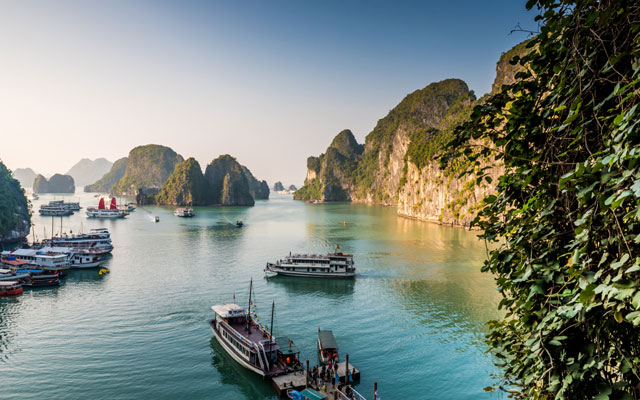
Vietnam (Halong Bay pictured) was the top Asia Pacific destination last year
In percentage increase terms between 2016 and 2017, the Pacific had the strongest annual increase at 5.9% year-on-year, followed by the Americas at 5.8%, while Asia kept pace with the Asia-Pacific average of 5.7%.
However, in terms of absolute increase, these positions were reversed with Asia receiving close to 25 million additional foreign arrivals between 2016 and 2017, followed by the Americas with a gain of almost 8.6 million and the Pacific with around 1.4 million additional foreign arrivals received over that period.
Across Asia it was South-east and West Asia that each captured the largest proportion of additional foreign arrivals into Asia between 2016 and 2017.
While in the Pacific, Oceania received more than half of the additional foreign arrivals into the region, followed by Polynesia.
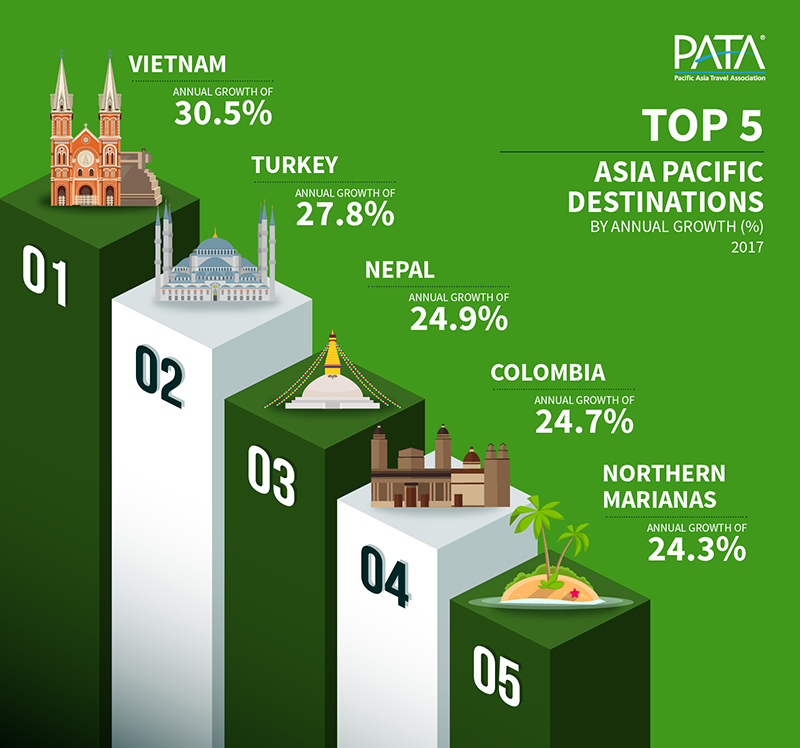
At the individual Asia-Pacific destination level, destinations with the strongest annual percentage growth rates in 2017 ranked as per Figure 1.
Figure 1 Top 5 Asia Pacific destinations by AGR in 2017. Source: PATA
Of the destinations covered in this report, more than a quarter had annual volume increases of more than one million each, while close to 15% had between half a million and one million apiece.
The strong collective performance of Asia-Pacific destinations in 2017 appears to be continuing into 2018 as well.
Mario Hardy, CEO of PATA, pointed out: “Early results for 2018 show a collective annual increase in foreign arrivals into Asia-Pacific destinations of 8.7%, adding more than 25 million additional arrivals to the total inbound count during the first periods of 2018 relative to the same period of last year.”
Thirty-six Asia Pacific destinations had released year-to-date 2018 data on foreign arrivals at the time of preparing the Annual Tourism Monitor for 2018 and these are covered in some detail through the body of the report.
The strongest early performances are seen in a number of destinations.
“In general terms, the volume of foreign arrivals into most Asia-Pacific destinations now needs to be managed in terms of distribution across the destination, especially with growth rates remaining relatively high,” added Hardy.
“This includes shifting our focus from just the volume of arrivals to other performance metrics including length of stay and yield as primary indicators, along with developing a better and deeper understanding impacts of tourism on the environment and society at all levels, especially if we as a responsible economic sector wish to remain sustainable and therefore viable into the future.”
It is not only the international travel flows that have an impact, he added, with domestic demand for new travel experiences gathering momentum in many destinations.
“When coupled with international visitor flows, that creates a very powerful dynamic. It is incumbent on us all to ensure that we can properly harness and manage that power or else risk losing those very attributes that drive visitor interest in the first place.”
Air passengers want new technology to give them more control and information, as well as to improve efficiency, IATA said in a summary of findings from its 2018 Global Passenger Survey (GPS) which sampled 10,408 respondents from 145 countries.
Real-time journey information wanted
The study found that passengers want to be kept informed throughout their journey, preferably via their personal device.
Receiving information on flight status (82%), baggage (49%) and waiting time at security/immigration (46%) were identified as passengers’ top three priorities after booking a flight.
Passengers want real-time information via mobile devices
Real-time baggage tracking throughout the journey was seen as a must for 56% of passengers. IATA pointed out that in line with the findings, airlines and airports are facilitating real-time baggage tracking by implementing tracking at major journey points such as loading and unloading (IATA Resolution 753). The industry is also working on developing a global readiness plan for the proposed introduction of RFID inlays in all baggage tags manufactured after January 2020 in order to meet passenger expectations for real time baggage tracking.
Passengers’ preferred option for receiving information on their baggage and other travel elements was via their mobile device, the survey revealed. Receiving information via SMS or smartphone app was preferred by 73% of passengers. Since 2016 there has been a 10% increase in passengers preferring to receive travel information via a smartphone app.
Digital is preferred but privacy concerns increase
The survey showed that the majority of passengers (65%) are willing to share personal data for expedited security, while 45% are willing to replace their passports with biometric identification.
While highlighting its One ID project, which aims to move passengers from curb to gate using a single biometric travel token, IATA also stressed that concerns over data protection must be addressed.
“As we move more and more towards digital processes, passengers need to be confident that their personal data is safe. IATA is working to establish a trust framework that ensures secure data sharing, legal compliance and privacy,” said Nick Careen, IATA’s senior vice president for airport, passenger, cargo and security.
Human touch still desired amid self-service trends
Passengers want more self-service options, IATA found, with automated check-in preferred by 84% of respondents. A significant portion (47%) prefer to check in online using a smartphone, and only 16% preferred traditional check-in.
Some 70% of passengers want self-service baggage check-in. Only one in three travelers prefers an agent to tag their bag. The electronic bag tag is growing in popularity – favoured by 39% of passengers (up 8 percentage points from 2017).
The overall experience with automated immigration procedures was rated favourably by 74% of passengers. A similar percentage (72%) believe that automated immigration processes are faster and 65% believe they enhance security.
Still, the human touch is preferred by some market segments and for certain situations. For example, senior travellers (65 years and older) have a strong preference for traditional check-in (25% vs global 17%) and bag-drop processes (42% vs global 32%). And when there are travel disruptions 40% of all age groups of passengers want to resolve the situation over the phone and 37% via face-to-face interaction.
Consistent shopping experience
Some 43% of passengers prefer to use a travel agency, TMC or corporate travel department to book their flights.
In light of this, IATA underscored the role of its Airline New Distribution Capability (NDC) in evolving the customer air travel shopping experience and closing the content gap between airline websites and travel agent systems through use of a modern (internet) data transmission standard for communications between airlines and travel agents. NDC will enable airlines to display and sell all of their products in the travel agent channel, including options to allow passengers to personalise their journey around their needs.
Border control process a pain
Passengers identified airport security/border control and boarding processes as two of their biggest pain points when travelling.
The top frustrations with security were the intrusiveness of having to remove personal items (57%), the removal of laptops / large electronic devices from cabin bags (48%) and the lack of consistency in screening procedures at different airports (41%).
To improve the boarding experience, the top three desires of passengers are more efficient queuing at boarding gates (64%), the availability of overhead space on the aircraft (42%) and not having to queue on the air bridge (33%).
“The GPS tells us that passengers want a seamless and secure travel experience from booking to arrival. Airports and airlines are eager to meet evolving passenger expectations. But making the right strategic choices among all the potential innovations is not an easy task. And aligning those choices into a seamless curb-to-gate experience needs a common vision. That’s why we have joined forces with Airports Council International (ACI) in the NEXTT Project (New Experience in Travel and Technologies),” said Careen.
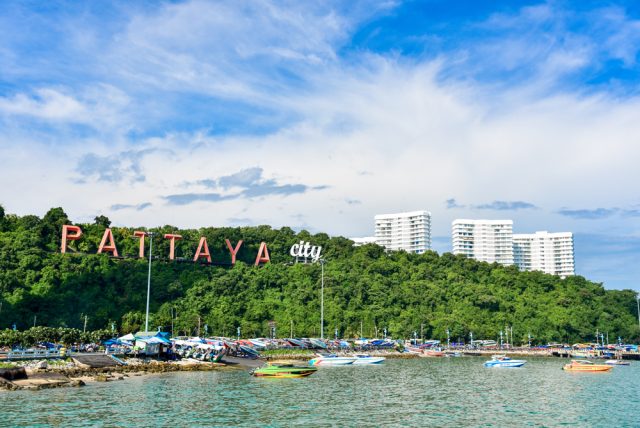
Thailand’s second largest tourism market, Pattaya, has pushed through the volatility hangover of the 2014 era, with its hotel sector now showing signs of rising stability.
According to the latest available data, strong demand from the Thai domestic sector accounted for 38% of hotel guests at Chonburi province accommodation establishments.
C9 notes the rising stability in Pattaya’s hotel sector
Greater Pattaya’s expanding gateway aviation hub of U-Tapao International Airport has been a critical stimulator of demand, where passenger arrivals over a three-year period rose at a compound annual growth rate (CAGR) of 79, according to a new report from consulting group C9 Hotelworks.
According to C9, the Thai government finalising plans for high-speed rail links between U-Tapao and Bangkok’s two airports, Suvarnabhumi and Don Mueang, is undoubtedly a game changer for the Eastern Seaboard area. New international routes into U-Tapao grew dramatically through the past three years as airlift arrivals increased significantly with a CAGR of 59%.
Translating airlift into hotel metrics, global data provider STR recorded an 8.7% year-on-year spike in key indicator RevPAR at the end of 2017. By mid-2018, market-wide occupancy hit 77.9%.
While the current number of accommodation establishments in Chonburi province is 1,046 with 81,607 keys, most of the growth is centred in Greater Pattaya. C9 Hotelworks report shows 11 new hotels in the development pipeline which accounts for 2,645 additional rooms.
C9’s managing director Bill Barnett said: “There is a substantial influx of branded select service and economy hotels including Holiday Inn Express, Ozo, Cosi and Citadines which are targeted at not only mainland China and India but regional South-east Asian markets.
“The impact of this new supply in the short to medium period will take time to absorb and likely create rate issues in the economy and midscale tiers, until such time as the EEC development becomes more pronounced. Though at the same time, Chonburi province last year racked up more than 16,000,000 hotel guests at accommodation establishments and there is little doubt that Greater Pattaya is moving into a broader tourism platform.”
The Travel Agents Federation of India (TAFI) launched the TAFI Connect platform on World Tourism Day to help members boost non air revenue and reach Indian and global suppliers directly.
“The major challenge that Indian small- and medium-sized travel agencies are facing is how to keep up with transformations of the digital age. The need of the hour is that agents collaborate among themselves and become a formidable power,” said Praveen Chugh, president, TAFI.
Praveen: the dire need for agents to collaborate among themselves to keep up with the times
“TAFI Connect is a new-age technology, an ecosystem that patches the current fragmented offline travel scenario, enabling peer-to-peer transaction between travel agents, hotels, DMCs and corporates. It allows exchange of rates, inventory and intelligence in real time with automation in a common platform for real-time search and a payment platform that’s secure.”
TAFI Connect affords the association’s members multiple buying options, best rate guarantee from suppliers, as well as a plug-and-play platform that enables instant and direct connection with hotels and suppliers.
“It will have taxation compliance and payment will be dispersed to suppliers in 72 hours with our banking partner HDFC,” Praveen added.
Among the suppliers that TAFI has tied up with for the platform include MakeMyTrip, Yatra, Zomata, Cleartrip, GRNconnect.com, Oyo Rooms and Lemon Tree Hotels.
With this initiative, TAFI has also extended its Joint Bank Guarantee (JBG) scheme beyond air ticket bookings to its members. TAFI Connect will allow member agents to utilise 20 per cent of their JBG limit for booking of hotels and other services.
TAFI at present offers JBG as an alternative mode of financial security to IATA. The JBG scheme is based on the principle of mutual liability of the group involved in offering the financial security.
Rajat Bagaria, managing director, Shrishti Tours & Travels, sees value in having leading companies aggregating hotels across India and the world on one common, transparent platform.
“For small agents it is an opportunity to grow their business by reaching out directly to suppliers to get best price of a product, while through JBG suppliers they have the assurance that their money is not at risk,” he commented.
Asian solo travellers are more likely to be younger – millennials (41%) and Generation Zers (38%) – while in the West, solo travel is more prevalent among baby boomers (39%) and Generation Xers (24%), one of the highlights of a recent study released by Agoda.
Agoda’s Solo Travel Trends 2018 survey, conducted by YouGov, found that solo travellers from the West are more likely than those in Asia to indulge in solo travel for longer periods, more often taking trips for four to seven nights (34%). In addition, Western solo travellers are twice as likely to go on trips of 14 nights or more (20% versus 10%).
Asian solo travellers tend to be younger and take shorter trips, the survey reveals
Millennial and Generation Z Asian solo travellers tend to take shorter, one- to three-night solo trips (46%).
Relaxation and time to unwind is the number one motivator for solo leisure travel globally (61%), followed by getting away from routine (52%) and exploring new cultures (45%), the survey shows.
The study also found that solo leisure travellers spend more time in front of their laptops and phones than any other traveller type – two hours a day (119 minutes), which compares to 15% more time than when travellers are with friends (100 minutes) and 26% more time than if they are with family (86 minutes).
Asian solo travellers are the most digitally connected and are more than two times as likely to spend four or more hours a day in front of their screens than their Western peers (31% versus 12%).
Whether for business, leisure or bleisure, independent solo travellers are all heading to cosmopolitan cities.
According to Agoda’s booking data, Bangkok is the top destination for Asian solo travellers this year, while London is number one for Western solo travellers.
Tokyo is a popular choice for both Asian and Western travellers, hitting the top three for both groups.




 But positive changes are afoot in this largely-conservative region. India’s Supreme Court’s historic ruling to decriminalise gay sex last month certainly calls for rainbow-coloured celebrations. In the immediate wake of scrapping the 157-year ban on homosexuality, some agents have shared that interest and queries from LGBTQ travellers for India are already on the uptick.