Cambodia and India have agreed to start direct flight connections and promote closer tourism exchanges and cooperation in all areas after the Covid-19 crisis subsides.
The agreement was reached during a meeting last week between Cambodian tourism minister Thong Khon and Indian ambassador to Cambodia, Devyani Uttam Khobragade, the Phnom Penh Post reported.
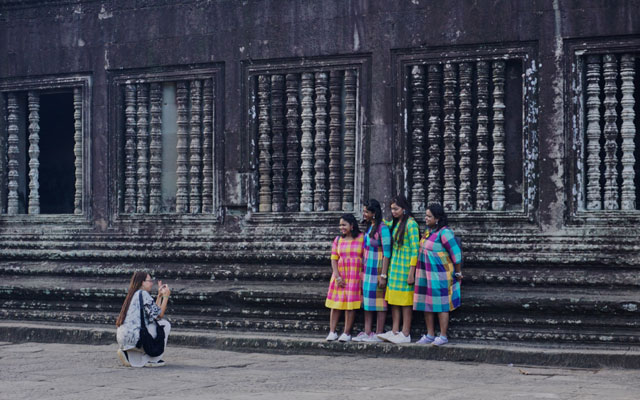
Pre-pandemic, Angkor Wat has drawn a rising tide of Indian tourists due to the deep-rooted historical connections between the two countries
Khon was quoted by the report as saying that the two countries have a long history of cultural and religious ties, with holy sites across India playing host to hordes of Cambodians on religious tours pre-pandemic.
To foster active tourism cooperation, he urged the Indian government to reschedule religious tour packages after Covid-19 had been stamped out.
Khobragade fully backed a direct air route connecting the two countries as “it will bring a lot of benefits to the tourism sector, considering how young Indians nowadays really like these kinds of tourism tours”.
Khmer Angkor Tour Guide Association president Khieu Thy told The Post that direct flights with India would be a boon for Cambodia.
Ancient Khmer temples remain a major drawcard for Indian visitors, he said, noting how closely related the religions that inspired their construction are with those of India.
“The number of Indian tourists coming to Angkor Wat has increased every year (with the exception of 2020) and this will create more jobs for local people,” Thy said.
An MoU between Cambodia and India that authorises the rights to operate a direct flight was signed back in 2002, according to Secretariat of State for Civil Aviation spokesman Sin Chansereyvutha.
Nearly 1.3 million international tourists visited Cambodia in the first 11 months of last year, down 78.2 per cent as compared to the same period in 2019, according to official data. Indians accounted for 12,869 visitors, marking a 80.2 per cent drop from the 65,077 tallied in the same period in 2019.
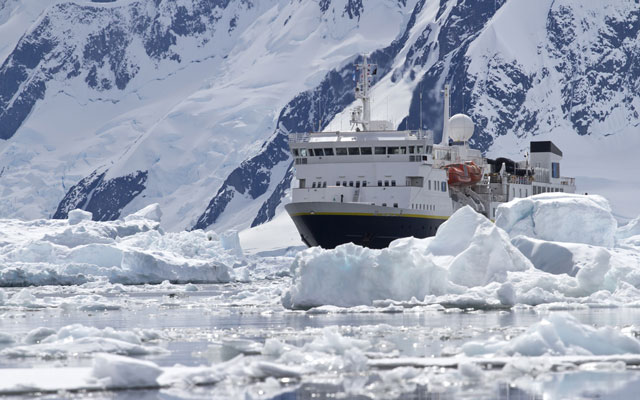
Thomas Cook India and its group company, SOTC Travel, have launched luxury cruise holidays to the polar extremes of the Arctic and Antarctica, targeting India’s ultra-high-net-worth individuals (UHNWI) and HNWI segments.
The new venture seeks to tap growing demand for exclusive and immersive travel experiences away from crowds during the Covid-19 era. The cruises offer natural vistas, wildlife encounters, relatively untouched terrain, with a glimpse into the lives of local cultures living in extreme environments.
Thomas Cook India and SOTC unveil cruise voyages across Antarctica and Arctic to answer growing demand for exclusive experiences among Indian travellers
Each sailing offers a bucket list of experiences, such as crossing the Drake Passage and the Antarctic Convergence, a glimpse of the penguin colonies in South Shetland Islands and the Antarctic Peninsula, and a visit to the home of the Polar Bear in Watkins Fjord.
On board the Ponant Cruise or the Sea Spirit, guests can expect a range of international cuisines, entertainment and live shows, sports and leisure activities, spas, and scenic views from their private balconies. Optional activities include kayaking, camping, hiking and polar region photography.
The 14-day Antarctic Peninsula includes: two-night stay at the Buenos Aires Marriott or similar, one-night stay at the Arakur Hotel in Ushuaia, and 10-night stay in Deluxe Suite on board the Sea Spirit. Guests can also expect encounters with whales, penguins and other marine wildlife using a fleet of Zodiac crafts. Bookings made before January 31, 2021 can enjoy a free upgrade to Premium Suite.
The 17-day Arctic Cruise includes: two-night stay at the Novotel Tour Eiffel in Paris or similar; 14-night stay in Prestige Stateroom on board the Ponant Cruise; unlimited alcoholic and non-alcoholic beverages on board the cruise; as well as flights from Paris to Longyearbeyn (Svalbard), and from Kanergerlussuaq (Greenland) to Paris.
Guests can also experience the magnificent landscape of Greenland, interact with local Inuit tribes at traditional villages, and partake in activities such as hiking and visit to the lava caves in Jan Mayen. The cruise will also sail along the Prins Christian Sund, a 100km long passage that winds its way through cliffs and glaciers.
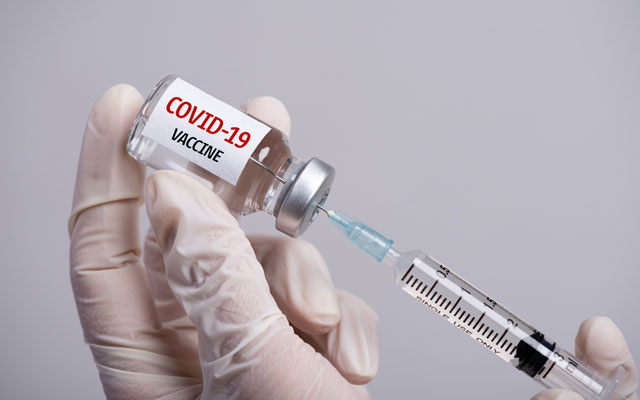
Setting Covid-19 vaccination mandates for travel is akin to workplace discrimination, claimed a high-level tourism official, who instead called for low-cost testing and better G20 and bilateral coordination.
Gloria Guevara, president and CEO, World Travel and Tourism Council (WTTC), speaking at a Reuters Events webinar titled Tourism in a Changed World, said accepting testing-on-arrival was not happening, and it was clear testing protocols were not being shared among countries.
Testing, not vaccination, the way forward for international travel, says WTTC
Agreeing, AirAsia Group CEO Tony Fernandes said global testing protocols remained key to unlocking travel and the issue is how to get governments on board, adding that a quick 30-second breathe test would be the game changer.
He quipped: “Treatments are coming up and testing is getting better. What is most important is that people want to get out and are not afraid. We are seeing ourselves promoting domestic destinations we have never heard of.”
WTTC’s Guevara (bottom, right): Making Covid-19 vaccination a requirement to get a job or to travel is similar to workplace discrimination
In the case of India, panellist Rajesh Magow, co-founder and group CEO, MakeMyTrip, said “revenge travel” and end-to-end testing was picking up, and cited domestic travel bouncing back to 80 per cent of pre-Covid levels.
He also highlighted a strong demand for India-Maldives/India-Saudi Arabia bilaterals, with the number of Indian arrivals in the Maldives surpassing that of pre-Covid, facilitated by the travel bubble arrangement forged between the two countries.
Fernandes said leisure and shorthaul trips will bounce back the fastest, with travellers favouring destinations within four to eight hours of flight time, with five hours being the sweet spot.
While travel demand is present, Guevara questioned how long recovery and coordinating bilateral agreements would take. She expressed hopes for a V-shaped recovery, but admitted it was hard to say which country would recover first as the situation is still fluid.
In the meantime, amid the rollout of Covid-19 vaccines at varying pace across the globe, IATA’s Alexandre de Juniac has called on global governments to replace quarantines with testing.
He said: “A more balanced public policy approach is needed – one that is based on testing as a replacement for quarantines so that we can begin addressing the severe side-effects of Covid-19 policies.
“Science tells us that travellers will not be a significant factor in community transmission if testing is used effectively. But most governments have tunnel-vision on quarantine and are not at all focused on finding ways to safely reopen borders – or alleviate the self-imposed economic and mental health hardships of the lockdowns.”
What is the future of travel? At this very moment in 2019, my vision of the future was one of abundant travel opportunities, made possible by convenient air services, some of which at affordable price points, that allow anyone to travel anytime. More destinations are opening up for tourism, fresh hotels are springing up in exciting destinations, and the growing presence of specialised tour and activity suppliers that present destinations in new light also serve to inspire travel and encourage exploration of new places.
Who would have guessed that the travel landscape would change so drastically in 2020 because of a single virus? I would never have imagined travel to become so inaccessible, that only business-critical trips may be permissible, that costly and invasive swab tests are compulsory for travellers to be cleared for take-off, and that one may need to jump through more hoops to secure a travel visa and government-issue entry approval.
The absence of travellers provides a sobering realisation that we cannot do without tourism
Travel and tourism for one and all who can afford it – in terms of time and money – no longer exists.
While the absence of travellers is a relief for communities struggling with overtourism, it has also provided a sobering realisation that we cannot do without tourism, for it touches many aspects of our life in positive ways – as an employer, a consumption stimulator for other industries, a supporter of community development, and a contributor to conservation efforts.
Can we rise from the ashes as responsible and appreciative travellers who make every trip count for something? Or, as professionals in the travel and tourism trade, ensure our work leaves a legacy for the communities we touch?
In these early days of tourism recovery, the answer seems promising. Hospitality players are partnering small businesses and communities within and beyond the tourism space to rebuild demand together and help each other ride out the storm.
Tours and activity operators are arousing interest in community-based tourism – even if only as an answer to safe distancing needs of travellers today.
So, even as initial travel demand seems to be mostly driven by convenient resort locations or the best deal in town, and not so much for meaningful and sustainable purposes, travel and tourism suppliers can be the heroes we need to move us towards a virtuous rebound.
A consistent move towards sustainable and responsible travel needs to start with programming, by ensuring that featured activities and contractors support host destinations, communities and local conservation efforts in some form.
Travel and tourism can build back better and stronger, and it is up to us to make that happen.
This was first published in the TTG Asia Future of Travel special issue in December 2020.
A resurgence of Covid-19 has not thwarted the travel plans of India’s super-rich, who are escaping the pandemic-ravaged region by flocking to the Maldives, with India emerging as the island country’s biggest source market last year.
Last year, 62,905 Indian tourists holidayed in the Maldives, accounting for 11.3 per cent of the total market share, according to the Indian High Commission in Male.
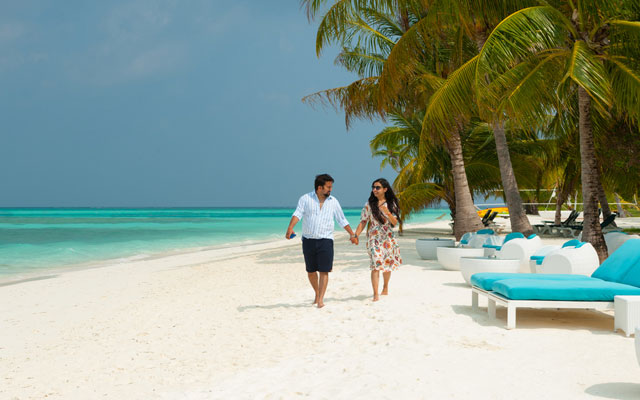
Wealthy Indian travellers are flocking into the Maldives’ waiting lap of luxury amidst the pandemic; an Indian couple strolling along a beach in the Maldives in December 2020 pictured
In second place was Russia, followed by the UK. For many years, China has been the mainstay of the Maldives’ tourism economy, but Chinese visitorship dropped sharply in 2020 as China put in place outbound travel restrictions to stem the Covid spread.
Incoming travellers from India to the Maldives largely comprise Bollywood celebrities and luxury jet-setters opting for stays at high-end resorts.
Five Indian cities have flights to the country’s capital city of Male, with five airlines operating there, under the air travel bubble established between the two countries, according to a Times of India report.
As one of the few countries which remains open to foreign tourists amid the pandemic, the Maldives has seen a steady climb in international arrivals since its reopening last July after a four-month closure. The island nation initially reopened with no testing or quarantine mandates, but changed tack in September to require all incoming travellers to present negative Covid-19 test results and complete an online health declaration form.
Even as countries worldwide battle a virus resurgence, the Maldives recorded 96,411 tourist arrivals in December 2020 – a drop from the 171,348 recorded in the same period in 2019, but still a creditable showing in the midst of the pandemic, according to industry officials. December’s figures were more than double that of November arrivals of 35,200.
In fact, the surge in tourist arrivals caught some Maldivian resorts and guesthouses unprepared. “The industry didn’t anticipate such a rush and some resorts reported a shortage of some consumables including liquor and some choice wines,” said the head of a destination marketing company. “There was no stockpiling of goods as resorts didn’t want to overstock, not expecting such a rush.”
The country recorded a total of 555,399 arrivals in 2020, lower than the 1.7 million in 2019, but much higher than the targeted 500,000 for the year. For 2021, the authorities are targeting 1.5 million arrivals.
“Despite the pandemic, Maldives tourism has done well. We expected a good last quarter for tourism, but the results were beyond expectations in December,” noted Maldives Marketing and Public Relations Corporation managing director Thoyyib Mohamed.
According to the former president of the Maldives Association of Travel Agents and Tour Operators, Abdulla Ghiyas, resorts ran at almost full occupancy at 60-70 per cent, given than a portion (ranging from 10 to 20 per cent) of the room inventory has to remain closed and kept for health and Covid-19 emergencies. “Some resorts have allocated a higher portion for health use,” he said, adding that while December was a good month for the country’s tourism, January is also turning out to be positive with 20,000 arrivals in the first week alone.
The Maldives has reported 14,040 Covid-19 cases and 48 deaths, with most of the cases confined to Male, isolated from resort islands, where a few cases have been recorded.
Like most tour guides who made the leap into the virtual experience market to tide through the Covid-19 slump, Lee Xian Jie also ventured down the same route – what’s interesting is that his virtual pivot happened because of a dog.
The 30-year-old Singaporean, who runs Kyoto-based tour agency Craft Tabby with his business partner, Yasuhiro Shiwaku, made the decision to pause the company’s in-person tours last February, at the peak of the Covid-19 outbreak in China.
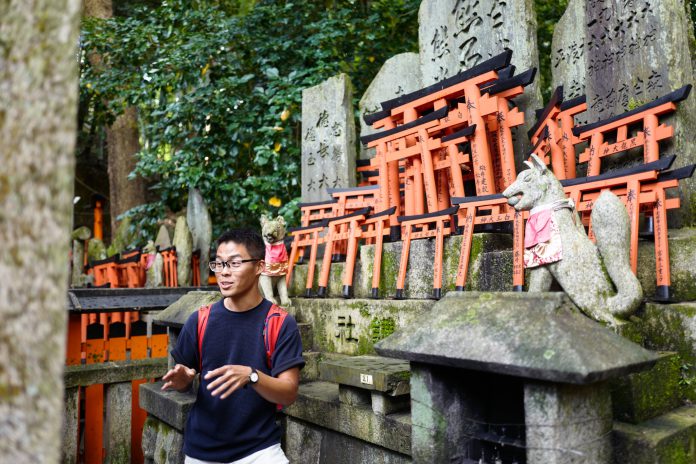
Lee bringing guests on a tour around Kyoto’s famous Fushimi Inari Shrine in pre-pandemic times
Towards the end of June, it became clearer to them that Covid-19 would drag on. When approached by Airbnb to craft a product for its Online Experiences platform, Lee was initially resistant to the idea as he thought the whole point of travel was to experience things first-hand.
“But I had been taking the downtime to pursue my interest in plant identification, and was walking my dog Mori endlessly. One day, I was taking her on a walk through the Kyoto Gyoen National Garden where the Imperial Palace is, and called my family in Singapore to show them how Mori was sniffing and chewing at wildflowers,” he recounted.
“Mori was born wild in the forest so she was especially interested in flowers that happened to have medicinal properties, and ignored all the toxic flowers.”
It was then that the idea of a virtual tour with Mori hit him, and Flower Hunting in Kyoto with Mori the Doggo was born. Since its launch last April, Lee has taken hundreds of virtual travellers on a live tour of the Palace grounds, identifying wild flowers and plants that Mori stopped by, with the help of a botanist friend.
Response for the online experience has been “overwhelming” from the get-go, according to Lee. “People were booking it for loved ones who love plants, but had mobility issues and would never be able to fly to Japan, and I was surprised by how older guests were the most enthusiastic,” he shared. “Over half of the people on the first tour were over 60, and almost everyone was using Zoom for the first time.”
Today, Craft Tabby has expanded its online experience menu to include Forest Bathe in Kyoto’s Sacred Mountain, an adaptation of its popular Alternative Fushimi Inari Walking Tour; and Zoom Around Kyoto the City of Water, exploring how Kyoto’s underground water sources shaped the city’s food, culture and spirituality. Elsewhere, Fly Like A Dragon in the Dragon Village involves flying a drone through scenic spots in the Ryujinmura Village in Wakayama Prefecture.
Starting off with about 50 bookings in April, that number swelled to 500 in November, with the rollout of new products along the way. Last month, the company secured about 1,000 bookings, partially made up of corporate clients.
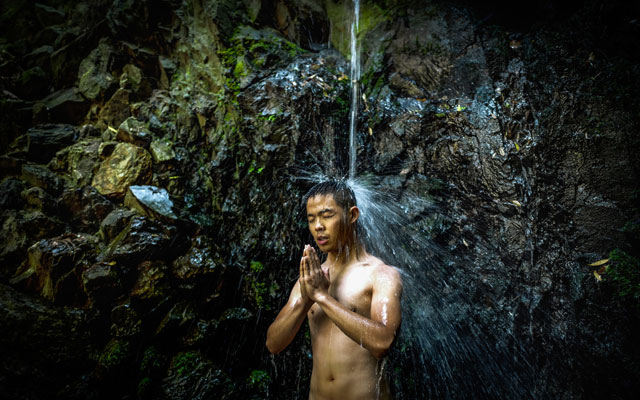
Lee explained: “Online experiences are very different from in-person tours. They are never just about a place, but about seeing things that cannot be seen in real life. For example, I go under waterfalls at Mt Inari to demonstrate the traditional waterfall meditation and ritual for Forest Bathe in Kyoto’s Sacred Mountain.
“That’s something I wouldn’t be able to do on the actual tour because there are spiritual spaces, not somewhere you can take others for touristic purposes.”
Lee at the sacred waterfall at Mt Inari
In Zoom Around Kyoto the City of Water, Turkish-born guide Gulay takes guests to eight different places scattered across the city in one hour, tying the story together with the theme of water. Lee said: “Most people would not physically be able to visit all eight places in one day in real life, let alone one hour.”
The virtual pivot has made Craft Tabby less of a tour guiding company, and more of an agency that creates interactive documentary experiences, described Lee.
“It has opened us to new markets, like psychologist networking groups who want to experience forest bathing in the land where forest bathing was born, and teams from companies like Amazon, Facebook, Google, and IBM wanting to see how we are using Zoom in a totally new way,” he said, adding that his past experience as a documentary producer for Al Jazeera English came in handy when crafting online experiences.
As well, Craft Tabby has collaborated with Singapore tour agency Lion Heartlanders to bring online experiences in Japan to hundreds of schoolchildren in Singapore. “We are now working on a new live tour where schoolchildren can control the narrative and see things happening in Japan in real time,” Lee said.
The bulk of Craft Tabby’s bookings for online experiences comes via the Airbnb’s Experiences platform. While its offerings have been listed on TripAdvisor, Sistic and other booking sites, more than 90 per cent of bookings have come through Airbnb, shared Lee. “We expect this percentage to fall as more group bookings come through experience providers like Lion Heartlanders,” he added.
These days, Lee has also been kept busy restoring a farmhouse in Ryujinmura Village. In future, he plans to run nature tours and a farm-to-table organic café there – a retirement plan he said was brought forward by Covid-19. Revenue earned from his Fly Like A Dragon in the Dragon Village experience, which was shot in that village, is pumped into the restoration project.
Looking ahead, Lee said the agency plans to hire and train local guides to give in-depth nature tours and workshops in Ryujinmura. Post-pandemic, he will also resume work on creating an English-language app to guide visitors to hidden gems in Kyoto where they can learn about specific aspects of the city’s culture.
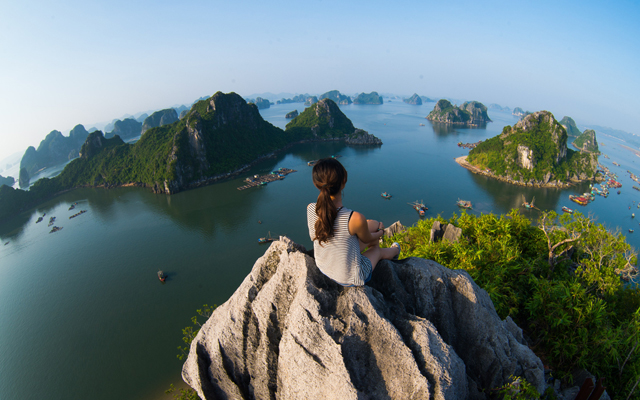
Visit Maldives welcomed a group of travel agents from India yesterday (December 10), as part of a series of fam trips to boost Maldivian tourism.
This is the second fam trip aimed at Indian professionals since the Maldives reopened its borders on July 15, and the first hosting travel agents from the Indian market. The week-long trip aims to equip agents with knowledge of the diverse products and offerings by the destination, as well as increase awareness of the current situation and safety measures in place.
Visit Maldives plays host to a group of top travel agents from India in a week-long fam trip
The team is made up of senior level members from Signature Tours, N Chirag Travels, Quintessential Vacations, The Pravasi and World of Vacation. The partners curate highly personalised travel experiences in the Maldives for the Indian market.
During their trip, the team is hosted by Blue Horizon Liveaboard, Robinson Club Noonu and Conrad Maldives Rangali Island, where they will get a firsthand experience of the services by each property. They will also get the opportunity to explore the Maldives on a liveaboard cruise.
The fam trip is one of several marketing activities conducted by Visit Maldives targeting the Indian market. Others include a marketing blitz focused on honeymoon segments, a campaign with Voot, and a recently-concluded Instagram conference with Indian celebrities. Furthermore, the visibility of Maldives is increased through global campaigns with CNN and Skyscanner, among other activities.
Following the reopening of borders, the Indian market ranks second in terms of arrival numbers to the Maldives. With the travel bubble initiation and additional flight schedules, coupled with the efforts of various marketing campaigns, a positive growth is anticipated in the coming days.
A fresh set of restrictions imposed by several state governments across India amid a Covid surge is threatening the green shoots of recovery that have emerged in the country’s hotel sector over the last few weeks, driven by the growth of leisure tourism and the onset of the country’s festival and wedding season, according to a new report published by HVS.
The report, authored by Mandeep S Lamba, Akash Datta and Dipti Mohan, noted that occupancy in most major markets were showing “fledgling signs of improvement”, with leisure destinations seeing “a strong rise in occupancy” as people started to hit the road again.
As India battles rising Covid cases, several states across the country have reimposed fresh guidelines; a near-empty street before the iconic The Oberoi Grand, Kolkata hotel during an earlier lockdown in July pictured
Overall, hotel occupancy in India has improved from approximately 10 per cent in April 2020 to nearly 30 per cent in October 2020.
In the absence of corporate travel, most branded hotels were relying on the upcoming wedding and holiday season in most part to bridge their revenue shortfall, said the report. However, fresh state restrictions to curb the Covid spread is expected to dampen the spirits going forward.
While urgent action is vital to keep the virus in check, “a reasonable notice instead of rampant execution of lockdowns will certainly help the industry as well as its people to prepare for the eventuality, especially during such destabilising periods,” the authors wrote.
To back their case, they cited the example of the recapping of wedding guests by some state governments to 100 or even 50 in some cases, from the earlier cap of 200, with the new guidelines being implemented almost overnight.
“This sudden change in guidelines has left the events and its planners in disarray,” the authors wrote. “Not only are hotels woefully impacted, their customers are left with dirty laundry running pillar to post trying to make fresh arrangements – from scouting of new venues to informing their guests about the change in plans, all the while trying to cope with the nuances of the ongoing pandemic and surrounding regulations.”
They concluded: “Most of the labor-intensive sectors, including hospitality, are already highly distressed and vulnerable and these sudden changes in regulations are only adding to their woes. Coherence between central and state government policies is needed to ensure that the impact on the economy and livelihood of people is limited going forward, especially in the absence of sector specific packages.”
The Macao Government Tourism Office (MGTO) in India has kicked off the Macao Specialist Program for travel agents, allowing the destination bureau to maintain engagement with trade partners and provide them with useful product updates.
MGTO makes it easy for Indian agents to acquire latest destination information
Each varied module in the online learning programme is designed to ensure that the agents are well equipped with accurate information to promote Macau as an ideal destination for Indian travellers, and to create interesting itineraries.
Upon completion and passing of each module, agents will be certified as a Macao Specialist.
The International Air Transport Association (IATA) Travel Pass, a digital health passport that will support the safe reopening of borders, is now in the final phase of development and will see its first cross-border pilot later this year as well as a launch slated for 1Q2021.
As governments begin to rely on testing as a replacement of quarantine measures to limit the risks of Covid-19 importation when reopening their borders to travellers, the IATA Travel Pass will support the procedure by managing and verifying the secure flow of necessary testing or vaccine information among governments, airlines, laboratories and travellers.
IATA Travel Pass manages and verifies the secure flow of necessary testing or vaccine information among governments, airlines, laboratories and travellers
The IATA Travel Pass incorporates four open sourced and interoperable modules which can be combined for an end-to-end solution. The first module covers a global registry of health requirements, which enables passengers to find accurate information on travel, testing and eventually vaccine requirements for their journey.
The second covers a global registry of testing / vaccination centre, enabling passengers to find testing centres and labs at their departure location which meet the standards for testing and vaccination requirements of their destination.
The third module takes in the Lab App, which enables authorised labs and test centres to securely share test and vaccination certificates with passengers.
Lastly, the Contactless Travel App enables passengers to create a digital passport; receive test and vaccination certificates and verify that they are sufficient for their itinerary; and share testing or vaccination certificates with airlines and authorities to facilitate travel. This app can also be used by travellers to manage travel documentation digitally and seamlessly throughout their journey, improving travel experience.
IATA Travel Pass is based on industry standards and IATA’s proven experience in managing information flows around complex travel requirements. IATA’s Timatic, which is used by most airlines to manage compliance with passport and visa regulations, is the base for the global registry and verification of health requirements.
IATA’s One ID initiative, which was endorsed by a resolution at its 75th Annual General Meeting in 2019 to securely facilitate travel processes with a single identity token, is the base for the IATA Contactless Travel App.
IATA and International Airlines Group (IAG) have been working together in the development of this solution and will undertake a trial to demonstrate that this platform combined with Covid-19 testing can reopen international travel and replace quarantine.
“Today borders are double locked. Testing is the first key to enable international travel without quarantine measures. The second key is the global information infrastructure needed to securely manage, share and verify test data matched with traveler identities in compliance with border control requirements. That’s the job of IATA Travel Pass. We are bringing this to market in the coming months to also meet the needs of the various travel bubbles and public health corridors that are starting operation,” said Alexandre de Juniac, IATA’s director general and CEO.
Nick Careen, IATA senior vice president, airport, passenger, cargo and security, commented: “Our main priority is to get people travelling again safely. In the immediate term that means giving governments confidence that systematic Covid-19 testing can work as a replacement for quarantine requirements. And that will eventually develop into a vaccine programme. The IATA Travel Pass is a solution for both.”
Careen explained that the IATA Travel Pass’s interoperability will allow it to be used in combination with other providers or as a standalone end-to-end solution.
Throughout the travel and tourism crisis, IATA has advocated the use of rapid, accurate, affordable, easy-to-operate, scalable and systematic Covid-19 testing for all passengers before departure as an alternative to restrictive quarantine measures in order to re-establish global air connectivity.
Earlier in June, Juniac had expressed: “Imposing quarantine measures on arriving travelers keeps countries in isolation and the travel and tourism sector in lockdown.”



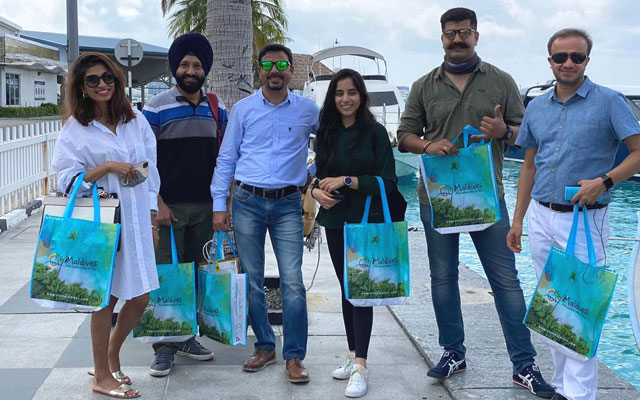










Visit Maldives welcomed a group of travel agents from India yesterday (December 10), as part of a series of fam trips to boost Maldivian tourism.
This is the second fam trip aimed at Indian professionals since the Maldives reopened its borders on July 15, and the first hosting travel agents from the Indian market. The week-long trip aims to equip agents with knowledge of the diverse products and offerings by the destination, as well as increase awareness of the current situation and safety measures in place.
The team is made up of senior level members from Signature Tours, N Chirag Travels, Quintessential Vacations, The Pravasi and World of Vacation. The partners curate highly personalised travel experiences in the Maldives for the Indian market.
During their trip, the team is hosted by Blue Horizon Liveaboard, Robinson Club Noonu and Conrad Maldives Rangali Island, where they will get a firsthand experience of the services by each property. They will also get the opportunity to explore the Maldives on a liveaboard cruise.
The fam trip is one of several marketing activities conducted by Visit Maldives targeting the Indian market. Others include a marketing blitz focused on honeymoon segments, a campaign with Voot, and a recently-concluded Instagram conference with Indian celebrities. Furthermore, the visibility of Maldives is increased through global campaigns with CNN and Skyscanner, among other activities.
Following the reopening of borders, the Indian market ranks second in terms of arrival numbers to the Maldives. With the travel bubble initiation and additional flight schedules, coupled with the efforts of various marketing campaigns, a positive growth is anticipated in the coming days.