The global travel freeze has put tremendous pressure on environmental and wildlife conservation efforts, as funding from supporting tourism businesses has diminished while economic hardships have forced some locals to return to detrimental activities, notes Bill Bensley, founder and creative director at BENSLEY.
To keep conservation efforts going, Bensley, who is behind the renowned eco-friendly luxury resort, Bensley Collection – Shinta Mani Wild in Cambodia’s Cardamom National Park, has taken over park protection financing on his own.
In this new episode of TTG Conversations: Five Questions video series, Bensley also talks about how he is supporting resort staff impacted by the tourism crisis as well as local villagers through his Shinta Mani Foundation’s organic farms, his work with the Wildlife Alliance, and the fun remedies he has prescribed to encourage resort bookings and donations to conservation efforts.
• Buyers say clients are ready to travel as soon as restrictions are lifted
• Vaccination of travellers has helped to boost travel confidence
• Destination research has started; clean and safe destinations are preferred
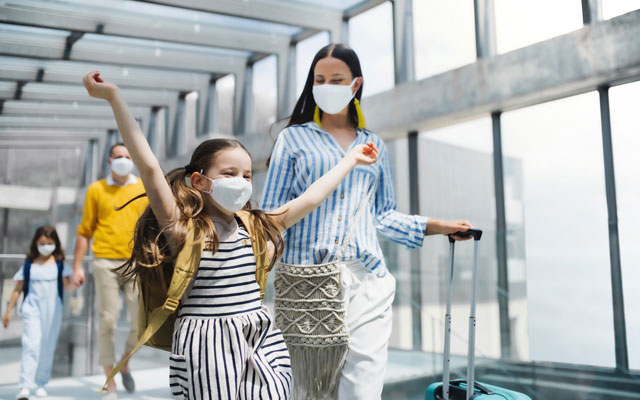
Although current international arrivals into South-east Asia are still severely marred by a volatile pandemic situation and travel restrictions, regional and international travel trade buyers have begun working on travel programmes in the region for a possible roll-out later this year.
Walter L Keats, president of US-based Asia Pacific Travel, expects travel to South-east Asia to be possible as early as November 2021 and that demand will continue through March 2022 – the typical winter travel season when Americans escape the cold at home.
Regional and international travel trade buyers have begun working on South-east Asian itineraries
His confidence is built upon the ongoing vaccination programme in the US and president Joe Biden’s goal to vaccinate all willing residents by July 4, 2021.
“This will unleash a wave of pent up demand for travel by these Americans,” Keats projected, but added that for outbound travel to be possible, destinations and airlines must agree on acceptable vaccination passports.
While waiting for an encouraging travel landscape to materialise, Keats has started to study the South-east Asian marketplace so as to help with travel programming.
Keats is among more than 150 regional and international travel trade buyers that have registered for Great ASEAN Travel Fest 2021, an online travel trade event focusing on promoting South-east Asian destinations and supporting players working towards business recovery. The event is happening on May 4 and 5, 2021. Participation numbers are expected to climb as registration remains open.
Sharing the same confidence is Zaim Muhammad, representative of Dubai-based Travel Counsellor, who expects the UAE’s successful vaccination programme to spur outbound travel confidence.
Zaim believes that South-east Asia, a popular region among UAE travellers pre-pandemic, will continue to charm once international borders reopen.
Melody Palomares, president of MAVP Travel & Tours in the Philippines and president/founder of the United Travel Agencies and Operators Association, has also started to research into South-east Asian destinations with the potential to welcome her incentive groups. Clients have expressed intentions to “push through with their incentive trips once borders are open”.
New and safe destinations with a track record of low Covid-19 infection numbers are desired, shared Palomares.
Zaim: Vaccinated residents across the UAE are eager and ready to resume international travels
Traveller health and safety as priority is a prime criteria echoed by several Great ASEAN Travel Fest 2021 buyers who spoke to TTG Asia.
Keats said vaccinated American travellers would be confident of travelling even to destinations without a majority vaccinated population, as long as health and safety protocols are in place, such as safe distancing and masking requirements.
Palomares added that outdoor attractions and activities, such as national parks, would be most attractive for her clients looking for social distance assurance. Destinations that offer contact-less screening technology at airports, hotels, restaurants and attractions would also be stand-out options.
As travel planning begins, buyers underline the importance of regular and detailed communications from destination marketers and sellers, particularly in relaying information on Covid-19 travel and activity regulations, new products and services in existing and emerging tourist destinations, and the availability of flexible booking arrangements.
Slow recovery for now
International air arrival numbers into South-east Asia for the period of January 1 to April 15, 2021 have stayed low, according to ForwardKeys’ Air Ticket Data, reaching only five per cent of pre-pandemic 2019 levels.
Researchers at the intelligence firm are not surprised, given the different pandemic situations among ASEAN member countries. They noted that Singapore, whose government has been successful in controlling caseloads, implementing a nation-wide vaccination programme, moving forward with travel bubbles, and establishing safe meeting zones for business travellers like the Connect@Changi facility, is seeing international arrivals recovering to six per cent of 2019 levels.
Domestic air travel recovery outpaces international air arrivals across South-east Asia
Domestic air arrivals within the individual South-east Asian countries look brighter, with Malaysia, Indonesia and the Philippines having clawed their way to 17 per cent, 20 per cent and 24 per cent of 2019 levels, respectively.
Domestic air travel recovery within Vietnam is most outstanding, having surpassed 2019 levels at 120 per cent. The country has escaped relatively unscathed from the pandemic, compared to her neighbours in the region. Domestic flights were resumed and lockdowns lifted in mid-April 2020, allowing tourism recovery to begin from mid-May. Between January 1 and April 11, 2021, domestic air arrivals in Vietnam recorded a 20 per cent increase compared to 2019 levels.
Despite a resurgence of Covid-19 cases in summer, domestic travel picked up steam from 4Q2020 when infections were contained.
Jameson Wong, ForwardKeys’ Asia-Pacific director, told TTG Asia that “the path to recovery in Asia-Pacific will be gradual, fragile and full of unexpected twists as the vaccination drive increases consumer trust, yet a lot depends on the pace of the rollout and new cases of Covid-19”.
Tourism Malaysia has rolled out five new interactive brochures and travel guides, in a rebranding of the agency’s digital travel brochures.
Dubbed Interactive Digital Brochures, they can be accessed via Tourism Malaysia’s recently-revamped microsite, ebrochures.malaysia.travel.
Tourism, arts and culture minister Nancy Shukri said that the interactive brochures “gives new life to digital brochures in pdf format, which previously could only be downloaded and printed”.
Initially, five popular Tourism Malaysia digital brochures have been uploaded on the site, namely, Malaysia Travel Guide, Kuala Lumpur the Dazzling Capital City, Langkawi the Jewel of Kedah, Islands and Beaches, and Adventures with Nature. More interactive brochures will be uploaded in time, Nancy said at the launch on April 20.
The all-new digital versions incorporate interactive multimedia elements such as text, audio, graphics, animation and video.
The site is user-friendly and more responsive, thus, making it easier for the public to access the brochure via mobile devices, tablets and laptops. Additionally, the contents of the digital brochures can be easily shared through various apps like Facebook, Twitter, WhatsApp, and even email.
Nancy revealed: “The launch of Interactive Digital Brochures is in line with efforts to intensify the digitisation of tourism to revitalise the tourism industry, as outlined under the National Tourism Policy (DPN) 2020-2030.
“This site utilises Google Maps links to help tourists and tour operators to plan trips, choose suitable accommodations and find out (surrounding) facilities such as petrol stations, restaurants, parking facilities and hospitals.”
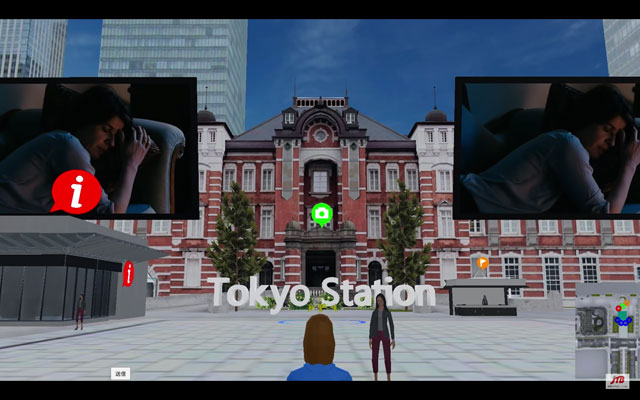
Japan’s largest travel agency has launched a virtual reality tourism resource that aims to introduce remotely the country’s top destinations, experiences and products amid ongoing pandemic restrictions.
JTB Corporation teamed up with information media provider Fun Japan Communications and cloud service vendor Fixer to create Japan Virtual Platform, which will begin registration of users at the end of this month.
Virtual travellers will be able to tour attractions around Japan using an avatar on JTB’s new VR platform
The initiative is designed to help revitalise Japan’s battered tourism industry as well as regions and local businesses specifically. Initially, JTB will target Japanese users, but its aim is to attract 1.25 million users in Asia and 10 million users worldwide by 2024.
Users will be able to explore various parts of Japan virtually using an avatar. So far, Hokkaido – an area renowned for seafood, dairy products and unspoiled nature – and Tokyo’s sleek Marunouchi district famous for Tokyo Station and the Imperial Palace Gardens have been created, with more areas slated for addition on a weekly basis. Users will also be able to interact with others and learn about the history and culture of Japan.
Local businesses and communities will be able to join the platform to promote e-commerce shopping, which JTB expects to be a popular activity among users.
Eijiro Yamakita, president and CEO of JTB, described the platform as a “new exchange mechanism that transcends the boundaries between real and virtual,” at a time when in-person exchanges continue to be “severely restricted” due to the pandemic.
Daisuke Fujii, president and CEO of Fun Japan Communications, said that the platform could “become a bridge between Japan and overseas” that helps to revive Japan’s tourism and local economy. He added that the project has the potential to “create a new trend in Japan and the world” based on “the connections between people”.
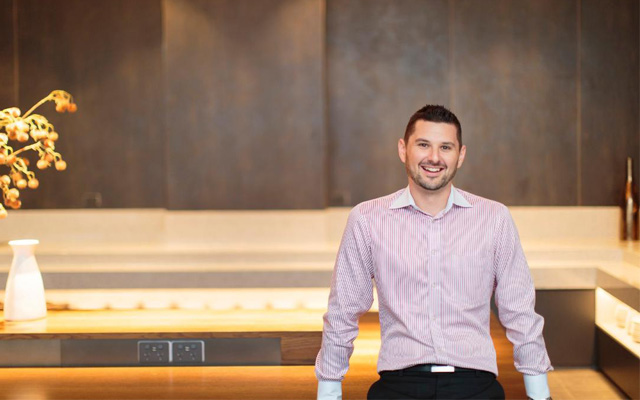
Dorsett Hospitality International has appointed Michael Foster as the general manager for Dorsett Gold Coast – the group’s debut hotel in Australia, set to open in 4Q2021.
In his new role, Foster will be leading the direction for the hotel’s pre-opening, including the building of a dedicated team.
Foster has over 15 years of hospitality and management experience, including pre-opening, overall hotel operations, and sales and marketing. He was previously the general manager of Holiday Inn Express Brisbane Central and has held several senior roles for other hotels brand
Mandarin Oriental Hotel Group has appointed Joanna Flint to the newly-created role of chief commercial officer.
In this new role, she will oversee the development and execution of the Group’s commercial strategy while also taking executive responsibility for all aspects of Mandarin Oriental’s customer experience.
These responsibilities were originally assigned to chief marketing officer, Jill Kluge, who will retire from Mandarin Oriental in September 2021.
Prior to joining Mandarin Oriental, Fint spent 12 years at Google in general management and sales leadership roles, most recently as managing director – global partner Business, with responsibility for industry go-to-market and commercialisation for Google’s media and technology partners in Asia Pacific.
Before Google, she was principal consultant at Ogilvy Asia Pacific. This followed a decade in the travel industry-leading global eCommerce, CRM and customer service transformation programmes for Singapore Airlines and British Airways.
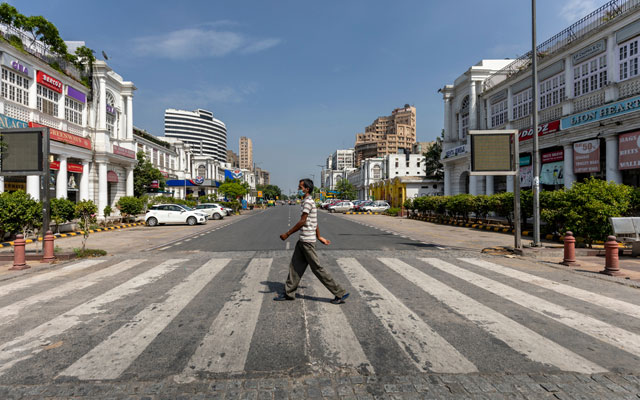
A fresh explosion of Covid-19 cases in India has extended the destination’s road to recovery, upsetting travel and tourism players’ efforts to rebuild both domestic and international business.
The latest wave of infections in early April has impacted almost the entire country, especially in key tourism destinations such as New Delhi and Mumbai, resulting in lockdowns and night curfews. There are now more than 15 million confirmed cases across the country at press time.
New Covid surge derails India’s tourism recovery; CBD of Connaught Place in New Delhi pictured
E M Najeeb, chairman of ATE Group of Companies, which has businesses in travel and hospitality, said the latest development has dimmed future prospects.
“The rising number of Covid-19 cases in India is worrying. We were expecting some green shoots to sprout in international demand beginning September this year, but now the future looks challenging,” commented Najeeb.
Some countries, such as the UK and the US, have responded this week with advisories against travel to India. Both are important source markets for India pre-pandemic, with the UK contributing 9.2 per cent of total international tourist arrivals in 2019 and the North American market holding a share of 17 per cent.
According to a recent ForwardKeys study, North American markets are expected to grow strongly for Indian inbound while markets like Europe are expected to record a decline. However, some Indian tourism players find it too premature to predict a shift in demand pattern.
“The demand that we are seeing from North American markets is mainly from the Indian diaspora,” said Ravinder Kumar, managing director, Indian Legend Holidays, who added that the resumption of tourist visas – presently suspended – is key to the recovery of the inbound sector.
“Restarting of e-tourist visas and reinstatement of scheduled international flights, at least to those countries with which India has travel bubble arrangements, are critical for the revival of Indian inbound market,” echoed Subhash Goyal, chairman of STIC Travel Group.
Currently, India has travel bubble agreements with 27 countries.
Najeeb believes that new tourism source markets will emerge once the pandemic is over. He is placing his bets on the Middle East and Far East, but remains confident that the traditional source markets of the US and Europe will still be important.
He has started engaging counterparts in the Middle East and Far East to gauge the needs of travellers, and has plans to organise familiarisation trips for tour operators based there.
Recovery could also come from niche travel segments, such as wellness and religious tourism.
Arun Anand, managing director of Midtown Travels, told TTG Asia that wellness seekers from the US and Europe would desire India post-pandemic, and they would likely do long-stay programmes.
He also urged Indian destination marketers to focus on Buddhist tourism as a means to rebuilding inbound business.
And with travellers prioritising travel safety and favouring shorter flights, Arun predicts that India will see “good demand” from neighbouring Asian markets like South-east Asia.
Delhi has imposed a week-long lockdown from April 19 to contain a spike in Covid-19 cases, which has put the Indian capital’s health system “at a tipping point”.
Delhi chief minister Arvind Kejriwal said the move was necessary now to prevent “a bigger disaster”.
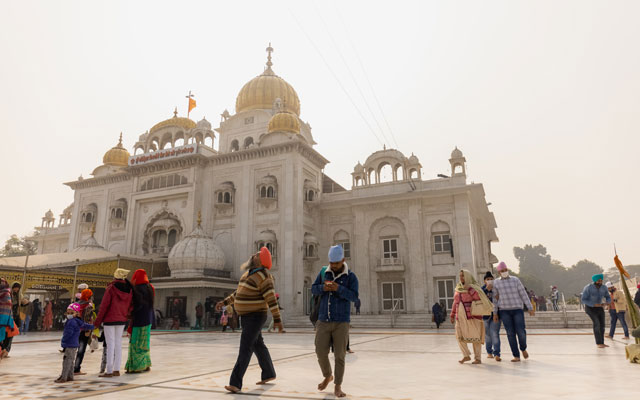
Delhi is in a week-long lockdown to contain a fresh wave of Covid-19 infections; Gurdwara Bangla Sahib in New Delhi pictured back in January 2021
Delhi has had five consecutive days of more than 200,000 cases as of Monday. On Sunday alone, 25,500 fresh cases were reported, with almost one-third of those tested returning positive Covid-19 results.
Businesses are shut and movement is restricted to essential services throughout the lockdown.
Thirteen other states, such as Maharashtra and Tamil Nadu, have also recently imposed movement restrictions to combat fresh waves for Covid-19 infections. According to AFP data, India has recorded more than 1.4 million cases in the past week.
These restrictions are bruising India’s tourism and hospitality players, who have reported cancellations of room and banquet bookings at a time when many are still struggling to recover from the massive losses incurred since early 2020.
Meanwhile, against this challenging backdrop, the Indian government announced on Monday that it will expand the national vaccination programme to all adults from May 1. The programme, which started in January 2021, is presently available only to residents aged 45 and above.
Noella Ferns has been appointed as head of sales, Asia Pacific, by British Airways.
Based in Hong Kong, she will be responsible for all sales and commercial activity for the region, covering mainland China, Japan, Hong Kong, Singapore, Malaysia, Thailand and Australia.
She was previously the airlines executive vice president for Greater China and the Philippines, where she drove the airline’s commercial and external communications strategy in key Chinese markets including Beijing and Shanghai.
In total, Ferns has over 30 years’ experience at British Airways across senior management, sales and airport operations in Sydney, Hong Kong and Beijing.
Hotels in India’s commercial capital of Mumbai, which has witnessed a rapid rebound post-Covid on the back of domestic demand, is projected to return to more moderate levels, as India battles a second Covid-19 wave, according to a recent market forecast from STR and Tourism Economics.
Driven by domestic business travel and quarantine guests, Mumbai recaptured 65 per cent of demand in February 2021 when compared with pre-pandemic levels. Group demand, which continues to lag in most markets worldwide, surpassed 70 per cent of pre-pandemic levels during the month.
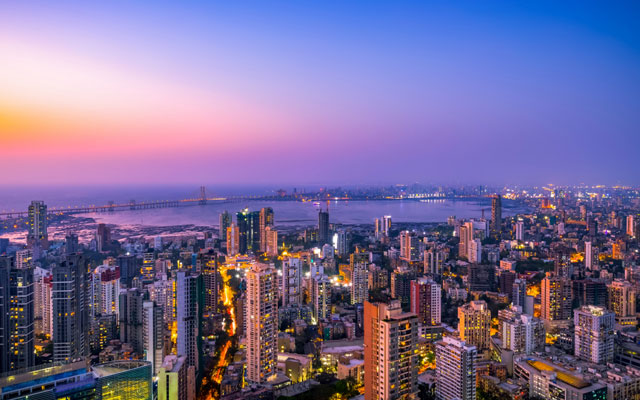
India’s Covid surge threatens to derail recovery of Mumbai’s hotel sector; Mumbai’s cityscape pictured
Preliminary data for March showed a slowing in Mumbai’s demand amid rising Covid-19 case counts and subsequent tightened restrictions.
“Although Mumbai has not escaped the impact of the pandemic, the market performed exceedingly well for a major metropolitan area in a world that has preferred rural, nature-based destinations,” said Vidhi Godiawala, STR’s business development manager for South and Central Asia. “Further bucking global trends, business and even group demand returned early to India’s financial capital, lending hope for a second swift recovery for hoteliers as the market contends with a second wave of Covid cases.”
Data from Tourism Economics showed that international arrivals contributed to only 23 per cent of nights spent in Mumbai, even before the pandemic. The market’s strong reliance on domestic guests helped drive demand more than halfway to its pre-pandemic highs prior to the new surge in Covid-19 cases.
“Domestic demand will drive recovery post-lockdown as international travel remains uncertain,” Godiawala said. “While 2021 may be shaping into a feast-or-famine year with the newest wave of cases representing a significant headwind to recovery, hoteliers can anticipate a more sedate 2022 as travel normalises and seasonal travel patterns return. The flatter trend heralds the end of the initial recovery boom, with demand growth expected to continue at a more moderate pace in the medium- to long-term.”





















Hotels in India’s commercial capital of Mumbai, which has witnessed a rapid rebound post-Covid on the back of domestic demand, is projected to return to more moderate levels, as India battles a second Covid-19 wave, according to a recent market forecast from STR and Tourism Economics.
Driven by domestic business travel and quarantine guests, Mumbai recaptured 65 per cent of demand in February 2021 when compared with pre-pandemic levels. Group demand, which continues to lag in most markets worldwide, surpassed 70 per cent of pre-pandemic levels during the month.
Preliminary data for March showed a slowing in Mumbai’s demand amid rising Covid-19 case counts and subsequent tightened restrictions.
“Although Mumbai has not escaped the impact of the pandemic, the market performed exceedingly well for a major metropolitan area in a world that has preferred rural, nature-based destinations,” said Vidhi Godiawala, STR’s business development manager for South and Central Asia. “Further bucking global trends, business and even group demand returned early to India’s financial capital, lending hope for a second swift recovery for hoteliers as the market contends with a second wave of Covid cases.”
Data from Tourism Economics showed that international arrivals contributed to only 23 per cent of nights spent in Mumbai, even before the pandemic. The market’s strong reliance on domestic guests helped drive demand more than halfway to its pre-pandemic highs prior to the new surge in Covid-19 cases.
“Domestic demand will drive recovery post-lockdown as international travel remains uncertain,” Godiawala said. “While 2021 may be shaping into a feast-or-famine year with the newest wave of cases representing a significant headwind to recovery, hoteliers can anticipate a more sedate 2022 as travel normalises and seasonal travel patterns return. The flatter trend heralds the end of the initial recovery boom, with demand growth expected to continue at a more moderate pace in the medium- to long-term.”