
Travel trade backs Sri Lankan’s ban on Indian arrivals
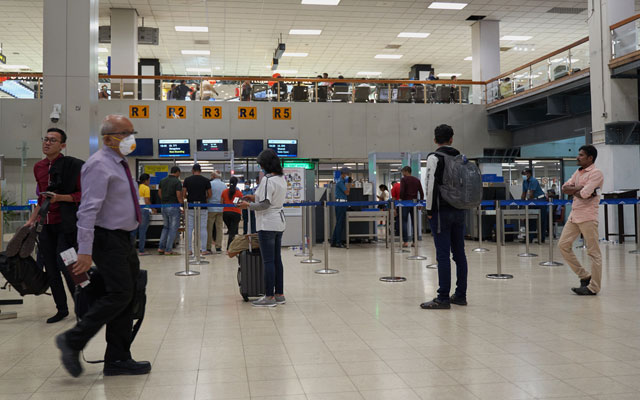
Sri Lanka’s recent move to ban travellers from India due to the exponential growth in Covid-19 cases there was inevitable as the safety of Sri Lankans remains a priority over economic interests, industry officials said.
Trevor Rajaratnam, former president of the Travel Agents Association of Sri Lanka, called the ban a “sensible” decision to avoid the virus spreading in Covid-19 certified hotels where Indian visitors would come into contact with other foreign guests and local staff.
On Thursday, Sri Lanka’s Civil Aviation Authority announced that due to the Covid-19 pandemic situation in India, passengers travelling from India will “not be permitted to disembark in Sri Lanka with immediate effect”. Indian travellers were welcome under a special travel bubble.
Since reopening its borders to tourism on January 21, 2021, Sri Lanka has seen only a trickle of arrivals. India has been Sri Lanka’s biggest source market in the pre-pandemic period. However, during the period from January 21 to end-April 2021, Kazakhstan emerged the country’s top source market, followed by Ukraine, Germany and then India.
Hiran Cooray, chairman of the Jetwing Symphony Group of Hotels, also welcomed the government’s move to ban Indian travellers. “Health is our number one priority,” he said, adding that it would also be wise for authorities to enforce a lockdown in Sri Lanka for one to two weeks given the sharp rise in the number of virus cases locally.
On Thursday (May 6), Sri Lanka hit a record daily toll of 1,939 Covid-19 infections and 14 deaths, taking the total to 117,529 cases with 734 deaths. The spike in cases has been attributed to Sri Lankans thronging shopping malls and street markets and travelling on crowded trains and buses during the long New Year holiday in mid-April.
A manager at a hotel situated in the central hill station of Kandy, a popular resort town, said they haven’t seen any Indian visitors since the pandemic started. He added that pre-Covid, Indian visitors usually accounted for 25 per cent or more of the total number of guests at the property.
High Covid-19 testing costs could stall aviation’s recovery: IATA
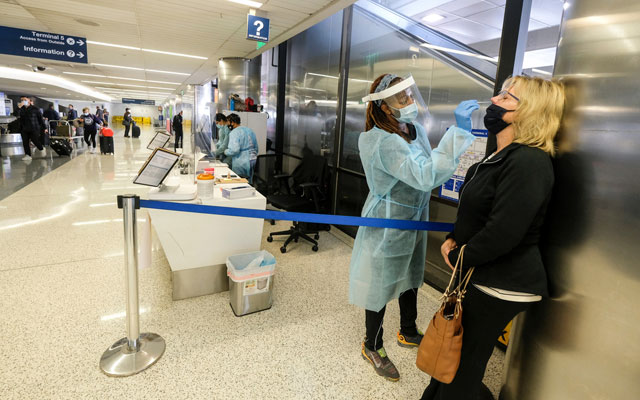
The IATA has called on governments to ensure that Covid-19 testing be kept affordable as well as timely, widely available and effective, in order to facilitate an efficient restart of international travel.
With many states imposing inbound requirements for PCR testing, the availability of affordable options everywhere is critical for a travel recovery, said the airline body.
An IATA sampling of costs for PCR tests (the test most frequently required by governments) in 16 countries showed wide variations by markets and within markets.
The 16 markets were Australia, Brazil, France, Germany, Indonesia, Japan, Malaysia, New Zealand, the Philippines, Singapore, South Korea, Switzerland, Thailand, the UK, the US, and Vietnam. Not all these markets require PCR testing.

Of the markets surveyed, only France complied with the WHO recommendation for the state to bear the cost of testing for travellers.
Of the 15 markets where there is a cost for PCR testing to the individual, the average minimum cost for testing was US$90, while the average maximum cost for testing was US$208.
Even taking the average of the low-end costs, adding PCR testing to average airfares would dramatically increase the cost of flying for individuals, noted IATA.
Pre-crisis, the average one-way airline ticket, including taxes and charges, cost US$200 (2019 data). A US$90 PCR test raises the cost by 45 per cent to US$290. Add another test on arrival and the one-way cost would leap by 90 per cent to US$380. Assuming that two tests are needed in each direction, the average cost for an individual return-trip could balloon from US$400 to US$760.
The impact of the costs of Covid-19 testing on family travel would be even more severe. Based on average ticket prices (US$200) and average low-end PCR testing (US$90) twice each way, a journey for four that would have cost US$1,600 pre-Covid, could nearly double to US$3,040 – with US$1440 being testing costs.
“As travel restrictions are lifted in domestic markets, we are seeing strong demand. The same can be expected in international markets. But that could be perilously compromised by testing costs – particularly PCR testing,” said Willie Walsh, IATA’s director general.
“Raising the cost of any product this significantly will stifle demand. The impact will be greatest for short-haul trips (up to 1,100 km); with average fares of US$105, the tests will cost more than the flight. That’s not what you want to propose to travellers as we emerge from this crisis. Testing costs must be better managed. That’s critical if governments want to save tourism and transport jobs; and avoid limiting travel freedoms to the wealthy.”
IATA further highlighted that the WHO’s International Health Regulations stipulate that states should not charge for testing or vaccination required for travel, or for the issuance of certificates.
The WHO COVID Emergency Committee recently reiterated this position, calling on governments to reduce the financial burden on international travellers of complying with testing requirements and any other public health measures implemented by countries.
Many states are ignoring their international treaty obligations, putting a travel recovery in jeopardy and risking millions of livelihoods. High testing costs also incentivise the market for fake certificates.
“Testing costs should not stand between people and their freedom to travel. The best solution is for the costs to be borne by governments. It’s their responsibility under WHO guidelines. We must not let the cost of testing – particularly PCR testing – limit the freedom to travel to the rich or those able to be vaccinated,” said Walsh.
“A successful restart of travel means so much to people – from personal job security to business opportunities and the need to see family and friends. Governments must act quickly to ensure that testing costs don’t stall a travel recovery.”
Centara names Wayne Duberly as area GM

Centara Hotels & Resorts has appointed Wayne Duberly as area general manager of Centara Grand Mirage Beach Resort Pattaya, and Centara Sonrisa Residences & Suites Sriracha.

The British national started his career with Centara Hotels & Resorts as general manager in 2011 at Centara Anda Dhevi Resort & Spa Krabi, before he was transferred to helm the Centara Seaview Resort Khao Lak in 2013.
In 2015, he moved to Centara Karon Beach Resort Phuket as area general manager, where he also oversaw operations for both Centara Kata Beach Resort Phuket and Waterfront Suites Phuket by Centara.
New GM for Hong Kong SkyCity Marriott Hotel

Hong Kong SkyCity Marriott Hotel has named Khan Sung as its new general manager.

A seasoned hotelier, Khan Sung joined Marriott International Corporate Headquarters in 2002, and had his first on-property assignment at JW Marriott Hotel Hong Kong serving as director of revenue strategy in 2005. Transitioning to operations in 2010, his first assignment as general manager came in 2013 at the JW Marriott Hotel Chongqing.
Since then, Khan has led his teams of associates through both operations and openings of hotels in China, including the opening of his most recent property, Sheraton Beijing Lize Hotel.
Liz Ortiguera takes helm at PATA

The Pacific Asia Travel Association (PATA) has appointed Liz Ortiguera as its next CEO, effective May 17, 2021.
She succeeds Mario Hardy who will finish his term at the end of May.

Liz Ortiguera is a senior executive with over 25 years of global experience and expertise in general management, marketing, business development, and partner network management.
Her career spans several industries – travel/lifestyle, technology, financial services, and pharmaceuticals. She has also cut her teeth at both multinational corporations including American Express and Merck, and start-up environments in software as a service (SaaS), e-commerce, and ed-tech.
For 10 years, she was the general manager for Amex’s Travel Partner Network in Asia-Pacific, managing partnerships with top travel management companies, MICE-related organisations, and leisure agencies in the region.
A day in the life of India


The world is now reading and watching headlines of a story unfolding in India of widespread infections, mass cremations and all-around anguish.
The stories are not all false, of course. It will be irresponsible for us to say otherwise. What happened? How did we go from being a global role model of controlling the infection to a living nightmare in less than a few weeks?
It was simply our complacency and overconfidence spiced with administrative incompetence and political upmanship. All those elements that every other major country in the world has been through in their subsequent waves. We just hit our second wave much later than everyone else. Today, we see other great nations like Japan and Canada also seeing a new wave and imposing lockdowns.
As you see images of India this week, let’s not forget all the images we saw of body trucks in New York or stretchers on the street in Italy. The world is all the same. We have all suffered the same aspects of the pandemic. A small difference in India is that our last rites are very public, very poignant and very visual, and that makes for good news headlines and graphics. As much as we hate it, we need to accept that media markets tragedy.
Till February, as the number of cases dropped across our country and Covid restrictions reduced, people became freer and started getting back to their everyday lives. We dropped our guard. Our governments, central and state, allowed for large political and religious gatherings (in the millions), and this was perhaps just (the) opening that the virus was looking for. Our governance lacked the foresight to see what was coming. The second wave came so fast that it took us all by surprise. We were not prepared.
Things are catching up, though. Medical facilities and supplies are being ramped up on a war footing, and we expect that there will be more of a balance in the next few days.
Don’t forget that India has some of the best doctors globally, and we salute the medical teams working under intense pressure. India has always been called the Pharmacy of the world; 60-plus per cent of all global vaccines for most of the pharma giants are manufactured in India.
It will be too late for some, but the rest are getting help. We do expect more people to get infected, 85 to 90 per cent being mild and recovering with home treatment. The overall recovery rate is also very much higher.
India still has one of the lowest per million caseloads and one of the lowest mortality rates at 1.13 per cent against the world average of 2.12 per cent. We have had an average of 147 deaths per million of population, and only 1.3 per cent of the population has been infected.
India is running the world’s most extensive vaccination programme. On March 1, it was opened to anyone aged above 60 years old; on April 1 to anyone over 45 years; and from May 1 all adults, aged over 18 will be eligible to get the vaccine. Some 39,484 vaccination centres are operating seven days a week, and so far, 138.6 million doses have been administered. India’s millions of doctors, healthcare and frontline workers had all been vaccinated by February, one of the few large countries in the world to have achieved this. This is also a reason there are very few cases of doctors falling ill.
India donated millions of vials to neighbouring nations and other developing countries. The largest vaccine producer in the world is in India and is working overtime to fulfil all its orders. Unfortunately, (production) has been road blocked by a stoppage of supplies of raw materials from some major western countries, which (the producer is) trying to resolve.
We do expect strict lockdowns to be imposed again soon, and we all agree we need some of that. Delhi and Mumbai have already taken these steps. We need to break the chain. It does not alarm us as we now know how to navigate life in that state. The past lockdowns helped us last time, and now with this and the vaccination drive, it will help even more. The silver lining on this dark cloud is that all essential services are operating just as normal, so nobody’s daily lives at home are impacted at all.
Indians are a resilient lot. We have been through many a crisis before, and we have learnt how to support each other. The grassroots support systems that have come up across the country are so heartwarming. No matter what religion or belief they have, all have come together to work as a team. People have grouped to lend a hand…to anyone who needs it, whether it is to deliver home-cooked meals to those in isolation or oxygen cylinders. There are support lines and WhatsApp groups working overtime to make sure we all get through this together.
And we shall! We are a very spiritual nation. As we face the realities of this pandemic, we also look inward for strength from our beliefs. Like all our tragedies and trials of the past, we shall rise as a proud nation, bonded as one to show the world what Indians are made of.
India is incredible.
UNWTO, IATA roll out destination tracker for travel restart

The UNWTO and the IATA have joined hands to launch a destination tracker, designed to boost travel confidence and accelerate recovery of the tourism sector when borders reopen.
The UNWTO-IATA Destination Tracker is a new free online tool for governments to provide information on Covid-19 requirements for travel and the measures in place at the destination.

Available through the websites of both organisations, the tool will provide information on Covid-19 indicators including infection rates, positivity rates, and vaccination rollout by destination/country; as well as air travel regulations, including test and quarantine requirements, provided by IATA’s Timatic solution. It will also track destination measures, including general health and safety requirements such as use of masks, transit through a country, curfew, or regulations related to restaurants and attractions, provided by NTOs.
The Destination Tracker aims to provide clarity on Covid-19 measures affecting tourism, as travel restrictions and in-country measures are continuously being revised.
Governments can use the Destination Tracker to post Covid-19 travel information so that potential travellers will know what to expect at their destination. When fully populated with updated destination information, travel stakeholders including DMOs and travel agencies will be able to obtain the latest destination information, enabling travellers to make informed decisions when borders reopen and travel resumes.
The development of the Tracker framework is now complete. Up-to-date information on Covid-19 indicators and air travel regulations is available and systematically updated. Destination information is being progressively uploaded, expanded and updated with official sources as the Covid-19 situation evolves.
UNWTO secretary-general Zurab Pololikashvili said: “Travellers and companies will be able to check requirements in place for air travel, as well as what measures will be in place at the visited destination. We trust this tool is also critical for governments to track existing travel restrictions and support the safe restart of our sector.”
Willie Walsh, IATA’s director-general, added: “It has been more than a year since the freedom to travel was lost as Covid-19 measures saw borders close. When governments have the confidence to reopen borders, people will be eager to travel. And they will need accurate information to guide them. With the support of national tourism organisations, the UNWTO-IATA Destination Tracker will help travellers and travel companies obtain the latest information for travel planning.”
Leslie Chiyoma takes helm at Grand Park Otaru

Grand Park Otaru has appointed Leslie Chiyoma as general manager of the hotel.
With more than 20 years of hospitality experience, Chiyoma has held leadership appointments with luxury hotel chains and select service hotels in Japan, Asia-Pacific, Middle East, and Africa.

Born in Saitama, Japan, Chiyoma started his career as a sales manager in an international hospitality company. He worked across multiple functions and rose through the ranks to leadership positions that required him to oversee the development of a new resort and operate a new hotel in Niseko, Hokkaido.
He was also a hotel performance consultant for nearly a decade where he provided analysis and guidance for 38 hotels across the world.
Travel restrictions against travellers from India on the rise
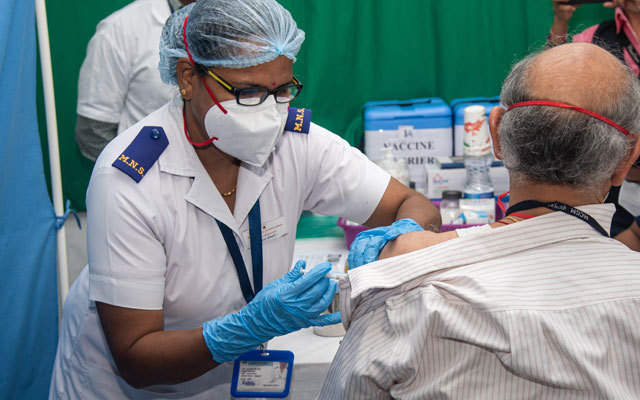
More countries are imposing travel restrictions on Indian arrivals as India continues to grapple with her worst Covid-19 wave of infections.
Some 349,691 new infections were recorded on April 24 alone, giving India the dubious honour of being a record breaker for the most number of Covid-19 infections in a day.
New Zealand, the UK, Italy, the US, the UAE, Indonesia, Singapore and Hong Kong are among countries that have imposed temporary restrictions on travellers who have resided in or visited India.
For instance, New Zealand is suspending the entry of all travellers from India, including her own citizens, for two weeks between April 11 and 28, while the UAE has barred the entry of travellers from India for 10 days from April 25 until May 4.
Humanitarian help is pouring into India as the crisis intensifies. The European Commission is coordinating with member countries to provide oxygen and medicine to India, while Singapore state investment firm Temasek is sending medical equipment, including oxygen-related supplies.
Over the weekend, the White House announced it would lift a ban on sending raw materials abroad, enabling Indian vaccine manufacturers to make more AstraZeneca vaccine.
Amid growing global concern for India’s predicament, Rajeev Kohli and Rohit Kohli, joint managing directors of Creative Travel, one of India’s largest travel and tourism companies, have published a statement urging the public to appreciate India’s past success in Covid-19 pandemic containment.
They noted that the number of cases had dropped across the country, allowing a relaxation of movement restrictions. However, that led India to drop her guard, they opined.
“Our governments, central and state, allowed for large political and religious gatherings (in the millions), and this was perhaps just (the) opening that the virus was looking for. Our governance lacked the foresight to see what was coming. The second wave came so fast that it took us all by surprise. We were not prepared,” they wrote.
The Kohli brothers also expressed: “As you see images of India this week, let’s not forget all the images we saw of body trucks in New York or stretchers on the street in Italy. The world is all the same. We have all suffered the same aspects of the pandemic. A small difference in India is that our last rites are very public, very poignant and very visual, and that makes for good news headlines and graphics. As much as we hate it, we need to accept that media markets tragedy.”
The statement emphasised India’s ongoing efforts, such as the national vaccination programme, as well as the country’s low caseloads and low mortality rates. “India still has one of the lowest per million caseloads and one of the lowest mortality rates at 1.13 per cent against the world average of 2.12 per cent. We have had an average of 147 deaths per million of population, and only 1.3 per cent of the population has been infected,” they wrote.
The statement concluded with a belief that India’s resilience, spirituality and supportive community will take the country out of the latest crisis. – Additional reporting by Rohit Kaul








Destinations which are opening to vaccinated travellers have seen a significant lift in bookings, showing that vaccinations may hold the key to reviving international travel, according to ForwardKeys’ latest data.
Greece and Iceland, which have announced that they will welcome vaccinated visitors this summer, have seen inbound flight bookings pick up dramatically.
Three origin markets, namely, Israel, the US and the UK, where vaccination campaigns are particularly well-advanced, have seen outbound flight bookings climb more steeply than elsewhere.
Greece has seen a surge in interest and flight bookings from major outbound markets such as the US and the UK. The country tops the list of most popular destinations for British travellers this summer, with confirmed tickets for travel between July and September currently 12 per cent ahead of where they were at the equivalent moment in 2019.
Furthermore, analysis of the most resilient destinations in Europe this summer revealed that seven of the top ten cities are Greek. Leading the list is the island of Mykonos, with summer bookings currently standing at 54.9 per cent of what they were at the equivalent point, pre-pandemic.
It is followed by the Spanish island, Ibiza, where bookings are at 49.2 per cent. The next eight destinations in order of resilience are Chania (48.9 per cent), Thira (48.1 per cent), Kerkyra (47.5 per cent), Thessaloniki (43.7 per cent), Palma de Mallorca (41.2 per cent), Heraklion (36.6 per cent), Athens (33.2 per cent) and Faro (32.8 per cent).
The correlation between the announcement of relaxed travel restrictions and bookings is also demonstrated by flight tickets issued from the US to Iceland.
On March 26, its government announced that all vaccinated travellers would be exempt from entry restrictions and the level of issued tickets soared to 158 per cent of what they were during the equivalent week in 2019.
The correlation between vaccination rates and outbound travel is strong, as consumers gain confidence. Bookings to Europe from Israel, which has vaccinated over 60 per cent of its population, are currently at 63 per cent of 2019 levels and bookings from the UK, which has vaccinated over 52 per cent, are at 32 per cent of 2019 levels.
Olivier Ponti, vice president insights, ForwardKeys, commented: “Vaccinations appear to hold the key to reviving international travel, as countries that make clear promises to welcome vaccinated travellers are being rewarded by strong surges in flight bookings. We are seeing a revival of confidence in outbound travel from countries where there has been a successful rollout of Covid-19 vaccines too.”
“From a commercial perspective, the outlook is likely to be a little better than the numbers portray because travellers are booking longer durations. Furthermore, if restrictions are eased in both origin markets and destinations, there are grounds for further optimism because there is strong pent-up demand and, during the pandemic, people have shown themselves willing to make bookings at significantly shorter notice than they used to.”