
Asia/Singapore Monday, 13th April 2026
Page 290

Cendyn makes CRM technology more accessible to speed up hotel recovery

0

An existing pressure on hotels to adapt to evolving technology and customer behaviours has only intensified during the pandemic and travel disruption, as managers struggle to gather and make sense of data while rebuilding customer trust with reduced manpower.

Painting a picture of hotels’ customer relationship management (CRM) journey today, Brad Noe, chief technology officer with Cendyn, said: “Hotels are now completely reliant on the data they gather themselves and the technology they use to manage their data. Hotels need to combine data with the human experience to enhance operating procedures, so they’re fit for purpose. Finding ways for these two elements to interact is how we can adapt to evolving guest expectations and therefore revolutionise the guest experience.”

Hotels need to combine data with 
the human experience to enhance 
operating procedures, so they’re fit for purpose.
– Brad Noe, chief technology officer with Cendyn


However, hoteliers are also faced with a “sheer volume of data points being captured across the entire tech stack”.

“Without a way to wrangle this fragmented data and unite it into a single view, hoteliers are unable to truly leverage their data insights,” said Noe, who added that Cendyn is on a mission to make CRM technology more accessible and easier to use for hoteliers and their customers.

Noe believes that a customer data platform (CDP) has the potential to revolutionise a hotel’s operations to make it more efficient and guest-centric. A unified guest profile from the CDP, coupled with data that is constantly in sync and available across departments, primes the hotel for peak performance.

Cendyn’s recent convergence of its CDP with Pegasus’s central reservations system (CRS) will enable the company to deliver on its mission of personalising and enriching the guest journey, opined Noe.

“Hotels now have a way to collect data and then leverage it to increase revenue — all through one trusted vendor,” he said.

The Cendyn-Pegasus merger sets the foundation for the Cendyn Hospitality Cloud, which gives hotels the tools to take control of their direct-booking channel, enhance brand loyalty, and drive profitability.

The Cendyn Hospitality Cloud is a vertically integrated, cloud-based platform that empowers revenue, ecommerce, distribution, marketing, and sales teams with a single source of truth. It offers a unified view of every guest, and a system of record for rates and reservations.

“The combination of these critical data elements in one platform ensures teams across the business can act on their data to automate, personalise, and transform the experience for every guest at every step of their journey,” explained Noe, adding that the platform is all the more valuable “at a time when hoteliers are being forced to do more with less”.

“They are looking for strategic technology partners who can provide them with the scale, reach, and stability to drive efficiencies and performance as the industry returns to recovery and growth. That’s where the focus of the Cendyn Hospitality Cloud comes in.”

Noe shared that the Cendyn Hospitality Cloud was made possible by Cendyn’s two decades of expertise and “the incredible companies we have merged and acquired over the past few years”.

The company is on track to launch even more new products and 
enhanced existing ones within the Cendyn Hospitality Cloud throughout 2022.

Meanwhile, Cendyn’s representatives will continue to conduct and speak on numerous webinars on hospitality technology.

In 1H2022, representatives will attend the HSMAI Revenue Optimization Conference Asia. Later in the year, it plans to be at ITB Asia 2022 and Travel Tech Asia 2022.

Time for harvest

0

IHG’s revenue was up 40 per cent to US$1.4 billion in 2021, over 2020. Operating profit was up 144 per cent to US$534 million, thanks to a cost base reduction. But Asia lagged behind while China was volatile. How do you feel about this?


Actually 2021 is telling us about the ability of the industry to recover. I feel confident. When I look across the markets that I have the privilege to be responsible for, there are multiple confirmations that a combination of vaccine development, and improvements in the treatment, is raising governments’ confidence, which means that restrictions are relaxed and, as soon as that happens, the industry recovers.

Does the Ukraine crisis throw a spanner in the works?
We remain optimistic for the recovery of travel in our EMEAA (Europe, Middle East, Asia & Africa) region – and around the world – in 2022. The situation in Ukraine and Russia provides a salient reminder of the need to continue to support our people, owners and hotels, especially when they need us most.

So how are you budgeting for Asia this year? I would also love to hear your thoughts on this on Greater China, since you were CEO of the region before becoming CEO of EMEAA.
Well, firstly, we’ve got to stay with the distinct approaches that are being signalled. China is being clear that it is going to continue with the current strategy, that quarantine requirements on international travel will continue for some time. But as soon as conditions are right within China, the Chinese domestic market recovers quickly, as we have seen.

We are highly respectful of the approach that China is taking, and recognise that with a zero-Covid strategy, there will be some volatility.

Other countries in Asia-Pacific are taking more of the living with Covid approach. And that’s where the level of vaccination, the competence of the healthcare systems, the confidence that governments have, come into effect. Different countries are in different stages. But the key is, our projections are of markets coming back.

That means we can confidently invest in our business. We can confidently talk to our partners, owners and colleagues about growth, and signing new deals.

But Asia depends heavily on China. How do you support your owners and hotels if the Chinese aren’t able to travel?
The external situation is whatever it is. You can’t control that. So let’s focus on what we can influence.

Take Thailand as an example. It has opened up, so we’ll then identify the markets where travel corridors are available for Thailand.

The advantage that we bring is the global reach of our brands, and the enterprise platform (IHG Concerto) that we’ve got.

Our partners know that we’re using our marketing campaigns, loyalty programme and other commercial drivers that we’ve got, to source demand and quality revenue into our hotels.

We’ve done a lot of this as markets opened and closed. We have an obligation to do that, because we are standing with our partners, and our colleagues in the hotels.

And this year, we’re bringing a new IHG rewards programme into the business.

We’re also enhancing our digital capability. An example is the next-generation IHG App, which is in pilot stage, with full roll-out planned for this year.

So, whatever it is that governments serve up to us, we’re just going to keep adapting and keep driving the right thing possible.

While on China, despite the strict zero-Covid approach, 40 per cent of all signings globally last year were in China. IHG does not have master licence agreements in China unlike some of the other chains.
We have an impressive team in China, and tremendous scale, as we’ve consistently invested in the China business for many years now. Again, it’s about the strength of the relationships we have with owners, the brand portfolio that we’ve got and the extent to which our business in China is localised.

But there’s also a lot of growth outside China.

Yes, the rest of Asia-Pacific saw fairly good signings – 40 last year. Was that in line with expectations and what is the target this year?
I’m pleased with the result. It’s not just 40 signings but 40 across important markets to us in Asia-Pacific. I deeply believe in the resilience and the growth potential of markets in Asia-Pacific. Coming through the year, the industry in terms of asset ownership has become more confident. Our teams continue to identify opportunities and to talk about what it is that IHG brings to them, and about our expanded brand portfolio.

So, what are you looking at for signings this year?
We don’t give (forward-looking projections) but an important part of our (2021) results message is the confidence that we have in getting back this year to the kind of growth level that’s more like 2018 level, and year after more like 2019 growth level.

I really believe we can build on 2021 – the teams we’ve put in place, our expanding portfolio with Voco, Vignette Collection and others, and the work we’ve done to strengthen our enterprise.

Voco is our fastest-ever global brand launch. It’s now growing in all three regions. Vignette is an important addition that allows us to bring independent hotels into the system yet enable them to retain the vast majority of their unique identity.

I really want to do everything I can to support teams to be successful. Coming out of this (crisis), my role is not to give them big targets and say, just deliver those. Right now, we’ve all got to support each other to be as successful as possible.

That’s partly why I’m here, to find out: What do we all need to do together? How do I support you? And how do I make sure we deliver that promise to our owners what they expect from us?

Speaking of support, I recall IHG was first to be leaner by restructuring in 2017, then again in late 2019, with the aim to be “closer to markets”. It was the first move by Keith Barr when he became CEO. But during earnings call last month, Keith also spoke about cost-cutting and achieving a linear cost base in 2021. I can’t help wondering, how much else could you cut without affecting the support you give to owners?
At the global level, we delivered US$75 million of sustained level of cost savings in 2021 and there’s also a further US$25 million savings. And we said to investors they should expect us to reinvest this into our business.

Clearly, with Covid, we needed to be prudent. We took an approach of making sure that our close-to-market teams were as little impacted as we could because, as you know, we spent a lot of time to build this structure and it’s not just a model for us but for our owners and our hotel teams.

So having built it, we tried to cut it back as little as we could. We retained a lot of capabilities that are close to market. In fact, I’d say we invested in additional capabilities in 2021, supporting our hotels and our guests in an enhanced way.

Banyan Tree Group marks Phuket for debut of new wellness brand

0

Banyan Tree Veya will join Banyan Tree Group’s multi-brand ecosystem this Friday with the opening of the flagship Banyan Tree Veya Phuket within the Laguna Phuket integrated resort.

Banyan Tree Veya Phuket is positioned as a resort that offers bespoke wellness programmes that are built on Banyan Tree’s proprietary eight pillars of well-being. The Veya experience is led by certified multidisciplinary well-being hosts around a three-step protocol of Awareness, Discovery, and Sustenance.

Guests at Banyan Tree Veya Phuket can pursue their wellness practices in the privacy of their villa

Created in direct response to the Covid-19 pandemic, Banyan Tree Veya aims to address a world with an urgent need for reconnecting mind and body on a daily basis.

“With our hyper-stimulated modern life, our nervous systems cannot truly relax and therefore, rest; chronic stress erodes our natural immunity and regenerative capacity. Our ethos #OwnYourPresence guides our mission of inspiring individuals’ to travel inwards and become conscious of how their daily actions, thoughts, and emotions interact with their physical being,” said Ho Ren Yung, senior vice president, brand and commercial of Banyan Tree Group.

Luxury accommodations are emphasised at Banyan Tree Veya Phuket, and guests are able to pursue well-being practices in the privacy of their room. Amenities including a well-being minibar, yoga mats, sound therapy bowls, exercise stretch bands and more.

Attention is paid to healthy meals, with Veya offering plant-forward cuisine that weaves together Asian and Mediterranean influences in a creative, flexitarian approach that respects ingredient provenance.

Menu signatures include bowls, broths and reinterpreted iconic local dishes around a Fuel-Balance-Repair daily sequence. Resident ‘Nutrition Sommeliers’ assist guests in curating a tailored menu during their stay to fulfil dietary needs and preferences.

Banyan Tree Veya Phuket puts guests within easy reach of Bangtao Beach.

Flight Centre secures majority stake in TPConnects Technologies

0

Flight Centre Travel Group (FLT) has increased its equity interest in Dubai-based TPConnects Technologies (TPC) from 22.5 per cent to 70 per cent.

It first invested in TPC in February 2020 with a view to supercharging the development of TPC’s innovative technology platform, which aggregates content from multiple sources including GDSs; low-cost carriers; emerging supplier-direct channels, specifically airlines’ New Distribution Capability (NDC) offerings; and other third party NDC aggregators.

Flight Centre Travel Group’s majority stake in TPConnects Technologies will allow it to respond better to an ever-changing travel distribution landscape

FLT’s leisure and supply chief executive officer Melanie Waters-Ryan explained that the traditional airline distribution model was being disrupted by growing direct buyer-seller connections, new commercial models, increasing presence of new entrant technology providers, and continuing connectivity enhancements.

Waters-Ryan said investing in TPC would enable FLT to ensure it could “source and deliver the best content to our leisure and corporate customers globally” amid the ever-changing distribution landscape.

“TPC has been at the heart of the evolution in airfare distribution during the past decade, and is now engrained in our business and integral to the new operating systems and platforms we are delivering in both the leisure and corporate sectors,” she added.

“By investing further in the business, we have greater influence over future developments and the product’s ongoing evolution, while ensuring we continue to deliver the widest choice of airfares to our customers. Fast-tracking future developments will also provide FLT with a better opportunity to be ahead of our competitors’ comparable solutions,” she said.

FLT’s majority stake in TPC will also bring other commercial benefits such as lower costs in accessing NDC content, access to NDC-related incentives that airlines are increasingly offering to their travel agency partners, and access to new revenue streams through TPC’s offerings to airlines and other travel agency groups, among others.

Rajendran Vellapalath, CEO of TPC, said: “FLT’s investment comes at an important time, given the rapid changes that are taking place in the distribution of air content and with the development of the Airline Retailing Maturity Index, which IATA is now pioneering.”

He believes that “the strong relationship between TPC and FLT will ensure that both companies remain at the forefront of this ongoing change and play a lead role in the future evolution of distribution”.

Alma Resort embarks on solar power project

0

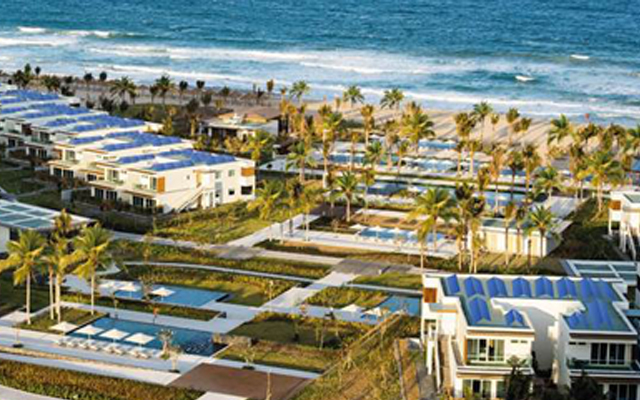
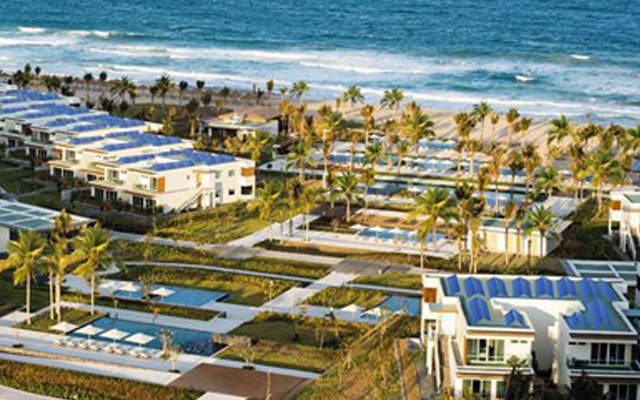
Vietnam’s Alma Resort is installing 5,634 solar panels on its extensive infrastructure as part of an ambitious solar power project that is expected to reduce the property’s carbon dioxide emissions by up to 72,670 tonnes over a 25-year period and save up to US$16.85 million in electricity bills.

The panels will be mounted on 196 pavilions, two V-shaped towers housing various hotel facilities, and the utility building. Operating at a capacity of 2,480 kilowatts peak, the system will power almost half of the resort’s energy needs, depending on its occupancy rate.

Alma Resorts’ solar power project will reduce the property’s carbon dioxide emissions by up to 72,670 tonnes over a 25-year period

According to a statement from Alma, Vietnam has overtaken Thailand as South-east Asia’s largest solar market with hundreds of solar projects under construction. Alma’s managing director Herbert Laubichler-Pichler believes it will soon be incumbent for five-star resorts across the country to follow suit.

“With the weather we have in Cam Ranh, it makes total sense for us to take advantage of an abundance of sunlight and embrace a more sustainable and environmentally-friendly alternative to electricity,” said Laubichler-Pichler.

The solar rooftop modules throughout the resort are engineered, implemented and financed by German companies C Melchers (Vietnam), Aschoff Solar and a German financial institution.

The resort will pay for the system in savings made on its electricity bills within the first decade of operation.

“After the costs are taken out to pay for the solar technology, Alma will still save an additional US$1.96 million on electricity within this 10-year timeframe,” Laubichler-Pichler said.

The resort’s solar project is expected to generate 3.83 million kilowatt hours of energy in its first year of operation. Excess solar energy from one part of the system is used by other facilities on the grid.

The resort also launched a mobile app called Alma Resort last year, which allows contactless communication between guests and staff in real-time during the pandemic, and also serves as a sustainable solution with digital menus, resort maps, and more.

Qantas expands use of SAF with second major fuel deal

0

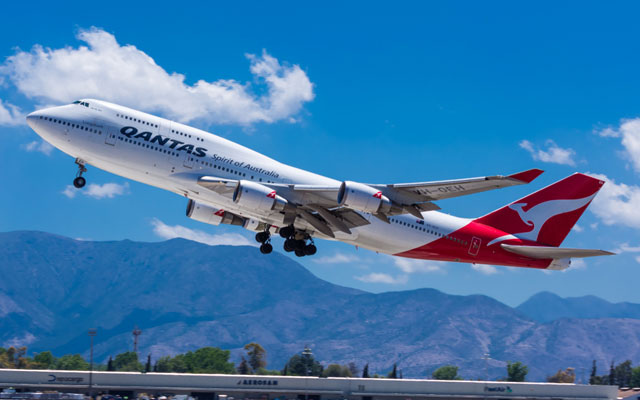
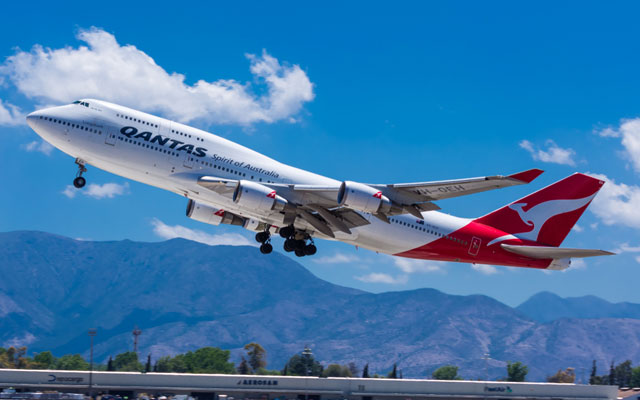
Qantas is tapping into sustainable aviation fuel (SAF) supplies in California to help reduce carbon emissions on its flights from San Francisco and Los Angeles to Australia, through a new deal that will see the use of almost 20 million litres of biofuels each year from 2025.

Supplies will come from US-based biofuels company Aemetis. The SAF will be produced at Aemetis’ plant currently under development in Riverbank, California. It will come from certified feedstock from waste products that is then blended with normal jet fuel.

Qantas’ latest biofuels purchase will benefit flights from San Francisco and Los Angeles to Australia

This is Qantas’ second major offshore purchase of SAF, with the first benefitting flights from London since the start of this year.

The airline is pursuing a number of additional SAF deals, and aims to be net carbon neutral by 2050. It will outline an interim target later this month.

Qantas Group CEO Alan Joyce said SAFs were critical to aviation’s transition to a low emissions future.

“Climate change is front of mind for Qantas, our customers, employees and investors, and it is a key focus for us as we move through our recovery from the pandemic,” Joyce said.

“Operating our aircraft with sustainable aviation fuel is the single biggest thing we can do to directly reduce our emissions. We’re actively looking to source sustainable aviation fuel for our operations, and the deal we’re announcing today is hopefully one of many we’ll make as the market catches up to demand globally.”

Joyce explained that the airline is only able to buy sustainable fuels offshore. “The US, the UK and Europe have industries that have developed with a lot of government support because this is a new field and the long term benefits for those countries are obvious,” he stated.

The airline has pumped A$50 million (US$36.4 million) into the development of an SAF industry in Australia, and will be its biggest customer. Joyce said the move would reduce the nation’s dependence on imported fuels.

“For now, SAF is more expensive than traditional fossil fuels but with the right investment it could grow to a scale where the cost is on par,” added Joyce.

Bart Callens to lead SAii Resorts in Koh Phi Phi, Phuket

0

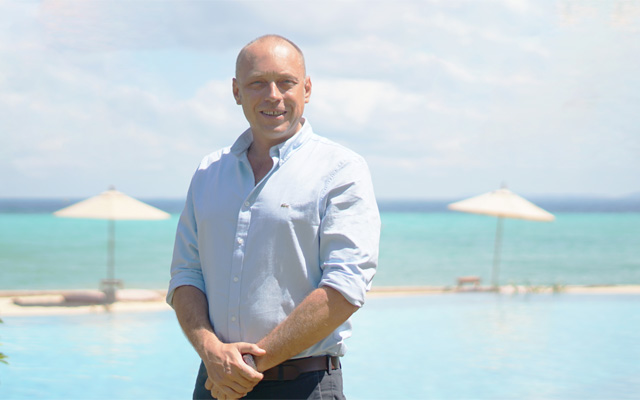
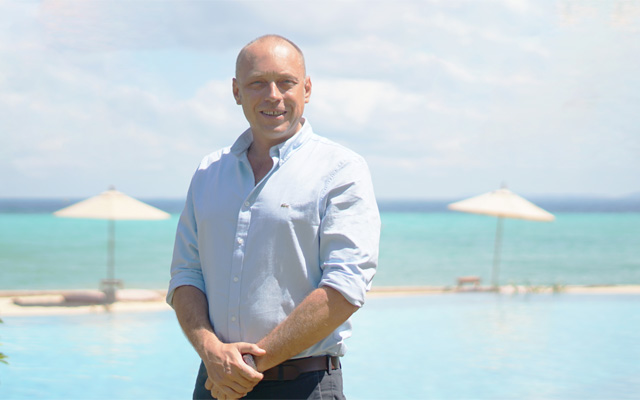
S Hotels and Resorts has appointed Bart Callens as the new cluster general manager of SAii Phi Phi Island Village and SAii Laguna Phuket, two five-star resorts in southern Thailand.

Callens has more than 25 years’ experience in the hospitality industry, with a career spanning four continents – Europe, North America, Africa and Asia – and roles with some of the world’s leading hotel brands. He is also an F&B expert, having led the culinary teams in many major hotels and resorts around the globe, and even a year on a Cunard cruise liner.

He has held leadership roles in South-east Asia for more than a decade.

A confidence challenge

0

Various studies over the course of the travel freeze have found a strong inclination to travel once again. While findings inspire hope in travel and tourism stakeholders, it is difficult to ascertain how many of those intentions will become reality due to the pandemic’s fluidity. Travellers now have more considerations and hurdles to cross when planning for a trip post-lockdown.

Staying visible
Despite the uncertainty, most destinations have continued to campaign with zeal, with a number remaining active throughout the travel freeze to ensure they stay top-of-mind among their target travellers.

Campbell Wilson, CEO of Scoot, noted that many destinations have been “playing up the element of wanderlust” and “invoking nostalgia or a desire to escape the everyday norm”, all of which are “relevant and resonant messages”.

Laura Houldsworth, managing director & vice president, Asia Pacific, Booking.com, agreed. “Many destinations made the shift from conversion-focused campaigns that actively encouraged travel, to campaigns that evoked the emotions and memories they were best known for, for when travel could once again happen,” she said.

Two campaigns, in particular, caught Houldsworth’s attention. The Messages From New Zealand campaign by Tourism New Zealand, reminded travellers of the bonds waiting for them when the time comes, through a series of emotive videos that brought to life a “see you later” text from an old friend.

The other is the Rhythm of Korea campaign by Korean Tourism Organisation, which embraced the power of hallyu and created hashtags like #MeetYouLater.

Booking.com itself also sought to keep travel dreams alive by inspiring individuals through its Booking Explorers campaign in Asia.

Kerry Healy, chief commercial officer, Accor South-east Asia, Japan & South Korea, opined: “I think travel operators and destinations across South-east Asia have done a good job in keeping people dreaming throughout the pandemic.”

Healy pointed out Tourism Authority of Thailand’s Even More Amazing campaign, which showcased the country’s cultural and natural sites; Department of Tourism Philippines’ Wake Up In The Philippines campaign which highlighted pristine island destinations; and the Indonesia Tourism Office’s series of activities under the It’s Time For Bali campaign.

“We have seen the pristine nature and renowned cultural sites of these destinations take centrestage within these campaigns, which is very relevant in today’s context. People want to get back out there and it’s very important that they have something to dream about as border restrictions ease,” she added.

Despite having one of the most stringent travel restrictions in Asia-Pacific before her recent reopening on February 21, Australia remained active in destination marketing. In October 2020, Tourism Australia rolled out Australia in 8D across multiple markets including Singapore, Malaysia and Indonesia. The campaign blended cinematics with 8D audio technology, and created a 360-degree dreamlike soundscape for travellers stuck at home to experience Australia through their headphones.

Tourism Australia’s regional general manager of South & South-east Asia, Brent Anderson, said: “Australia in 8D was a way to engage people with travel and ease their tensions at the same time; during that period, we knew many consumers were turning to online content to alleviate anxieties, with the rise of meditation apps and ASMR content.”

The campaign performed “extremely well”, Anderson noted, driving 1.6 million clicks to Australia.com and leading to a 176 per cent increase in month-on-month website traffic.

Wake Up in the Philippines campaign highlights the best tourism spots all over the country

Removing barriers
However, there are numerous challenges in enticing people back to travel. Current roadblocks include expensive Covid tests, quarantines, varying entry requirements, and other cumbersome border restrictions. Obtaining the most updated travel information is also another challenge, as the situation continues to fluctuate.

“A globally-recognised list of vaccination requirements, as well as the digitalisation of health records, will also facilitate fuss-free travels and go a long way in restoring customer confidence to travel,” Wilson stated.

Houldsworth stated that although governments have advanced the concept of digital vaccine certificates, it would be more helpful if countries could agree “on criteria that meet the needs of testing and vaccinations”.

Aside from ensuring the ease of travel, Healy said destinations must resume key sporting, entertainment or business events to regain travellers’ interest.

One bright spot on South-east Asia’s events calendar, according to Healy, is Singapore’s Formula One night race, which the destination will continue hosting for another seven years until 2028.

“Events like these are vital for recovery as they persuade people to travel again, which is such an important lever for economic growth within South-east Asia,” she added.

Anderson pointed to three key factors that would encourage travellers to move again – peace of mind (with regards to hygiene and safety, and seamlessness of the full travel process); confidence that there are great experiences awaiting that hold up to pre-pandemic standards; and value for money.

“Confidence and reassurance are key,” said Wilson. “Giving travellers confidence in health safety was an early focus, as was ensuring people had confidence that they had flexibility to change plans should government policies change. This is an ongoing task.”

Continuous dialogue
Industry stakeholders also highlighted the need to work closely with government agencies and health experts on a coordinated approach towards travel and tourism resumption.

Wilson said government policies “played an important role” in providing “stability and predictability”.

Healy said it was imperative that governments across the region “consult with us, work with us and allow us to share our expertise”.

She also hoped that more countries would change policies to accept rapid antigen tests – instead of the more costly PCR tests – and align their entry applications.

As more people returned to travel and share their experiences, while processes become simpler or disappear, Wilson said travel confidence would build.

He is confident that once customers have taken their first flight, “any lingering doubts will likely dissipate and subsequent travel plans will naturally fall into place”.

“We have seen a huge demand on routes where pandemic restrictions on quarantines have been relaxed, as well as for Singapore’s Vaccinated Travel Lanes with many countries. This gives us great confidence that it is just a matter of time until full recovery,” he said.

And until that day comes, Anderson said Tourism Australia sees “a strong opportunity to appeal to (travellers’) innate desire to experience new cities and showcase our offerings to them”.

Love never ends: We can’t stop the war, but we can help those affected

0

Does the tourism industry not deserve any joy? It sure feels that way. Our battle with Covid-19 is not yet over, and travel is only just starting to pick up, but there goes Russia mounting an invasion into Ukraine, scuppering plans by Asian destinations to rebuild arrivals through the long-staying, sun-loving Russian holidaymakers.

My correspondent, Raini Hamdi, wrote a lengthy analysis on how the Ukraine-Russian conflict is hurting Asia’s tourism. ForwardKeys data showed a spike in flight cancellations to and from Russia following the attack.

But it is here that I arrest my negativity. You see, it is far easier to see the bad side of things – humans are hard-wired this way, unfortunately, according to psychologists.

Amid the frustrations and despair arising from the Ukraine-Russian conflict, the travel and tourism industry has offered a sliver of light and love to affected communities and colleagues.

Since February 26, Royal Caribbean International has been helping an estimated 500 Ukrainian crew members to return home or get close to home should they wish to leave their contracts early, as well as with counselling. The same help is extended to its Russian crew who are emotionally affected by the conflict.

US-headquartered Sabre, one of the major global travel distribution systems, donated US$1 million to the Polish Red Cross, while Singapore-based Frasers Property has done the same with a contribution of S$100,000 (US$73,332) via Singapore Red Cross. In addition, the latter has called on employees, partners and friends to join its fundraising campaign to gather more financial aid.

It isn’t just the big corporations that are coming forward with help. Individuals are too.

PKF Hospitality Group’s Michael Widmann and Christian Walter as well as Bench Events’ Jonathan Worsley have formed the Hospitality-Helps.org to secure room contributions from hotels operating in Austria, Germany, Hungary, Moldova, Poland, Romania, Slovakia, and the Czech Republic to house fleeing Ukrainians.

Poland-based Insight Vacations tour guide Tim Pendlebury has joined in too, donating his time and energy to pick up Ukrainian families crossing the Poland-Ukraine border into safety. He has also set up a fundraiser on Facebook to support Polish charity, Caritas Polska, which is helping Ukrainians arriving at the border.

I’m sure there are far more heart-warming stories like these out there, as the travel and tourism industry has shown throughout the pandemic – the one crisis that has spared nobody – that selflessness prevails even when individuals and organisations are struggling for survival themselves.

Philippines welcomes all foreign tourists from April 1

0

Travel to the Philippines will be made even smoother with the removal of an arrival cap at all ports of entry across the country from April 1, 2022.

The Department of Tourism (DoT) made the announcement on March 11, following the decision of the Inter-Agency Task Force for the Management of Emerging Infectious Diseases (IATF-EID) to lift the arrival quota for unvaccinated passengers.

The Philippines will open to fully vaccinated tourists from all countries, without arrival limits, from April 1; Coron, Palawan pictured

Arriving passengers will submit a negative laboratory-based antigen test result taken within 24 hours from departure. This replaces the initial requirement of a negative RT-PCR test taken 48 hours prior to departure from point of origin.

The resumption of visa issuance by Philippine embassies and consulates will also start on April 1 to coincide with total removal of arrival quotas.

“This latest development opens the country to all fully vaccinated tourists from all countries, and means the country’s tourism industry is well on its way to recovery,” said tourism secretary Berna Romulo-Puyat.

“We at the DoT thank our colleagues in the IATF for approving such measures that will help sustain the recovery of the sector in the coming months. We have high hopes that all of these will result in an uptick in international travelers visiting the country during the summer season,” Puyat added.

The IATF Resolution 164-A also allows the entry of passport holders from Hong Kong and Macau for a period not exceeding 14 days.

There will also be reciprocal recognition of Covid-19 vaccination certificates from Croatia, Cyprus, and Nepal which are among the 157 countries whose citizens can enter the Philippines without a visa.

“While our domestic tourists have been the pillar of our recovery, we are also excited to welcome more foreign visitors in the weeks ahead. Such a move to further ease our borders and recognise the vaccination certificates of other countries is very important, noting that our top foreign markets were part of the visa-free countries,” she added.

Since reopened the borders to foreign travellers from visa-free countries on February 10, the Philippines has recorded 76,736 arrivals at the main airports. Of these, 43,249 were foreign tourists.