Dusit International has appointed Gilles Cretallaz as its new chief operating officer, replacing Lim Boon Kwee, who retired from the position in May 2022.
In this new role, Cretallaz will be responsible for overseeing the financial and operational responsibilities of Dusit’s hotel business unit, including all Dusit Hotels and Resorts, ASAI Hotels, Elite Havens, White Label properties, and condominiums/residences under Property Management, at both corporate and property levels.
The French national brings to the role more than 30 years of experience leading hotels for the Accor group across Turkey, China, and South-east Asia. Before moving to Dusit, Cretallaz served as senior vice president operations – South-east Asia where he headed Accor’s Bangkok Office and oversaw the operations of 150 hotels.
Go First’s inaugural direct flight from Kochi to Abu Dhabi took off on June 28 at 20.05, marking the start of the new route.
Formerly known as GoAir, Go First will operate three direct flights per week between Kochi and Abu Dhabi. Return fares start from Rs15,793 (US$200).
Go First’s inaugural Kochi-Abu Dhabi flight took off on June 28
Kaushik Khona, CEO of Go First, said: “Abu Dhabi has always been a focus city for us. We are pleased to inaugurate new non-stop flights connecting Kerala with Abu Dhabi, which will not only benefit the blue-collar workers, but also the travellers who are planning to visit the UAE and Kerala during the summer holidays.”
Other recently commenced daily direct flights by Go First include Kochi to Kuwait and Kochi to Muscat.
The central Indian state of Madhya Pradesh has grown in popularity as a tourist destination over the years in both domestic and international markets. Also known as the heart of India, Madhya Pradesh offers diverse tourism products including wildlife, heritage, cultural, adventure and spiritual trails.
With the pandemic situation drastically improved in India, the state is experiencing healthy tourist demand, especially from domestic travellers.
Travellers are opting for outdoor and adventure experiences, such as visiting tiger reserves; Bandhavgarh National Park pictured
Rajeev Kale, president and country head, holidays, MICE, visa, Thomas Cook (India), said: “Pandemic-induced safety concerns have led to travellers opting for outdoor and adventure experiences, including safaris, and Madhya Pradesh offers several such options. Tiger reserves like Kanha National Park, Bandhavgarh National Park and Pench National Park that served as an inspiration for the famous novel The Jungle Book are (benefitting from) pent-up demand.”
Travel consultants noted that strong domestic tourism pick-up coupled with trending appetite for off-the-beaten-track places are helping to enhance the popularity of Madhya Pradesh as a tourist destination.
Daniel D’Souza, president and country head – holidays, SOTC Travel, said domestic tourism demand now has surged over 120 per cent vis-à-vis pre-pandemic numbers.
He added: “Madhya Pradesh is emerging as an enthralling traveller’s haven with its fascinating history, diverse wildlife, vibrant culture, majestic waterfalls through verdant landscapes, indulgent cuisine and spiritual trails. Right from UNESCO World Heritage Sites like Khajuraho, Bhimbetka and Sanchi Stupa to Pachmarhi – the state’s only hill station, also listed as a UNESCO Biosphere Reserve or the architectural wonders of Mandu, Madhya Pradesh is attracting travellers across segments to explore the hidden gems of this fascinating destination.”
Growing demand from both leisure and MICE markets has attracted hotel developments in the region, with Choice Hotels India’s Comfort Inn Vilasa opened recently and Brij Hotels’ Brij Sone Bagh in Bandhavgarh set to launch end of this year.
Udit Kumar, co-founder, Brij Hotels, observed that domestic travellers are looking for the unexplored and “demanding something more than just a luxurious stay”.
As such, Brij Sone Bagh will focus on “providing the most unique locally-immersive experiences to our guests”.
“With Indian borders now open and more weekly international flights having recently been added in June, travel demand is expected to rise further,” added Udit.
Madhya Pradesh Tourism Board (MPTB) has been actively promoting the diversity of the destination in both domestic and international markets – hosting and promoting various cultural festivals in the state, as well as promoting the destination for film shoots.
“Till now, more than 150 projects including feature films, television serials and reality shows have been shot in Madhya Pradesh. After the implementation of the Madhya Pradesh Film Tourism Policy-2020, the state government is encouraging film tourism by providing subsidies and all permissions and clearances through a single-window online system,” said Yuvraj Padole, deputy director – events and marketing, MPTB.
Hasrat: this beautiful state is going to see increased demand in the near future
MPTB has also organised events like Khajuraho Dance Festival, Gwalior Music Festival and Tribal Food Festival to attract and promote tourism.
Kanika Hasrat, area director – Uttar Pradesh, MP & Uttarakhand, Indian Hotels Company & general manager of Taj Lakefront Bhopal, shared: “We collaborated with MPTB for the Tribal Food Festival which showcased the unique culture and food of the indigenous tribes from the state to a host of invited bloggers from across the country.”
However, despite the rapid strides Madhya Pradesh has made as a tourist destination, it has yet to create a similar impact as other popular destinations like Rajasthan and Kerala.
D’Souza explained: “While improved infrastructure, increased awareness (due to the state’s innovative marketing) and a diverse range of tourist experiences has put Madhya Pradesh on the map, direct flight connectivity remains a challenge. Hub and spoke connectivity from gateway Indian cities will help attract both global and domestic travellers.”
According to Hasrat, there is a need to create awareness about the hidden gems of the state, like Chanderi and Maheshwari.
“I am confident that with the combined effort of the hospitality and tourism industry and the state’s tourism department, this beautiful state is going to see increased demand in the near future,” concluded Hasrat.
Editor’s note: A correction has been made to the original copy which stated that Brij Hotels’ Brij Sone Bagh has opened. The property will only launch end of this year.
The Fullerton Hotels and Resorts has appointed Gino Tan as country general manager.
In this newly-created role, Tan helms the leadership teams in The Fullerton Hotel Singapore, The Fullerton Bay Hotel Singapore and The Fullerton Hotel Sydney.
Tan is a seasoned hospitality professional with almost 30 years of operational and marketing leadership experience under his belt. Prior to joining The Fullerton Hotels and Resorts, he was vice president hotel operations at Pan Pacific Hotels Group.
Kikuhiko Okura is the new president and representative director of Hotel Okura in Japan.
Okura has been with Hotel Okura Group since November 2019, when he was first appointed corporate advisor, as well as president of Hotel Okura Amsterdam.
He has since served in various executive positions in the Hotel Okura Group, brings to his new role more than 25 years’ experience in the financial services sector in both the US and Japan.
Business Premier Luxe suite lets two dine in comfort
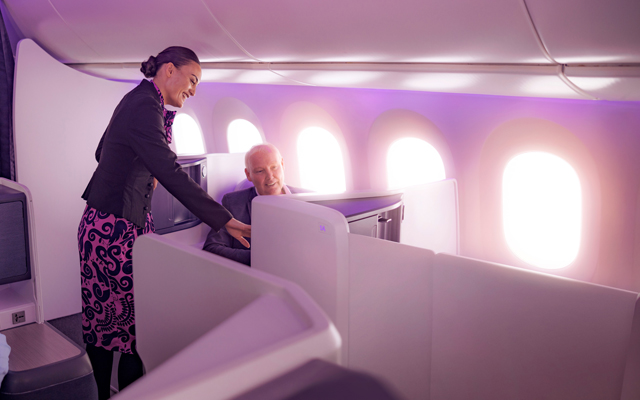
Air New Zealand will soon be able to offer a new Business Premier Luxe suite, a new Business Premier seat, and the world’s first Skynest when the airline’s new Dreamliners touch down in 2024.
This is in response to extensive customer research over five years, where the importance of a good night’s sleep, and the need for more space and comfort have been highlighted.
1 of 4
Business Premier Luxe suite
Business Premier Luxe suite with a fully-closing door for privacy
Business Premier Luxe suite lets two dine in comfort
Skynest is the world’s first sleep pods in the sky for Economy travellers
The new Business Premier Luxe seat has been designed for customers looking for more space and privacy. It has all the features of a Business Premier, with the addition of a fully-closing door and space for two to dine comfortably.
Meanwhile, Skynest will be the world’s first sleep pods in the sky for Economy travellers. A concept first announced in 2020, Skynest will offer six lie-flat options for better rest.
The airline has also added a Sky Pantry to the Premium Economy and Economy cabins, where customers can stretch their legs, and grab some food and drinks.
The eight Boeing 787-9 Dreamliners arriving from 2024 and retrofitted current 787-9 fleet will have either eight or four Business Premier Luxe seats, 42 or 22 Business Premier, 52 or 33 Premium Economy, 125 or 213 Economy seats, and specifically on the ultra-longhaul aircraft, six Skynest sleep pods.
Air New Zealand’s CEO Greg Foran said: “New Zealand’s location puts us in a unique position to lead on the ultra-longhaul travel experience. We have zeroed in on sleep, comfort, and wellness because we know how important it is for our customers to arrive well-rested.
“It’s a proud moment to finally unveil five years of hard mahi (work), in what truly is a cabin of possibility – one that will provide customers with options to get some shuteye wherever they’re sitting.”
Air Canada is expanding its route network with the addition of Bangkok, Thailand – the carrier’s first non-stop service to South-east Asia – as well as resuming flights to Mumbai, India.
Both routes are subject to receiving final government approvals.
Air Canada is expanding services to Bangkok and Mumbai
Air Canada’s seasonal service to Bangkok will operate from Vancouver International Airport, while the carrier’s Mumbai flights will operate from Toronto Pearson International via London-Heathrow.
Mark Galardo, senior vice president, network planning and revenue management, Air Canada, said: “We are extremely pleased to be launching our first non-stop service to South-east Asia this winter, the only direct flight between North America and Thailand.
Galardo added: “We continue to pursue our strategy of expanding our global network in response to pent-up demand and expect to operate approximately 81 per cent of our 2019 international capacity this winter.”
As international meetings and events faded out of Taiwan over the past two years of the global health crisis, the government turned its attention to something that it could not do during the many years of packed business events calendar – it led a digital transformation in the business events industry.
Through staging virtual and hybrid events over the last two years, the industry was able to identify and rectify gaps in this capability that has shown to be critical for business continuity.
At the same time, Taiwan’s hotels and venues committed to upgrades while new experiences were born, all to prepare for the return of international events and attendees.
The Kaohsiung Exhibition Center hosted the Wind Energy Asia 2022 in March
Supporting the digitalisation effort is the Taiwan External Trade Development Council (TAITRA), which created an online exhibition platform that provides product displays and online meeting services to enable Taiwan’s industries to communicate with foreign buyers throughout the pandemic. A TAITRA spokesperson also shared that smart technology and big data analysis were introduced to various business activities, which “not only improved the efficiency of events but also captured more business opportunities through precise marketing methods”.
“With the dynamic power of technologies and digitalisation, we will continue to work together with MICE professionals to revitalise the industry and propel it forward in the post-pandemic era,” the spokesperson added.
TAITRA’s digitalisation focus echoes through the industry, with many event venues investing in facility upgrades to ensure they are ready for future events.
Taipei World Trade Center, TAINEX 1, TAINEX 2 and Kaohsiung Exhibition Center are all equipped with 5G communications, allowing event participants and visitors to quickly locate booths on their smart devices.
Also in on the technology game is the 30-year-old Taipei International Convention Center (TICC), which established a brand-new digital studio, TICC 103 iStudio, in 2021 to appeal to meeting planners. The facility can support livestreams, webinars as well as virtual and hybrid meetings.
Set to complete in 2023, Taoyuan Exhibition Centre will boost the destination’s venue portfolio with 10 meeting rooms that can take between 100 and 2,000 attendees.
When Kaohsiung Exhibition Center (KEC) hosted gaming event League of Legends: Wild Rift in November 2021, 5G experiential visits surged past 41,700, including onsite and online livestreaming. The figure was 10 times more than in-person visitors during the physical event.
Come August, KEC will welcome the 11th Creative Expo Taiwan, the largest gathering for the creative industry.
Michael Tu, president of KEC/Interplan Group, told TTGmice that the venue’s digital transformation has bestowed it with various technical solutions, such as 3D 4K Beam Display projection and 360-degree real-time production, to deliver immersive exhibitions and events.
“Along with our 5G infrastructure, we will inspire PEOs and PCOs to create unforgettable hybrid experiences for the satisfaction of visitors and attendees,” Tu added.
However, GIS Group, founder and CEO, Jason Yeh, noted that not all venues in Taiwan are equipped with 5G infrastructure even as demand is moving towards the high-tech end.
Episode Hsinchu
“High-tech exhibitors demonstrating interaction between robots or hosting game shows with Virtual Reality devices require very low‑latency and low-delay. Wi-Fi is not enough to support such exercises, and 5G is the best solution now. But as not all venues are (equipped) with 5G, it results in very high cost for setup on a project basis,” said Yeh.
That limitation aside, Pairry Chiang, director of impact with event organiser Asia Concentrate Corporation, said technology could be harnessed for Sustainable Development Goals (SDGs).
Chiang shared that a proposal was put to MEET Taiwan, the events promotions agency of the Ministry of Economic Affairs, to play a leading role in connecting PCOs with various technology companies to help events meet SDGs.
For instance, the Asia Pacific Social Innovation Summit in May 2022 has made sustainability a key focus this year. It utilised the Taiwan iPass, an electronic ticket loaded with tourism resources, to encourage attendees to rely on mass transportation. Local ingredients were also prioritised in the preparation of lunchboxes.
“There are many things MEET Taiwan can assist to make business events in Taiwan more sustainable,” opined Chiang.
Meanwhile, event planners considering Taiwan will be glad to know that the accommodation scene has not remained stagnant during the travel freeze.
Ten new hotels were opened in 2020 and 2021, with more in the pipeline. Some of the upcoming openings include Hotel Indigo Alishan in Chiayi County, Wyndham Sun Moon Lake and InterContinental Taichung Hotel.
Hyatt Hotels Corporation has also extended its footprint in Taiwan, where on April 1, it opened Episode Hsinchu. Following that later this year is Hyatt Place New Taipei City Xinzhuang, as well as Park Hyatt Taipei, Andaz Taipei, Hyatt Centric Songshan Taipei, and Hyatt Regency Kaohsiung – all set to launch over the next two years.
Loyalty programmes get more creative and competitive to increase customer engagement
Hotels are moving from being a ‘travel product’ to a ‘lifestyle’ product
Perks are curated to appeal to both domestic and international travellers
Freshly revamped loyalty programmes show a turning point in how chains are re-engaging guests and increasing direct bookings and incremental revenues as customers get back on the road.
Chains including Global Hotel Alliance (GHA) and Shangri-La Group are going beyond the traditional earn-and-burn points for free nights, breakfasts, late check-outs and upgrades.
Shangri-La Group’s revamped Golden Circle comes with a new Members Day flash sale on the sixth day of each month
GHA Discovery, owned by independent hotel companies including Kempinski Group and Minor Hotels, relaunched last December, fielding the industry’s first digital rewards currency, Discovery Dollar or D$.
Members earn these dollars (D$1 = US$1) from day one, starting with four per cent on eligible spend, and higher as they move up the membership tiers.
Currently, a stay is required to redeem D$, but from next year, D$ can also be earned and burned in any GHA brand hotel on spa, dinner or drinks – even at home and without a stay. The programme already has offers that give members free access to hotel facilities such as beach, pool, gym and sauna.
To incentivise spending beyond room nights, the programme dangles not only stay deals but local offers – typically discounts on F&B, spa treatments – and unique experiences for members to book. A Helicity experience offered by Hotel Indonesia Kempinski Jakarta takes guests on a 30-minute private helicopter tour of the city, with a one-minute video as a keepsake.
Some 500 local offers and exclusive experiences are available, according to GHA Discovery CEO, Christopher Hartley. With NH Hotel Group having joined the alliance on June 20, Hartley expects a “substantial” boost in these offerings. Owned by Minor, NH has more than 350 hotels under three brands.
Shangri-La Group unfurled its revamped Golden Circle in April with similar threads: a simple and clear way to earn points (US$1 = 15 points) for all Shangri-La products and experiences. Special benefits, such as Shangri-La All Access, grants members full access to hotel facilities where they live, even without staying.
It offers more flexibility, such as using cash, points or both for stays and dining experiences, and removing blackout dates and dynamic redemption rates for all room redemptions. Plus it includes a new app that allows members to plan a trip, book a gourmet experience and buy items from the Shangri-La boutique directly via mobile.
A new Members Day incentivises members to book perks-laden stays, be it family vacation, staycation and others, curated by the Golden Circle team and released on the sixth day of each month. These offers are available for only 48 hours.
Christine Lu, Shangri-La Group’s chief marketing officer, said: “It’s not just about offering our members limited-time offers and good deals, but a curated showcase of the full range of Shangri-La products and experiences across the entire group – from our F&B offerings, Shangri-La branded merchandise, to our wellness and family experiences. It is meant to create a regular platform for members, so that they have reasons to engage with us on a more regular basis.”
Hartley: especially important to incentivise customers after their long break from travel
Changes that stick
The pandemic saw chains scrambling to cater to locals with deals such as family staycations, work or study from hotels, pool access, food delivery, and so on. This changes the idea of hotels from a ‘travel’ to ‘lifestyle’ component. As Lu puts it, it is about making Shangri-La “their second home”.
Chains are mindful of changes in customer behaviour as well. The frequent business traveller, for instance, may replace some trips with virtual meetings, but increase leisure and ‘bleisure’ travel.
This means chains have to ensure their programmes are relevant in post-lockdown, catering for both local and international demand, and new guest aspirations. This accounts for the loyalty programme transformation in the industry, and the eagerness of chains to reintroduce these programmes – and themselves – often with tactics such as giving double points or, in the case of GHA Discovery, double D$ in its recent campaign.
“We feel it is especially important to incentivise our customers to re-engage with GHA Discovery again after the long pandemic and to learn about our new programme. And giving them more D$ as a reward is a great way to achieve that,” said Hartley.
Some D$25 million have already been issued this year, which shows the programme is aiding the ongoing recovery for member brands, he said.
Fierce competition
The likes of GHA and Shangri-La must stand shoulder-to-shoulder – or taller – with behemoths such as IHG, Accor and Marriott, which have also transformed their loyalty programmes.
GHA Discovery, with 800 hotels and 22 million members is big, but small when compared with, say, IHG One Rewards with 6,000 hotels and 100 million members.
Already, loyalty plans are jostling to stand out through differentiation. A case in point is Good Travel With Marriott Bonvoy, which pulls together experiences that centre on environmental and marine preservation, as well as community engagement, across its hotels in Asia-Pacific for Bonvoy members to book.
A Coral Seed Making experience at The Ritz-Carlton in Okinawa raises awareness of how corals face threats from global warming and includes a lecture on coral ecology and making seedling in The Onna Fishing port. It costs 9,000 yen (US$66) per person.
The value of Good Travel goes beyond revenue, said Bart Buiring, Marriott International’s chief sales and marketing officer, Asia-Pacific.
He added: “The pandemic has shifted the way people travel. Travellers are more thoughtful and are increasingly making decisions with purpose in mind. We expect to meet these evolving demands by providing them with more ways to connect with local communities on a deeper level.”
Good Travel now features 100 hotels across the region since its pilot last year. Most of the experiences are new, with hotels creating them with local experts and NGOs, said Buiring, while the handful that were already available have gained more visibility through Marriott Bonvoy.
The response has been “overwhelming”, Buiring said. As to whether Good Travel will be expanded globally, he said the focus is to first expand it further in the region, especially as travel gradually returns.
Michael Marshall, chief commercial officer of Minor Hotels, said GHA Discovery can compete well.
“From our perspective, GHA ensures independent and culturally diverse hotel brands in the upscale and luxury segment can compete with major global brands, while retaining their individuality and uniqueness,” he said.
Consumers in Asia-Pacific are showing a stronger interest in sustainability while traveling when compared to global averages, finds a study by Expedia Group that analyses data from Japan, India, China, and Australia.
A whooping 95 per cent of Asia-Pacific travellers are keen on sustainable options when booking a trip
APAC consumers seek sustainable options while travelling
Globally, 90% of travellers want to see sustainable options when booking a trip. This trend was even stronger in the APAC region, with 95% of travellers indicating interest in sustainable travel options, as compared to other surveyed regions, including the Americas at 74% looking for sustainable travel options, and Europe at 69%.
India and China emerge as countries showing the most interest in sustainable travel, with 98% of Indian and 96% of Chinese consumers saying they look for sustainable travel options.
Australia and Japan also show strong interest in sustainable travel, with 72% and 56% respectively saying they look for sustainable travel options.
Increasing importance of sustainable travel in Australia and Japan
Compared to previous trips, Japanese consumers are 280% more likely to stay in accommodations or lodging that are actively lessening environmental impact and 125% more likely to use environmentally friendly transport for their next trip.
For their future travels, Australian consumers are 74% more likely to use providers who declare a commitment to sustainable practices. Additionally, on their next trip, 63% of Australians plan to support local communities by buying from local stores and restaurants, rather than chains.
APAC consumers pay a premium for sustainable travel
APAC consumers are aware that sustainability comes at a cost, and they are willing to pay more to ensure that their trip is sustainable. Overall, 100% of APAC consumers said they would be willing to pay more for sustainable travel.
APAC consumers are willing to pay 41% more for sustainable travel options, with Indian consumers willing to pay up to 44% more. Those in Japan and Australia are willing to pay 25% or so for sustainable travel.
For 56% of APAC consumers, they are willing to pay more for sustainable food and activities, closely followed by additional transportation and lodging costs.
Sacrificing convenience and comfort for sustainable travel
Compared to the Americas and Europe, 96% of APAC consumers are willing to make sacrifices if it means that they can be a more sustainable traveller.
In giving up convenience and comfort while travelling, 53% of APAC consumers are willing to do so, followed by 50% who are willing to sacrifice time travelling to a destination and accommodation convenience.
Australian and Japanese consumers are more likely to sacrifice the time it takes to travel to a destination than other factors.
Sustainable travel differs by country
Sustainability has become a common term in many spaces, but the meaning of the word can differ from person to person and region to region. Across the APAC region, supporting local economies, supporting local cultures and communities, and lessening environmental impact are considered aspects of sustainable travel, according to about 70% of respondents.
Looking at the country-specific data, different patterns emerge. In Australia, over 75% consumers believe that lessening environmental impact is a part of sustainable travel. Australians were less likely to say that supporting local economies, cultures, and communities were part of sustainable travel. Fewer than 40% of respondents saw visiting lesser-known destinations as a part of sustainable travel.
Supporting local cultures and communities was the most popular response for Indian consumers, with 74% indicating that as sustainable travel. Chinese respondents were split between lessening environmental impact and supporting local economies as the most popular answers.
In Japan, supporting local economies as a part of sustainable travel had the highest percentage of respondents at 50%. Less than 40% of respondents saw supporting local cultures and communities or visiting lesser-known destinations as part of sustainable travel.
Looking for sustainable travel information from various sources
More than 66% of APAC consumers are looking to learn more about travel options with low environmental impact and options that support local cultures and communities. More than half want to see this information from local destinations, tourism, or visitor resource groups. Just under half of respondents want more information about sustainability from accommodation or lodging companies and transportation providers.
Preferred sustainable travel destinations differ by country
Over 50% of Chinese and Indian respondents are looking for sustainable options in major cities, compared to less than one-third looking for travel options in lesser-known towns or resorts.
However, 56% of Japanese consumers and 46% of Australians are looking for sustainable travel options in a lesser-known destination. Only 18% of Japanese respondents are looking for sustainable options in a major city.


 The French national brings to the role more than 30 years of experience leading hotels for the Accor group across Turkey, China, and South-east Asia. Before moving to Dusit, Cretallaz served as senior vice president operations – South-east Asia where he headed Accor’s Bangkok Office and oversaw the operations of 150 hotels.




 Tan is a seasoned hospitality professional with almost 30 years of operational and marketing leadership experience under his belt. Prior to joining The Fullerton Hotels and Resorts, he was vice president hotel operations at Pan Pacific Hotels Group.
 He has since served in various executive positions in the Hotel Okura Group, brings to his new role more than 25 years’ experience in the financial services sector in both the US and Japan.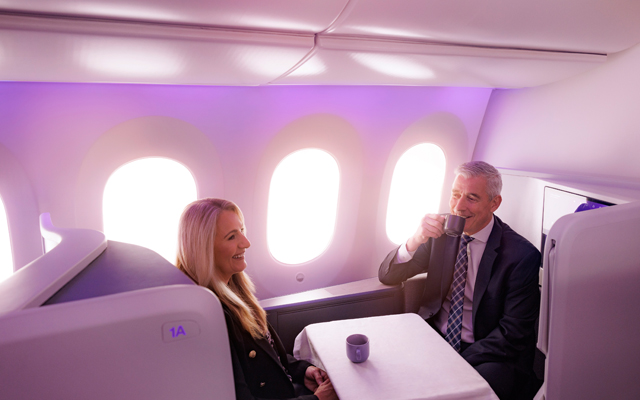













Consumers in Asia-Pacific are showing a stronger interest in sustainability while traveling when compared to global averages, finds a study by Expedia Group that analyses data from Japan, India, China, and Australia.
APAC consumers seek sustainable options while travelling
Globally, 90% of travellers want to see sustainable options when booking a trip. This trend was even stronger in the APAC region, with 95% of travellers indicating interest in sustainable travel options, as compared to other surveyed regions, including the Americas at 74% looking for sustainable travel options, and Europe at 69%.
India and China emerge as countries showing the most interest in sustainable travel, with 98% of Indian and 96% of Chinese consumers saying they look for sustainable travel options.
Australia and Japan also show strong interest in sustainable travel, with 72% and 56% respectively saying they look for sustainable travel options.
Increasing importance of sustainable travel in Australia and Japan
Compared to previous trips, Japanese consumers are 280% more likely to stay in accommodations or lodging that are actively lessening environmental impact and 125% more likely to use environmentally friendly transport for their next trip.
For their future travels, Australian consumers are 74% more likely to use providers who declare a commitment to sustainable practices. Additionally, on their next trip, 63% of Australians plan to support local communities by buying from local stores and restaurants, rather than chains.
APAC consumers are aware that sustainability comes at a cost, and they are willing to pay more to ensure that their trip is sustainable. Overall, 100% of APAC consumers said they would be willing to pay more for sustainable travel.
APAC consumers are willing to pay 41% more for sustainable travel options, with Indian consumers willing to pay up to 44% more. Those in Japan and Australia are willing to pay 25% or so for sustainable travel.
For 56% of APAC consumers, they are willing to pay more for sustainable food and activities, closely followed by additional transportation and lodging costs.
Sacrificing convenience and comfort for sustainable travel
Compared to the Americas and Europe, 96% of APAC consumers are willing to make sacrifices if it means that they can be a more sustainable traveller.
In giving up convenience and comfort while travelling, 53% of APAC consumers are willing to do so, followed by 50% who are willing to sacrifice time travelling to a destination and accommodation convenience.
Australian and Japanese consumers are more likely to sacrifice the time it takes to travel to a destination than other factors.
Sustainable travel differs by country
Sustainability has become a common term in many spaces, but the meaning of the word can differ from person to person and region to region. Across the APAC region, supporting local economies, supporting local cultures and communities, and lessening environmental impact are considered aspects of sustainable travel, according to about 70% of respondents.
Looking at the country-specific data, different patterns emerge. In Australia, over 75% consumers believe that lessening environmental impact is a part of sustainable travel. Australians were less likely to say that supporting local economies, cultures, and communities were part of sustainable travel. Fewer than 40% of respondents saw visiting lesser-known destinations as a part of sustainable travel.
Supporting local cultures and communities was the most popular response for Indian consumers, with 74% indicating that as sustainable travel. Chinese respondents were split between lessening environmental impact and supporting local economies as the most popular answers.
In Japan, supporting local economies as a part of sustainable travel had the highest percentage of respondents at 50%. Less than 40% of respondents saw supporting local cultures and communities or visiting lesser-known destinations as part of sustainable travel.
Looking for sustainable travel information from various sources
More than 66% of APAC consumers are looking to learn more about travel options with low environmental impact and options that support local cultures and communities. More than half want to see this information from local destinations, tourism, or visitor resource groups. Just under half of respondents want more information about sustainability from accommodation or lodging companies and transportation providers.
Preferred sustainable travel destinations differ by country
Over 50% of Chinese and Indian respondents are looking for sustainable options in major cities, compared to less than one-third looking for travel options in lesser-known towns or resorts.
However, 56% of Japanese consumers and 46% of Australians are looking for sustainable travel options in a lesser-known destination. Only 18% of Japanese respondents are looking for sustainable options in a major city.