

Karnataka is advancing tourism growth through policy support, regional development and rising domestic demand, with a focus on experiential travel and lesser-known destinations
“Karnataka offers immense opportunities for investors and stakeholders across ecotourism, heritage conservation, adventure tourism and hospitality infrastructure. Through our Tourism Policy 2024-29, we are committed to creating a robust ecosystem that balances growth with sustainability while ensuring community participation and global visibility for Karnataka as One State, Many Worlds,” said Thrilok Chandra KV, secretary, tourism department, government of Karnataka.
The policy aims to attract over 78 billion rupees (US$936 million) in investments, generate 150,000 jobs and promote the state across different global tourism events. Authorities have also identified 25 tourism themes and 44 priority projects, supported by incentives and public-private partnership (PPP) models to accelerate development. Karnataka is aiming to be among the top five destinations for foreign tourist visits in India by 2030.
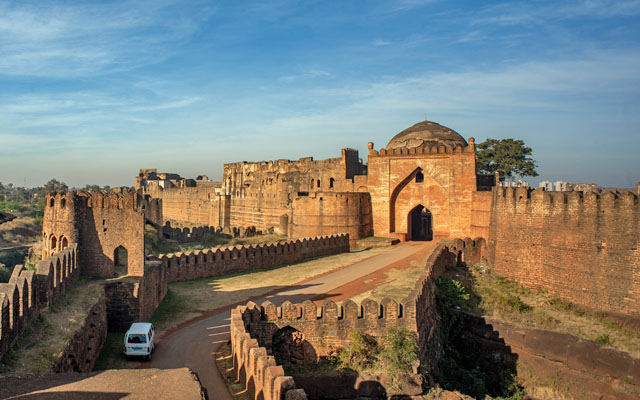
As part of its regional outreach, the Karnataka Tourism Society (KTS), in collaboration with the Ministry of Tourism, government of India, and the tourism department of the Karnataka state government, recently organised the Explore Kalyan Karnataka workshop and B2B meet. The initiative focused on promoting lesser-known districts such as Bidar, Kalaburagi, Yadgir, Raichur, Koppal and Ballari.
“The Kalyan Karnataka region, with its rich heritage and layered history, deserves greater visibility in India’s tourism landscape,” Chandra noted, adding that ongoing initiatives will drive destination development, heritage conservation and community participation.
Echoing this sentiment, Syama Raju, president of KTS, said: “We expect engagements like Explore Kalyan Karnataka workshop to translate into stronger trade interest with tour operators including Kalyan Karnataka in their itineraries, thereby boosting brand positioning and expanding tourism circuits across Karnataka.”
The state government is also preparing a dedicated tourism policy for coastal Karnataka, alongside a comprehensive coastal tourism development plan. Plans include improving connectivity through seaplanes and heli-taxi services, promoting river cruises and enhancing infrastructure through private sector participation.
In a bid to preserve heritage, the government will train and accredit 1,000 ‘smaraka mitras’ (firms and NGOs designated for conserving, maintaining and developing tourist amenities at a site for at least five years) across more than 1,800 protected and unprotected monuments. Key infrastructure projects include a one billion rupees plan to develop Anjanadri Hill into a world-class destination, a new tourism circuit connecting Gadag, Kappatagudda and Lakkundi, and a ropeway project in Chikkamagaluru, which were announced in the state’s budget in March this year.
Industry stakeholders indicate that these policy moves align with evolving travel trends, particularly the surge in domestic and experiential tourism.
Ritwik Khare, founder and CEO of ELIVAAS, said Karnataka continues to be a strong-performing destination, driven by demand for premium, shorthaul leisure travel. “Our Coorg location has picked up exceptionally well, benefiting from strong weekend demand from Bengaluru travellers. At the same time, our Bengaluru properties are seeing consistent traction from staycations, workations and corporate offsites,” he shared.
ELIVAAS is now planning to expand into emerging destinations such as Nandi Hills near Bengaluru while strengthening its presence in key markets across the state.
“We are also launching business stays in key cities of the state to cater to corporate travellers and leadership off-sites, which makes Bengaluru a key focus market,” added Khare.
Heritage hospitality is also witnessing positive traction, driven largely by domestic travellers. Abhishek Bhattacharya, head of sales at WelcomHeritage, told TTG India that the company’s Shivavilas Palace property recorded its highest revenue in three years during FY2025-26.
“Our strongest source markets are the metropolitan hubs of Bengaluru, Hyderabad and Mumbai, driven by high-net-worth individuals who have pivoted toward regal privacy and heritage within the state. The domestic travellers now account for nearly 85-90 per cent of our business. High-end leisure travel, boutique weddings and exclusive corporate retreats are emerging as key demand drivers, while wellness and sustainability are becoming central to guest preferences,” said Bhattacharya.
In the state capital Bengaluru, demand remains anchored in domestic business and leisure travel. Anuradha Venkatachalam, hotel captain at Moxy Bengaluru Airport Prestige Tech Cloud, highlighted the growing preference for airport hotels driven by convenience and improved connectivity.
“With better airport infrastructure and road networks, travellers are increasingly opting for efficient, well-connected stays. Bengaluru continues to act as a gateway for destinations like Coorg, Hampi and Kabini, with many guests combining multiple locations into a single itinerary,” she said.
While international travel demand has seen a slight dip due to global uncertainties, industry players agree that robust domestic travel, coupled with rising interest in experiential, wellness-led and heritage tourism, is driving sustained growth across Karnataka.
“Domestic business travel remains robust and continues to be our primary source of demand. We continue to see strong demand driven by domestic and leisure travellers coming to stay with us, particularly from key tier-I and tier-II cities such as Mumbai, Delhi, Hyderabad and Pune. Bengaluru is also one of the most globally connected cities in India. With such high daily passenger movement, the airport naturally becomes a key gateway, which in turn has a positive impact on our business,” said Venkatachalam.
As per statistics available with India’s Ministry of Tourism, Bengaluru contributed 8.40 per cent to foreign tourist arrivals in India through international airports in 2024, behind New Delhi, Mumbai and Chennai. Karnataka, with 304.56 million visits, ranked third in domestic tourist arrivals, accounting for 10.33 per cent of the total in 2024. However, international arrivals stood at 0.485 million, indicating scope for further growth in the inbound segment.