
Delhi NCR is stepping out of the shadow of its transit-hub status, leveraging new heritage trails, MICE infrastructure, and policy shifts to keep travellers in the capital longer
Delhi NCR has traditionally been viewed as a transit hub with many inbound travellers using the region as a gateway to the iconic Golden Triangle circuit of Delhi, Agra and Jaipur. The Delhi government, however, is now seeking to change this perception and position the national capital as a destination in its own right. The focus is on encouraging both domestic and international visitors to extend their stays and explore Delhi’s rich religious, cultural and historical heritage.
As part of this effort, Delhi chief minister Rekha Gupta recently unveiled four spiritual and heritage tourism circuits aimed at promoting the capital as an experiential travel destination. The circuits were launched at the Spiritual and Heritage Tourism Conclave 2026 which took place earlier this month in New Delhi. Named The Soul of Delhi, The Heritage of Delhi, Delhi Sacred Harmony and Echoes of Delhi, the four circuits bring together significant sites that showcase different eras and facets of the capital’s rich history.
“Apart from strengthening Delhi’s leisure tourism offering, we are also focusing on enhancing its position as a MICE and medical tourism destination. Our aim is to encourage visitors to explore the diverse range of tourism experiences that the capital has to offer. Delhi already attracts a significant number of medical tourists and to further facilitate this segment, we are developing a centralised repository that will bring together comprehensive information on medical tourism facilities and services available across the national capital,” said Suneel Anchipaka, managing director and chief executive officer, Delhi Tourism and Transportation Development Corporation (DTTDC).
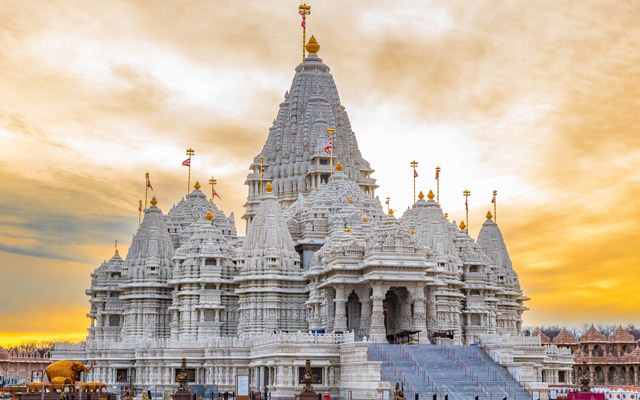
The Soul of Delhi circuit includes the Lotus Temple, Agrasen ki Baoli, Gurudwara Bangla Sahib, Akshardham Temple and Sacred Heart Cathedral. The Heritage of Delhi circuit covers Jhandewalan Mata Mandir, Birla Temple, Jantar Mantar, Jagannath Temple and Yogmaya Temple. Delhi Sacred Harmony includes the Ancient Hanuman Temple, Digambar Jain Lal Mandir, Dr Ambedkar Memorial, Purana Qila and Hazrat Nizamuddin Dargah. Echoes of Delhi includes Church of Redemption, the Buddhist Temple, Mehrauli Archaeological Park, Gurudwara Rakab Ganj Sahib, Chhatarpur Temple and Linga Bhairavi Sannidhanam.
“Demand for Delhi NCR is certainly strong both domestically and from international markets. Domestic travel continues to provide scale through business travel, MICE, weddings, VFR and short leisure breaks, while Delhi remains India’s principal international gateway, accounting for a huge portion of foreign tourist arrivals by port of entry in 2025. So, in many ways, the bigger opportunity is not simply bringing more travellers into Delhi NCR but encouraging those already passing through to stay longer and experience more of the destination,” said Sandeep Arora, Director, Brightsun Travel India.
With the notification of the Master Plan 2047, Delhi has unveiled an ambitious vision to transform itself into a 24×7 economic hub by promoting a vibrant nightlife and strengthening tourism-led economic activity. The plan proposes the creation of dedicated precincts around major tourist attractions and public spaces to enrich visitor experiences and stimulate local businesses. Complementing this, the city is considering the establishment of a tourism board to simplify regulatory approvals for tourism and hospitality projects while driving the development of immersive experiences that appeal to today’s experience-seeking travellers.
“From our perspective, domestic business travel remains an important contributor with professionals travelling regularly for meetings, projects, training programmes, exhibitions and corporate engagements across Delhi, Gurugram and Noida. From an inbound perspective, Delhi continues to benefit from being an important gateway for international visitors. However, we believe the distinction between business and leisure travel is becoming less rigid with more travellers extending business trips or combining work with some leisure time,” said Gaurav Gupta, co-founder, Saltstayz.
According to Gupta, Delhi NCR’s biggest strength is its ability to cater to diverse kinds of travellers within one region. It is a major corporate and commercial centre, but at the same time offers a strong heritage, cultural, culinary and shopping experience.
In fact, Delhi NCR is one of India’s most vibrant hospitality markets with many hospitality chains expanding their presence in the region. Espire Hospitality is shortly opening the 29-key property Country Inn Smart Stays, Gurgaon, and the 70-key luxury resort, Zana Luxury Escape, Sohna, Gurgaon, scheduled to open in June 2027.
“We do expect the corporate segment to be a major demand driver for both hotels. For Zana Luxury Escape, Sohna, Gurgaon, we see strong potential across both corporate events and weddings. Delhi NCR’s hospitality market benefits from multiple demand streams that include corporate and government travel, MICE events, which are huge due to world-class venues such as Bharat Mandapam, Yashobhoomi and Noida Expo Centre, as well as Gurgaon’s thriving corporate ecosystem. The region also sees strong demand from large-scale weddings and social gatherings, alongside growing inbound tourism,” said Akhil Arora, CEO and managing director, Espire Hospitality.
As per a section of tour operators, the challenge is not that Delhi NCR lacks attractions; it is more about how easily and consistently visitors can experience them.
“Traffic and last-mile connectivity, air quality seasonality, safety perceptions and fragmented destination information can all influence the overall experience. Promotion can only go so far on its own, so there also needs to be stronger attention to curated experiences, evening activities and coordination between hotels, attractions, transport providers and tour operators,” added Brightsun Travel India’s Arora.
Hospitality players feel that to attract more travellers, Delhi’s heritage, neighbourhoods, museums and cultural experiences should be promoted more strongly. “There is also scope to create more experiences around local food, markets, art and culture rather than focusing only on the traditional monuments,” said Gupta.
Despite the challenges, industry stakeholders expect tourism demand to remain strong. Arora of Espire Hospitality highlighted that unlike many leisure destinations, demand in Delhi NCR remains relatively consistent throughout the year without a pronounced seasonal cycle. “Coupled with ongoing infrastructure development and airport expansion, we believe Delhi NCR is well positioned to sustain long-term growth across both domestic and international travel segments, making it a very resilient and attractive market for hospitality growth,” he concluded.