
Asia/Singapore Sunday, 5th April 2026
Page 384

Six Senses plans India debut in a Rajasthan fort

0

Six Senses Hotels Resorts Spas’ first property in India will open its doors in Rajasthan in late 2018.

Situated 110km south-east of Jaipur, the 48-suite Six Senses Fort Barwara is located in the village of Chauth ka Barwara on the site of a 700-year-old fort.

Six Senses will soon welcome its first property in India

Six Senses Fort Barwara will mark the second heritage property under the the brand’s portfolio, following Six Senses Douro Valley in Portugal, according to president Bernhard Bohnenberger.

The Bangkok-based hospitality company is currently working with Espire Group to restore the fort to its former glory. Panika, a design consultancy led by Nimish Patel and Parul Zaveri who are known for their conservation work, will oversee the architectural design.

Focus will be placed on reinterpreting the regal ambience of Rajasthan’s royal forts and places in the property’s landscape concept. The design will include traditional gardens, water features and Shekhavati art to reflect the fort’s storied history.

The property will feature a Six Senses Spa, located in the original women’s palace, in addition to two restaurants, bar and lounge, fitness centre, two swimming pools, banquet space, retail boutique and kids club.

It will also offer daily safari drives to the 1,400kmRanthambhore National Park, a sanctuary famed for its tiger population located 30 minutes away.
Hong Kong eyes youth travel to revive Indian market

0

The Hong Kong Tourism Board (HKTB) is taking steps to attract younger travellers from India in hopes of reversing declining arrivals from the market.

Hong Kong recorded 149,000 overnight arrivals from India in the first six months of 2017, a 15 per cent dip from the same period last year. The decline has been attributed to the introduction of pre-arrival registration for the Indian market, the strengthening the Hong Kong dollar, and an increase in direct flights between India and mainland China.

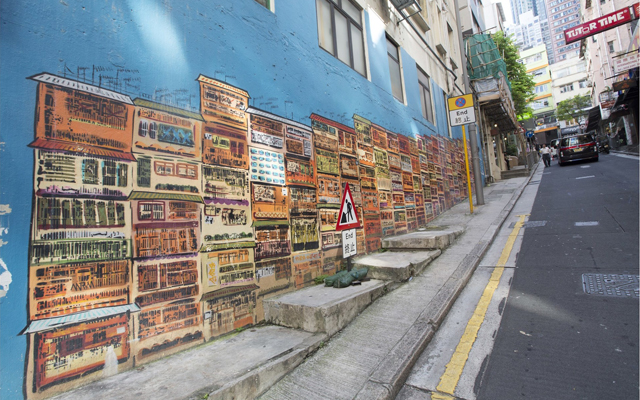
HKTB promoting Old Town Central walking trails

“The pre-arrival registration has (put) a few people off visiting (Hong Kong) because it takes a while for travellers to understand the new process. Indian tourists see Hong Kong as a last-minute destination. Without successfully registering for pre-arrival, it will take Indian travellers longer to get a visa,” said Peter Hoslin, HKTB’s regional director, Europe and new markets on the sidelines of a recent mission to Chennai, Mumbai, Kolkata and Delhi.

The HKTB’s focus is now on India’s seasoned travellers in their early 20s to early 40s. “We (are targeting) New Delhi, Mumbai and Bengaluru as we see an inclination (of travellers) in these cities to visit Asian destinations,” he added. “We want to target young, evolved travellers who have been to a few destinations before they choose Hong Kong.

“For us, young travellers comprise 54 per cent of the Indian overnight stay. Most of our visitors from India (70 per cent) are visiting Hong Kong for the first time. We want to (increase the share of) younger segment as they are likely to be repeat visitors,” said Hoslin.

With attractions like Hong Kong Disneyland and Ocean Park already popular among Indian travellers, the NTO is now looking to promote experiential products such as walking trails in Old Town Central among India’s youth segment.

Apart from travel trade partnerships, the HKTB is banking on fam trips for trade and media, in addition to digital and social media strategies, to reach out to young Indian travellers. Its new TV commercial, scheduled to run from September, is expected to help attract the segment.

Travellers more open to non-hotel stays in home continent: Agoda

0

Travellers are more likely to opt for homestays when travelling close to home, the Agoda Travel & Tech Study on non-hotel accommodations (NHAs) has shown.

The report revealed that travellers from Indonesia (79 per cent), Singapore (71 per cent), the Philippines (82 per cent) and Thailand (80 per cent) will most likely consider booking homestays when travelling within Asia.

Preference for different NHA types like B&Bs, private homes, guesthouses vary across markets

Similarly, travellers from the UK (88 per cent), the US (84 per cent) and Australia (75 per cent) are most likely to book a privately-owned home within their home continent.

Reasons for opting for NHA vary across countries, Agoda further pointed out. Indonesians (55 per cent), Malaysians (54 per cent) and Filipinos (53 per cent) tend to book NHAs to accommodate families and large groups; while Singaporeans (57 per cent), Thais (54 per cent) and Australians (46 per cent) view NHAs as a less expensive option to a hotel room.

Chinese travellers, on the other hand, mostly look to NHAs for a more local travel experience (55 per cent).

Among non-hotel bookers, there is a clear trend in the most popular type of NHAs booked per market. B&Bs rank first for Filipino travellers, with 53 per cent of those surveyed having booked one in the past year. Private homes are among the favourites for travellers from Singapore (44 per cent), Malaysia (40 per cent) and Australia (38 per cent).

And among Indonesian (37 per cent, 36 per cent) and Thai (31 per cent, 32 per cent) travellers, Agoda observed a preference for villas and guesthouses.

In Thailand, strongest waves of interest seen for Krabi, Phuket’s Kathu

0

Beaches and islands prove to be Thailand’s most powerful attractions for international travellers, with Krabi enteringTripAdvisor’s top five Thai destinations in terms of search traffic growth for the first time this year, after registering the highest increase at 41 per cent.

Krabi is followed by Kathu and Nai Yang in Phuket, at 37 and 31 per cent respectively. Tied in fourth place with a 10 per cent increase in searches are the cultural city Chiang Mai in the north and border city Hat Yai in the south.

Searches for Thailand’s beaches and islands surge; view from Phra Nang cave in Railay, Krabi province

As for visitor origin markets, China continues to contribute the highest percentage increase in search traffic on TripAdvisor, with a year-on-year increase of 30 per cent, outpacing the overall international average of four per cent. India and Indonesia followed in second and third place, with year-on-year search increases of 16 and 12 per cent respectively.

The largest sources of search traffic for Thailand are China, the US, UK, Australia and Russia. According to the Tourism Authority of Thailand (TAT), China and Russia were also two of the largest contributors to Thailand’s inbound tourism and inbound expenditure in 1H2017.

Out of the top five inbound markets, Chinese travellers have the shortest planning lead-time of approximately 51 days and stay for nearly four nights. Russian travellers take around 60 days to plan a trip but stay the longest with approximately 11 nights per stay.

Travellers from US, UK and Australia stay for an average of six nights and take the longest to plan, with lead-times of 108, 102 and 82 days respectively.

On average, international travellers visiting Thailand start planning their trip 65 days in advance, and stay for almost five nights.

Among Chinese travellers searching Thailand, there was continued interest from second-tier cities of Hangzhou, Dalian and Qingdao. The surge in interest comes amid increasing disposable income in these cities and improved flight connectivity to South-east Asia.

APAC a bright spot as global tourism sustains growth: UNWTO

0

In 2016, tourism accounted for seven per cent of the world’s exports, or US$1.4 trillion, after increasing one percentage point and outpacing the growth of world trade for the fifth year running, according to the latest UNWTO Tourism Highlights report.

International tourist arrivals increased 3.9 per cent to hit nearly 1.2 billion worldwide in 2016. The growth is led by Asia-Pacific, which recorded a nine per cent increase in international arrivals, followed by Africa (+eight per cent) and the Americas (+three per cent).

International tourist arrivals grew 3.9 per cent in 2016

The world’s most visited region, Europe (+two per cent) showed mixed results, while available data for the Middle East (-four per cent) points to a decline in arrivals.

France, the US, Spain and China continued to top the international arrivals ranking in 2016. In receipts, the US and Spain remain at the top, followed by Thailand and China in third and fourth place.

Meanwhile, international tourism receipts grew 2.6 per cent in real terms with total earnings in the destinations estimated at US$1.2 trillion worldwide in 2016.

France and Italy moved up in receipts to fifth and sixth position respectively, while the UK, Mexico and Thailand moved up to sixth, eighth and ninth place in arrivals.

According to projections in UNWTO’s Tourism Towards 2030 report, between 2010 and 2030, arrivals in emerging destinations (+4.4 per cent a year) are expected to increase at twice the rate of those in advanced economies (+2.2 per cent a year).

The market share of emerging economies increased from 30 per cent in 1980 to 45 per cent in 2016, and is expected to reach 57 per cent by 2030, equivalent to over one billion international tourist arrivals.

Amadeus shines light on diverse travel preferences in APAC

0

Amadeus, in collaboration with YouGov, has centred on the diverse preferences, behaviours and demands characterising the region’s travellers in its Amadeus Journey of Me Insights traveller survey.

In terms of where they prefer to receive trip information, 62 per cent and 70 per cent of Australian and New Zealand travellers respectively chose email. Chinese travellers, on the other hand, are most likely to prefer to be contacted via messaging services like WeChat (41 per cent), and almost half of all Thai travellers want to be contacted through social media.

Journey of Me report reveals varying travel preferences in Asia-Pacific

Recommendations that help save money was the top choice for Malaysian travellers, while Vietnamese travellers prefer recommendations that help ensure their safety.

Offering an example of how starkly travel preference can vary, Amadeus said that while 84 per cent of Singaporeans travellers think it’s important that service staff in their chosen destination speak a language they understand, only four per cent of Hong Kong travellers think the same.

And while 70 per cent of Japanese travellers surveyed have never used a sharing economy service for trip accommodation, almost half of Indian travellers say they do so ‘often’ and ‘very often’.

The research further revealed that online booking sites, travel review sites, along with word of mouth, have the largest influence on Asia-Pacific travellers’ trip planning. These were also ranked the top three sources from which Asia Pacific travellers have received relevant travel recommendations.

More information of the study can be viewed here.

Subtle indulgence, no-frills chic on the rise among luxury travellers

0

High-end travellers are increasingly choosing subtle indulgence and travel forms that relate to their personal values, as opposed to flashy, conspicuous consumption, according to recent research by Sabre in collaboration with TrendWatching.

“The evolution of high-end travel is creating a marketplace where ‘luxury’ is defined by the most exclusive, unique experiences that reside at the intersection of affluence and access,” said Sarah Kennedy Ellis, vice president of global marketing and digital experience at Sabre Hospitality Solutions.

Yoga in extraordinary spots a popular activity among ‘post-status’ luxury travellers, Sabre says

“We see guests moving beyond traditional ideas of status and embracing highly-bespoke travel opportunities that focus more on the individual traveller’s personality and values and less about expressing opulence.”

One trend highlighted in the Future of Luxury Travel report is wellness consumption. According to figures from the Global Wellness Institute, the global wellness tourism segment is expected to grow by over 37 per cent to US$808 billion over the next three years. A major driver of this growth will be luxury travellers looking for opportunities to better themselves.

Secondly, low-key luxury is on the rise for affluent travellers who identify with “post-status” ideals. These travellers choose subtle indulgence over prominent labels and showy opulence. The “no-frills chic” phenomenon sees travellers choosing travel that contrasts with traditional luxury – which, itself, is a new expression of status through defying convention, Sabre observed.

Another trend is what Sabre refers to as “indulgence without guilt”. The report cites examples of emerging high-end products and services whose selling points include positive environmental or social impact. From ice cream made from fruit that would otherwise have been sent to a landfill, to lab-grown gems that offer an ethical alternative to diamond mining, wealthy consumers are choosing luxury products that help make the world a better place.

The full report is available for download here.

Surging demand for Phang Nga highlights urgent need for airport

0

As Thailand’s Phang Nga Province recorded a record high of nearly 4.5 million visitors in 2016, the lack of a gateway airport is looking to be a key stumbling block, according to a new report by consulting group C9 Hotelworks.

Annual arrivals growth has slowed since 2014, but the compound annual growth rate for the five years ending 2016 remains high at 29 per cent, with strong uplift from the overseas market.

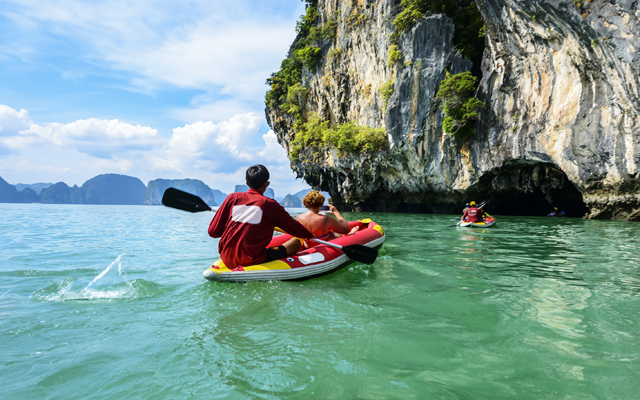
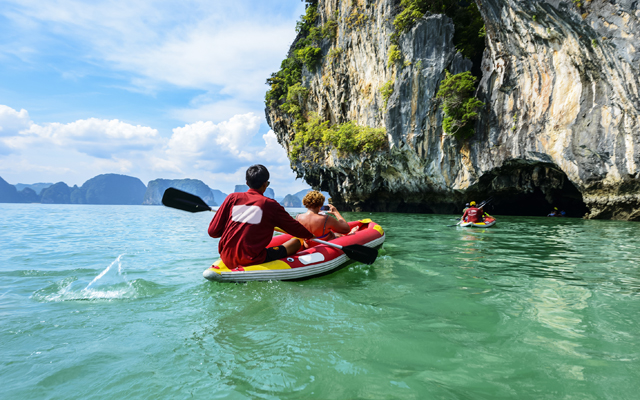
Kayaking in Phang Nga

And despite strong growth from Chinese visitors led by lower margin wholesale business, average daily rates still rose eight per cent.

This is attributed to the increasing mix of overseas source markets, while Western Europe remains the key international feeder market for room nights. The report identified South Korea (+62 per cent), Hong Kong (+57 per cent), Russia (+40 per cent), China (+37 per cent) and Australia (+27 per cent) as top growth markets.

Looking at average length of stay, the number for international visitors is significantly longer at 6.7 days, compared to 2.4 days for domestic visitors.

While international visitor markets pick up, the destination is also battling a “pronounced fluctuation of visitor arrivals throughout the year”. The province last year achieved 65 per cent of its tourism receipts during the high season, which runs from October to March. Cumulatively, revenue totalled more than US$1.1 billion in 2016, with a peak in February due to the Chinese New Year.

Bill Barnett, managing director, C9 Hotelworks, stressed that “Phang Nga desperately needs a gateway airport in order to become a sustainable year-round leisure destination”.

Phang Nga and its leading resort area Khao Lak heavily rely on Phuket’s overloaded international airport. With over 12,000 registered hotel rooms in the province and a burgeoning pipeline of new projects (289 keys are expected to be added this year), something has to give, C9 opined.

Plans for the development of a privately operated airport in Thai Muang District by Bangkok Airways is currently under review as part of the Environmental Impact Assessment. While Phang Nga’s provincial government has been a strong advocate, the project has faced local opposition from the agricultural sector.

C9 pointed out that the province experienced a key shift in 2014 and 2015 when the hotel and restaurant sector surged ahead of agriculture and fisheries to become its leading industry.

“If the situation is allowed to continue the-long term limitation will stunt the province’s most important industry,” C9 stressed.

Mobile to drive APAC’s undertapped online travel market

0

Asia-Pacific is one of the fastest-growing online travel markets in 2017, with China a significant growth contributor particularly on mobile, according to Expedia Affiliate Network (EAN) and Phocuswright’s 2017 Phocus Forward: The Year Ahead in Digital Travel report.

The research further makes a surprising prediction that in markets like India, Indonesia and Brazil – where desktop habits are less entrenched – it’s likely mobile will overtake desktop bookings more quickly than in the world’s most mature online travel markets such as Europe and the US.

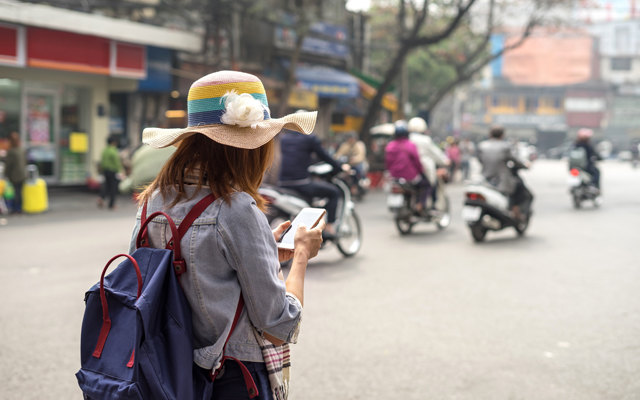
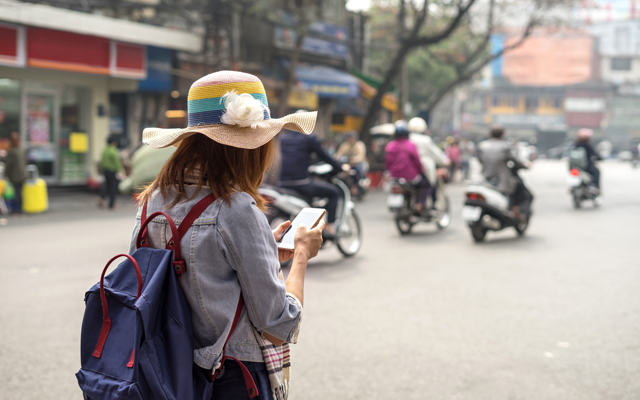
Traveller in Hanoi

Based on report findings, global online travel bookings this year should reach US$567 billion, up from US$513 billion in 2016. By 2020, Asia-Pacific is expected to have the largest share of online and overall travel demand, at 37 per cent and 42 per cent respectively.

Much of the region’s online travel growth will be led by mobile bookings, particularly in China. More than half (53 per cent) of online travel bookings in China are already made on mobile, based on 2016 data, versus 21 per cent in the US and 25 per cent in the UK.

The surge in mobile bookings are spurred by steep discounts for app-based hotel bookings in a hypercompetitive OTA environment, according to the report.

Now the second-largest individual travel market in the world, China is expected to become the region’s most highly penetrated online market this year.

Ariane Gorin, senior vice president and general manager, EAN brand, said: “For travel providers, this research underlines that it’s crucial to be present on mobile in Asia-Pacific, and particularly in China, from the early stages of the booking process – this is where young travellers will be inspired, do their research and most likely plan and book their trips.

“Messaging, voice search and artificial intelligence will drive a new wave of mobile innovation which could result in big mobile gains for those businesses which can tap into traveller mobile trends.”

Meanwhile, the report revealed that Asia-Pacific is underpenetrated for online air bookings, but it is making fast gains – half of air bookings in the region is projected to be made online by 2020.

As well, in-destination activities are a huge untapped opportunity and the long-tail of providers is finding its way into the global digital travel ecosystem and becoming a priority for travel’s biggest players. The value of travel activities in 2016 was US$46 billion in Asia-Pacific.

1Q tourism receipts for Singapore up 15 per cent

0

Singapore’s international visitor arrivals in 1Q2017 saw modest year-on-year growth, up four per cent to 4.3 million visitors, while tourism receipts increased 15 per cent to S$6.4 billion (US$4.7 billion).

The growth in tourism receipts was driven by shopping spend (+38 per cent) while the sightseeing, entertainment and gaming (SEG) component held steady.

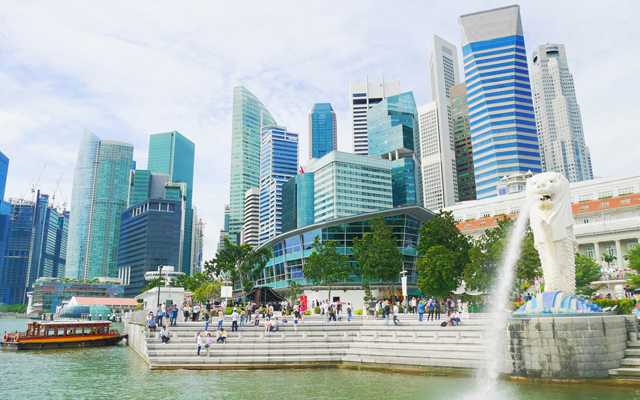
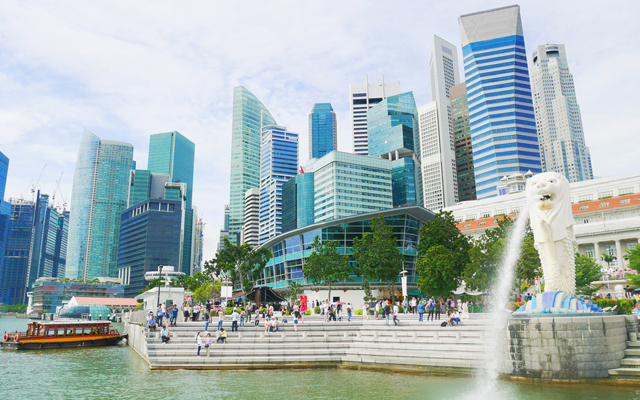
Singapore

Excluding expenditure on SEG, China (S$1.1 billion), Indonesia (S$688 million) and India (S$302 million) were the top three tourism receipts generating markets in 1Q2017.

China was the top source market after arrivals increased 14 per cent to 851,000. Indonesia is in second place at 720,000 arrivals, an increase of just two per cent. These are followed by Malaysia (up one per cent to 275,000), Australia (up six per cent to 272,000) and India (up seven per cent to 241,000). These five markets accounted for 55 per cent of total international visitor arrivals during this period.
Chinese visitors contributed 30 per cent more in tourism receipts, with shopping the largest spend component, while the largest increase in tourism receipts came from Malaysia (+37 per cent). Tourism receipts from Indian arrivals showed no increase, while Australians spent four per cent more.

Notably, gazetted hotel room revenue declined 1.3 per cent to an estimated S$800 million for 1Q2017. Average occupancy rate came in at 86 per cent, a 1.3 percentage point increase compared with the same quarter last year while average room rate declined 2.8 per cent to S$233. RevPAR slipped 1.2 per cent year-on-year to S$199 due mainly to a lower average room rate.