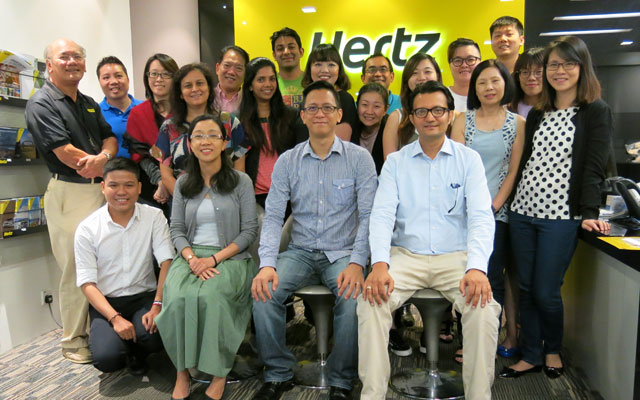
The Hertz Corporation has appointed Discover the World and InterGlobe Air Transport Limited (IGAT) as general sales agents (GSAs) for Vietnam and selected India markets respectively.
The GSAs will promote Hertz’s products and services around the globe to domestic travel trade partners, corporate customers and leisure travellers.
Sitting in the front row from left to right: Discover the World Vietnam’s Tu Thi My Phuc, Hertz’s Marcus Tan; and InterGlobe Air Transport’s Amit Mishra
Michel Taride, group president, Hertz International, said: “With the number of international trips from India and Vietnam forecasted to grow by almost 10 per cent over the next few years, we view these countries as important source markets for our worldwide rentals.”
In India, IGAT will distribute car rental products from the Hertz brands across the travel trade, small and medium enterprises, and large local companies in selected Indian cities. Meanwhile, Discover the World India will continue to operate as Hertz’ GSA servicing the travel trade and global corporations in Bengaluru, Delhi and Mumbai.
Discover the World also operates as Hertz’s GSA in Indonesia, Malaysia, Philippines, Taiwan and Thailand.
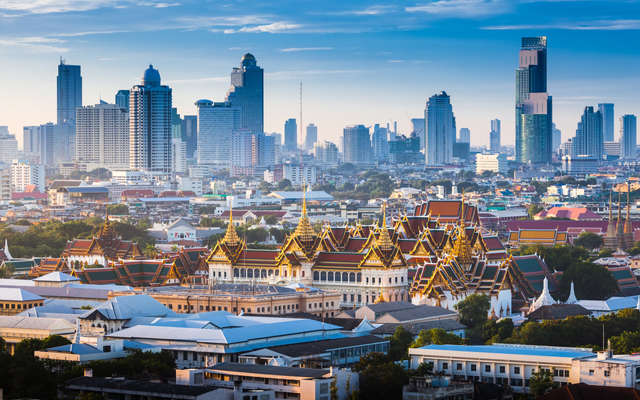
Bangkok clinched top spot in the Mastercard Global Destination Cities Index of most visited cities for the second year running in 2016.
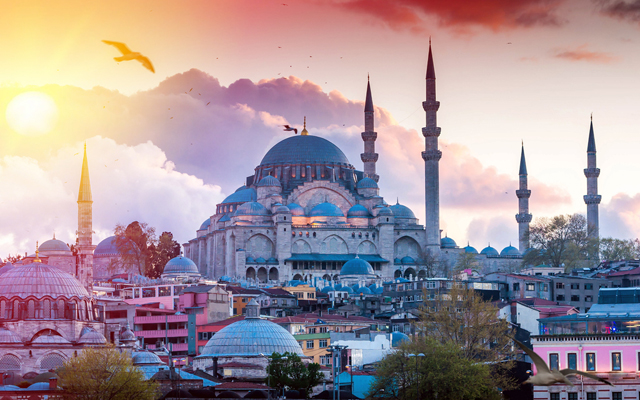
The leading city attracted over 19.4 million international visitors last year, followed by London (19.1 million), Paris (15.5 million), Dubai (14.9 million), Singapore (13.1 million), New York (12.7 million), Seoul (12.4 million), Kuala Lumpur (11.3 million), Tokyo (11.2 million) and Istanbul (9.2 million).
Bangkok still winning city, but others are catching up fast
Among the top 10, Tokyo is projected to see highest growth (+12.2 per cent), followed by Dubai (+7.7 per cent), Kuala Lumpur (+7.2 per cent) and London (+five per cent).
Meanwhile, New York (-2.4 per cent) is the only city in the top 10 expected to experience a dip in international visitors this year.
Across the top 20 destination cities, Mastercard observed that the majority of travel was conducted for leisure purposes, except in Shanghai where nearly half (48.4 per cent) of visitors were travelling on business. Conversely, Kuala Lumpur had the greatest percentage of visitors on vacation (92.2 per cent).
The index also shows that dining consumed the greatest percentage of visitor spend in Seoul (47 per cent), Istanbul (33.6 per cent) and Prague (29.3 per cent).
People spent more on shopping while in London (46.7 per cent), Osaka (43.4 per cent) and Tokyo (43.1 per cent), while lodging was the most expensive part of the trip when visiting Paris (44.8 per cent), Milan (40.4 per cent) and Rome (40.4 per cent)
And with efficient transport systems in place, less was spent on transit in London (4.3 per cent), Singapore (4.6 per cent), & Hong Kong (4.6 per cent).
While not in the top 10 in terms of visitor arrivals, Osaka is showing to be a strong contender, with top growth performance (for 2009-2016 period) at 24 per cent. Chengdu is in second place showing 22.7 per cent growth, followed by Colombo (20.3 per cent), Abu Dhabi (18.9 per cent), Jakarta (18.2 per cent), Tokyo (17.7 per cent), Hanoi (16.4 per cent), Riyadh (15.9 per cent), Lima (15.2 per cent) and Taipei (14.5 per cent).
Forty-five per cent of international travellers say the terror threat will have an influence on their travel plans this year, up six percentage points over last year, according to IPK International’s latest Terror Threats and Tourism survey.
Though not majorly quelling the hunger to travel, IPK International stated that the fear of terror attacks is affecting destination choice, with travel flows expected to continue shifting from “unsafe” to “safe”.
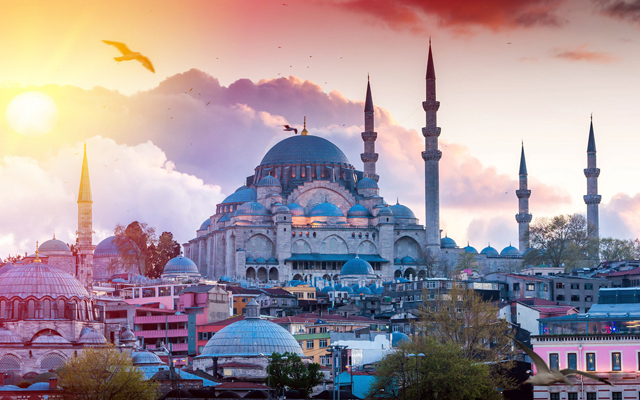
Turkey perceived as least safe
Sixteen per cent of international travellers polled said they will not travel in the next 12 months or will only go on domestic trips within their own country. A further 29 per cent indicated they will continue to travel abroad, but only to countries they consider “safe”.
Compared to 2016, the safety perception of some travel destinations has declined. For example, the proportion of respondents rating Turkey as “unsafe” rose to 76 per cent from 64 per cent in 2016.
Overall, IPK International said destinations with the weakest safety image are Turkey, Israel, Egypt and Tunisia – whereas Canada, Switzerland, Australia and Scandinavia were perceived as safest.
However, results from the survey show regional differences between source markets in Europe, Asia as well as North and South America.
IPK International revealed that travellers from Asian source markets such as South Korea, China and Japan as well as Russia are more likely to let instability and terror warnings influence their travel plans. In contrast, travellers from European source markets such as Denmark, Sweden and Finland are less sensitive to the threat of terror attacks.
Singles are also relatively unimpressed by terror warnings, whereas people travelling with children are more cautious, according to IPK International.
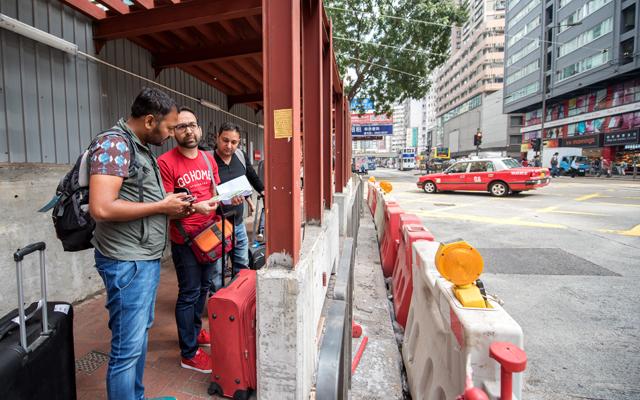
Hong Kong’s online pre-arrival registration (PAR) requirement for Indian nationals, in place since January, has triggered a 20 per cent drop in Indian inbound to 207,133 in 1H2017.
And with Macau a popular twin destination in Indian travellers’ itinerary, the entertainment city has also seen fewer Indian footfalls – down 12.9 per cent to 91,090 in 1H2017.
Hong Kong not as attractive to Indian tourists now with PAR
Ronald Wu, director of sales and marketing at Hong Kong’s Grayline Tours, said the impact on Macau was lighter compared with Hong Kong because Indian nationals transiting at Hong Kong International Airport to Macau did not need PAR, as long as they show their Macau ferry tickets at the immigration counters.
For Chennai-based ttworld-tours.com’s CEO, Tamilselvam T, trouble brought on by the new visa system was the high number of application rejections.
“(Tendency of rejection is higher for travellers) from North India. It’s typical for clients to pay for their tour only to have their PAR application rejected later. We agents have to refund their money, which means the extra administration burden.”
Travel Agents Association of Jharkhand president Sanjiv Poddar, said: “One immediate impact I’ve observed is that Indian business event groups have chosen to skip Hong Kong (in order to avoid PAR application) and only hold their meetings in Macau.”
Indian leisure groups, however, are skipping Hong Kong and Macau entirely and spending their vacation elsewhere in the region. Poddar expects Indian travel to fall by 20 per cent to Hong Kong and Macau. “(PAR) is also giving additional work to our staff as they have to fill out online application forms for our clients,” he lamented.
He hopes the Hong Kong government can relax the rules at least for family groups, such that a single approval is only needed rather than the existing requirement for individuals.
CITS (Macao) international department manager, Cooper Zhang, has also reported dismal Indian performance.
He told TTG Asia: “Leisure market is the worst hit. For the upcoming Devali, bookings don’t look promising and we are estimating a 30 to 40 per cent drop in business.”
Oriental Travels India’s director Mukesh Goel is, however, unaffected, saying that Macau’s many new integrated resorts and their varied recreational attractions are strong enough magnets to keep Indian travellers coming despite the PAR requirement.
“What we are seeing though is clients cutting down time in Hong Kong to stay on longer in Macau,” he remarked.
European travellers are the main driving force behind Indian inbound growth, with room bookings from Europe surging 109 per cent year-on-year, according to latest data from Tourico Holidays, part of Hotelbeds Group.
Also showing strong growth are Asia-Pacific (+53 per cent) and North America (+32 per cent).
Among the source markets showing the largest booking influxes are China (+115 per cent), the UAE (+113 per cent), Canada (+105 per cent), the UK (+57 per cent) and the US (+20 per cent).
“India is currently experiencing a boom in travel demand – and with a diversity of source markets increasing their bookings,” said Madhuri Khanna, regional director of product development in South-east Asia for Tourico Holidays.
Bullish that India’s popularity will continue to grow, he said: “A relaxed e-visa regime and an emphasis on bolstering tourism has India primed to become a major global destination in the years to come.”
Tourico’s outbound business also saw significant growth at 28 per cent year-on-year, led by Indian bookings for Asia-Pacific, which increased 58 per cent. A surge in demand was seen for China (+127 per cent), Malaysia (+101 per cent), Thailand (27 per cent), and Australia (+24 per cent).
Meanwhile, hotel bookings from India to Europe increased by 20 per cent, led by Turkey (+90 per cent), Spain (+33 per cent) and the UK (+28 per cent). Hotel bookings to North America increased by 10 per cent.
“Encouraged by India’s leading GDP global growth rate, a growing middle class, and a millennial age block that is increasingly enjoying more disposable income, the country is rapidly becoming an outbound travel force,” said Khanna.
With technology still a painpoint especially for mom-and-pop agencies in India, Guiddoo, a B2B platform offering tours, dining and shopping options for Indian travellers, has rolled out two new solutions targeted at smaller players.
Despite the predominance of smartphones, many travel formalities such as reservation confirmations, directions, and itineraries are still a hassle and largely paper-based, Guiddoo said.
Guiddoo eyes smaller players
Its Trip Assistant allows agents to keep in touch with their customers during a trip with itinerary sharing, live updates (e.g. pickup details) and in-app communication through chat and call.
For tour operators and DMCs, Guiddoo’s CRM is introducing a customisable interface that integrates lead management, query handling, finance and post sales management into operations. This would allow tour operators to manage bookings from the point of sales until customers return from their trip, in addition to reducing dependence on emails and spreadsheets.
Biswajeet Karmakar, director of sales, Guiddoo, who leads the B2B technology distribution, commented: “With the correct use of technology we can automate the whole process resulting in minimal error and help (smaller players) compete effectively with the bigger technology-driven travel companies.”
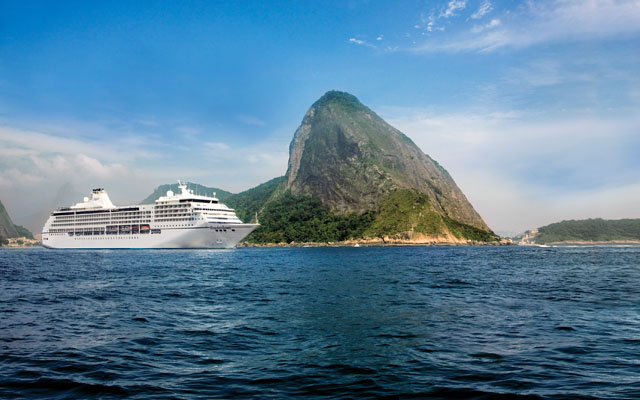
In 2017, Asia’s booming cruise industry saw 10,196 operating days scheduled, a 137 per cent increase from 2013, effectively tripling the total passengers carried from 1.5 million in 2013 to 4.2 million, according to newly released figures from Cruise Lines International Association (CLIA).
Sixty-six cruise ships are being deployed in Asian waters for the year, including five mega ships (more than 3,500 passenger capacity), 13 large (2,000-3,500 passengers), 26 mid-size, 17 seasonal small ships and five seasonal expedition ships. This marks a 53 per cent growth from the 43 ships cruising Asia in 2013.
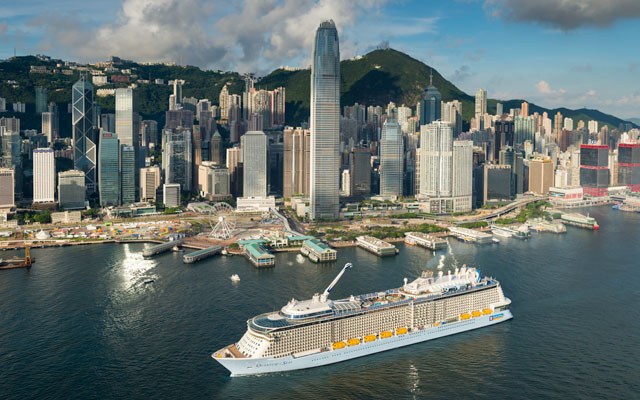
Royal Caribbean International’s Quantum of the Seas in Hong Kong
The report found that Asian travellers predominantly take cruises within the region. Out of the 2,086 sailings scheduled for Asian waters in 2017, 1,992 cruises (95.4 per cent) will remain within Asia, while an additional 94 voyages are scheduled to pass through the region. Total sailings in and through Asia has increased 142 per cent, from 861 cruises and voyages in 2013 to 2,086 in 2017.
In 2016, a total of 3.1 million Asians took cruises, 55 per cent more than in 2015. Of these, 68 per cent or 2.1 million were from China, a market which grew by 99 per cent last year and at a four-year CAGR of 76 per cent, making the country the world’s fastest-growing major source of passengers.
Meanwhile, the direct economic contribution of cruise tourism across North Asia last year consisted of US$3.2 billion in direct expenditures, US$1.5 billion in value-added goods and services, and 23,697 full- and part-time jobs paying US$754.5 million in employee compensation.
Combining the direct, indirect and induced contributions, the total economic contribution of cruise tourism in the three North Asia economies of China, Japan and South Korea amounted to US$7.2 billion in output, US$3.2 billion in value-added goods and services, and 51,631 full- and part-time jobs paying US$1.5 billion in employee compensation.
Commented Joel Katz, executive director, CLIA: “While the Asian cruise market has grown tremendously within the past four years – it has the potential to capture a much larger percentage of the Asian population, which could catapult Asia’s capacity share ahead of competing markets.”
Despite being most likely to admit that they don’t enjoy travelling with children in tow, Asian parents are also the least willing to leave their children behind when they go on holidays, according to new findings by Expedia and research firm Northstar.
Almost all surveyed go on vacation at least once a year with their family, while non-parents tend to only go once a year. Regional differences are striking, the research shows, with those in Asia and southern Europe and Mexico, the most likely to prioritse getting away with family as often as they can.
Family travel is still popular in Asian markets
South Korean travellers led the charts in terms of commitment to family holidays, with 74 per cent of teens vacationing with family more than twice a year, along with 68 per cent of parents and 57 per cent of non-parents. On the other end is Hong Kong, with just 29 per cent of teens, 25 percent of parents, and 21 percent of non-parents taking a family vacation more than once a year.
Notably, the report revealed that Hong Kong (47 per cent) and Taiwan (40 per cent) have the highest proportion of parents who indicated they do not enjoy holidays when travelling with their children. Comparing between regions, the sentiment is strongest in Asia, with an average of 27 per cent per nation agreeing, compared to 17 per cent in Europe.
The markets least likely to choose their children as their favourite travel companions are also in Asia – Malaysia (32 per cent), Taiwan (32 per cent) and Hong Kong (33 per cent).
Yet, parents from these countries are relatively less willing to travel without their children. Only 19 per cent, 23 per cent and 27 per cent from Malaysia, Taiwan and Hong Kong respectively are willing to leave their children behind on their travels.
The markets most reluctant to travel kid-free are Thailand (six per cent) and South Korea (eight per cent), while those most willing are Finland (82 per cent), Mexico (64 per cent) and Spain (56 per cent).
Reconnecting with a partner is the main reason to leave the children behind in Malaysia (67 per cent), Canada (65 per cent), Singapore (61 per cent), Denmark (61 per cent) and the US (61 per cent).
Meanwhile, few parents show interest in traveling with their own parents, although some interest does show up in Asia, led by Thailand (24 per cent), Malaysia (16 per cent) and South Korea (15 per cent).
Still, family travel continues to play a key role especially for Asian travellers. Parents in Asia were much more likely to agree that most of their favourite memories occurred on family vacations, led by parents in Thailand (82 per cent), Malaysia (81 per cent), South Korea (74 per cent) and Taiwan (69 per cent).
Most teens in nearly all countries say that a majority of their favorite memories occurred on family vacations, with the exception of Hong Kong (48 per cent) and Japan (44 per cent).
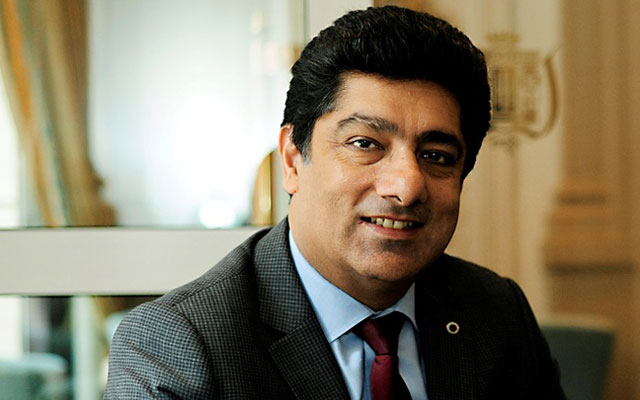
The Indian Hotels Company Limited (IHCL), which runs the Taj chain of hotels, has appointed Puneet Chhatwal as the new CEO and managing director.
Chhatwal will replace Rakesh Sarna, who is stepping down from September 30, 2017.
He is currently CEO and member of the executive board of Deutsche Hospitality, the Germany-based hotel chain that operates the Steigenburger chain of hotels in Europe, the Middle East and Africa.
The Indian-born Chhatwal first started his career in India, and has amassed over three decades of leadership experience in the hospitality sector in Europe and North America.
Thailand-based Dusit International has launched a new global sales office (GSO) in Mumbai to manage sales across all market segments including leisure, MICE and corporate business.
Heading the office is Keshwar Bhagat, director of sales – GSO India, who will be responsible for selling all Dusit Hotels & Resorts, establishing marketing partnerships with leading local companies, and preparing inroads for Dusit-branded hotels to open in India in three-to-five years.
Bhagat heads the new office
The Indian office will focus on Tier 1 cities such as New Delhi, Mumbai and Bangalore, but will also cover smaller cities which are emerging as important source markets for outbound travel.
The opening of a GSO in India was a strategic move to tap India as one of the world’s fastest-growing outbound travel markets, as the Thai hotel group plans to grow its worldwide portfolio to 80 properties within the next four years, said Lim Boon Kwee, COO, Dusit International.