Asia/Singapore Wednesday, 8th April 2026
Page 368

Vietnamese start-up wants to unite fragmented domestic travel market

0

After four years working at VietJet Air in business development, Phan Le quit his dream job and set about finding a solution to unite Vietnam’s fragmented travel market by launching VLeisure.com in 2013.

His aim was to provide an online, one-stop B2B travel platform where agencies can manage and distribute services and products to online partners, has recently landed fresh investment valuing VLeisure at US$4 million.
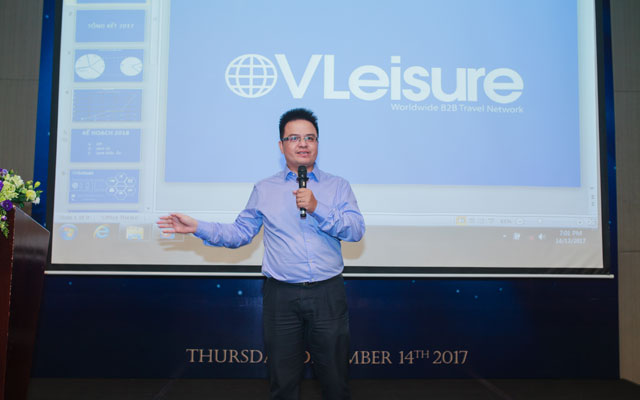
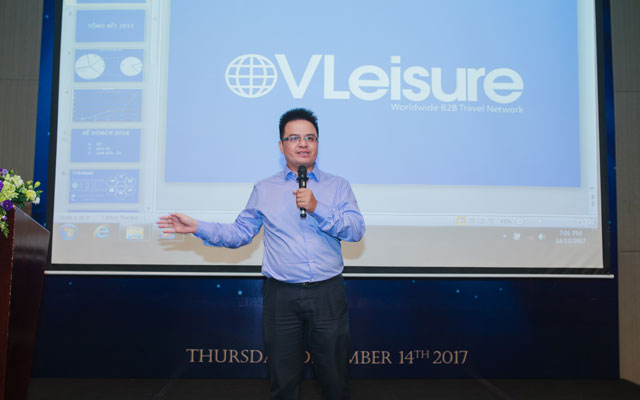
Phan Le: digital technology is the way forward for Vietnam’s tourism sector

Said Le: “When I started the company, I felt the domestic market was undervalued and often overlooked compared with the inbound and outbound markets. The booking process was inefficient and a pain, and the market was fragmented. There was a need to build a tech solution, a mobile solution to be exact. I love travelling and saw an opportunity to create a travel tech business where I get to build exciting things and connect people.”

Through the platform, buyers and sellers can manage inventories with ease, make bookings more efficiently in real time, while taking advantage of VLeisure’s competitive rates.

The database offers more than 50,000 accommodation options across 147 countries, tours, tickets and excursions, transfers and flights.

A swathe of niche products has also been developed, including local hotel rates for agencies operating outside Vietnam, Laos and Cambodia such as China’s Ctrip and Fliggy.com.

White label solutions are also available for large agencies, with VLeisure providing a travel API to be integrated into websites and mobile apps.

To date, VLeisure has signed up more than 3,000 online and 10,000 offline agencies, with the company recently securing an undisclosed sum of funding from South Korean early-stage investor, BonAngels Venture Partners. This has valued the company at US$4 million.

Le will use the cash injection to strengthen VLeisure’s position in South-east Asia while expanding into new markets, such as China and South Korea. He added: “We are looking to launch new products and services to better serve our clients, not only in Vietnam but in Laos and Cambodia.”

Looking ahead, Le believes digital technology is the future for Vietnam’s tourism sector, as the country’s swelling middle-class have more disposable income to spend on travel.

“As more Vietnamese have discretionary income to spend on exploring new places and destinations, the more it will be great for the travel tech space,” he said. “The next trend is digital; the new generation is raised to think and behave with a super computer at their fingertips.”

Positioning itself to remain at the forefront of this movement, the VLeisure team is currently working on securing more partnerships with global wholesalers and general sales agents and developing more products, including connecting more APIs with agencies, creating more themes and developing additional white label solutions.

“This will better position VLeisure for future growth,” said Le.
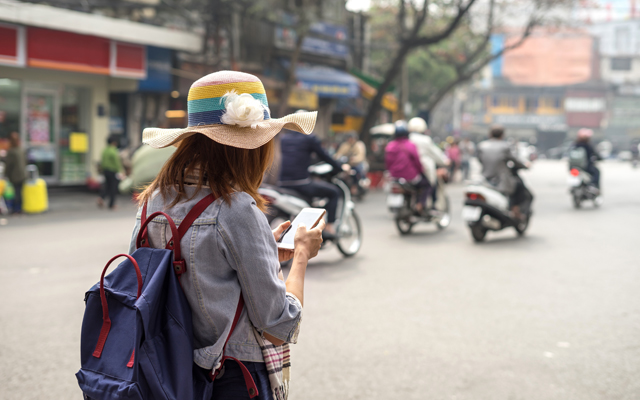
Demand for digital travel tools on the up: Travelport

0

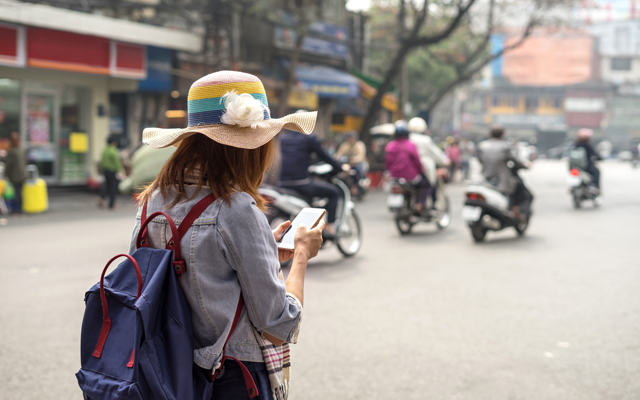
Mobile devices remain vital while demand for new technologies such as voice search, e-payment and digital room keys grows, according to Travelport’s 2018 Digital Traveler Survey.

The study, which surveyed 16,000 travellers from 25 countries, showed that around the world, mobile devices are seen to be as vital for travel as for other aspects of life.

Almost half of those surveyed have booked and paid for an entire or part of a trip through their smartphone. Nine in 10 respondents have travel-related apps, with maps, airlines, weather and social media ones topping the list of favourites.

Travellers now more mobile app reliant

While mobile remains crucial, travellers want a consolidated experience. On average, travellers use 10-12 apps throughout the searching, booking and traveling parts of their trip, the study showed.

The top three most important features identified by leisure travellers in their travel apps are the ability to search & book flights (68%), real-time flight alerts throughout their journey (64%) and being able to see an entire trip itinerary in one place (67%).

Only around a fifth of travelers currently use itinerary management tools.

Among the emerging technologies are voice-search. Over half of global travellers use voice to search either during booking or whilst traveling – up 3% from last year.

Over two thirds (68%) of Indonesian travellers use voice search, such as Apple Siri or Amazon Alexa. However, in Japan, Singapore and some parts of Europe, the proportion of travellers using voice search is less than 45%.

Almost half of all respondents rated the ability to pay using Apple/Android pay (Touch ID) is important or very important.

Over half of business travellers surveyed said they wanted to be able to check in to their hotel via an app, rather than at a reception desk. Some 50% also want to use a digital room key to unlock their hotel room door from their phone.

Source: Travelport’s The 2018 Global Digital Traveler League Table

Most respondents said they would use biometric scanning to reduce the need for waiting in security lines. This proportion is particularly high among Asian countries, with 80% in Singapore and 84% in Indonesia indicating that preference. Over two-thirds of travelers think digital boarding passes make travel easier.

India and Indonesia took top spots in a ranking of countries with the most digitally-advanced travellers. India has been top for the second year in a row, and Indonesia was ranked third last year.

The standings are based on a combination of the main indicators of digital usage for travel-related purposes by travelers in each country. For example, India’s top position is maintained due to 69% of the country’s travellers using voice search, over 60% wanting digital room keys and 88% saying they are influenced to travel by friends on social media.

Switzerland Tourism rides train of opportunity in India

0

Switzerland Tourism recently concluded its annual roadshow across the four Indian cities of Mumbai, Pune, Kolkata and Delhi to showcase the country’s diverse offerings.

Key partners included the cities of Zurich, Lucerne, Interlaken and St. Moritz, regions such as Lake Geneva Region and the Swiss Travel System, among others.

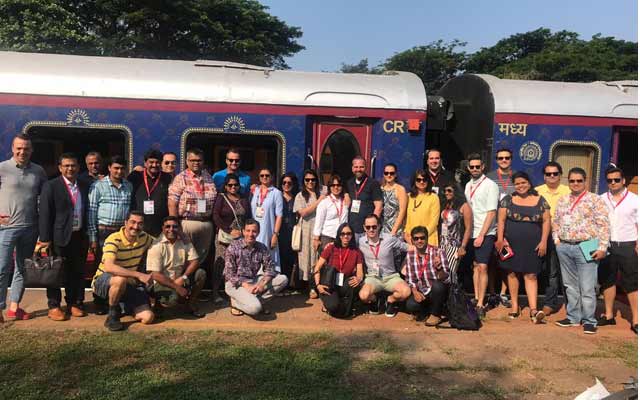
Networking programme on board Deccan Odyssey to Goa

As The Grand Train Tour of Switzerland encompasses the country’s top attractions and marks a key aspect of promotions for 2018-19, Switzerland Tourism also saw it opportune to offer a unique networking experience on Deccan Odyssey to Goa for its 22 suppliers and 34 buyers this year.

Switzerland’s appointment of Bollywood actor Ranveer Singh as the brand ambassador in August 2016 has led to increasing number of Indian overnights, according to Switzerland Tourism in a statement. In 2017, Switzerland recorded a 23.4 per cent increase in the overnights spent by Indians.

“Our numbers this year are also encouraging – we are up 10 per cent in hotel overnights in the period January to August 2018 as compared to the same period last year,” said Claudio Zemp, director – India, Switzerland Tourism.

“Besides this campaign, we also continue our travel trade campaigns – with regular webinars, training sessions in tier 2 and tier 3 cities as well our new e-learning modules on the Switzerland Travel Academy.”

Female-only travel on the rise for Indians

0

Female-only travel is emerging as a key segment in Indian outbound tourism, a niche that travel consultants are now targeting as they come up with a raft of customised tour packages targeted at women.

The growing financial independence of Indian females, coupled with social media, were key factors driving the rise of women-only tours, outbound travel experts told TTG Asia.

More Indian women feel empowered to travel alone or with other females

“The segment of women travellers has become one of the most influential and demanding one with around eight to 10 per cent year-on-year growth,” said Karan Anand, head – relationships, Cox & Kings. “Social media has played a big role as women share their travel stories online and motivate fellow women travellers to try out new destinations, be it domestic or international.”

Manas, Sinha, director, India sales associates, Hotels Marketing & Consultancy Services, made similar observations: “There has been a rise in demand from female-only groups. The size of such groups can go up 15-20 females travelling together.

He elaborated: “The reasons of travel may be a special occasion, shopping trip, culinary and spa retreats or just quick-fix extended weekend travel plans. Singapore, Bali and Thailand are the top three destinations that we have seen tops the list of women-only travellers.”

Anand also observed that themed journeys such as bachelorette, solo, girlfriends, female family bonding, spa, shopping, cultural and adventures, are especially in vogue among Indian women travellers.

“Keeping this trend in mind we have introduced a brand called Getaway Goddess which caters to women-only travel,” he added. “We offer a diverse range of holiday experiences to women travellers like gourmet food, fabulous wine and cruise in Bali, shopping spree and cruise in Dubai, luxury spa retreat in Bali, tropical beach resort in Thailand and wildlife expedition in South Africa, among many others.”

Seeing an increase in demand in Indian women travelling to South Africa, Mojhi, an online marketplace for the adventure enthusiasts, has recently introduced curated African tours for women-only adventure travellers.

Safety remains a key concern for women-only tours though, noted Vineet Raina, founder & managing director, Pink Elephant Sport & Pink Elephant Journeys. “Some of the most popular destinations for women-only travel include Finland, France, Spain, Italy, Russia, Kenya, South Africa, Singapore and Thailand.”

Opening of Myanmar-India border crossings to stimulate overland travel

0

The opening of Myanmar’s borders with India is expected to lure overland travellers from Europe and Asia.

From September, all nationalities were given clearance to enter Myanmar at the overland borders of Tamu and Rih Khaw Dar. It is now possible to travel through Myanmar and onwards to Bangkok, exiting at one of the four Thai border crossings.

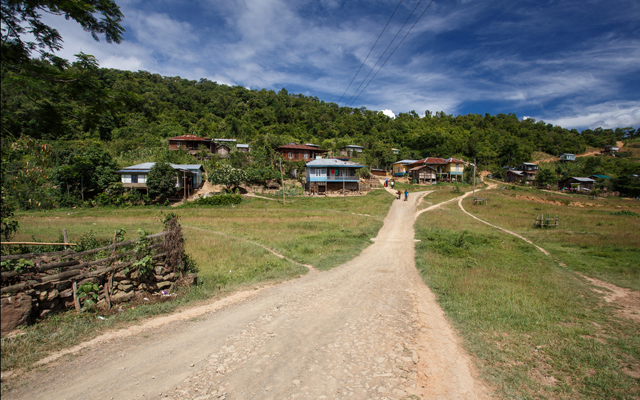
Rhi village in Chin State, close to an India border crossing

Edwin Briels, managing director of Khiri Travel Myanmar, said this is the first time overland travellers can cross through Myanmar from Europe and Asia. Previously, the Old Silk Road was used, passing through China.

Said Briels: “In the past, travellers had to circumvent Myanmar, or pay high fees for a caravan permit that includes a government minder and all their expenses for the trip. Now, it’s possible to cross into Myanmar and exit to Thailand.”

He added once the route becomes established, it will lead to a steady growth in overland travellers. They tend to stay in the country for one month and travel year-round, including during the traditionally quiet green season months.

Briels also expects the route to appeal to overland bikers.

Sammy Samuels, managing director of Myanmar Shalom Travels, said the checkpoints make remote areas of Myanmar more accessible to travellers. Tamu connects with upper Sagaing Region and Rih Khaw Dar with Chin State.

Said Samuels: “Both regions offer many off-the-beaten-track places for travellers… We hope there is great potential for tourism development.”

However, Bertie Lawson of Sampan Travel pointed out that while the opening of the crossings have “provoked a lot of interest”, amenities are currently lacking and it will take time for it to become a popular tourist draw.

“Infrastructure and guide services are still basic and expensive,” he said. “So I don’t think it will make a huge difference soon.”

Asian destinations win big amid Muslim travel boom

0

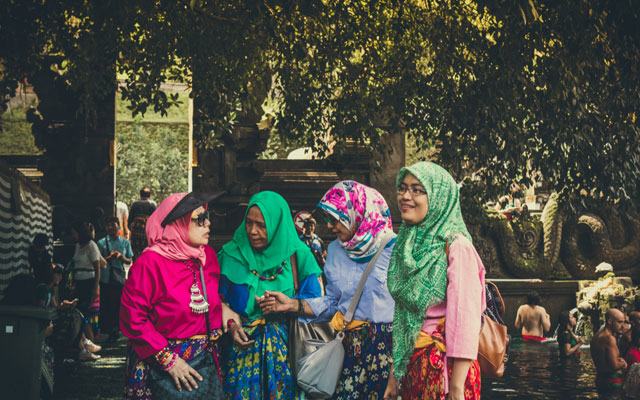
Asia is set grow its market share of global Muslim travel spend to 22% or US$34 billion by the end of the decade, with non-Muslim destinations including China, Thailand and Singapore claiming a large percentage of this inbound expenditure, according to new research.

The Global Economic Impact of Muslim Tourism and Future Growth Projection: 2017-2020 report by Salam Standard further revealed that the GDP impact of Muslim travel in Asia is forecast to hit US$33 billion by 2020, up 27% from US$26.2 billion in 2017.

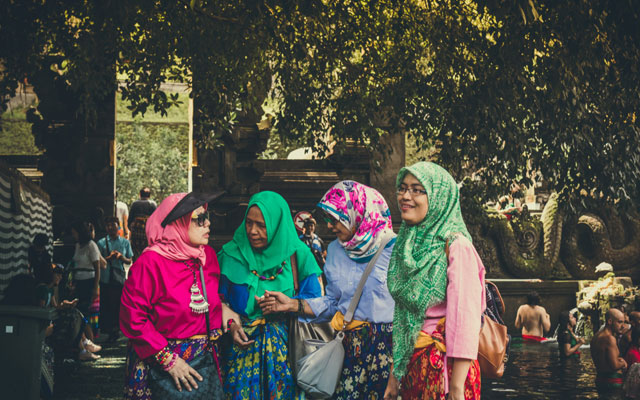
There is a huge opportunity for countries to develop halal-friendly tourism as the Asian Muslim travel community is set to grow

As a region of outbound Muslim travellers, Asia is starting to generate significant Muslim travel expenditure, which reached US$21 billion in 2017, or 21% of the global share, and is forecast to hit the US$29.6 billion mark by 2020.

“Asia is one of the top regions driving the growth of the global Muslim travel market, fuelled by a young and aspirational population and an increasingly-affluent middle class who are hungry to travel the world in a faith-compatible way, whether for business or leisure,” said Faeez Fadhlillah, co-founder and CEO of Salam Standard and Muslim-friendly hotel booking portal, Tripfez.

Muslim travellers from Malaysia, Indonesia and China will lead the way, according to Salam Standard, contributing 17% of the total global outbound spend by 2020 and outpacing European countries included in the study, who will contribute just 15% between them.

While Asia is a big feeder of Muslim travellers, the report urges Asian destinations to also look outside the region to key Muslim travel source markets in order to better capitalise on global growth trends.

The GDP impact of the global Muslim travel sector is projected to reach US$183 billion by 2020, up from US$148 billion in 2017.

Notably, the Middle East generated the majority of global outbound spend (61%) at US$62.2 billion. This is expected to reach US$72 billion by 2020, with Saudi Arabia and the UAE forecast to contribute 41% of the total Muslim travel spend worldwide by that date.

“One in three people worldwide will identify as Muslim by 2060 and to disregard this trend would be foolhardy,” said Faeez.

“With the Muslim population growth at 70% compared to the global average of 32%, the Muslim travel market presents many untapped opportunities for countries and organisations that successfully address its needs – and an enormous threat for those who ignore it.”

The full Global Economic Impact of Muslim Tourism and Future Growth Projection: 2017-2020 report will be launched on Salam Standard on November 6 during WTM in London.

Experiences redefined

0

The latest DMC to enter the playing field, Xperience Singapore Events & Travel is keen to bring a host of in-depth and immersive activities for leisure and business travellers.

Owned by Xperience DMC – a partner of Destination China – Xperience is headed by director Jane Goh, a veteran in hotel conference services and tourism with more than a decade of guiding experience.

She opined: “There are many other things we can do to sell the country as a destination, but they’re not being done yet. There’s a lot of focus on man-made attractions, but the soft (experience) is not there yet. I wanted to show another side of Singapore that many travellers and incentive visitors have not seen.”

Activities offered include learning and performing the Chinese lion dance, tracking and photographing otters in the city, and rowing across Marina Reservoir on dragonboat.

Goh shared: “We only started in April, and there was an avalanche of ideas in just three months.”

The spark came in the form of a Teochew opera troupe performing at the Singapore Heritage Festival, where she witnessed their behind-the-scenes preparations.

“When I saw that, I knew that tourists would love seeing something like this,” Goh recalled, and revealed that the performers were initially “a bit worried” and shy to open up their practice to tour groups.

However, not only was she able to negotiate with and convince the opera troupe, Goh was also introduced to their friends from other cultural groups such as lion dances and Wing Chun (a martial arts style).

Many of these groups are willing to welcome tourists, but do not have the means or knowledge of how to market themselves to visitors, she explained.

She also revealed that the dragonboat racing group had approached a travel agent for a partnership in the past, but was turned away.

“Our guides have become bored with city tours, so they’re excited to start these activities,” shared Goh.

Xperience’s smaller size can be an advantage, Goh insisted. “We are very involved in direct contact with our clients,” she said. “We give our clients the link to the management and the assurance that we are always here if there’s anything they need.”

Conversational commerce will shape future of travel in APAC: Facebook

0

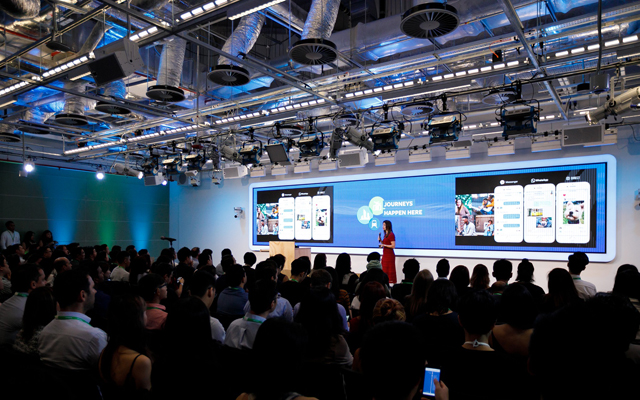
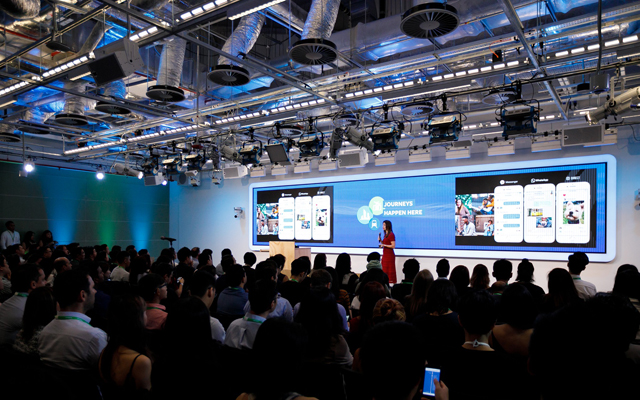
Messaging, or “conversational commerce”, is poised to be one of the hottest trends shaping travel in 2019, according to Facebook’s global travel strategy and planning lead, Nikhliesh Ponde.

At the Facebook’s APAC Travel Summit in Singapore, it was revealed that people and businesses around the world now exchange over 10 billion messages each month.

Facebook’s Meghan Joseph on the deeper role of messaging between brands and consumers

This preference for messaging is even more pronounced in Asia-Pacific, where 87 per cent of smartphone owners use a messaging app every month.

“We recently conducted a global survey and found that people in emerging markets are twice as likely as those in mature markets to message a business at least once a month. People increasingly expect businesses to be available via messaging apps. This is a dynamic that travel businesses in Asia-Pacific are poised to leverage, given these are mobile-first markets,” Ponde added.

Some leading brands have already taken the leap by using WhatsApp to send timely notifications and offer customer support. First movers include leading airlines such as Singapore Airlines and travel planning websites like MakeMyTrip.com.

Messaging can also play a much deeper role as it draws people and businesses together into an ongoing conversation, said Meghan Joseph, client partner, Facebook Singapore.

“Consumers today visit numerous travel-related touch points over a few weeks when making a travel purchase. It’s much easier to make travel decisions when you have a personal and direct conversation – this is something that messaging can enable,” Joseph said.

The insights carry greater weight considering the emergence of a new middle class in Asia-Pacific. Nearly one in every two Internet users in Asia travels abroad at least once a year, the highest proportion of any region in the world.

APAC takes lion’s share of world’s fastest growing cities: WTTC

0

Four of the five fastest-growing cities by travel and tourism GDP contribution over the past decade are located in China, WTTC found in its annual Cities Report.

Of the 72 cities deemed most important for tourism in the WTTC report, Chongqing, Chengdu, Shanghai and Guangzhou took top spots as the fastest growing in the past 10 years, while Shanghai is ranked as the largest city by travel and tourism in 2017.

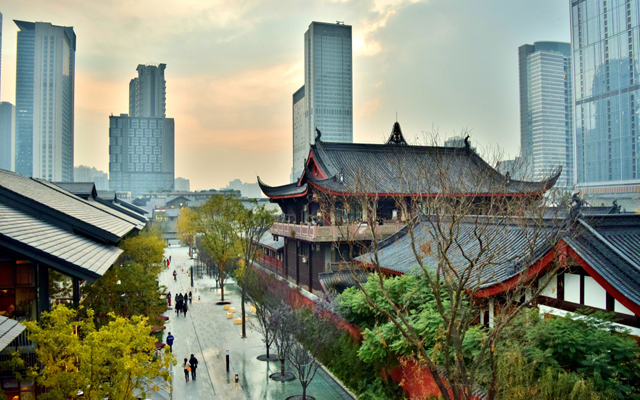
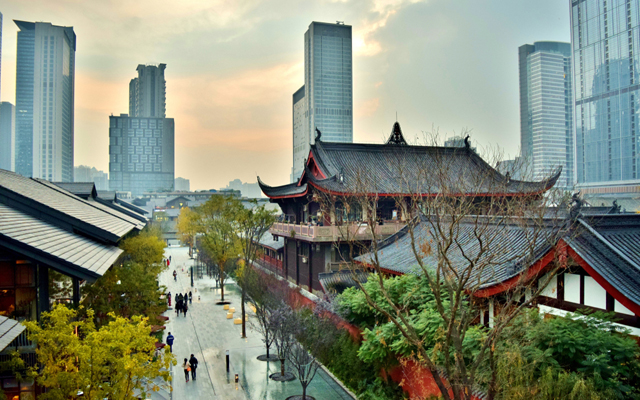
Chengdu (pictured) among the top 10 fastest growing tourism cities over the past decade

Chinese cities have matured rapidly over the past decade, and are forecast to continue dominating the growth charts between 2017 and 2027. Shanghai, for example, went from being the eighth largest city in terms of travel and tourism GDP in 2007 to become the largest in 2017 – a position it is expected to maintain until 2027.

Meanwhile, the rapid growth of Guangzhou will take it to fourth place, and Chongqing is forecast to join the top 15 for the first time, WTTC posits. This comes following a period of sustained infrastructure development, including investments in airports and extensive product development.

The Chinese domestic and outbound markets will drive growth in the coming decade, with the majority of top performers maintaining their positions. Chinese cities will continue to lead, although a slowdown in growth is expected.

With the exception of Marrakech, the cities in the top 10 ranking of fastest growing travel & tourism GDP in the coming decade are in Asia-Pacific.

Considering 2017 alone, Cairo (34.4%) was the fast-growing city in terms of travel and tourism GDP contribution, followed by Macau (14.2%).

The world’s top 10 cities in terms of tourism market size in 2017 are Shanghai (US$35 billion), Beijing (US$32.5 billion), Paris (US$28 billion), Orlando (US$24.8 billion), New York (US$24.8 billion), Tokyo (US$21.7 billion), Bangkok (US$21.3 billion), Mexico City (US$19.7 billion), Las Vegas (US$19.5 billion) and Shenzhen (US$19 billion).

Looking at job creation, the world’s top 10 cities are Jakarta, Beijing, Mexico City, Shanghai, Bangkok, Chongqing, Delhi, Mumbai, Ho Chi Minh City and Shenzhen.

WTTC president and CEO Gloria Guevara commented: “With 54% of the world’s population living in urban areas, cities have become global economic hubs, driving growth and innovation. They attract huge quantities of people who travel to experience their culture, do business and live. This growth has also resulted in a rise in city tourism – a trend which is forecasted to maintain momentum.”

New GSA paves road into India for Hertz

0

The Hertz Corporation has appointed InterGlobe Air Transport (IGAT) as its exclusive GSA in India.

IGAT will manage the outbound sales of products and services of Hertz and its additional car rental brands Dollar, Thrifty, ACE and Firefly to domestic travel trade partners, corporate customers and leisure travellers. The partnership was formed following a year of collaboration in India between the two companies.

Hertz appoints InterGlobe Air Transport as exclusive India GSA

Eoin MacNeill, vice president, Hertz Asia Pacific, said in a statement: “The India outbound market represents a great opportunity for Hertz and we are very pleased to extend our partnership with IGAT to a sole agent basis. IGAT is an experienced operator, managing a wide travel distribution network and extensive corporate customer base across India. IGAT is ideally placed to grow the presence of The Hertz Corporation’s car rental brands in India and provide outbound travellers with a wide choice of car rental options around the world.”

Siddhanta Sharma, president and CEO, InterGlobe Air Transport, added: “Hertz’s global expertise and modern fleet, coupled with our strong footprint across the Indian market will help us pave substantial inroads with both corporate and leisure holiday travellers. ”

IGAT has 29 years of experience in the Indian travel industry, 12 sales offices and 80 sales people.