Asia/Singapore Thursday, 9th April 2026
Page 353

Australia hotel room count surpasses 300,000 mark: STR

0

Openings in November pushed Australia’s hotel inventory above 300,000 open rooms, with the country now ranked 12th in the world in total room count and fourth among countries in the Asia-Pacific region, data from STR revealed.

According to most recent figures in STR’s AM:PM platform, the country features 5,600 hotel properties and 300,229 rooms. STR defines a traditional hotel on three exclusionary criteria: 1) generates revenue on a nightly per-room basis, 2) has 10 or more rooms and 3) is open to the public (excludes those properties requiring membership, affiliation or club status).
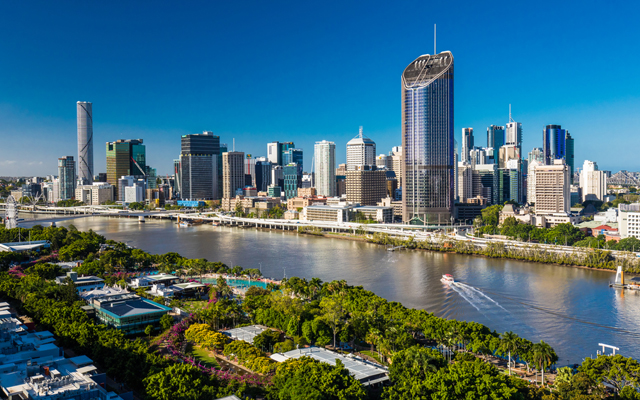
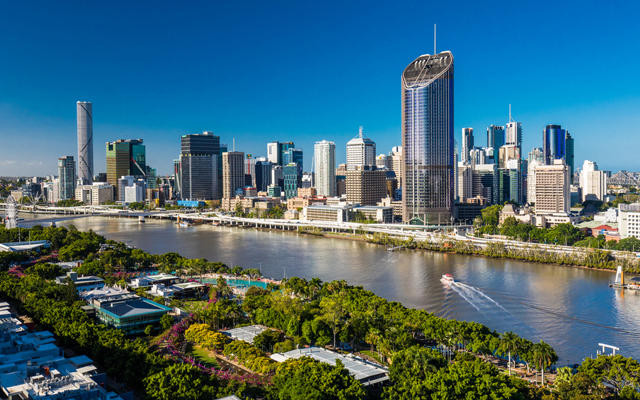
Australia’s hotel room supply surpasses 300,000 as of November; aerial image of Brisbane CBD and South Bank in Brisbane, Australia pictured

“Australia has been on a progressive development path since 2016 with more than 26,000 rooms added to the marketplace,” said Matthew Burke, STR’s regional manager – Pacific. “That is not counting the more than 5,000 rooms that were closed during that period and converted for alternative commercial usage. This uptick in investment reflects the country’s strong performance, especially in major markets. As a whole, Australia’s occupancy has been at or near 75 per cent for each of the last five years, and average daily rate has consistently ranged around A$185 (US$135).”

The 10 largest STR-defined markets in Australia represent 57.1 per cent of all rooms in the country, led by Sydney with 43,841 rooms. While each hotel class is well-represented in the country’s overall numbers, the largest percentage of rooms sit in the upscale (24.2 per cent) and midscale (23.6 per cent) segments. The upscale class has seen the largest influx of new supply, with 10,931 rooms opened since 2015.

Among branded inventory only in the country, Accor represents the largest market share with 32.1 per cent of rooms while the Ascott comes in a distant second at 7.6 per cent.

Australia also has 94 projects and 18,294 rooms in construction as well as 216 projects and 36,005 rooms in the two planning phases of the pipeline.

“Australia is not likely to hit its construction peak until next year, and we don’t expect a substantial slowing in development anytime over the next several years. Melbourne, Hobart and Adelaide are projected to see the largest increase based on their existing room counts, and the two highest-tiered segments (luxury and upscale) will combine to welcome 35 per cent of the new rooms in the pipeline,” Burke said.

“As we have seen in the data this past year, all of this new supply has put some pressure on occupancy levels, and subsequently, hotelier pricing confidence. Moving forward, we anticipate demand growth in almost all markets, but with sustained supply increases, we’re still forecasting occupancy declines in the short term,” he added.

“Room rates will of course be weighed by the additional competition in the market, but that is not likely to become a long-term trend as many markets trade at high absolute occupancy levels with the ability to absorb new supply.”


Off-the-beaten-track destinations gain popularity among Singaporean travellers

0

A greater number of Singaporeans are heading to off-the-beaten-track destinations and seeking more unique travel experiences, according to a survey conducted by YouTrip, Singapore’s first multi-currency travel wallet.

The Singapore Overseas Spending Study 2019, which analysed the travel and overseas spending habits of 100,000 Singaporean travellers between September 2018 to August 2019, found that YouTrip users transacted in 112 currencies and visited 161 out of a total of 195 countries (83 per cent) in the world.

More Singaporean travellers venturing off the beaten path

Singaporean travellers are becoming increasingly adventurous, and taking their YouTrip cards to more exotic destinations, said Caecilia Chu, co-founder and CEO of YouTrip.

The top destinations among Singaporean travellers in 2019 are Malaysia, Japan and Australia. Notably, the study also revealed that off-the-beaten-track destinations are gaining popularity among travellers.

With an average 76 per cent growth in the number of unique YouTrip visitors, Chile, Romania, and Mongolia will be the preferred picks for an off-the-beaten-track holiday in 2020, predicts YouTrip. This is in comparison to an average 42 per cent growth of other off-the-beaten-track destinations.

There is also a shifting preference towards using multi-currency travel wallets for overseas payment, according to the study, citing a ten-fold growth in transactions processed by YouTrip in the last half of the year.

Since its launch in August 2018, over 10 million transactions have been processed, the company said in a statement.

Multi-currency travel wallets like YouTrip provides travellers access to multiple currencies, including niche currencies such as Chilean Peso, Romanian Leu, and Mongolian tögrög, YouTrip said. This access to niche currencies could also have fuelled the growing popularity of off-the-beaten-track destinations like Chile, Romania, and Mongolia, it added.

Another reason exotic destinations are preferred could be due to Singaporean travellers’ growing appetite for adventure. According to a 2019 survey by Skyscanner, 82 per cent of respondents said that they are planning to visit destinations they have not been to, citing “off the beaten-track destinations like Ethiopia, Guatemala, Iran and Yemen”.

YouTrip’s study also revealed that Gen Y travellers covered close to 20 per cent more destinations than Gen X in 2019, preferring off-the-beaten-track destinations such as Luxembourg, Peru, and Saudi Arabia.

While Central Asia remains one of the top regions for Gen X travellers to visit, Mexico, Slovakia and Montenegro are fast gaining popularity as off-the-beaten-track destinations among Gen X travellers, found the study.

Overall, Singaporean travellers spend almost 33 per cent of their total travel budget on food, the study also found. Even in off-the-beaten-track destinations observed in 2019, YouTrip is used mainly on dining expenditure.

Based on the average YouTrip user spend in each destination, travellers may expect to spend a daily estimate of S$107 (US$78) in Chile, S$76 in Romania and S$85 in Mongolia, mainly on food and transport expenditure.

In comparison to the top three popular travel destinations, travellers to Malaysia, Japan and Australia spend an average of S$116, S$195 and S$115 per day, respectively.

Singaporean travellers also tend to seek familiar food when in non-Asian countries, with cuisines such as Chinese, Japanese, and Thai falling within the top five most frequented F&B outlets, according to the study.

In the top three most popular travel destinations, YouTrip users spend an average of S$67 in Japan, followed by S$40 in Malaysia, and lastly, S$30 in Australia, in a single dining receipt.

Living Irrawaddy Dolphin Project puts sustainability at heart of operations

0

Myanmar-based social enterprise Living Irrawaddy Dolphin Project is aiming to rekindle age-old relationships between fishermen and dolphins while adding to Mandalay’s attractions.

Since launching at the end of 2017, Living Irrawaddy has developed a series of one- to three-day itineraries that immerse guests into Myanmar’s rich culture and deliver authentic experiences unique to Mandalay.

The tours take guests to cruise along the Irrawaddy River, stopping at small fishing communities living along the banks to learn about local life and the dwindling age-old practice of cooperative fishing.

This unique fishing technique, which is practised in only three places around the world, sees fishermen work with the endangered Irrawaddy dolphins that populate the area to fish in the waters.

Like the Irrawaddy dolphin, that fishing method is at threat as fish stocks deplete due to illegal fishing and environmental issues, as well as the introduction of more modern fishing techniques.

The itinerary also includes a trip to see the Irrawaddy dolphins. According to the latest count by WWF in January, the population of Irrawaddy dolphins that inhabit the Mekong River stands at 76, making them critically endangered.

Living Irrawaddy’s project advisor Paul Eshoo, who previously worked with Wildlife Conservation Society (WCS) to help set up ecotourism initiatives to protect the Irrawaddy dolphins in the area, was approached by Living Irrawaddy Travel to devise dolphin tours.

“It was a good opportunity to build on the work I’d done with WCS, but (on the premise of) creating more of a social business and doing more to promote the area and making it more tourist-friendly,” he said.

Eshoo set about curating a product that gives visitors a taste of the traditions unique to this part of Myanmar. Working with local fishing communities, the team devised itineraries that see visitors cruise along the Irrawaddy, stopping at villages along the way and glamping on picturesque islets that stud the river.

Profits are ploughed back into dolphin conservation, with its 80 partner villagers benefiting from providing services, such as meals, boat trips and other excursions.

Since launching its first tour in September 2018, Living Irrawaddy has upgraded its offerings. Its fleet has doubled to two boats and new luxury tents equipped with mattresses were added for this season.

Meanwhile, Eshoo is confident that creating more unique tourism products which showcase Myanmar’s rich culture and natural beauty will help re-attract the attention of tumbling markets.

He said: “We want to add to Mandalay’s tourism products and give visitors something else to do. Even if tourist numbers are dwindling, it’s important to continue giving people reasons to come to Myanmar and doing something positive for communities.”

On-demand access to drive car rental market in mobility age

0

The car’s popularity will stay strong in the upcoming mobility shift, but attitudes towards ownership will change significantly, according to a recent report by Avis Budget Group.

The report titled ‘The Road Ahead: The Future of Mobility Report’ revealed that over the next decade, consumers are likely to move to an access-driven, on-demand model for their favourite mode of transportation.

Recent study points at shift towards on-demand vehicle access in the future

Based on consumer research carried out across 16 markets in Europe and Asia, the report found that majority of the people (82%) surveyed thought owning a car was still important, while 77% report that they own a car outright, and nearly 50% still see the car as their ideal mode of transport.

However, this is set to change with more than two thirds (68%) of people thinking that outright car ownership will not be the most popular way to access a car within the next decade, and over half (54%) are prepared to give up car ownership and rely on long-term rental, on-demand or subscription services. In fact, 59% said that they expect more subscription and on-demand services for cars and vans over the next few years.

Keith Rankin, president, international, Avis Budget Group, said: “Driven by technology advancements and the influence of services like Amazon, Netflix and Spotify, people today want to consume and access products and services at the click of a button. The expectation for an on-demand service has impacted the mobility industry and resulted in the evolution we’re seeing today – from being able to book a taxi instantly to hiring a car for a week-long holiday, all from your smartphone. However, our report reveals that we are now seeing a rise in this demand for instant access and flexibility, resulting in changing behaviours towards car ownership.

“Changing needs and the expansion of the sharing economy offer both challenges and opportunities for the mobility industry. Our research has shown that whilst consumers are expectant of connected, integrated and on-demand services, they still want convenience at a reasonable price.”

Rankin concluded that it’s imperative that different mobility players work together to cater to consumers’ future needs. “We have demonstrated the success of collaboration, as shown with our fleet management as a service partnerships with Via and Lyft, and our agreements with Ford and Continental in providing connected cars. Our partnerships demonstrate well how the sector can work together to provide the on-demand and connected services that customers want. These can range from a technology giant delivering 5G, or local governments working with the private sector for improved, urban EV access for residents.”

The full report is available here.

Savvier Chinese travellers put greater focus on dining and accommodation

0

Global travel spend by Chinese outbound tourists in 1H2019 hit US$127.5 billion, according to the 2019 Chinese Outbound Travel Consumption Report by UnionPay International (UPI), released in partnership with Chinese OTA Ctrip, based on payment data from UPI and statistics of travel products bookings from Ctrip.

Some key takeaways from the report are that in 2019, there were 10 per cent more female outbound travellers than male, though the average expenditure per person of male travellers is higher. As well, there has been a steady growth in outbound tourists from second- and third-tier cities.

Chinese travellers are putting greater emphasis on dining and accommodation: study

By age, the post-80s and 60+ age bracket made up the highest spending, while people born in the 2000s are following the trend of solo travel, the study found. The different customer profiles unveiled by the report all point to a growingly diverse set of travellers, all with different expectations and demands for services. For example, the young generation sees mobile payment services as essential while seniors seek information.

The report also found that destinations in Europe, the US and Australia remained top favourites among Chinese outbound travellers. However, for the first time, there was substantial growth in visitors to countries participating in the Belt and Road Initiative, such as Belarus, Myanmar, Georgia and Nepal.

The report also noted that Chinese travellers care significantly about hospitality, dining and booking before arrival, with 80 per cent of travellers opting to stay at high-end or five-star hotels. Spending on F&B in regions such as the South Pacific and the Middle East also saw an increase of around 60 per cent.

There has also been substantial growth in online bookings for entertainment and attractions, according to the report. This highly segmented group of travellers are increasingly demanding more versatile services, it added.

Aditya Ghosh joins Oyo’s board as Rohit Kapoor named new India and South Asia CEO

0

Aditya Ghosh, presently serving as CEO, India and South Asia, at Oyo Hotels & Homes, will be joining the company’s board of directors, announced the hospitality unicorn.

Aditya will be joining Oyo’s founder and group CEO Ritesh Agarwal, Baja Corporation’s founder and CEO Betsy Atkins, and other industry experts including SoftBank Vision Fund’s managing partner Munish Varma, Lightspeed India Partners Advisors’ partner Bejul Somaia, Sequoia Capital India Advisor’s managing director Mohit Bhatnagar, among others.

Aditya Ghosh (left) & Rohit Kapoor

In his new role, Ghosh will focus on five key areas at Oyo, namely, safety and security, customer experience, corporate governance, revenue management, and stakeholder communications.

“Aditya’s strong business acumen, problem-solving capabilities, passion for building an organisation with strong corporate governance and a high performing work culture that thrives on principles of diversity and inclusion, makes him the perfect choice for this larger and more strategic role, at a global level,” said Ritesh Agarwal, founder & group CEO, Oyo Hotels & Homes.

Meanwhile, Rohit Kapoor, who is currently serving as the CEO of new real estate businesses will be taking over Ghosh’s role as the chief executive for the India and South Asia business.

In his year-long tenure with Oyo, Kapoor has been overseeing the growth of Oyo Life, the brand’s long-term rental housing portfolio, as well as other new real estate businesses in India. He will now also helm the operations of over 18,000 hotels across more than 500 cities in India and South Asia.

Travel spikes in January for ANZ and Singapore markets: Sojern

0

Australian and New Zealand travellers are searching and booking in January for travel during the Easter and even Winter break next year, said Sojern, calling on travel marketers to kick-start their campaigns by December 15 to leverage on the demand spike.

Nearly one in two Australia and New Zealand travellers (48 per cent) are searching for trips more than 91 days out, according to data from the travel marketing engine.

Sojern reports a spike in travel bookings in January for Australia, New Zealand and Singapore markets

Likewise, Sojern’s data also revealed that Singapore travellers are searching and booking in January for holidays over the Chinese New Year and National Day periods, urging travel retailers to start launching their campaigns from December 15 to ride the demand wave.

Some 32 per cent of Singapore travellers are searching for more than 91 days ahead and 46 per cent are booking for trips within the same month, according to Sojern.

In response to a question posed by TTG Asia as to why December 15 has been singled out as the optimal date for kick-starting campaigns targeting these two markets, Sojern replied: “Algorithms can take up to three, four weeks to learn the data before it gets into the stable state. Hence, December 15 is what we consider the latest date to start a campaign (for optimal results) in January.”

Today’s travellers hungry for culinary adventures: Travelzoo

0

The desire for authentic cuisine experiences is one of the biggest factors influencing travellers’ vacation decisions today, according to a survey by Travelzoo.

Trying new food and experiencing the culinary culture of the destination is ranked as the second most popular reason (39%) for going overseas, just behind getting to see famous landmarks (41%).

Travellers thirst after culinary experiences, says Travelzoo survey; street food in Chinatown, Bangkok, Thailand pictured

Travelzoo’s 2019 Fall Travel Trends Survey, which polled 9,000 people across nine countries, also found that today’s travellers make an effort to support the local community and economy while on culinary trips.

As well, more than half (53%) of the respondents have gone on vacations for food or food-centric activities. Younger people aged 25 to 44 are twice as likely to go on these journeys of culinary discovery than people who are 55 or older, according to the survey. Local cuisines are the most preferred as travellers want to try something new and special (62%) and/or have an authentic experience to explore the local culture (54%).

Italian, Chinese and Japanese are the three most popular cuisines among respondents from all the surveyed countries, while Thai, Vietnamese and Korean food are the top three cuisines that respondents are curious to try in the future.

Travelzoo’s survey also found that Chinese consumers are today’s most adventurous foodies. A huge number (96%) of Chinese respondents have been on a break or vacation centred around food or culinary experiences, and 70% of them have tried food on vacation that they had never even heard of before. When asked whether they would be willing to try non-traditional foods, such as insects or live animals, the Chinese were three times more willing to do so out of curiosity than travellers from other countries, found the survey.

When abroad, Chinese consumers usually spend US$95 per person, per day, on food – about 80% more than the global average, said Travelzoo. The use of social media to show off foodie experiences is popular among travellers, and tech-savvy Chinese travellers do this the most, with 94% posting food images on social media. That number is twice as high as that of any other nation in the survey.

The survey also showed that travellers are becoming much more receptive to responsible travel solutions and sustainability concerning food during travel. When asked what they would take into account when dining abroad, 77% said they want their food to have been sourced locally, to help support the local economy and community. Millennials are twice as likely to consider the ethical and sustainable factors around food than older demographics.

Almost half (43%) of the respondents stated in the survey that supporting local people and local communities gives them a different and valuable experience to be close to the culture of their chosen destination.

Two-thirds of travellers report that they usually conduct intensive research to find the best food and restaurant options. It’s clear that curated culinary trips and local dining tips will inspire today’s travellers to explore more new destinations, concluded Travelzoo in its findings.

Asia leads the charge in solo travel market: Klook survey

0

The vast majority of travellers – regardless of age, gender, or nationality – are keen on solo travel, according to a Klook-commissioned Solo Travel study conducted by YouGov.

The study, which polled close to 21,000 respondents across 16 markets, found that 76% of them have either travelled alone or are considering it.

The number of travellers in Asia who are more inclined to travel solo are growing

When comparing generational preferences, 80% of Generation Z (18 to 24 year olds) respondents and 79% of Millennials (25-39) said they have already travelled alone or would be keen to plan a solo trip.

Similar trends were also found among the older generations: roughly 73% of Generation X (40-54) and 71% of Baby Boomers (55+) said they were interested in travelling alone. There is also little difference between genders, with 74% of women and 78% of men saying they have either already experienced or would be interested to pursue solo travel.

And while there has been an uptick in interest globally, the data shows that solo travellers in Asia are leading the charge by a large margin. Between 69% and 93% of travellers from Asia have either travelled solo in the past or said that they are open to the idea. In western countries, by comparison, that number hovers between 60% and 69%.

When asked about their reasons for flying solo, half of the respondents said that they wanted to enjoy uninterrupted “me time” or reward themselves, suggesting that travellers value their independence more than ever.

However, the same survey also found that while many people said that they are interested in hitting the road alone, they also had reservations about potentially feeling lonely. In fact, half of the survey participants who wanted to solo travel cited a “fear of loneliness” as the biggest hurdle. This concern was prevalent across all generations – with Gen Z, Millennials, Gen X and Baby Boomers all ranking loneliness as their top concern.

Additionally, 48% said that safety was their biggest worry; and 30%, planning and booking the itinerary on their own.

APAC key driver for Christmas booking surge to Europe

0

Helsinki is the top European destination for longhaul visitors this Christmas, with 29.6% growth in flight bookings over the period December 15, 2019 to January 15, 2020, according to a recent study by ForwardKeys.

Helsinki’s growth is mainly attributable to great growth in festive forward bookings from China and Japan, driven by a substantial increase in capacity, said the report.

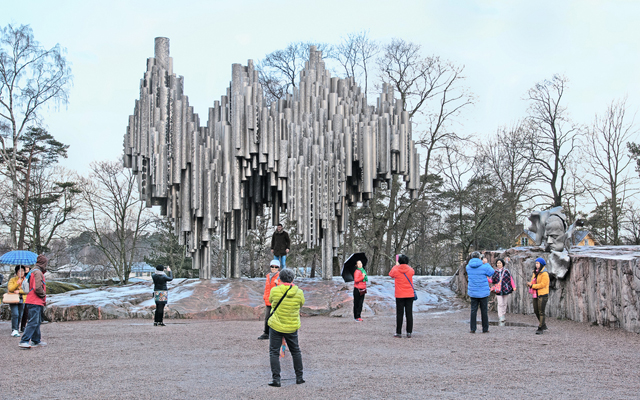
Helsinki tops European destinations for longhaul visitors this Christmas, driven by growth from China and Japan; Chinese tourists at the Sibelius Monument in Helsinki, Finland pictured

It is followed by Budapest (up 29.3%), Bucharest (up 28.4%), Lisbon (up 27.2%), Porto (up 26.5%), Athens (up 22.0%), Copenhagen (up 18.5%), Madrid (up 18.3%), Prague (up 16.5%), and Amsterdam (up 14.4%).

Budapest’s strong booking position is due to notable capacity growth on routes from New York and Tel Aviv. Bucharest’s boom is due to notable capacity growth over the last two years. Lisbon is benefitting from a new route, operated by Asiana, from South Korea; while Porto is profiting from an increase in flight capacity from Sao Paulo, Brazil’s commercial capital.

As of November 12, Christmas bookings to European countries from outside the European Union were 11% ahead from the same period last year.

However, not every destination has seen growth. Bookings to Stockholm and Venice are behind, 23.1% and 6.5%, respectively. Stockholm is suffering since SAS stopped direct flights to and from Hong Kong last November and Venice has experienced a stalling in bookings from South Korea, the US, Russia and China. Furthermore, with the recent floods, a further slowdown is likely, said the report.

Europe’s largest city destinations by market share are currently all showing very healthy bookings for the Christmas period, found ForwardKeys. The number one destination is London, with a 16.2% share and bookings 10.2% ahead from the same period last year. It is followed by Paris, which has a 13.6% share and bookings 12.9% ahead. The next most visited cities will be, in order, Rome, Madrid, Barcelona, Frankfurt, Amsterdam, Lisbon, Milan and Munich.

Looking at the most important origin markets for global shoppers in order of size, coming to Europe, there is extremely healthy, above inflation, growth from six of the top seven, said the report.

Forward bookings for the Christmas period from the US are 7% ahead; from South Korea, 15.1% ahead; from Brazil, 29.3% ahead; from Russia, 1.6% ahead; from Japan, 15.8% ahead; from China, 19.5% ahead; and from the GCC countries, 3.6% ahead.