Asia/Singapore Thursday, 9th April 2026
Page 352

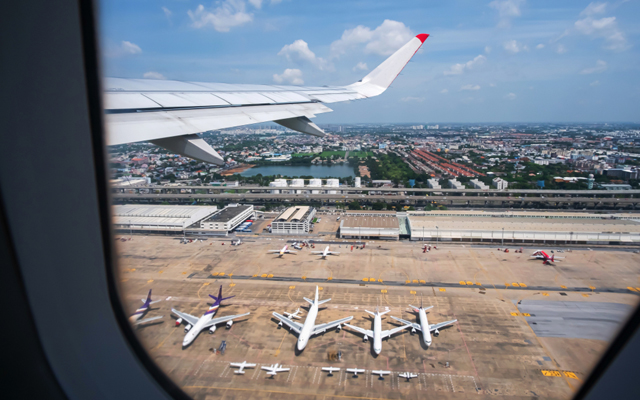
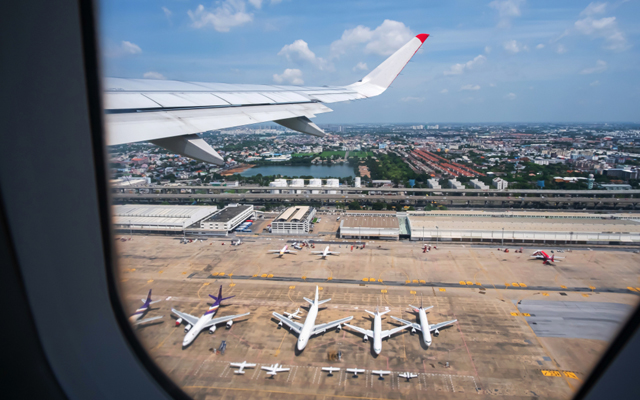
Satisfied travellers spend more at airports: Collinson

0

Happy travellers are likelier to splurge at the airport, according to new research from Collinson, urging airports and their ecosystem of travel-related businesses and brands to prioritise traveller satisfaction across the entire journey so as to increase passenger dwell time and spend.

Collinson’s Airport Journey report surveyed 6,667 people across 11 countries in the Americas; Europe, the Middle East, Africa (EMEA); and Asia-Pacific to track evolving traveller preferences and behaviours, and learn more about travellers’ satisfaction with the airport experience.
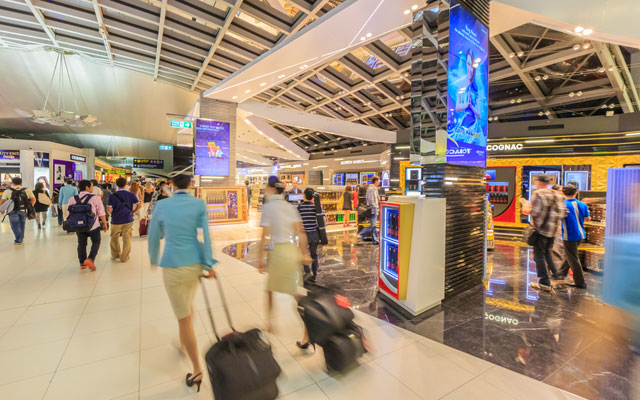
Retail spending in airports linked to travellers’ satisfaction: Collinson

Overall, traveller satisfaction with the airport experience is on the rise, found the report. In 2019, 63% of global travellers said they enjoy the airport experience, a jump of 13 percentage points from 2018 when only 50% of travellers said the same. Collinson’s 2019 data drew on five additional markets not included in the 2018 data; with markets held constant, a jump of eight percentage points year-on-year was recorded.

However, there is a significant gulf between traveller satisfaction in Asia and the Middle East, compared to the US and Europe. On average, three in four travellers (74%) across markets like India, China and the UAE enjoy the airport experience, compared to less than half (48%) across markets like the US, the UK and Germany.

The polarisation in airport experience should concern airports and their ecosystem of businesses since the research found that happy travellers spend more.

Nearly nine in 10 (88%) travellers who routinely spend over US$200 at the airport said the airport experience is an enjoyable part of the journey. On the other hand, the least satisfied travellers spend less than US$28, among whom only 40% saying that they enjoy the airport experience.

Mignon Buckingham, corporate strategy officer, Collinson, said: “It may seem unsurprising that happy customers spend more, but the devil is in the detail. The airport experience is fragmented and relies on an ecosystem of players, including airlines, airport authorities, security and operational service providers, merchants, duty-free, retailers, bars and restaurants. Dissatisfaction at any point of the airport journey can trigger a loss in overall satisfaction and have a knock-on impact for all other players.

“The staggering differences in satisfaction rates in Asia and the Middle East compared to Europe and the US point to a variety of conclusions. Asia and the Middle East are leading international tourism growth, with arrival numbers growing by 6% and 8% from January to June 2019, respectively. This boom in tourism arrivals and the regions’ growing middle class are major motivations for the development of new airports and the evolution of existing ones.

“Without the long-standing legacy infrastructure that other regions must contend with, airports in Asia and the Middle East can build ultra-modern facilities, cherry-pick best-of-breed features, and keep the customer experience absolutely central to it all. These are no doubt contributing factors to travellers’ strong enjoyment of the airport experience in these regions.”

Asia-Pacific has been called the busiest area on Earth for airport development, accounting for 48.5% of global spend on airport upgrades and 57% of investment in new airports. Starting from scratch in very recent years means airports in Asia and the Middle East can leverage innovative design and offer seamless technology and services to passengers, as seen in some of the world’s top airports like Singapore Changi, Incheon International and Dubai International.

On the other hand, airports in the US and Europe must contend with how to update long-standing facilities to accommodate booming passenger numbers. Europe and the US are home to the world’s 10 oldest airports, while the average US airport is over 40 years old.

Mignon continued: “But infrastructure alone does not deliver traveller satisfaction. With so many innovative travel experience solutions now coming to market, this is an exciting time for airports in every region to consider new ways to boost traveller satisfaction and spend. Airports in Asia and the Middle East can integrate trailblazing products and services into their offering, to ensure travellers’ on-the-ground experience matches the airports’ modern physical infrastructure.

“A brand new terminal may look impressive to a traveller, but unless the services offered are equally cutting-edge, customers won’t be satisfied. Airports in the US and Europe have a different challenge and must seek out solutions that enable a seamless journey and offer unexpected moments of delight, so that no matter the age of the infrastructure, travellers enjoy a world-class airport experience.”

New opportunities to help improve traveller satisfaction

Collinson’s Airport Journey research indicates many key opportunities for airports and other businesses to enhance traveller satisfaction and encourage engagement and spend. Travellers want more opportunities to take control and create a smooth, enjoyable trip even before the journey begins, with nearly three in four (70%) saying they would consider pre-ordering food and beverage if the option was available.

More than half (53%) of travellers who spend upwards of US$150 on retail said they do not spend more because of baggage restrictions, and 39% would spend more if a delivery or collection service was offered.

The travel retail app Inflyter is currently working to connect airports and duty-free providers to deliver services which will allow travellers to pre-order and collect duty-free purchases on their inbound journey or have them delivered to an airport lounge.

Travellers want relevant marketing communications

Another key finding from Collinson’s Airport Journey research is that there is considerable opportunity for airports to improve their traveller relationships via communications. Nearly one in two travellers (45%) receive communications at times when they are not planning to travel; indicating a lack of relevance and personalisation, not to mention wasted marketing spend for airport businesses and brands.

An explanation for this may be that, in the absence of a structured loyalty or engagement programme, many airports have no means of knowing when customers will be travelling. Still, 48% of travellers said they receive communications that encourage them to spend more time at the airport, and another 46% said receiving discounts ahead of travel encourages them to shop and dine at the airport. Both points reveal that travellers are in fact open to receiving marketing-driven communications from the airport, if these are relevant and tailored.

Mignon added: “Traveller satisfaction with airports is improving, but there is still a significant gap between travellers’ ideal experience and what airports deliver. Our research shows a number of opportunities where all of us in the travel experience landscape can help to give travellers a little more luxury, comfort and peace of mind right across their journey.

“For example, when we know who the traveller is, we can make their experience smoother via inbound or in-lounge duty-free collection services or the ability to pre-order airport meals. Travellers can also be incentivised with card- and payment-linked offers that are personalised and relevant. Ultimately, communications is key, which is why Collinson is focused on helping our partners get to know individual travellers better so that we can provide them with timely information and tailored offers that make the journey more efficient, enjoyable and stress-free.”
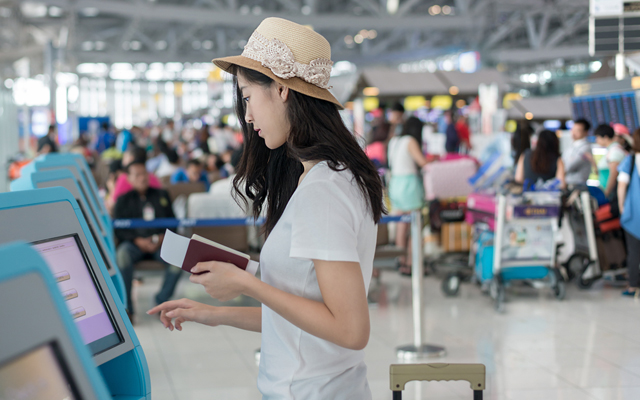
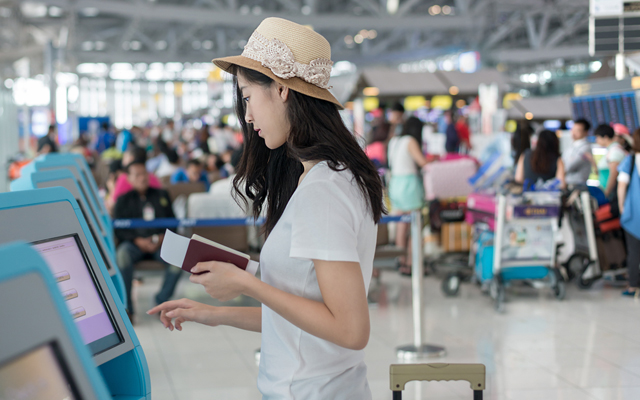
Shift to self-service and rise of super apps among Travelport 2020 trends

0

Customers’ preferences are shifting towards self-service, amid the growing trend of super apps and a change in content retailing, according to a new report by Travelport highlighting the trends that may shape travel experiences in 2020.

Customers in control
Several trends highlight that customers are moving towards self-service options, with 55 per cent of those surveyed preferring to hear about travel disruption via digital communications rather than speak with a person on the phone. This is especially important when it comes to Gen Z, the future business traveller, and managing their high expectations through technology.

Growing demand for self-service among travellers in 2020: Travelport

Mobile takeover
Super apps are spreading west from their established base in South-east Asia. Super app tech giants such as WeChat, Grab and Go-Jek give their users a one-stop shop to communicate, shop online, book travel, bank, find a date, get food delivery, and pay for anything within a single, unified smartphone app. Travel brands that want to deliver holistic mobile customer experiences need to think about how they engage travellers within these super apps as well as in their own mobile channels.

Retail accelerated
In 2020, research shows that there will be an accelerated rate of change in the way travel is retailed and purchased online. This includes wider and more complex multi-content reach, more enriched and comparable offerings, more focus on relevance than magnitude, and increase in automation that enables customer self-service.

Commenting on the trends, Fiona Shanley, chief customer and marketing officer at Travelport, said: “These insights into the forces which will shape travel experiences as we start a new decade show we’re seeing rapid change in content retailing, particularly online, and an evolution of mobile travel as we all increasingly depend on our devices to help us navigate the world.

“It’s clear to see customers are driving change across the travel industry with new topics, such as the environmental impact of travel. And when an agency could successfully employ a ‘bot’ show, the 2020s will be another era of rapid change for travel.”

APAC fastest growing region for travel and tourism: WTTC

0

Asia-Pacific is the fastest growing region for travel and tourism, with 80% of the top fastest growing cities in the region, and contributing US$915 billion (33%) in direct travel and tourism GDP, according to a report by the World Travel & Tourism Council (WTTC).

The Cities Report for 2019 focuses on 73 major tourism city destinations, providing estimates of the GDP and employment directly generated by the travel and tourism sector; and highlights successful initiatives, strategies and policies that have been implemented to support this growth.

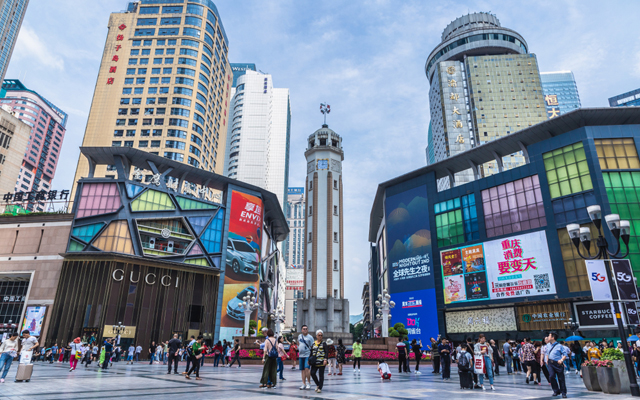
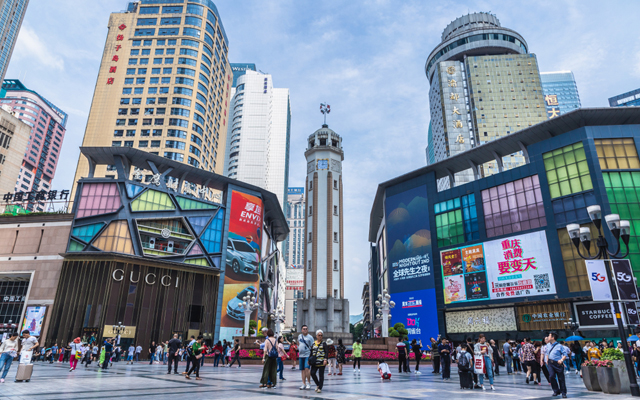
Asia-Pacific emerges fastest growing region for travel and tourism, with Chinese cities like Chongqing making up half of those cities; popular tourist spot Jiefangbei Pedestrian Street in Chongqing pictured

Chinese cities continue to mature rapidly, making up five of the 10 fastest growing cities in direct travel and tourism GDP over the last decade: Chongqing, Chengdu and Shanghai ranking first, second and fourth, and Guangzhou and Shenzhen coming in eighth and tenth.

International visitor spending is usually more important to cities than it is to countries as a whole, WTTC said in a statement. Six out of the top 10 cities for international visitor spending for 2018 were in Asia-Pacific, including Bangkok, Singapore, Tokyo and Shenzhen, found the study. This highlights the importance of revenues from international visitors which in some cases pay for major city infrastructure projects and services that improve the quality of life for residents, it added.

Notably, six out of the top 10 cities for domestic visitor spending are also in Asia-Pacific, and five of them are in China, with Shanghai taking the number one spot at US$79 billion, followed by Beijing at US$75 billion.

However, cities with an over-reliance on domestic or international demand can be more exposed to economic and geopolitical shocks, according to WTTC. For example, large cities which are highly reliant on domestic demand could be exposed to changes in the domestic economy.

On the other hand, cities which are more reliant on international demand and/or particular source markets may be vulnerable to external disruptions. The report highlights several cities which demonstrate a more balanced split between domestic and international demand, including two Japanese cities: Tokyo and Osaka.

The report also reveals that all but one of the 10 global cities with the highest direct travel and tourism growth over the past decade, are in emerging and developing economies, seven of which are in Asia-Pacific, such as China, Vietnam and the Philippines.

Infrastructure development and prioritisation of tourism has been a key driver of travel and tourism growth. The projected trends for 2018-2028 continue in this way, with all 10 coming from emerging and developing countries, and all but one located in Asia-Pacific, for example, India, Vietnam and Indonesia.

Spotlight on Oceania

Cities in Oceania make up a large portion of their respective countries’ travel and tourism GDP, with Brisbane and Sydney making up more than 30% of Australia’s direct travel & tourism GDP, and Auckland making up over 40% of New Zealand’s.

When considering the visitor impact of these cities, Sydney maintains the most even split between domestic and international, with domestic visitors contributing 56% towards the total visitor spend, and domestic contributing 44%. Brisbane’s split is similarly balanced with domestic visitors contributing 67%, and international visitors contributing 33%.

In terms of employment, Auckland contributes the most towards its respective country’s travel and tourism direct employment, offering 36.9% of all jobs in this sector, and 9.9% of total employment in Auckland. Additionally, Sydney and Brisbane collectively contribute 32.6% of direct travel and tourism employment to Australia.

The Global Picture

With over half (55%) of the world’s population living in urban areas, which is set to increase to 68% over the next 30 years, cities have become the hubs for global economic growth and innovation, while also attracting more people who want to live and do business there.

The report reveals these 73 cities account for US$691 billion in direct travel and tourism GDP, which represents 25% of the sector’s direct global GDP and directly accounts for over 17 million jobs.

Additionally, in 2018, direct travel and tourism GDP across the cities grew by 3.6%, above the overall city economy growth of 3.0%. The top 10 largest cities for direct travel and tourism contribution in 2018 offer diverse geographic representation, with cities such as Shanghai, Paris, and Orlando sitting in the top five.

WTTC president & CEO, Gloria Guevara said: “Asia-Pacific has been, and as shown by this important research, will continue to be a crucial region for travel and tourism. We are seeing an exciting amount of growth and development in the region and there is an opportunity to create sustainable change that will translate in further benefits for the local communities.

“Achieving sustainable growth in cities requires reaching far beyond the sector itself, and into the broader urban agenda. To drive true economic impact that can translate seamlessly into social benefits, a city must engage with all stakeholders, across the public and private sector, in order to establish the cities of the future.”

Phuket tourism buoyed by robust 2H2019 arrivals

0

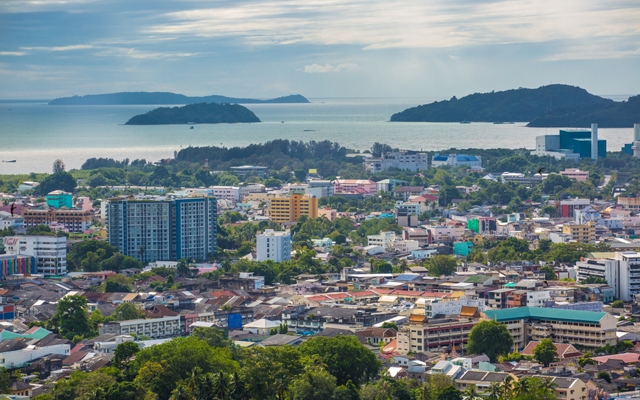
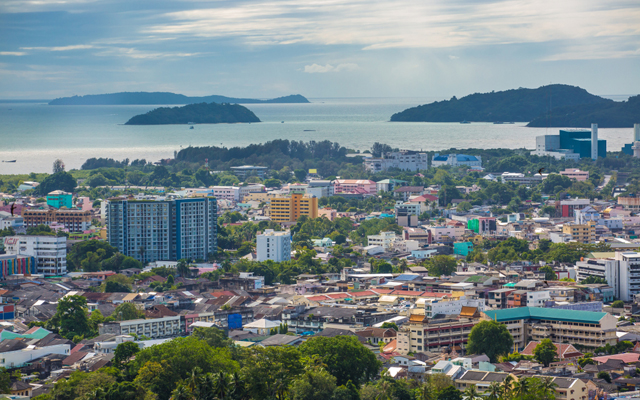
Robust passenger arrivals in 2H2019, spurred by the growth in the Indian market, has helped to rebalance Phuket’s tourism market, according to a new report by C9 Hotelworks.

The Phuket Hotel Market Update showed that the launch of direct flights to Bengaluru, Delhi, and Mumbai has boosted Indian arrivals, with year-on-year growth of 298 per cent.

Phuket’s tourism industry kept afloat by robust passenger arrivals in 2H2019: C9

In 2019, year-on-year passenger arrivals declined in 1Q (-4 per cent) and 2Q (-7 per cent) due to international economic volatility, China-US trade tensions, and a strong Thai baht. As well, longhaul travellers from Australia and European countries (led by Scandinavia, Germany, and Italy) shrank. Moreover, Chinese arrivals moved into troubled territory with a negative year-on-year growth rate of -9 per cent.

However, passenger arrivals notably regained momentum in 3Q (3 per cent) and 4Q (8 per cent). The demand came from regional Asian feeders (led by India, Malaysia, and Singapore). Overall, for the year, passenger arrivals in 2019 are forecasted to be similar to 2018, but punctuated by a 2H rising trend.

In 2019, the total number of passenger arrivals at the Phuket International Airport is forecasted to be 9.1 million, with the December year-on-year monthly 2019 figure forecasted to be up by 8 per cent.

“Looking at key hotel performance trends, the second half growth spurt in demand drove full-year market-wide occupancy to 72 per cent. Rate pressure remains intense and a challenge to RevPAR, with Thai currency appreciation set to continue in 2020,” said C9 Hotelworks’ managing director Bill Barnett.

“A key airlift factor is direct flights and diverse destinations. Comparing mainland China with 21 destinations from 22 airlines and Russia with 34 destinations from eight airlines, the number of Indian arrivals from three cities and two airlines is anticipated to see continued market penetration and upside.”

Meanwhile, the top five locations for Phuket hotel pipeline developments are Patong, Bangtao, Kamala, Nai Harn, and Kathu, according to the report. The newly opened Porto De Phuket, alongside the Central Floresta and upcoming Andamanda, are all helping to position Phuket as a lifestyle, entertainment and shopping destination, it added.

In 2020, 5,009 new keys from 21 properties will enter the island hotel supply, which is a 6 per cent increase. The majority of future pipeline developments are in upscale and midscale tiers.

Thirst for tech advances and eco-choices among 2020s travel trends: Agoda

0

Single apps for all travel needs, passport free travel, and mobile app check-in are the top three new travel norms expected by travellers in the 2020s, according to new research by Agoda.

With the continued advancement of technology, revolutionary travel apps, and better connectivity, people expect a lot more from their travel experience in the next decade, said the OTA in a statement.

Asian travellers expect technology developments to simplify travel in the 2020s: Agoda

Specifically, South-east Asians expect these technological advances to simplify travel, according to the survey which polled over 16,000 adults between December 12, 2019 and December 18, 2019. Half of all respondents in Indonesia (56 per cent), Singapore (54 per cent), Malaysia (53 per cent), Taiwan (50 per cent), the Philippines (48 per cent) and Thailand (48 per cent) consider this to be the norm in the next decade, compared to only a third of people in the UK and the US (33 per cent).

One in two South-east Asians also view mobile app check in, which allows guests to skip the registration queue, download their room access key and go straight to their rooms, as the norm in the 2020s, with Singaporeans (54%), Filipinos (53%), Malaysians (58%) and Thais (49%) most expectant of this trend.

Meanwhile, Singapore (50 per cent), Vietnam (47 per cent), the Philippines (45 per cent), China (44 per cent) and Australia (41 per cent) are the top five origins most likely to see a future with passport-free travel. In the UK and the US, they are less expectant of this advancement, with only one in five respondents expecting it to be the norm within the next decade.

Timothy Hughes, vice president of corporate development at Agoda, said that “the 2020s will be defined by the power of data and machine learning. This will enable companies like Agoda to provide personalised, more relevant recommendations to make booking travel even easier”.

He added: “Asian travellers, in particular, are enthused by, and expectant of, technology developments that enhance and simplify their travel experience. Asian-based companies are now leading the world in technology adoption and development to achieve this. I expect to see Asia press ahead with that lead in the 2020s – especially in areas such as video and augmented reality, improved mobile services with more chat and voice solutions, and payments to help bring the ‘unbanked’ online”.

Universally, people want to increase the amount of travel they undertake in the 2020s, with 40 per cent of respondents globally wanting to explore more of their own country, while 35 per cent is keen on international travel.

There is also a growing trend in responsible tourism, with more than a quarter of respondents desiring eco-friendlier travel choices in the next decade.

Travellers from Singapore, Thailand, and Indonesia are most keen to make eco-friendlier choices, perhaps in light of the recent closure of Maya Bay in Thailand, and the Boracay rehabilitation programme in the Philippines.

Travellers in the 35-44 and 55+ age groups are most likely to want to explore their own countries and territories more (40 per cent and 42 per cent respectively), with those from China, Indonesia, Japan, Malaysia, the Philippines, Taiwan, Thailand, the US and Vietnam choosing domestic destinations as their top three wishlist destinations for the coming decade.

Meanwhile, South Korean and Japanese travellers see themselves taking more solo trips in the next decade, while Taiwanese and Indonesians would prefer taking a sabbatical or gap year.

Asian destinations dominate the global travel wishlists for the next decade, as travellers from both Asia and the West showcase a growing curiosity for Asian countries, with Kyoto emerging as the world’s most desired destination to visit in the 2020s, followed by Bangkok and Bali.

Travellers in the Philippines, Thailand, Taiwan, Vietnam and Malaysia want to cross off their own capital cities from their travel lists. Meanwhile, only travellers from South Korea, the UK, and Australia didn’t choose a domestic destination on their travel wishlists for the next decade.

American and British travellers alike are most excited about visiting New York in the coming decade, with New York also a top three choice for travellers from Australia, Japan and South Korea. Both Malaysian and Indonesian travellers would like to visit Makkah by 2030.

Demand for travel loyalty programmes in Singapore holds strong

0

Travel loyalty programmes holds immense potential in Singapore, with 43% of Singaporean travellers using travel loyalty programmes and 83% of those enjoy using it, according to a study by Criteo to uncover latest insights on loyalty programmes.

Criteo’s Why We Book study, which are based on responses received from May to July 2019 from 1,027 residents in Singapore that had travelled abroad for leisure in the past six months, also found that loyalty programmes encouraged travellers to be loyal to a specific brand (77%) and like the brand more (76%).

Loyalty programmes spur 77 per cent of Singaporean travellers to be loyal to a specific brand: study

Travel loyalty programmes are popular in Singapore, with 43% surveyed being members of at least one travel loyalty programme, found the study. Singapore occupies the highest share in Asia-Pacific and second globally after the US (47%). The popularity of such programmes is low in Europe, with Italy and Spain tied at the lowest share at 20%.

“Travel is a competitive and complex space with great growth potential in Asia-Pacific. The region’s rising middle class and growth in the digital economy are enabling more Singaporeans to look for different travelling options. This has contributed to an increase in travel loyalty programmes that are enjoyed especially among the older travellers such as Millennials, Gen X and Boomers and Silent,” said Pauline Lemaire, director of large accounts, Southeast Asia at Criteo.

Targeted travel loyalty programmes and user friendliness drive loyalty

Among all responses, the study found that travellers prioritise a simplified booking experience. When it comes to their reasons for booking directly with an airline or hotel, travellers remarked that “it is easier to change or amend my booking” and “I am used to booking this way”. As such, travel operators should aim to provide a seamless experience to retain customers to encourage repeat visits and purchase.

To do so, travel operators should serve highly relevant ads, so travellers complete their bookings quickly. In fact, a separate customer loyalty study by Criteo titled Why We Buy, which polled 1,000 residents in Singapore in July 2019, revealed that Singaporeans are open to receiving targeted advertising.

Some 62% reported having a positive experience with online ads when they help with product discovery and 58% enjoy it when a personalised discount is offered. This finding complements the demand for a smooth and personalised travel booking experience. Thus, travel operators should consider developing personalised loyalty programmes with rewards and benefits that appeal to individual travellers.

Travel loyalty programmes get lost on Gen Zs

Travel presents a huge opportunity among Gen Zs in Singapore, with 55% expecting to spend more on travel in 2019. However, this segment is not motivated by travel loyalty programmes and few utilise them. As Gen Zs are less engaged with loyalty programmes, they use it less often and 52% of Gen Zs even forget that they have signed up for one.

The shares for members of at least one travel loyalty programme by age group are as such: Gen Z (25%); Millennials (46%); Gen X (41%); as well as Boomers and Silent (48%).

“As Singaporean travellers are open to receiving relevant ads, travel operators should look to develop more dynamic loyalty programmes and offer different types of rewards to various customer segments. Those who can make the travel experience and booking process easier will earn traveller loyalty. To truly understand what each traveller desires, it is important to understand the full customer journey from browsing to purchase with the help of a strong full-funnel solutions provider,” said Lemaire.

Travellers perceive that airlines and OTAs provide the best prices

In Singapore, different types of travel loyalty programmes come with varying levels of engagement. Travellers who choose to book directly with hotels do so out of habit (38%) and not necessarily because they are members of the hotel’s loyalty programme (24%).

The top reason travellers book directly with airlines and OTAs is to find the best prices. Some 39% of travellers surveyed believe that OTAs typically offer the best prices, while 32% find that booking directly with airlines gets them the best prices.

Millennial tour operator wants to veer travellers off the beaten path

0

What started as a travel community created with friends and family in 2017, soon blossomed into a full-fledged boutique travel agency Beyond Expeditions for Singaporean millennial Scott Tay.

The Singapore-headquartered boutique agency specialises in small group tours limited to six participants to off-the-beaten-track destinations in Mongolia, Kazakhstan and Ladakh.

When asked why he picked Mongolia as part of the tour itinerary, Tay told TTG Asia: “I was tired of working and took a long break, and one of the places I visited was Mongolia. What I liked about the country was the sense of freedom out in the countryside. I felt liberated, and there was nothing to distract me from living in the moment. Everything was so crisp, clear, and I swear I could even hear the birds chirping louder. This is precisely why I want to introduce more people to Mongolia.”

Tay added that he saw a way of bridging the geographical distance between Mongolia and Singapore by helping to fill the logistics gaps, given that he has visited the East Asian country countless times since founding his company in 2017.

Additionally, online information surrounding Mongolia is not readily available, while local operators typically sold similar packaged tours visiting the same tourist attractions.

A typical winter itinerary for Mongolia, for instance, may include a 30-minute husky ride for a group with a large travel agency. For Tay who hopes to give his travellers the unique experience of a nomadic life, he puts them on a three-day husky sledding expedition that includes bonding with the dogs and camping in the wild, on top of mushing through the snow.

To spread the word about Beyond Expeditions, Tay has hosted sharing sessions at Travel Revolution, as well as run numerous ads on Facebook and Instagram – the latter targeted at millennials. Business has been growing year after year, with Beyond Expeditions having served over 300 clients to date.

Besides millennials, Tay shared that some of his travellers are in their late 30s and 40s, with more of those in their 40s dropping him enquiries in recent times. His largest group of clients, however, are solo female travellers, which account for a whopping 98 per cent.

“There are many Singaporean ladies who are very curious about travelling to these off-the-beaten-track destinations, (and would like a group to travel with to err on the side of caution),” explained Tay.

While Tay is currently contented with Beyond Expeditions’ portfolio, his future goal is to have a repertoire of five countries, which will evoke a strong sense of adventure and bring about unique experiences.

“We are positioning ourselves as travel specialists. If I were doing, say, more than five countries, I don’t think I’d be a specialist anymore,” he said.

Echoing the sentiments of other tourism industry leaders, Tay believes that experiential travel will continue to grow in popularity, and there will be a shift away from “typical Singaporean holidays like shopping trips to Bangkok”.

“People are starting to tire of the conventional way of travelling. They crave for more experiences that will leave an imprint in their hearts,” Tay opined.

Alongside regularly scheduled group trips, Tay also runs charity expeditions in collaboration with local NPOs such as Singapore Cancer Society and Down Syndrome Association.

He elaborated: “We don’t embark on these tours for our own leisure, and we try to get our friends and family to support us in the cause by donating money directly to the organisation while we put in the effort in walking – or kayaking – for the expedition. The journey is usually harsh, for example, (trekking through) Mongolia (during winter lows of) minus 50 degrees celsius together with other cancer survivors.”

Beyond collecting donations, Tay and his expedition crew aim to inspire others in similar situations through these voyages, as well as send a strong message to cancer survivors and patients that there is life after cancer.

“For me, it’s about having a purpose. And I’m always up for trying and learning new things every day. That is what excites me and keeps me going,” Tay concluded.

Cruise industry doubles down on sustainability: CLIA

0

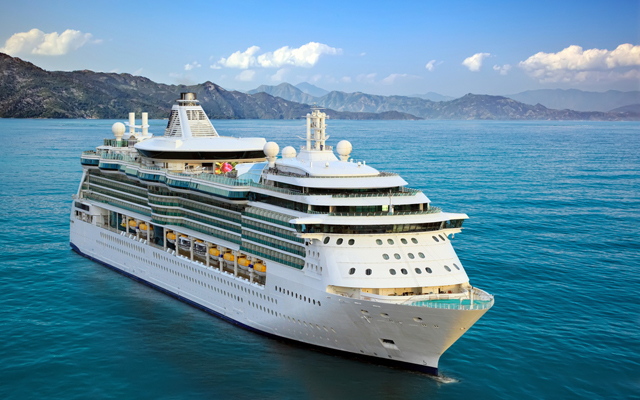
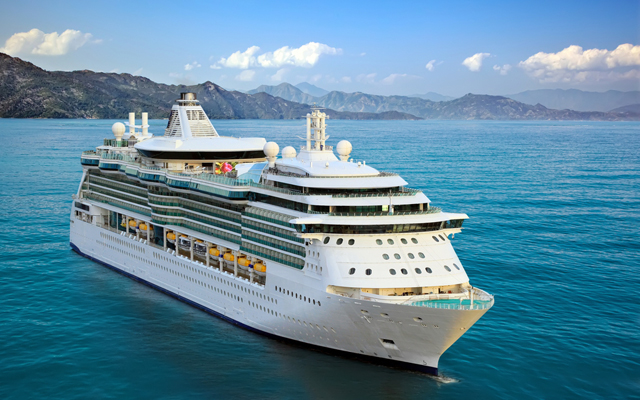
The cruising industry is making a deeper commitment to responsible tourism practices, with a focus on environmental sustainability and destination stewardship, according to the 2020 State of the Cruise Industry Outlook report by Cruise Lines International Association (CLIA).

The report highlighted the industry’s US$22 billion investment in the development of new energy efficient technologies, partnerships with local governments in key destinations, and a commitment to reducing its rate of carbon emissions by 40 per cent by 2030, compared to 2008.

Sustainability key priority for cruise industry in 2020: CLIA

“While demand for cruising has reached new heights, the cruise industry is accelerating our efforts to be a leader in responsible tourism,” said Kelly Craighead, president and CEO, CLIA. “Our members are at the forefront of best practices designed to protect the sanctity of the destinations we visit and enhance the experiences of travellers and residents alike.”

With a projected 32 million passengers to set sail in 2020, CLIA Cruise Lines is gearing up to meet ongoing demand by scheduling to debut 19 new ocean ships in the upcoming year, resulting in a total of 278 CLIA Cruise Line ocean ships projected to be in operation by the end of 2020.

Industry growth results in positive economic progress in communities around the world, said CLIA in a statement. Cruising sustained 1,177,000 jobs equaling US$50.24 billion in wages and salaries and US$150 billion total output worldwide in 2018, according to the report.

As well, the newly released CLIA 2018 Global Economic Impact Analysis found that passengers spend US$376 in port cities before boarding a cruise and US$101 in each visiting port destination during a cruise. North America accounts for the highest rate of cruisers with 14.2 million North Americans cruising in 2018.

“The industry’s economic impact is a big part of the story, especially as it relates to our passengers’ contributions to local economies and the diverse workforce onboard our ships,” said Craighead. “We recognise that with growth comes increased responsibility to raise the bar in all aspects of what we do to ensure cruising remains a force for good and the best way to experience the world.”

Here are some of the cruise industry trends going into 2020, according to the State of the Cruise Industry Outlook report:

1. Environmental Sustainability: The development and identification of new technologies and cleaner fuels is a top priority for the cruise industry, which continues to make substantial investments in reducing environmental impact. CLIA’s most recent Environmental Technologies and Practice Report shows significant progress towards the adoption of new and innovative practices, while the industry continues to explore new ways to increase efficiencies.
• Liquified Natural Gas (LNG) – 44 per cent of new-builds will rely on LNG fuel for primary propulsion
• Exhaust Gas Cleaning Systems (ECGS) – 68 per cent of global capacity currently utilises EGCS, while 75 per cent of non-LNG new-builds will have EGCS
• Advanced Wastewater Treatment Systems – 100 per cent of new-builds will have these systems in place
• Shore-side Power – 88 per cent of new-builds will have or be configured to add this ability
• Additional Areas of Focus – battery propelled vessels, advanced recycling practices, reduced plastic use, energy-efficient lighting, solar energy, and fuel cell

2. Destination Stewardship: With increased demand and growth in the cruise industry comes responsibility to foster respect and cooperation with cruise destinations. In collaboration with local communities, the cruise industry is exploring new and creative ways to manage the flow of visitors and implement the highest standards of responsible tourism including partnerships with local governments, staggered arrivals and departures, excursion diversification, shoreside power and local passenger spending.

3. Cruise and Stay: More travellers are spending time in and near cruise ports. In fact, 65 per cent of cruise passengers spend a few extra days at embarkation or debarkation ports.

4. Reduce Single-Use Plastic: Travellers are taking sustainability to the seas. The study found that more than eight of ten cruise passengers recycle (82 per cent) and reduce using single-use plastics (80 per cent) while travelling. Seven out of ten cruisers also forego plastic straws.

5. Generation Cruise Positive: The attitude around cruising is changing, no matter the generation. More than 66 per cent of Generation X and 71 per cent of Millennials have a more positive attitude about cruising compared to two years ago.

6. Lone Cruisers: Marriage rates are declining and the number of single adults is growing globally. As a result, cruise lines are responding to the shift in passenger demographics by offering studio cabins, single-friendly activities, eliminating single supplements and solo-lounges.

7. Micro Travel: Trip durations are continuing to change, with many travellers looking for quick trips. Cruise lines are offering bite-sized cruises over a three- to five-day period offering shorter itineraries to a variety of destinations.

The full report can be viewed here.

Brighter 2020 on the horizon for global airline industry: IATA

0

Despite a challenging year for the global airline industry owing to global economic slowdown, trade tensions and social unrest in Hong Kong, the outlook is brighter for next year, said IATA.

The global airline industry is expected to produce a net profit of US$29.3 billion in 2020, up 13% from a revised forecast of US$25.9 billion expected in 2019, IATA predicts.

Global airline industry flies into a brighter 2020: IATA

If achieved, 2020 will mark the industry’s 11th consecutive year in the black, it said.

Overall industry revenues are forecasted to rise 4% to US$872 billion in 2020, from US$838 billion in 2019; while passenger numbers are expected to increase 4% to 4.7 billion, from 4.5 billion in 2019.

Stronger economic growth should support passenger traffic growth of 4.1%, similar to 2019 (4.2%), but below historical trends.

“Slowing economic growth, trade wars, geopolitical tensions and social unrest, plus continuing uncertainty over Brexit all came together to create a tougher than anticipated business environment for airlines. Yet the industry managed to achieve a decade in the black, as restructuring and cost-cutting continued to pay dividends. It appears that 2019 will be the bottom of the current economic cycle and the forecast for 2020 is somewhat brighter,” said Alexandre de Juniac, IATA’s director general and CEO.

“The big question for 2020 is how capacity will develop, particularly when, as expected, the grounded 737 MAX aircraft return to service and delayed deliveries arrive,” he added.

Jet kerosene prices are also expected to dip in 2020, averaging US$75.60 per barrel versus US$77 per barrel in 2019. The expected industry fuel bill of US$182 billion will represent 22.1% of expenses, down from $188 billion or 23.7% of expenses in 2019.

Passenger demand is expected to grow 4.1% in 2020, in line with 4.2% growth in 2019. However, while passenger capacity rose 3.5% in 2019, it is forecasted to grow 4.7% in 2020, as aircraft deliveries rise significantly, causing load factors to slide to 82% from 82.4% in 2019. Passenger revenues, excluding ancillaries, are expected to rise 2.5% to US$581 billion, from US$567 billion in 2019.

Asia-Pacific carriers will be helped by the modest recovery in world trade and air cargo, showing a US$6 billion net profit in 2020 (up from US$4.9 billion in 2019) for a 2.2% net margin, according to IATA.

Asia remains the manufacturing centre of the world and revenues from transporting many of those goods are a significant proportion of sales for many of the region’s airlines. But the trade war is assumed just to be on hold; trade tariffs are not reversed, it said.

India ramps up bleisure offerings for growing South-east Asia market

0

India’s Ministry of Tourism is hedging on the bleisure trend among incoming MICE travellers to promote longer stays and travel to attractions surrounding the primary cities.

“For example, if you’re coming to Mumbai for a business meeting, you could take an hour’s flight to Jodhpur and visit the beautiful palaces,” said Rupinder Brar, additional director general, Ministry of Tourism, Government of India.

Mehrangarh Fort and the Blue City of Jodhpur

However, the primary challenge that the country is grappling with is the lack of awareness of its numerous attractions, opined Brar. She said: “Travellers who want to visit India (tend to) feel at a loss of where to start and where to go. The feedback that we get from a lot of people is that one time is not enough. The challenge is how to strategically pitch the right products for the right customers.”

Local tour operators are well aware though, and are jumping at the opportunity to build up greater awareness in South-east Asian markets, with several joining forces with the tourism ministry to promote lesser-known activities in the destination.

For instance, Swagatam Tours is hawking unique group experiences such as village visits and dining with a local family, and religious tourism specialist Lotus Trans Travel is diversifying into arranging group travel via luxury sleeper trains that traverse India.

To extend their outreach to South-east Asian agencies, these tour operators are participating in an Incredible India roadshow that is making its rounds in Singapore, Kuala Lumpur and Bangkok this month. The roadshow, Brar said, is part of the ministry’s strategy to bring about better destination awareness in South-east Asia.

Brar: lack of awareness about India’s many attractions

Moreover, next year will bring big plans for the destination, with the International Buddhist Conclave in late-September to early-October set to become a ripe bleisure opportunity. Brar revealed that local operators are working to “try some mixing of itineraries” with the event.

This bleisure push is a timely move, after India relaxed its visa requirements for business travellers, explained Brar. She said: “MICE is a growing segment for India, and to encourage more business, the government has introduced electronic visas not only for participants of government conferences, but also private conferences.

India extended its e-visa coverage from 30 days to 60 days in 2017, whereupon e-visas were also subdivided into three categories: tourist, business and medical. The government also reduced its visa registration fees this year; dropping tourist visa fees to US$40 from US$80.

As a result, India’s cities have risen in popularity. In a recent report by UK-based global market research company Euromonitor International that ranked the top 100 cities by tourist arrivals in 2019, Delhi and Mumbai rose by three places and one place to rank eighth and 13th respectively. Five other Indian cities – Agra (18th), Chennai (31st), Jaipur (34th), Kolkata (74th) and Bengaluru (93rd) – also rose in rankings from 2018 to make the 2019 list.

“Goods and services tax rates have also recently been lowered, and we believe that is providing a huge boost given the growing demand for MICE tourism to India,” said Brar.