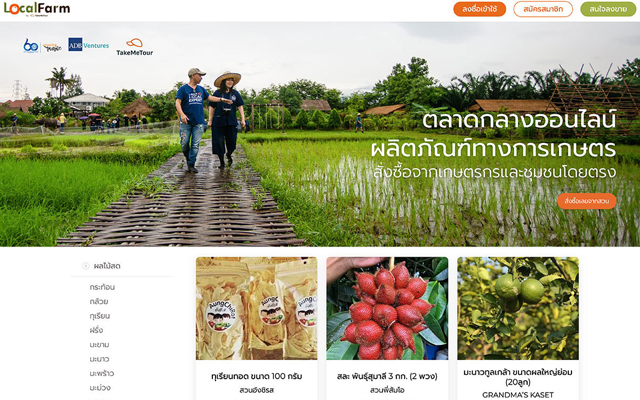
Peer-to-peer online activity marketplace TakeMeTour has established an online retail platform to help Thai farmers and gardeners, once dependent on tourist dollars, to better survive the current tourism crisis.
The LocalFarm online platform presently features agricultural products, such as seasonal vegetables and processed fruits, from more than 50 sellers across Thailand, with some of them being past Local Experts listed on TakeMeTour.
TakeMeTour helps onboard sellers on LocalFarm platform, but no micromanagement required: Taro
Taro Amornched, co-founder of TakeMeTour, explained that the other sellers on LocalFarm are those affected by declining tourism activities and have been unable to sell or export their products, or are no longer able to welcome visitors.
“We promoted LocalFarm through Facebook and other social media networks (and) proactively reached out to some of them that we see a fit,” added Taro.
TakeMeTour charges these suppliers no fees or commissions to access the LocalFarm platform. And the assistance goes even farther; the suppliers can avail to photography services for their products, banner design expertise, copywriting help as well as advertising and marketing activities – with all costs shouldered by TakeMeTour.
“We help to onboard them but do not micromanage their account unless they want us to do so,” shared Taro, who added that the LocalFarm platform was designed to be easy to use, even for non-tech savvy individuals.
In turn, TakeMeTour’s work on LocalFarm is financially supported by the Asian Development Bank’s impact investment platform, ADB Ventures, and the Tourism Authority of Thailand (TAT). A seed grant of US$150,000 helps LocalFarm with product development and regional market validation.
ADB and TAT have supported TakeMeTour through technical assistance since 2017.
ADB Ventures senior investment specialist, Dominic Mellor, commented that “it is impressive to see how quickly and efficiently TakeMeTour has developed an innovative online platform to help frontline tourism workers earn alternative income streams” during what he described as an “unprecedented crisis”.
LocalFarm site features agricultural products from over 50 sellers across Thailand
Just two weeks old at press time, LocalFarm has gained more than 100 transactions from across Thailand.
In the initial phase, LocalFarm targets only Thai residents due to logistical restrictions. However, translations are underway to prepare the website for the expatriate community and future travellers to Thailand.
Taro is working towards two plans: one, to facilitate orders by tourists during tour bookings and have the purchases delivered to their hotel; two, to curate a selection of farms that are ready for agritourism activities, such as fruit pickings and farm visits.
When asked if LocalFarm could be expanded to help local farmers in the Greater Mekong Subregion, where TakeMeTour is also present and supporting more than 25,000 local experts, Taro said: “Although this is possible technically, we want to focus on our largest coverage location, which is Thailand, at the moment. However, we are open to partnerships or software licensing if anyone is interested.”
Demand spike for hotel and resort buyouts in time of coronavirus
More hoteliers bringing buyouts to the forefront, promising worry-free holidays, but at a hefty price
Property buyouts seen as revenue saviours
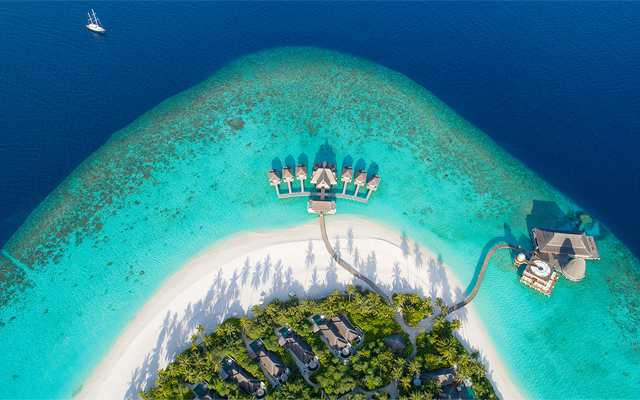
Anantara Kihavah aerial view
As ‘safecations’ slowly take root as the newest travel trend, more luxury hotels and private island resorts are taking seclusion to a whole new lavish level, offering property buyouts for the ultimate private experience.
Anantara Hotels, Resorts & Spas is one example. The group recently launched a collection of buyout retreats in a host of destinations, from the Maldives to the Medjumbe Island off the coast of Mozambique. The price of such seclusion? A whopping US$20,000 to US$100,000 per night.
For instance, the 20 villas at Naladhu Private Island Maldives, a sister property to Anantara, offers takeovers for up to 50 guests, starting at US$35,000 per night, requiring a three-night minimum stay. The hefty price tag includes water excursions on a private yacht, a range of watersports activities, personalised butler service, and a resort doctor on 24-hour standby.
Thomas Meier, senior vice president for operations at Minor Hotels, said that while the group has previously offered exclusive-use properties, its recent deeper push into buyouts is in response to spiking demand.
He elaborated: “In the last couple of months, Anantara has seen a notable increase in enquiries relating to buyout opportunities in a number of destinations where we have properties, including in remote destinations and island resorts. We decided to collate a number of packages from some of our exclusive island resorts that have the potential to become ‘private islands’, and actively promote (them) for buyouts.”
These options, Meier shared, are aimed at high net worth travellers on a global level, and they have garnered interest from across the Middle East, Russia, India, Asia and Europe. “In terms of length of stay, this has varied from four nights up to 45, but the average request is for one to two weeks,” he added.
Anantara is among a growing pool of luxury resorts wooing deep-pocketed travellers with promises of complete peace of mind. Nihi Sumba, a luxury resort on the remote island of Sumba in Indonesia, is no stranger to buyouts, having since 2016 put the property up for exclusive hire, at a starting price of US$250,000 for three nights, inclusive of flight, guest experiences and private entertainment.
However, in light of post-lockdown needs, the 29-villa resort recently pushed out a million-dollar, month-long buyout with the tagline: Socially Distant, Wildly Connected. Offering up to 80 guests full run of the 233ha sanctuary, the rate includes meals, laundry, tour of the Sumba Foundation (the resort’s charity arm) projects, water activities, group yoga and meditation classes, as well as a five per cent donation to the Sumba Foundation.
Elsewhere in Seychelles, JA Enchanted Island Resort and Six Senses Zil Pasyon have also launched buyouts, for a starting rate of 9,950 euros (US$11,140) and 330,000 euros for a week-long stay, respectively. Access to the resort’s villas and facilities, bespoke dining experiences and a wealth of water activities are built into both resorts’ buyout packages.
For Bawah Reserve, a private island resort in Indonesia’s Riau Islands, the number of buyout enquiries have doubled.
Kristen Graff, director of sales and marketing, said enquiries had come from “as far away as Scotland and the US, while bookings have been made from countries closer to us, Singapore and Hong Kong”.
Customers are looking to stay between three and seven days.
“We have two corporate buyout bookings for November, both made during the Covid-19 crisis, and a potential wedding in the summer of 2021,” Graff revealed, adding that the resort will be launching destination wedding packages later this year and have spoken to several corporate groups who want to use the whole island for a retreat.
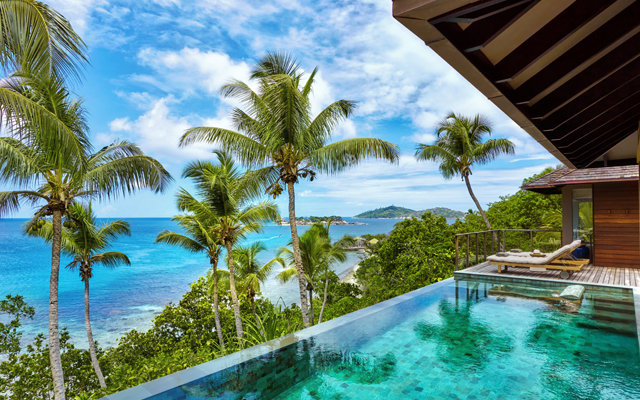
Six Senses Zil Pasyon
Buyouts: the safest vacation mode?
As travel begins to arouse from its deep slumber, destinations that boast sea, sun and seclusion have become major draws for consumers in light of the current global threat. Private islands and luxury resorts set in remote locales seem tailor-made for socially distanced vacations. And what safer way to do so than a total takeover?
James McBride, CEO and partner, Nihi Hotels, said resort buyouts would greatly appeal to those seeking an unprecedented opportunity to experience a private resort fully on their own terms and at their own pace.
“Considering the current Covid situation, travellers’ desire for uncommon and extraordinary travelling experiences will stir toward extremely private arrangements to allow them to further enjoy their special occasions,” he added.
Agreeing, Burak Aydin, general manager, JA Resorts & Hotels, said: “We have entered a time where travelling and vacationing habits are changing. People’s priorities and needs are shifting focus. Renting a private island may have seemed like an extreme luxury in the past, however moving forward, it will be seen as a wise choice by many.”
For those still looking to travel, even as a cure for coronavirus remains elusive, buyouts seem like a ticket to a worry-free holiday. Beyond solitude, buyouts also offer the luxury of abundant space for extended families to come together.
Meier shared: “As we move into the ‘new normal’, the enquiries we’ve been receiving to date (for buyouts) are from large family groups or for celebrations with family and friends, allowing the opportunity to spend quality time together in isolation with the knowledge that they’ll not be having to see or interact with other guests.
“With peace of mind and safety being such a priority right now, we see that a higher number of customers are willing to spend more to ensure a safe and trusted experience.”
Bespoke buyouts can also be curated to suit guest needs. “Some groups may want all-inclusive with everything from transfers, F&B and experiences, while others may prefer solely accommodation or B&B – we are able to be very flexible and arrange bespoke solutions,” Meier said.
Additionally, the wildly wealthy who are also looking to social distance in the sky are opting to fly by private jets, once borders reopen.
Meier shared that Minor International’s MJets, which operates a small fleet of private jets out of Bangkok’s Don Mueang Airport, has seen an increase in enquiries for travel both within Thailand and regionally, in addition to further afield.
Recovering lost ground
Even as travel restrictions loosen, virus fears persist, keeping tourists at bay. Thus, buyouts could offer hoteliers a way to make up for the revenue shortfall stemming from lower occupancy levels.
Aydin shared that this is the first time JA Enchanted Island Resort has been put up for private hire, after the pandemic’s crippling impact on tourism forced the resort to rethink strategies in line with current market trends.
He elaborated: “JA Enchanted Island Resort has always been popular for romantic getaways and has been preferred for its privacy and beautiful natural surroundings. The resort has been almost sold out throughout the recent years, thus, not allowing much flexibility in allocating the whole island as a buyout option. Now seems to be the perfect occasion to be able to enjoy this enchanting island all to yourself.”
Aydin added: “Our country is one of the few that are Covid-19 free and being an island resort only enhances this fact by offering an even more protected environment.”
Within the first week of launching, the buyout retreat drew interest from potential buyers from Europe, the UAE and the local market, made up of extended families and group of friends, according to Aydin.
Similarly, Six Senses Hotels Resorts Spas is looking to make up for the drop in tourist footfall by intensifying marketing efforts around buyouts. Requests have come in from Russia, the UK and China, according to Jad Frem, regional director of sales and marketing Indian Ocean, Six Senses Hotels Resorts Spas.
Frem added that island privatisation was not a new initiative by Six Senses, “but (we) have not proactively gone out into the market with a package previously, as under normal circumstances, the hotel would be operating with FIT bookings”.
An endless honeymoon is not as wonderful as it seems, discovered a South African couple recently in the Maldives. The duo went viral after a New York Times report revealed that they were stranded at a luxury resort due to border closures.
Widespread travel restrictions have led several industry players across popular wedding and honeymoon destinations in Asia, including Japan and Bali, to report a sharp decline in business.
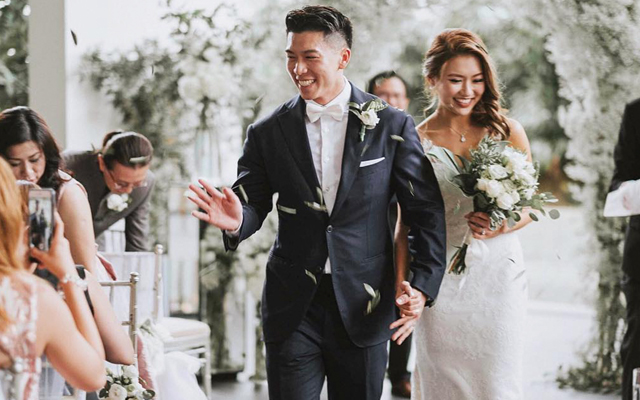
A wedding at Capella Singapore
Capella Singapore, known for its upscale weddings, saw nuptial bookings dwindle to zero over the last two months as the local government introduced a “circuit breaker”, which prohibited people from gathering with those outside of their immediate household.
“We (used to have) an average of two to three weddings every weekend, and (even) more during peak months,” said Dora Wong, the hotel’s creative style director.
Over in Japan, Tomoko Yagi, general manager, Aman Tokyo and regional director, Aman Japan, shared with TTG Asia that the hotel “used to welcome at least four to five couples a week on honeymoon”. Those numbers have since dropped off.
A property in Bali – a favourite destination among couples – has also been affected. Hemal Jain, general manager, Alila Villas Uluwatu, said that the resort hosted up to 250 weddings a year prior to the pandemic. Now, a small number of weddings have been cancelled, though many have been postponed to next year.
Moving the date forward appears to be the way to go for several clients of bespoke travel agency Lightfoot Travel. Co-founder and director Lucy Jackson shared that “a couple of honeymoon bookings for this summer” had been moved to summer 2021.
A couple at one of Alila Villas Uluwatu’s three-bedroom cliffside villa
Flexibility in demand
Wong recalled how two weddings at Capella Singapore across the weekend of March 28 and 29 were impacted, when a series of new social distancing measures kicked in on March 26. Wedding planners and hosts were advised to keep total participants and attendees to ten persons and under, and ensure minimal social interaction.
“We had to entirely reconfigure our ballroom setup and seating plans to ensure we were complying with the new measures,” Wong recalled.
As decor and florals had to be reconsidered, her team worked “round the clock to ensure the wedding day was “(one) to remember” even amid the restrictions, she added.
Due to the new restrictions, guests were offered the flexibility to postpone or cancel the celebrations, she shared.
Challenges and outlook
Having been monitoring the progression of the pandemic, many players seemed hopeful that couples would begin making reservations again in 4Q2020.
Of course, travel restrictions continue to present a challenge to businesses. Recovery at the Fivelements Bali, for instance, could be partly contingent upon European guests being allowed back into the province, noted John Nielsen, general manager.
Other industry players gave their predictions on when numbers would start to rebound. Nielsen believes it will gradually occur in or around October and November, and initially involve Indonesian couples hosting small, intimate celebrations; Yagi, more optimistic, reckoned it may happen by September.
Despite the uncertainty, Wong shared that her team has been receiving new enquiries for celebrations to be held next year and beyond.
Goh Wan Qi, wedding planner, Beautiful Gatherings, remains positive. While she acknowledged that couples are less likely to spend on travel or wedding planning services in the current downturn, she reckoned there might be a boom in both industries once the pandemic is over.
Think local and regional
Wong predicted an increase in staycation honeymoons after the pandemic, sharing that couples who want to “spend some time away together” but are not yet comfortable to travel overseas are likely to choose the option. Jackson agreed that couples would probably consider travel within their country or to nearby nations.
Jain added that couples could come out of the pandemic with a greater appreciation of their country’s “charm”, which could contribute towards making domestic travel a more compelling option.
Eco-conscious retreat Fivelements Bali
Think intimacy and personalisation
When asked about business outlook post-Covid-19, several industry players reckoned there would be a greater demand for private and intimate settings, including more unconventional options such as villas and a chef’s table celebration.
Meanwhile, mega weddings – traditionally popular in Asian countries – could fall out of favour, shared Nielsen.
For Jain, this is an opportunity for destinations and resorts in Asia to improve on their offerings and services. They would likely need to deliver personalised and authentic wedding experiences of a variety of sizes, he said.
He predicted that unique regional traditions, such as Fivelements Bali’s healing Agni Hotra fire ceremony, could prove prove increasingly sought-after for small celebrations.
Think health and sustainability
Besides a new focus on the local and the intimate, industry players expect the pandemic to bring home concerns over health and well-being.
According to Yagi, couples might opt for serene locations or look to places offering programmes with a focus on fitness and wellness.
Meanwhile, Jain predicted that the renewed focus on health would extend to concerns over the source of ingredients. He reckoned that sustainability-driven accommodation, such as Alila Villas Uluwatu, would have a competitive advantage, as such a business model would involve sourcing food responsibly.
Goh shared couples might also come out of the crisis with a greater appreciation of nature, borne out of the need to stay indoors. This could lead them to scout for nature-based travel options.
Slow travel could also be the new normal, posited Malik Fernando, owner, luxury Sri Lankan resort Resplendent Ceylon. Couples might choose to combine their wedding and honeymoon into one longer trip to more remote locations, Fernando added.
Amadeus has released an eBooks collection, designed to help hoteliers navigate the path to recovery post-pandemic.
The eBooks are created in partnership with a trio of global hospitality organisations, namely, Hospitality Sales and Marketing Association International (HSMAI), the Institute of Hospitality, and the Hospitality Professionals Association.
Amadeus’ new eBooks will aid hoteliers to chart a course to recovery, including how operational departments can address new cleanliness protocols
Some 76 per cent of HSMAI members are starting to prospect new types of account business and traveller segments they previously did not focus on, according to their research.
Additionally, a new global customer segment of travellers is emerging – Generation Clean, a new cross-generational segment of traveller who will prioritise health and hygiene when hotel shopping in this new era.
The eBooks contain key findings from a research conducted among members of the various organisations, looking at the short- and long-term strategies hoteliers need to develop over the four phases of recovery, which span local, domestic, continental, and a global reopening.
With travel restrictions in place for the remainder of the year, hoteliers will need to strategically plan to re-segment their expected guests and cater their approaches accordingly.
HSMAI president & CEO Robert Gilbert said: “Together, we are identifying new ways to handle a new world of hospitality through knowledge sharing, better understanding traveller intentions, observing best practices in parts of the world that are beginning to emerge from the crisis, and implementing new policies and procedures.”
Below is a list of topics covered by the four eBooks:
Planning for Hospitality Recovery – Marketing
• Advice for hoteliers preparing a marketing plan, including relevant data and leading indicators to look out for
• Audience profiles and messaging to appeal to the changing trends and behaviours caused by Covid-19
• Channels and steps to consider in order to retain existing guests and attract demand throughout the different stages of recovery
Planning for Hospitality Recovery – Sales
• Action steps to maintain sales team motivation and continuity
• Tactical advice to reposition sales strategy and to prospect new group business
• Key skills needed to navigate a world of digital selling
Planning for Hospitality Recovery – Revenue Management
• Building new segmentation strategy according to recovery phases
• Create pricing strategy that is flexible, while guarding rates
• Create new competitive sets based on the changes happening
Planning for Hospitality Recovery – Operations
• Tactical action steps and best practices to implement from arrival to departure
• How operational departments can address physical distancing, sanitation and cleanliness procedures, and provisions of PPE
• How to enhance the guest experience and achieve trust, while implementing new standards
The Covid-19 pandemic has presented new and unusual business challenges for hotels. How have hotels’ approach to sales and marketing changed as a result?
With the global impact of Covid-19 on travel evolving from week to week, and market-to-market recovery being hard to predict, we conducted a survey with 500-plus hoteliers worldwide at the end of May (to understand the state of hotel marketing). Findings indicated that they are aligned on key post-Covid recovery marketing strategies.
Some key findings included:
● 42% of respondents believe we can expect to see signs of recovery in 4-6 months
● 54% are looking to government easing lockdown restrictions as an indication of recovery
● 39% will have a very small budget for marketing when recovery begins, so (spend) will be lower than pre-Covid
● 50% will keep the same marketing mix (while) 39% will be focusing on tactics that promote more direct bookings, away from OTAs
We don’t recommend that hoteliers go dark right now, as they should be focused on generating brand awareness, honing in on the local and drive markets, and (creating) advanced booking offers. Pay-for-performance models are an excellent way to achieve this without (straining) a small budget or (when there is) no budget at all.
Consumers trapped at home are spending more time online, working, learning, shopping and seeking connections. What should hoteliers do to engage these consumers online positively?
Hoteliers spending this time to upgrade their website and booking engine is key. Having a Covid-19 information page will also be key to garnering confidence among consumers to book with that specific hotel.
Now, more than ever, travellers want a flexible cancellation policy. Hoteliers are (doing that, enabling their guests) to book now and stay before the end of 2021. For example, Marriott has extended loyalty status to February 2022, and paused all points expiration to February 2021. Additionally, Marriott is making it easy for their customers to get involved in giving back, thus building brand loyalty; they can use their Bonvoy points to donate to The World Central Kitchen, UNICEF, Red Cross, (or desired) disaster relief fund.
What critical considerations should hotels take in planning their current sales and marketing strategy?
What we are seeing as part of current strategies, especially for chain hotels, is that they are offering competitive pricing and flexibility with stay dates. This has resulted in independent hotels holding off introducing offers due to the low lead in room rates.
In terms of future marketing strategies, hoteliers need to be cautious about group bookings – crowded hotels (during the) pandemic will not send a positive message and perhaps even create consumer distrust of that hotel.
When we ease out of Covid-19, hotels should focus on messaging that will give their customers and travellers peace of mind to stay with them and feel confident in their brand. Cleaning, disinfecting, social distancing, meal service protocols, and other standard operating procedures will be at the forefront for a long time.
Other recommendations I have for recovery are:
● Look for early signs of recovery, starting with the number of active cases and death rates. When numbers of new active cases and death rates plateau, it is likely that lockdown restrictions will be eased and social distancing measures will be lifted. Pay attention to government-issued travel policies obtained from reliable sources. Another sign to look out for is airlines ramping up to reinstate suspended flights.
● Promote a flexible reservation policy that is customer sensitive, and be mindful that the approach you take now will be remembered in the future. Consider incentivising postponed bookings and having a flexible cancellation policy.
● Use this time to optimise your website. Make it easy to navigate and book; provide updated and accurate information; use desirable images to convey the brand’s offering; and improve the speed of your webpages which will affect your ranking on Google search results page. It’s important to note that travellers using mobile to search are much more likely to leave a page if it takes longer than three seconds to load.
● Set up a Covid-19 information page to highlight the measures you are taking to ensure the well-being of your customers, staff and local community. Share how the team is trained to respond swiftly to anyone showing Covid-19 symptoms on property, including your process to notify medical authorities. If your country has a national health and hygiene audit initiative, call it out on this webpage.
How about their future sales and marketing strategy?
Globally, more and more people are isolated indoors. With that, many have turned online and are dreaming about and planning their next trip. Because online traffic is exponentially higher these days, it is important to maintain upper to mid-funnel marketing and brand awareness activities. We have seen a spike in travel bookings for late-2020 and early-2021, suggesting that travel will pick up (then), with a domestic focus first, then regional and finally, international.
Here are some digital advertising tips to keeping your potential customers engaged and ready to book with you as soon as they are able: choose your audience; get ahead of the staycation trend; select optimal marketing channels such as Display, Facebook, Instagram, search engine marketing, video and metasearch, and ideally, run them with a single vendor in order to avoid attribution/overlap issues; make sure your messages match the tone of your current audience’s circumstances; and use remarketing to advertise to the people who had come to your site, checked you out and then continued on their day.
Other recommendations I have are:
• Inspire dreamers on social media by continuing to showcase your business to keep future customers engaged
• Use metasearch to get in front of travel planners, starting with sites like Google Hotel Ads, TripAdvisor, Kayak, Trivago, and Skyscanner where approximately three-quarters of travellers will be browsing to plan their future travel
• Improve your SEO (Search Engine Optimisation) strategy to get your business in top search results organically without paying for advertising. The content you put on your website determines your SEO ranking, so, during this crisis, use certain key phrases often and meaningfully throughout your website to float your site to the top of the Search Engine Results Page
• Reevaluate your rate parity and OTA strategy. When businesses are able to convince that their brand presents the best value, it encourages guests to book directly with them, thus developing trust
• Consider a co-op, especially if you don’t have the funds. Reach out to your local NTO or government destination partner for an advertising co-op possibility.
The big hotel chains clearly have all the sales and marketing guns they need to go forward in the digital world. What about the smaller local chains or independent properties that want to be competitive but may not know how to proceed? How can they get started?
Gone are the days when it cost an arm and a leg to own a website. Nowadays, there are affordable website developers and marketing partners (to be found).
At Sojern, we support independent hotels with our Pay On The Stay model, where a hotel pays a commission for the booking we have driven and (use our) tools such as The Hotels Network’s offering to… drive direct bookings.
The absolute bare minimum a local chain or independent property can do is have a well informed property website.
How is Sojern helping?
We’ve been talking with our customers across the world and travel verticals, and (many say they are) using this time to think about their current partnerships, relationships, and industry, and to see how they can use this time to re-evaluate some things.
There is so much changing every week that you need to be flexible, soak up as many great ideas and strategies from each other and from other verticals within travel, and let data guide your decision-making as much as possible.
We understand that tracking the ever-changing travel trends is more important now than ever. To help arm hoteliers and travel marketers (with timely information), we’ve released a real-time insights dashboard that provides the latest travel trends. Additionally, we have a webinar series where industry experts share how they are tackling Covid-19.
Bleisure is not forbidden, but corporate travel managers expect demand tagged to overseas business trips to be soft, as more governments negotiate bilateral green lanes to fast track the resumption of international business travel.
Adriana Nainggolan, travel programme manager, Asia-Pacific, Autodesk, said: “Bleisure is allowed. Nothing has changed with our travel insurance policy where a work trip and personal trip up to seven days’ extension is covered by medical insurance paid by the company.
CTMs predict that travel insurance policies will be modified soon to reflect the current situation
Adopting a Covid-19 travel policy of “business-critical and with vice president approval”, travel is still currently restricted and many borders are not fully open, she noted. But while the company has not looked at changing its travel policy, it will have to soon.
“Insurance, in general, is under the compensation and benefits department of HR, so this is a topic that we need to have a discussion on internally.”
Another corporate travel manager also said there was no change if travellers want to mix business and leisure, “but we don’t foresee anyone taking this up at this moment”.
However, if a traveller is infected by Covid-19 during the leisure portion of the business trip, then it is not covered under the company’s business travel insurance, he explained.
Noting that Covid-19 is a new disease that is highly contagious with more than 400,000 deaths around the world and counting, Benson Tang, executive director, corporate travel, Informa Markets, said: “It is not just the issue of insurance. If a traveller is infected, the hospital stay and the possible consequence of not being cured is much higher than before.”
Tang added the overall consideration is not just limited to personal interest, for corporate interest is a major consideration as asymptomatic travellers returning to the office could infect others.
When asked if travel insurance premiums would rise and by how much, a corporate travel manager based in Shanghai said he was unsure.
But Tang opined “this is very certain,” though he acknowledged it was still too early to comment further as the pandemic is still not over yet.
On seeking support from insurance companies, a corporate travel manager in the pharmaceutical industry wanted “verbiage” specific to the coverage of pandemic situations. This is necessary with more countries starting to reopen, he commented.
There was this joke I saw on Facebook a while ago about what pushed a company towards digital transformation. The options were: COE, CTO and Covid-19. Guess which ‘C’ was the catalyst?
Without downplaying the evil of the pandemic, we should also acknowledge how it has forced us into new ways of thinking that we may not have otherwise considered in good times.
In a short few months since the onset of Covid-19, people have acceleratated their technology adoption.
Those who had never worked from home are now remotely performing their tasks as they would in the office.
Those who had shied away from virtual calls are now familiar with Zoom, WebEx, Skype and other platforms used for official communication, and are even participating in virtual game nights with family and friends. Companies that had never seriously considered online meetings are going down that route swiftly and learning ways to make their next session better.
Those who had never participated in online shopping have now discovered a glorious new world of consumerism at their fingertips (save me!).
For Vox Group’s John Boulding, Covid-19 and the growing need for safe distancing have enhanced the appeal of self-guiding products. He has seen an about-turn in marketplace acceptance and his team has smartly sped up innovation to bring two new products to market. You can read about this on TTGAsia.com.
Covid-19 does not only have a hand in digital transformation. Between the human survival instinct of fight or flight, some travel companies have chosen to fight back in innovative ways, pivoting away from travel while retaining the flexibility to bring back its tourism arm or enhance its original forte as soon as the world is ready to wander again.
Trazy – Travel Crazy Korea, MAD Travel Philippines, and Joy Paradise Solution Japan have been exemplary in this regard.
Once tour operators, these companies are now raking in vital income through proxy shopping services offered in popular destinations people cannot visit at the moment, grocery and food delivery services that support local farmers and SMEs, and virtual educational tours that facilitate safe interactions with local communities and social entrepreneurs. Again, you can read about these on our website.
Such pivots require an open mind and courage – something we all need in times of crisis when normal ways of doing things can no longer work.
Here’s another thing we all need now – kindness. Remote working now is nothing like remote working pre-pandemic. Schools and child-minding services may be closed, jobs and income may be at stake, and people are stuck at home all day. Working from home really is taking care of the family first and foremost while trying to work. So if your colleagues or business partners have fallen short of usual standards, patience and kindness can save the day and everyone’s sanity.
China-based OTA giant Trip.com has announced an industry-wide initiative that will support the drive for new safety and hygiene standards for aviation, hospitality, tourism and retail companies.
The Travel On Initiative, launched yesterday evening (June 22) at a ‘live’ virtual event, sees Trip.com collaborating with its many partners in the travel trade to implement new procedures, including the Safe Travels protocols developed with WTTC.
Okinawa Tourism Board, one of the destinations to join Trip.com’s Travel On Initiative
New industry standards to be set include pre-arrival risk assessment and boosted biometric checks for airports and airlines, a possible redesign of immigration procedures in consultation with governments and airports, optimisation of boarding and limiting cabin movement on planes, pre-allocated transport seating and partnerships with verified restaurants and venues on tours, as well as providing complimentary Wi-Fi to encourage retail outlets to adopt contactless and paperless payment solutions.
Accompanying this, the group also launched a series of enhancements to its services under its new International Travellers’ Guide, which provides users with features such as travel advisories and help, cancellation guarantees and a Green Map.
The Green Map is a ‘live’ model of countries, their border restrictions and their quarantine policies. For instance, “green” areas signal countries where users can travel freely without being quarantined, while “yellow” destinations would require traveller information that will be specified on the page.
Travellers can also subscribe to an alert service for up-to-date information or advisory changes during their journey.
Under its new product roll-out, Trip.com will also launch campaigns with airlines to provide discounts, flexible bookings, and safety information “on a granular level”, described Trip.com Group COO Schubert Lou; touchless booking features and marketing support provided to tour and attraction partners; as well as live broadcasts offering pre-sales, discounts and free cancellations.
Ten live-streams have been planned starting today.
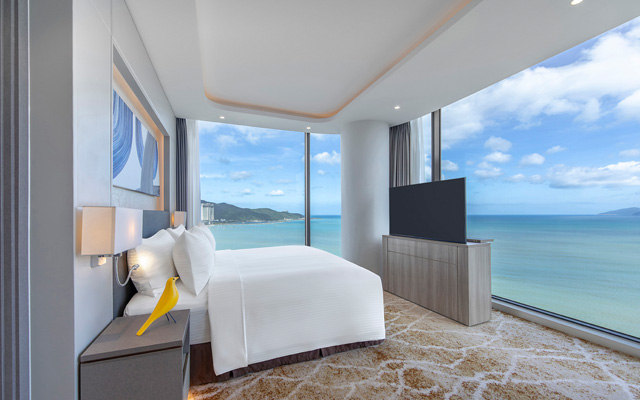
Accor has set up its seventh MGallary in Vietnam, Hôtel Perle d’Orient Cat Ba – MGallery, which is situated in the picturesque Lan Ha Bay. The hotel is the first international luxury property on Cat Ba Island. Offering exclusive access to its own private beach, the 121-key hotel offers five F&B venues, kid’s club, gym, spa, and wellness centre with outdoor pool. For events, the Crystal Ballroom can host up to 190 guests, while the Tonkin Room can accommodate small meetings and private functions for up to 26 guests.
Park Hyatt Suzhou, China
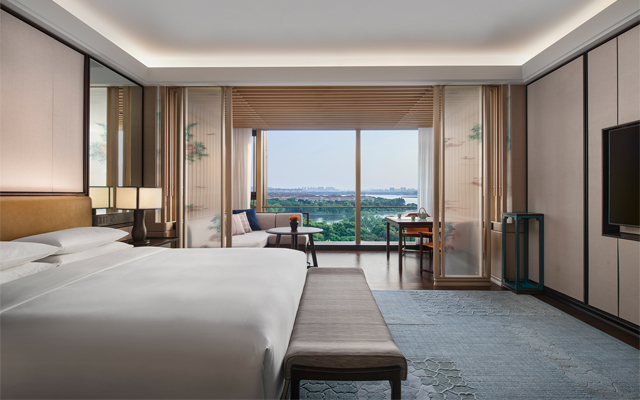
The Park Hyatt brand has opened an outpost in Suzhou, eastern China, located near Jinji Lake in the heart of Suzhou Industrial Park. On-site facilities include a pool, fitness centre, spa with six treatment rooms, as well as three F&B venues – Xizhou Hall serving locally-inspired fare, Living Room for light refreshments and tipples, and Apartment 208 specialising in prime steak and sustainable seafood. On show too are five function venues covering 2,400m2, which can accommodate private and large groups, up to 900 guests. Accommodations can also be arranged for overseas attendees in the hotel’s 178 rooms and suites, ranging from 50 to 173m2.
Wyndham Hotels & Resorts, Japan & China
Wyndham Hotels & Resorts has expanded its portfolio with two property conversions in Japan, and the opening of five new hotels in China.
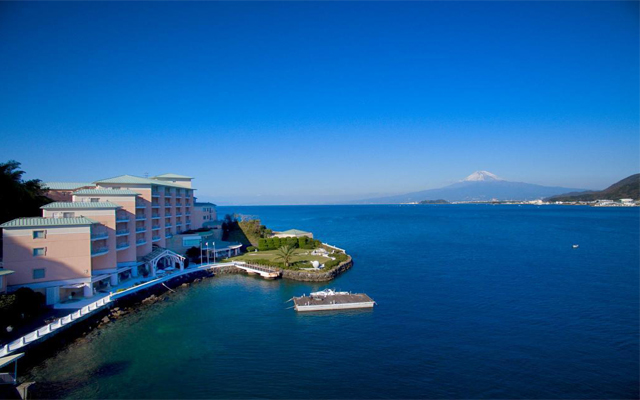
Wyndham Grand Awashima, formerly known as Awashima Hotel, is a Mediterranean-style resort hotel located on the island of Awashima. The property boasts 60 suites, an outdoor onsen, a concert hall for events and several restaurants, one of which specialises in the local cuisine from Shizuoka Prefecture. There are also several banquet halls for events.
Wyndham Garden Nagaizumi, formerly known as Nagaizumi Garden, features 95 Japanese and contemporary style-suites, all equipped with kitchenettes. Situated on the slopes of Mount Ashitaka, guests are surrounded by views of Numazu City and Suruga Bay. Visitors can bathe in the Momozawa natural onsen which contains vanadium from Mount Fuji, while travellers with pets will be delighted to know that the hotel is pet-friendly and even has a dog café, Blue Bird.
Both hotels, which have recently undergone light refurbishments, mark the debut of the brands in the country and make Wyndham the first global hotel company to expand into the emerging destinations of Awashima and Nagaizumi.
Over in China, Wyndham has opened five Ramada by Wyndham-branded hotels.
Located in the centre of Luoyang city, the Ramada by Wyndham Luoyang Downtown offers 142 rooms and suites, alongside amenities such as meeting spaces, business centre, gym, bar and restaurant.
Situated south-east of Chengdu, the capital of Sichuan province, the Ramada by Wyndham Jianyang is the first international five-star hotel in Jianyang city. The 191-key hotel features facilities like meeting rooms, fitness centre, indoor pool, restaurant, and lobby bar.
Looking over Changsha’s Yuhua district, the Ramada by Wyndham Changsha Wuguang offers delegates easy access to the Changsha International Convention & Exhibition Center. There are 140 rooms and suites within, alongside amenities such as meeting facilities, fitness centre, and two restaurants.
Over in the capital of Central China’s Hubei province, the Ramada by Wyndham Wuhan Qingshan is situated at the intersection of Jianshe 3rd Road and Fushun Street. The property boasts over 100 keys, two restaurants and meeting facilities.
Lastly, the 179-room Ramada by Wyndham Kunming Yiliang in central Yunnan province stands 45 minutes from the Jiuxiang Scenic Region and Shilin Stone Forest, a UNESCO World Heritage site. On-site amenities include two restaurants, meeting facilities, pool, and spa.
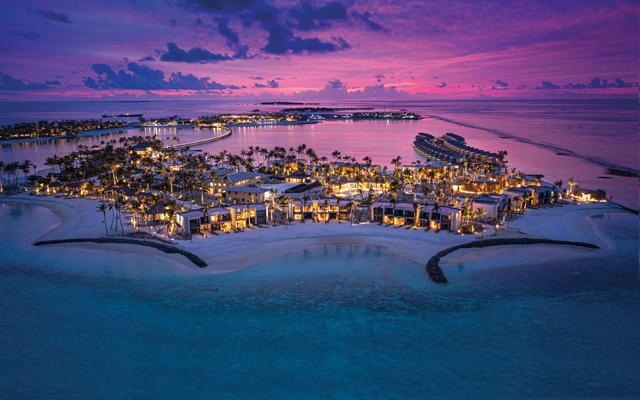
Billed as the first integrated resort in a country traditionally known for its one-resort-per-island tourism product, the Crossroads Maldives opened its first phase last September.
Located in the Kaafu Atoll, the project which will eventually span nine islands is said to be a 20-minute speedboat ride away from Velana International Airport, Malé.
Even with just the first phase completed, the Crossroads Maldives already has a host of offerings: two resorts; a massive leisure, retail, and entertainment space called the Marina @ Crossroads; and spa and wellness centre Lèn Be Well.
Currently, accommodation within the project comprises the 178-key Hard Rock Resorts Maldives and the 198-key SAii Lagoon Maldives. Guests at the two resorts have direct access to The Marina @ Crossroads.
Housed within the 11,000m2 leisure and entertainment zone is a watersports and dive centre, 12 F&B outlets, and the Koimala & Maalimi’s Junior Beach Club and Camp for families. Guests can dock their private vessels at the yacht marina, which has 30 berths.
Other highlights include the Maldives Discovery Centre, where guests can find out about local heritage, and a Marine Discovery Centre.
Sharfraz Fazley, managing director, Viluxur Holidays, who has recommended Crossroads Maldives to clients, said the development has “completely transformed” the Maldives’ tourism product.
From a destination for dive enthusiasts, honeymooners and couples, the Maldives is now a place for families, group travel with friends, and even shopping, shared Fazley.
In fact, the Marina @ Crossroads had not only attracted visitors, but also affluent Maldivians, making it a shopping destination in itself, according to the manager of a DMC, who declined to be named.
It was not all smooth-sailing, however, when the Crossroads Maldives first opened. “It took a little time and (there were) some hiccups… but there has been tremendous interest since then,” said Dharshan Munidasa, owner of three restaurants at the Marina @ Crossroads.
While occupancy at the project’s two resorts was high between December and mid-January, it later fell through to April, shared Munidasa.
Late-January was the point where the potential impact of the pandemic began to sink in worldwide. China, where cases were first reported, was the Maldives’ largest source market between 2015 and 2018.
Nevertheless, Dillip Rajakariar, CEO, Minor Hotels Group – who oversees multiple properties in the Maldives – is confident that the country’s tourism can recover by leveraging on pent-up demand.
Rajakariar cautioned, however, that the industry “(needs) to be prepared for six to 12 months of slow recovery” after borders reopen. He called for more government support for the hospitality sector.