Thomas Cook India has signed an agreement with dnata Travel to take over the latter’s corporate travel business portfolio and serve its existing clients as the travel management company closes its operations in India.
As per the agreement, there will be no transfer of assets, liabilities or manpower from dnata Travel to Thomas Cook India, with the latter only acting as an alternative service provider.
Thomas Cook India will now serve dnata Travel’s existing clients as the latter exits the corporate travel business in India
Speaking to TTG Asia, Thomas Cook India CEO & executive director, Mahesh Iyer, said: “dnata Travel wanted a stable partner who can act as a ‘safe house’ for their corporate clients with whom they have a long-term relationship… So, effectively it is going to be a migration of all the existing contracts of dnata Travel to Thomas Cook India. There was no financial commitment from either party for this transaction.”
The transition is expected to be completed in the next few weeks. The agreement was concluded after an extensive process of evaluation by dnata Travel.
dnata Travel regional vice president, Rashid Al Awadhi, said: “Whilst we are disappointed to be exiting the corporate market in India, it has always been our intention to provide our valued customers with an alternative option. We are delighted that we can now offer customers the option of a seamless transition to Thomas Cook.”
Iyer declined to divulge the size of dnata’s existing corporate client base, but said that he expects a slow recovery of corporate travel business in India, beginning with domestic markets.
He added: “The fact that we are already dealing with a lot of corporates and have the required infrastructure support puts us in good stead to serve dnata’s clients. We have started to see early green shots in corporate travel and expect to witness some recovery from the international side too beginning 4Q2020. I also expect more consolidation happening in the corporate travel business in India.”
Preferred Hotels & Resorts has launched Loving Local, a global campaign championing local and regional hotel stays, in India.
The campaign, rolled out across 21 destinations, aims to encourage travellers to staycation within their hometown or venture further into their surrounding region to enjoy authentic hospitality at more than 200 participating hotels and resorts worldwide.
Preferred encourages Indian travellers to staycation at members hotels like The Leela Palace Udaipur (above)
In India, there are 16 participating member hotels, including The Leela Palace Udaipur, The Leela Palace Bengaluru, The Imperial New Delhi, and Welcomhotel Amritsar.
The campaign is valid for bookings made by July 31, 2020 for stays of two nights or more through December 31, 2020.
The IATA Agents Association of India (IAAI) has filed a petition with the Supreme Court of India, calling for the powers to order airlines to expedite refunds for cancelled tickets.
This follows continued inaction from airlines despite the Supreme Court of India instructing the Ministry of Civil Aviation and Directorate General of Civil Aviation (DGCA) on June 12 to work out a solution for the refund of airfares to passengers.
Airlines in India continue to deny refunds to travel agents, who are buckling under financial strain
Biji Eapen, national president of IAAI, said: “We have requested aviation regulators to direct airlines (to make) full refunds of all tickets issued before and after March 24 for the flights that were supposed to operate (but were) cancelled due to the coronavirus situation, travel restrictions and lockdowns.”
The elusive airfare refunds have put additional pressure on Indian travel agents who are battling mounting financial losses due to the pandemic.
Jyoti Mayal, president of the Travel Agents Association of India (TAAI), told TTG Asia that some member travel agents, who have been hounded by clients for airfare refunds, have had to dig into their own pockets, despite that being ill-advised by the association.
In addition to refusing full refunds, airlines have also insisted that financially-stretched travel agents fulfill their IATA payments on time, revealed Mayal.
Vineet Raina, founder and managing director, Pink Elephant Journeys, remarked: “The airlines are legally required to provide refunds to customers who had their flights cancelled because of the coronavirus.
“In most of the cases, the airlines…are providing a credit shell, valid up to one year (in place of full ticket refund). That is clearly in violation of the DGCA instruction.”
How the global travel industry will recover from the current situation is unclear. However, we are witnessing some early signs of recovery in China. Slowly and cautiously, bookings are seeing a small increase, with the recent five-day holiday bringing a jump in travel and hotel bookings.
We are seeing industry players rethink how they should be managing unforeseeable risks. For airports in the region specifically, during this period, we saw operators increasingly look to technology to ensure a hygienic and frictionless passenger experience.
For example, Hong Kong International Airport deployed several self-driving robots to clean public areas as part of its measures to protect against the spread of Covid-19. In the long term, the utilisation of technology is crucial for airports with regards to meeting the needs of passengers and driving non-aeronautical revenues.
Automation to streamline the passenger journey
To adapt to changing passenger flows, airports are implementing automation across all touchpoints in and around the terminal. Automated bag drop units are one way airports can streamline the process of check-in, allowing a fast and efficient way for travellers to check in luggage, independently. For example, Tokyo’s Narita International Airport is installing 72 Auto Bag Drop units to create a more seamless experience for passengers.
In the long term, by automating the airport experience, travellers can have more time to relax and unwind before a flight. With the time they save, travellers can further explore the airport and its retail and food and beverage outlets, making airports more experiential, rather than purely functional.
Biometrics will be more prominent
To further manage passenger flows across the terminal, airports can invest in biometric technology to adjust throughput while streamlining the passenger journey.
Biometrics are being widely implemented in airports across the Asia-Pacific region. Australia’s Qantas Airways is an example where an airline tested the technology for all touchpoints across the terminal at Sydney Airport, including check-in, bag drop, lounge access, and boarding processes.
Ultimately, biometrics are a key component in enabling frictionless travel, allowing passengers to enter a lounge, check-in, and board their aircraft all via facial recognition. The technology can also be helpful in the current environment.
Wuhan Airport, which has recently reopened to the public after the city lockdown, is piloting the AI-powered biometrics scanner that does temperature checks on passengers. It can measure up to one hundred people in just two minutes.
As passengers become more conscious of touchpoints at the airport and feel confident their privacy and security are not compromised, biometrics can also facilitate contactless travel. Imagine replacing traditional touch checks such as passport and boarding pass scans, with a touchless scan of a passenger’s face.
Off-site passenger handling will become the norm
Airports can also explore off-site passenger handling to offer a seamless airport experience; this can be done through pop-up check-in and baggage drop services. Off-site processing can be deployed in more convenient locations away from the airport, such as railway stations, cruise terminals, conference venues, sporting events, and hotels.
Not only does off-site processing reduce the number of passengers at the terminal, it also works to personalise the journey for the traveller as it offers more choice in how, when and where they check-in and drop off their bags. It can also assist airports in meeting new passenger expectations surrounding social distancing by dispersing traditionally crowded terminals and checking in passengers at strategically placed off-site locations.
Mega airports will become destinations in themselves
Competition for passengers, airline routes, and non-aeronautical revenues are already driving innovative players to rethink what the airport of the future could look like. Looking ahead, we’re going to see the expansion of airports in China to be more competitive against airports elsewhere in Asia, as well as to meet new customer demands.
As travellers are offered more choice, airports will have to become more experiential, and ultimately, a destination themselves in the upcoming future. As airports look to utilise their existing infrastructure, terminals will begin to see automation, biometrics and off-airport check-in as viable solutions to address evolving passenger expectations.
The good news is that airports are seeing the benefits of these new efficient technologies, and the technology itself will only get better to continue to improve the traveller’s journey – ultimately, allowing airports to lead in providing a frictionless travel experience.
• Biosecurity clearance that supports a ‘test and trace’ approach is recommended
• Study shows consumers are willing to sacrifice privacy for right to travel
• Implementation is, however, easier said than done
National governments in Asia, Australia and Europe have rolled out contact-tracing apps to curb the spread of Covid-19 on home soil, but what if similar technology could be harnessed in the skies and effectively bring the travel industry back to life?
Digital health passports have to be implemented by governmental health authorities: Hardy
This may seem far-fetched, but later this month, a blockchain-powered health app, which has been backed by the UN World Tourism Organization (UNWTO), will be tested on a flight from Madrid to Canary Islands.
The Health iCard App, known as Hi+ Card, was developed by Madrid-based Tourism Data Driven Solutions (TDDS) and securely stores medical records to certify that travellers are Covid-free.
In a statement, TDDS CEO, Antonio López de Avila, said the app is compliant with the EU’s General Data Protection Regulations (GDPR) and creates a unique Digital ID for each user based on data supplied by a national authority and accredited health entities.
“So, there is no chance of creating fake profiles or manipulating the medical records. Users ask these entities to directly store the info, in a cryptographic and secure way, in their profiles using the blockchain,” he said.
A similar app has also been developed by the International Chamber of Commerce, which teamed up with a number of global organisations, including medical and security services firm International SOS, to develop ICC AOKpass.
“The app allows users to privately and securely verify their health information with third parties anytime, anywhere,” AOKpass co-founder Dorjee Sun told TTG Asia.
“It can adapt to whatever rules apply to any given country, based on medical science, regulation and best practice as they evolve,” he said.
Biosecurity is the new normal
Global leaders in the travel and tourism industry also support the use of biometric identification to help kick-start regional and international travel.
On June 25, the World Travel & Tourism Council (WTTC) released a new set of guidelines that advocate a ‘test and trace’ approach to replace “highly damaging” quarantine measures.
“This is consistent with advice from WHO (World Health Organization) and other leading health authorities that the best way to control and reduce the spread of the Covid-19 virus, is through early identification of carriers to ensure they don’t travel,” WTTC president & CEO, Gloria Guevara, said.
WTTC’s advice includes the systematic roll-out of biometric identification at each stage of the travel journey.
Responding to questions by TTG Asia, a WTTC spokesperson said the organisation supports technologies that establish a traveller’s identity using government-issued ID (like a passport for international travel or a driver license for domestic travel) and integrate biometrics such as e-certificates for Covid-19 testing and/or vaccination.
“Test certificates, for travel use, are defined by governments and should include test result, date of the test, test type, testing location, and test result. In the immediate term, as tests are not broadly available, a self-declaration symptoms questionnaire may be required,” the spokesperson said.
Creating a global standard?
The International Air Transport Association (IATA) also supported the use of biosecurity measures as part of a “layered approach” to reopen borders.
“There is no single measure that will reduce risk and enable a safe re-start of flying. But a layering of measures that are globally implemented and mutually recognised by governments can achieve the needed outcome,” IATA director general and CEO, Alexandre de Juniac, said.
The recent opening of travel bubbles in Europe and a ‘green lane’ between Singapore and China are examples of such ‘mutually recognised’ measures. But these are in their infancy and, for the most part, based on bilateral agreements.
If there’s any hope of reviving the international travel industry before the discovery (and deployment) of a vaccine, a digital heath passport must be recognised globally.
According to PATA CEO Mario Hardy, that’s easier said than done.
“The WHO, ICAO and other UN agencies can certainly recommend best practices, but may not have the ability to enforce adoption. In order to be valid, a digital health certificate/ passport would have to be issued by governmental health authorities,” he said.
Hardy suggests the best way forward is to incorporate health information into existing processes such the Advance Passenger Information System (APIS), which the airline industry uses to transfer security information to government authorities.
“In addition, rapid testing needs to be available at departure/arrival and for that information to be transmitted to the destination’s health authorities as well as recorded in a contact tracing app,” he said. “There are several variations of this scenario being discussed with authorities around the globe, however none of them are 100 per cent perfect.”
Biometric identification to verify an individual’s health status can help restart air travel
Privacy concerns
Apps like AOKpass, according to Sun, can help to connect the various checks and balances that exist in each country, while also ensuring the strict protection of personal data.
“If different and incompatible digital health passport systems are adopted across countries, this will substantially increase the time and cost for government authorities, businesses and travellers to comply,” he explained.
“Digital health passports that rely on centralised systems to access/store personal health data will also infringe on the privacy rights of individuals.”
After months of lockdown, travellers may even be more willing to share their personal data if it means a safe return to the skies.
A recent survey by telehealth and travel insurance provider, Global Rescue, revealed that 91 per cent of travellers are prepared to share personal medical history and their travel plans as a pre-condition to returning to travel.
Travel agents play a guiding role
Digital solutions that enable a ‘low-touch’ travel experience will likely prevail. Cybersecurity will therefore be a key concern moving forward, as will compliance to data privacy laws and rebuilding trust with clients.
President of the National Association of Travel Agents Singapore (NATAS), Steven Ler, said travel agents will need to help clients navigate the brave new world of tracking technology, and provide additional aid to elderly travellers who may be less tech-savvy.
Ongoing communication and engagement with clients will also prove crucial on the road to recovery.
In a post-Covid world, travel and tourism will play a role in rebuilding societies and economies — but so will blockchain technology.
Global travellers looking to book holiday accommodation in the post-Covid era prioritise sanitation and hygiene over price and location, according to a Skyscanner survey.
The survey, which sought to find out how planning for a stay will evolve post-Covid-19, was conducted among 2,300 travellers from the UK, the US, Australia, South Korea, and Singapore (131 respondents) visiting Skyscanner’s site from June 12-22, 2020.
When it comes to booking a property in the future, 55 per cent of Skyscanner users score sanitation and hygiene practices as “extremely important”, compared to price (48 per cent) and location (45 per cent). Reward and loyalty programmes ranked lowest (11 per cent), after brand reputation (21 per cent) and star rating (20 per cent).
When it comes to the importance of flexible room change/cancellation policies, nearly half of (47 per cent) Singapore travellers rate it as “extremely important”, the highest across all surveyed countries, against the global average of 29 per cent.
This shift in traveller preference can be attributed to the Covid-19 pandemic, with travellers saying that hygiene and sanitation practices (73 per cent) and flexible cancellation policies (61 per cent) have become “more important than before”.
In response, Skyscanner has recently introduced cleanliness ratings on most accommodation listed on its site. These ratings are retrieved from TripAdvisor’s reviews in real-time.
Ulf Waschbusch, director of product – hotels for Skyscanner, commented on the new feature: “The cleanliness rating provides a clear indication of the accommodation’s hygiene standards, allowing travellers to make more informed accommodation choices.
“It is still early days for the industry’s recovery, but travellers have already determined that hygiene and flexibility are the new necessities in the face of Covid-19. Moving forward, it is imperative that travel providers not only implement measures to instill consumer confidence, but also find new ways to inform the holiday booking experience.”
Skyscanner data also revealed that the hotel experience will be reshaped. Nearly half (46 per cent) of the surveyed travellers said they will avoid shared amenities and common areas such as fitness facilities. Some 40 per cent of them would also prefer to dine outdoors, if given the option.
Having activities in-room is especially attractive to Singapore travellers, with nearly a third of them (31 per cent) saying they will look out for in-room experiences offered by the property, as compared to the global average of 19 per cent. This presents accommodation providers with opportunities to reinvent the hotel experience to offer add-ons such as private spa treatments and indoor workout videos.
Contactless check-in kiosks, as well as facial and iris recognition for immigration clearance, are part of heightened safety measures rolled out by Changi Airport, in anticipation of the return of the flying public.
These new innovations will be rolled out airport-wide, Changi Airport Group (CAG) said in a press release on Wednesday.
New contactless and cleaning innovations, such as the proximity touch screens, will enhance the health and safety for travellers at Changi Airport
Proximity touch screens and infrared sensors will be installed progressively at the airport’s check-in and bag drop kiosks, enabling travellers to select options by pointing their finger close to the screen without touching it.
For those who need to check in at counters staffed by customer service agents, acrylic screens will provide a safe barrier between passengers and staff.
Additionally, the Immigration and Checkpoints Authority has upgraded the automated immigration lanes at the airport with a new biometric system that uses facial and iris recognition technology as the primary means for identity verification. This replaces traditional fingerprint scanning.
Cleaning innovations have also been introduced by CAG. Autonomous cleaning robots that roam the terminals have been fitted with a nozzle that sprays a light disinfecting mist on carpets and floors during cleaning.
The group is also testing the use of UVC LED technology to disinfect the handrails of escalators and travellators. A trial is also being conducted on the use of contactless infrared technology for passenger lifts, where travellers just need to hover their finger over the lift button to activate it.
Tan Lye Teck, CAG’s executive vice president for airport management, said: “Passengers will expect airports to deliver the highest standards of safety and hygiene to give them peace of mind during their journey, and we will rapidly bring on board new measures as we go into a new normal for air travel… CAG will work with other aviation partners to instill a high sense of confidence among travellers going through Changi Airport when air travel eventually resumes.”
The Travel Corporation’s Trafalgar and sister brand Costsaver is offering private trips in Europe for groups of 12 or more, to ease travel anxiety amid the pandemic.
Available on all Autumn, Winter and Spring itineraries, this new initiative is designed to give enhanced peace of mind for families and friends who prefer to travel as their own private group.
Tralfager, Costsaver gives families and friends the chance to travel as a private group on its Europe itineraries
They will be accompanied by a dedicated on-road team trained in enhanced social distancing and hygiene protocols while travelling on luxury coaches during the private tours.
Surcharge for private group tours is based on group size. For groups of 12 to 15, there will be a 30 per cent surcharge tacked on to the advertised price; for groups of 16 to 19, 20 per cent; and for groups of 20 to 25, 10 per cent. For 26 guests or more, there will be no additional surcharge.
Some 21 Shangri-La hotels in South-east Asia and Sri Lanka are donating 12,500kg of used, clean bedsheets, duvet covers and pillowcases to local Non-Governmental Organisations (NGOs) and volunteer groups to be repurposed into reusable face masks for vulnerable members of society.
Done in partnership with global hygiene and cleaning company, Diversey, the hotel company’s initiative also presents employment opportunities for members in low socio-economic community groups in cities such as Yangon, Manila, Johor Bahru, Colombo, Surabaya, Jakarta and Bangkok.
Volunteer sewing face masks with donated linens
In Singapore, the group’s four hotels are looking to contribute up to 80,000 reusable face masks for communities in need during this period, with volunteer groups such as Dirtylinen and Keeping Hope Alive distributing the masks to the elderly often living alone in rental flats. The masks will also be distributed to teachers and students in need at NGO Intercultural Theatre Institute.
The upcycling of clean, used linen into face masks also provides Shangri-La a meaningful way to help reduce environmental wastage.
Citing an independent study by Metabolic in The Netherlands on the life cycle analysis of cotton and poly-cotton linen and cotton towels used in top hotel chains, Shangri-La noted in a press statement that the production of 500,000 fabric face masks using new linen would have incurred 60 million litres of water – the equivalent of 23 Olympic-size swimming pools – and a carbon footprint of 150 tonnes of carbon dioxide, equivalent to 63,000 litres of petrol being combusted.
Chan Kong Leong, regional CEO for Shangri-La Group in Southeast Asia & Australasia, said: “At Shangri-La, we have dedicated our last 50 years to caring for our guests, colleagues and local communities. Just as we have elevated our cleaning and safety protocols in our hotels as part of our Shangri-La Cares commitment to our guests and colleagues, we are heartened to be able to continue helping and caring for the communities around us throughout the Covid-19 pandemic.
“The Linens For Life Face Masks programme provides clear health, social and environmental benefits for communities during these challenging times.”
Shangri-La’s partnership with Diversey on the Linens For Life Face Masks programme builds on the successful Soap For Hope collaboration between the two entities globally, which has seen 427 tonnes of hotel soap slivers recycled into 3.5 million new soap bars for at-risk communities over the past three years.
A Travel Circle, a bespoke luxury travel brand offering curated experiences, has debuted in India.
Apart from customised travel itineraries, guests can also avail of the brand’s curated collection of private villas or small boutique hotels for buyouts.
In India, A Travel Circle has partnered a number of luxury hospitality brands, including Four Seasons Hotels and Resorts, Marriott International, Shangri-La Hotels & Resorts, and Rosewood Hotels & Resorts. The agency is also part of the Traveller Made network and have access to some of the most prestigious travel shows worldwide.
Pritish Shah, its founder and CEO, said: “A Travel Circle is the newest addition to our experiential travel brands. During the past 10 years of successfully curating travel journeys for couples, we frequently received requests from numerous guests wanting tailor-made experiences for their varied holiday requirements.
“We conducted a comprehensive market research to better understand the evolving preferences of this ultra-wealthy segment. Spending quality time in a fabulous setting, and more importantly, to be able to bond with loved ones, emerged as the most prominent trends.
“This pandemic has fast-tracked us to launch A Travel Circle, as the changing travel expectations in the new normal world align very well with our product offerings – private villas for social distancing, private jets to avoid commercial airports, highest standards in safety with our carefully selected hospitality partners and other service vendors.”
Shah is also the founder behind two other specialised brands: A Travel Duet, an experiential travel brand targeting honeymooners; and A Travel Quest, catering to travellers seeking immersive and engaging experiences.





















Contactless check-in kiosks, as well as facial and iris recognition for immigration clearance, are part of heightened safety measures rolled out by Changi Airport, in anticipation of the return of the flying public.
These new innovations will be rolled out airport-wide, Changi Airport Group (CAG) said in a press release on Wednesday.
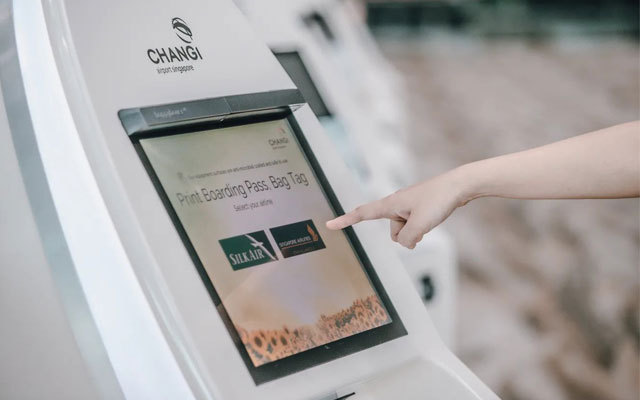
Proximity touch screens and infrared sensors will be installed progressively at the airport’s check-in and bag drop kiosks, enabling travellers to select options by pointing their finger close to the screen without touching it.
For those who need to check in at counters staffed by customer service agents, acrylic screens will provide a safe barrier between passengers and staff.
Additionally, the Immigration and Checkpoints Authority has upgraded the automated immigration lanes at the airport with a new biometric system that uses facial and iris recognition technology as the primary means for identity verification. This replaces traditional fingerprint scanning.
Cleaning innovations have also been introduced by CAG. Autonomous cleaning robots that roam the terminals have been fitted with a nozzle that sprays a light disinfecting mist on carpets and floors during cleaning.
The group is also testing the use of UVC LED technology to disinfect the handrails of escalators and travellators. A trial is also being conducted on the use of contactless infrared technology for passenger lifts, where travellers just need to hover their finger over the lift button to activate it.
Tan Lye Teck, CAG’s executive vice president for airport management, said: “Passengers will expect airports to deliver the highest standards of safety and hygiene to give them peace of mind during their journey, and we will rapidly bring on board new measures as we go into a new normal for air travel… CAG will work with other aviation partners to instill a high sense of confidence among travellers going through Changi Airport when air travel eventually resumes.”