

Malaysia bans long-term pass holders from three countries
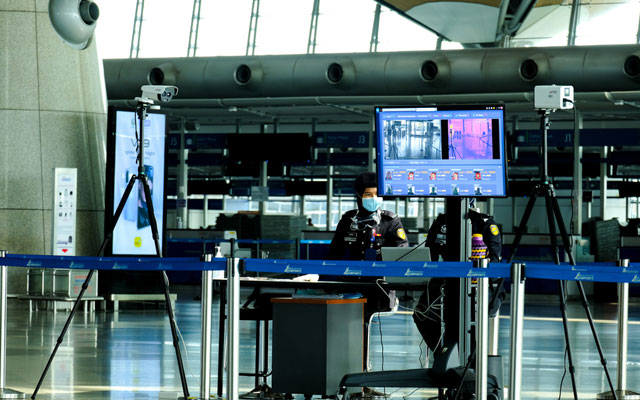
In a move to tighten border controls, Malaysia will ban long-term pass holders from India, Indonesia and the Philippines from entering the country starting September 7.
Senior minister (security cluster) Ismail Sabri Yaakob said during a press briefing that the move was in response to a spike in Covid-19 cases in these countries.
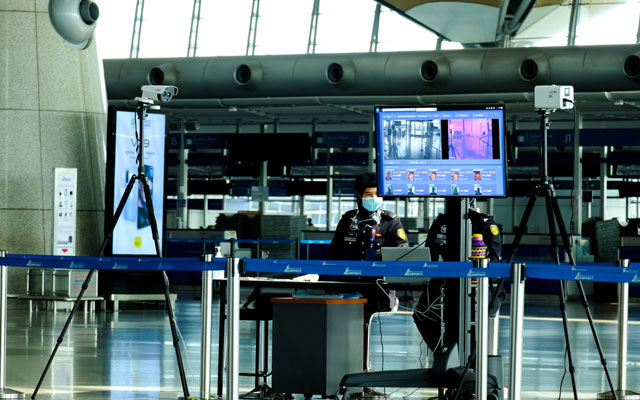
He added that the restriction includes those who are permanent resident pass holders, Malaysia My Second Home participants, expatriates with Employment Pass category 1, professional visit pass holders, Resident Pass and Spouse Visa and students.
Ismail Sabri did not rule out the possibility that similar restrictions might be extended to citizens of other countries experiencing surges.
“We have asked the Health Ministry to make detailed planning on how Malaysia should face threats and challenges in view of the possibility of an increase in cases during winter,” The Star quoted him as having said.
Another issue that needs to be looked into is the precaution measures that need to be taken in anticipation of the return of Malaysian citizens from countries experiencing winter, he added.
AirAsia India strikes car rental deal with Avis
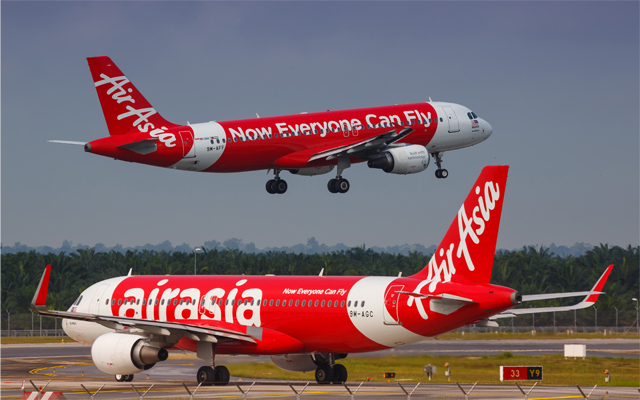
AirAsia India has partnered with Avis India to offer the airline’s passengers discounted car rental services, as travellers increasingly seek private modes of transport.
AirAsia India guests can opt to hire airport transfers, chauffeur-driven vehicles, long-term car rentals or self-drive cars from Avis’s fleet of mid, premium, luxury and SUV cars.
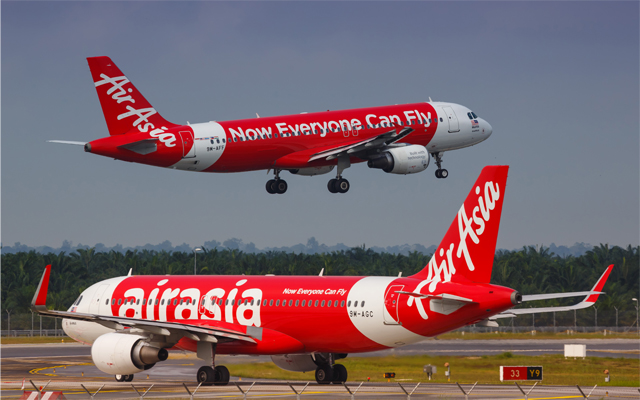
Through this partnership, AirAsia India guests can use the services of Avis across 14 cities – Delhi, Noida, Gurugram, Faridabad, Bengaluru, Mumbai, Hyderabad, Chennai, Kolkata, Chandigarh, Kochi, Pune, Bhubaneswar, and Jaipur. They will also be able to enjoy other benefits such as complimentary upgrades in India and internationally.
Sunil Gupta, managing director and CEO, Avis India, said: “In the wake of coronavirus, many people remain apprehensive about taking public transport or booking cabs. With this partnership, we are happy to take forward the responsibility to offer a hassle-free and safe travel experience once our travellers depart the airport.”
Buffalo “bio-mowers” reap bumper rice crop

Laguna Golf Lang Co’s family of water buffalo greenskeepers have helped the club reap a record rice harvest: the fruits of which are going towards feeding members of the local community in Central Vietnam.
The bovine brood has been bolstered by the birth of Lulu, a new baby daughter, who joins fellow recent arrival Luna, eldest calf Bao, and father and mother Tu Phat and Chi Chi in the workforce.

And the extra sets of hooves have dramatically boosted productivity, with the club gathering 28 tonnes of rice from the seven hectares of fields right in the middle of the Sir Nick Faldo Signature layout – a record harvest-time haul.
The buffalo “bio-mowers” have been vital in helping to maintain the elevated status of the layout, which winds its way through tropical jungle, ocean sand dunes and ancient rice paddies.
They help to manage the seven hectares of rice fields located right in the middle of the course by eating excess weeds, crops while tilling the soil in the area that would otherwise require machinery and additional manpower to maintain.
The rice-fields, though, are not just for show. Harvested twice a year, they have previously yielded up to 20 tons of rice that are used to support the organic farm at Laguna Lang Co and donated to families and seniors in the area who are in need of extra support.
This winter’s record haul, however, surpassed previous harvests by some way. Additionally, the bumper crop could not have come at a timely juncture, with Vietnam’s economy taking a hit on tourism as the international borders remain closed to combat the spread of the global pandemic.
Adam Calver, director of golf at Laguna Lang Co, said: “The communities that have limited economic means have been hit the hardest by the economic downturn that has resulted from the global pandemic. The fact that we are able to donate even more rice to locals who need it most this year was a really positive outcome for our edible golf course.”
Dusit plots expansion in India

Thailand-based Dusit International will expand its footprint across India, with a plan to open at least two Dusit-branded hotels in the country each year beginning 2021.
The expansion will target tier one and tier two cities, such as Mumbai, Delhi and Bangalore; as well as key leisure destinations throughout the country.

Already, the hotel group has signed Dusit Princess Serviced Suites Kolkata, under a franchise agreement with the Kolkata-based real estate developer Jain Group.
Slated to open in 2Q2022 as part of Jain Group’s high-end residential development project, Dream One, Dusit Princess Serviced Suites Kolkata will occupy a prime location near the green expanse of Eco Park.
Comprising 42 three-bedroom units, the new property will feature a swimming pool, an all-day dining restaurant, a speciality restaurant, and a fitness and wellness centre. Banqueting and meeting facilities will also be available for small and midscale events.
Currently, Dusit is in talks with other potential owners and is on course to conclude at least four more signings within the next 12 months.
“While Covid-19 has brought immense challenges for tourism and hospitality worldwide, we remain confident that our resilient industry can and will bounce back, and we expect India to be a key player in international and domestic tourism in the brighter days ahead,” said Suphajee Suthumpun, group CEO, Dusit International.
India is one of the top seven source markets for Dusit Hotels and Resorts worldwide.
With India’s fast-growing middle class expected to reach 583 million people – or 41 per cent of India’s projected population – by 2025, Dusit also sees huge potential for its upscale and midscale brands in this burgeoning market.
An Asian flavour
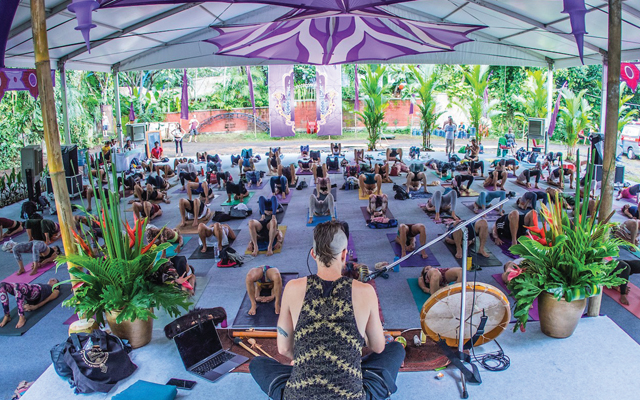
BaliSpirit Festival, Indonesia
Yoga, music and dance is celebrated annually at the BaliSpirit Festival since its launch in 2008.
Positioned as a premier international destination event that embodies the Balinese Hindu concept ofTri Hita Karana – living in harmony with our spiritual, social and natural environments, the event draws more than 5,000 in attendance every year.
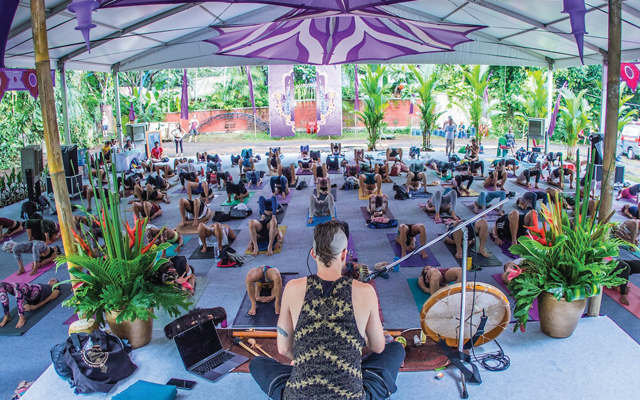
While the festival had to be cancelled this year due to Covid-19 precautions, it will return in 2021.
Commenting on the success of the BaliSpirit Festival, media manager Noviana Kusumawardhani said: “What BaliSpirit Festival offers transcends national boundaries. People from all over the globe want to connect in a community of like-minded souls, to practice yoga with world-class teachers, to dance and have fun, and to experience global music concerts under the stars. The essence of the festival appeals to an international audience.
“Secondly, the presenters and artists of the festival are also very international. Naturally, their students and fans from across the globe get to hear about BaliSpirit Festival.
“Thirdly, our location is ideal for international travellers. Bali, the Island of the Gods, is a dream destination for tourists from all over the world and is well connected with international flights and offers a variety of accommodation options for both budget and luxury travellers.”
The organisers market the annual gathering through online channels and word of mouth.
Noviana revealed that BaliSpirit Festival enjoys keen attention from traditional and new media, chalking up coverage by international magazines, TV stations, bloggers and e-news outlets every year.
To encourage overseas attendance, the organisers partner with travel companies, such as those in Japan and China, to promote and sell BaliSpirit Festival.
However, with Bali hotels being so easily available, Noviana said that the majority of attendees would arrange their trip themselves.
“Besides, booking on your own gives you maximum flexibility and options,” she said. – Mimi Hudoyo

Shilin Singapore
Often considered a gateway to Asia, Singapore has developed a reputation for themed festivals that bring the best of its regional neighbours to locals and visitors alike. Shilin Singapore, a Taiwanese night market-themed event which debuted last year over two weekends and drew more than half a million attendees, returned this year in a unique virtual edition.
The event featured more than 100 livestream parties from June 12-14 and 19-21, where attendees had Taiwanese cuisine delivered right to their doorsteps. They were able to order retail products from brands, watch celebrities host live shows and performances, and enjoy giveaways.
To mimic the feeling of a physical carnival, the event even incorporated digital arcade games.
Kent Teo, founder and CEO of Shilin Singapore organiser, Invade, said: “Shilin Singapore Virtual 2020 used various technologies to create a truly multi-sensorial experience. We wanted to tackle the pandemic head-on by providing businesses with an alternative platform to generate revenue. By digitising our (event), we were also helping our vendors get upskilled with live shopping and social shopping capabilities.”
He explained that since the Singapore government implemented a nation-wide shutdown of non-essential services on April 7, as many as 80 per cent of restaurants might not be able to tide through the next six months. He hoped that Shilin Singapore Virtual 2020 could alleviate the pressures for these operators.
“It’s easy for organisers to simply cancel their events during such unprecedented times. However, we wanted to challenge ourselves and perhaps find a solution that could also work in the long run, while still being able to help businesses,” he added.
He said the digital version of Shilin Singapore may even change the way Invade – which is also behind the Artbox Singapore festival – organises offline festivals in the future. – Pamela Chow

George Town Festival, Malaysia
George Town Festival (GTF) is an annual, three-week celebration of culture, heritage, art, and community. The festival came to life when George Town in Penang was designated UNESCO World Heritage Site status in 2008.
This year’s festival, from July 4 to 19, took on a new twist; it was held online due to the Covid-19 pandemic which has also made social distancing a new norm.
Penang Tourism, Arts, Culture and Heritage committee chairman, Yeoh Soon Hin, said nine programmes were curated for this year’s digital festival, bearing the theme, Everyone Everywhere.
Talks and workshops as well as a post-GTF bonus screening on July 26, related to visual art theatre, music, dance and film, were all part of the line-up.
Nigel Wong, director, Urban Rhythms Tours, Adventures and Travel, shared: “Going digital will help keep the brand alive as this festival is well-known internationally. (This year) it allowed a wider audience to access content, without actually having to physically travel to Penang. As borders remain closed, travelling to Penang for the festival is just not possible for foreigners.”
Maintaining the festival in a virtual format this year was deemed “a smart move” by Arokia Das, director, WL Travel, as it set a continued presence.
“Once the pandemic is over, borders reopened, and free movement of people resumes, I am sure the festival will return to its original form. That is a good thing because…the festival enhances the value of Penang as a business events destination. Planners can incorporate (festival activities) into their programme which will leave delegates with lasting memories of Penang.” – S Puvaneswary

Bangkok Design Week, Thailand
Bangkok Design Week’s extensive coverage of the city provides a fresh way of experiencing and understanding the Thai capital as a destination. This year, over 2,000 designers and creative businesses decked out four areas of the city with art installations.
According to Pichit Virankabutra, director of the creative space development department at the Creative Economy Agency (Public Organization) or CEA, the event is now South-east Asia’s largest design week. The size and breadth of the issues it tackles are of an international standard, putting it on par with the design weeks of Italy and Finland’s Helsinki.
And the event is meant for everyone. “We try to draw…people (who are) searching for experiences, issues and new perspectives to think about,” said Pichit.
“We want to drive the creative economy sustainably, and be able to help develop the city. It has to be truly inclusive and forward-thinking, something that people can bring their grandparents and their kids to.”
Drawing festival-goers into local neighbourhoods, the event helps catalyse discovery of local shops, businesses and culture. “With 30,000 people a day walking into local communities and supporting local businesses and cafes, it truly helps to drive the local…economy.”
This year’s Bangkok Design Week, hosted from February 1-9, 2020, was attended by 300,000 to 400,000 visitors every day, with 13.2 per cent being tourists. – Anne Somanas

Pahiyas Festival, Philippines
Held every 15th of May, the colourful harvest fiesta known as Pahiyas Festival helps to lure curious tourists into the town of Lucban, Quezon.
During the festival, town residents compete to have the most creatively decorated houses, uniquely bedecked with kiping – glutinous rice pounded into leaf shapes and dyed with food colouring, local decorative materials, fruits, vegetables and other farm produce. Cultural shows, parades, pageantry, and street sales were added over the years.
Arjun Shroff, managing director, Shroff International Travel Care, said Pahiyas is “something new, very natural and culture-related”.
As Lucban is a few hours’ drive from Manila, an experience of Pahiyas can be combined with Tagaytay or Pagsanjan Falls in Laguna as well as Batangas. – Rosa Ocampo
Most travellers ready to go if consistent safety measures are in place: Travelport study

An independent research released by Travelport on August 25 has found that the majority of travellers will consider booking domestic and international trips, but only if airlines, airports, hotels and car rental companies collectively implement 10 different safety measures throughout their journey.

The study was conducted in July 2020 with 5,000 travellers across the US, UK, India, Australia and New Zealand, as well as in-depth interviews with 29 leading travel suppliers.
The 10 separate safety measures survey respondents want adopted by airports, airlines, hotels and car rental companies include social distancing rules, mandatory use of face masks, and ready access to sanitising gel or wipes, face masks and gloves

The percentage figures represent the number of travellers that said they will not travel unless the respective measure is in place.
Air
Overall, more than half of travellers said that to consider booking a flight, they need to know in advance that a wide array of specific measures have been implemented by both the airport and airline.


At the airport, these include temperature checks on arrival (66%), plexi-glass at check-in desks (58%), and managed boarding by row (56%).
Hotels
For travellers to have the confidence to book a hotel room, the study showed the majority want six specific safety measures in place, including enhanced cleaning (73%) and guest services accessible via their mobile phone (51%).

Car rental
To book a car rental, according to the study, the majority of travellers want five key safety measures in place both at rental destinations and in vehicles, including contactless car collection and drop-off (55%).

Greg Webb, Travelport CEO, said: “Over the last few months, the travel industry has rolled out many initiatives to support a safe, healthy and responsible return for travel. This study highlights the criticality these measures are now playing in restoring traveller confidence. However, for the majority of travellers to return to the skies, the industry now needs to work together to not only ensure a wide array of safety measures are in place throughout the travel journey, but to collectively communicate these changes to travelers using a range of channels and merchandising technologies.”
On a country level, the study revealed demand for almost every safety measure is highest in India.
Demand in New Zealand, while still high, tended to be the lowest across the five countries assessed.
When it comes to age groups, demand for robust safety measures was again high across all categories, however, it was highest among baby boomers and lowest among millennials.
Derek Sadubin, managing director, CAPA – Centre for Aviation, added: “Health and safety is understandably front of mind for travellers right now. The travel industry recognises and respects this and, what’s encouraging, is that many suppliers, such as airlines, have already implemented the safety measures travellers say they need to book a domestic or international trip – but we still have a long way to go. Collaboration and communication are now key to restoring traveller confidence and securing a strong and responsible industry recovery.”
The safety measures currently being undertaken by more than 80 of the world’s largest airlines can be found in the recently launched Travelport Airline Health & Safety Tracker. The tool, which is free of charge and available to both Travelport customers and the wider industry, is delivered to both online and offline travel agencies through the Travelport COVID-19 Smartpoint Plugin, Travelport’s API-based merchandising solution, Branded Fares Data File, and through the company’s COVID-19 Resource Hub for the general public.
The full results of both the quantitative and qualitative components of the research are captured in Travelport’s Guide to Travel Recovery report, which can be downloaded from the company’s COVID-19 Resource Hub.
Labuan Bajo presses on with tourism development

Infrastructure development across Labuan Bajo, East Nusa Tenggara in Indonesia has carried on in earnest even as the Covid-19 pandemic disrupts travel and tourism businesses, to ensure the destination is ready for both the ASEAN Summit and the G-20 Summit come 2023.
Shana Fatina, president director of the Labuan Bajo Flores Tourism Authority Agency (BOP), said that infrastructural works include new roads and airport runway extensions.

Shana said: “The construction of Komodo Airport is a focus this year. The Ministry of Transportation is working on extending the runway by 250m to reach 2,700m. The government has also breached the Telumpang hill (for improved aircraft access).”
Service excellence is also on the agenda, and the government is working with regional peers and experts, such as Changi Aiports International, Changi Airports Mena, Cinta Airport Flores and Cardig Aero Services, to manage Komodo Airport and to make it an international airport by February 2021.
Meanwhile, development of the Labuan Bajo marina area has been accelerated, allowing it to accommodate up to 125 yachts or cruise ships by end-2020.
On the accommodation side, Indonesia Tourism Development Corporation (ITDC) has been appointed to oversee Tana Mori’s development into a high-end resort destination similar to Bali’s Nusa Dua.
Edwin Darmasetiawan, ITDC’s director of development, said the Tana Mori masterplan was now complete and works could begin. The plan includes the construction of two five-star hotels and one four-star hotel to accommodate delegates of the two Summits.
Funding has been proposed through state equity participation, in addition to private investment.
“I am very optimistic that we can finish latest by 2022,” remarked Edwin.
“The event will be in 2023 but our obligation is to prepare the venue with all supporting aspects, both property and infrastructure by the end of 2022,” he added.
Susilowani Daud, president director of Pacto Convex, said the project underlined the government’s commitment to developing destinations in the country for business events, which would send a positive signal to investors.
She added that while private investors might remain conservative now due to economic uncertainty, interest could soar once business recovery begins.
Susilowani hopes the government would also invest in tourism and business events education for the local workforce, to establish a strong human resource foundation that would support the future developments in Labuan Bajo.
Thailand trials attraction concept at prisons

Cooking contests and craft shops within prisons could soon be available to tourists visiting Thailand should the Corrections Department succeed in its plans to turn 72 prisons across the country into attractions.
According to The Bangkok Post, minister Somsak Thepsuthin said on Monday that the plan was being piloted at five prisons, such as those in Rayong and Ratchaburi.

Various activities are already being tested, such as chefs behind bars, to promote occupations in various fields, prepare inmates for return to a normal life in society, and improve the image of prisons. With prisons being developed as tourist stops, inmates would also be able to use their abilities and skills to earn an income.
Somsak said the Corrections Department was ready with personnel to implement the policy, and many prisons were already sited on existing tour routes.
He revealed that the development would be expanded to 67 other prisons in fiscal 2021, with the possibility of having half of the country’s 143 prisons turned into tourist attractions.
Should the concept prove popular, the ministry might in future work with the Ministry of Tourism and Sports to use prisons for tourism promotion.
ACI Asia-Pacific urges replacement of quarantines to ensure airports’ survival

The Airports Council International (ACI) Asia-Pacific is pressing governments to replace quarantine requirements with testing and contact tracing protocols to ensure the sector’s survival amid a worsening situation for airports in Asia-Pacific and the Middle East.

It joins the international travel and tourism community which has been increasingly vocal and urgent in its call for sensible health and safety measures to facilitate the restart of travel and tourism.
The latest preliminary forecast figures show that airports in Asia-Pacific and the Middle East will lose 55 per cent and 60 per cent of passenger volume by the end of the 2020 respectively.
Prior to the pandemic, Asia-Pacific was set to welcome close to 3.5 billion passengers in 2020. The full year estimate amounts to just above 1.5 billion passengers, a reduction of around 1.9 billion passengers, compared to the pre-Covid-19, business-as-usual scenario.
The Middle East was set to welcome 420 million in 2020. Under the impact of the pandemic, Middle Eastern airports are expected to welcome 170 million passengers, a reduction of 250 million.
Airport revenues, a direct reflection of traffic, are forecasted to decline by approximately US$27 billion in the Asia-Pacific region and US$8 billion in the Middle East by the end of 2020.
“The latest ACI forecast depicts an ongoing uncertain picture for the airport sector. To put the revenue loss in perspective, it equates to wiping out the revenues of 27 of the regions’ busiest hubs. We are now facing at least a three-year recovery period,” said Stefano Baronci, director general, ACI Asia-Pacific.
The airport sector has implemented a raft of precautionary health and hygiene measures in anticipation of the restart of the sector. However, current government travel restrictions and quarantine requirements are severely hampering the restart and contributing to the worsening economic situation, noted ACI Asia-Pacific in its press statement.
“Governments should relax current travel restrictions and consider alternative safeguarding measures to ensure the survival of the aviation sector based on a periodically updated risk assessment. The recent announcement from the Government of Singapore replacing the 14-day quarantine with Covid-19 testing for all inbound passengers from some low risk countries is a first step in the right direction to support the economic recovery of the aviation ecosystem,” added Baronci.
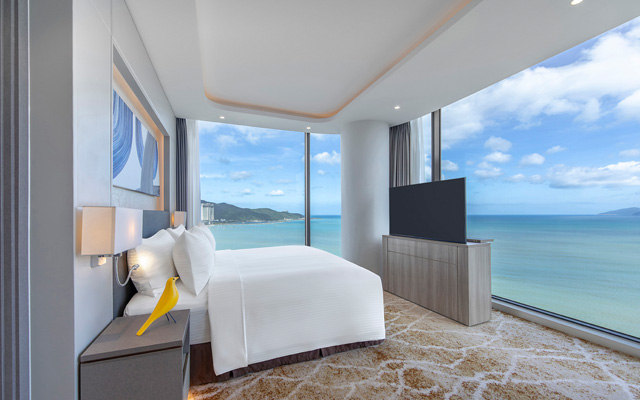








The inaugural ITB India this April will take on a hybrid model, becoming one of the first exhibitions in India to do so.
The physical exhibition will be held from April 7-9 at the Bombay Exhibition Centre in Mumbai, while the virtual event is set to take place five days later, from April 15-16.
“We see how trade fairs are changing as a result of the Covid-19 pandemic. Personal contact remains the heart of a trade fair. At the same
time, however, the trade fairs of the future will be hybrid events. Classic
meetings of exhibitors and visitors will be accompanied by digital events,”
said Sonia Prashar, deputy director general of Indo-German Chamber of
Commerce, the organiser of ITB India.
Attendees can expect business matching opportunities. On-site pre-scheduled appointments are coupled with additional virtual appointments connecting exhibitors and buyers during the live and virtual event.
The live event will also feature a line-up of key industry speakers and showcases of innovative technology and solutions. Exclusive access for selected audience profiles and focused sessions on niche topics will also be available in both live and virtual events.
All ITB India exhibitors will also be given a complimentary virtual booth, while all attendees of ITB India live event will be entitled to complimentary access to the virtual event.