Once upon a time, Wonosobo and Banyumas in Central Java were favourites of European travellers who were drawn to the Baturraden mountains, Dieng Plateau and Hindu temples in the areas. Over time, the appeal waned, as these travellers were lured away by scenic train rides between Bandung and Jogjakarta.
However, completion of Trans-Java toll roads connecting major cities in the province at end-2018 has injected new life into two destinations. Domestic road trips across Java have flourished along with a growing presence of new hotels such as those managed by Indonesian company Dafam Hotels & Resorts in second- and third-tier cities across Central Java.
Go on offroad Jeep rides in Banyumas
With international borders shut during the pandemic, Indonesian residents took to touring their own backyard, allowing the domestic road trip segment to rebound as soon as movement restrictions were lifted and attractions were once again allowed to welcome vsitors in mid-2020.
Encouraged by the strong domestic interest, the regency government and industry players are taking the opportunity to refresh their product offerings.
Building on Banyumas’s natural adventurous appeal, the regency government intends to use 200 billion rupiah (US$14,286) from the post-Covid-19 National Economic Fund for attraction development. It aims to leverage the area’s beloved Baturraden mountains and the 200 waterfalls within to attract visitors.
These efforts will complement the range of nature attractions managed by Palawi Risorsis, a subsidiary of Perhutani, a state-own company of the Ministry of Environment and Forestry. They include the Pancuran Tujuh hot springs and adventure activities like trekking, offroad drives and camping.
With tourism in the government’s long-term vision, Achmad Husein, the regent of Banyumas, said the construction of a botanical garden in Baturraden will kick off development plans this year. Along with the gardens, water sports facilities in Purwokerto city and a floating market along Serayu River will materialise. Two docks have already been built along the river to facilitate this development.
Eco-printing activity at Banyumas
Visitors to Banyumas can also look forward to a new eco-printing facility that is part of the Bruwun Alas Village Education programme. Here, visitors can observe community members print cloth using dyes and leaves collected from around the village. They can even print their own cloth souvenir.
“These will give travellers alternative attractions beyond Baturraden (mountains),” said Achmad.
Over at Wonosobo and the neighbouring Temanggung area, local authorities are riding on the region’s newfound fame in coffee bean production, which has won international recognition through competitions.
Today, taking a tour of a coffee plantation and learning to pick coffee beans and then brew a hot cuppa is a fresh tourist offering.
Two Heart Coffee, a home industry and coffee shop located in the Posong area, about 20 minutes by car from Wonosobo city, beckons visitors with a chance to roast, brew and taste the famous Kopi Posong and sample local sweets while learning about the history of the local coffee industry.
After acquiring a caffeine boost, visitors can proceed to the Posong Recreational Park on the slopes of Sindoro Mountain. Opened in 2019, the park comprises a recreational area, camping and glamping grounds. It is loved for its sun rise and sun set views.
Zuniyanto, Posong Recreational Park manager, said glamping groups often arrive in the afternoon to take in views of the tobacco and tea plantations before catching the sunset glows and indulging in a barbecue dinner over a bonfire. Come morning, the group will watch the sun rise over the horizon, have breakfast and partake in activities such as team-building games or plantation tours.
Zuniyanto recalled that a 2017 film, Filosofi Kopi, had propelled Posong into the spotlight. With the opening of the park, a number of tour operators from Yogyakarta and Central Java streamed in with travellers from the Netherlands, Germany and Malaysia.
Pranoto Hadi Prayitno, director of Citra Gilang Tour, said recent tourism developments in Wonosobo and Banyumas are perfect for the domestic tourism markets.
“But they could eventually attract international travellers with new facilities developed with specific target markets in mind. The hot springs in Baturraden, for example, could attract the Japanese crowd if onsen-like facilities were created,” he suggested.
He also encouraged local travel companies to promote Wonosobo and Banyumas to regional markets through travel tradeshows, and avoid relying on traditional European markets as international travel resumes.
As travel slowly resumes, new research from Collinson has found that quarantine and testing remain a key concern for travellers in Asia.
Comparing data collected from a total of 18,500 travellers in 2019 and 12,607 travellers in 2020, the findings reveal that travellers are just as worried about their mental wellbeing as they are their physical wellbeing.
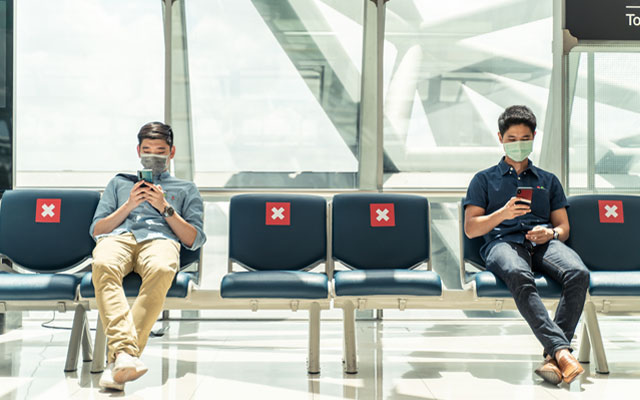
Majority of global travellers desire access to socially-distanced spaces, finds Collinson study
Whilst generally the desire to travel is high, there’s a new underlying mental health issue that travelling may cause, manifesting itself in the stress associated with post-pandemic travel. Three quarters (73%) of travellers worldwide said they’ll be prioritising their mental wellbeing more when they travel now, than they did before Covid-19.
Two in three travellers in Japan (67%) expect travel in the next year to be more stressful than in the past, a concern echoed by 78% in Hong Kong and 81% in Singapore. As such, a large proportion (87%) of global travellers specifically said they wanted access to socially-distanced spaces in which to ‘de-stress’ and ‘relax away from the crowds’; with 89% of travellers in Singapore and 90% in China citing socially-distanced spaces to relax in as a key factor to their airport experience.
While there was already a concern among travellers about the impact journeys were having on their physical wellbeing, 81% said the pandemic had heightened these concerns. Physical wellbeing when travelling is a key priority for both Singaporeans (64%) and Hong Kongers (74%), with both above the global average of 60%.
“The importance of mental health on the journey is perhaps surprising but equally a welcome insight into what travellers are looking for as the travel recovery continues to gain ground with new testing and vaccination regimes”, explained David Evans, joint CEO at Collinson.
“This is a way for the travel industry to look at its offering to consumers, allowing travel brands to understand what consumers want and what the industry needs to act on to rebuild traveller confidence.”
While apprehensions surrounding mental wellbeing and stress are a top priority for global travellers, issues around quarantine rules remain a significant concern for passengers in Asia.
The report found that the need to quarantine tops Hong Kong travellers’ list of concerns for post-pandemic travel, with 57% primarily hesitant to travel due to the need to quarantine on arrival or return. These concerns are shared with 49% of travellers from China and a further 71% of travellers from Singapore.
In light of these findings, testing has proven to be an essential factor in rebuilding global traveller confidence, with the vast majority (83%) of global passengers wanting there to be tests in arrivals at the airport, and nearly the same (82%) wanting tests on departure.
Since the beginning of the pandemic, Asia has spearheaded the drive for Covid-19 testing, attributing it to the region’s success in keeping cases largely under control. The importance of testing both pre-departure and on arrival is shared by travellers from China (90%) and Hong Kong (86%), with a further 86% of travellers from Singapore desiring testing in arrivals and 85% on departure.
Ultimately, travellers are looking for a seamless journey, with a third of travellers from China (31%) happy to pay for airport lounge access to allow for this and 45% of Hong Kong travellers specifically listing a quick and efficient journey, including a fast security queue, as key to ensuring this stress-free experience.
The pandemic has slowed travel across the globe, but as people experiment with new ways of working while traveling, the rise of the digital nomad is likely to accelerate.
As a testament to the evolution of the growing trend of workcation, 68 per cent of Indian travellers have already considered booking somewhere to stay in order to work from a different destination, as per the findings of Booking.com’s Future of Travel report. The trend has led to a shift in traveller needs, who now increasingly look to combine work with travel. As a result, accommodation providers today need to be agile in catering to the evolving traveller demands.
With homes and apartments offering work-friendly amenities to attract these valuable guests, as well as hotels and chains rolling out work-oriented programmes, many in the travel industry are already adapting to meet this trend. However, what travellers working from the road really want is quite simple: Steady Wi-Fi, a workstation, amenities catered to health and wellness, and home comforts.
Steady Wi-Fi and workstation: The backbone of workcations
When it comes to determining a suitable accommodation for a workcation, fast and reliable Wi-Fi tops the chart since it is the backbone of remote working. Location, price and a comfortable workstation are other considerations for travellers. Besides providing the service, demonstration of services across customer platforms is as important. For instance, Matthew Kepnes, author of popular travel blog Nomadic Matt and Ten Years A Nomad: A Traveler’s Journey Home, recommended accommodation partners to consider including a screenshot of a typical Wi-Fi speed test performed at the property. And it is a great way to get guests to notice their attention to this crucial detail.
Health and wellness: Icing on the cake
Change in lifestyle during the pandemic has put the spotlight on health and wellness, as a result of long screen times and being stationed at one’s home desk for a significant amount of time. In such a scenario, accommodation with accessibility to gyms, fitness clubs or healthy restaurants can have an edge in being the preferred choice for a workcation traveller. Additionally, for properties located amid natural landscapes such as hills or beaches, extending beyond just accommodation and supporting travellers with nature-oriented activities such as hiking can also drive deeper relevance and attraction for the accommodation. Travelling responsibly during the pandemic is also a strong concern, so having information about where guests can take Covid-19 tests could also be very helpful.
Digital nomads: Beyond backpackers
Digital nomads are very different from backpackers and business travellers. They are not necessarily driven by value-led accommodations and may not need services fit for a luxurious experience. The key to understanding them is to cater to their need for routine and focus on work. In their quest for routine and normalcy during their long stays, travellers on workcation may prefer home comforts, such as a kitchen to make their own coffee and breakfasts. Welcoming travellers by making them feel at home should be a key priority for accommodation providers.
Their journey – and work – continues
Despite the pandemic, there is travel optimism among digital nomads and others alike, where they look forward to collecting travel experiences and sharing them with their communities. The pandemic has seen travellers who normally stay in hotels gravitate to more socially distanced short-term rentals and explore unique accommodation and experiences. As enablers of travel experiences, accommodation providers have a key role to play in providing holistic and fulfilling experiences. And with the onset of the pandemic and ever-evolving travel behaviour and preferences, they must be able to quickly adapt to new traveller demands in a more meaningful way.
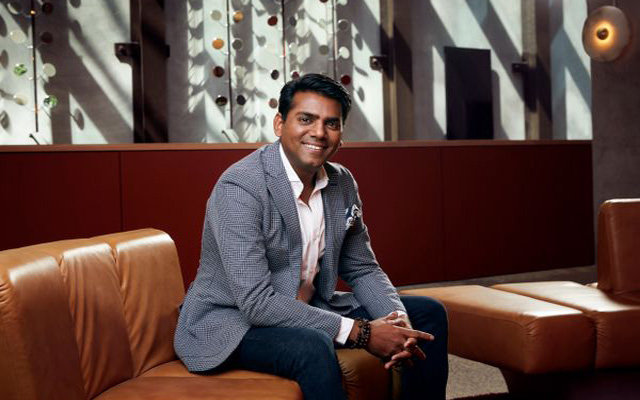
Ovolo Group has expanded the role of Dave Baswal to managing director ANZ.
Previously, Baswal has been leading the Australian arm of the business since 2016. This includes acquisitions, repositioning, design and project management for The Inchcolm by Ovolo and Ovolo The Valley in Brisbane, Ovolo Nishi in Canberra and Ovolo South Yarra in Melbourne.
He has over two decades of hospitality finance and real estate management experience under his belt.
Green shoots sprouting in India’s domestic tourism market has been curtailed by renewed restrictions to stem a resurgence in Covid-19 cases, leaving hospitality players bracing for a fresh blow to their businesses.
With destinations like New Delhi imposing a night curfew and Mumbai announcing a weekend lockdown, business sentiments have nosedived.
Renewed lockdowns and curfews derail India’s tourism recovery; tourists thronging Taj Mahal in April 2021 pictured
“The domestic market that had started to pick up is going to witness a downturn again,” said Sanzeev Bhatia, vice president and general manager, The Metropolitan Hotel and Spa in New Delhi.
“Restrictions like night curfews mean that besides a loss in room night business, the banqueting business will also take a hit. In fact, a lot of hotels are already seeing cancellations of some booked banqueting business.”
Maharashtra reported 63,294 new Covid-19 cases on Sunday (April 11), its highest spike since the onset of the pandemic. The state government is mulling imposing a full lockdown across Maharashtra from April 14.
“Whenever there is a rise in Covid-19 cases, the hospitality industry is targeted and victimised, (despite us) operating in the safest of environments and following all the mandated compliances,” said Sherry Bhatia, president, Hotel and Restaurant Association of Western India.
“A majority of the establishments have mounting debts and face threats of insolvency. With fear of losing jobs like last year, many workers have begun to leave for their homes again. After last year’s lockdown, the hospitality industry is in turmoil and is just not in a position to bear any more losses.”
However, a section of hospitality players remain bullish about the future prospects of the industry.
“After almost a year, the last couple of months saw domestic tourism enabling the hospitality sector to slowly get back on its feet. Though the recent increase in Covid-19 cases has created a dent in that growth, it is still faring well,” said Sarbendra Sarkar, founder and managing director, Cygnett Hotels and Resorts.
“We are better prepared to manage the situation. While all tourist spots and public places have been closed, people are still opting for staycations. Besides, the vaccination drive has instilled a sense of safety among people. While they are cautious, they have no fear of leaving their safe spaces.”
Minor Hotels has appointed Mark O’Sullivan as area general manager Bangkok.
This role will see O’Sullivan at the helm of numerous flagship properties including Anantara Siam Bangkok Hotel, Anantara Riverside Bangkok Resort and Avani+ Riverside Bangkok Hotel.
He first arrived in Bangkok in 2018 to take up the post of general manager at Anantara Riverside. During his tenure, he introduced several F&B concepts, as well as led the launch of Loy River Song, a luxury river cruise that transports guests from Bangkok to Ayutthaya.
Hailing from Ireland, O’Sullivan has over a decade’s worth of hospitality experience in Asia. He first joined Anantara in 2017 as general manager for Anantara Mai Khao Phuket Villas.
Prior to joining Anantara, the Irishman has cut his teeth at large global hotel brands such as Starwood and Hyatt, as well as boutique properties such as Club Coco and Brooks Hotel in his native Dublin.
With the global pandemic changing how people work, travel and live, the remote working trend continues to gather pace, with pristine beaches, expansive villas and even national parks being pitched as temporary workspaces to a rising breed of digital nomads.
Accommodation across the globe have reported longer-stay bookings fuelled by a rising tide of travellers looking for an escape from lockdown fatigue or a change in work scenery.
Keen to tap on that growing demand, more hotels and destinations are rolling out longer-stay packages, ranging from one month to a year, with deep discounts and other perks to please this unusual breed of travellers.
More remote workers are flocking to sandy beaches and the countryside for workations as the pandemic gives rise to a work-from-anywhere culture
Sweetening the long-stay deal
From free vaccines to five-year visas, tourism authorities across Asia and the Middle East are crafting strategies and dangling sweeteners to stir interest among long-stay tourists.
Dubai has since January started promoting free vaccines for all UAE residents as an added perk to its one-year virtual working programme launched last October.
Following on, in February, Ras Al Khaimah Tourism Development Authority rolled out its Live RAK Play programme, luring remote workers to call the emirate home for one month to a year. The programme comprises a host of long-stay offers across numerous hotels, complete with free Wi-Fi, discounted rates, complimentary tickets to attractions, and other perks.
Similarly, Indonesian tourism officials are looking to tap into the burgeoning pool of remote workers facing work-from-home fatigue, in hopes of reviving the bruised sector. Once international travel reboots, Indonesia plans to offer a five-year visa for international tourists to carve out a second home in Bali, traditionally one of Asia’s hotspots for digital nomads.
According to tourism minister Sandiaga Uno, they can either opt for an individual package or one for the family, by making a deposit of US$142,300 or US$178,000, respectively. The plan targets business owners and travellers who are looking to escape the cold winters in their native countries by staying at least three to four months in Bali.
Foreign visitors will be allowed to work in Indonesia under this visa, renewable every five years. There are also plans to extend the programme to other parts of Indonesia, including Batam, Bintan and others within the ASEAN Travel Corridor Framework.
A remote worker taking a workation at a co-living and co-working space in Bolinao, Pangasinan
Work from home away from home
Private tourism stakeholders are also eager to capitalise on the extended workcation trend to speed up recovery in the pandemic’s wake.
In February, Hyatt Hotels Corporation launched The Great Relocate, offering a flat rate for long-term stays with a minimum 29-day booking for hotels across South-west Asia, the Middle East and Europe.
Likewise, Centara Hotels & Resorts in January rolled out Work From Hotel (WFH) packages in destinations across Thailand, offering extended stays from two weeks to a month at reduced rates.
The initiative came about as Centara saw a surge in remote workers, some with children in tow, looking to escape for “a significant period of time” to pastures new such as beaches or the countryside amid the pandemic, said Tom Thrussell, vice president of brand, marketing and digital at Centara Hotels & Resorts. A trend was also emerging of Bangkok-based residents migrating to different areas, like coastal towns, to escape the city’s air pollution, he added.
“We see value in not just day packages but also longer-stay WFH packages, because people are taking this opportunity to change up their environment for a longer period,” he said, adding that the WFH trend “is here to stay for the foreseeable future”.
To date, Centara has seen “hundreds” of bookings for its WFH packages, with top locations being the drive destinations from Bangkok and Pattaya; and further afield, Phuket, also known as one of the areas in Thailand with the finest air quality, according to Thrussell. Buyers of WFH packages have been a mix of Thai and expatriate residents.
While Centara also has a home-away-from-home package offering three- to six-month stays at slightly more competitive rates, demand has been subdued, shared Thrussell. However, he expects more longer stays to come into demand once borders reopen.
Over in the Philippines, hotels and resorts are looking to court digital nomads booking long-term stays. To capture this growing segment, an online booking platform has been set up by Manila-based hostel owner Orly Darnayla.
Baybayin Hub, referencing the word ‘coast’ in Filipino, connects a portfolio of local hotels and resorts with a current network of over 1,400 digital nomads seeking medium to long stays.
Currently, 35 resorts are on the platform, spanning six locations: from tourist hotspots like Boracay and Palawan to the scenic province of Pangasinan. Listings run the gamut from hostels and beach lodges to luxury resorts, with rates slashed up to 80 per cent and prices starting at US$200 for a month-long stay.
The idea was born out of the pandemic when occupancy at Darnayla’s hostel plunged from 99 per cent to zero amid the lockdown. To survive, he converted his hostel into a co-working and co-living space to tap the growing pool of remote workers, digital nomads and freelancers seeking an affordable workspace.
The move allowed Darnayla to continue operations at a time when leisure travel was banned, with only business travel permitted.
His pivot took off, with revenue soaring by 20 to 30 per cent – inspiring him to set up Baybayin Hub to support other hotel operators to make the same transition. For each booking made via the site, the platform takes a 15 to 30 per cent cut.
The 25-key Birdland Beach Club, the first resort to join the platform, saw occupancy soar from zero to 95 per cent within the first month of converting into a co-working space.
Gen-Zers and millennials make up the bulk of the platform’s clientele, with the rest comprising Gen X business owners and upper-class families, according to Darnayla.
Under the lockdown, guests were required to book a minimum one-month stay in accordance with legal requirements. But, following the rolling back of restrictions, the platform now also markets seven-day and 15-day stays. Since its October 2020 launch, over 400 rooms have been sold on the platform, with 15- to 30-day stays making up 98 per cent of bookings.
Darnayla said he has seen a hike in longer-stay bookings, with some guests at lower-end accommodation opting to extend their month-long stay for three to six months.
“They will stay longer, especially when they have found a community of like-minded professionals to co-work and co-live with,” he said. “Also, they feel safer staying in our resorts in the countryside or province because they are not as crowded as compared to (those in) big cities.”
Darnayla sees the switch to target remote workers and digital nomads as a way to crisis-proof hospitality businesses, as in the event of another pandemic, they can continue operating as co-working spaces.
Some of the platform’s resort partners are now investing to set up exclusive co-working spaces to cater for long-stay guests.
More companies are also catching on to the idea of flexible workspaces. In March, one of the biggest business process outsourcing (BPO) companies in the Philippines, with 47,000 employees nationwide, signed up to the Baybayin Hub platform. As well, a couple of small, local BPO companies are also due to come on board.
Looking ahead, Darnayla plans to expand Baybayin Hub across South-east Asia, including countries like Japan, Thailand and Singapore.
Centara’s properties across Thailand, including Centara Grand Mirage Beach Resort Pattaya, now offer extended stays at reduced rates
Embracing diversification, differentiation
The entry of more players into the long-stay market heralds new competition for established serviced residence providers who are vying for that same share of extended stay demand.
To strengthen its position in the extended stay business and build the company’s global scale, Ascott – which manages a range of long-stay brands, including Ascott The Residence, Somerset, Citadines and co-living brand lyf – has embarked on various initiatives.
Last June, Ascott expanded into the rental housing segment in China to tap on the growing demand from young, mobile workers as well as returning students from abroad looking to rent quality fully furnished homes in the tier one and tier two cities on a long-term basis.
“We have secured three rental housing properties in Shanghai and Hangzhou, increasing our presence in China’s high growth rental housing sector,” said Kevin Goh, CapitaLand’s CEO for lodging and Ascott’s CEO.
Further, the group’s hospitality trust, Ascott Residence Trust (ART), will foray into the US student accommodation sector with the acquisition of an Atlanta property for US$95 million, as it looks to capitalise on the sector’s resilience amid Covid-19 headwinds. The purpose-built student accommodation, Signature West Midtown, boasts 525 beds across 183 units.
“Student accommodation, with leases that typically last for a year, will build on our stable income streams,” said Goh. “It will offer a new platform for growth and also diversify ART’s portfolio beyond traditional hospitality assets, mitigating the near-term headwinds faced in the hospitality sector.”
To tap on the telecommuting trend, Ascott also capitalises on its serviced apartments to feed domestic demand, with the launch of Work in Residence and Space-as-a-Service last August in countries such as Singapore, Malaysia, Japan, Australia, China and Vietnam.
As for Far East Hospitality (FEH), the company’s segmentation of its brands based on traveller profiles, instead of demographics or nationalities, has set it apart from its extended stay competitors, said Arthur Kiong, CEO of FEH.
For instance, the company’s Village brand targets travellers with a keen interest on the local culture and wanting to experience living like a local, with edible gardens set up in its Village serviced residences so that residents can sample local vegetables in their own backyards.
Meanwhile, its Oasia brand targets the wellness-conscious traveller.
Post-Covid, Kong projects that families are likely to travel together out of safety considerations and that travellers will be opting for longer stays due to the inconveniences of travel. With the company offering accommodation options for shorter-term, with a minimum six-night stay, and extended stays for a minimum of three months, Kong said that its serviced residence portfolio is well poised to meet these evolving trends.
Princess Cruises has scheduled Diamond Princess for a Japan summer season running from July to October 2021, with 24 departures out from Yokohama. Itineraries range from five to 19 nights, with some featuring multiple destinations such as Japan and South Korea, or Japan,Vladivostok and Korsakov.
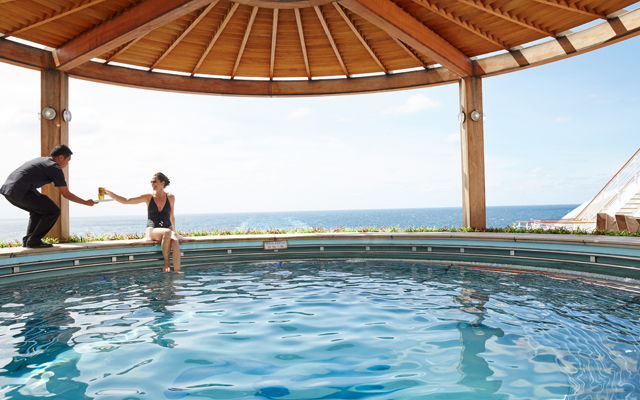
A Japanese hot tub onboard the Diamond Princess
Come summer 2022, Diamond Princess will sail out of Yokohama and Kobe on diverse itineraries spanning from the southern tropical islands of Okinawa to the northernmost island of Hokkaido. There will be 35 departures on offer, from May through September featuring 31 destinations and four countries – Japan, South Korea, Russia and Taiwan.
Both summer sailings will present numerous opportunities for passengers to experience local festivals, such as Kyoto Gion Festival, Osaka Tenjin Festival, Tokushima Awa Dance Festival and Kumano Fireworks Festival, in addition to visits to UNESCO World Heritage sites.
Highlights: Watch out for the MedallionClass Experience coming onboard Diamond Princess’s 2021 and 2022 summer sailings. A number of new features that leverage touchless technologies promise to significantly enhance and personalise the guest experience, as well as support new health protocols. This will include touchless embarkation and disembarkation, highly personalised services, contactless payment, and friends and family locator, among others. Princess MedallionClass ships also offer speedy Wi-Fi at sea, utilising VSAT technology that supports movie streaming and live TV.
Diamond Princess will complement her itineraries out of Japan with onboard Japanese experiences, such as authentic Japanese meals at Kai Sushi, soaks in a traditional Izumi bath that is said to be the largest Japanese bath at sea, and folk shows for entertainment.
Agent support: Travel agents continue to be critical trade partners for Princess Cruises, and the cruise line has been feeding them with latest news and industry developments throughout the pandemic, so that they can better advise their customers. Training is maintained online via the Princess Academy, while regular contact is made with travel advisors in order to understand their challenges and have relevant support crafted when the market recovers.
Support for planning, sales development and marketing are also provided.
The Balcony Cabin onboard Cunard’s Queen Elizabeth
Cunard
Cruisers can look forward to two sailings to Asia in 2022.
Queen Mary 2 will offer a seven-night itinerary from Singapore to Hong Kong from February 11 to 18, with two ports of call in Vietnam’s Ho Chi Minh City and Chan May.
The Queen Elizabeth will sail on an eight-night voyage from Singapore to Hong Kong from March 24 to April 1, taking in stops for shore excursions in Chan May and Hanoi.
Highlights: Cunard’s cruise ships are reputed from their British elegance and service standards are sterling.
As the cruise line’s flagship, Queen Mary 2 holds numerous charms. She boasts her own onboard micro-brewery and what is said to be the world’s finest wine cellar at sea – one that houses a unique collection of 486 fine wines and a stunning collection of ports, dating back to 1840.
Equally stunning, but for different reasons, is Illuminations, the ship’s planetarium. The planetarium dome takes guests on an epic voyage across the solar system and once retracted, becomes a luxury 3D cinema or classical music venue.
Bookworms will marvel at Queen Mary 2’s library, which contains about 10,000 books in various languages.
Outstanding experiences onboard the Queen Elizabeth include a large conservatory inspired by the famous hothouses of Kew Gardens, afternoon tea at the Queen’s Room and a game of croquet – all for a quintessential British holiday.
Agent support: Communication and training is a continuous process that is taken seriously at the Cunard, and efforts to plan and develop future co-funded marketing activities with travel agent partners have not ceased despite the pandemic.
Quantum of the Seas
Royal Caribbean International
This year, Royal Caribbean International operates two- to four-night cruise-to-nowhere Ocean Getaways onboard the Quantum of the Seas. These are exclusive to Singapore residents, and are available until June 21.
Highlights:Quantum of the Seas boasts unique onboard products for entertainment. RipCord by iFLY, which offers a skydiving experience at sea, is iconic, and so is the North Star observation capsule that offers a 360-degree view from more than 91m above sea level.
Endless fun onboard continues at SeaPlex, the largest indoor sports and entertainment complex at sea and home to bumper cars, a roller-skating rink, a rock climbing wall and more.
Over at the Bionic Bar, drinks are made by robotic bartenders.
Performances are transformed in the Two70 multimedia theatre, where cutting-edge technology turns two-storey high windows into beautiful scenes, while aerialists and robots bring the space to life.
Dining experiences never gets old on the ship, thanks to 18 restaurant concepts.
Agent support: Believing that it is only a matter of time that other destinations will resume safe cruising, Royal Caribbean International continues to engage travel partners on a regular basis. Industry trends as well as information on updated health and safety protocols and cruise experience for guests are frequently shared.
The cruise line continues to invite many travel trade partners on Ocean Getaways to have them experience safe cruising.
For now, Royal Caribbean International is encouraging travel planners to focus on the individual incentive travel segment, as that will likely bounce back before large group travel, as well as new-to-cruise consumers.
World Dream calls at Singapore
Dream Cruises
World Dream offers a series of two- and three-Night Super Seacation itineraries out of Singapore from now until June 27, 2021.
Meanwhile, Explorer Dream continues with her round-island sailings in Taiwan, from March 7 until October 1, 2021. Options include the four-night Penghu-Kinmen-Matsu Island cruise; the four-night Penghu-Kinmen-Hualien cruise; and a combination of two-night cruises to Hualien, Penghu, Kinmen or Matsu Island.
World Dream’s cruise experience is made more enticing with special themes that are built on traditional and pop culture from South Korea and Thailand as well as gastronomy.
Onboard Explorer Dream, a taste of cultures and activities from around the world is dished out. This allows cruisers to ‘visit’ iconic destinations, such as Hawaii and the Nordic region, on a single excursion.
Highlights: Muslim and vegetarian guests will enjoy peace of mind when travelling onboard World Dream, which has been certified by both the United World Halal Development (UNWHD) and the Global Vegetarian Certification Services. The UNWHD certification encompasses not only cuisine but the overall Halal lifestyle onboard the ship.
Agent support: Parent company Genting Cruise Lines has been working closely with travel agent partners across the region, especially in key markets like Taiwan and Singapore where safe cruising has resumed since July and November 2020 respectively. Regular updates and training on the new norms of cruising are provided.
Star Cruises’ Star Pisces will kick off Malaysia sailings from May 13
Star Cruises
Star Pisces will become the first ship to resume sailing in Malaysia, departing from Penang starting May 13, at the start of the Hari Raya Aidilfitri Holidays.
It will offer a two-night Langkawi Escape and a series of one-night Straits of Malacca cruises.
Cruisers on the Langkawi Escape will get 10 hours of port time to explore the resort island, while those choosing the Straits of Malacca Cruise will be able to see all types of marine vessels in the Straits of Malacca, the busiest straits in the world.
Highlights:Star Pisces is packed with entertainment, dining and shopping options. There are six restaurants and bars, two swimming pools, a Jacuzzi, a running track, and the Galaxy of the Stars entertainment centre.
Agent support: Parent company Genting Cruise Lines has been working closely with travel agent partners across the region. Regular updates and training on the new norms of cruising are provided.
Costa Firenze’s Ristorante dei Medici
Costa Cruises
Costa Firenze will make her maiden call in South-east Asia in 4Q2021, with 13 departures from November 20 to January 8, 2022.
On offer are three-night roundtrips out of Singapore to Malaysia and four-night roundtrips from Singapore to Malaysia and Thailand. There will also be three-night roundtrips from Laem Chabang in Thailand to Cambodia’s Sihanoukville or Thailand’s Koh Samui, and four-night roundtrips from Laem Chabang to Vietnam’s Phu My.
Thematic itineraries are planned to coincide with Christmas and New Year festivities in 2022.
Cruisers looking for variety should keep an eye out for the Tropical Paradise Cruise, with four departures planned out of Singapore to Malaysia and Thailand; and the Amazing Strait Cruise from Singapore on December 11 and December 25, 2021 to Melaka and Klang, both in Malaysia.
Highlights: Costa ships take pride in their authentic Italian atmosphere. There are six themed zones, taking guests from the Renaissance period to modern day Florence, and its high fashion and elegance. In fact, the ship’s name is dedicated to the beautiful city of Florence and the interior design is inspired by it.
Costa Firenze is great for families, with plenty of activities – including a water park, exploration park and a Rope Garden – to keep everyone entertained. Come evening, catch stunning shows or take to the dance floor.
Agent support: Costa Asia has maintained a line of communications with travel agent partners, feeding them information on the resumption of cruise schedules, itinerary planning and safety protocols. Online training courses have also remained throughout the pandemic.
Hyatt Hotels Corporation plans to grow its brand footprint in India by more than 70 per cent by 2023, with six new hotels set to open this year across the Hyatt Regency and Hyatt Place brands.
With 24 executed managed and franchised agreements, Hyatt will add more than 3,600 keys to its existing portfolio of 32 Hyatt-branded hotels across eight brands in the country.
Hyatt Regency Dehradun among 24 new Hyatt-branded properties to open across India through 2023
In 2021, Hyatt plans to primarily expand its Hyatt Regency and Hyatt Place brands. The Hyatt Regency brand will enter two new markets with Hyatt Regency Jaipur Mansoravar, and Hyatt Regency Trivandrum. The Hyatt Place brand will enter four new markets with Hyatt Place Bodh Gaya, Hyatt Place Jaipur Malviya Nagar, Hyatt Place Vadodara, and Hyatt Place Bharuch.
Other Hyatt-branded hotels in India that are expected to open through 2023 include: Grand Hyatt Gurgaon, Grand Hyatt Jaipur, Hyatt Regency Dehradun, Hyatt Regency Ghaziabad, Hyatt Regency Udaipur Sisarma, Hyatt Regency Kochi Malayattoor Resort, Hyatt Regency Goa Baga, Hyatt Regency Kasauli, Hyatt Regency Surat, and Hyatt Regency Jaipur.
Under the Hyatt Centric and Hyatt Place brands, upcoming hotels are: Hyatt Centric Sector 17 Chandigarh, Hyatt Centric Lonavala, Hyatt Centric Electronic City Bangalore, Hyatt Place Vijayawada, Hyatt Place Dehradun Rajpur Road, Hyatt Place Kolhapur Shiroli, Hyatt Place Tirupati, and Hyatt Place Visakhapatnam Madhurawada.
Best Western Hotels & Resorts has appointed Erwann Mahe as managing director – Asia.
In this new role, Mahe will be responsible for all aspects of operating Best Western Hotels & Resorts in the region. He will focus his efforts on supporting hoteliers through the upcoming recovery and expanding the brand’s portfolio of hotels throughout Asia Pacific.
Erwann Mahe
The seasoned hospitality professional joins the Best Western Hotels & Resorts team with over 23 years of industry knowledge. Mahe’s prior roles range from managing large-scale Accor hotels to holding executive-level positions, including chief operations officer at Red Planet Hotels and executive vice president of Hotel Investment at The Erawan Group.
Mahe takes over from Olivier Berrivin, who has moved within the BWH Hotel Group parent company to take up the role of managing director of WorldHotels Asia Pacific.