Global wholesale tour operator G2 Travel has birthed a new business division, G2 Sport, to provide end-to-end products and service in sports tourism, which it said would benefit travel agents as well as sports organisations and associations in a fragmented market.
Building on G2 Travel’s land service expertise and presence in 54 cities worldwide, the new business division will be able to pull off a range of activities for sports organisations and associations, such as training camps and tournaments; support sponsors and federations in travel programmes; and assist wholesale customers in providing travel services for FITs and groups looking to attend sports events.
G2 Sport has launched to provide end-to-end sports tourism products and services, just as sporting events return in Europe and the US
G2 Sport, which is a Certified Partner Member of the International Sports Travel Agencies Association, will also handle touristic requirements, such as excursions and sightseeing, for sports teams and athletes. Support will include a 24-hour customer care team.
Al Mulenga, director of G2 Travel, Hong Kong office, told TTG Asia that the current fragmented sports tourism industry meant that travel agents engaged by sports organisations and associations had to conduct extensive research on their own to deal with unique requests.
He believes that a sports tourism specialist with a global footprint, like G2 Sport, can remedy the situation.
Mulenga said this was an opportune time to launch G2 Sport, as sporting events are starting to make a comeback in the US and Europe.
“Events have been mostly cancelled during the last 17 months. After that, we had events with no fans. Now, there is pent-up demand for athletes and fans to watch live events again, as more of the population becomes vaccinated,” he said.
While sports tourism is awakening in the West, recovery is slower in Asia-Pacific. Despite being one of the first high-profile sporting events to resume in Singapore, the HSBC Women’s World Championship 2021 in April admitted only 250 guests as in-person spectators in consideration of safe distancing needs. At the upcoming Tokyo Olympics, overseas spectators have been banned.
Despite the current situation, Mulenga maintains that G2 Sport will “have to keep an eye on Asia always, as it is the biggest market in the long run”.
“For Asia, we need to invest more in our inbound capabilities, which we are doing gradually as we roll out our FIT offering,” he shared.
He added that destinations and communities have much to gain from successful sports tourism, as sports ultimately lead to culture exchange and interest in destinations that are showcased during competitions.
“We also know that sports lead to massive changes in society as people start to opt for healthier lifestyle. Case in point is Indonesia, where hosting the 2018 Asian Games had encouraged people in Jakarta to jog and ride bikes throughout the city. City planners (have thus) created bicycle lanes. This eventually promotes a healthier population and a better environment.”
Looking forward, Mulenga sees opportunities arranging cycling tours from Asia to Europe, especially Holland, as well as trekking tours in Switzerland.
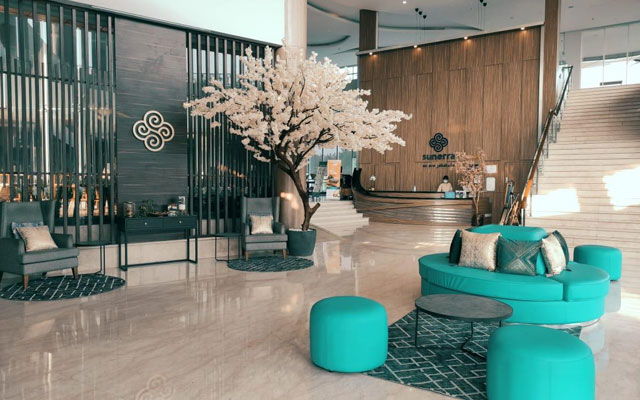
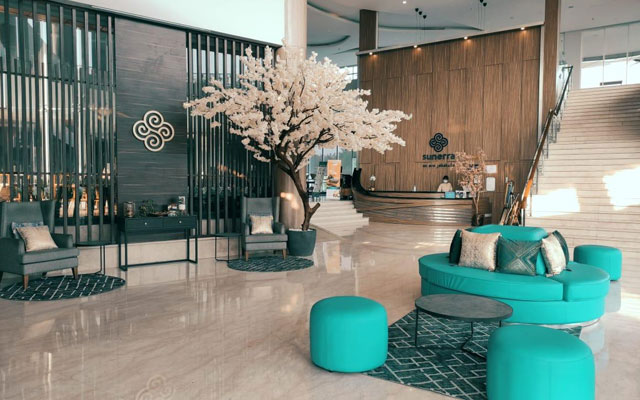
RedDoorz has joined the midscale hotel segment with the launch of its first Sunerra Hotel in Jakarta.
Located in a business district, the 142-key property has been designed to be a “workcation” hotel, offering leisure, family and business travellers experiences rooted in local heritage, art, cuisine, and hospitality.
The first Sunerra Hotel has officially launched in Jakarta, Indonesia
The launch of the Sunerra brand comes as the group looks to cater to the growing middle-class segment within its existing customer base, founder and CEO Amit Saberwal said at a virtual press briefing yesterday (June 8).
Saberwal also explained that in line with its vision to be the largest hotel company in South-east Asia, RedDoorz needs to broaden the appeal of its properties and the technology that property owners would like, hence, the multi-brand strategy.
Launched in November last year, its economy lifestyle SANS hotel has expanded to six properties in Indonesia and within two weeks will inaugurate the first in the Philippines, the heritage hotel SANS Hotel Laperal in the heart of Old Manila.
Chief marketing officer Liviu Nedef said RedDoorz, RedDoorz Plus and RedDoorz Premium hotels can be upgraded to become SANS hotels.
Nedef added that the new hotels incorporate the requirements for safety, hygiene and physical distancing – with automated check-in, capacity limits at restaurants, and contactless transactions, among others.
In assessing the market behaviour of the four countries where RedDoorz has presence – Indonesia, the Philippines, Vietnam and Singapore – Saberwal is optimistic about its biggest market, Indonesia, which he deemed is striking the right balance between public health and the economy. This synchronisation, micro-lockdown strategy as well as hygiene and safety protocols are boosting the public’s confidence to travel.
Domestic travel is doing relatively well in Indonesia, he said, with some RedDoorz hotels enjoying occupancy that’s 10 to 20 per cent above the industry average. Even the post-Ramadan occupancy is keeping up.
COO Kelvin Teo said that in the Philippines, where RedDoorz has 250 properties, there has been some easing of domestic travel restrictions in metro Manila and its surrounding cities, with the economy opening up again.
Teo also noted that 60 per cent of RedDoorz’ corporate business comes from the Philippine government, with whom they are closely cooperating with regarding hotel accreditations and changes in the travel landscape.
The World Travel & Tourism Council (WTTC) has launched a campaign this week that calls on governments around the world to restart international travel after more than a year of lockdowns, and encourages travellers to share with the world, the positive impact travel makes to their lives and mental well-being.
The campaign, titled Reunite, has been made available across social media channels since June 7. It is fronted by a feel-good and positive video showing how now is the time to get the world moving again, to reunite families, friends, colleagues, and communities.
WTTC’s new Reunite campaign is fronted by a feel-good video that is available on the WTTC YouTube channel and other social media platforms
WTTC believes that while travel and tourism makes a significant contribution to economies around the world, it also provides an essential way for individuals to connect, experience and discover cultures around the world.
As vaccination rollouts advance in many countries around the world and as cases begin to drop, it is important for governments to recognise what travel and tourism brings to the economy and the population as a whole, urged WTTC in a press statement.
Virginia Messina, WTTC’s acting CEO, said: “Travel gives us memories which last a lifetime and the most amazing experiences to share, so we are excited to launch a campaign that gets to the heart of what travel means to people.”
Messina added: “For the past year WTTC has been hugely invested in advocating for the social and mental benefits of travel and tourism. Through this campaign, we are hoping to help kickstart the recovery of our sector through a truly worthwhile experience: reuniting with those who matter most to us.
“With the immense pressures being faced by the global travel and tourism sector due to the current restrictions caused by the Covid-19 pandemic, it’s now more important than ever that we remind everyone, how travelling can make all the difference not only to the world, but to us as individuals.”
Since the start of the pandemic, WTTC has been leading the private sector in efforts to rebuild global consumer confidence and encourage the return of safe travels. Its Together in Travel campaign, launch in April 2020, has met with great success. Hundreds of thousands of people around the world shared their stories, which generated more than 100 million impressions.
While recovery to pre-pandemic occupancy continues to elude the hospitality trade, serviced residences have received an unexpected blessing in disguise. Remote work and telecommuting are driving consumers in search of more conducive places to work that can double up as a vacation opportunity – a demand that has driven long-stay players towards more inventive, daily offerings.
Oakwood Residence Sukhumvit Thonglor Bangkok offers the Work from Oakwood programme
For instance, Oakwood’s workcation product, Work from Oakwood, provides its guests day access to available recreational facilities, a private kitchen, snacks and beverages, as well as complimentary and discounted printing services. Since its launch in September 2020 at 27 properties across Asia-Pacific and the US, the package has enjoyed “a consistent take-up in bookings month on month”, accompanied by a “healthy” average occupancy of 55 per cent across all brands, shared CEO Dean Schreiber.
Schreiber added: “For the workcation segment, properties in dense gateway cities like Singapore, Bangkok and Tokyo have proven to enjoy greater demand.”
Pan Pacific Serviced Suites Beach Road in Singapore also released a comparable workcation package in response to “the needs of locals who were in search of indulgent alternatives to the usual work-from-home routine”, described Cinn Tan, chief sales and marketing officer, Pan Pacific Hotels Group (PPHG).
With this, guests can take up a one-bedroom suite with complimentary amenities such as a welcome hamper, mini-bar with snacks, in-room Nespresso coffee and tea as well as complimentary parking.
“We received good response during the initial launch period as people were seeking alternative working venues. However, demand has slowed down slightly this year, most likely due to more people gradually returning to work. While the workcation bookings contribute only a slight increase in revenue, it has given us the opportunity to showcase our Serviced Suites to Singaporeans,” shared Tan.
Pan Pacific Serviced Suites Beach Road brings a luxury touch to work-from-home routines
The Ascott launched its Work in Residence initiative in August 2020, giving guests the option of daily, weekly or monthly packages for work suites in 85 properties worldwide, as well as selected amenities such as a dedicated workstation, regular housekeeping, complimentary coffee and tea, high-speed WiFi, and complimentary parking. Guests can also request for task lights, USB charging ports, a webcam and Bluetooth speakers with microphones. Further conveniences, such as food delivery, grocery shopping, printing, concierge or book-a-chef for in-room dining, are available too.
This offering has allowed The Ascott to maintain “robust” occupancy at its properties over the course of the pandemic, said Ervin Yeo, its managing director for South-east Asia.
For instance, lyf Funan Singapore was able to maintain a strong occupancy rate of more than 80 per cent from April to June 2020 as a result of the Work in Residence programme. As at March 2021, it had achieved 85 per cent average occupancy, with 68 per cent being corporate groups and long-stay guests of between one and 24 months.
lyf Funan Singapore has done well on the workation route
Yeo elaborated: “Revenue from long-stay guests has increased, particularly on stays of three to 12 months. (The) Work in Residence initiative had the highest demand in Japan, followed by countries such as Singapore, China, Vietnam and Indonesia.
“We have (also) seen increased bookings of our Work in Residence packages for day use amid the Covid-19 situation.”
All work, all play
The Ascott has gone beyond the workcation game, now offering its apartments to be used as live-streaming spaces and fitness studios. For instance, Ascott Raffles City Shenzhen and Somerset IOC Hangzhou have hosted long-staying Internet celebrities and employees of new media and ecommerce companies, along with their live-streaming events and photoshoots. Ascott Raffles City Chengdu and Somerset Riverview Chengdu in China have converted some apartments into fitness studios, which instructors can reserve at special rates to conduct classes for guests. In Vietnam, selected apartments in Somerset Grand Hanoi, Somerset Hoa Binh Hanoi and Somerset Vista Ho Chi Minh City have similarly been converted into yoga studios.
The Shueng Wan by Ovolo is a partner property of Dash Living
In another initiative, The Ascott released Space-as-a-Service in August 2020 for collaboration with corporations and enterprises. Under this banner, the company has partnered with Nestlé to set up “We Proudly Serve Starbucks” coffee kiosks in the lobby of its Citadines-branded properties.
These inventive verticals netted the group more than S$91 million in 2020, revealed Yeo, and strengthened confidence in its brands. “Property owners continue to sign new management and franchise contracts with us despite Covid-19. In 2020, Ascott signed a record of over 14,200 units across 71 properties globally. This exceeds the number of units secured in 2019, marking a fourth consecutive year of record growth,” Yeo told TTG Asia.
Meanwhile, Dash Living, which offers serviced living rental solutions, is reaching out to merchants located around its partner properties – the most recent portfolio additions being Ovolo’s The Sheung Wan and The Aberdeen in Hong Kong – to foster a service ecosystem around the workcation experience. Its tenants are afforded lifestyle benefits in the precinct, such as fitness centre access, F&B discounts and monthly events organised by Dash Living or its tenants.
“We differentiate by creating a community for our tenants, with convenience, a sharing economy and tenant engagements in mind. During the pandemic, Dash Living has managed to maintain an occupancy rate of over 90 per cent,” said Aaron Lee, founder, Dash Living.
The journey forward
While demand from the workcation segment continues to hold strong for serviced residences, forward-looking players are levelling up in pursuit of higher domestic numbers.
The Ascott is turning its sights back to its loyalty programme, Ascott Star Rewards (ASR), having launched a mobile app in October 2020 to service its members. Besides membership and point management, the ASR app enables guests to perform self-check-in and check-out, make digital payments, access their apartments with a digital key and place service requests. With flexible bookings now the name of the reservations game, ASR members may receive bonus loyalty points even for cancelled bookings, which can be redeemed in the future when travel resumes.
For PPHG, its serviced residences are paying close attention to the non-working crowd to keep its occupancy healthy for 2021. For instance, Parkroyal Serviced Suites has launched a pet-friendly staycation package, targeting local homeowners who desire a mini retreat with their “furkids”.
In a bid to rejuvenate inflight retail, Singapore Airlines’ (SIA) online shopping platform KrisShop has an upcoming initiative designed to allow passengers a seamless e-commerce experience through the integration of KrisShop into the airline’s inflight entertainment system KrisWorld.
A collaboration between SIA, AirFree/Thales and Panasonic, the offering also provides an express fulfilment service, whereby pre-order lead-time to flight down is shortened to a mere 60 minutes.
Chris Pok, CEO of KrisShop, explained: “The initiative entails an industry-first air-to-ground connectivity technology, which will allow KrisShop to achieve real-time updates of stock availability, and enable passengers to shop inflight and have their purchases delivered directly to their next flight or straight to their homes.”
Covid-19 may have upended the travel industry and greatly affected KrisShop as inflight sales contributed significantly to its overall revenue, but it deftly turned challenge into opportunity through its omnichannel strategy by strengthening its flagship e-commerce store, KrisShop.com, to capitalise on the pandemic-induced e-shopping boom.
KrisShop expanded the assortment of brands and products available on its site, fast-tracked the onboarding of new partners, reduced local delivery times to as early as the same day upon check-out, as well as gave consumers the option of redeeming miles earned through their purchases.
Throughout the year, it also launched a number of campaigns and promotions for both local and international shoppers as many remained landbound.
The move paid off handsomely with one of the best campaigns during the pandemic period, Anniversary Fiesta, performing twice as good as other campaigns in the same quarter. KrisShop also more than doubled its sales compared to the year before.
Pok added: “Beyond e-commerce, we’re also developing new ways of working with existing inflight partners. We understand that the future of inflight retail will need to exemplify new customer engagement approaches based on the current climate, and making a comeback will require all parties involved to exercise their core strengths to collectively deliver experiences like never before.”
With wellness tourism poised for exponential growth post-pandemic, more hotel brands are keen to get in on the act
From introducing wellness butlers to forging partnerships with wellness-related businesses, hotels are stepping up their wellness game
Wellness-boosting initiatives by hospitality brands expand into the digital space to support guests remotely
More eco- and mid-scale hospitality brands jumping on the wellness bandwagon to tap rising demand
Wellness is slated to become part of a hotel’s core DNA post-Covid, and industry experts predict it will delve much deeper than yoga and a spa to sharply focus on mental and emotional wellbeing.
While the wellness movement has been rapidly gaining momentum even before Covid-19, it is predicted to vastly accelerate post-pandemic as travellers seek respite from long periods of uncertainty, lockdowns and restrictions on everyday life.
At the virtual Arabian Travel Mart, Emlyn Brown, global vice president of Accor well-being luxury and premium brands, said in 2019, 80 to 85 per cent of luxury guests were making conscious daily steps to incorporate health and wellbeing into their lives.
He added: “This will vastly accelerate post-Covid. People now understand more the importance of taking care of their health and wellbeing, boosting immunity and looking after themselves.”
Once largely the preserve of luxury brands, Brown said the pandemic has seen the wellness movement start to trickle down to eco- and mid-scale brands.
He noted: “Millennials and Gen Z are looking for that fitness, health and wellness element; they expect it. This generational shift will drive demand into the eco- and mid-scale sector, whether its Ibis Styles encouraging outdoor exercise (or) mid-scale hotels like Novotel encouraging mindfulness.”
Brown observed wellbeing is already being integrated into some hotel brands’ core ethos. For example, Accor’s Raffles Hotels and Resorts introduced ‘wellness butlers’. They are on-hand to see to guests’ every wellbeing-related need in-room.
This forms part of the Emotional Wellbeing by Raffles programme that offers curated experiences based around the pillars of harmonious design, nutrition for pleasure and serenity rituals.
Accor’s M Gallery brand hotels have formed partnerships with wellness-related businesses and experiences close to properties. Wellness concierges are trained to be able to assess guests’ needs and make tailored recommendations.
Said Brown: “This engages people in unique locations and experiences. The idea of concierges now adding a wellness element is going to be something all hotels need to consider.”
Mandarin Oriental Hotel Group is also enhancing its wellness experiences in response to the pandemic.
Jeremy McCarthy, director of spa and wellness, said: “We see people looking for programmes to develop themselves. They (not only) want to build physical strength and make sure their immune system is strong, but also (cultivate their) inner strength. This is about building mental resilience because of living through this time of great uncertainty, stress and anxiety.”
The group started by crafting a four-week, online Inner Strength, Outer Strength training programme that encompasses physical wellness, vitality and mindfulness. This was initially delivered to employees.
Noted McCarthy: “If we want our colleagues to really be able to take care of our guests, they have to be strong themselves.”
The concept was then rolled out across its spas. The programmes allow guests to tap into the knowledge of expert trainers and practitioners, such as traditional Chinese medicine specialists, kung fu masters and meditation teachers.
The hospitality brand has also developed a series of virtual assessments and online tips to support guests remotely. This marks another emerging trend within the sector that sees the wellness and digital worlds collide.
Elsewhere, Pullman Hotels and Resorts has teamed up with Les Mills, the world’s largest creator of group fitness classes, to launch Pullman Power Fitness Fuelled by Les Mills. This gives guests access to multiple workouts and training sessions via on-demand videos that can be accessed from anywhere for a certain time.
Novotel is also working with popular sleep app, Calm, to offer guests who stay in an Executive Room a 60-day pass.
Said Brown: “Another big shift is towards the sixth pillar, the digital adoption of wellness and wellbeing, and how we can do that in a good way.”
B2B accommodation provider WebBeds has launched an interactive tool enabling its travel trade clients to access the latest Covid-19 travel restrictions.
The tool is powered by Sherpa and consolidates information from thousands of official data sources to display international travel restrictions for over 180 countries, as well as domestic travel restrictions for the US, the UK, Canada and Australia.
WebBeds’ tool details origin/destination travel restrictions, quarantine and health documentation requirements
When users input the origin, destination (country, city, or airport) and departure date, the tool generates a comprehensive list of the inbound and outbound travel restrictions and requirements, as well as rules for quarantine, masks/PPE, testing, and health documents. This information also includes links to official sites for governments, regional authorities, and health bodies.
WebBeds clients can access the tool on webbeds.com, or via the trading platforms; Destinations of the World, FIT Ruums, Lots of Hotels, Sunhotels and totalstay. The tool is available in English, French, German, Spanish and Arabic, with Japanese, Korean and simplified Chinese to be added in early July.
Luxury travel specialist Unforgettable Travel is offering adventurous campers the chance to experience a unique overnight stay at the entrance of one of the world’s largest caverns.
Located in Vietnam’s Phong Nha-Kẻ Bàng National Park, Hang Sơn Đoòng and Hang Én are the world’s largest and third-largest caves, respectively. At almost 6km long, Hang Sơn Đoòng has sections reaching up to 200m tall and 150m wide.
Hang Sơn Đoòng is the world’s largest natural cave
Tourists can now experience the wonder of these breathtaking natural formations and enjoy a night camping experience in the entrance chamber of Hang Én with any Vietnam tour booking under Unforgettable Travel.
Located 20km away from Vietnam’s border with Laos, the Phong Nha-Kẻ Bàng National Park is a UNESCO World Heritage Site, and is surrounded by the dense jungle found close to the central northern coast of the country.
Discovered only in 2009, Hang Sơn Đoòng and Hang Én are estimated to be between two and five million years old. The naturally formed stone caverns first opened to the public in 2013 after several years of extensive exploration, and only permit a limited number of visitors every year.
The caves are only accessible by a helicopter or four-hour jungle trek from the nearest road.
Easy identification of sustainable eco-friendly travel options, limited use of single-use plastics and financial incentives for accommodation providers who maximise energy efficiencies are the top three measures needed to make travel more sustainable, according to Agoda’s Sustainable Travel Trends Survey.
Establishing more protected areas to limit tourist numbers and removal of single-use bathroom amenities round out the top five global measures.
Global travellers most concerned about overtourism, pollution of beaches and waterways: Agoda survey
The findings from the survey which polled 18,327 respondents across 14 markets was launched to mark World Environment Day 2021 on June 5. The survey also revealed that globally, overtourism, as well as pollution of beaches and waterways are the top two concerns of the environmental impact of tourism, with deforestation and energy inefficiencies (including overconsumption of electricity/water) ranking joint third.
Globally, the public considers governments most accountable for making positive environmental changes around travel, followed by tourism authorities and individuals themselves.
When it came to holding governments most accountable, those in Indonesia and the UK were most likely to do so (36 per cent). China followed not too far behind at 33 per cent, with Australia and Malaysia in fourth and fifth spot (28 per cent and 27 per cent, respectively).
The markets most likely to cite themselves or individuals as most responsible for making changes to travelling sustainably were Thailand (30 per cent), Japan (29 per cent) and the US (28 per cent). Meanwhile, China (11 per cent), the UK (13 per cent), and Vietnam (14 per cent) were least likely to attribute responsibility to the individual.
When asked what they would pledge to do better in a post-Covid travel scenario, the top responses globally were #1 manage their waste including using less single-use plastics, #2 switch off the air-con and lights when leaving their accommodation, and #3 always look for eco-friendly accommodation. Interestingly, despite overtourism being the biggest concern, going to lesser-known destinations only ranked seventh out of 10 as a pledge to do better.
The top practices most associated with environmentally-friendly or sustainable travel are #1 renewable energy and resources like solar, wind, hydroelectric and water, #2 no single-use plastics, and joint #3 animal conservation and creating a smaller carbon footprint.
Other energy-saving solutions such as key cards or motion sensors, and using natural cleaning products are the other key practices. Interestingly, buying locally sourced products, reusing bedding or towels during holiday stays and visiting off-the-beaten track destinations are the bottom three practices out of 10 associated with sustainable travel.
John Brown, CEO of Agoda, said: “We can see from the Agoda Sustainable Travel Trends Survey that the messages of taking simple steps such as switching off lights and air-conditioning when leaving the room or reducing waste by minimising use of single-use plastics are being embraced by the public across the globe. What is also clear is that while globally, the message is governments need to take the lead on managing sustainable travel, there is recognition that some responsibility lies with people’s own behaviour.
“While there are different interpretations of what practices are eco-friendly or sustainable, most of the public are keen to be able to do their part, by actively pledging to choose eco-friendly properties or make smarter environmental choices when travelling.
“One of the easiest ways to counter concerns about overtourism is to consider traveling to off-the-beaten track destinations. This past year at Agoda, we have seen a shift in travel patterns as people, limited to domestic travel, explore lesser-known areas. If managed well, not only does this help support independent hoteliers and accommodation providers that rely economically on the tourist dollar, it can help lessen the environmental burden on overcrowded areas.”
“As an industry, we need to continue to find ways to help individuals achieve these goals, be it making it easier to search and find sustainable properties on Agoda or supporting and encouraging more partners to use key cards for power, use renewable energy sources or offering carbon-offsetting options for travel products.”
The increase in desire to travel more sustainably was most prevalent among respondents from South Korea, India and Taiwan (35 per cent, 31 per cent and 31 per cent, respectively).
However, looking at the figures globally, while 25 per cent have an increased desire to travel more sustainably, 35 per cent said their desire to do so has decreased. The markets reporting the biggest proportional decrease were Indonesia (56 per cent), Thailand (51 per cent) and the Philippines (50 per cent).
Brown said: “It’s concerning that many people see sustainable travel as less important today than they did before Covid-19, but I hope that is just a short-term effect, driven by people’s thirst to get back out there and travel any way they can.”
The slow but sure rise of veganism in recent years as consumers awake to the health and environmental benefits of going meat-free has resultantly set vegan tourism on the path of steady growth.
Veganism has been vaunted as the more sustainable food option that is good for both the people and the planet, as a plant-based diet requires only one third of the land needed to support a meat and dairy diet.
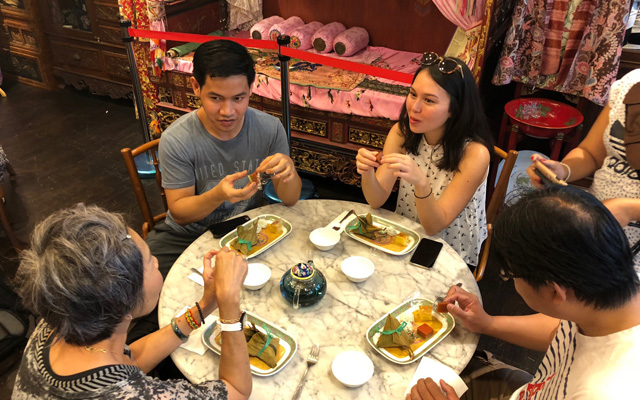
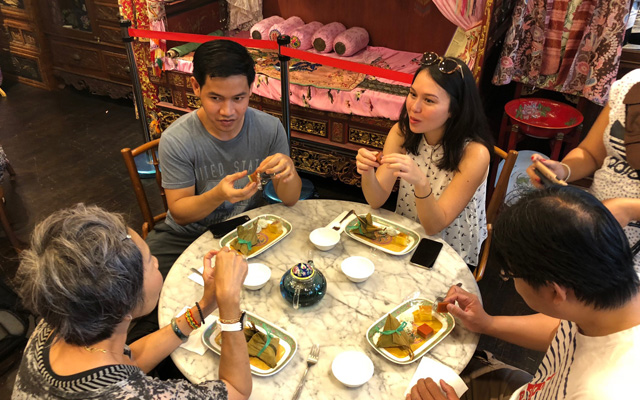
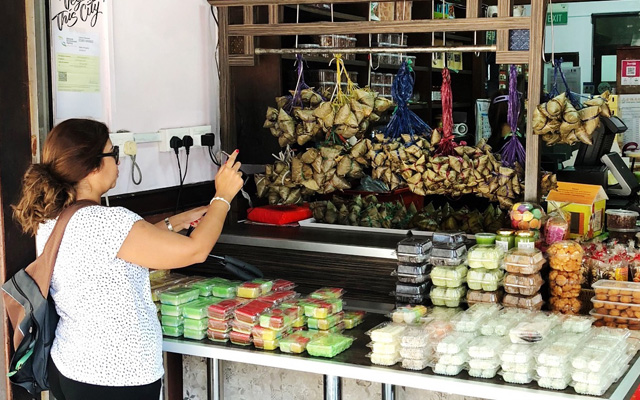
Singapore agency VegThisCity’s vegan food tours allow guests to support local businesses such as Peranakan heritage brand Kim Choo Kueh Chang (above) and connect with foodies from around the world
While the pandemic brought travel to a standstill, the global appetite for veganism has grown since 2020, driven in part by a groundswell for sustainability and climate action.
A GlobalData survey conducted in December 2020 showed that post-Covid, more global consumers are influenced by how ethical, environmentally-friendly and socially responsible a product or service is.
The report indicated that changing traveller perceptions amid the pandemic may prompt many more to switch to veganism, as reduction of meat consumption has a positive environmental impact.
Vegan vacations: the next big tourism trend?
As the popularity of veganism grows, tour operators across the world like Intrepid Travel are answering the eco-conscious call for more vegan-friendly travel options.
Since launching a series of vegan tours in mid-2018, the global tour operator based in Australia has seen a rise in interest for such tours held in India, Thailand and Italy. The company recorded an 80 per cent increase in bookings for its vegan tours between 2018 and 2019, shared Erica Kritikides, senior brand and product manager, Intrepid Travel.
Of these, more than 70 per cent of bookings were for its India vegan tour – which enjoys a popularity that Kritikides attributes to “the centrality of veganism within many regional Indian cuisines”.
Led by vegans or vegetarians, these vegan food tours run by Intrepid Travel comprise vegan-friendly cooking classes and all-vegan street food crawls, alongside culturally immersive activities.
Majority of guests (72 per cent) on such tours were female, mainly hailing from Australia, the UK and the US, with millennials making up over 50 per cent of all customers.
While the pandemic forced the company to pause its vegan tours, it is looking forward to how these tours could evolve when travel resumes.
According to Statista, nine per cent of the Asia-Pacific population identified as vegan in 2016. As a further sign of growing appetites for veganism, between 2017 and the start of 2020, searches for “vegan tours” on Google grew by 76 per cent, noted Kritikides.
“Increased interest in vegan tourism is undoubtedly linked to more mainstream acceptance of the vegan diet and a general trend towards a more plant-focused way of eating – both for its recognised health benefits, as well as for sustainability reasons, with awareness around meat production being a carbon-intensive agricultural process,” she explained.
“More people – especially millennials and Gen Y – are also recognising that vegan food can be delicious – and that there are some fascinating vegan culinary subcultures well worth exploring – and tasting – many of those found in Asia. Examples might be shojin ryori (Japanese monastic cuisine) or Jain cuisine in India – both of which are completely vegan.”
Eiktha Khemlani, founder of Singapore’s first and only plant-based food tour company VegThisCity, said that vegan tourism “ticks all the right boxes” for a growing segment of travellers looking to travel responsibly and sustainably.
“They want products and experiences that are animal-friendly, better for the planet and allow them to leave a positive impact on the local community,” she said.
Started in 2018, VegThisCity offers themed vegan and vegetarian food crawls around neighbourhoods like Joo Chiat and Chinatown.
On VegThisCity’s History of Taste tour, guests get to savour traditional delicacies around Singapore’s Joo Chiat district and learn how families are keeping their food heritage alive (photo taken pre-Covid)
The company also runs collaborative dining events, virtual experiences and corporate tours, and works with global travel and event companies as the local operator for vegan walking tours in Singapore.
VegThisCity’s tours attract a wide range of both local and foreign vegans and curious foodies, including business owners exploring cruelty-free options.
To cater to the young ones, the company arranges child-friendly dishes and swap out cocktails and non-dairy lattes for fresh fruit smoothies and superfood popsicles.
“These experiences inspire conversations on food and the environment, and provide a platform for businesses and individuals to rethink traditional options and innovate in a more eco-friendly and sustainable way, no matter the industry,” said Khemlani.
With the plant-based movement taking root across the globe, interest in VegThisCity’s tours has been on the rise. From hosting once or twice monthly tours to weekly outings within the first 18 months of starting operations, it is a growth Khemlani attributes to the company’s varied and customisable offerings.
“(Vegan tourism) has been a growing segment for the past two years, especially now more than ever as people approach food with a greater emphasis on their personal health and want to know more about where and how food comes to their plate,” explained Khemlani.
“With organisations making greater investment on alternative food products, new advocacy documentaries on mainstream media and vegan food becoming more experimental – this is naturally fueling the foodie’s curiosity.”
“As a lifestyle, veganism adapts to the most pressing ethical, environment and health needs… Travellers also realise that they can travel responsibly and eat better without missing out on the best experiences each country has to offer.”
While the company was on track for steady growth, with advance bookings for the first half of 2020, travel curbs imposed due to the pandemic saw its tour bookings dip. Khemlani, however, saw an opportunity to reinvent the company’s guest engagement and experiences.
“Guests who cancelled their existing bookings with us were not only offered full refunds, but also, a complimentary virtual Singapore experience with our professional guides to entice them to rebook their food tour with VegThisCity once travel resumes,” she said.
“The feedback we received from this was very positive, with some international guests booking our virtual teasers as surprise gifts for friends, and our tour experiences as travel incentives for their work teams.”
Fairkonnect, India’s first vegan travel company which operates vegan tours in India and Sri Lanka, had also seen swelling demand for its tours before the pandemic.
“We had a nearly 150 per cent increase in our bookings in 2019 compared to years prior,” shared Shilpa Jujjavarapu, digital marketing manager, Fairkonnect.
In light of the pandemic, the company has lined up only one vegan tour in South India this December. The 11-day digital detox getaway in Bangalore and Pondicherry will bring guests to explore night markets and wildlife rehabilitation centres, as well as learn about sustainable fashion and the vegan food movement in South India.
The tour has garnered “quite a lot of interest”, said Jujjavarapu, adding that the agency hopes to be able to expand its trips again in 2022.
Pre-pandemic, interest in Fairkonnect’s vegan tours came from all across the globe, with solo travellers from North America and Europe generating the bulk of its business. Its tours see a wide age range, dominated by those in their late 30s.
Intrepid Travel’s vegan food tour in India brings guests to sample authentic food on cuisine crawls around the country
Veganism as a lifestyle
Many vegan tour operators go beyond serving up an itinerary filled with plant-based menu options, to also include sustainable initiatives such as local community involvement.
For Fairkonnect, its sustainable vegan tours are as much about the food, as they are about connecting with various animal conservation initiatives and visiting environmental projects.
Currently, the company works with various organisations and holds workshops on its trips to educate travellers on conscious travel, animal conservation, environmental efforts and veganism.
“Our trips are curated to teach travellers about global issues and movements around sustainable fashion, veganism, climate change, zero-waste, animal conservation and how to travel while making a low environmental impact,” explained Jujjavarapu, adding that the company is also mindful about keeping its trips as zero-waste as possible.
With the growing tide towards environmentalism, Jujjavarapu hopes for the company to work with bigger outfitters and organisations to help them veganise their trips.
Further, Fairkonnect prides itself on supporting local communities with its vegan tours by working with local organisations, visiting local restaurants and patronising small businesses.
That sustainability ethos also guides VegThisCity’s tours. A shared meal in a private farm, a botanical art session with a social enterprise and a lavish vegan feast in a 100-year-old establishment are among some of the tour experiences designed to not only celebrate local multicultural cuisine in a fresh way and showcase local culture, but also empower local communities.
Khemlani also recognises that veganism is a lifestyle that goes beyond food, and that philosophy is reflected in the company’s line-up for the coming months – from showcasing locally-made vegan lifestyle products on its tours and collaborating on wellness programmes such as the upcoming Recharge Retreat with Grand Hyatt to organising multi-day vegan adventures and pop-ups within homes of local hosts.
While still currently a niche market, vegan tourism is ripe for growth. No longer just appealing to vegans and vegetarians, vegan vacations are gaining traction among a broader segment of health and environmentally conscious travellers.
Tour operator Responsible Travel, which offers a range of vegan and vegetarian holidays across the world including many parts of Asia, has seen a spike in demand generally for healthier and more sustainable holiday options, including food choices, shared its co-founder and CEO, Justin Francis.
“(Vegan holidays) are no longer only the preserve of yoga and wellness retreats. Any holiday can be a vegan holiday, or at least, inclusively so,” he said.
Post-pandemic, Francis predicts that demand for vegan tourism will continue on its upward trajectory, and that travel businesses will become much more inclusive of veganism and actively raise their game to offer the choicest vegan experiences.
























B2B accommodation provider WebBeds has launched an interactive tool enabling its travel trade clients to access the latest Covid-19 travel restrictions.
The tool is powered by Sherpa and consolidates information from thousands of official data sources to display international travel restrictions for over 180 countries, as well as domestic travel restrictions for the US, the UK, Canada and Australia.
When users input the origin, destination (country, city, or airport) and departure date, the tool generates a comprehensive list of the inbound and outbound travel restrictions and requirements, as well as rules for quarantine, masks/PPE, testing, and health documents. This information also includes links to official sites for governments, regional authorities, and health bodies.
WebBeds clients can access the tool on webbeds.com, or via the trading platforms; Destinations of the World, FIT Ruums, Lots of Hotels, Sunhotels and totalstay. The tool is available in English, French, German, Spanish and Arabic, with Japanese, Korean and simplified Chinese to be added in early July.