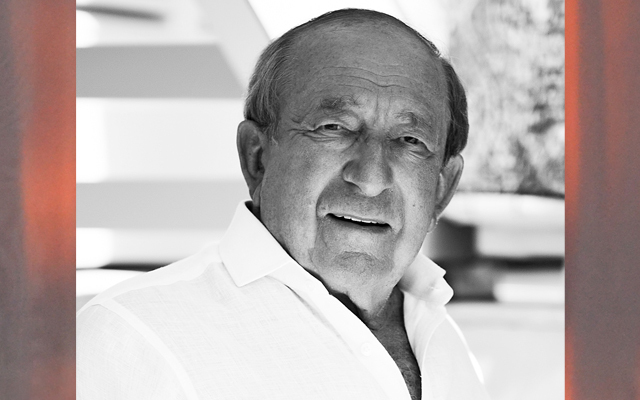
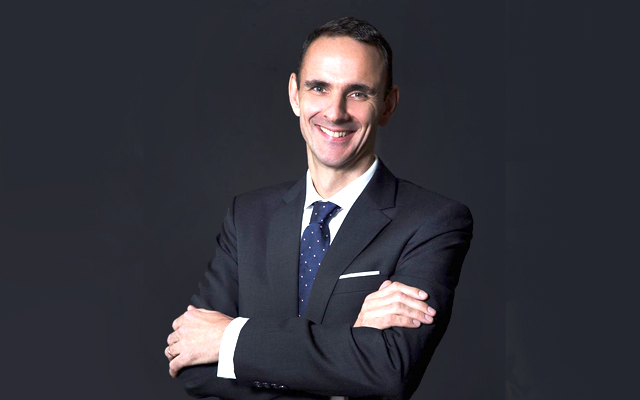
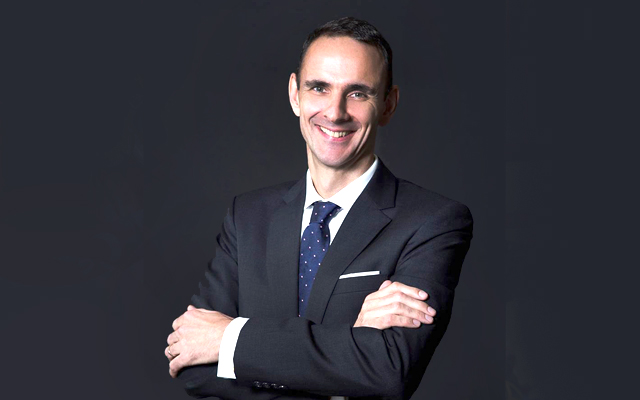
Stanley Tollman, chairman of The Travel Corporation (TTC), has died at the age of ninety-one following a battle with cancer.
Celebrated as one of the architects of the global tourism industry and a devoted philanthropist, Tollman’s visionary leadership, innovative approach to travel experience development, innate understanding of excellence in hospitality, and commitment to employee care nurtured TTC’s development into one of the most innovative and respected privately held travel companies in the world, with offices in numerous countries.
Stanley Tollman built The Travel Corporation into one of the most innovative and respected privately held travel companies in the world
Tollman’s life’s work has embedded a spirit of family across the over 10,000 employees working within TTC’s portfolio of 40 award-winning brands operating in 70 countries worldwide.
His death represents a great loss that will be felt throughout TTC, and the travel industry at large.
Tributes to Tollman have been many, most notably from highly respected industry leaders including Geoffrey Kent, founder, co-chairman and CEO of luxury travel company Abercrombie & Kent.
Kent said: “One of the most amazing figures in travel and tourism has left us. His name is Stanley Tollman. I have known him and his lovely wife Bea since I met them for the first time in 1972 in the Tollman Towers, a brand-new hotel they had just built in Johannesburg in 1970. Our travel paths have been closely linked over the years. Stan and his lovely family were always on the cutting edge in the travel industry and continually creating new products run with consummate style. They made so many people so very happy.”
Tollman closed the final days of his life in France, surrounded by his close-knit family.
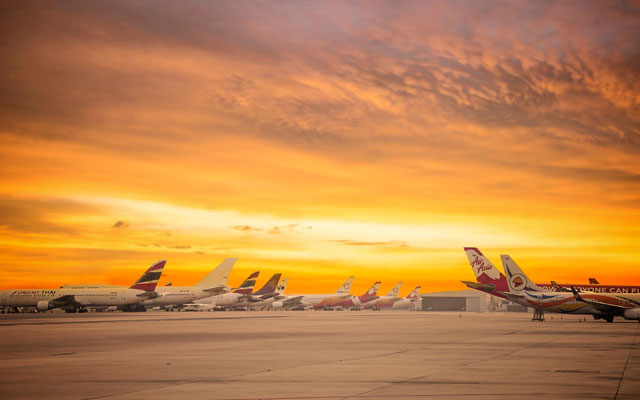
Recovery in air travel has decelerated in August 2021 compared to July 2021, as government actions in response to concerns over the Covid-19 Delta variant cut deeply into domestic travel demand.
Total demand for air travel in August 2021 (measured in revenue passenger kilometers or RPKs) was down 56.0% compared to August 2019. This marked a slowdown from July, when demand was 53.0% below July 2019 levels.
Concerns over Covid-19 Delta variant hindered air travel recovery in August
This was entirely driven by domestic markets, which were down 32.2% compared to August 2019, a major deterioration from July 2021, when traffic was down 16.1% versus two years ago. The worst impact was in China, while India and Russia were the only large markets to show a month-to-month improvement compared to July 2021.
International passenger demand in August was 68.8% below August 2019, which was an improvement compared to the 73.1% decline recorded in July. All regions showed improvement, which was attributable to growing vaccination rates and less stringent international travel restrictions in some regions.
“August results reflect the impact of concerns over the Delta variant on domestic travel, even as international travel continued on a snail’s pace toward a full recovery that cannot happen until governments restore the freedom to travel,” said Willie Walsh, IATA’s director general.
“In that regard, the recent US announcement to lift travel restrictions from early November on fully vaccinated travelers is very good news and will bring certainty to a key market. But challenges remain, September bookings indicate a deterioration in international recovery. That’s bad news heading into the traditionally slower fourth quarter,” Walsh added.
Among international passenger markets, Asia-Pacific suffered the heaviest tumble in August 2021 against the same month in 2019
International passenger markets
European carriers’ August international traffic declined 55.9% versus August 2019, significantly bettering the 63.2% decrease in July compared to the same month in 2019. Capacity dropped 45.0% and load factor fell 17.7 percentage points to 71.5%.
Asia-Pacific airlines saw their August international traffic fall 93.4% compared to August 2019, barely improved over the 94.5% drop registered in July 2021 versus July 2019 as the region continues to have the strictest border control measures. Capacity dropped 85.7% and the load factor was down 44.9 percentage points to 37.9%, by far the lowest among regions.
Middle Eastern airlines had a 69.3% demand drop in August compared to August 2019, improved upon the 73.6% decrease in July, versus the same month in 2019. Capacity declined 55.0%, and load factor deteriorated 26.2 percentage points to 56.2%.
North American carriers experienced a 59.0% traffic drop in August versus the 2019 period, much improved on the 61.7% decline in July compared to July 2019. Capacity sank 48.5%, and load factor dipped 18.0 percentage points to 70.3%.
Latin American airlines saw a 63.1% drop in August traffic, compared to the same month in 2019, improved over the 68.3% decline in July compared to July 2019. August capacity fell 57.3% and load factor dropped 11.4 percentage points to 72.6%, which was the highest load factor among the regions for the eleventh consecutive month.
African airlines’ traffic fell 58.5% in August versus two years’ ago, somewhat improved over the 60.4% decline in July compared to July 2019. August capacity was down 50.1% and load factor declined 12.7% to 63.0%.
An August outbreak caused China’s domestic traffic that month to fall 57% against the same month in 2019
Domestic Passenger Markets
China’s domestic traffic dropped 57.0% compared to August 2019 – a huge deterioration from the 2.5% fall in July. However, overall cases were low, and outbreaks were mostly under control by the end of August, suggesting numbers will improve in September.
India’s domestic traffic reversed the trend, as demand fell 44.8% in August, improved from a 58.9% decline in July versus July 2019, owing to positive trends in new cases and vaccination.
The Bottom Line
Walsh said: “The rapid slowdown in the domestic traffic recovery in August, owing to a spike in the Delta variant shows how exposed air travel continues to be to the cycles of Covid-19.
“For governments that should send two messages. The first is that this is not the time to step away from continuing support of the industry, both financial and regulatory. The second is the need to apply a risk-based approach to managing borders – as passengers are already doing in making their travel decisions.”
As IHG Hotels & Resorts turns 75 this year, guests are invited to join in the celebrations through a series of limited-time offers, ranging from sparkling anniversary cocktails to exclusive stay experiences.
The offers are available from now till April 2022 and across numerous properties worldwide. Participating properties in Asia-Pacific include Grand InterContinental Seoul Parnas, South Korea; InterContinental Maldives Maamunagau Resort, Maldives; InterContinental Danang Sun Peninsula Resort, Vietnam; and InterContinental Phuket Resort, Thailand.
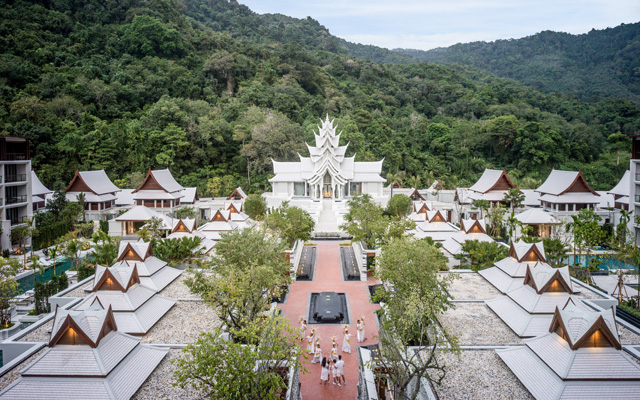
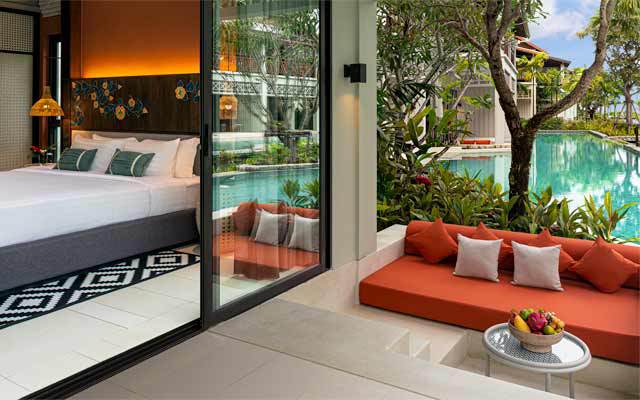
InterContinental Phuket Resort, Thailand’s anniversary special deal promises a luxurious stay and destination experience
At InterContinental Maldives Maamunagau Resort, for instance, the exclusive Diamond Anniversary luxury experience (priced from US$75,000++ for six adults) begins with a private seaplane charter from Malé to the resort, where guests will enjoy a five-night stay in one of the spectacular Three-Bedroom Residences with specially curated private dining experiences throughout the stay.
Exclusive use of the resort’s luxury yacht offers a chance to explore the crystal-clear waters of the Raa Atoll, nestled close to the UNESCO Biosphere Reserve. Those looking to get closer to nature will relish the opportunity to swim with the country’s largest known population of manta rays, alongside the resort’s resident marine biologist.
At InterContinental Phuket Resort, Thailand, a three-day/two-night experience in a three-bedroom villa awaits (US$15,500 for two guests), along with a chauffeured ride to and fro the airport by Maserati, in-villa champagne breakfast, 90-min signature Sati Spa treatment by HARNN, a fine-dining Thai dinner, a day cruise with exquisite lunch paired with more champagne, and more.
IHG’s celebratory drink, named InterContinental75, will be served at over 130 hotels and resorts in the global portfolio. It is a reimagination of the classic cocktail, French 75, and is created in partnership with Piper-Heidsieck Champagne and The Botanist Islay Dry Gin. Select hotels and resorts will also craft cocktail variations inspired by their destination and local ingredients.
As part of the 75th anniversary celebrations and IHG’s Journey to Tomorrow commitment, the hotel company will donate US$75,000 to Water.org, supporting 15,000 people to gain access to clean water through sustainable, locally owned and run projects.
Roku Kyoto, Japan
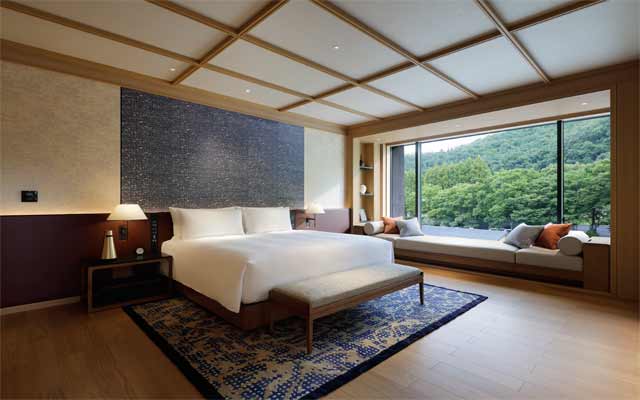
Hilton’s LXR Hotels & Resorts marked its debut in Asia-Pacific with the opening of Roku Kyoto, which also represents Hilton’s inaugural property in Kyoto, Japan. Situated beneath the Takagamine mountains in northern Kyoto, the 114-key Roku Kyoto is nestled within the 11.57ha Shozan Resort Kyoto, a luxury enclave home to Japanese gardens, historic architecture and authentic tea houses. The expansive Roku Suite offers views of the mountains along the Tenjin River, while the Takagamine mountains can be observed from the Peak Suite. The Garden Deluxe rooms each feature a private onsen with a garden, while the Poolside Deluxe rooms are conveniently located closest to the Roku Spa and provide direct access to the outdoor onsen thermal pool from the room’s private terrace. The hotel also features a 24-hour fitness room. Named after the Tenjin River, the French restaurant Tenjin serves French-style dishes made from locally sourced seasonal ingredients. At the bar, guests can sip on signature cocktails made with local ingredients or enjoy a seasonal afternoon tea.
Sunway Hotel Big Box, Malaysia
Sunway Hospitality has launched the Sunway Hotel Big Box, the first Sunway hotel in southern Malaysia. The 284-room hotel is located in Sunway City Iskandar Puteri, a 728ha integrated township in Nusajaya, Johor with residential, hospitality, retail, educational and medical elements.
Opening in phases starting from October 1, Sunway Hotel Big Box is easily accessible via Senai International Airport, Puteri Harbour International Ferry Terminal, and the Coastal Highway Southern Link (CHSL) from Singapore, which is just 5km away.
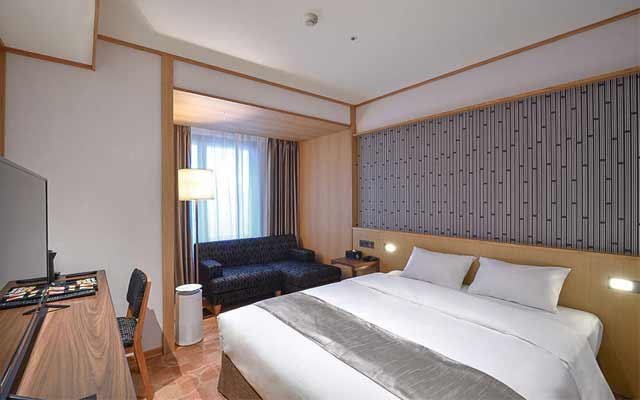
Guests can choose from five categories of accommodation – Deluxe Room, Deluxe Plus Room, Family Suite, Executive Suite and Premier Suite – all of which come with complimentary Wi-Fi, smart flat-screen IPTV – Internet Protocol TVs, mini fridges, coffee and tea making facilities and sofa beds in select categories. During the soft-opening phase, guests will be able to book the 32m2 Deluxe King or Twin Rooms, which can host up to two adults and two children; or the 57m2 Family Suites, which feature a separate living space, two bathrooms, a bedroom with a super king or twin beds, a sofa bed, capsule coffee machine and microwave.
Hotel facilities include an outdoor pool and children’s pool, 24-hour fitness centre, and the Pool Bar. The Pendas Café serves local and international cuisine for breakfast, lunch and dinner, with a 24-hour in-room dining menu. For corporate travellers and event planners, the hotel features three flexible meeting rooms that can accommodate between 20 and 300 people, with a 3m LED video wall and mobile 86-inch interactive touch screen Smart Panel. The Sunway Hotel Big Box is connected via a bridge to the Sunway Big Box Retail Park offering a variety of leisure activities, shopping and restaurant outlets.
Grand Mercure Khao Lak Bangsak, Thailand
Located on a stretch of Thailand’s Andaman Coast in the province of Phang Nga, the Grand Mercure Khao Lak Bangsak offers travellers a unique and tranquil beach getaway experience. Taking inspiration from the traditional riverside villages of Thailand, a canal flows throughout the resort connecting guestrooms and shared areas. Each of the 195 guestrooms and suites at the property feature private terraces, with a wide variety of room configurations available.
All-day dining restaurant Patio features a range of Asian and international dishes, while beachfront restaurant Green Mango offers authentic Southern Thai cuisine using recipes passed on through the generations. Guests can also unwind at the Soak Pool Bar while sampling a variety of beverages and light snacks. Hotel facilities include three swimming pools, a kids’ corner, 24-hour gym, and spa. The resort is also equipped with a business corner offering computers, printing and other business services. Meetings, private parties and corporate events can be catered for at the resort’s 260m2 meeting room, which can accommodate up to 100 guests.
Hotel Gracery Taipei, Taiwan
Tokyo-headquartered Fujita Kanko Inc. has opened Hotel Gracery Taipei in the capital city of Taiwan, representing the company’s second Hotel Gracery property outside Japan after Hotel Gracery Seoul. Situated in the centre of Taipei, a minute’s walk from MRT’s Zhongxiao Xinsheng Station, the hotel offers 248 guestrooms with layouts starting at 25m2. All rooms boast Japanese-style bathrooms with separate toilets. One distinctive feature presented at the hotel is its various concept rooms themed after Japanese and Taiwanese brands like Tokyu Hands, Katsuya and Niseko.
Marriott International has signed 22 new hotel agreements in South Asia – comprising India, Bhutan, Bangladesh, Sri Lanka, the Maldives and Nepal – in the past 18 months, expecting to add more than 2,700 rooms to its portfolio.
“In a highly unpredictable year, these signings are a testament to Marriott International’s resilience and agility in driving strong growth within a hospitality landscape that continues to evolve,” commented Rajeev Menon, president, Asia Pacific (excluding Greater China), Marriott International. “It is a sign of confidence from our owners and franchisees who have been an integral part of our growth journey.”
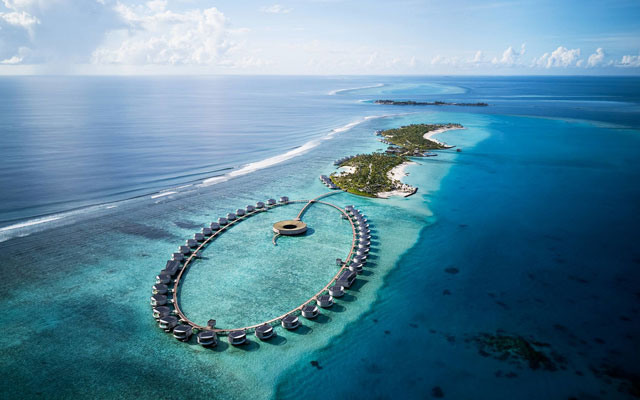
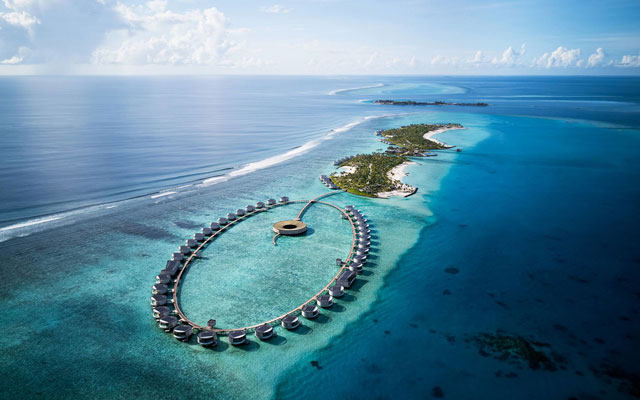
A second JW Marriott hotel will open in the Maldives come 2025, following the newly opened The Ritz-Carlton Maldives, Fari Islands (above)
More than a third of the newly signed projects in South Asia in the last 18 months include hotels and resorts in the luxury-tier, comprised of brands such as JW Marriott and W Hotels.
Come 2024, the W Hotels brand will be making its debut in Jaipur with W Jaipur.
Meanwhile, JW Marriott properties are expected to debut across several locations within South Asia over the next five years. These include JW Marriott Ranthambore Resort & Spa located at one of India’s most prominent wildlife sanctuaries, The Ranthambore National Park; JW Marriott Chennai ECR Resort & Spa on India’s Southern coastline; JW Marriott Agra Resort & Spa in the land of the Taj Mahal; as well as the debut of the JW Marriott brand in Goa and Shimla – two of India’s most famous resort destinations – with JW Marriott Goa and JW Marriott Shimla Resort & Spa.
JW Marriott Hotel Bhutan, Thimphu is expected to mark the debut of the JW Marriott brand in Bhutan, anticipated to open in 2025.
The Maldives anticipates its second JW Marriott hotel in 2025, when the JW Marriott Resort & Spa, Embhoodhoo Finolhu – South Male Atoll featuring 80 pool villas is expected to open. The signing follows the newly opened The Ritz-Carlton Maldives, Fari Islands.
Comprised of brands such as Courtyard by Marriott, Fairfield by Marriott, Four Points by Sheraton, Aloft Hotels and Moxy Hotels, Marriott’s select brands also continue to resonate in South Asia representing more than 40 per cent of the 22 newly signed hotel projects.
The Moxy brand is expected to debut in India and Nepal with Moxy Mumbai Andheri West in 2023 and the Moxy Kathmandu in 2025.
Secondary and tertiary markets remain a focus for Marriott International in India, where its Courtyard by Marriott and Fairfield by Marriott brands will be expanding their presence with the recently signed agreements.
Courtyard by Marriott expects to add five new properties to an existing operating portfolio of 20 hotels across South Asia. Four of these properties are expected to open in the next five years and will be located in leading tier-two markets within India: Courtyard by Marriott Gorakhpur, Courtyard by Marriott Tiruchirappalli, Courtyard by Marriott Goa Arpora, and Courtyard by Marriott Ranchi. Meanwhile, Fairfield expects to add two new properties in Jaipur.
In Sri Lanka, the Courtyard by Marriott Colombo expects to mark the debut of the Courtyard brand in the country, slated to open in 2022.
Expected to further the growth of premium brands in South Asia, the recent signings include the Katra Marriott Resort & Spa in India and the Le Méridien Kathmandu, which will mark the debut of the Le Méridien brand in Nepal. Additionally, the Bhaluka Marriott Hotel expects to mark the entry of the Marriott Hotels brand in Bangladesh, anticipated to open in 2024.
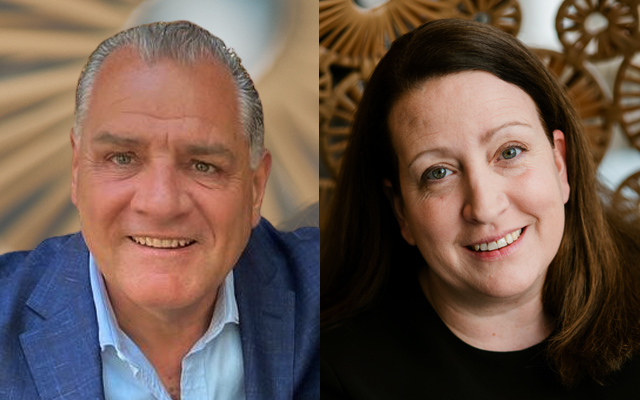
Hilton has appointed Paul Hutton to the position of head of Australasia, while Alexandra (Alex) Murray will take on the role of head of South-east Asia, with both leadership changes effective January 1, 2022.
Hutton will succeed Heidi Kunkel, who has led the Australasia region over the past 3.5ears. The move represents a return to the Australasia leadership role for Hutton, who spent the past four years as Hilton’s regional head of South-east Asia, where he built a robust leadership team and oversaw significant portfolio growth.
From left: Paul Hutton; and Alexandra Murray
As the leader of Hilton’s Australasia portfolio, Hutton will be based in Sydney where he will continue to drive Hilton’s successful recovery efforts, working closely with the company’s network of owners. In this role, he will oversee 27 operating hotels and a development pipeline of 12 hotels and resorts, with further growth plans to double Hilton’s footprint in Australasia in the next five years.
Taking up the South-east Asia leadership role is Murray, who will transfer from Hilton’s operations in Europe, Middle East & Africa. In that role, Alex oversaw a portfolio of 57 hotels with a pipeline of 47 properties.
Based in Singapore, Murray will oversee 46 open and trading hotels in the region, with a further 51 in the pipeline – including the largest Hilton hotel in the APAC region.
Both Hutton and Murray will be part of the Hilton APAC Senior Leadership Team.
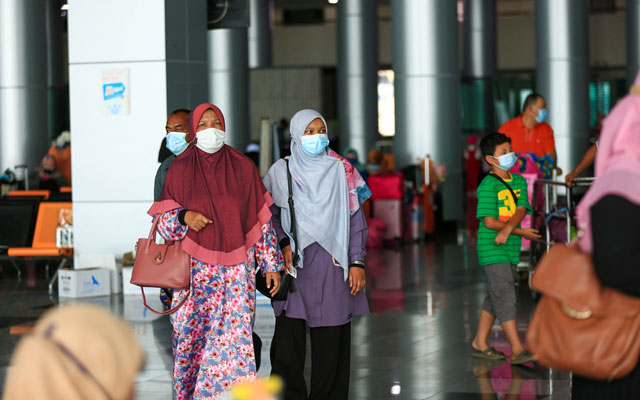
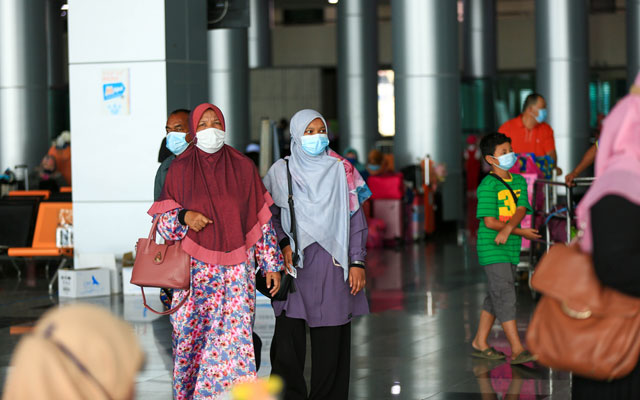
The road to recovery for Indian tourism stakeholders continues to be bumpy and uncertain with the government further extending the suspension on scheduled international commercial passenger flights till October 31, 2021.
The Directorate General of Civil Aviation (DGCA) announced the latest extension via a circular on Tuesday (September 28). The earlier ban on scheduled overseas flights was to end on September 30.
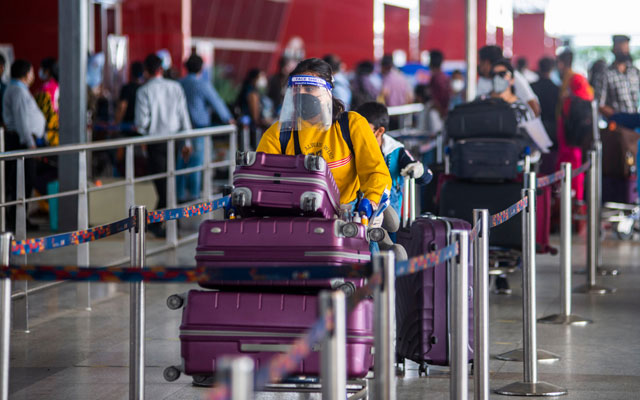
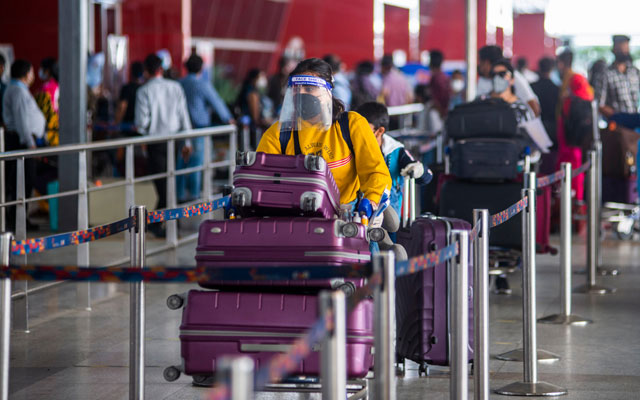
International passenger flights have been suspended in India since March 2020; domestic passengers at departure terminal in Indira Gandhi International Airport pictured
To add on to the woes of tourism stakeholders, the government has yet to announce the resumption of the e-tourist visa facility, which has been suspended since March 2020 due to the Covid-19 pandemic.
Sanjay Razdan, director of Razdan Holidays and joint secretary of the Indian Association of Tour Operators (IATO), shared that stakeholders had expected the Indian government to restart scheduled international flights and e-tourist visas from October 1.
“The IATO had made various representations to the Ministry of Tourism and other government authorities for the cause,” he said.
“We were also positive considering our major source markets like Europe have ensured that the majority of their population is vaccinated. Also, the Indian vaccination drive is going on in full swing.
“We were hoping for a positive announcement so that we can prepare ourselves to receive international tourists from November onwards.”
K Vijay Mohan, managing director of Holiday World and president of Tours & Travels Association of Andhra, opined that India is lagging behind other international markets in its tourism restart strategy.
“At a time when other international markets are opening up for tourism, we are still not beginning scheduled international flights. India is allowing special flights so I don’t see why scheduled international flights can’t be resumed,” he said, adding that airfares will become cheaper once international flights recommence.
India at present is allowing special international flights to operate in the country under the government’s Vande Bharat Mission (VBM) which launched in May 2020. Up till September 27, 2021, the national carrier, Air India, has operated 17,651 inbound flights under VBM.
“At present, travellers who are coming to India are arriving due to emergency reasons under other categories of visa. It is not a holiday and the majority of tourists would prefer not to pay the present steep fares to visit India,” said Lally Mathews, managing director, Divine Voyages.
“Inbound tourism can’t take off unless international flights and the e-tourist visa facility are resumed. There are many international travellers who have booked commercial flights online for coming months but they won’t be able to embark on the journey until scheduled international flights begin.”
Mathews added that Indian travel trade associations need to be more proactive if they want their issues to be addressed by the government.
CWT has appointed Joel Hanson as senior director of global innovation business development.
In this leadership role within CWT’s Global Supply Chain Partners team, Hanson will be responsible for incubating, building and delivering industry-leading products and services to optimise CWT’s client and their traveller’s end-to-end travel experience.
Joel Hanson
Based in Minneapolis and reporting to Vince Chirico, senior vice president global supply chain partners, Hanson is a CWT veteran, having joined the company as global senior writer before spending the last six years as the company’s senior product incubation manager.
Over the last two years, Hanson spearheaded the launch of CWT Guest Services worldwide, and was pivotal in the conceptualisation and launch of CWT AnalytIQs.
The Malaysian government is deliberating lifting border control and allowing fully vaccinated Malaysians to travel abroad as well as tourists and business travellers to enter the country, amid expectations that interstate travel in the country will resume by mid-October.
The announcement was made by the National Recovery Council chairman, Muhyiddin Yassin on Monday (September 27), however, he did not specify a date as to when border measures will be eased.
Malaysia targets October for interstate travel resumption; local tourists at Langkawi’s Jetty Point pictured
He also said that interstate travel will be allowed when the country achieves 90 per cent adult vaccination coverage, and this could be realised in early October or at the latest, by mid-October.
As of Tuesday, Malaysia has fully inoculated 85.1 per cent of its adult population.
Commenting on the federal government’s plan to resume interstate travel from next month, Uzaidi Udanis, president of the Malaysian Inbound Tourism Association, stressed that a consensus must be reached between both federal and state governments.
He cited the recent case of the federal government announcing that fully vaccinated domestic travellers will be allowed to visit Melaka from October 1, only for the state government to come out later to say that interstate tourists will not be accepted until the 90 per cent vaccination target is reached.
“There are costs involved when preparing for a reopening after a very long closure,” said Uzaidi. “A lesson that can be learnt from Melaka is that communications between federal and state governments must be improved upon and there must be ample notice given to tourism stakeholders to prepare to receive visitors. (Reopening plans) will backfire if the destination is not ready to receive visitors.”
Meanwhile, Penang Port CEO, Sasedharan Vasudevan, said the port authority has submitted the standard operating procedures for Covid-19 management to the government and once approval is given, cruise operators can begin their cruise-to-nowhere operations out of Penang.
A hospitality veteran with three decades of industry experience in Asia and Europe, Edward E. Snoeks, will take charge of the new Meliá Chiang Mai scheduled to open by end-2021.
Snoeks joins Meliá Chiang Mai after managing the pre-opening of Sindhorn Kempinski Hotel Bangkok & The Residences and working as both Thailand’s regional general manager and general manager of The Okura Prestige Bangkok.
Previously, he was the general manager of Crowne Plaza Hong Kong Causeway Bay and vice president of hotel operations at Hong Kong Parkview Hotel Services.
His work in Asia goes back to 1994 when he worked for The Regent Hong Kong’s F&B department. Snoeks’ hotel management experience also includes stints at the Marco Polo Hotels in Hong Kong, the Mutiara Hotel Kuala Lumpur and Le Royal Meridien Baan Taling Ngam on Koh Samui.
Comprising a 22-floor tower fronted by an adjoining seven-floor podium building, Meliá Chiang Mai will feature a host of facilities including two restaurants, two bars, two lounges, a YHI Spa with seven treatment rooms, a fully-equipped fitness centre, swimming pool, ballroom and four additional meeting spaces.