The travel and tourism sector’s continued sluggish recovery will see its year-on-year contribution to global GDP rise by less than one-third in 2021, according to new research from the WTTC.
The sector’s recovery has been hampered by the lack of international coordination, severe travel restrictions and vaccine inequity, WTTC said in a media release.
With the right measures, governments could see travel and tourism jobs surpass 2019 levels by 2022, says WTTC
In 2019, the travel and tourism sector generated nearly US$9.2 trillion to the global economy, noted WTTC. However in 2020, the pandemic brought travel and tourism to an almost complete standstill which resulted in a 49.1 per cent drop, representing a loss of nearly US$4.5 trillion, it added.
While the global economy is set to receive a modest 30.7 per cent year-on-year increase from travel and tourism in 2021, this will only represent US$1.4 trillion and is mainly driven by domestic spending.
The economic modelling was conducted by Oxford Economics on behalf of WTTC and calculated a baseline scenario based on the current global vaccination rollout, consumer confidence and relaxed travel restrictions in some regions around the world.
The research reveals that at the current rate of recovery, travel and tourism’s contribution to the global economy could see a similar moderate year-on-year rise of 31.7 per cent in 2022.
Last year, WTTC revealed the loss of a staggering 62 million travel and tourism jobs around the world and with the current pace of recovery, jobs are set to rise by only 0.7 per cent this year.
Similarly, research shows a more hopeful potential year-on-year jobs rise across the sector next year, by a positive 18 per cent.
Julia Simpson, WTTC president & CEO, said: “If governments can start looking internationally and support travel and tourism with simplified rules to enable the safe return of travel, there is the opportunity to save jobs and boost economic wealth.”
According to the research, the sector’s contribution to global GDP and the rise in jobs could be more positive this year and next, if the following measures are met:
Allow fully vaccinated travellers to move freely, irrespective of their origin or eventual destination, removing complex tiered systems.
The implementation of digital solutions which enable all travellers to easily prove their Covid status, so in turn, speeding up the process at borders around the world.
Recognition of all vaccines authorised by the World Health Organisation (WHO) and/or any of the stringent regulatory authorities (SRA).
Agreement from all relevant authorities that international travel is safe with enhanced health and safety protocols.
The research shows that if these four vital rules are followed before the end of 2021, the sector’s contribution to the global economy could jump by 37.5 per cent, reaching US$6.4 trillion this year (compared to US$4.7 trillion in 2020).
There is also hope that if restrictions continue being lifted and with more international cooperation, governments could bring back nearly 19 million jobs before the year ends (up 6.8 per cent).
The trend continues into next year when the sector’s contribution to the global economy could see a year-on-year rise of 34 per cent, reaching US$8.6 trillion, close to 2019, a record year for travel and tourism. Similarly, jobs could surpass 2019 levels – up 20.1 per cent year-on-year, to more than 349 million.
As part of its Vision 2030 plan which aims to diversify the economy to ready for a post-oil future, the Saudi government is plowing billions of dollars into tourism projects. Spearheaded by Crown Prince Mohammed bin Salman, the plan targets 100 million annual tourist arrivals by 2030, and a 10 per cent contribution to the Kingdom’s GDP, up from around three per cent.
Wadi Tayyb-Esm in Neom
In late June, the Crown Prince who is also chairman of the Higher Committee for Transport and Logistics announced plans to establish a second national airline as part of the National Transport and Logistics Strategy to transform the Kingdom into a global logistics centre as well as position Saudi Arabia in fifth place in terms of global air passenger traffic, and boost its air network to 250 destinations. While Saudia, the current national airline, mainly caters to the domestic passenger flow, the new airline is expected to attract international travellers entering or transiting through the country. Plans are also underway for a new airport to be built in the capital, Riyadh.
Saudi Arabia, home to Mecca and Medina, Islam’s two holiest cities, has always been strong in religious tourism. In 2019, the Kingdom hosted 9.5 million pilgrims.
However, tourism for leisure purposes is new to the Kingdom which opened its doors to international holidaymakers for the first time in September 2019. That year, it introduced fast and easy means for travellers from 49 countries to obtain an e-visa. It also relaxed strict rules for women tourists, including exempting them from wearing an abaya in public, and allowing those above the age of 25 to travel unaccompanied.
Also in line with its plan to develop the tourism sector and open it to foreign investment, Saudi is building several mega projects backed by its Public Investment Fund (PIF).
This includes the US$500 billion futuristic mega-city Neom, which is being billed as a vision for a future smart city. Neom, a region in north-west Saudi Arabia on the Red Sea, is being built from the ground up that will include hyperconnected, cognitive towns and cities, ports and enterprise zones, research centres, sports and entertainment venues, and world-class tourist destinations.
For the more active traveller, Neom will entice with sports such as skydiving, hiking and water skiing, alongside wellness programmes for the health-conscious.
There are plans to make Neom part of its own economic zone with its own set of policies including offering visas-on-arrival and improved business regulations.
Another mega project backed by PIF is The Red Sea Project. Extending over 28,000km² on Saudi Arabia’s Red Sea coast, the destination will offer a diverse range of tourist experiences, from island getaways and resort holidays to mountain retreats and desert adventures.
According to the masterplan created by The Red Sea Development Company, upon completion in 2030, the Red Sea Project will offer around 8,000 hotel rooms, alongside more than 1,000 residential properties across 22 island resorts, mountain retreats and desert hideaways. The Red Sea Project is being positioned as a high-end tourism destination with luxury marinas and accommodation, golf courses, posh restaurants and entertainment facilities.
Yet another mega project that has PIF’s backing is the Qiddiya entertainment city, which will be located on the doorstep of Riyadh and is set to become Saudi Arabia’s capital of entertainment, sports and the arts.
Spanning 366km², the city will host a Formula 1 racing track, a Six Flags theme park, a water park, and sports facilities such as football stadiums, among others.
Ally Bhoonee, executive director of World Avenues Travel & Tours, a Malaysia-based outbound tour operator, shared: “Saudi Arabia has a lot of marketing to do in terms of changing overseas travellers’ general mindset that the Kingdom is a very conservative country. It has to carry out overseas roadshows and invite international media to experience the Kingdom’s current tourism offerings and to be aware of the new tourism developments in the pipeline.”
Alicia Seah, director of public relations & communications at Dynasty Travel in Singapore, concurred. She said: “It is important to orientate travel agents and showcase to us what the destination has to offer and its safety and hygiene protocols in place. (This can be done through) familiarisation trips or even webinars hosted by the tourism board.”
Pauline Suharno, director of Elok Tour in Indonesia and president of the Indonesian Travel Agents Association, shared: “With Saudi Arabia government’s initiatives to attract leisure travellers, it gives our tour operators more opportunities to sell Umrah packages to Indonesian pilgrims. So far, local agents are selling Umrah packages to Turkey and Europe.”
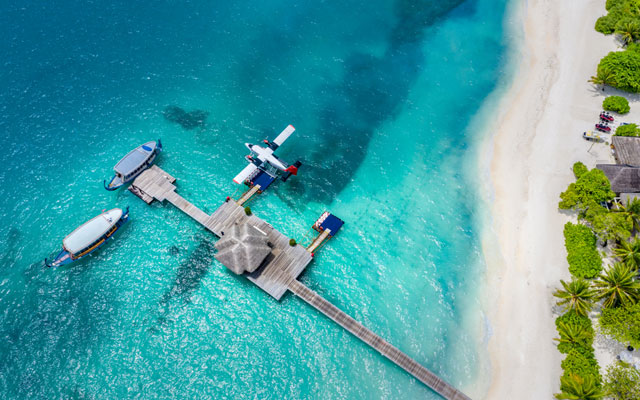
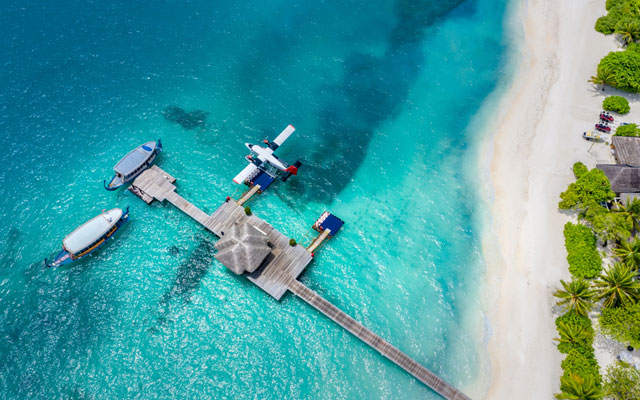
The Maldives, one of the few tourism destinations that is thriving in the post-pandemic era, is anticipating a surge in tourist traffic this upcoming winter, with some resorts already fully booked ahead of the peak season.
A senior official at Diethelm Travel shared that forward bookings are painting a rosy picture for the sector, with tourism and hospitality operators seeing “unbelievable” demand for rooms.
With its one-island-one-resort concept, the Maldives touts itself to be a Covid-safe haven
Some resorts will be running at full capacity this winter, he said, adding that “it is going to be one of our best winter seasons”.
Maldivian tourism authorities said there were a total of 114,896 arrivals last month, higher than 107,620 in September 2019. Russia, Germany, the UK, Italy and the Middle East markets are doing well, with Monday (October 4) recording 6,000 arrivals, the country’s highest single-day arrivals to date.
Pent-up travel demand coupled with the fact that it remains one of the few destinations open to international tourists amid the pandemic have made the Maldives a holiday hotspot.
Furthermore, with its seclusion and signature one-island-one-resort concept which allows for social distancing, the Maldives is considered one of the safest destinations to visit during this time.
Industry officials said that with the growing demand for winter vacation packages, resorts have stopped offering discounts.
Shafraz Fazley, managing director at Viluxur Holidays, is also optimistic about winter season bookings. Some resorts are expecting a full house, he said, adding that Russia is strong, Saudi arrivals are growing in numbers while a relatively new market, Brazil, have been showing promising returns.
He said there has been an increase in visitors from the US staying at a range of properties, from three to four-star accommodation to super luxury resorts.
Shaushan Aan Shafeeq of Maldives Holiday Collections said they were excited at the prospects of a promising winter season, and expects more airlines to resume flying to the island nation by year-end and in 2022.
2022 marks the destination’s golden jubilee of tourism with Thoyyib Mohamed, managing director at state-run Visit Maldives, saying it will be a historic year with many activities being planned by the industry.
As of Monday, the Maldives has recorded 85,042 Covid-19 cases and 231 deaths.
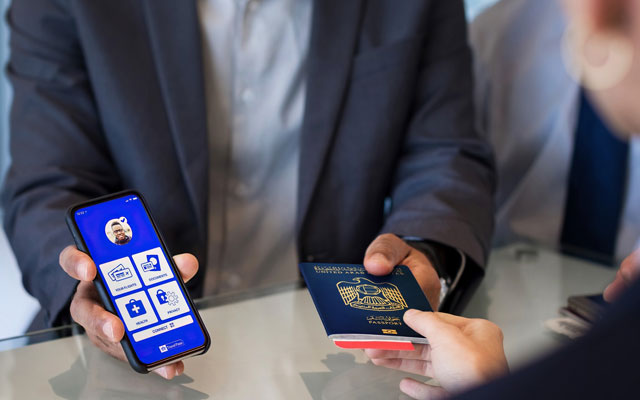
Etihad Airways, Jazeera Airways, Jetstar, Qantas, Qatar Airways and Royal Jordanian will implement IATA Travel Pass in a phased rollout across the airlines’ networks.
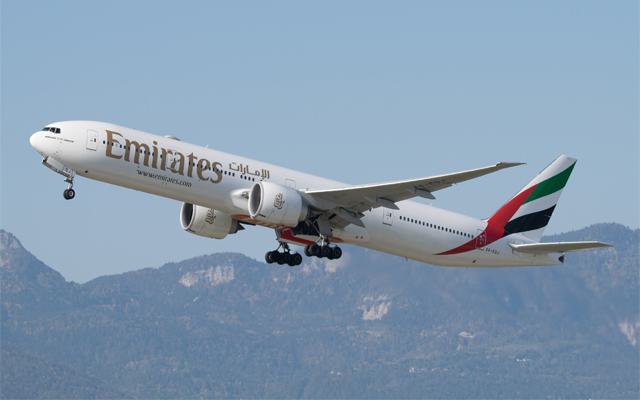
These six airlines join Emirates Airline as IATA Travel Pass implementation pioneers, the International Air Transport Association (IATA) said in a release.
Following Emirates Airline, six more airlines will implement IATA’s Travel Pass solution
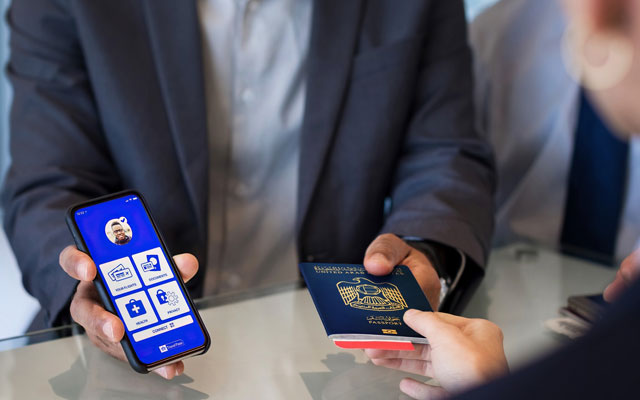
IATA Travel Pass is a mobile app that can receive and verify a range of Covid-19 test results and digital vaccines certificates. Currently, vaccine certificates from 52 countries – representing the source of 56 per cent of global air travel – can be managed using the app. This will increase to 74 countries, representing 85 per cent of global traffic, by the end of November.
Willie Walsh, IATA’s director general, said that the IATA Travel Pass is now entering the operational phase following months of testing.
“The app has proven itself to be an effective tool to manage the complex mess of travel health credentials that governments require. And it’s a great vote of confidence that some of the world’s best known airline brands will be making it available to their customers over the coming months.”
The app offers a safe and secure way for travellers to check the requirements for their journey, receive Covid-19 test results and scan their vaccine certificates, verify that these meet the destination and transit requirements and share these effortlessly with health officials and airlines prior to departure, said IATA.
It added that this will avoid queuing and congestion for document checks, thereby benefiting travellers, airlines, airports and governments.
Sabre Corporation and Emirates have signed a new multi-year, worldwide distribution agreement that will provide Sabre-connected travel buyers and agencies with access to the airline’s content, through Sabre’s GDS.
Further to this, Emirates will create and distribute NDC offers through the Sabre GDS. The new contract will connect Emirates to a global network of travellers, while supporting its global vision to provide travel buyers and travellers with personalised offers.
Emirates re-establishes long-standing partnership with Sabre
Emirates CCO Adnan Kazim said: “The new contract will support us to meet the needs of our agency partners. Providing agencies with flexibility, choice and efficiency will help them to thrive in the current climate and will help us drive revenue and growth.”
Roshan Mendis, CCO, Sabre Travel Solutions, added that the agreement “will provide both Emirates and travel buyers with immense value, removing complexity in the buying process, which is crucial to the recovery of the industry”.
In addition, Sabre will continue to partner with Emirates on advanced retailing, data and analytics capabilities through a number of its solutions in areas such as network planning, revenue optimisation and market intelligence.
UNWTO and Netflix have partnered on the publication of a report which looks at the role of film and series as drivers for tourism and cultural affinity.
The Global Report on Cultural Affinity and Screen Tourism explores the growing affection one has towards a particular country or culture displayed on the screen.
New UNWTO-Netflix report highlights the role screen content plays in sparking travel interest
The findings of the research were presented in Madrid at the Iberseries Platino Industria, the largest international event for professionals linked to the audiovisual industry in Spanish and Portuguese.
The report’s ultimate goal is to support policymakers and key stakeholders within the tourism sector to implement policies that make their destinations attractive for audio-visual producers.
It also aims to help in the building of strategies to promote tourism and consumption of local culture, investing in skills and training to develop the local film and creative sectors, as well as integrating tourism and showcasing culture at film festivals to deepen the global audiences’ knowledge.
UNWTO secretary general Zurab Pololikashvili said: “Both tourism and the audiovisual sectors celebrate and promote culture, support jobs and provide opportunities in diverse locations. The joint work of UNWTO and Netflix will help destinations realise the potential benefits of screen tourism.”
Dean Garfield, vice-president, public policy, Netflix, added: “As highlighted in this research, we have been able to demonstrate conclusively what we instinctively already believed, which is that alongside the desire to travel and visit destinations, exposure to screen content also leads to greater interest in heritage, culture, language, and developing interpersonal relationships.
“This truly demonstrates that the creative industries, cultural exchange, storytelling, and tourism are all interlinked and can transform the way communities perceive and connect with each other.”
Following the presentation of the Global Report, experts on tourism and the audio-visual industry shared their knowledge and insights into changing trends in screen tourism and its positive impacts on strengthening cultural affinity, as well as the role of online streaming services in promoting tourism and cultural affinity between people, cultures and countries in line with the 2030 Agenda.
The event also served to underline how public-private partnerships can support destinations to promote themselves as attractive locations for audio-visual producers.
Moving from bed to desk within minutes to ready for one’s first meeting of the day has become a norm for many people, as offices rely on work-from-home arrangements to keep staff safe during the pandemic.
Now, as freedom of movement returns, a workation trend has emerged – people are combining remote work with much-needed vacation at relaxing locations, such as hotels, resorts and villas.
When Booking.com conducted a study in late-2020 to identify critical travel trends in 2021 and beyond, it discovered that people were looking to take longer trips in the future that allowed them to mix work and pleasure. Thirty-seven per cent of travellers considered booking somewhere to stay in order to work from a different destination, while 52 per cent would take the opportunity to extend any business trips to enjoy leisure time at the destination.
Richard Roocroft, director of global sales at Interprefy, was among those who have adopted a workation arrangement. Based in Bangkok, Thailand, Roocroft is in an enviable position – literally, as he is within reach of many beautiful resorts.
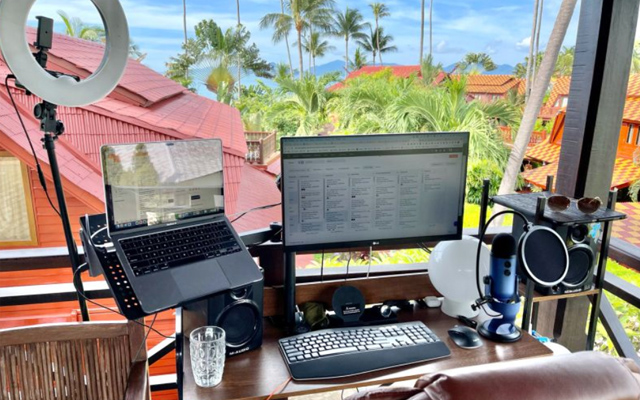
Roocroft has chosen to relocate to Koh Samui with his family this year, away from the populous capital to minimise Covid-19 exposure. They have been through five resorts so far. He has set up his desk at a beachfront restaurant, café and co-working space – anywhere with Wi-Fi and a plug for his laptop.
He has benefitted from more productive meetings, fewer interruptions, and time saved from office commute being channelled to leisure.
Varying acceptance
Roocroft’s ability to adopt a workation arrangement is made possible by his company’s flexible work approach. Interprefy specialises in cloud-based simultaneous interpretation solutions, and has a workforce of 180 spread across five continents.
He explained: “Some work from home, some like to change location every now and then. One of my team members even works out of a camper van, and he is on a constant trip through Europe.
“Being a fully remote company, we really don’t mind where someone decides to work from, as long the environment allows them to get the job done. As a result, we see many of our European team now travelling around freely, and it is an absolute pleasure to follow their working adventures on Instagram.”
India’s Microtek International recently gathered its key leadership for a workation at a resort. Subodh Gupta, chairman and managing director, said it was a nice change from the work-from-home norm.
“It offered us an opportunity to meet each other in person and discuss the company’s roadmap. We had our meetings in open spaces, which was a relaxing change after being confined to our home for so long. What made it different from incentive trips or teambuilding programmes was that we abided by the usual office hours, and unwound only in the evening,” said Gupta.
The outcome was a more energetic and motivated team, he concluded.
While Ian Cummings, global head of CWT Meetings & Events, acknowledges that workation is the “new buzzword following on from staycations”, he said his company has yet to see clients evolving their corporate policy to support this phenomenon.
He explained: “Companies are looking at this on a case-by-case basis. Given the focus around travel and event costs at present, it is not likely that organisations would overspend.”
Clients are maintaining their reimbursement policies. “If it was an expendable activity before, it is expendable now. That is a sensible way forward. We are not seeing an appetite for increased costs, such as Wi-Fi, calls or meals just because someone has decided to work from an alternative location,” he told TTGmice.
That said, Cummings reflected that the workation trend is worth watching. According to research company Axios, 74 per cent of surveyed remote workers said they would consider taking a workation.
CWT Meetings & Events’ own poll earlier this year with 200,000 LinkedIn followers found that 60.5 per cent of those surveyed cited the uniqueness or attractiveness of a destination as the most influential factor in deciding to take a workation.
He said: “It really underlines that employees are interested in combining business and pleasure when travelling. All the more reason to take this phenomenon seriously, although I believe interest in a workation depends on job function and likely seniority in an organisation.”
“Perhaps, some businesses might change their policies if workations remained popular and if it was a necessity to boost traveller satisfaction rates,” he mused.
Elsa Kimy Yue, spokesperson for Sofitel Singapore Sentosa Resort & Spa, has seen some resistance from corporate travel and HR managers to include workation packages into their travel or staff welfare programmes.
“Employers feel that workation is a personal choice and costs should not be on the company. However, our clients have conveyed details of our Dream B-Leisure Lifestyle Package to their staff, and we offer a discount for personal bookings that come through the corporate channel,” she said.
Richard Roocroft’s extended workation around Koh Samui has given him some inspiring views from his desk
A business opportunity
Workations are an opportunity for accommodation operators to tap into a new segment of travellers who are looking to escape from lockdown fatigue. For many, the workcation trend is both a lifeline amid suppressed travel and tourism business and a recovery catalyst.
Marriott International was among the first to offer a workation programme. Work Anywhere with Marriott Bonvoy packages fall into three categories – Day Pass, Stay Pass and Play Pass – and are available at select hotels in certain cities worldwide.
“Working remotely doesn’t necessarily have to mean working from home, where blurred lines between personal and professional lives can create distractions and stress,” Stephanie Linnartz, group president – consumer operations, technology & emerging businesses, had said during the programme’s launch in October 2020.
Hyatt Hotels Corporation and Centara Hotels & Resorts followed earlier this year with their own workcation campaign.
The Great Relocate by Hyatt Hotels Corporation offers a flat rate for long-term stays with a minimum 29-day booking for hotels across South-west Asia, the Middle East and Europe.
Centara Hotels & Resorts’ Work From Hotel packages are available across Thailand, offering extended stays from two weeks to a month at reduced rates. The initiative came about as Centara saw a surge in remote workers, some with children in tow, looking to escape for “a significant period of time” to pastures new such as beaches or the countryside amid the pandemic, said Tom Thrussell, vice president of brand, marketing and digital.
A trend was also emerging of Bangkok-based residents migrating to different areas, like coastal towns, to escape the city’s air pollution, he added. Top locations are those most accessible from Bangkok, such as Pattaya and Phuket, and the packages attract a mix of Thai and expatriate residents.
Melia Ho Tram in Vietnam offers the Teleworking in Paradise programme, which appealed to guests wanting to “escape the city with their family and stay at the resort for longer periods, as it is a place for them to work and relax with their family during the pandemic”, shared Ha Minh Thu, the resort’s director of sales and marketing.
Bookings come from both individuals and companies, and the guests themselves are mostly CEOs and high-level executives from Ho Chi Minh City. Most would work in their villa, with an occasional request for a meeting room to conduct video conferences.
Vibhas Prasad, director of India’s Leisure Hotels Group, has been welcoming local workation groups. He said guests prioritise “comfortable workspace in the room and at select areas across the resort where they can work undisturbed”. Also in demand are high-speed Wi-Fi, IT support, quality meals whenever they want, and entertainment.
Sofitel Singapore Sentosa Resort & Spa’s Yue observed that most workation guests would work in their room, although the luxury property invites guests to work out of anywhere on the sprawling grounds. She pointed to the resort’s many green lawns, poolside cabanas, LeBar’s quiet corners that overlook the pool as well as the sea-facing patio at The Cliff restaurant as some ideal work spaces.
Flexibility is key in the resort’s Dream B-Leisure Lifestyle workation offering. Guests are granted more than 10 complimentary amenities, included in both the DayDream Pass which comes without a guestroom and the DayLifestyle Pass which comes with an overnight stay. Numerous add-ons are available, such as free-flow alcoholic beverages, a three-course meal, spa access, and an hour-long yoga session.
Yue said: “Some things are essentials now – speedy Wi-Fi, coffee and tea, for instance. So, we have to offer more than these basics to elevate the workation experience for our guests. People are working longer hours as a result of the work-from-home arrangement, and are feeling more exhausted easily because they now have to balance work and family duties.
“As a resort that offers a workation programme, we have to provide valuable conveniences, be it access to quality meals that guests do not have to prepare for themselves, a rejuvenating spa or swim, or activities that will keep their children occupied while they focus on work.”
Recognising that “there needs to be a balance in work and play for someone to remain passionate about their professional duties”, Sofitel Singapore Sentosa Resort & Spa has made available many wellness options to workation guests. Soon to come is a private yacht option for guests to unwind in style.
Will demand last?
Hoteliers are confident that the workation trend is here to stay, even after the pandemic is contained and normal work resumes, now that more people have had a taste of blending remote work with pleasure.
Prasad noticed that India’s young workforce, those aged 20 to 45, have adapted well to remote work, and this segment will continue to drive demand for workations “long after the Covid-19 impact becomes redundant”.
Yue expects workation demand to fluctuate by seasons, such as peaking during long school breaks “when children are off but parents are not”.
She added: “There are companies that have chosen to permanently adopt a full or partial remote work arrangement. Their staff will therefore continue to have the option to work from anywhere, even at a resort where they can balance work and play.”
Cummings is less optimistic. “As popular as a workation seems to be now, I am not sure if it will hold much weight for organisations when we are exiting the pandemic,” he said.
“Again, it really depends on the job function: there are many jobs where it doesn’t matter if you are behind your desk in a Singapore office or in a cottage in the French Alps. But where face-to-face teamwork and collaboration are necessary or where it is compulsory to come into the office one or two days a week, then a workation will not really work,” he added.
Benson Tang, executive director of Corporate Travel Community, Informa Markets, believes that a “distinct separation of work and leisure” is necessary, and that face-to-face interaction at work triumphs over the isolation of work-from-home arrangements.
As such, Tang believes that remote work will likely be replaced by a hybrid work model post-Covid, which will result in demand for workations being phased out.
The Exhibition and Event Association of Australasia (EEAA) has revealed a newly constituted Board of Directors, following the Annual General Meeting on September 28.
Nicole Walker
The new office bearers for the EEAA Board were elected unopposed:
Nicole Walker, Arinex – president
Helen Mantellato, ICC Sydney – vice president
Paul Elliot, Harry the hirer – treasurer and,
Elissa Duke, Melbourne Convention & Exhibition Centre (MCEC) – secretary
The two-venue designated board positions remain vacant. The board has agreed to call for expressions of interest from venue members, which close on December 10.
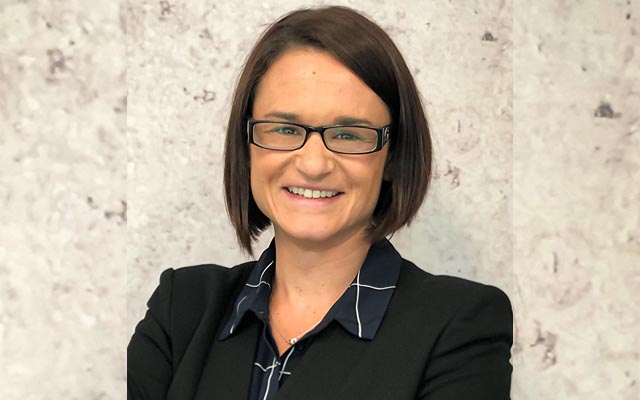
Incoming president, Nicole Walker, said, “It is a true honour to be elected as president of EEAA and the Board. I will continue the advocacy work, provide our members with clear outcomes, drive quality training and best practice to grow their businesses. Together with the Board and the EEAA team, I will ensure the value of this sector is recognised in Australasia, not only for the industries it supports but for the legacies it leaves long after.
“Spiro stated in his outgoing message about the difficulties in bringing the industry together under one umbrella however, I would like to thank Spiro and the EEAA outgoing Board for having this conversation with the Australian events industry and look forward to continuing these discussions. I hope to provide enthusiasm for collaboration to ensure consolidation and strength of unity and voice of the exhibition and events industry.”
Other newly-elected board members include:
Rodney Cox, director, Delaro as Supplier representative
Rod Peter, managing director, Coleman Group as Supplier representative
Kym De Britt, CEO, Australian Dental Industry Association as the Association representative
The newly constituted EEAA Board of Directors:
Organiser representatives:
Nicole Walker, CEO, Arinex
David Longman, managing director, Diversified Communications Australia
Spiro Anemogiannis, managing director, Informa Australia
Matt Pearce, CEO, Talk2 Media and Events
Association organiser representative:
Kym De Britt, CEO, Australian Dental Industry Association
Supplier representatives:
Paul Elliott, state manager NSW, Harry the hirer
Rodney Cox, director, Delaro
Libbie Ray, director, Connected Event Group
Rod Peter, managing director, Coleman Group
Venue representatives:
Helen Mantellato, senior manager, business development international & exhibitions, ICC Sydney
European destinations are hoping to lure Asia-Pacific’s elite travellers seeking wellness tourism once travel resumes.
While the wellness movement was taking off pre-pandemic, it is predicted to soar once borders reopen and travel-starved tourists seek holidays to balance the body and mind after many months of confinement. Readying for that rebound, destinations across Europe are lining up carefully-curated wellness agendas targeted at Asia-Pacific markets.
Wellness tourism expected to see healthy growth post-Covid
Encouragingly, a recent study by ILTM and Barton revealed Asia-Pacific travellers are not only searching for wellness-orientated trips in the region, but everywhere they go.
According to the research, Asia-Pacific high-net worth (HNW) travellers spend US$2.4 billion on wellness activities on their trips, compared to US$9.6 billion among global HNW travellers. Asia-Pacific’s overall spend on the same is US$5.1 billion compared with US$23.7 billion globally.
Chinese international travellers were found to spend about US$1.7 billion annually on wellness activities – 33 per cent of Asia-Pacific’s total spend. The nation’s HNW outbound spend is US$799 million.
Jessica Rideout, spokesperson of VisitScotland’s China and emerging markets department, said prior to the pandemic, Scotland was enjoying an annual increase in visitors from China that positioned it as Scotland’s leading developing market.
The destination is currently getting ‘China-ready’ in anticipation of the market reopening borders. Rideout said: “China will be driving our marketing and we are looking to rebuild what we already had pre-pandemic with China.”
She added India, South Korea, Japan and Australia are also strong markets from Asia-Pacific. More efforts will be ploughed into promoting Scotland to the emerging markets of Indonesia, Malaysia and Thailand, with the wellness agenda featuring heavily in promotional campaigns. Once possible, VisitScotland will join forces with VisitBritain to jointly host familiarisation trips with key Asia-Pacific source markets.
In 2019, VisitScotland launched a general wellness campaign in response to rising global demand. Realising its ever-growing potential in the wake of Covid-19, in June, it launched a water wellness campaign to push activities that take place on its thousands of kilometres of coastline, lochs and rivers.
Rideout remarked: “In response to the pandemic, there have been new realms created in terms of wellness and this will be very important going forward. With Scotland’s open spaces, fresh air and plentiful water, wellness is very popular for us.”
As a playground for the rich and famous, Monaco on the luxurious French Riviera has pledged to continue to tap into Asia-Pacific’s swelling number of elite travellers seeking restorative getaways.
Benoit Badufle, who represents the Monaco Government Tourist and Convention Authority in Asia, said: “Monaco has positioned itself as a global leading medical and wellness tourism destination. Demand for this type of tourism is expected to grow once people are again able to travel, and we are promoting Monaco’s range of offerings.”
In July, hotels in Monaco recorded 70 per cent occupancy compared with 39 per cent in 2020. Visitors were mainly domestic, Belgian and Swiss, with American and Middle Eastern clients also flying in. Badufle predicts that once borders in Asia-Pacific reopen, the destination will welcome arrivals from the Asia-Pacific region, especially China.
Asia-Pacific is also of importance to Spain. Australia and New Zealand have traditionally been strong performers, with Thailand and Indonesia showing signs of growth pre-pandemic. Future promotion will also target Vietnam and Brunei.
The destination is pushing its wellness agenda too, boasting 112 spa areas countrywide. The northwest region of Galicia is famed for its upmarket spa experiences, southern Spain is renowned for its facials, while Valencia in the south-east recently started promoting its variety of health and wellness offerings.
Vien Cortes, regional market analyst for Turespaña, said: “We are very strong on wellness tourism and offer some unique experiences. The spa concept in Spain is very different to what we see in South-east Asia and is more focused on the therapeutic side, which is interesting for Asia-Pac ific visitors.”
Switzerland Tourism is also ramping up its wellness focus, and has its sights set on the Asia-Pacific market. Batiste Pilet, Switzerland Tourism’s director for South-east Asia, said: “As consumers become more and more aware of their health, tourism is also impacted by this change. As a result, we have launched a health tourism campaign spanning from spa and wellness all the way to medical travel.”
He added that as a longhaul market, the Asia-Pacific region is one of Switzerland’s most important source markets for wellness and medical tourism. China is the main focus, where outbound wellness and medical travel will be a “booming trend” post-Covid.
In 2020, Switzerland Tourism launched a campaign in China, based on feedback from medical and hospitality institutions that noted rising demand. Pilet noted that there had also been growing demand out of South-east Asia for programmes that Switzerland is strong in, such as detox and addiction rehabilitation.
Said Pilet: “We except this segment to boom (post-lockdown) as consumers have never been that health-conscious and Switzerland’s cleanliness, reliability and natural beauty are more attractive values than ever before.”
Agoda has launched its Welcome Back to Europe campaign to help property partners in Europe capitalise on early international travel demand and drive incremental bookings.
Participating accommodation providers will benefit from Agoda’s multi-channel promotion aimed at the growing market of inbound travellers. Welcome Back to Europe will be rolled out across several marketing touchpoints, including a dedicated landing page for international travel to Europe, social media campaigns, customer and affiliate marketing.
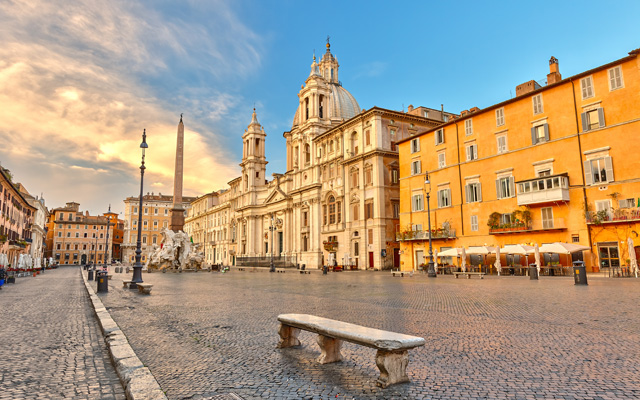
Agoda’s Welcome Back to Europe campaign will support accommodation partners in their road to international tourism recovery; Piazza Navona, Rome pictured
“As the travel industry begins to recover, we want to make sure our hotel partners are best placed to get a head start in capturing that demand. While intra-region travel has dominated summer plans in Europe, more international markets are lifting travel restrictions, including like the US, Singapore, the UAE and India to name a few,” said Errol Cooke, vice president, partner services, Agoda.
“In our soft launch phase, hundreds of hotels have already offered additional discounts to international travellers and enjoyed the benefit from these incremental bookings. We are confident that Agoda’s Welcome Back to Europe programme will help all our hotel partners, as we work together to bring back travellers,” Cooke added.
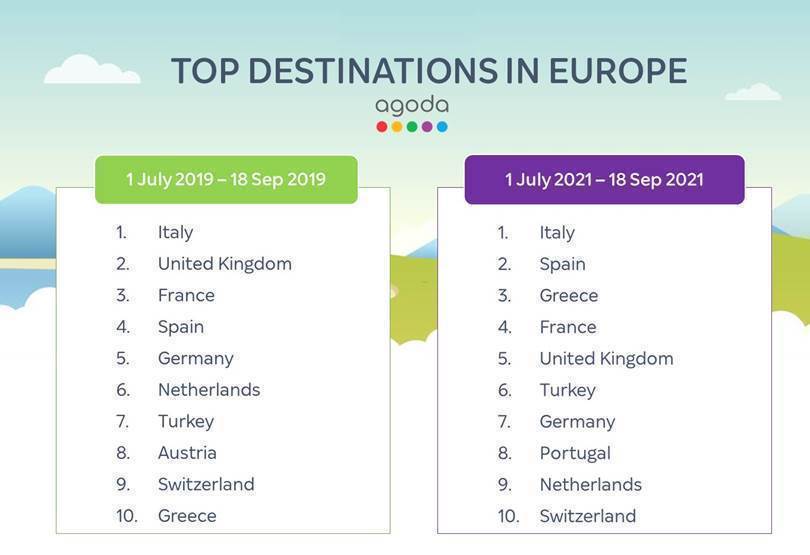
Italy retains top spot as the most popular destination for international travellers
According to Agoda’s booking data, Italy retains top spot as the most popular destination for international travellers, when compared to the same period (July 1 to September 18) in 2019. Spain climbs two places to number two, knocking the UK to fifth place, while Greece jumps seven spots to third place. Germany has lost her position in the top five, and now takes seventh position.