Asia/Singapore Sunday, 12th April 2026
Page 301

Jayson Heron-Smith takes on dual role at The Langham Hospitality Group

0

Langham Hotels and Resorts has appointed Jayson Heron-Smith to wear the dual roles of director of sales & marketing, The Langham, Sydney and director of sales Australia, global sales office at Langham Hospitality Group.

Heron-Smith brings over 25 years of experience and a wealth of knowledge to his new role; from starting out in F&B to working as an event manager and then through the ranks of sales and marketing to his current position today.

The Australian started with The Langham Hospitality Group across the pond in Auckland in November 2019 as director of sales and marketing at The Langham’s sister property, Cordis.

Before working for The Langham Hotels and Resorts, Heron-Smith worked for companies including Hyatt, Crown Melbourne, Hilton and The Star Sydney.

Profiling the traveller of 2022

0

As the old year draws to an end, travel and tourism organisations have pulled up booking data and scrutinised consumer intentions to make out how the world might return to travel and tourism in the new year.

It is no surprise that two years of travel limitations, social isolation and blurred work/leisure boundaries have left many people restless and eager to take a proper break.

Latest studies conducted by World Travel & Tourism Council (WTTC), Trip.com Group and Booking.com are able to break down travel intentions further.

Raring to go
As more international border restrictions ease, people are happy to take on any opportunity to travel. According to Booking.com’s Travel Predictions 2022 report, 61 per cent of travellers are now more open to different types of vacations.

The number of people who feel that they need to make up for lost vacation time has ballooned from 42 per cent to 63 per cent.

With any and all travel plans being put on hold due to the pandemic, 2022 will be the year of simply saying yes, projected Booking.com, with 72 per cent agreeing they will say “yes” to any vacation, as long as their budget allowed.

Underscoring how much travel has been missed, respondents regard anticipation for the journey to be as exciting as the destination itself. Seventy-five per cent of respondents find that the journey to a destination is more enjoyable when it feels like part of the trip. They say navigating new and unfamiliar transportation systems (58 per cent) and feeling the sun on their skin (77 per cent) are some simple travel pleasures they cannot wait to savour.

Home base comes first
However, continued travel limitations are forcing travellers to turn to experiences at home, found a joint study by WTTC and Trip.com Group.

The Trending in Travel: Emerging Consumer Trends in Travel & Tourism in 2021 and Beyond report identified that domestic travel will continue to lead travel and tourism recovery, especially in the short to medium-term. More than half of global travellers plan to travel for a domestic holiday in the next 12 months.

In particular, the concept of staycations may continue to be in demand and more so for countries with prolonged restrictions on outbound travel. The report observed a sustained increase in demand for local staycations across Asia-Pacific, especially in Singapore where the government has been encouraging domestic tourism through the issuance of vouchers for hotel stays, tours and attractions.

While domestic travel may slow proportionally as global travel returns, the report stated that the trend in rediscovering domestic destinations is likely to linger in the long-term.

Social remedies
Not only are people eager to make up for lost vacation time in 2022, they are also keen to reconnect with friends and family, and expand their social network.

Booking.com found that 40 per cent of respondents hope to spend time with friends and family on their next trip, while 60 per cent are determined to meet new people while on vacation. Fifty per cent of single respondents are hopeful of finding love on their next trip.

Out of office for real… or not
Working from home – and anywhere, really – has become normalised in the past two years, expediting burnout rates everywhere. Come 2022, more people want to firmly re-establish a healthy work-life balance, with 73 per cent telling Booking.com that vacation time will be strictly work-free.

Fifty-two per cent want their next trip to help them break out of the monotony of routines at work and at home.

In fact, a majority – 79 per cent – regard travel as an essential form of self-care that is especially critical for mental and emotional well-being.

Sixty per cent plan to use their next trip to explore new cultures and enjoy new places and experiences.

Once out on a trip, people want to make the most out of their time, found the WTTC and Trip.com Group study, with one in four global travellers desiring longer stays of over 10 nights.

Contrasting Booking.com’s findings, respondents in the WTTC and Trip.com Group study are happy to let work and play go hand in hand. For them, remote work during quarantine and travel will encourage them to stay longer during their trips. This sentiment is the strongest among respondents in Thailand (69 per cent), Vietnam (57 per cent) and China (54 per cent).

Meaningful community connection
Opportunities to be more engaged with their communities at home by supporting local businesses throughout the pandemic have translated to a burning desire to do the same when they are on vacation.

Fifty-eight per cent of respondents told Booking.com that it is important that their trip is beneficial to the local community, while 29 per cent will do more research into how their tourism expenditure will impact or improve local communities.

Sixty-six per cent of respondents will factor over-tourism into their travel decision-making, and 68 per cent will choose an alternative destination just to avoid peak season crowds.

According to Ctrip data for Asia-Pacific, there has been a rise in nature-related attraction bookings – a 264.5 per cent spike in 1H2021 compared to 1H2020. Respondents have also expressed a preference for less crowded and even unfamiliar destinations, with an increased interest in exploring secondary destinations and nature.

Sustainable and wellness-driven options are gaining preference among travellers, noted the same study. There is an increase in travellers, notably 94 per cent of travellers in Thailand, who plan to reduce and recycle waste when visiting a destination.

Technology, flexible policies 
to ease worries
The pandemic has added layers of unpredictability to travel, but post-pandemic travellers believe that technology can help them navigate the unknown.

According to Booking.com, 63 per cent of respondents believe technology is important for controlling health risks when travelling, with 62 per cent agreeing that technology helps to alleviate travel anxiety.

Most (69 per cent) are interested in an innovative service that can predict which countries will be safe to visit even months in advance, or can automatically suggest destinations that are easy to travel to now based on their country’s and the destination’s current Covid-19 requirements (67 per cent).

The Trending in Travel: Emerging Consumer Trends in Travel & Tourism in 2021 and Beyond study also highlighted travellers’ emphasis on flexible booking policies in a post-pandemic landscape. This has led to the need for the industry, including airlines, hotels and travel providers, to adapt and review cancellation policies to accommodate changes that may affect traveller itineraries.

Editor’s note: The headline has been amended from its original, Profiling the travellers of the post-pandemic future, to more accurately reflect current circumstances, where the pandemic is still present and tourism resumption does not equate the end of the pandemic.


Groundhog Day: Omicron brings back recovery woes

0

Our exit from 2021 came with the promise by more governments to live with Covid. That, along with rising global vaccination rates, improved scientific understanding of the virus and leadership assurance that the harsh lockdowns implemented in 2020 and 2021 are a thing of the past, has allowed businesses to harbour more hopes of recovery in the new year ahead.

The decision to live with Covid is the only way forward for the world because it is unnatural to be gripped by fear for prolonged periods and to be forever socially isolated, especially when many more variants are to be expected.

Unfortunately, the thing about this statement, living with Covid, is that it can mislead one into thinking that life would return to pre-pandemic state, where there is ease and convenience in all aspect of our usual activities, including travel and event attendance. Low national infection incidents and a high vaccinated population function as a double-edged sword, feeding complacency and that misbelief.

And yet, living with Covid should not be an endless chain of disruption, confusion, complexity and hopelessness, as some of the Omicron measures taken by anxious governments have made people feel. For instance, if the local population is almost fully double-vaccinated and boosted, should capacity limits at attractions and tours still apply, should restricted interaction at public and private events still be required, should costly quarantines upon arrival still be necessary, would curfews still make sense?

Assurances of less extensive disruptions with an endemic Covid strategy seem to have wavered in the face of Omicron, as we have seen Thailand quickly pausing her quarantine-free allowance for travellers, Singapore freezing new ticket sales for Vaccinated Travel Lane flights and buses, and South Korea scrapping quarantine exemptions for vaccinated travellers.

A recent commentary by Financial Times’ Martin Sandbu suggested the need for “predictable emergency responses”, not knee jerk reactions by anxious governments and leaders, so that people are prepared to shift from normality “to a crisis regime at the flick of a switch, when contagion intensifies”.

Sandbu likened the ideal Covid response to “fire and safety drills, military war games, police playbooks for anti-terrorism operations”.

If governments could agree on a similar – single would be too hopeful – Covid emergency response that is built on science and practicality, people could truly live with Covid. With more certainty and less every-changing travel restrictions, people and organisations would be more willing to resume their travel plans, and put our industry on the proper track to recovery.

Luxury travel in the post-pandemic world

0

While quarantine and ongoing restrictions dictated that travel looked very different in 2021, wanderlust is at an all-time high. A recent survey of our Singapore guest database, of 4,000 people, on travel aspirations for 2022 revealed that many are desperate to travel, with more than 80 per cent keen to take a minimum of two international trips this year.

In addition, with companies and employees adopting work-from-home for the past two years, more people are able to work remotely and in turn have become comfortable with the idea of serving stay-home notice/mandatory quarantines upon their return, driving the demand for travel and allowing for a wider range of destination options and longer travel periods.

Managing your travel risks
Travel is expected to remain relatively volatile as new variants continue to emerge globally. This is fuelling consumer appetite for bespoke tailor-made travel, especially for the middle and higher income segments, as they move away from DIY-ing their own trips.

Travel operators can add value by helping travellers to navigate this fast-evolving world of travel seamlessly, by settling the necessary admin and managing their travel risks.

A flexible approach to travel is key for guests to book with confidence. Additionally, offering 24/7 support is impactful in making guests feel assured to know that they are in safe and experienced hands, with a team ready to react quickly should the need arise.

We have seen an increase of new guests approaching us to deliver their first holiday after two years. And we expect this trend to continue as travel continues to evolve.

Strengthening focus on meaningful travel
With everyone having different risk appetites and reasons to venture out in such a time, we foresee a renewed focus on meaningful travel. According to the guest survey, reuniting with family/loved ones is one of the top three reasons for guests to travel and we’ve noticed an increasing number of guests looking to combine leisure travel with such trips, allowing them to spend more time together while on holiday.

From emerging travel preferences, we are forecasting these three key trends for travel in 2022:

Ed-venture: From cooking to painting, the inactivity during the pandemic has encouraged many to take up a new hobby. Dubbed “ed-venture,” this new trend of booking trips based on new interests is taking travel by storm, particularly families looking to combine education and holidays for the youngest members of the family – especially conservation trips.

Tick off the bucket list: Guests are doubling down and planning extended trips in 2022 due to postponed trips. Based on the survey, travellers seem to want to scratch their explorer itch, after staying home for a prolonged period during the pandemic. Some 29 per cent of respondents are looking forward to ticking off their extensive bucket lists in 2022 that includes epic polar expedition cruises in Antarctica and exploring the ancient Incan ruins in Peru.

Celebratory holidays – reconnecting with loved ones: Families can once again look ahead and plan epic trips to celebrate special occasions like birthdays and big anniversaries that were missed in 2021. Private yacht charters, self-drive itineraries, and exclusive-use properties will work well for multi-generational families.

As we ease into 2022, the clouds of the pandemic linger with the rise of Omicron delaying further re-openings globally. However, it’s encouraging to see a strong desire to push forward for a recovery. I look forward to the opportunities that 2022 will bring, allowing travellers to reconnect with the rest of the world again; a chance for them to reacquaint themselves with familiar haunts and to make special memories discovering new places.

Google poses ongoing threat to OTAs: GlobalData

0

The pandemic’s impact on OTAs has amplified their existing concerns around the growing presence of Google in the market, and how the tech giant’s control could impact competitivity and, therefore, consumer choice.

According to GlobalData, the OTA market value decreased by a gruesome 60.4 per cent year-on-year (YoY) in 2020.

Google’s dominance in the online travel space raises competition concerns

Ralph Hollister, travel and tourism analyst at GlobalData, said: “Google’s growing presence in online travel will be ominous for OTAs that have no choice but to rely on the search engine for web traffic.

“Regulators are starting to control Google’s practices, but the company has to be treated differently due to its position as a dominant search engine, as well as the fact that it is not offering directly competing services. Low competition can lead to rising prices, so it is vital for all travellers that the right balance is achieved.”

Laura Petrone, thematic analyst at GlobalData, added: “Google certainly has a huge responsibility when it comes to competitivity. Google has a monopoly over internet searches, and it has been accused many times of violating competition law to preserve this monopoly.

“Digital platforms like Google can use data generated knowledge from one market and taking advantage of their scale, they can expand their services to new markets. However, they need to be careful: in doing so they end up attracting even more regulatory scrutiny, as they are viewed as data monopolies in whichever sector they move into.”

GlobalData notes that from 2015 to 2019, the OTA market was seeing growth of 9.4 per cent compound annual growth rate (CAGR), reaching US$480.3 billion. This rapid growth rate and future growth potential intensified Google’s focus on online travel, it said.

By 2019, the OTA market was already blaming weakened visibility in Google search results for poor third quarter earnings. Expedia Group’s net income fell by 22 per cent YoY in 3Q2019, which it partially blamed on changes to Google’s algorithm, resulting in lost visibility.

Hollister continued: “Google really ramped up its activity in online travel prior to the pandemic. When looking at 2019 alone, Google launched its Travel Hub, added flight check-in and hotel booking abilities to Google Assistant, attached lodging listings to its Maps function, created a search site for hotel availability by destination, and Alphabet (Google’s parent company) even launched its own ride-hailing app.

“Google clearly has both the business model and capital needed to better weather an event like Covid-19: by 2020, Alphabet’s revenue was over 15 times the amount of Booking’s and Expedia’s combined.

“Struggling OTAs will rely more and more heavily on Google search traffic as they look to recover from the impact of the pandemic. Google will have to be mindful not to expand or act too aggressively in the short-term, or it will face more frequent anti-competitive claims, lawsuits, and fines.”

Lufthansa Group ramps up APAC operations, banks on organisational transformation in march to recovery

0

Despite Asia-Pacific’s cautious approach to travel and tourism resumption relative to Europe and the US, Lufthansa Group continues to regard the region as an critical market and has maintained agility in ramping up services along with changes to border restrictions.

In an interview with TTG Asia during his recent business trip to Singapore, Stefan Kreuzpaintner, chief commercial officer with Lufthansa Group, emphasised the region’s importance – one where the group used to operate 253 weekly flights to 18 destinations pre-pandemic and where it has many important joint venture partners, specifically All Nippon Airways, Air China and Singapore Airlines.

Kreuzpaintner: Nimble capacity management needed as Asia-Pacific reopens for international travel

Even with Asia-Pacific’s careful reopening, the group has been able to resume close to 30 per cent of its pre-pandemic frequency – with 71 weekly flights in operation today to 14 destinations.

Kreuzpaintner noted that travel demand is moving very closely with travel restrictions, with any easing of measures resulting in a spike in flight searches and bookings on all Lufthansa Group airline websites.

“Singapore’s Vaccinated Travel Lane (VTL) is a good example. As soon as the announcement was made in August 2021 about a VTL between Singapore and Germany, we saw demand kicked in,” he recalled.

“Therefore, as soon as markets reopened here in Asia-Pacific, we responded by putting capacity back in. Our flights serving China and India are fully packed – sold out – and we are prepared to bring in additional capacity.”

When asked if top source market rankings in the region would change post-pandemic, Kreuzpaintner said no; he expects India and China to “keep their weight and return to their original strength soon” after the pandemic, and acknowledges Singapore’s continued importance as a destination and source of origin”, especially with the successful implementation of the VTLs.

Besides responding swiftly to changing border conditions, the group has kept a prominent market presence in the region throughout the pandemic with help from its sales force.

Kreuzpaintner said the decision was a conscious one to ensure the group remains close to its travel agent partners – a community that has an even more important role to play in post-pandemic travel and tourism. The pandemic has altered the role of travel agents, he noted, moving them past ticketing functions to responsibilities in “providing travel counsel to their end customers and fulfilling important services”.

The group’s recovery also relies heavily on an organisation-wide transformation that was rolled out pre-pandemic and accelerated by the crisis.

According to Kreuzpaintner, a major achievement of the transformation was the group’s implementation of a capital increase on November 12 last year, which allowed it to exit its state subsidies.

“I think that is an enormous positive step for the company. While we are very appreciative of the support given to us by Germany and the state throughout the pandemic, we are glad to be able to refinance ourselves on the capital market,” he remarked.

The second milestone is the group’s fulfillment of a promise to keep more than 100,000 jobs amid tough cost-cutting measures deployed throughout 2021.

Lufthansa Group’s transformation also involves boosting its products and services. It has kept more than 650 airplanes post-pandemic and continues to invest in new aircraft. More than 170 airplanes are expected to join the fleet up to 2030, with all capable of serving longhaul and shorthaul routes.

“Our focus on offering premium products and services (have not wavered) during the pandemic,” Kreuzpaintner said, pointing to the reopening of its own First Class Terminal at Frankfurt Airport on September 1, recent introduction of a new catering concept for economy and business class products across all Lufthansa Group airlines, resumption of longhaul service in all seat classes, and a soon-to-launch business class product with the next delivery of its longhaul aircraft. The latter initiative will begin with Lufthansa and progress through other airlines in the group.

Kreuzpaintner observed that appetite for premium air travel has grown globally, with the “front of the cabin booked more than the rear of the cabin”. He explained that this could be driven by the robust return of corporate travel, a segment of the market that favours premium products, as well as a growing appreciation for more airport and inflight comforts during longer journeys.

“The one exception to this trend is in our flights to North Atlantic and the US – they are sold out across all cabins, especially after November 8 when the US reopened to European travellers,” revealed Kreuzpaintner.

In view of growing preference for premium products, the group will continue to evaluate seat and space configurations. For instance, all Swiss aircraft will have first class cabins in the future.

The group also continues to pursue a sustainable strategy in response to growing customer expectations for airlines to use sustainable fuel and to offer sustainable compensation in their booking flow.

It is now the largest sustainable aviation fuel (SAF) customer in Europe and second worldwide. In mid-November, the group secured US$250,000 worth of sustainable kerosene in order to meet the foreseeable increase in demand in the coming years.

This is the largest pure sustainability investment in the history of the group.

“We see the same expectations for responsible travel and sustainable air travel globally, be it in Asia-Pacific or Europe or the Americas. This is a good thing for our industry,” he said.

In identifying challenges to the group’s CO2-neutral travel approach, Kreuzpaintner said there needs to have the same sustainability measures and restrictions across the world – something the group is lobbying for – as well as greater access to SAF.

Alma names new resort manager

0

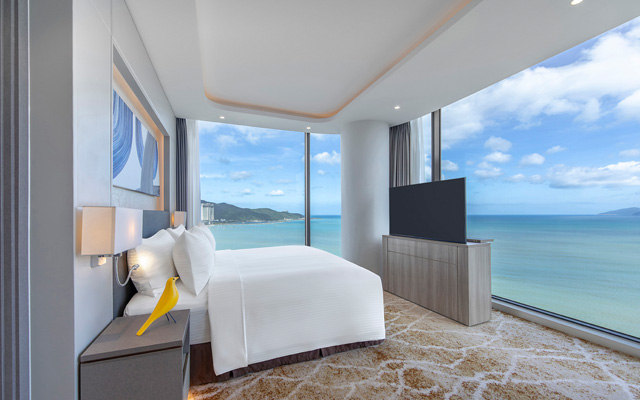
Alma Resort in Vietnam has promoted Vu Thi Huong Giang as resort manager.

Born and bred in nearby Nha Trang, Giang graduated from Nha Trang University with a major in food processing and started her career in 2004 as a waitress at Six Senses Ninh Van Bay, where she steadily climbed the career ladder over a decade to become an F&B manager.

She has also worked for Vinpearl Land and Mia Resort in Nha Trang, and was the F&B director at The Anam, before moving to Alma in the same capacity. She was subsequently promoted to executive assistant manager of F&B.

In her new role, the resort’s executive chef, executive assistant manager of rooms, assistant director of F&B and the recreation manager report to her.

Sabre SafePoint adds travel restriction tracking capability

0

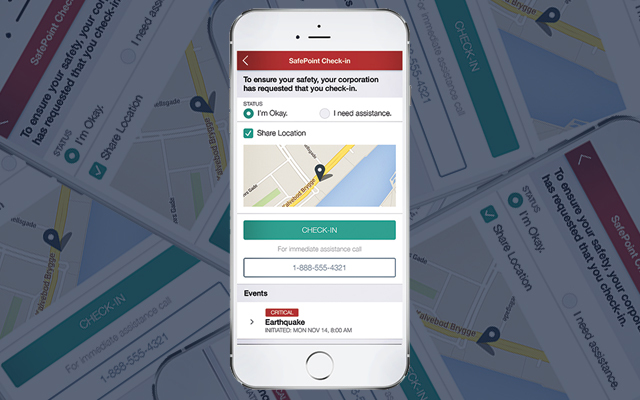
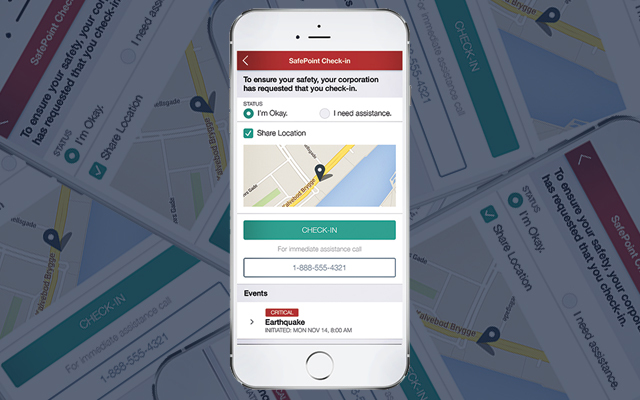
Sabre Corporation has expanded SafePoint, its travel risk management product, to include global travel restriction tracking.

The solution is not limited to a singular event, and instead, provides information regarding the spread of Covid-19 and new variants, as well as destination entry restrictions imposed by countries including masks, vaccinations, health documentation and quarantine requirements.

SafePoint monitors global travel restrictions and enhances traveller safety

SafePoint monitors world events in near real-time, 24/7. It utilises hundreds of data sources for events and restrictions that may impact travel arrangements and/or traveller safety. This would help Sabre’s travel agencies and corporate customers make more informed decisions and enhance the safety of their travellers by alerting them to restrictions that may impact their itinerary. Travellers will then be able to use the information to take action at any stage of their trip.

“As travel rebounds, we believe a duty-of-care and crisis alerting solution is imperative to any travel business, especially in a world where travel advisories can change rapidly,” said Saunvit Pandya, senior director of product management, Sabre. “SafePoint is designed to keep travellers and corporate travel managers apprised of critical events in a fast-moving world.”

G Adventures unveils forecast of top 10 travel trends

0

G Adventures has released its predictions of the top 10 travel trends for 2022, which looks to be a more purposeful and intentional travel year.

The forecast is based on two surveys of more than 4,500 travellers who make up the tour operator’s global consumer panel, of which two thirds are former travellers. Surveys used are from July and October, 2021.

Majority of travellers deem travel as important to their wellbeing and mental health, finds survey

1: Community tourism = responsible travel
Close to a third of respondents said they will put more focus on travelling responsibly in 2022. Travellers are looking for adventures that move through several smaller communities which they can do on a walking trek as it supports many local people as they explore their region.

2: Travellers care more about supporting local people
Coming in well ahead of carbon footprint and plastic reduction, travellers want their money to directly benefit local people. At 66 per cent globally, this trend was intensified by the pandemic’s impact on countries that rely on tourism for economic survival.

3: Workations increasing in popularity
No longer just for digital nomads, workations have hit the mainstream. Of its panel respondents, 24 per cent said they are able to work from anywhere – with that number jumping to 46 per cent for 18-34 year olds. An increasing number of people (37 per cent up from 19 per cent in December 2020) plan to combine work with future travel.

4: Hostels set to make a big comeback
The need for social connection among young travellers is stronger than ever with 63 per cent of respondents aged 18-34 saying they are likely to try a hostel experience after the pandemic. Meeting people to socialise and possibly travel with was the most important factor going into selecting which hostel for 71 per cent of panelists.

5: Desire to disconnect from devices
Workationers aside, travellers want to reconnect with people and places but are desperate to disconnect from the online world while on holiday. Some 54 per cent of respondents want to pause social media and reduce screen time, with 28 per cent saying socialising and meeting new people is their top wellbeing priority for booking their next holiday.

6: Having a bit more cash to splash
With staying in spurring a savings boom, 18 per cent of respondents said they have bumped their travel budget for an international holiday. That surplus likely means their travel dollars will take them on bigger adventures than they might have thought possible.

7: Nay to staycations, yay to remote destinations
Domestic holiday appeal is wearing thin as the pandemic rolls ever onward. Only 18 per cent of respondents said they would prefer to stay closer to home rather than head further afield on their next international holiday. Close to a third (30 per cent) said they are less likely to take a staycation in 2022.

8: Lockdown lethargy spurs active lifestyles
Being physically active on their next holiday came in strong at 70 per cent, with 64 per cent of travellers saying their physical and mental wellbeing is a top consideration for their next holiday.

9: Wellbeing and mental health come first
With an overwhelming 95 per cent of travellers saying travel is important to their wellbeing and mental health, many are looking for a holiday that helps them to reconnect and optimises travel as a means to revitalise.

10: Revenge travel is out, reconnection travel is in
Travellers are hungry for new experiences and stronger connections with others. Although the term ‘revenge travel’ gained popularity over the course of the pandemic, reconnection travel now sits at 42 per cent compared to revenge travel at 14 per cent.

Country Inn refreshes brand identity, plots expansion

0

Country Inn Hotels & Resorts plans to expand its footprint in more than 12 other locations this year, with the aim of increasing its property count from the current five resorts to 20 by 2023.

Planned locations for expansion include Goa, Dehradun, Mussoorie, Varanasi and Vrindavan.

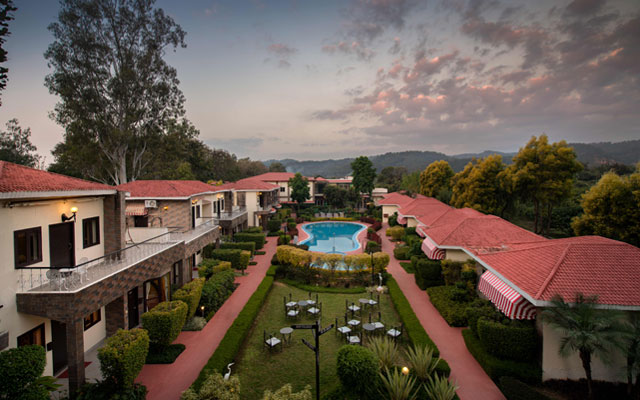
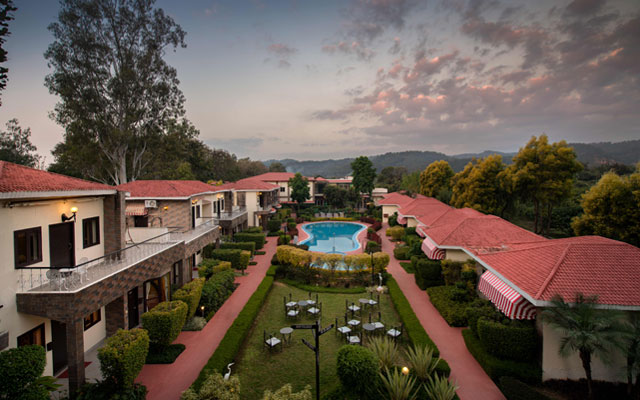
Country Inn Tarika Riverside Resort, Jim Corbett (above) is the latest addition to the brand’s portfolio

As well, the company recently launched a brand new logo and identity. The new logo representation with a lotus symbolises warmth and hospitality which is the core ideology of the brand. The new logo and identity also resonates with the brand’s vision of having hotels in serene destinations.

Akhil Arora, COO, Espire Hospitality, said: “It’s a crucial time for the tourism industry and with the unwavering increase in domestic travel in the last few years, we see an enormous potential for our Country Inn Hotels & Resorts brand. We plan to grow our portfolio exponentially, making it a leading mid-market resort brand known for its quality of service.”