
Travelport+ updates with new tools
Travelport has brought enhanced, modern retailing tools onto its Travelport+ platform to make it easier for agents to deliver better service to their travellers.
Travel agents can expect more capabilities that improve airline connectivity and minimise back-end work in customer servicing; upgraded hotel content distribution, with richer room, rate and rules details as a result of upgraded connectivity with Hilton; and a new version of Smartpoint which now comes with more customised itinerary quotes in Trip Quote as well as faster Assisted Ticketing capabilities that streamline complex ticketing and exchange tasks for agents.
Travelport has also launched a new Trip Manager portal on Travelport+, offering travellers the ability to service their own trip, and carry out fast, easy transactions on the go. The self-service option for travellers using the new portal allows agencies to preserve resources while providing travellers an improved experience with the ability to easily add extras to their trip.
These enhancements are part of Travelport’s continued Intelligent Storefront mission, which aims to make it easier for agents to understand offers and compare brands with similar attributes on a like-for-like basis, and to easily identify upsell offers with NDC and ATPCO fares.
Jen Catto, chief marketing officer at Travelport, said: “Today’s enhanced features empower travel agents to offer more choice, enable greater self-service capabilities for travellers, and simplify the most complex servicing processes.
“All Travelport+ customers enjoy a more modern, digital-first retail experience when connecting through our platform. That includes our desktop customers, who have said that the latest version of Smartpoint has managed to transform mundane travel management tasks into superior servicing opportunities.”
Western Australia delays border reopening indefinitely
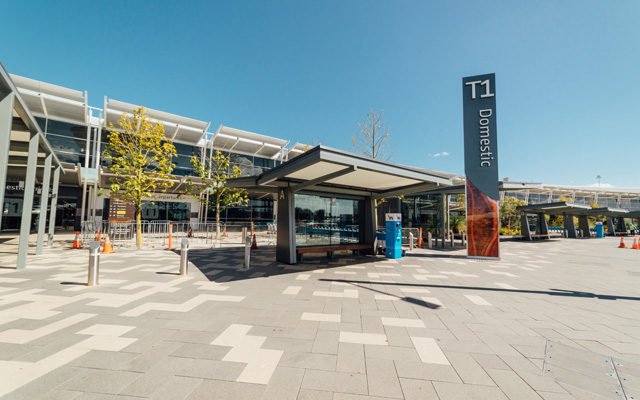
Western Australian premier Mark McGowan has extended his state’s hard border closure beyond February due to Omicron concerns.
McGowan, however, did not set a new date for reopening, stating only that it would be considered over the next month, reported news.com.au.

He explained that the delay in border reopening was in view of the large number of people in Western Australia (WA) who were not yet eligible for their boosters, which are key to fight Omicron.
The aim now for WA is to achieve a third booster vaccination rate of at least 80 or 90 per cent. Currently, around 90 per cent of locals have been double jabbed, and around 26 per cent of those 16 years old and above have received a third dose.
However, from February 5, travel exemption rules would be expanded on compassionate grounds, although individuals would still be required to undergo testing, and quarantine for 14 days upon arrival. They would also need to be triple-vaxxed.
Under the revised plan, travellers allowed to enter WA include returning WA residents with direct family connections in the state; those returning on compassionate grounds including for funerals, palliative care or terminally ill visitation; people seeking urgent and essential medical treatment, as well as commonwealth and state officials, members of parliament, and diplomats; among others.
There are now 79 active cases in WA, with 23 in hotel quarantine, 56 in self-quarantine and none in hospital.
Kimpton Kitalay Samui welcomes Michael Janssen as GM

As general manager at Kimpton Kitalay Samui, Michael Janssen will spearhead strategy and development to successfully establish the resort in Koh Samui and drive its continued growth.
His other responsibilities include overseeing all resort operations and ensuring excellence in all functions of the hotel, from guest service and sales to profit performance.

Janssen has been with IHG Hotels & Resorts for more than 20 years and has worked in a range of roles and across geographies including EMEA, China, Thailand and Indonesia.
He was previously the area general manager based at InterContinental Hua Hin Resort. There, he was responsible for managing a portfolio of south Thailand’s luxury resorts including Holiday Inn Vana Nava Hua Hin, InterContinental Koh Samui Resort and InterContinental Phuket Resort.
Previously, he successfully managed hotels in Mauritius and Indonesia after leading sales and marketing teams in hotels across Asia and Europe.
Global tourism grows 4% in 2021 but remains far below pre-Covid levels

While global tourism experienced a four per cent upturn in 2021 compared to 2020 (415 million versus 400 million), international tourist arrivals (overnight visitors) were still 72 per cent below the pre-pandemic year of 2019, according to preliminary estimates by UNWTO.
This follows on from 2020, the worst year on record for tourism, when international arrivals decreased by 73 per cent.
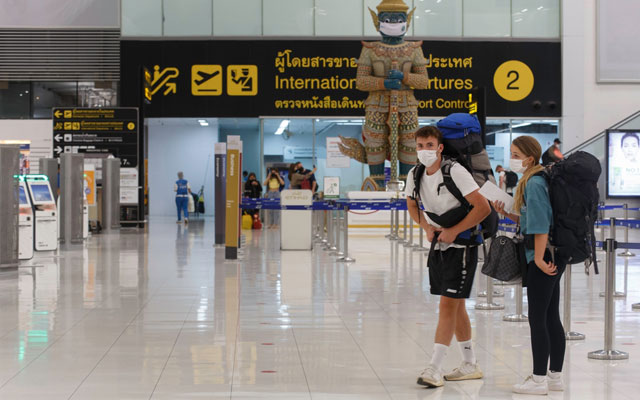
The first 2022 issue of the UNWTO World Tourism Barometer indicates that rising rates of vaccination, combined with easing of travel restrictions due to increased cross-border coordination and protocols, have all helped release pent-up demand.
International tourism rebounded moderately during 2H2021, with international arrivals down 62 per cent in both 3Q and 4Q compared to pre-pandemic levels. According to limited data, international arrivals in December were 65 per cent below 2019 levels. The full impact of the Omicron variant and surge in Covid-19 cases is yet to be seen, said UNWTO.
The pace of recovery remains slow and uneven across world regions due to varying degrees of mobility restrictions, vaccination rates and traveller confidence. Europe and the Americas recorded the strongest results in 2021 compared to 2020 (+19 per cent and +17 per cent respectively), but both still 63 per cent below pre-pandemic levels.
By subregion, the Caribbean saw the best performance (+63 per cent above 2020, though 37 per cent below 2019), with some destinations coming close to, or exceeding pre-pandemic levels. Southern Mediterranean Europe (+57 per cent) and Central America (+54 per cent) also enjoyed a significant rebound but remain 54 per cent and 56 per cent down on 2019 levels respectively. North America (+17 per cent) and Central Eastern Europe (+18 per cent) also climbed above 2020 levels.
Meanwhile, Africa saw a 12 per cent increase in arrivals in 2021 compared to 2020, though this is still 74 per cent below 2019. In the Middle East, arrivals declined 24 per cent compared to 2020 and 79 per cent over 2019. In Asia and the Pacific, arrivals were still 65 per cent below 2020 levels and 94 per cent when compared to pre-pandemic values as many destinations remained closed to non-essential travel.
India demand for SE Asian vacays stay strong
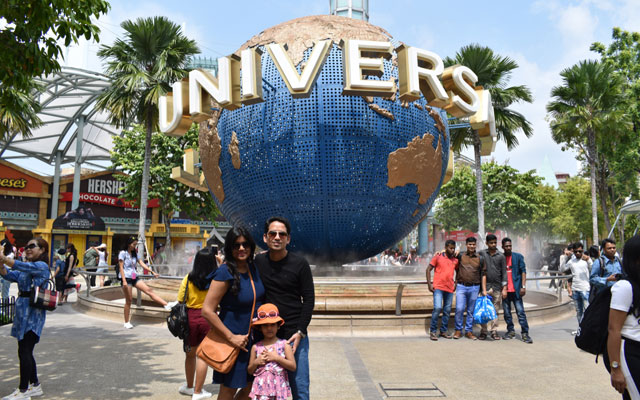
South-east Asia’s myriad destination appeals and close proximity to India are keeping Indian holidaymakers spell-bound, travel agents told TTG Asia.
In fact, many expect buoyant demand for South-east Asia to play a critical role in reviving India’s outbound tourism business.
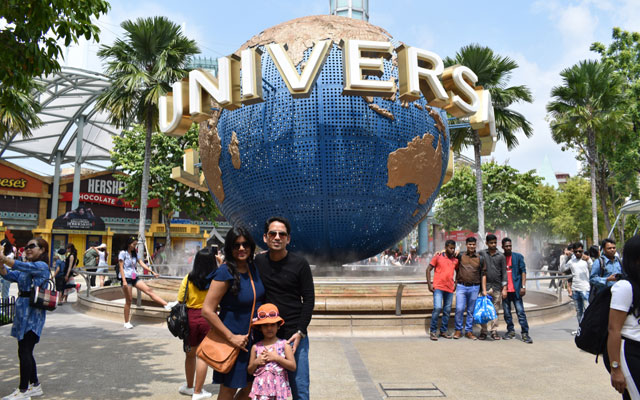
Bookings rebound hinges on the resumption of commercial flights, opined Rajeev Kale, president & country head – holidays, MICE, visa with Thomas Cook (India).
“Our data indicates high interest across a range of consumers – both the small and multi-generational family segment, couples and honeymooners, young working professionals/millennials, and those seeking ‘bleisure’ trips, said Kale.
Counting the region’s many appeals, which include gastronomic variety, wide range of outdoor activities including water sports and jungle adventures, and excellent diving locations, Kale said cruising is another strong business opportunity for Indian outbound specialists.
Other Indian travel consultants expect South-east Asian demand to return with the onset of the summer holidays.
Aditya Tyagi, founder of Luxe Escape, is confident of a good summer showing, as the current Omicron variant has had a less fatal and severe impact on communities compared to earlier variants.
Although Tyagi expects favourable leisure demand, he is less optimistic of destination weddings.
“As far as weddings are concerned, I think Indians will not choose South-east Asian destinations, as that involves charter flights and we don’t have many options due to restrictions on international services,” he explained.
Offering an alternative view, Meera Charnalia, senior vice president & head of MICE & events, Thomas Cook (India), said there has been pent-up demand for destination weddings, along with pre- and post-wedding ceremonies and celebrations. Such celebrations have so far been taking place in India, but clients are looking forward to hosting their life’s milestone in South-east Asia, particularly Thailand and Malaysia.
Given the large expenditure on destination weddings, Charnalia said the return of such overseas events is vital to the revival of India’s outbound tourism sector.
PATA partners launch net zero methodology for hotels

PATA has partnered with global hospitality, travel and tourism sector organisations to release a new methodology to guide hotels on how to set a net zero pathway.
The Net Zero Methodology for Hotels provides detailed guidance on how hotels can approach the technical aspects of net zero, such as what should be included in Scope 1, 2 and 3 emissions; milestones to be reached by target years such as 2025, 2030 and 2040; and how to approach decarbonisation through renewable energy.

The methodology also provides guidance on alignment with frameworks such as the Science Based Targets Initiative, Race to Zero and the Glasgow Declaration.
Graham Harper, PATA sustainability and social responsibility advisor, said: “Although many parts of Asia are still suffering significantly from the impact of the Covid-19 pandemic, as we gradually reopen, it is clear that sustainability is top of the agenda. This methodology will help hotel companies understand the steps they need to take to get on the path to net zero.”
The methodology is authored by Greenview, a global sustainable hospitality consultancy, in partnership with PATA, Tourism Declares a Climate Emergency, Sustainable Hospitality Alliance and WTTC. It was developed through a collaborative process with industry experts, including an advisory group of over 20 hotel companies, and after a wide stakeholder consultation.
The Net Zero Methodology for Hotels is available for download here.
UN report underscores tourism’s key role in global economic recovery
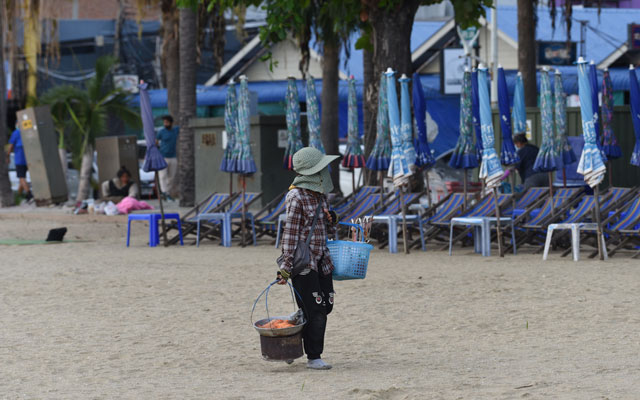
Tourism’s critical role as a source of employment and economic development will determine growth for the global economy, notes the 2022 edition of the World Economic Situation and Prospects by the United Nations.
Drawing on data from the World Tourism Organization (UNWTO), the report underlines the sector’s particular economic importance for developing economies, including Small Island Developing States (SIDS).
After a global contraction of 3.4 per cent in 2020 and a rebound of 5.5 per cent in 2021, the world economy is projected to grow by four per cent this year and 3.5 per cent in 2023.
UNWTO secretary-general Zurab Pololikashvili said in a statement: “The sudden halt in international tourism caused by the pandemic has emphasised the sector’s importance to both national economies and individual livelihoods. The flagship UN report makes use of UNWTO data and analysis to assess the cost of declining tourism and illustrates just how important restarting tourism will be in 2022 and beyond.”
The report notes the pandemic and tourism crisis’ devastating impact on employment, including in hospitality, travel services and retail trade, causing disproportionate effects on vulnerable groups, including youth and migrant workers, as well as workers with lower educational attainment and skills. Exacerbation of the gender divide is evident, especially in developing countries, with women seeing greater declines in employment and labour force participation than men.
Further analysing the sector’s role in economic recovery, the report notes that many destinations, in particular tourism-dependent countries, will need to diversify their tourism throughout 2022 and beyond. Many destinations are already developing domestic and rural tourism to help local economies in rural and depressed areas to boost job creation and protect natural resources and cultural heritage, while at the same time empowering women, youth and indigenous peoples.
Additionally, the report notes how SIDS can take steps to ensure local businesses and workers retain more of the economic benefits that international tourism brings.
Moving with the times

Right from the start of the pandemic, PATA stepped up to help the industry with crisis management. How are these efforts paying off two years on?
This crisis is longer-running and more complex than anticipated. Last year, we created the Crisis Resource Center to assist destinations as they looked to recover, with toolkits focusing on Destination Marketing and Crisis Communications. This had been well-received by our members, particularly from the public sector with destinations like the Maldives using these tools to help welcome back tourists.

In July 2021, we launched an 8 Point Plan to support industry recovery. Our programmes now range from government-only Destination Recovery Forums in partnership with World Bank, to PATA Innovation Workshops for members, to the launch of a Global Travel Sector Vaccine Coalition in partnership with WHO Foundation, Virgin Atlantic and Collinson. We’ve also run an Informal Workers Project in Thailand, to support the needs of the most impacted segment in our industry. Our goal is to deliver tangible learnings and projects that are effective and can be replicated in the region and globally.
During this unprecedented crisis, PATA is working hard to support our members and the industry in multiple ways.
How are PATA’s support programmes evolving now that travel is resuming in many tourist regions?
We have more strategic initiatives launched, including the Tourism Destination Resilience (TDR) project, Destination Marketing and the Net Zero Methodology for Hotels.
The Crisis Resource Center focused on providing frameworks dealing with the pandemic. The pandemic has highlighted and given the opportunity to proactively address other vulnerabilities and capability building needs for our industry. With the support of GIZ, we launched TDR to look beyond Covid-19 and help destinations and organisations prepare well for expanded capacity and future crises. Destination resilience is foundational to achieving sustainability.
In addition, we’re using all our industry communication channels, such as virtual events, webinars, social media and industry eDMs, to support the destination marketing efforts of all our member destinations. We hosted our first Wellness and Luxury Conference and Mart in October (2021) and we’re continuing our Destination Insights Series in partnership with the BBC.
These forums are critical to support the reopening of travel since destination marketing is more multi-level and complex than ever.
We are seeing governments in Asia-Pacific easing their steel hold on travel restrictions in the later months of 2021. Where are we in terms of recovery?
The easing of travel restrictions in the Asia-Pacific region is a good step forward, but with the new variant emerging, the world and therefore the travel industry is not out of the woods. The next few months will be critical, particularly as we head into the holiday season.
Fortunately, destinations across Asia-Pacific have been vigilant in addressing health and safety protocols with many destinations such as Singapore, Malaysia and Cambodia achieving greater than 75 per cent vaccination rates.
From incorporating the right health and hygiene protocols to evolving products and services for the needs of the post-pandemic consumer, the industry here will be in a strong position to recover in line with the global battle to address this pandemic.
In your conversations with tourism leaders in the western world, where travel and tourism have resumed earlier than in Asia-Pacific, what lessons could our region learn from them to better our recovery efforts?
It’s interesting to observe the differences in approach taken by various nations. The underlying, ever-evolving medical information and statistics may be similar but there are interesting cultural, economic and political elements at play that influence policies and practices.
There are a couple of key elements differentiating the East from the West currently. First, in many cases,
Asian destinations have taken a more conservative, community-oriented approach to ensuring health and safety protocols are in place before marketing for tourism. Second, many parts of Asia have not had the access to vaccines that the wealthy Western nations have had. Deployment of vaccines in Asia has been more limited by supply than acceptance. Equitable access to vaccines is critical for a global recovery, which is why we co-launched the Global Travel Sector Vaccine Coalition.
Perhaps, the bigger lesson to be learnt is more for the Western affluent nations and the pharmaceutical companies. The lesson for Asia would be to continue marketing their preparedness and travel offerings – keeping their destinations top of mind for consumers.
What are some opportunities or trends in travel and tourism that organisations and destinations should pay greater attention to as they rebuild business?
Globally, consumer interest in human connections, travel, nature, and for wellness experiences is high after more than a year of social distancing, quarantining, and staying at home.
Prior to the pandemic, wellness tourism expenditure was growing between eight and 11 per cent in North America, Europe and Asia –with Asia seeing the highest growth rate. International wellness tourists spend 35 per cent more than the average international tourist (according to Global Wellness Institute, based on tourism data from Euromonitor). Interest in wellness and nature-based tourism will only be heightened emerging from the pandemic.
The current health and economic crisis caused by Covid-19 has been an accelerator of many existing trends, including the rise of conscious capitalism. According to a study by Accenture, 60 per cent of consumers are now making more environmentally friendly, sustainable or ethical purchases. This should influence how companies are managed, properties are developed, and products and services are designed and delivered.
The art of reimagination and reinvention
The Covid-19 pandemic may have dealt Singapore’s tourism industry a tough hand, with tight travel curbs over the past two years, but one silver lining has emerged from the crisis that may yield long-lasting benefits.
In a bid to increase local patronage to tide through the travel slump, great strides have been made by travel and hospitality players towards innovation of their tourism products.
Tour operators have churned out creative offerings that provide unique, immersive and culturally-rich experiences. Think zipping around the city in a vintage Vespa sidecar to explore filming locations of the Crazy Rich Asians movie or visiting a traditional coffee roasting factory and watching craft masters work on paper making.
Local agency Tribe Tours gamified the tour experience in what it touts is the first-of-its-kind product in the local market with Chinatown Murders. The outdoor escape room game tour requires players to solve puzzles around the heritage district – an innovative tour format that has since been imitated by other operators.
Domestic response to the game tour has been “unexpectedly good”, according to founder Jason Loe, who attributed the warm reception likely to the SingapoRediscovers Vouchers scheme launched by the Singapore Tourism Board in December 2020 to stimulate domestic tourism in the absence of international travel.
The agency also hosts livestream tours, which pulls back the curtain on everything from food factories to disappearing trades in Singapore.
Loe told TTG Asia that they have been mulling over hybrid concepts and livestreaming tours even before the pandemic struck, but Covid-19 accelerated that pivot as “there was time to properly curate meaningful experiences and tap into new fields”.
Paranormal tours offered by Oriental Travel and Tours have also proved to be a hit among locals, which has led the operator to come up with more of such after-dark offerings, shared founder Stanley Foo.
The agency’s guided Creepy Tales of Singapore outing takes participants to spine-chilling locations such as the Bukit Brown Cemetery with over 100,000 tombs and a World War 2 battlefield to educate them on Singapore’s urban legends and history.
Meanwhile, hotels are also dialling up the novelty factor by offering experiential stay packages that allow guests to experience Singapore in unusual ways.
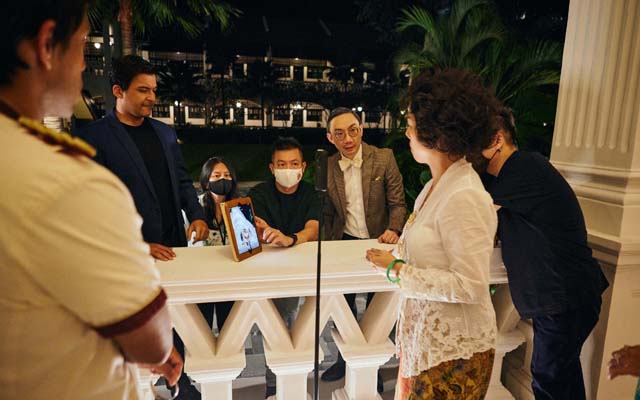
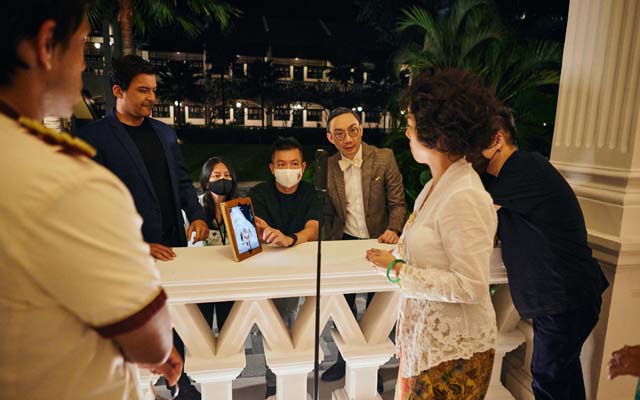
Raffles Hotel Singapore debuted its first-of-its-kind virtual interactive play, The Curious Case of the Missing Peranakan Treasure, set against the backdrop of the iconic grand dame. According to managing director, Christian Westbeld, the detective whodunit tale “exceeded expectations” and was “very well-received”, with guests “pleasantly surprised by this unexpected experience from a hotel”.
“We wanted to give guests the flexibility to enjoy this from the comfort of their homes wherever they are in the world or for local guests to experience the play in real life at the property itself – where the theatrical experience transcended the virtual realm in the form of a treasure hunt through exclusive daycation and staycation packages,” Westbeld explained.
Elsewhere, The Fullerton Hotel Singapore and The Fullerton Bay Hotel Singapore are luring guests with an array of unique experiences, including guided cultural tours around The Fullerton Heritage precinct, sustainability-themed tours at the Fullerton Farm where an array of fresh ingredients are grown, as well as culinary and cocktail-making workshops.
Singapore’s recent move to ease border controls with Vaccinated Travel Lanes (VTLs) forged with several countries signal a positive sign towards tourism recovery. As of end-December, the VTL scheme, which kicked off in September, allows quarantine-free travel for vaccinated travellers from 24 countries including the UK and the US.
Since news of the VTLs broke, The Fullerton Hotel Singapore and The Fullerton Bay Hotel Singapore have received enquiries and bookings from a mix of international travellers and Singaporeans who are returning primarily from the UK, the US and Australia, according to a spokesperson.
To cater to VTL travellers, both properties have rolled out the Experience Fullerton Hospitality package which includes daily breakfast for two, S$50 (US$37) dining credit and one-way limousine transfer for a minimum stay of three nights.
The package has seen “strong demand”, said the spokesperson, adding: “We expect many of these bookings to materialise in the first quarter of 2022, and we anticipate an uptick in bookings from VTL travellers as more VTLs are opened over the coming months.”
While the current spread of the new Omicron variant threatens to derail the muted inbound improvements, industry stakeholders remain cautiously optimistic on the country’s tourism outlook.
Loe reckoned: “We have built and cultivated a strong relationship with our local fans, so much so that they now look forward to our new tour launches. They have also become the ‘evangelists’ and word-of-mouth for Tribe’s experiences when their friends come back to Singapore.”
Association of Singapore Attractions’ chairman, Kevin Cheong, expressed hope that the creative, innovative and entrepreneurial spirit displayed by tourism businesses will prevail beyond this current period. “We must keep this spirit alive to continually reinvent ourselves, refresh our experiential offerings and most of all, rejuvenate our products,” he said.
Sarah Wan, general manager, Singapore, Klook observed that travellers worldwide are increasingly seeking more hyper-local and authentic experiences.
She said: “The efforts to innovate and deepen offerings will start to bear fruit once cross-border travel resumes, paving the way for a wider range of offerings for overseas travellers when they return. This is a perfect opportunity for Singapore to showcase a different side, beyond the urban environment.”








PATA has formed a new preferred partnership with Flywire, a global payments enablement and software company with significant experience in the travel industry.
According to PATA CEO Liz Ortiguera, the partnership with Flywire can assist its members in enhancing their international payment processes.
Flywire brings industry-leading expertise to the PATA community to solve today’s complex travel payments and reconciliation challenges. Their focus travel segments include DMCs, travel operators as well as accommodation providers.
PATA members could benefit from expanded payment options for their guests and customers, timely receipt of payments in full, as well as digitised invoicing, automated payment tracking and reconciliation.
“Payment experience actually impacts a customer’s choice of travel agent or tour operator, and it’s not hard to understand why. Nearly half of travellers have experienced problems travelling because of payment issues,” said Colin Smyth, vice president and general manager of Travel at Flywire.
“Collecting and processing payments in multiple currencies and payment types is quickly becoming an integral part of (the) guest experience.”
Flywire can be used as a standalone product, and also integrates seamlessly with existing booking systems providing a one-stop shop for payment through receipt to reconciliation.