The Australian Government is heavily investing in tourism, where on March 22, 2022, it announced a A$60 million (US$44.7 million) funding boost in tourism. Tourism Australia will also receive a coffer boost of A$45 million over the next two financial years to help bring international guests back to regions hit hardest by international border closures.
A third round of funding – part of a previously-implemented Consumer Travel Support Program – was also released in March 2022. This provides A$75.5 million in targeted support and is open to eligible travel agents and tour providers who are supporting consumers to rebook their travel using existing Covid-related travel credits.
Glen Helen Gorge in the Northern Territory is one of many natural wonders in Australia
When asked how business looked like at the start of 2022, regional general manager, South & South-east Asia, Tourism Australia, Brent Anderson told TTG Asia: “All the indications we received have been positive. Our recent insights show that monthly flight searches and bookings to Australia rose with news of the return of international travel.”
For example, the top performing market during the week ending March 20, 2022, was Singapore, which showed a 93 per cent increase when compared to the same week in 2019.
Although searches from other top markets such as the UK, Germany and India were not as dramatic, Anderson indicates that “recovery won’t happen overnight”.
He remains optimistic that the industry is “heading in the right direction”.
Carolyn Smith, general manager of the new Courtyard by Marriott Melbourne Flagstaff Gardens, shares the same optimism.
“It’s going to take some time for the industry to rebuild and return to pre-Covid levels of trade, but we’re very optimistic and buoyed by the positive signs that traveller confidence is growing.”
Help is also available at the local level, Smith shared, stating that the Victorian government and City of Melbourne are also offering attractive incentives, including travel and dining rebates, to encourage visitors back to the city for work and play.
Currently, forward bookings for the hotel look healthy, thanks to several other major events and sporting spectacles on the calendar. In fact, all rooms were sold out during the F1 Grand Prix period from April 8 to 10.
To stay top-of-mind in key markets, Tourism Australia has been rolling out fresh marketing campaigns, as soon as borders reopened on February 21, 2022.
Anderson said the existing Come and Say G’Day – Australia is Yours to Explore campaign, which launched in Singapore ahead of Australia’s reopening, will be rolled out in other Asian markets such as India, Malaysia, Indonesia, South Korea, Japan, and Greater China “as travel reopens”.
Meanwhile, the Come and Say G’Day – Don’t Go Small. Go Australia campaign will run in Western markets including Germany, France, Italy, Canada, the US and the UK.
“These campaigns are just the first step in a long-term strategy to restart tourism to Australia, with further investment in tourism marketing campaigns internationally to come in 2H2022,” said Anderson.
When asked for Australia’s projected recovery for 2022, he told TTG Asia: “Based on the travel patterns to destinations that have opened before us, we expect that inbound travel will recover quickly up to about 40 to 50 per cent.”
Tripadvisor has named Matt Goldberg its chief executive officer.
Goldberg will succeed co-founder and long-time CEO, Stephen Kaufer.
With over 20 years of leadership and experience in strategy and operations across a number of leading media, advertising, and consumer-facing companies under his belt, Goldberg will return to the travel sector to innovate within the industry and leverage the platform’s reach and community trust. He foresees many opportunities to create value for travellers and partners alike.
Previously, Goldberg was executive vice president for North America and global operations for The Trade Desk. He will take on his new position at Tripadvisor from July 1, 2022 and will be based at the company’s Needham, Massachusetts headquarters.
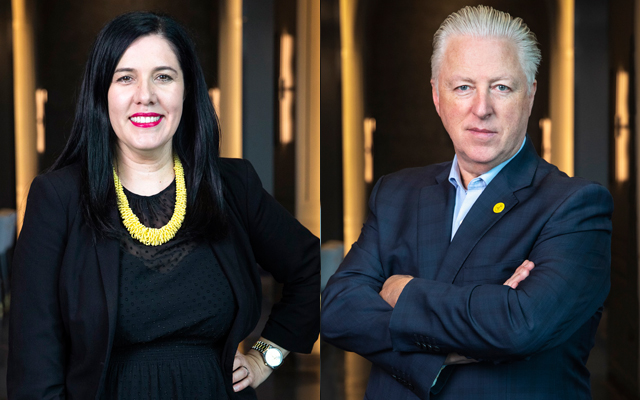
Newly-opened voco Melbourne Central has appointed Erik Stuebe as general manager, and Christine Bridge as director of sales & marketing.
Prior to this move, Stuebe was general manager of InterContinental Melbourne The Rialto, a position he held for the past six years. In addition to being voco Melbourne Central’s general manager, he is also the area general manager for Victoria and Tasmania.
Meanwhile, Bridge brings with her a depth of experience and knowledge having held various leadership positions during her eight years with IHG Hotels & Resorts.
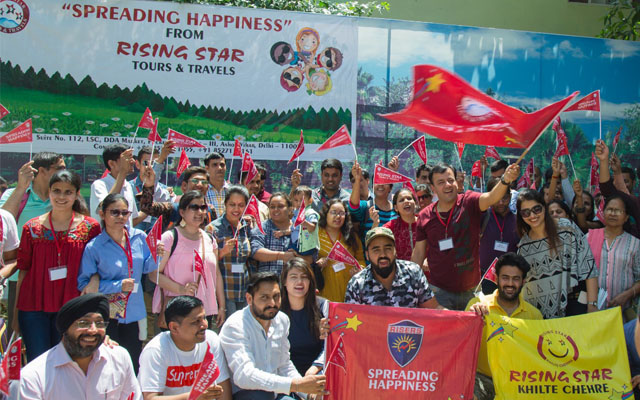
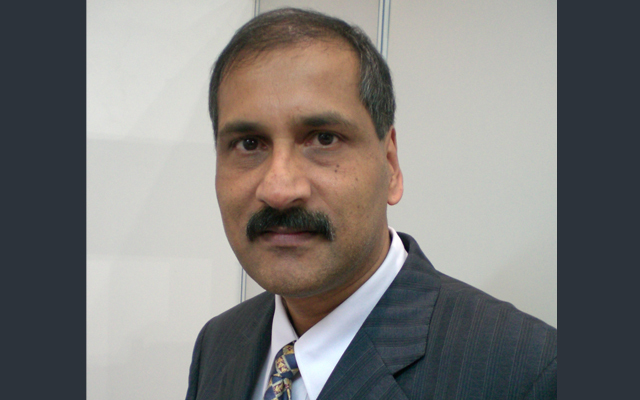
In July 2019, Amit Jain, founder of Rising Star Tours and Travels (RSTT), had met a few visually-challenged individuals and learnt that their most unfulfilled desire is to travel.
Being part of the tourism industry, he took it on himself to create a platform that helps visually-challenged people to travel. He wanted to give this community an experience that they would never have dreamt of.
RSTT hopes to give the visually-challenged community great travel experiences
Jain shared that travel for visually-challenged persons usually involves a day trip where they were taken someplace and brought home by the evening. If it was an overnight stay, the quality of the accommodation was compromised and there were limited volunteers on the trip to ensure the comfort of the travellers.
He said: “So, I ensured that on all of our trips, the stay is in a good four-star or five-star hotel. For every three visually-challenged participants in the trip, we have one assigned volunteer who looks after their needs.”
The first trip that Jain organised was a trip to a small picturesque hamlet called Pangot located in the state of Uttarakhand. Following that, RSTT has organised 10 similar trips to domestic, as well as international destinations like Jaipur, Goa, Jim Corbett, Thailand and Dubai, where the group size for each trip ranges from 50 to 70 people.
RSTT is now preparing for its 12th trip to Shimla on May 12.
Jain reaches out to various bodies working for the welfare of the visually-challenged to create awareness about such tours, such as the National Association for the Blind, All India Confederation of the Blind (AICB) as well as newspapers and online groups dedicated to the visually-challenged.
Response has been overwhelming and they are unable to accommodate all who are interested to join their trips, Jain added. Unlike at the beginning, where many were sceptical and he had to convince people that such tours were possible for the visually-challenged community.
His efforts paid off as over time, RSTT received very positive feedback from those who had travelled on their trips.
A recce of the destination is done before planning the trip, and the RSTT team discusses with hotels and other stakeholders involved, like transport providers, to sensitise them about the needs of visually-challenged individuals. Even the volunteers are educated on how to deal with the group.
“Frankly, visually-challenged tourists are the same as a ‘normal’ tourist. They like to dance, sing, listen to music or take a dip in the pool. They experience the same rush, when say someone with sight would feel while on a jungle safari,” explained Jain.
Presently, the finances of these trips are managed in a three-way arrangement: RSTT contributes the first part, the second part by sponsors, and the third part is managed by the visually-challenged participants themselves.
Jain said: “A very nominal contribution is taken from the traveller to maintain their dignity and keep their commitment level high; in the past, what had happened was that many individuals didn’t turn up even after confirmation.”
He shared his future plans of organising more of such trips but with financial constraints, many requests will be turned down. He also hopes to organise similar trips for people with other disabilities.
He also spoke of creating a mobile application where people who want to volunteer on such trips can submit their details and be involved.
Jain explained: “For example, if a visually-challenged person is travelling to Mumbai on his own and wants the service of a volunteer who can help him to explore a certain part of the city, an interested person can offer his or her service. However, there will be no money involved in such an arrangement.”
Eat well
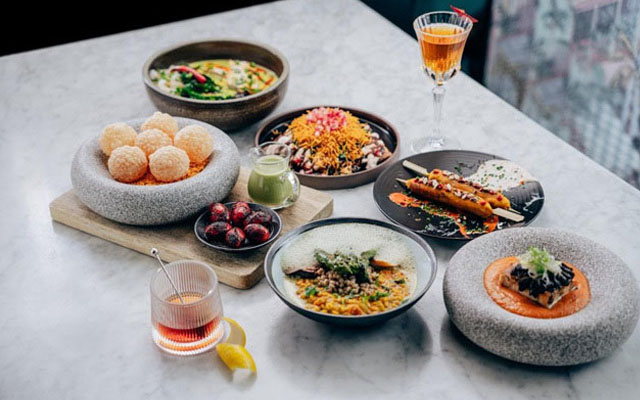
As the saying goes, you are what you eat. At Ovolo Hotels, guests can dine with peace of mind, knowing that a vegetarian-led offering is guaranteed across all dining venues.
Launched on February 14, Ovolo’s Plant’d initiative is the company’s ongoing pledge to ethical eating and conscious cuisine, and is an extension of its Year of the Veg campaign that was launched in October 2020 to transition menus to plant-based dishes for an initial 365 days.
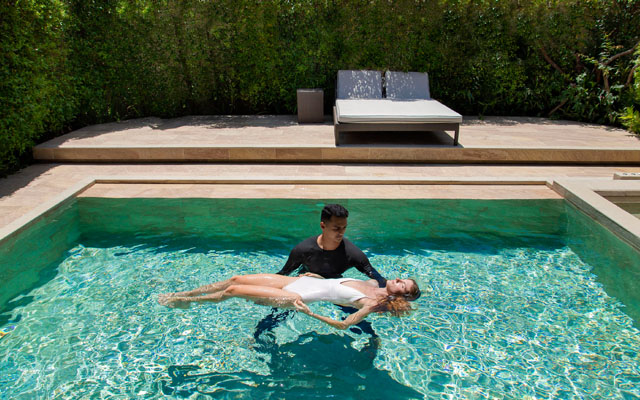
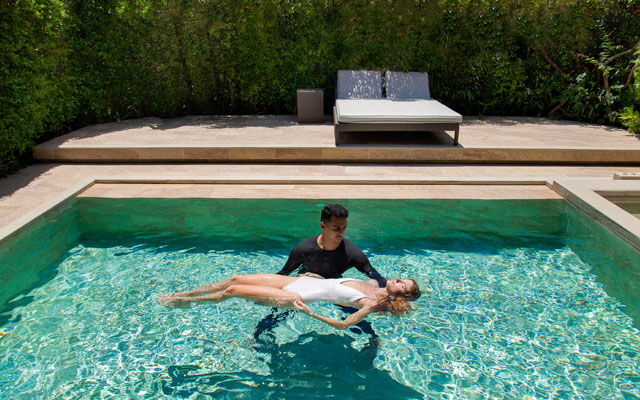
Weightless therapy in action at the new Banyan Tree Veya Phuket
Ovolo’s group creative culinary partner, Ian Curley, worked with restaurants across Ovolo Hotels to take the Plant’d veg pledge and to revamp all their menus.
While the initiative is not executed at Ovolo Collective properties, dining menus still carry a variety of vegetarian and plant-based options.
Ovolo said the move was inspired by a growing consumer interest in the many benefits of a plant-based diet. The move not only promotes an ‘eating good to feel good’ mentality, it also supports sustainability goals by sourcing from suppliers who offer nutritious, delicious and sustainable food solutions.
Ovolo Group’s founder and executive chairman, Girish Jhunjhnuwala, told TTG Asia: “Plant-based and vegetarian dining was always in the back of our minds. but it wasn’t until the pandemic that we saw the trends really shift, and there was a real opportunity to be a first-mover in a market that was starting to pick up globally.”
He added: “Ovolo prides itself on being an industry leader. We believe that the world changes, therefore we continue to evolve – we want to ensure we are doing our bit to help preserve our environment, promote healthy eating, and enhance the image of vegetarian and plant-based dining.”
Curley said Ovolo’s move to vegetarian dining “has been even more successful than we anticipated, and we now find ourselves part of a new wave of plant-based pioneers”.
He said: “A key focus for us has been ensuring we are creating something that still appeals to everyone – from vegans to flexitarians, and those who are simply keen on expanding their palette.”
Indeed, Ovolo’s plant-based menu is anything but solemn and bland. Healthy, plant-based ingredients are played up with creativity. Imagine: chargrilled okra seasoned with mushroom XO sauce from the kitchen of Alibi at Ovolo Woolloomooloo, Sydney; an escabeche made of marinated paneer and grilled maitake florets on makhani curry from Veda at Ovolo Central Hong Kong; oyster mushroom ceviche with coconut, fermented poblano and pineapple from Lona Misa at Ovolo South Yarra, Melbourne.
When asked if the initiative would carry on beyond a year, exceeding the lifespan of the Year of the Veg campaign, Jhunjhnuwala said the progamme has a “flexible timeline” but the company is keen to stick to it and evolve the initiative as time passes.
Ovolo’s Plant’d initiative answers the call for healthy and responsible consumption
Stay well
Banyan Tree Veya is the latest addition to Banyan Tree Group’s multi-brand ecosystem, and one that is positioned as a resort offering bespoke wellness programmes and knowledge that will continue to benefit guests beyond their stay.
While the group is already known for its well-being offerings through the restful Banyan Tree resorts and Banyan Tree Spa sanctuaries, Lee Woon Hoe, the group’s senior assistant vice president and executive director of well-being, said Veya was a necessary addition.
“With our hyper-stimulated modern life, chronic stress erodes our natural immunity and regenerative capacity. Our nervous systems cannot truly relax and therefore, rest. At Banyan Tree Veya, our ethos #OwnYourPresence guides our mission of inspiring individuals to travel inwards and become conscious of how their daily actions, thoughts and emotions interact with their physical being,” said Lee.
Defining the difference between Banyan Tree Spa, which is an established wellness brand, and the new Banyan Tree Veya, Lee said the Veya experience is led by certified multidisciplinary well-being hosts around a three-step protocol of Awareness, Discovery, and Sustenance.
“During their stay, guests will gain a greater awareness on their state of well-being through Banyan Tree’s proprietary eight pillars of well-being. They can discover new tools and knowledge through mindfulness practices, somatic movements and lifestyle learning workshops, so that they are empowered to continue to improve their own well-being when they return home,” he explained.
The first Banyan Tree Veya is set in Phuket, within the existing Banyan Tree Phuket resort. Luxury accommodation is offered, and guests can pursue well-being practices in the privacy of their room. Amenities including a well-being minibar, yoga mats, sound therapy bowls, exercise stretch bands and more.
Attention is paid to healthy meals, with Veya offering plant-forward cuisine that weaves together Asian and Mediterranean influences in a creative, flexitarian approach that respects ingredient provenance.
Menu signatures include bowls, broths and reinterpreted local dishes around a Fuel-Balance-Repair daily sequence. Resident nutrition sommeliers will help guests curate a menu that fulfils dietary needs and preferences during their stay.
Banyan Tree Veya at Vabbinfaru, Maldives will follow in 4Q2022.
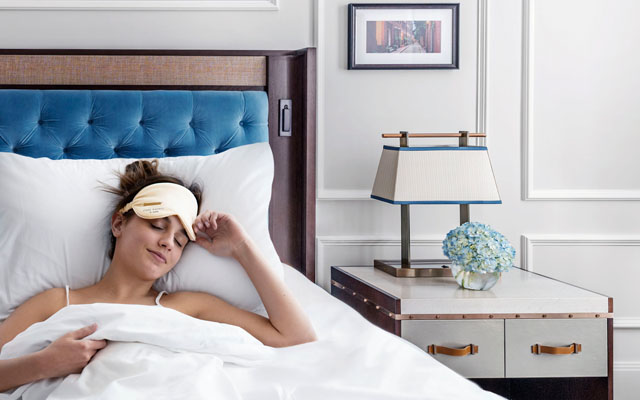
Langham’s Sleep Matters by Chuan takes snoozes seriously
Sleep well
Determined to help guests rest better, Langham Hospitality Group (LHG) has created the Sleep Matters by Chuan, a comprehensive programme developed with the World Sleep Society.
Launched across all properties of The Langham Hotels and Resorts and Cordis Hotels and Resorts in March, the programme is crafted on the basis of sleep medicine and scientific expertise.
“Sleep is one of the essential connections between our hotels and our guests,” said Bob van den Oord, regional vice president – operations for North America, Europe and the Middle East of Langham Hospitality Group. “There is a direct link to guest sleep quality and their happiness with their hotel. Sleep Matters by Chuan is deliberately designed to enhance the wellness of our guests with new rituals and habits that they can take home and use long after they have stayed with us.”
All Langham and Cordis properties have embraced Sleep Matters by Chuan, and each have curated their own packages to take guests on a more fruitful sleep journey.
The Langham, Shanghai Xintiandi, for example, has designed a sleep package that includes healthy meals, spa baths, yoga classes, consultation with a sleep doctor, and more; while The Langham, Melbourne brings in a Traditional Chinese Medicine consultant as part of its Sleep Matters by Chuan package.
At the same time, a broad selection of sleep programmes is made available across all properties. They include the Sleep Matters Turndown Kit, which comprises sleep-promoting items like herbal tea and cushioned sleep mask; Sleep Matters Menu, which offers wellness-related items, such as a fitness ball for pre-sleep stretching and white noise sleep machines; a curated Spotify playlist of relaxing tunes; and bedtime reading materials.
All Chuan Spa locations offer Ear Auricular Therapy for Sleep.
According to a spokesperson of LHG, Sleep Matters by Chuan has been well received, with guests saying that they are now more aware of their own sleep habits. Sleep tips offered through the programme have continued to benefit them at home.
As an indication of LHG’s long-term commitment to sleep, it is collaborating with StimScience, a start-up team of neuroscientists and inventors, to launch Somnee, an electronic headband that mimics and enhances the brain’s natural sleep patterns for improved sleep. Somnee will be available exclusively to LHG properties.
Tourism players can now get the opportunity to market and put their products and services in front of a massive market of 20 million gaming players, if they can get their avatars ready in time.
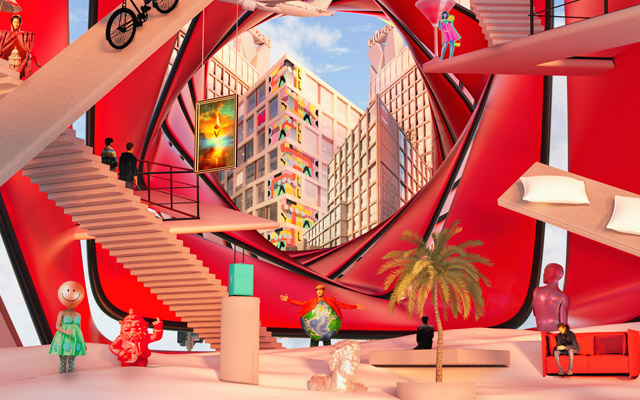
BuzzAR, a Singapore-based metaverse start-up, is launching its virtual land, ToonLand, next year. Bell Beh, its co-founder and CEO told TTG Asia that hospitality stakeholders can then utilise its metaverse with its huge audience for branding and as a new way to engage their customers.
citizenM intends to use profits from the sale of NFTs to finance a real-life hotel where token holders will vote on the location
“We are building the creator tools for creators and authoring tools for businesses to co-create within ToonLand,” she explained.
BuzzAR’s suite of augmented reality (AR) and artificial intelligence (AI) solutions has changed the way tourism stakeholders interact with their customers.
Some metaverse applications for their hospitality clients include gamified wayfinding to guide tourists from point A to B and an avatar engine to turn face into avatar in real-time.
At the upcoming London Tech Week in June, BuzzAR will launch a CryptoToon API (Application Programming Interface) project with the Singapore Economic Development Board, as well as mark the official launch of its genesis NFTs (non-fungible tokens), which will be user-generated.
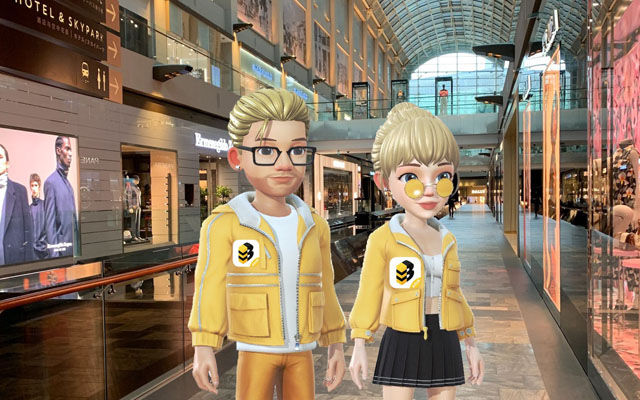
Using the start-up’s intuitive APIs, everyone can create their own avatars and mint their own NFTs. “We have over 2.18 million avatars, created by users from 163 countries and the numbers are growing exponentially everyday,” added Beh.
Essentially, BuzzAR aims “to lower the entry barriers for everyone to tap into this trillion-dollar (metaverse) market”.
Enter the metaverse
First described by sci-fi author Neal Stephenson in his 1992 novel Snow Crash, the buzzword, metaverse, surged to the forefront when Facebook CEO Mark Zuckerberg rebranded his technology giant to Meta Platforms.
Zuckerberg envisioned an embodied Internet, in which people can have enriched interactions – a blend of VR (virtual reality), AR, and AI – and where one can move from object to object, world to world using AR.
Although the metaverse only started trending recently, the concept is not new.
A convergence of the digital and physical worlds or “phygital”, it has already been adopted by gaming platforms. Technology companies have tried to incorporate metaverse elements in popular games including Animal Crossing and Fortnite.
While it is unlikely that virtual travel will ever replace the wonderous experience one gets when exploring a destination in person, it will no doubt benefit hospitality players if they embrace new technologies for their businesses to be future-ready and to increase bottomlines too.
Hotels and NFTs
Hospitality players and aspiring hoteliers can take a leaf from citizenM’s playbook on how to build virtual and physical hotels by utilising NFTs for financing, promote digital art and artists, as well as engage guests both online and in the real world.
In a recent move to venture into the metaverse, the global hospitality brand claimed to be the first to buy property in The Sandbox.
The Sandbox is a metaverse where users can create and monetise their own distinct worlds and game experiences on LANDs, which are NFTs that represent virtual real estate.
citizenM acquired a LAND site in the leading decentralised gaming virtual world to begin building a hotel. “We are thrilled to be the first hospitality company to build in the metaverse,” said Robin Chadha, CMO of citizenM.
“As a brand that has always pushed the boundaries and challenged traditional models, this new venture in The Sandbox fits not only with our brand strategy but also the commitment we have to the creative community and to our guests both online and in the real world.”
Once the LAND is bought, citizenM aims to finance the build of a hotel in the virtual world through the sale of an exclusive collection of NFTs with real-world rewards or utilities attached.
Utilities will take the form of discounts, free drinks and more with the specifics determined by the level of NFT assigned to the purchaser. They will be redeemable at any of citizenM’s growing portfolio of hotels in the real world. Currently, it includes 24 hotels in 16 cities globally.
Once the virtual hotel – a location for avatars visiting The Sandbox to work, sleep and play – is built, citizenM will collaborate with an additional roster of digital artists to create and sell NFTs that can be purchased in the digital space.
Eventually, the pioneer of affordable luxury hotels plans to use these profits, as well as the incorporation of a decentralised autonomous organisation (DAO), to fully finance a physical, real-life property where token holders will vote on the location – essentially creating a hotel for the people, by the people.
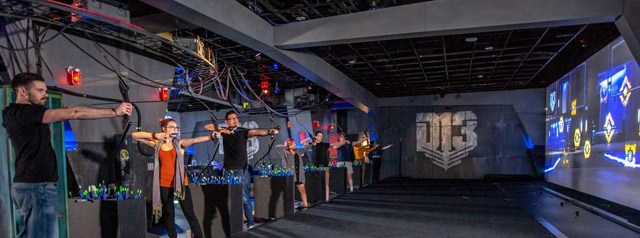
The Hunger Games: The Exhibition invites visitors to use real bows and safe arrows to interact with a virtual world
Cruising into metaverse
Norwegian Cruise Line is also in on the game, launching its own NCL NFT marketplace to allow travellers and NCL loyals to own a piece of its newest vessels, Norwegian Prima and Norwegian Viva.
It claims to be the first in the cruise industry to sail into the NFT marketplace.
Italian artist Manuel Di Rita, who designed the hull art on both ships, will create six art pieces – one will be auctioned at a starting rate of US$2,500, and the remaining NFTs will be sold for prices beginning at US$250. The auction winner will also be awarded a balcony stateroom on one of Norwegian Prima’s inaugural voyages in the US.
All proceeds from the NFT auction and sales will be donated to Teach For America, which finds, develops, and supports a network of leaders who expand opportunity for children.
Elevating the booking process
As BuzzAR’s ToonLand illustrated, another obvious metaverse application for hotel chains, cruise brands, travel agencies and other businesses is to use the platform to amplify their promotional efforts.
For a start, hospitality players can enrich the guest experience – right from the consideration stage.
Xiong Zehui, assistant professor, Information Systems Technology and Design, Singapore University of Technology and Design, told TTG Asia: “In the area of hospitality, when customers book a hotel room, they can tele-present in the room they want to book through virtual reality. In this way, customers can view the inside and outside of the hotel room and know exactly what they are getting prior to booking it.”
Travellers can even turn into digital avatars and virtually walk through the hotel property or resort before the check-in.
Through immersive experiences, hospitality players can now showcase their rooms, décor, amenities and even surroundings to its full splendour to entice keen guests – taking the booking process to the next level.
Indeed as Beh pointed out, adopting metaverse applications can generate various benefits relating to brand awareness, productivity and increase in revenue, done through very creative solutions.
She shared how one hospitality client accumulated an estimated S$500,000 (US$365,604) in bookings after running a WebAR campaign with BuzzAR, gaining an ROI of 100 times.
BuzzAR’s avatars in a public mall setting. Courtesy of BuzzAR
Alleviate manpower crunch
Avatars and AR/VR may even replace physical staff, according to articles on Hospitality Net. AI-powered avatars can further eliminate the variations in service operations caused by human individual factors.
With the metaverse becoming a virtual workspace for hospitality staff, hotels can deploy flexible, work-from-home schedules that today’s workforce demands, as well as address the labour challenge.
Digital attraction opportunities
In the same vein, tourism players can deploy metaverse applications such as the use of mixed reality to create digital attractions based on existing ones in the real world.
Such content can interact with the visitor in 3D and real-time – not only as a complement to the real attraction but also as a stand-alone digital attraction for visitors in the metaverse, according to Xiong.
He cited the example of Disney, the international leader in tourism and hospitality with an extensive portfolio of physical parks and virtual entertainment content worldwide.
Disney’s virtual game, Play Disney Parks, is complementary to its physical parks. The AR game allows visitors of the park to complete tasks with family and friends, based on Bluetooth beacon settings and the phone camera, to activate the hidden AR elements around them.
While waiting in line for a ride on a spaceship, players can for instance see the rocket “flying” overhead.
Another Singapore-based start-up, Vizzio, which is at the forefront of 3D capture and visualisation, has created a 1:1 replica of Gardens by the Bay in under three days for an event.
In the project, Vizzio’s AI created the models using a patent-protected algorithm that can create normalised digital surface model raster by aggregating the height of points gathered from satellite imagery.
Vizzio is able to stream this event over the network to any browser without the need to install any app – an exciting enterprise use of metaverses, according to Vizzio’s co-founder and CEO, Jon Li.
Every metaverse application requires 3D content, be it a digital product, an indoor space or an entire city.
Li opined: “We see the metaverse as a continuum that spans the spectrum of digitally enhanced worlds, realities and business models. It applies across all aspects of business, from consumer to worker and across the entire enterprise; from reality to virtual and back; from 2D to 3D; and from cloud and artificial intelligence to extended reality. It is the future of digital businesses.”
The current pandemic may have made offline activities challenging but the metaverse opened up other possibilities – by scanning the space of the attraction and uploading the results to the cloud, the cloud algorithm can process the data of the authentic international attraction into an explorable space, added Xiong.
In the metaverse, crowding, labour, climate, venue limitations, traffic conditions are no longer part of the equation as visitors can explore attractions without leaving the comfort of their homes.
Room for innovation
Later this year, Cityneon Holdings will launch Avatar: The Experience at Gardens by the Bay’s Cloud Forest in Singapore.
The walk-through event incorporating metaverse applications allows guests to connect with the alien world of Pandora, its bioluminescent environments, mythical creatures, flora, and the captivating culture of its indigenous people, the Na’vi.
Welby Altidor, group chief creative officer, Cityneon, told TTG Asia that the company is constantly on a lookout for ways to integrate different technologies into their immersive offerings.
“The metaverse is something we have already applied to many of our experiences, such as the use of AR, VR, and other new technologies, and we are also continuously exploring different ways to tell the story to make the experiences truly memorable for our guests,” Altidor added.
For its brand-new artefact IP experience, Machu Picchu and the Golden Empires of Peru, Cityneon has integrated a VR experience where visitors can admire the UNESCO heritage site in its full view.
The Hunger Games: The Exhibition uses an award-winning game engine to create the archery experience where visitors use real bows and safe arrows to interact with a video virtual world on the world’s largest interactive touchscreen display.
Cityneon houses teams dedicated to applying new technologies – BIG LAB creates the content for all its experiences, and designs all the guest experiences; ANIMAX, which comprises a team of creative technologists, is behind its state-of-the-art animatronics.
“Our visitors feel that the virtual worlds really add to the experience and the feedback has been very encouraging. We definitely see great potential in developing this technology for all our other experiences that are touring the world,” added Altidor.
To take it further, travel and hospitality brands can come up with similar “packages” to allow tourists to virtually visit a destination or attend a festival with friends.
Some of these friends may be on-site at the festival while others attend virtually, through holograms or their avatars.
Adopt a metaverse strategy
Industry stakeholders in Singapore keen to undergo a digital transformation can look to Singapore Tourism Board’s (STB) Tourism Technology Transformation Cube’s (Tcube) support to supplement their businesses’ AR capabilities.
STB has developed 100 3D models of points of interests, and these are available via the Tourism Information and Services hub for industry players to utilise for free. The concept has been expanded into extended reality (XR), which encompasses augmented, mixed and virtual reality.
To create engaging interactive content, STB is also keen to pilot proof-of-concepts with the sector. It has worked with S.E.A. Aquarium on an AR app for visitors to interact with marine animals digitally, and learn more about marine life.
It even launched a grant call, The Next Experience, in February with the purpose of creating XR-enabled experiences that motivate people to visit multiple points of interest.
Beh reckoned: “Every business should have a metaverse strategy. The estimated market for businesses is at least 100 billion dollars.
“Early adopters will dominate the game, as history has taught us many times. If I were a hospitality business, I would allocate a percentage of revenue to be re-invested in this high growth area.”
In the early days of the Covid travel disruption, industry observers and leaders said isolation and self-reflection would trigger an awakening among consumers to desire a more meaningful life when the lockdown was over. The numerous traveller intention surveys that followed us through the past two years also pointed to an era of more responsible, meaningful travel.
Now that travel barriers are increasingly being dismantled and travel freedom is being returned to most people, we will finally know if these expectations were correct or if traveller intention surveys were distorted by social desirability bias.
The good news is, many destination developers and marketers are not leaving it to travellers to make the right move. It takes two to tango, so they have been shaping the narrative the right way themselves, through messages that inspire meaningful, immersive and sustainable travel.
Throughout the travel freeze, Spain Tourism Board has been deepening South-east Asian travel agents’ understanding of Spain’s various points of appeal, with the aim of spreading post-lockdown tourism attention to lesser-known parts of the country and play up unique local experiences.
Raising awareness of off-the-beaten-path destinations and customised programmes is recognised as an effective solution for overtourism issues that were present pre-pandemic.
Tourism Western Australia has redefined its strategy to emphasise the Australian state as a premium destination that offers bucket-list worthy adventures across the destination, not just in the busy heart of Perth. It wants high-value travellers, who are known to spend more, disperse farther and stay longer. This approach ensures that the NTO acts “sustainably and in good faith for the protection and preservation of our natural landscape”, said managing director Carolyn Turnbull.
Mauritius tourism stakeholders are moving in similar directions, crafting and promoting authentic experiences that enable visitors to form meaningful connections with the locals.
At the Southeast Asia Development Symposium 2022 in March, PATA CEO Liz Ortiguera said the metrics by which tourism is measured “will be completely different” from pre-pandemic yardsticks. Performance based on large arrival volumes is out; quality dispersion, longer stays, and tourist receipts that flow into the local community are in.
That’s not to say that the world has no place for travellers who just want to shop and feast. There is nothing wrong with that. Some forward-thinking destinations have long been putting the spotlight on local entrepreneurs, especially those with a sustainable business model, and whose products and services tell a valuable story of the local culture and heritage, so that every purchase is unique, meaningful and impactful.
So, will the travel and tourism industry be able to truly build back better? It does look like we will.
The tourism industry stands to benefit from the government’s move to further relax Covid-19 restrictions from May 1, with fully vaccinated travellers aged 13 and above no longer required to undergo Covid-19 tests before and after arrival, while travellers under 12 will not need to undergo Covid-19 tests upon arrival regardless of their vaccination status.
Travellers also no longer need to have Covid-19 insurance coverage to enter the country.
Bhoonee: removing the hassle of Covid-19 tests will make the destination more attractive
Entry to all premises will be allowed for everyone, and check-ins with the MySejahtera app for contact tracing purposes will no longer be required.
While wearing of face masks is not required outdoors, it is strongly encouraged by the authorities.
Uzaidi Udanis, president, Malaysian Inbound Tourism Association, said the health minister’s recent announcements of further relaxations are timely and very much welcomed by the tourism sector – this would help revive the industry which had been battered by the pandemic.
At the same time, petrol prices are being heavily subsidised by the government, which helps to stabilise the cost of public transportation in the country.
World Avenues Travel & Tours executive director, Ally Bhoonee, a big player in the Middle Eastern market, said the relaxation of Covid-19 restrictions coincides with the peak Middle East summer travel season. Pre-pandemic, Middle Eastern travellers were top spenders in Malaysia.
Bhoonee said: ”Removing the hassle of having to take Covid-19 tests will make the destination more attractive to the Middle Eastern traveller. We will use the Arabian Travel Mart tradeshow next month as a platform to broadcast this piece of good news to our partners in the Middle East.”
Short days after Thailand announced the removal of on-arrival PCR testing and relaxation of insurance demands on visitors from May 1, hoteliers in the destination say a positive impact on events is already visible.
Royal Cliff Hotels Group, which owns and operates a collection of luxury hotels and beach resorts in Pattaya, has “some exciting bookings lined up”, shared CEO Vitanart Vathanakul.
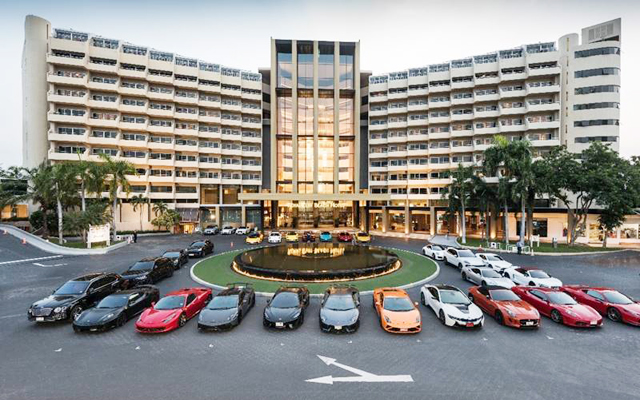
With travel barriers down, Royal Cliff Hotels Group is seeing the confirmation of more events, such as the Club 8ight Supercars gathering in June; Club 8ight Supercars event at the Royal Cliff Beach Hotel in 2019 pictured
They include the Bare Knuckle Fighting Championship in May, the Club 8ight Supercars event in June, and the Bill & Melinda Gates Foundation’s International Conference on Family Planning in November.
“We hope (the International Conference on Family Planning) will attract up to 5,000 people,” said Vitanart.
Ross Park, director of sales & marketing at The Athenee Hotel, a Luxury Collection Hotel, Bangkok, said the first two months following May 1 will be important.
“The hotel has seen a large number of enquiries in the MICE sector and incentive travel is returning very quickly, with many in-person meetings and events confirmed and re-booked. We expect to see the first large-scale overseas event within the first two months of the removal of Test & Go, and hope to continue to build from there,” he told TTGmice.
The Slate Phuket has also reported positive impacts from the relaxation of travel requirements – two incentive groups have confirmed their arrival in August, revealed general manager Claude Sauter.
While there has not been a surge in event bookings at Carlton Hotel Bangkok Sukhumvit, general manager Mark Bulmer said enquiries are trending up since the announcement.
But it is “too early to tell” the true impact of the deregulation, Bulmer added.
For Thailand’s business events industry to return to its previous levels of success, hoteliers concur that the Thailand Pass and compulsory travel insurance are barriers that must be removed. They state that it is still far easier for event groups to choose another destination where there are none of such restrictions.
Business travel is surging forward, international travel is returning, and despite new challenges, industry recovery is entrenched, observes the Global Business Travel Association (GBTA) in its latest April Business Travel Recovery Poll.
In addition, corporate travel policies are undergoing a revamp and employees are broadly willing to travel for business, found the survey.
Corporate travel bookings are up with more certainty and fewer cancellations
“We’re seeing significant gains in the return of business travel, especially over the past month or two. GBTA’s global data shows more companies are allowing domestic and now also international employee travel.
“Booking levels and travel spending continue to return, and there’s high levels of optimism and employee willingness to travel for business. This comes even as the industry faces challenges beyond Covid-19, including rising fuel prices, inflation, supply chain disruption and war in Ukraine,” said Suzanne Neufang, CEO, GBTA.
Double-digit increments, international travel jumps
Companies that report they at least sometimes allow non-essential domestic business travel has increased to 86%, up from 73% in GBTA’s February poll. International travel made a big jump with 74% reporting their company now allows it, up 26 percentage points from February.
Less cancellations, more travel
Companies continue to resume international business travel, with only 45% saying they have cancelled or suspended most or all international business trips, 27 points less than the 71% in February. In addition, only one in five respondents (20%) report they have cancelled or suspended most or all domestic business travel, compared to 33% in February.
Of the companies that previously cancelled or suspended most or all trips to a specific region/country, 75% plan to resume domestic travel and 52% international travel in the next one to three months.
Corporate travel bookings return
A majority (88%) of suppliers and TMCs report their bookings have increased in the prior month. This is much higher than the share that said the same in February (45%). On average, travel buyers say their company’s travel bookings are currently at 56% of the pre-pandemic level, up 22 points from February.
Spending trends up
When asked to characterise their company’s spending on business travel compared to 2019, on average, respondents expect their company will be back to 59% of their pre-pandemic spend by the end of 2022, and will reach 79% by the end of 2023.
Back in the office and on the road
Four in ten (41%) GBTA stakeholders say their company’s return to the office directly correlates to the return to business travel. Over half (55%) of respondents say their company has implemented a permanent back-to-office policy.
One-quarter (23%) report their employees will be full-time in-office, and over half (52%) will be hybrid. Twenty-six per cent report their company has not yet announced a permanent policy. A smaller segment (12%) say employees will have the choice whether to return to the office or not.
Travel willingness climbs
Nine in ten (94%) GBTA buyers and procurement professionals feel their employees are “willing” or “very willing’ to travel for business in the current environment, up from 82% in the February poll. No respondent in any region of the world feels their employees are not willing to travel for business in the current environment.
Changing policies
The pandemic has forced many companies to rethink their business travel program. A majority (80%) of travel managers report the pandemic has driven changes to their company’s travel policies in some capacity, including: fewer business trips overall (39%); employees take fewer business trips, but with more goals assigned to each trip (37%); more trip approval requirements (24%); and a re-evaluation of how employees travel for business (23%).
Inflation impact
Many companies are increasing their business travel spend in the wake of inflation. Forty-one percent report they have increased employee travel spending for air travel, 34% for hotel stays, 33% for car rentals, and 26% for ride share and taxis.
Sustainable considerations
Corporate travel managers recognizs sustainability will impact their travel programme. The most frequently cited expectations include fewer trips per employee overall (54%) and longer, multi-purpose business trips (43%), and more rail and multi-modal options (34%). However, most travel buyers (61%) do not expect their company will restrict the frequency of flying in business class.
Getting used to travel
As employees return to business travel, many have faced hurdles as they get back in the air and on the road. GBTA stakeholders most often report they and/or their colleagues have experienced confusion on travel restrictions/travel documentation (63%), are more anxious or stressed about business travel (45%), or have had challenges when navigating airports and security rules (36%).
Mask on planes – who should decide?
Global sentiment around mask mandates on commercial airplanes varies. Two in five GBTA stakeholders (41%) say governments should require passengers to wear masks on airplanes, while a third (32%) feel each airline should be allowed to decide on this. One in five (20%) feel governments should prohibit mask mandates, which is to allow passengers to fly on any airline without masks.




 With over 20 years of leadership and experience in strategy and operations across a number of leading media, advertising, and consumer-facing companies under his belt, Goldberg will return to the travel sector to innovate within the industry and leverage the platform’s reach and community trust. He foresees many opportunities to create value for travellers and partners alike.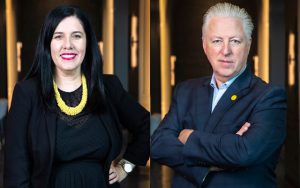
 Meanwhile, Bridge brings with her a depth of experience and knowledge having held various leadership positions during her eight years with IHG Hotels & Resorts.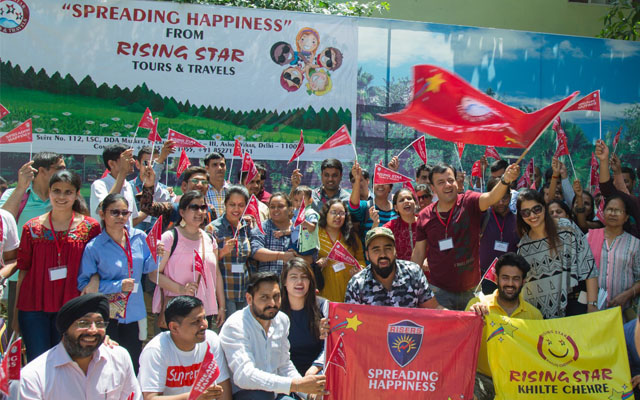






Business travel is surging forward, international travel is returning, and despite new challenges, industry recovery is entrenched, observes the Global Business Travel Association (GBTA) in its latest April Business Travel Recovery Poll.
In addition, corporate travel policies are undergoing a revamp and employees are broadly willing to travel for business, found the survey.
“We’re seeing significant gains in the return of business travel, especially over the past month or two. GBTA’s global data shows more companies are allowing domestic and now also international employee travel.
“Booking levels and travel spending continue to return, and there’s high levels of optimism and employee willingness to travel for business. This comes even as the industry faces challenges beyond Covid-19, including rising fuel prices, inflation, supply chain disruption and war in Ukraine,” said Suzanne Neufang, CEO, GBTA.
Double-digit increments, international travel jumps
Companies that report they at least sometimes allow non-essential domestic business travel has increased to 86%, up from 73% in GBTA’s February poll. International travel made a big jump with 74% reporting their company now allows it, up 26 percentage points from February.
Less cancellations, more travel
Companies continue to resume international business travel, with only 45% saying they have cancelled or suspended most or all international business trips, 27 points less than the 71% in February. In addition, only one in five respondents (20%) report they have cancelled or suspended most or all domestic business travel, compared to 33% in February.
Of the companies that previously cancelled or suspended most or all trips to a specific region/country, 75% plan to resume domestic travel and 52% international travel in the next one to three months.
Corporate travel bookings return
A majority (88%) of suppliers and TMCs report their bookings have increased in the prior month. This is much higher than the share that said the same in February (45%). On average, travel buyers say their company’s travel bookings are currently at 56% of the pre-pandemic level, up 22 points from February.
Spending trends up
When asked to characterise their company’s spending on business travel compared to 2019, on average, respondents expect their company will be back to 59% of their pre-pandemic spend by the end of 2022, and will reach 79% by the end of 2023.
Back in the office and on the road
Four in ten (41%) GBTA stakeholders say their company’s return to the office directly correlates to the return to business travel. Over half (55%) of respondents say their company has implemented a permanent back-to-office policy.
One-quarter (23%) report their employees will be full-time in-office, and over half (52%) will be hybrid. Twenty-six per cent report their company has not yet announced a permanent policy. A smaller segment (12%) say employees will have the choice whether to return to the office or not.
Travel willingness climbs
Nine in ten (94%) GBTA buyers and procurement professionals feel their employees are “willing” or “very willing’ to travel for business in the current environment, up from 82% in the February poll. No respondent in any region of the world feels their employees are not willing to travel for business in the current environment.
Changing policies
The pandemic has forced many companies to rethink their business travel program. A majority (80%) of travel managers report the pandemic has driven changes to their company’s travel policies in some capacity, including: fewer business trips overall (39%); employees take fewer business trips, but with more goals assigned to each trip (37%); more trip approval requirements (24%); and a re-evaluation of how employees travel for business (23%).
Inflation impact
Many companies are increasing their business travel spend in the wake of inflation. Forty-one percent report they have increased employee travel spending for air travel, 34% for hotel stays, 33% for car rentals, and 26% for ride share and taxis.
Sustainable considerations
Corporate travel managers recognizs sustainability will impact their travel programme. The most frequently cited expectations include fewer trips per employee overall (54%) and longer, multi-purpose business trips (43%), and more rail and multi-modal options (34%). However, most travel buyers (61%) do not expect their company will restrict the frequency of flying in business class.
Getting used to travel
As employees return to business travel, many have faced hurdles as they get back in the air and on the road. GBTA stakeholders most often report they and/or their colleagues have experienced confusion on travel restrictions/travel documentation (63%), are more anxious or stressed about business travel (45%), or have had challenges when navigating airports and security rules (36%).
Mask on planes – who should decide?
Global sentiment around mask mandates on commercial airplanes varies. Two in five GBTA stakeholders (41%) say governments should require passengers to wear masks on airplanes, while a third (32%) feel each airline should be allowed to decide on this. One in five (20%) feel governments should prohibit mask mandates, which is to allow passengers to fly on any airline without masks.