The latest UNWTO World Tourism Barometer recorded a 182 per cent year-on-year increase in international tourism for the January-March 2022 period, with destinations everywhere welcoming some 117 million international arrivals compared to 41 million in 1Q2021. In March alone, there were 47 million arrivals.
But you don’t need the stats to know that travel recovery is gaining pace. Airports, hotel lobbies, attractions and restaurants are bustling again. My social media feed in the last two months has been bursting at the seams with photos and videos of friends getting back on the road for meetings, events, family reunions and leisure retreats. It is fabulous.
Travel and tourism stakeholders everywhere have been preparing for this recovery, even as soon as lockdowns were ordered in 2020. Whatever goes down must come up, and it has been reported time and again that businesses have made good use of the travel disruption to review and evolve their operations so that they can hit the ground running once Covid red tapes are removed.
However, even the most well-prepared business owner is fighting a tough battle now to rebuild his team – a challenge that exists in our industry pre-pandemic and has only intensified since many have left their roles and even the industry for good. In an employee’s market, wages have gone up and HR must do much more to retain staff, thus adding to the mounting cost pressure on businesses everywhere.
Travellers today will find that travel isn’t as smooth as they last remembered. Queues to check in luggage or clear immigration are getting longer and moving slower. Delayed hotel check-ins are common, and daily housekeeping may take a little longer to complete. On board flights and at restaurants and attractions, it takes a little more effort to get some assistance.
Tempers are short and complaints are flying fast across social media. Such experiences cast a shadow over businesses’ warm welcome for returning travellers and customers, which is unfortunate because we, in this industry, know how earnestly we have pined for recovery.
It is now a test of patience for both the customer and business operator, and the latter has to find an acceptable balance between digitising processes for efficiency and keeping the promise of hospitality through human touch.
In recent interviews with hospitality leaders, hirers and a hospitality educator, the consensus is that the talent shortage now is an opportunity for travel and tourism businesses to revamp their employment terms and expand career opportunities for their staff.
An improved public perception of service as a career is important. By sending a louder and more positive message about the value of service and the career prospects it brings, the industry will also impress upon consumers that – in the words of Arthur Kiong, CEO of Far East Hospitality – service is not servitude but a respectable passion.
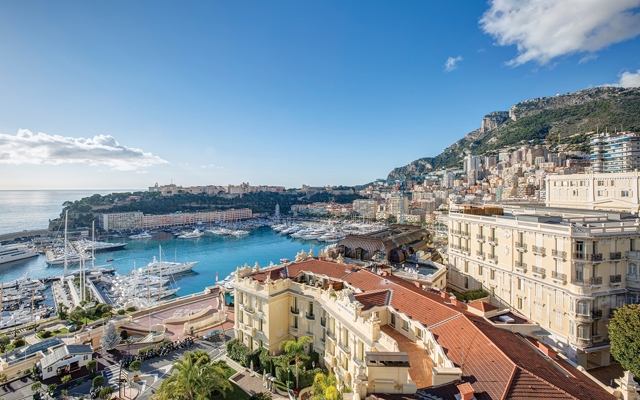
Monaco is shaking off its post-lockdown cobwebs, and is ready to welcome the Asian leisure market after two years with refreshed products and the promise of a luxurious European adventure.
During the pandemic, several hotels such as the Metropole Monte-Carlo and Columbus Hotel Monaco completed ambitious renovations.
Port Hercule in Monaco. Picture by Benjamin Vergely
Casino Square and Larvotto Beach have also been given facelifts, while the Monaco Grand Prix, Monaco Yacht Show, and Monte-Carlo Jazz Festival are once again mainstays in the busy yearly calendar.
To attract more tourists, Benoit Badufle, managing director of the Promotion Bureau of the Principality of Monaco, shared: “We have also rolled out a series of thematic trips ranging from a friends getaway to gastronomic adventures to appeal to the leisure market.”
That is why Charlotte Harris, managing director of Charlotte Travel, a Hong Kong-based travel agency affiliated with Virtuoso, believes that Monaco will continue to appeal to her clients.
“I think Monaco tourism is doing a great job promoting the many attractive events in the region. Many of our clients are drawn by the unique events and plan their trips around these dates. Monaco is also full of exceptional hotels and high-end boutiques.”
This positive sentiment is echoed by Julia Lai, general manager for Kuoni Tumlare in Malaysia.
“Monaco has always been on the bucket list for travellers. Aside from having an elegant vibe, tourists are curious how such a country with a low population can sustain high living standards and an elegant lifestyle.”
Local hoteliers are eager to promote to various Asian markets, building onto their current sales strategy that in the past two years was largely focused on European markets.
Jesus Scott, director of sales, Hotel Metropole Monte-Carlo, said: “We know that travellers in Asia, especially China, are eager to travel abroad. We will focus our actions on the niche market of HNWI living in Asian capitals, as well as the first-tier cities in China, as there is great potential there.”
For Fairmont Monte Carlo’s director of leisure sales, Koji Ito, the hotel is already welcoming FITs from India, and package tours from Malaysia and Thailand.
However, one of the largest challenges in selling Monaco to the Asian jetset is air connectivity.
“We used to have more Middle Eastern and European carriers flying from South-east Asia to Nice (in France, the main gateway to Monaco), but not all flights have resumed their routes, and therefore capacity is affected,” Lai shared.
To welcome more Asian travellers, Scott pointed out, the “regular airlift to Europe” has to be restored, for example the direct Air China flight between Beijing and Nice pre-pandemic.
To keep the travel industry abreast of Monaco’s happenings, Badufle shared that “in-person reconnections” with key travel partners, tour operators, agencies, and media in the region are currently happening, having recently visited Indonesia and South Korea.
Ongoing infrastructure projects include the waterfront eco-district Mareterra set for completion in 2025, while the extension of the Grimaldi Forum convention and exhibition centre will finish in 2024.
Looking ahead, Monaco’s Exotic Garden – first opened in 1933 – will reopen in 2023 after a two-year renovation that will enhance its botanical and cultural aspects, as well as offer improved accessibility.
Also, Monte-Carlo’s iconic Café de Paris – temporarily located within the Hotel de Paris – will also reopen in 2023 after a two-year uplift, which will raise the current brasserie by two floors, as well as introduce a unique rooftop space.
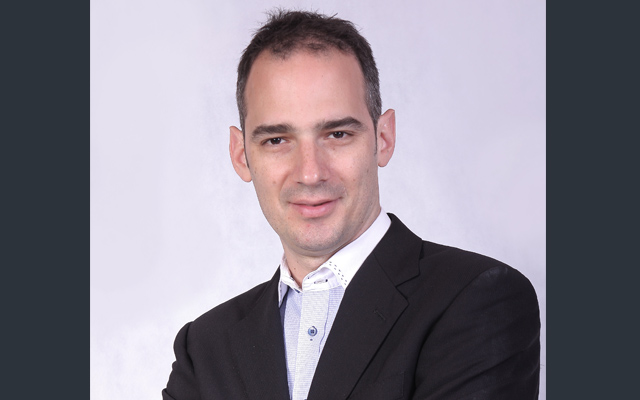
Katrina Group has named Andreas Lorenz as chief operating officer for its hospitality subsidiary, in a move aimed at rekindling the company’s accommodation business.
In his new role, he will oversee ST Hospitality’s operations while spearheading its expansion in Singapore and beyond, including identifying new properties to manage.
The German joined the company in February this year as general manager of ST Hospitality, Katrina Group’s wholly-owned subsidiary.
ST Hospitality operates four boutique co-living hotels, a block of serviced apartments comprising 38 units, and more than 50 fully serviced condominium rental units in Singapore. It expects to add more fully serviced condo units and hotel rooms to its portfolio in Singapore before the end of the year.
Before joining ST Hospitality, Lorenz was vice-president of asset management at The Garcha Group. Prior to that, he managed two hotels in Singapore – Six Senses Maxwell and Six Senses Duxton – from 2017 to 2019.
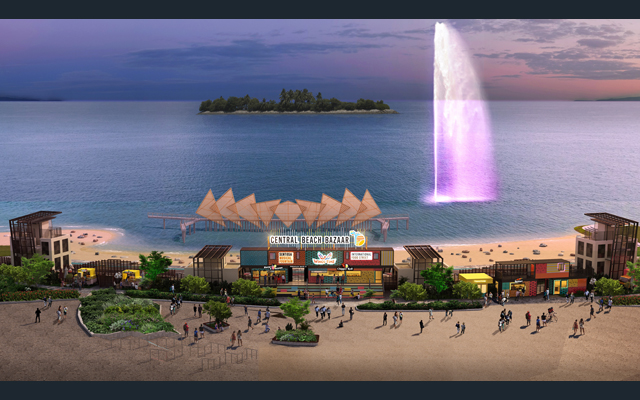
Mount Faber Leisure Group (MFLG) is set to debut this September a new cluster of F&B and entertainment that will give beach goers an enhanced experience from day to night in the heart of Sentosa’s beach district.
The Central Beach Bazaar, located between the popular Palawan and Siloso beaches and at the foot of Beach Station, will take in the 80-metre high Sentosa SkyJet, said to be the tallest fountain in South-east Asia; a revival of the iconic Sentosa Musical Fountain from the early 1980s but now with a new musical score; and the International Food Street, a collection of eight F&B street food concepts presented through food trucks, kombi vans and upcycled shipping containers.
The Central Beach Bazaar will join the Wings of Time outdoor night show with upgrades like refreshed pyrotechnic effects
Sentosa visitors can enjoy the Musical Fountain and Sentosa SkyJet up close in the day with a minimum spend of S$5 (US$3.55) at the International Food Street. The Musical Fountain comprises two five-minute performances – one with musical numbers that the attraction used to play in the 1990s, and the other a medley of the nation’s beloved National Day songs like Home and Count on me Singapore.
The Central Beach Bazaar will join the Wings of Time outdoor night show, an established attraction in the beach district that has been upgraded recently with refreshed pyrotechnic effects and a more spectacular finale.
A third new attraction, to be revealed at a later time, will offer simulation ride experiences and carnival games.
Thien Kwee Eng, CEO of Sentosa Development Corporation, said in a press statement: “The Central Beach Bazaar is a key milestone in the series of new leisure experiences coming onstream along Sentosa’s beaches. Together with the upcoming Palawan Sands and other novel offerings, the Central Beach Bazaar will give our guests a reimagined beach experience.”
According to Buhdy Bok, managing director of MFLG, the Central Beach Bazaar is one of the visitor experience innovations that were developed during the travel disruption.
In an interview with TTG Asia ahead of the press launch, Bok said MFLG had continued to invest in product development even during “the toughest period” when the pandemic had impacted international travel
He said: “Our approach was to remain mindful of the situation while still planning ahead. Six months ago, we opened SkyHelix Sentosa, which was also planned for and built during the pandemic.”
Bok said international visitorship has been on the mend since Singapore established the Vaccinated Travel Lanes in September 2021.
“There is a sizeable return of tourists, mostly from the region, but we are nowhere near pre-pandemic levels. This will take time, as our recovery is dependent on how airlift and airport operations are being rebuilt,” he said.
However, he has refrained from projecting visitorship to Sentosa, saying that it is “no longer possible to give a very long forecast these days due to so many unknowns”. A three-month outlook is more realistic, he said, adding that his team continues to be “very aggressive” with development and marketing while staying “practical and nimble” to face any situations that present themselves.
In response to TTG Asia’s question on how MLFG is dealing with the hospitality industry’s prevalent labour shortage, Bok said it is still actively recruiting while tweaking operations to minimise pressure on the existing team. Measures include adjusting menus, automating some food preparation processes, and outsourcing some functions.
“These changes will be permanent, as Singapore will always be operating in a tight labour situation so businesses will have to be more efficient with available resources,” he concluded.
The Thai government recently floated plans to introduce a split pricing structure for the country’s hotels.
If enacted, this scheme means that foreign travellers to Thailand will see hotel rates surge back to pre-Covid 19 levels, while domestic tourists will continue to receive discounted fees introduced during the height of the pandemic.
Foreign travellers to Thailand will see hotel rates surge back to pre-pandemic levels, while domestic tourists continue to receive discounted fees
Government spokeswoman, Traisuree Taisaranakul, outlined the administration’s reasons for introducing dual pricing.
“This is to maintain our standards of rates and services for foreign tourists, which affects the perception of the country’s tourism brand. Rates that have been reduced during Covid-19 will be maintained for Thais to sustain the momentum of domestic tourism,” she said.
Although Thailand’s tourism and sports minister Phiphat Ratchakitprakarn’s indicated that the directive is not compulsory and the government merely wants to encourage hospitality firms to shift room rates based on the market, the industry is apprehensive.
Marisa Sukosol Nunbhakdi, president of Thai Hotels Association, pointed out that the move was not pragmatic, stating that “hotels in each tier also use different strategies to set prices”, and “if demand increases to support hotel occupancy, then rates will automatically increase”.
“Every hotelier would like to operate with higher and fair rates to gain a larger margin, but it is difficult to do so because of heated competition and oversupply. Operators have to use pricing strategies to gain cash flow,” added Marisa.
Following the removal of the Thailand Pass on July 1, many hotels in Thailand have reduced their room rates to help lure foreign tourists back to the country and shore up their bottom line. Yet despite these offers, occupancy remains low, and is not expected to return to peak levels until 4Q2022 at the soonest.
To build international visitor confidence in the destination, Laos has implemented LaoSafe, a nationwide initiative designed to create a world-class health and hygiene system within the tourism and hospitality industry.
This initiative by Laos’ Ministry of Information, Culture and Tourism, and approved by the Ministry of Health, comprises sector-specific standards developed for accommodation, F&B, tour guides, and drivers, to raise the benchmark of hygiene provision throughout the country.
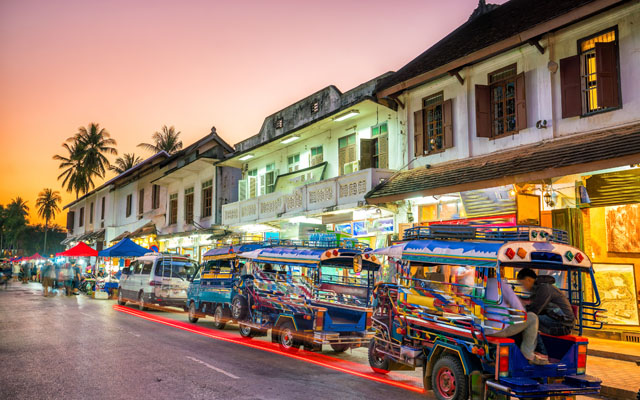
LaoSafe is already in place in popular locations, such as the city Luang Prabang, pictured
LaoSafe is already in place in popular locations, such as the UNESCO World Heritage city Luang Prabang, and is gradually being rolled out to other destinations across the country.
To date, LaoSafe has certified over 50 restaurants, 60 hotels, 500 tour guides, 180 drivers, and two airlines.
Darany Phommavongsa, director general, tourism management department, Ministry of Information, Culture and Tourism, said: “The LaoSafe certification programme has used the time of Laos’ closure to prepare for an influx of tourists post-Covid. Now that the country is open again, the tourism industry is more prepared than ever to welcome travellers.”
The LaoSafe programme is supported by the Skills for Tourism Project (LAO/029), which is co-financed by the governments of the Lao PDR, the Grand Duchy of Luxembourg and Switzerland, and implemented by the Ministry of Education and Sports of Laos, and LuxDev, the Luxembourg Development Cooperation Agency.
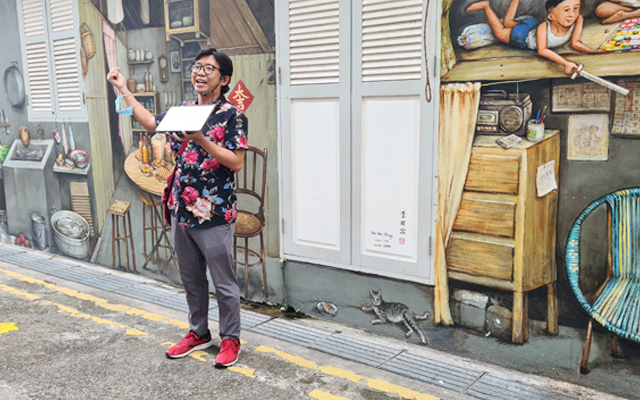
Before setting foot into the tour business, Thiam Wei Toh, founder and chief storyteller of Indie Singapore Tours, said he was a “local boy” who neither saw beyond the borders of Singapore nor thought much about travel.
A career with the Republic of Singapore Navy gave him his first taste of travel, where assignments took him around the world.
Toh founded Indie Singapore Tours to provide free and immersive walking tours to backpackers
“My first trip was to New York and it was an eye-opener. As we sailed from port to port, we would get some time off and that allowed me to join tours to see the destination,” recalled Toh.
The travel bug kept its grip on him even after Toh concluded his employment with the Navy, so he and his wife-to-be embarked on a six-month-long plan to backpack around the world. That plan extended to three good years.
“Our backpacking experience planted some business ideas in our mind,” Toh said. “Cities that matter most to us were those that we got to know very intimately. We had locals as our guide, and they brought us to places they grew up in and showed us what they used to do and how they lived. The more we learnt about the cities, the more we fell in love with them.”
At the end of his journey around the world, Toh returned to Singapore with a determination to present Singapore – his home and country – in the same manner to visitors.
In 2015, Indie Singapore Tours was formed upon a simple business direction – to provide free and immersive walking tours to backpackers.
“When we started in 2015, there was a strong perception among travellers that Singapore is a very expensive destination. Since backpackers travel cheaply, few would consider joining tours to learn about Singapore. They would just come for a few days and then hop off to other destinations in South-east Asia. So, we kept our tours fuss-free to be appealing – travellers would just sign up and show up,” he said.
Toh’s free walking tours gained traction “quite fast”, with demand fuelled by numerous positive reviews left on social media sites.
“We started to see increasing participation over the following years. We didn’t advertise, and had only communicated our free walking tours to backpackers staying at the hostels around Singapore. Despite that, social media reviews led many non-backpackers to us. We even had cruise passengers signing up for our free walking tours,” he shared.
As Indie Singapore Tours saw its customer mix changing, Toh and his tour guide partners started to get requests for private tours. That led the company to go down the bespoke tour route, earning it paying customers.
With the arrival of the Covid-19 pandemic, which snuffed out international arrivals, the need for survival forced Indie Singapore Tours to pivot to programmes that would interest Singapore residents who thought they knew all there is to know about their own backyard.
Furthermore, to benefit from the Singapore government’s SingapoRediscovers programme, where vouchers were issued to residents to use and support local travel and tourism businesses during the travel disruption, Toh had to move away from free walking tours to paid content.
“We have a soft spot for Chinatown, as that is where our first free walking tours were born. Foreigners are keen on cultural tours to Chinatown, Kampong Glam and Little India, but try selling those to Singapore residents!” he said.
To reel in the locals, Indie Singapore Tours created the Whimsical Walk through the Blair Plain Conservation Area tour, a 2.5-hour exploration of a hidden gem in modern Singapore. It pointed out conserved architecture, old school eats, gorgeous contemporary art, and beautiful hole-in-the-wall cafés.
“There was nothing like that when we started, so the tour gained a lot of attention from both customers and the media,” he recalled fondly.
Unusual spins on city tours continue to be a central focus, and Toh told TTG Asia that he often finds his sparks at kopitiams – local coffee houses in the neighbourhoods.
“I’d drink with the old folks and they will share their growing up stories. These tales inspire tour ideas and give us unique content,” he said.
Today, Toh also makes it a habit to visit local businesses and talk to the owners about potential collaboration.
“Tours have to evolve to be more immersive and experiential. Collaboration with varied businesses will help to add depth to the tour experience, and this is something that has become so important during Covid,” he stated.
“Often, before the pandemic, I would have an occasional idea to do something different but business was so brisk that most of us had little time to stop and talk through details. When Singapore imposed the Circuit Breaker (lockdown on non-essential activities) and then tourism got disrupted, we finally had time to give all our ideas attention and turn them into experiences that will be valuable and insightful for our customers,” he said.
Conversations with business owners have led to the creation of even more fancy tours. The latest in Indie Singapore Tours’ portfolio is the Whis-Kueh tour, which takes guests through some of the oldest traditional pastry shops in Chinatown, and concludes with a craft whisky-pairing experience at Furama City Centre hotel.
“Kuehs have a special place in Singapore heritage but they get so little attention compared to the main dishes, like chilli crab and chicken rice. I often say kuehs are the underdog of Singapore food. So, the Whis-Kueh tour spotlights these bite-sized treats, which allows us to talk about the history and heritage of Singapore, while adding in the unusual idea of pairing craft whiskies with these food items,” he detailed.
Looking ahead, Toh sees an exciting future for tours in Singapore, as experiences continue to evolve and improve, allowing the city-state to gain more fans.
He now hopes that corporate group enquiries would return soon, and is eager to curate tours that weave in hands-on experiences for participants.
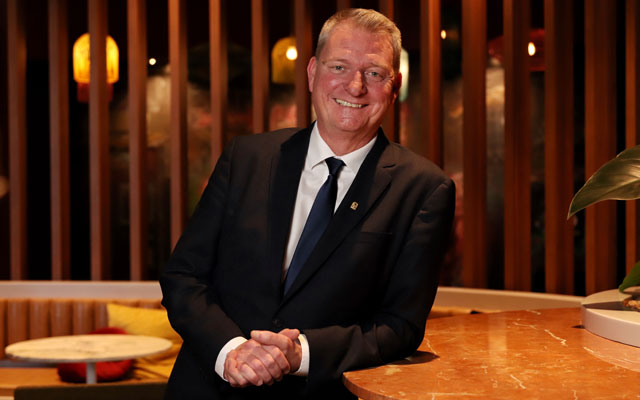
Paul Flett has been appointed general manager of Pan Pacific Perth.
He was previously general manager at Parkroyal Parramatta, a position that followed a two-year appointment at Pan Pacific Sonargaon Dhaka. Prior to this, Flett held the general manager position at Parkroyal Darling Harbour, as well as senior positions for InterContinental Hotels Group across the Northern Territory and Queensland.
In total, Flett brings over 30 years of hospitality experience to his new role, while his tenure with Pan Pacific Hotels Group spans 10 years, across Australia and South Asia.
A new business events-focused campaign, Reevent, was launched last year, as Monaco Government Tourist and Convention Authority sets out to rejuvenate the destination’s business events industry, shares Christine Barrabino, head of the convention bureau with the Monaco Government Tourist and Convention Authority.
In this episode of TTG Conversations: Five questions, Barrabino sheds light on Reevent, how business events ambitions are aligned with the country’s national development and economic goals, major events that are on the calendar now and in the near future, the allure of the Asia-Pacific market, and what Monaco is doing to face off hyper competition for Asian business.
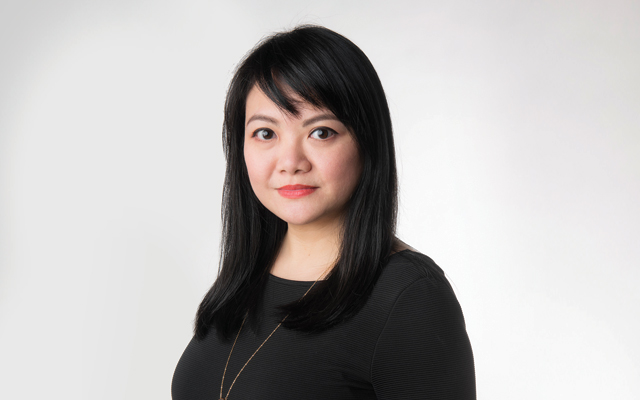
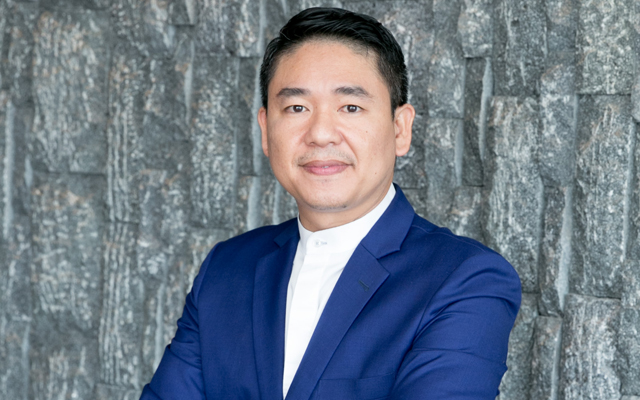
Thawintorn Kanungkid will take on the role of general manager for Centara Hotel Korat, scheduled to open in September 2022.
Thawintorn brings with him two decades of experience in the hospitality industry, most recently as resident manager at The Sukosol Bangkok Hotel.
No stranger to the Centara family, he first joined the hospitality business in the front office team in 2006, and again in 2013 as the rooms division manager in the pre-opening team of one of Centara’s Pattaya properties.


 The German joined the company in February this year as general manager of ST Hospitality, Katrina Group’s wholly-owned subsidiary.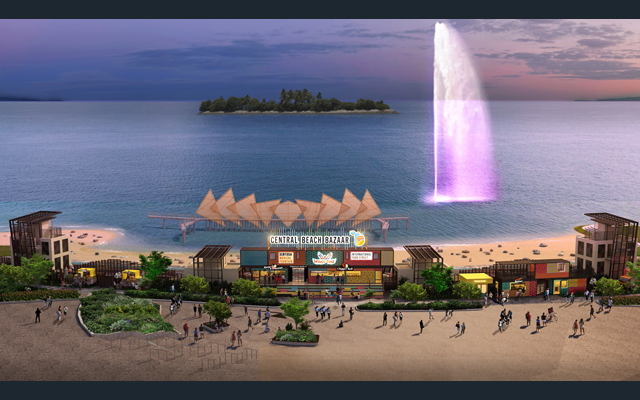



 In total, Flett brings over 30 years of hospitality experience to his new role, while his tenure with Pan Pacific Hotels Group spans 10 years, across Australia and South Asia.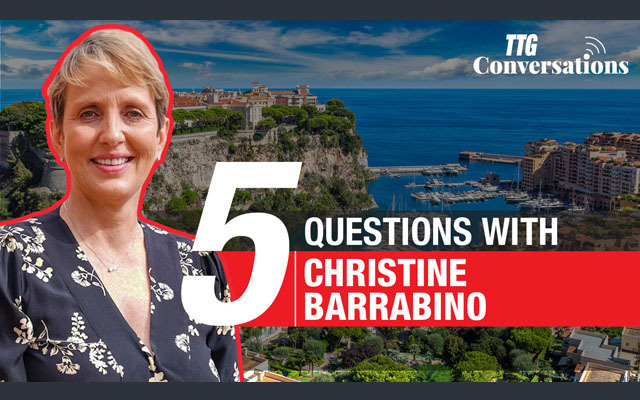
 No stranger to the Centara family, he first joined the hospitality business in the front office team in 2006, and again in 2013 as the rooms division manager in the pre-opening team of one of Centara’s Pattaya properties.