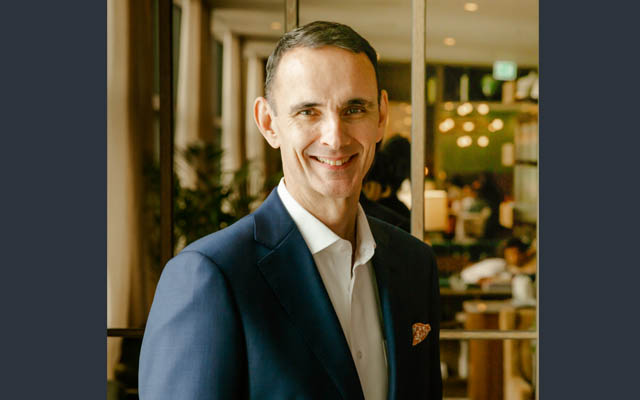
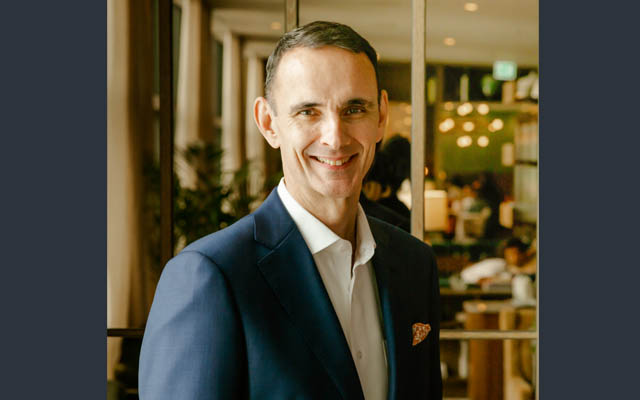
Harilela Hotels has appointed Edward E. Snoeks as general manager of The Hari Hong Kong.
The seasoned hotelier possesses three decades of experience in luxury hospitality across Europe and Asia including Hong Kong and Thailand.
Prior to joining The Hari Hong Kong, Snoeks was general manager of Meliá Chiang Mai. Other positions he has held include pre-opening general manager of Sindhorn Kempinski Hotel Bangkok & The Residences, as well as Thailand’s regional general manager and general manager of The Okura Prestige Bangkok.
Centara Hotels & Resorts and Go First are offering passengers big savings on stays in Thailand, Oman and the Maldives.
CentaraThe1 members can enjoy 40 per cent off all-inclusive rates at Centara Grand Island Resort & Spa Maldives and Centara Ras Fushi Resort & Spa Maldives; and a 19 per cent discount on publicly available rates at participating hotels and resorts in Bangkok, Phuket and Muscat, Oman.
Travellers can stand a chance to win a three-night stay at two Centara properties; Centara Grand Beach Resort, Phuket pictured
From now to December 20, those who travel with Go First and stay at any of the participating Centara properties will also be eligible to win a free holiday package, which includes a roundtrip airfare and a three-night stay at either Centara Grand Beach Resort, Phuket or Centara Grand and Bangkok Convention Centre at Central World, Bangkok.
UK-headquartered booking technology solutions company Vibe has appointed Graham Whyte as business development manager, APAC.
In this new role, Whyte has been tasked with leading the company’s expansion in Australia, New Zealand and Asia-Pacific.
Whyte has over 30 years of senior travel industry experience, including at Travelport and Virtuoso in Australia, New Zealand and the US. He was previously the regional commercial manager at Sabre.
euromic, the oldest DMC alliance in the industry, is on a “major upward trajectory”, with president Rajeev Kohli reporting an expansion in sales units and membership around the world.
Kohli, who took office in January 2020, said: “In the past 12 months, we opened sales units in Germany and South Africa, and one more is coming in early-2023.
Kohli: euromic needs to negate the perceptions of long flights to Asia, in order to push more global events to the region
“When most other consortiums were cutting back (during the pandemic), euromic was planning to invest for the future.”
The non-profit marketing organisation, with one member per country by invitation, turns 50 next year and has new members in the US, the Dominican Republic and Mexico.
The grouping is also expected to add a Singapore member, Kohli told TTGmice, adding there was interest from three companies, which were being vetted.
Kohli, who is joint managing director of India’s Creative Travel, said 12 euromic members attended the recent IMEX America.
“The outlook from most of our members is very positive. For our mainstream European members, business is back over 2019 levels for quite a few, and for others it is still very positive, but the Russia-Ukraine conflict is seriously impacting members in that region,” he said.
Asia is picking up, he observed.
“I think US planners want to show their clients a broader side of the world. Asia has a lot to offer. Infrastructure is generally good. Culture is a positive,” he said.
“Our mission needs to be to negate the perceptions of long flights. That is perhaps our biggest hindrance from increased business into Asia,” he added.
With the US travel industry still in the recovery phase, destinations that are tried and tested are preferred. “Asia will probably come into the picture from 2023 onwards,” he observed.
Meanwhile, manpower recruitment continues to be the “biggest challenge the industry is facing the world over”. He said requests for proposals had gone up rapidly and members were struggling to reply on time.
While euromic members were sharing notes, trying to help each other, hiring was a local matter.
“At this stage, members are just too busy and trying to keep their heads over water with what infrastructure they have,” he pointed out, when asked what support members were looking for.
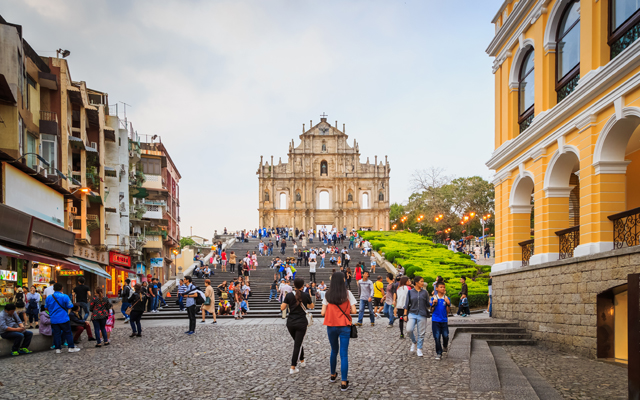
Macau will follow at the heels of China’s revised inbound travel policy, requiring five days of centralised medical observation and three days of home isolation after.
The new entry requirements will come into effect November 12 and apply to individuals arriving from Hong Kong, Taiwan and any foreign countries.
Individuals entering Macau from November 12 will serve five days of centralised medical observation and three days of home isolation after
Travellers will need to take a nucleic acid test on the first four days of their centralised medical observation. Negative test results from all tests will clear the individual from centralised medical observation on the fifth day.
Travellers will hold a code red Macao Health Code during their home isolation, and will only be allowed to leave home to perform nucleic acid tests. Tests are needed on all three days, starting from their exit from centralised medical observation. Furthermore, individual must obtain a negative RAT/ART result prior to leaving home for nucleic acid tests.
Their Macao Health Code will only turn yellow once sample collection is completed, and then green when a negative result is eventually obtained.
ASEAN Tourism Forum (ATF) 2023 will take in a series of government meetings on February 2 and 3, NTO meetings on February 4, and a new concept for its TRAVEX tourism exhibition component.
Speaking at a press conference last week, Sandiaga Uno, Indonesia’s minister of tourism and creative economy, said plans were well underway to host next year’s event.
ATF 2023 will feature two new components within TRAVEX to showcase more of Indonesia and local creative industies
“The government, both central and regional, are committed to the success of ATF 2023, (and are getting ready) to welcome participants and delegates,” he said.
Martini Mohammad Paham, deputy for resources and institutions of the Ministry of Tourism and Creative Economy (MoTCE), revealed that the high-level meetings would address issues related to marketing, investment, human resources, and sustainable tourism. Discussion outcomes would be shared in a joint statement by the ASEAN ministers at the end of the event.
Meanwhile, TRAVEX will carry the theme, Journey to Wonderful Destinations. Held at Jogja Expo Center, the exhibition in 2023 will feature two new components, shared Rizki Handayani, deputy of tourism products and events of MoTCE.
The Indonesia Tourism Exhibition B2C show will provide regional tourism offices and industry members an opportunity to present and sell their products, while an SME exhibition will showcase creative industries from Yogyakarta and its surroundings.
TRAVEX, to be held from February 3 to 5, targets 250 exhibitor booths and 250 international buyers in attendance. Ninety buyers will be fully hosted by MoTCE, and some will be semi-hosted in cooperation with trade members.
Rizki said: “We are working with ASEANTA, as the steering committee, to organise ATF, and with ASTINDO and ASITA to invite their overseas partners to participate.”
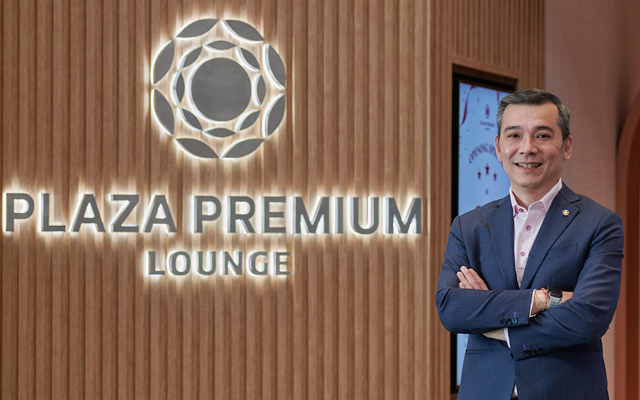
As part of its aggressive expansion to improve passenger service and experience in South-east Asia, the Plaza Premium Group has launched at Clark International Airport a Plaza Premium Lounge, ALLWAYS bespoke Meet & Assist Services, and TGM Root98 dining outlet.
On level three of Clark’s international departure terminal, the Lounge is suitable for passengers’ layover, with pay-per-use shower, VIP Meet & Greet service, in-lounge flight information and smoking room.
Lim: Plaza Premium Group’s expansion continues to gain pace
It also serves as the Business Class lounge of Philippine Airlines, Emirates and Qatar Airways.
Plaza Premium Group regional general manager (South-east Asia), Steven Lim, also disclosed plans to have an airport VIP Lounge where departing passengers will be picked up by limo straight to check-in and immigration, bypassing the main terminal. They will then get to rest at the VIP Lounge while waiting for their flight.
Also by next year, an Aerobar overlooking Mount Pinatubo will take shape at the airport’s international departure terminal.
The group, which already has an 11-key airport transit hotel Aerotel and a Plaza Premium Lounge each at the domestic and international terminals of Cebu Mactan International Airport, is also in discussion to have a Plaza Premium Lounge at Manila’s Ninoy Aquino International Airport (NAIA).
Lim said Plaza Premium Group’s global expansion picked up speed during the pandemic, growing from 170-plus lounges pre-Covid to 250 today.
He said that within a month, the group will open its first mega lounge – “a lounge within a lounge” – in Terminal 1 of Jakarta’s international airport. The lounge can hold 700 pax at once, and will contain the Singapore Airlines Lounge that the group will also manage.
A similar “lounge within a lounge” will be launched at Kuala Lumpur International Airport by 1Q2023. It will feature both Plaza Premium Lounge and Plaza Premium First for first class passengers.
Elsewhere in South-east Asia, Lim said the company is looking to expand in Vietnam and Cambodia where it already has a presence, particularly to operate in Ho Chi Minh Airport when it is ready in three years’ time and a new airport in Phnom Penh. It is also keen to enter Laos and Brunei.
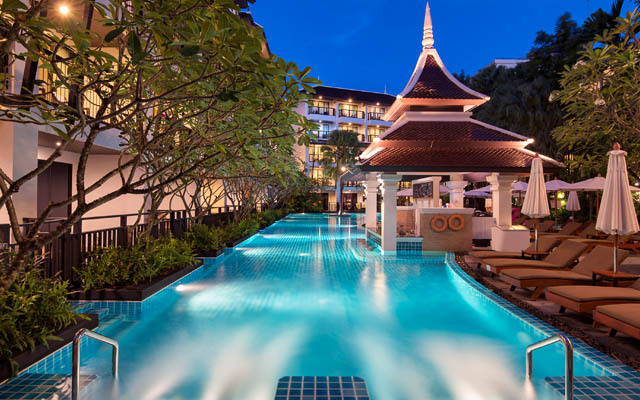
Thailand’s Centara Anda Dhevi Resort & Spa Krabi reopens on November 15 with a variety of perks to welcome guests once more.
The Place to Be offer includes up to 30 per cent off best available room rates, 500 baht (US$14) in F&B credits, complimentary Wi-Fi, daily breakfast for two guests, free stays for up to two children, as well as late check-out and complimentary room upgrade to the next room category, subject to availability.
The offer is valid for booking and stays until June 30, 2023.
The sustainability focus on travel and events has intensified and trickled down the supply chain, putting pressure on businesses to support clients’ responsible objectives, noted speakers on a panel at IT&CM Asia and CTW Asia-Pacific in October.
Emphasising the importance of sustainability and scope of focus at Accenture Solutions, Amarnath Lal Das, vice president – India of travel, meeting & events, said: “Sustainability spans environmental, social and governance issues. We have made sustainability one of our greatest responsibilities, not just because it’s the right thing to do, but also because we believe that it is one of the most powerful forces for change in our generation.”
The Athenee Hotel, a Luxury Collection Hotel in Bangkok, sources direct from local food producers as part of its sustainable commitment
Accenture started its sustainability journey in 2012, and in the space of travel and events, its efforts have moved past the elimination of single-use plastics and cutlery. It has its own system to digitise invoices to reduce paper usage, and is developing a booking tool that will identify carbon emissions based on the fuel efficiency of the aircraft used by Accenture travellers. The booking tool will be an improvement on the current system, which provides emissions information post-trip.
Das said the booking tool would be ready by 2025.
A similar approach is taken with hotel suppliers, where Accenture travellers can identify their carbon emissions from their accommodation choice, based on the hotel’s design and sustainability porgrammes.
In general, Accenture requires its suppliers to respond to a set of questionnaires that looks into their sustainability programmes.
When asked by panel moderator, Karen Yue, group editor of TTG Asia Media, if Accenture have had to disqualify travel suppliers that failed to align with the company’s own sustainability goals, Das said “leeway is given to those who just started their sustainability journey”.
He also emphasised a supportive approach, where Accenture looks at helping suppliers to catch up on responsible actions.
For example, should a potential airline supplier fall short on Accenture’s sustainable requirements now, it would consider the airline’s future plans to acquire fuel-efficient aircraft and how it intends to optimise passenger load to reduce carbon emissions.
Supplier support The pressure on businesses to be sustainable is real and strong.
Brayden Lai, senior business development manager at South Pole, a Swiss carbon finance consultancy, noted that more companies are getting serious about their climate strategy. 2021 saw a 29 per cent increase in the number of companies in Asia-Pacific reporting through CDP – an international non-profit organisation that runs a global disclosure system for investors, companies, cities, states and regions to manage their environmental impacts – compared to 2020, and a more than five-fold growth from fewer than 700 companies in 2016. One-third (32 per cent) were first-time responders, demonstrating a growing momentum among businesses towards embedding transparent environmental disclosure in their operations.
The report shows that climate action has risen to the C-suite level, with almost all respondents (98 per cent) having management-level oversight for climate-related issues. Three-quarters (76 per cent) of companies reported having a process for identifying, assessing and responding to climate-related risks and opportunities.
“Companies now regard sustainability efforts as a way to engage consumers who are highly aware of environmental issues. Many are starting to disclose their carbon emissions and environmental impact,” said Lai.
Currently, South Pole’s website lists many major global firms across industries as its clients. Within the travel and tourism industry, South Pole supports Hilton and FCM Travel Solutions.
With Hilton, South Pole helps to facilitate carbon-neutral meetings at the group’s hotels. Hilton calculates emissions from onsite meetings and events, and takes part in South Pole’s offsetting projects.
With FCM Travel Solutions, South Pole provides clients of the corporate travel agency with insights into their carbon emissions and facilitates carbon-offsetting through its projects.
Lai told TTGmice that there is a “huge interest in this because business travel contributes to Scope 3 emissions, which is more challenging for companies to track”.
Chooleng Goh, general manager, The Athenee Hotel, a Luxury Collection Hotel, has seen sustainability practices reigning as the “number one question” among event clients.
“Once we share our sustainability story, it’s a 99 per cent done deal. Some clients don’t even need to see our spaces or look at our service (to decide on us),” she said.
Located in Bangkok, The Athenee Hotel is an active campaigner for environmental sustainability, and is the first hotel in the world to be certified ISO 20121 for event sustainability management systems.
A major milestone in its sustainability journey is the purchasing of organic rice directly from Thai farmers. This keeps costs low for the hotel and provides a sustainable livelihood for over 700 keeps. On Goh’s agenda now is the move towards electric vehicles, and the installation of charging stations.
To help clients make responsible travel choices, travel-related organisations like SAP Concur and Amadeus have partnered CHOOOSE, a climate-tech company that integrates climate action options into the customer experience.
SAP Concur and CHOOOSE launched this year the CHOOOSE Climate App, which automates flight-related carbon emission measuring and reporting, and allows companies to address unavoidable emissions by supporting verified, high-impact climate solutions, such as carbon removal, offsetting projects, and Sustainable Aviation Fuel.
Over at Amadeus, CHOOOSE’s technology is used to provide emissions calculations across the entire travel journey – rail or air travel, accommodation, and ground transportation – built upon industry standard frameworks. The collaboration also offers trade buyers access to a marketplace of solutions aimed at reducing or eliminating climate change.
From left: TTG Asia Media’s Karen Yue; The Athenee Hotel’s Chooleng Goh; Initiative for Global Resilience’s Barbara Ewals; and Accenture Solutions’ Amarnath Lal Das speaking at the IT&CM Asia and CTW Asia-Pacific 2022 panel
Concrete climate actions
Barbara Ewals, executive director with Initiative for Global Resilience (i4gr), said “it’s great to see that everyone has more sustainable intentions now, which pushes the corporate side”.
“This, in turn, pushes the government to enact more policies for corporates to be more intentional (in their sustainability efforts,” she added.
The Bangkok-based social enterprise supports leaders in creating large-scale and lasting social change by facilitating and advancing solutions to global challenges through multi-stakeholder partnerships, and the sharing of knowledge and best practices, via position papers, forums, and the media.
Ewals believes in influencing sustainable practices with personal experience and flexibility, instead of “force-feeding” values.
Citing an example, she pointed to i4gr’s F&B approach at a series of global meetings on sustainable food and agriculture, where it was one of the content providers. i4gr intentionally designed vegetarian meals for delegates. The arrangement was a success in Asia, Europe and North America.
“But when we went to Brazil, there were vehement protests, (as the locals insisted on) their right to their meat!” she recalled with a chuckle.
A compromise was reached, with a vegetarian offering only on the last day. The outcome was encouraging, as the attendees “were pleasantly surprised that vegetarian options were edible”.
“This is an incremental change,” said Ewals, adding that the positive experience could influence some of the 300 Brazilians in attendance to make an intentional change to their future event menues.
As for relying on carbon offset programmes, Ewals spoke bluntly against potential scams, where organisations sold credits to protect national parks – trees cannot be felled easily in these areas, so credits are meaningless.
Instead of buying credits to get to net-zero somewhere in the future, she urged companies to take actions now to reduce their emissions.
Agreeing, Goh said her hotel provides options for clients to minimise their event footprint from the get-go. Such options include reducing food waste through the hotel’s work with Scholars of Sustenance Foundation where excess food is donated, or by repurposing unused ingredients.
When asked what more could the travel and events industry do to contribute to a sustainable and resilient world, Ewals suggested establishing cross-industry partnerships.
For example, hotels and resorts could work more closely with a landscape architecture association on responsible design.
“We need to stop (staying in) our own silos and engage other like-minded associations,” Ewals encouraged.
She also advised corporates to drop the term CSR (corporate social responsibility), because it is “self-serving”. Instead, she suggested adopting the terms “stakeholder engagement” or “community engagement” because they inspire more meaningful work.
As for Goh, she underlined the need to consider sustainable actions for the long run.
“Instead of a one-off donation to a youth orphanage, it is better to provide them with education and take them on as young future trainees and educate them.
“Same for the rice farmers. They do not want one-off donations; they want to have a sustainable livelihood and to continue farming for the next 10, 20 or 30 years,” she said. – additional reporting by Karen Yue
Asian airline executives have reacted positively to China’s decision to ease inbound travel procedures, but said the announcement would not trigger immediate changes to their flight schedules.
“It is always encouraging to get updates like this, especially from China which is a big market for Malaysia. We are hopeful that the reopening momentum will continue,” Izham Ismail, group CEO of Malaysia Airlines, told TTG Asia.
Changes to China’s travel restrictions are not inspiring immediate and major reinstatement of flight capacity
Malaysia Airlines currently flies twice a week to Guangzhou with a limited capacity, and has long redirected operations elsewhere in response to China’s steely travel restrictions.
As rescheduling flights requires time and careful planning, Izham said Malaysia Airlines would “stick to our plans”.
“We normally plan our capacity every summer and winter season, and the next change would only come in March 2023. Even if China reopens tomorrow, it is not possible for us to redirect our flights there,” he explained.
“However, the next season will coincide with our optimistic projection that China will resume international travel in 2Q2023,” he said.
Some airlines are also choosing to hold their horses for now, as the restriction updates are regarded as too slight to inspire a spike in travel interest.
“While this is a step in the right direction, it is still not enough to move the needle for a major reinstatement of flight capacity at the moment,” opined Mayur Patel, head of Asia, OAG Aviation.
When asked if Thai Airways International would bring forward its intended commencement of services to China’s Shanghai and Guangzhou, Korakot Chatasingha, chief commercial officer of Thai Airways International, would only say that “as long as China retains its quarantine requirement for inbound travellers, it will not convince people to resume their travel back to the country”.
The Thai flag carrier currently has 68 aircraft in operation this year, across THAI and THAI Smile, with two aircraft ready for activation to China when the time is right.
Japan Airlines (JAL) will not respond to China’s Friday announcement with flight changes too, but only because it has maxed out its slots to the country.
JAL, which used to operate 98 flights a week to China pre-Covid, has just announced 15 flights to the country last week, including the resumption of services to critical cities Shanghai and Beijing.
Ross Leggett, JAL’s executive officer and deputy senior vice president – route marketing, international relations and alliance, told TTG Asia: “If we could, we’d fly more to China but flight capacity into China is not our decision to make. The Chinese government still tells us which routes and how many we can fly. We’ve already gone from the five-one rule to 15 flights.”
Although China’s travel updates are minute compared to most part of the world, where barriers to travel have largely been dismantled, Leggett said “any (reopening decision) will stimulate more traffic, especially for Japanese business people looking to go to China”.
Agreeing, Subhas Menon, director general of the Association of Asia Pacific Airlines, said airlines could consider reinstating flights to “interesting and important” Chinese metropolises, like Beijing, Shanghai and Guangzhou, where travellers would be willing to undertake a five-day quarantine and three-day home isolation just to reconnect with important business partners.

 Prior to joining The Hari Hong Kong, Snoeks was general manager of Meliá Chiang Mai. Other positions he has held include pre-opening general manager of Sindhorn Kempinski Hotel Bangkok & The Residences, as well as Thailand’s regional general manager and general manager of The Okura Prestige Bangkok.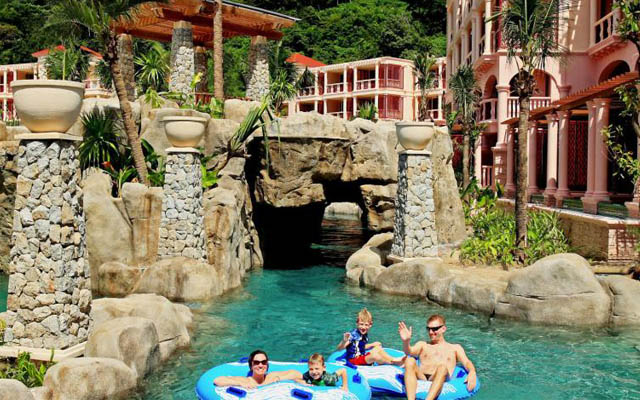

 Whyte has over 30 years of senior travel industry experience, including at Travelport and Virtuoso in Australia, New Zealand and the US. He was previously the regional commercial manager at Sabre.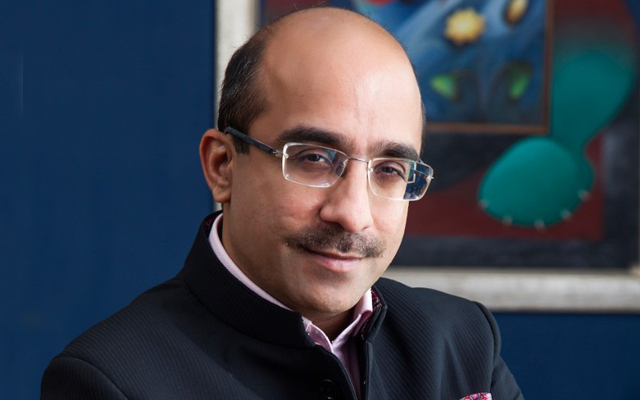



 Thailand’s Centara Anda Dhevi Resort & Spa Krabi reopens on November 15 with a variety of perks to welcome guests once more.







euromic, the oldest DMC alliance in the industry, is on a “major upward trajectory”, with president Rajeev Kohli reporting an expansion in sales units and membership around the world.
Kohli, who took office in January 2020, said: “In the past 12 months, we opened sales units in Germany and South Africa, and one more is coming in early-2023.
“When most other consortiums were cutting back (during the pandemic), euromic was planning to invest for the future.”
The non-profit marketing organisation, with one member per country by invitation, turns 50 next year and has new members in the US, the Dominican Republic and Mexico.
The grouping is also expected to add a Singapore member, Kohli told TTGmice, adding there was interest from three companies, which were being vetted.
Kohli, who is joint managing director of India’s Creative Travel, said 12 euromic members attended the recent IMEX America.
“The outlook from most of our members is very positive. For our mainstream European members, business is back over 2019 levels for quite a few, and for others it is still very positive, but the Russia-Ukraine conflict is seriously impacting members in that region,” he said.
Asia is picking up, he observed.
“I think US planners want to show their clients a broader side of the world. Asia has a lot to offer. Infrastructure is generally good. Culture is a positive,” he said.
“Our mission needs to be to negate the perceptions of long flights. That is perhaps our biggest hindrance from increased business into Asia,” he added.
With the US travel industry still in the recovery phase, destinations that are tried and tested are preferred. “Asia will probably come into the picture from 2023 onwards,” he observed.
Meanwhile, manpower recruitment continues to be the “biggest challenge the industry is facing the world over”. He said requests for proposals had gone up rapidly and members were struggling to reply on time.
While euromic members were sharing notes, trying to help each other, hiring was a local matter.
“At this stage, members are just too busy and trying to keep their heads over water with what infrastructure they have,” he pointed out, when asked what support members were looking for.