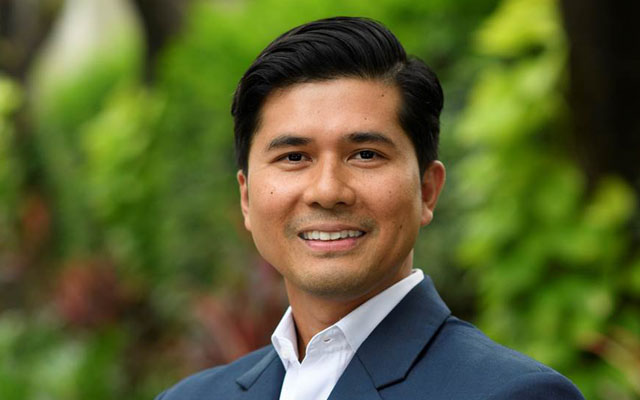
Jed Arricivita has been named Alma Resort’s commercial director. He will oversee commercial management, sales and marketing management, digital strategy and more, with focuses on leisure, business and MICE travel in his new role.
Having amassed more than two decades of business development, sales and marketing experience, Arricivita was most recently director of sales at The Peninsula Bangkok, a position he held for 10 years.
Malaysia is seeing improved incentive travel demand from regional markets this year, but large gatherings numbering into the thousands are still rare, say inbound operators.
At press time, Malaysia’s largest incentive group scheduled for 2023 is a 3,000 pax gathering led by Taiwan’s WOW Prime Corporation, with staggered arrivals from March 26 until September 28.
Asian incentive travel groups are returning to Malaysia; Kuala Lumpur city pictured
Inbound operators told TTGmice that air connectivity is to blame. Although capacity is improving, it has yet to recover to 2019 levels.
Mint Leong, managing director of DMC Sunflower Holidays, is confident that her regular client since 2010, China-based health and wellness company, Perfect China, will return to Malaysia in the third or final quarter.
Sunflower Holidays has handled Perfect China’s incentives annually since 2010, but activities were halted for two years due to the Covid-19 pandemic.
According to Leong, discussions are ongoing with the management to bring the incentive back to Malaysia.
However, Leong doubted that attendance would match pre-pandemic levels, where group sizes averaged 6,000 to 8,000 delegates. In 2016, it peaked to 12,000 delegates.
She said: “Flight connectivity as well as high airfares remain the two biggest challenges. We are working on persuading them to return to Malaysia this year with staggered arrivals.”
Sunflower Holidays is currently handling a proposal for a 1,000-pax incentive travel group from Taiwan for a five-day/four-night programme in Kuala Lumpur and its surroundings. Should this project be confirmed, the trip will take place in 3Q2023.
Tourland Travel has secured an Indian incentive travel group from a multi-level marketing company for 8,000 qualifiers this October, with programmes in Kuala Lumpur and a day trip to Genting. Managing director A Aruldas said participants will arrive in batches over 10 days.
He believe that as air accessibility between Malaysia and India improves further, it will be easier to promote the destination in 2024.
Arokia Das Anthony, executive director of The Essence of Asia Tours & Travel, has had enquiries from India for corporate incentive events since August 2022. Group sizes range from 800 to 5,000 people.
“These big groups are interested in Kuala Lumpur,” shared Arokia.
While interest is strong, glitches in Malaysia’s e-visa process for Indian travellers last year had left a sour taste in the mouths of many Indian agents. Glitches on the website had caused many applications to get rejected, disappointing those who had purchased air tickets but could not travel.
Significant improvements have materialised, but Arokia said the damage had been done and many Indian agents are reluctant to sell Malaysia.
Following the introduction of an Expedia plug-in for ChatGPT users last month, the travel company has now rolled out the beta launch of a new in-app travel planning experience powered by ChatGPT.
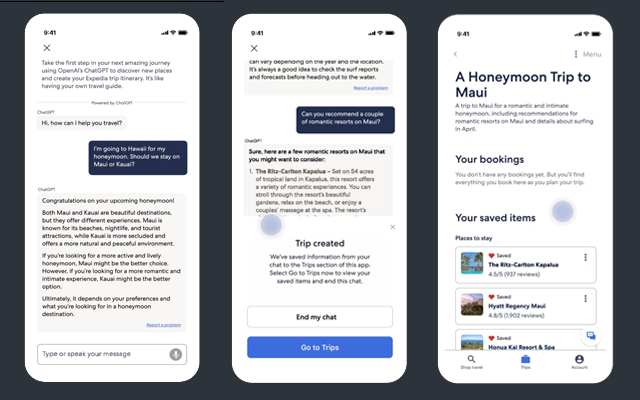
The new function allows Expedia members to have an open-ended conversation in the Expedia app for recommendations on destination activities and tourism products, and have hotels discussed in the conversation saved for future booking. Expedia members can choose dates, check availability, and add on other trip components, such as flights, cars, or activities.
Expedia members can move from trip recommendations to bookings
The conversational trip planning beta experience is rolling out globally in English on the Expedia iOS app.
“Every great trip can be made or lost while planning and shopping. As the leader in travel tech, Expedia continues to build out the core operating system for the industry, constantly enhancing capabilities and making trip planning faster, simpler and even more informative,” said Peter Kern, vice chairman and CEO, Expedia Group.
“By integrating ChatGPT into the Expedia app and combining it with our other AI-based shopping capabilities, like hotel comparison, price tracking for flights and trip collaboration tools, we can now offer travellers an even more intuitive way to build their perfect trip.”
Expedia already integrates artificial intelligence (AI) and machine learning (ML) throughout its platform to create a seamless experience from planning to post-booking.
To help travellers shop, AI and ML are used to deliver personalised and relevant trip options out of 1.26 quadrillion variables like hotel location, room type, date ranges, price points and much more.
For confidence in flight booking, Price Tracking uses Expedia’s comprehensive flight data, AI, and ML to compare today’s flight price with historical price trends and track price fluctuations, so travellers can confidently decide when to book and earn rewards.
For unexpected trip changes, travellers can resolve issues quickly using Expedia’s AI-powered Virtual agent available 24/7.
Ambul thiyal, polos, wambatu moju, kola kanda and kiribath – some of Sri Lanka’s beloved dishes are often unfamiliar to those setting foot on the South Asian island country for the first time, and hint at the swathes of gourmet discoveries waiting to be unravelled by food lovers.
Over dinner with TTG Asia, Manoj Devaraj, group head – sales and marketing, Teardrop Hotels, and Chamintha Jayasinghe, co-founder of luxury travel curator Ayu in the Wild, said Sri Lankan cuisine is often misunderstood to be the same as that of neighbouring India.
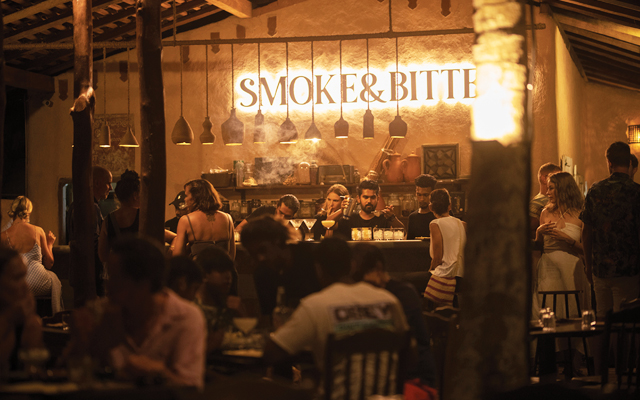
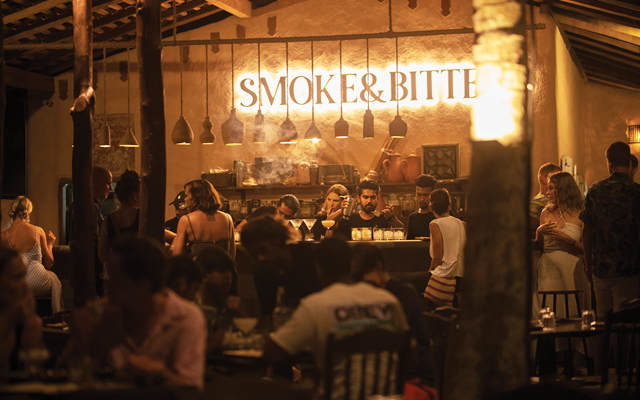
Join the stylish crowd at Smoke & Bitters where smoked dishes and creative cocktails dominate the menu
“Both make different use of spices and cooking styles. We consume a lot more seafood here. Our food has huge influences from our historical interactions with the Portugese, Dutch, Arabic and English,” defined Devaraj.
Furthermore, different cooking styles across the country – from north to south and from coastline to hill country – also birth unique flavours and dishes, pointed out Jayasinghe.
Travellers looking to take their first bite can start onboard SriLankan Airlines, where inflight meals have recently been reinvented to showcase traditional food and its nutritional benefits. Themed Sri Lankan Flavors, the airline’s local meal options are available onboard long- and medium-haul flights as well as at its Business Class lounges at Bandaranaike International Airport in Colombo. Some home favourites on the menu include polos baby jackfruit curry and kuruluthuda rice with chicken pepper curry, as well as a wide selection of local tea.
Richard Nuttall, CEO of the flag carrier, said: “The idea is for passengers to experience Sri Lanka right from the moment they are onboard. Our food philosophy has always been to reflect the country’s culinary culture. We often hear from our Sri Lankan customers that the best local breakfast is found on SriLankan Airlines.”
Another memorable way to get acquainted with Sri Lankan cuisine is through lunch prepared by village folks, served and eaten on a kamatha – a clearing in the middle of lush paddy fields. Arranged by Ayu in the Wild, the kamatha lunch experience introduces guests to the life of rural farmers back in the good old days as well as their traditions. As the space is sacred, only vegetables and non-alcoholic beverages are allowed there along with positive chatter. Farming families involved in delivering the experience gain additional income – a point of appeal for travellers who want to ensure that their spend reaches the hands of the local community.
Amanwella’s herb and spice garden
Food lovers can even recreate their favourite Sri Lankan dishes back home, following an immersive cooking class led by a chef of Shangri-La’s Hambantota Golf Resort & Spa. The Spice Tales activity sees guests joining the chef at the fishing harbour and vegetable market to score some fresh ingredients before returning to the kitchen to prepare their own tasty lunch. Guests are also gifted a pack of essential Sri Lankan spices and a recipe book.
For a more modern take on Sri Lankan flavours, head to Paradise Road The Gallery Café, set in a stylish section of Colombo. Here, a mix of western and Sri Lankan dishes – such as curried fish head soup and coconut crusted modha fish – are served beautifully plated and accompanied by creative cocktails.
Yet another pleasant surprise awaiting visitors is Sri Lanka’s vibrant and cosmopolitan food scene – a vastly different view compared to recent portrayals of civil unrest and resource shortages in some mainstream media. While those were issues the country had to grapple with in 2022, the authorities and people have since established systems to ensure critical resources – including food and fuel – are available to most residents as well as tourists.
“Some imported items, like wine and cheese, may not be easily available here now, but that is only due to an import curb to preserve foreign currency reserves. This does not affect Sri Lanka’s ability to feed tourists, who can continue to enjoy dishes and beverages made with fresh local produce,” Jayasinghe told TTG Asia in early January.
Kamatha lunch
Echoing her view, Nuttall emphasised: “We need tourists to understand that they are not taking food away from Sri Lankans. It is the high cost of living that has resulted in some families not having enough money to buy as much protein as they need. In fact, the return of tourism and tourist expenditure can allow more Sri Lankans to generate more income to feed their families.”
At press time, tourism is stirring once more in Sri Lanka. Visitors who came calling in December 2022 and January this year found popular dining and entertainment venues buzzing at meal times, after dark and over weekends.
Both Sri Lankan flavours and international alternatives are widely available in the tourist hubs, from Colombo and Galle to Hiriketiya and Hambantota.
At Park Street Mews in the capital city, where old warehouses have been converted into an entertainment district, guests can enjoy Japanese, South-east Asian, Middle Eastern, Italian, French favourites and more from across eight restaurants.
Over at the UNESCO World Heritage Site Galle Fort, travellers benefit from a lively dining scene populated by stylish restaurants, cafés and bars tucked within conserved buildings and reimagined boutique hotels. For food lovers, Galle Fort is a gourmet paradise to be slowly savoured across several days.
And should sensible living be needed after days of indulgence, check into luxury coastal resort, Amanwella, where executive chef Shantha Peiris will nourish guests with balanced meals. Peiris takes pride in using traditional herbs and spices harvested from the onsite gardens and forest to create dishes served across the resort’s F&B venues. Menus change with the season, and can be customised according to the dietary needs of guests.
Travellers who scrutinise their carbon footprint and value opportunities to support the local community will be heartened to know that several hospitality operators in the country have intensified sourcing from producers at home. Such decisions were borne out of practical need – supply chain disruptions during the pandemic and earlier import curbs on certain ingredients – as well as a conscious desire to uplift local communities as these operators rebuild their business.
Teardrop Hotels, which run seven hotels across the country, has improved the conditions of its four fruit and vegetable gardens since 2020 for better harvests. Today, 30 per cent of its fruit and vegetable supplies are from these gardens.
Seafood, meats and other ingredients are also obtained from local producers “as much as possible”, shared Devaraj.
Close to 85 per cent of ingredients used in Teardrop Hotels kitchens are now locally sourced – up from about 60 per cent pre-pandemic.
“We have even looked at how suppliers work with us,” he added. To encourage local producers to deliver orders more sustainably, the company supplied reusable, stackable crates.
“The pandemic and import disruptions made us realise that relying on local producers is more reliable, offers greater value, and enables us to support our own people,” Devaraj said.
Smoke & Bitters, a cocktail bar and smokehouse that sits on Hiriketiya’s Pehebiya Beach, takes pride in supporting local producers. A product of two Sri Lankan sons with vast global F&B experience, Smoke & Bitters sources almost 100 per cent from local producers, resulting in an award-winning cocktail menu built on local rum, arrack and home-made syrups, as well as a tantalising food menu featuring dishes prepared with traditional smoking techniques.
SriLankan Airlines’ home favourites
Shangri-La’s Hambantota Golf Resort & Spa, too, is keen to source more of its food supplies from within the country. It plans to engage a village near Yala to supply the hotel with vegetables.
“This community is dependent on seasonal wildlife safari. By having them grow and supply food to our hotel, they can earn income during the off-season,” explained general manager Refhan Razeen.
As the best holiday memories are made of glorious food and exquisite experiences, Jayasinghe believes that “Sri Lanka is absolutely ready to welcome travellers”.
Jayasinghe, who connected TTG Asia with various hotels and dining venues on a research trip in January, said: “Anyone who visits today will realise that this is a country with everything.”
Sri Lanka is gifted as a tourist destination, she opined, thanks to its varied geography and attractions, ranging from whale watching and nature parks to community-based tourism opportunities and specialised tours for those keen to learn about the country’s archeology, conservation efforts, culture, heritage and more.
Travelport has received a US$200 million investment from owners Siris Capital Group and Elliott Management, following the company’s strong first quarter performance.
This injection of capital will enable Travelport to continue executing against its aggressive growth strategy as the travel industry recovers.
The investment will allow Travelport to further advance its technology innovations
In March, Travelport acquired Deem, a leading corporate travel management platform, in order to fulfil a growing need for a tight, fully-integrated tool that provides access to all multi-source content, including NDC.
The company also launch Smartpoint Cloud, delivering a more intuitive and efficient way for travel agents to sell and service travel, all while increasing sales of higher-value services for suppliers.
The US$200 million investment, along with a recent refinancing that received the support of 100 per cent of Travelport’s First Lien Lenders and materially lowered the company’s cash interest expense, provides the company with significant liquidity while demonstrating investors’ strong belief in the company’s bright future.
Greg Webb, CEO of Travelport, said: “The main advantage of private equity ownership is agility, which is crucial in a rapidly changing environment. This investment will allow Travelport to further advance its tech innovations, while fuelling the company’s momentum.”
Jeanette Mao has been appointed the new CEO of HK Express, taking over the reins from Mandy Ng.
In her new role, Mao will spearhead the airline’s growth strategy to expand its capacity and network, and lead the team in enhancing operational efficiencies and customer experience through digital innovations.
She has over 20 years of experience with the Cathay Pacific Group, and was previously general manager inflight service delivery.
Indian business events movement to Australia is growing strongly on the back of improved direct air access between the two countries, making the market one of the fastest to recover since Australia reopened borders for tourism in 2022.
There are now 22 direct flights a week between India and Australia, compared to seven prior to the pandemic.
Robin Mack (left) and Kristian Nicholls welcome Asian buyers at the BEA Asia Mega Famil Showcase business session on April 3 at Crown Sydney
In an interview with TTGmice at the ongoing Business Events Australia (BEA) Asia Mega Famil Showcase that kicked off on 30 March, Robin Mack, Tourism Australia executive general manager of commercial & Business Events Australia, said the Indian market has been bringing in “sizeable groups”.
In July 2022, a group of 600 pax from an insurance company in India visited Melbourne and the Gold Coast.
Strong demand is persisting through 2023, with a group of 350 attendees from a dealership of an automobile company calling at Sydney earlier this year.
“Improved air connectivity has been a strong pillar of rebuilding the Indian market,” remarked Mack.
Australian flag carrier Qantas started four-times-a-week flights between Sydney and Bengaluru last year – making it the first direct connection between Australia and South India. The airline also commenced flights between Melbourne and Delhi in December 2021.
“Adding to this, indirect services from Singapore offer great connectivity for Indian MICE groups as (Singapore Airlines) flies to seven gateways in Australia,” he added.
Not only are Indian corporate groups eager to return to Australia for meetings and events, they are also staying on longer.
Mack shared that while Indian business events groups used to stay an average of five nights in two destinations in general, they are now extending their time to seven or eight nights for the same two destinations.
Kristian Nicholls, executive general manager client engagement, Business Events Sydney, said: “India was one of the first markets to open up for Sydney, and at present is among our top three key source markets. Considering the US inbound market is slower to restart at the moment and China has just opened up, I definitely see India as being a critical market for us moving forward.”
Illustrating the promise of the Indian market, Nicholls said demand comes from “vast business verticals, from insurance to paint companies, which we don’t see in other markets”.
“The average size of Indian MICE groups has been between 300 to 500 pax. However, now we are also seeing queries of 1,000-plus groups,” added Nicholls.
Australia attracted 59,000 business events visitors from India in 2019 who contributed A$339 million (US$229.7 million) in direct expenditure. India was the sixth-highest business events market in terms of visitors; and fifth in terms of spend.
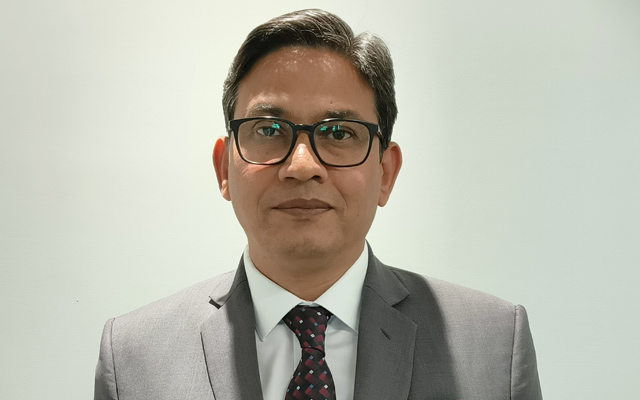
Brij Hotels has named Sandeep Singh as vice president sales, who brings with him over 25 years of extensive experience in leisure travel sales for luxury hospitality segment.
He will lead the sales efforts for seven operational hotels and develop strategies for upcoming properties in his new position, and will work closely with all unit heads and the frontline sales team to ensure the delivery of exceptional experiences to guests and stakeholders.
Prior to joining Brij Hotels, he served as the director of sales and marketing for the Gujarat region at The Leela Palace Hotels and Resorts.
The Department of International Trade Promotion (DITP), the Thai Chamber of Commerce (TCC), and Koelnmesse, have joined forces to create an all-new HoReCa (hotel, restaurant, and catering) tradeshow next year.
Scheduled to take place from March 6 to 8, 2024 at IMPACT, Muang Thong Thani, Bangkok, Thailand, the inaugural tradeshow will showcase a comprehensive range of innovative solutions in nine major segments: Bakery & Ice-cream, Café and Bar, Cleaning and Laundry, Dining, Furnishing, Kitchen, Services, Tech, and Wellness.
The inaugural tradeshow will be located at IMPACT, Muang Thong Thani in Bangkok
Additionally, there will be several supporting programmes, including a Hosted Buyer Programme, slated to host more than 500 top buyers from Asia, allow them the opportunity to network. Industry players can also glimpse into the future of HoReCa at the THAIFEX – HOREC Xperiential Zone, and gain access to industry insights, perspectives, and best industry practices by attending forums, live workshops, and culinary demonstrations.
Phusit Ratanakul Sereroengrit, director-general, Department of International Trade Promotion (DITP), noted that after three challenging years of Covid-19 restrictions, the HoReCa industry is now seeing a surge in consumer demand as people are eager to return to travelling, dining out, and other forms of entertainment.
“Thailand is… a famous tourist destination with a quality reputation for great hospitality and strong capability to serve the needs of the industry. This year, Thailand is expected to receive more than 20 million foreign visitors. Backlog demand is leading to an unprecedented need for new investments and opportunities in the HoReCa industry. Given the growth trajectory and our great achievement of THAIFEX – Anuga Asia tradeshow, all three organisers are confident that THAIFEX – HOREC Asia will be a beneficial platform to meet the needs of the region’s fast-growing tourism and hospitality industry.”
The debut event aims to attract over 300 leading brands and 20,000 trade visitors from South-east Asia and key cities across Asia-Pacific.
Emirates and United have activated their codeshare partnership, allowing Emirates customers to enjoy easier access to an expanded choice of destinations in the US.
Emirates customers will be able to fly to Chicago, Houston or San Francisco and connect easily to United’s expansive network of domestic US points.
Customers of Emirates and United will benefit from expanded flight services and enhanced loyalty programmes
Similarly, Emirates customers in the US can easily access Dubai and beyond, across the Middle East, Africa, Central Asia and the Indian subcontinent, where the Middle Eastern carrier operates extensively.
Emirates is enabling its Skywards members to earn and redeem miles on all flights across United’s worldwide network, while United will allow its MileagePlus members to earn miles on select flights in the Emirates network when travelling from Newark to Dubai and onwards to certain destinations.
Both airlines have an interline arrangement, affording travel conveniences to their customers.


 Having amassed more than two decades of business development, sales and marketing experience, Arricivita was most recently director of sales at The Peninsula Bangkok, a position he held for 10 years.





 She has over 20 years of experience with the Cathay Pacific Group, and was previously general manager inflight service delivery.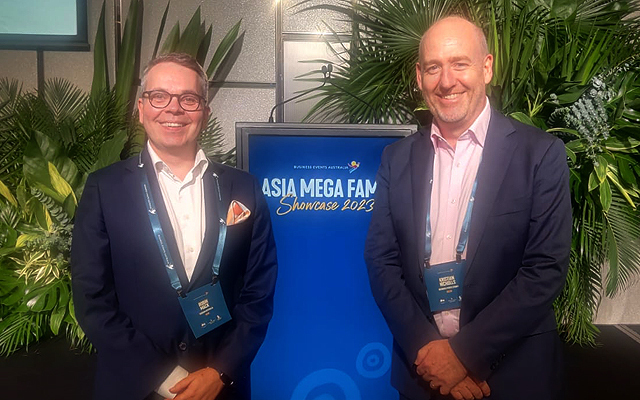
 Prior to joining Brij Hotels, he served as the director of sales and marketing for the Gujarat region at The Leela Palace Hotels and Resorts.






Following the introduction of an Expedia plug-in for ChatGPT users last month, the travel company has now rolled out the beta launch of a new in-app travel planning experience powered by ChatGPT.
The new function allows Expedia members to have an open-ended conversation in the Expedia app for recommendations on destination activities and tourism products, and have hotels discussed in the conversation saved for future booking. Expedia members can choose dates, check availability, and add on other trip components, such as flights, cars, or activities.
The conversational trip planning beta experience is rolling out globally in English on the Expedia iOS app.
“Every great trip can be made or lost while planning and shopping. As the leader in travel tech, Expedia continues to build out the core operating system for the industry, constantly enhancing capabilities and making trip planning faster, simpler and even more informative,” said Peter Kern, vice chairman and CEO, Expedia Group.
“By integrating ChatGPT into the Expedia app and combining it with our other AI-based shopping capabilities, like hotel comparison, price tracking for flights and trip collaboration tools, we can now offer travellers an even more intuitive way to build their perfect trip.”
Expedia already integrates artificial intelligence (AI) and machine learning (ML) throughout its platform to create a seamless experience from planning to post-booking.
To help travellers shop, AI and ML are used to deliver personalised and relevant trip options out of 1.26 quadrillion variables like hotel location, room type, date ranges, price points and much more.
For confidence in flight booking, Price Tracking uses Expedia’s comprehensive flight data, AI, and ML to compare today’s flight price with historical price trends and track price fluctuations, so travellers can confidently decide when to book and earn rewards.
For unexpected trip changes, travellers can resolve issues quickly using Expedia’s AI-powered Virtual agent available 24/7.