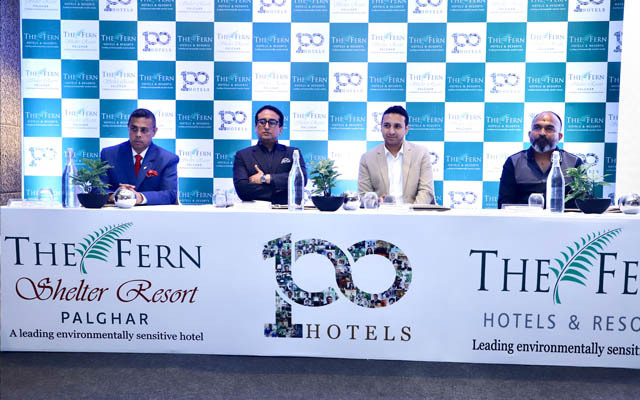
CG Hospitality Holdings, hospitality arm of CG Corp Global, has opened The Fern Shelter Resort in Palghar, Maharashtra, India, marking its 100th Indian hotel milestone.
The Fern Shelter Resort is positioned as a luxurious retreat.
CG Hospitality grows its Indian hotel portfolio
Binod Chaudhary, chairman & founder of CG Corp Global, said the “significant achievement epitomises our steadfast commitment to delivering hospitality experiences that are both environmentally sensitive and sustainable”.
“As we forge ahead with our portfolio expansion, we remain steadfast in our dedication to curating unforgettable and conscientious stays for our esteemed guests,” he said.
During a press event, CG Corp Global and CG Hospitality Holdings CEO and managing director Rahul Chaudhary highlighted CG Hospitality’s strong strategic alliances with leading brands, such as Taj and Fairmont, as well as its extensive portfolio of more than 150 hotels and resorts across 91 destinations in 12 countries.
CG Hospitality has set an expansion goal of 200 hotels and 10,000 keys, and is looking out for unique destinations to establish new properties.
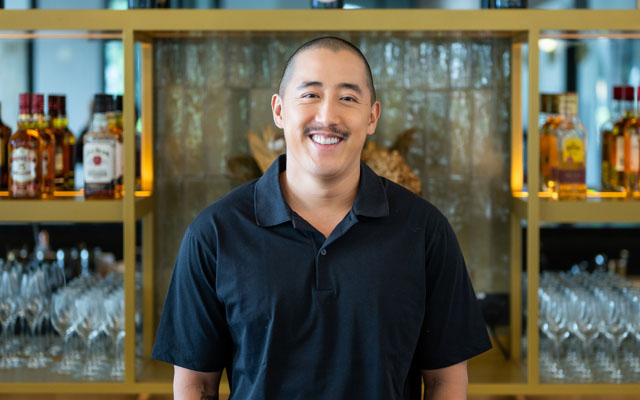
Habyt has appointed Jonathan Wong as its new chief executive officer for Asia-Pacific.
He will lead the business in the region by delivering commercial success for real estate partners, enhancing stay experiences for members, expanding Habyt’s presence across the region, as well as deepening its footprint in current cities.
Prior to joining Habyt, Wong held senior executive positions in CloudKitchens Asia-Pacific and Uber South-east Asia.
Skyscanner’s latest Travel in Focus report uncovers key travel insights in Singapore, South Korea, and India for the year, and revealed that while travel remains on the rise, budget-conscious travellers are embracing travel with an open mind to score more affordable getaways.
While rising costs of everyday items will affect their travel plans, close to 99% of travellers across Singapore, South Korea, and India still plan to travel.
86% of South Koreans are willing to allocate a larger budget for destination specific experiences; Wat Suan Dok in Chiangmai, Thailand, pictured
When it comes to planning, travellers from Singapore (63%), South Korea (66%), and India (72%) would prefer to plan every single detail of their travel ahead of time, but they are equally willing to change their itineraries if they come across a good deal.
With the rising cost of living, travellers are looking to stretch their dollar – but Skyscanner’s recent research revealed that they are willing to sacrifice different things to fit in their budget. 54% of South Koreans are willing to give up comfort to travel no matter what, while more than 60% of Singaporeans and Indians prefer to travel in comfort.
The following are highlights from the report which show three different traveller categories for Singapore, South Korea, and India.
Singapore Escape Artists: About 80% of Singaporeans take advantage of long public holiday weekends for quick getaways, while 50% of Singaporeans have utilised between one and three long public holiday weekends in the past two years.
Celebration Chasers: Two of five Singaporeans (40%) are motivated to travel due to the holiday season (long weekends, four seasons, and Christmas) or special occasions (anniversaries, birthdays, and honeymoons). 33% of Singaporeans are attracted to destination-bound events such as Sakura season, Songkran, sale seasons, concerts, festivals, and sports events. Above all, most Singaporeans simply can’t resist a good deal – with 62% of them travelling due to a great price offer.
Zen Z: It was discovered that “social clout” was Gen Zs’ (aged 18-24) least commonly cited benefit of travel (29%). In fact, mental recharge to destress are Gen Zs’ most frequently cited advantage of travelling (76%), closely followed by the desire to enrich themselves through novel experiences (68%).
South Korea Solo Flyer: 40% of South Korean travellers are likely to travel alone on their next holiday. Gen Zs are less likely to travel solo (23% of the 18-24 age group) when compared to millennials (64% of the 35-44 age group). In comparison, 47% of the respondents from the 65 and over age group responded that they are likely to travel alone.
Travel Junkies: 54% of South Koreans want to travel no matter what – even if they have completed all their planned trips, they would prefer to use their extra cash to squeeze in one more trip (61%) instead of using it on something else (35%).
No-normal Travellers: A majority of South Koreans (86%) are willing to allocate a larger budget, or adjust their itinerary, for obscure travel attractions and destination specific experiences. They’d rather dine at famous local restaurants or experience cultural heritage tours, instead of shopping or attending sporting events.
India Deal-driven Travellers: Cost continues to be a major consideration for Indian travellers, with 47% of travellers willing to change their itineraries if presented with better deals. Some Indians prefer international destinations that are less expensive to visit (35%), and some opt for non-peak travel periods (33%).
Slow Travelling Gurus: In 2023, Indians prefer slow travel, with many opting for immersive travel (46%) over fast-paced travel (40%). Rather than visiting as many places as possible, travellers are looking to spend more time in a single destination where they can experience the local culture more deeply. They believe this mindful approach creates more meaningful personal connections and a richer experience. According to Skyscanner data, over 38% of Indian travellers spend longer than one month on a single-destination trip, including domestic and international destinations, based on redirect data for the year 2023, which is significantly more compared to travellers in Singapore (3%) and South Korea (8%).
Purposeful Voyagers: From wellness retreats to holy sites and cricket matches, Indian travellers are looking to travel domestically with purpose and centre their travel experiences around specific activities. 55% of Indians embark on purpose-related travels within India for activities such as scuba diving, gold panning, yoga, and wellness retreats. 38% of them are likely to spend more on travel to catch live cricket matches, and 57% of Indians actively plan to visit holy sites in the next six months.
Destination Queenstown chief executive Mat Woods has been appointed to the board of Regional Tourism New Zealand with immediate effect.
Representing Queenstown and all the South Island regions, Woods will work alongside other regions on nationally significant issues, such as shaping the evolution of the visitor economy.
He was previously the chair of Lake Wānaka Tourism, and is currently on the board of Snow Sports NZ.
Hyatt Hotels Corporation has named Ratih Handayani as general manager of Alila Manggis in Bali.
Bringing a wealth of experience to her new role, she previously served as an independent hospitality consultant since 2020, contributing her expertise to Triloka Architects in Bali.
Prior to that, she was general manager at the Cabochon Hotel & Residence in Bangkok.
Minor Hotels has appointed Ian Di Tullio as the company’s new chief commercial officer, who joins the Bangkok-based group from his most recent position as chief commercial officer Europe at Accor.
Di Tullio brings to Minor Hotels a deep expertise in loyalty, analytics, customer engagement and digital, having overseen ground-breaking innovations in customer loyalty, digital marketing and distribution during previous roles at Accor, Qatar Airways and Air Canada.
Fluent in English, French and Italian, he also has extensive global management experience with large multinational organisations.
SITA has signed a deal with the Airports Authority of India (AAI) to support and provide technology to 43 of the country’s biggest airports.
The deal will see improvements to over 2,700 passenger touch points. Initially deployed across 43 airports, the technologies are scalable to an additional 40 airports over the next seven years. Over 500 million passengers are expected to be processed during this period.
SITA’s solutions will help India’s airports reduce their infrastructure footprint and increase operational efficiency
Under the agreement, SITA will deploy its IATA-certified solutions, including SITA Flex, CUPPS, SITA CUSS, and SITA Bag Manager, which offer airlines and ground handlers the benefits of common use technologies, enabling scalable operations to meet their specific operational requirements.
Indian airports will benefit from a reduced infrastructure footprint and increased operational efficiency, while airlines will be able to enforce better security and take advantage of an agile technology platform to host new progressive technologies and move away from native applications.
In addition, a centralised cloud hosting of all servers means reducing on-premise infrastructure costs on top of enabling proactive monitoring and control of services.
The adoption of cloud solutions will also benefit passengers, who will gain more control over their journey through a low-touch, efficient check-in, bag drop, and collection process via assisted and self-service mechanisms.
Sumesh Patel, president, Asia-Pacific, SITA, said: “The number of airports in India is expected to increase from 148 today to 220 by 2025. By connecting cities better, air travel and transport will help unlock the full potential of India’s economic growth too.
“Ensuring efficient and fluid operations and a seamless passenger experience at these airports will be critical to delivering on India’s air transport industry opportunity.”
ANA InterContinental Tokyo has appointed Michael Janssen as general manager of ANA InterContinental Tokyo, as well as portfolio general manager.
Joining ANA InterContinental Tokyo from Kimpton Kitalay Samui, Janssen will be responsible for day-to-day operations and strategic direction of the hotel.
The German national has over 25 years of experience with IHG Hotels & Resorts across Europe, the Middle East, Africa and Asia, and brings extensive knowledge and expertise to his new role.
The ACI Asia-Pacific has announced the appointment of four new members into its board.
ACI Asia-Pacific Board Members at the Regional Assembly in Kobe, Japan
They are Musad Abdulaziz Aldaood, CEO, Riyadh Airport Company; Nguyen Duc Hung, deputy general director, Airports Corporation of Vietnam; Hag Jae Lee, president and CEO of Incheon International Airport Corporation; and Sarah Samuel, senior vice president, Airport & Airline Operations, ICM Airport Technics, director for World Business Partner, ACI Asia-Pacific.
A glimpse of Pan Pacific Hotels Group’s (PPHG) Parkroyal Collection properties will easily conjure visions of an alternate universe where lush, leafy giant structures dominate the skyline.
This is the result of the brand’s decision to make iconic and biophilic design a cornerstone of its architectural direction. Its first biophilic hotel, Parkroyal Collection Pickering in Singapore, is such a success that both its design and sustainable achievements have earned it numerous awards, media coverage and social media posts.
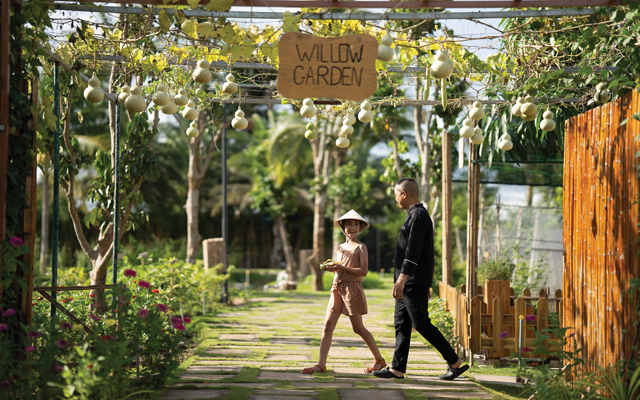
Willow Garden at Melia Ho Tram
Parkroyal Collection Marina Bay in Singapore, the second property to open under the brand, is no shadow of its sister. Its sky-lit indoor atrium – said to be South-east Asia’s largest – is home to more than 2,400 plants, trees, shrubs and groundcovers.
When Parkroyal Collection Kuala Lumpur opened in June 2022, it carried the brand’s biophilic design promise, with a vertical garden facade and roof terraces showcasing 1,208m2 of plants and trees.
The fourth development to come in 2026, the Parkroyal Collection Faber House in Singapore, will be another one to watch for fans of biophilic design. The 250-key hotel will form part of an 18-storey development in the heart of Singapore’s shopping belt. Its stellar address aside, the hotel will draw eyeballs with its façade of intense outdoor greening and cascading water features, bringing much needed greenery to the district packed with malls.
“But these are more than just aesthetics,” said Choe Peng Sum, PPHG’s CEO, during a panel discussion hosted under the Hospitality Conference 2023 by SHATEC – The International Hotel & Tourism School (Singapore) earlier in March.
“All that greenery gives these properties a different quality of air and cools the air naturally. Reducing just two degree Celsius without the use of air-conditioning means substantial energy savings,” he explained.
Furthermore, with these properties adopting stringent environmentally sustainable operations, such as waste and water management, beyond their pretty biophilic features, Choe emphasised that going green is a sensible business move.
Citing an example, Choe said securing the Green Mark Platinum certification from the Singapore Building and Construction Authority for his company’s soon-to-launch Pan Pacific Orchard resulted in a S$120 million (US$90 million) green loan, up to three per cent additional gross floor area – which he said could mean an extra floor of guestrooms, and cash incentive to lower upfront cost of energy efficiency retrofits.
Indeed, PPHG’s sustainability efforts flow through its entire portfolio. It works closely with parent company UOL Group and respective hotel owners to determine the ideal design for the property, and if possible, incorporate environmentally friendly systems.
A PPHG spokesperson told TTG Asia: “To invest in complete biophilic design with environmentally-friendly systems is not cheap, and not easy – it is crucial to have the hotel owners’ buy-in and to believe in the returns, both in long-term cost savings and in securing strong brand equity.”
Pan Pacific Orchard
Top-level commitment
At Meliá Hotels International, sustainability commitment has top-level involvement. Its sustainability directions are led by a Sustainability Committee formed in 2020, with two members of the Executive Committee holding seats.
The company’s sustainability vice president, Lourdes Ripoll de Oleza, told TTG Asia: “This fact gives it the executive impetus at the highest level necessary to ensure that decisions are passed downstream to the operation. This committee maintains a close link with our Board of Directors as it reports directly to one of its committees.”
At the same time, day-to-day operations are assumed by the Sustainability department, which reports directly to the executive vice president and CEO. Owners are also an essential part of the commitment, and they would “share their thoughts on sustainability, and address concerns and potential actions that we can promote together”.
Sofitel Singapore Sentosa Resort & Spa, which has started to establish a farm on its premises, has its sustainability strategy and goals championed by members of a task force comprising key departments such as housekeeping, engineering, human resources, culinary, purchasing, food and beverage, front office, sales and marketing communications. This task force supports the resort’s cluster general manager Cavaliere Giovanni Viterale and general manager Robert Gauer.
Vehicle for education
Hotels committed to sustainability are realising that they can play a part in educating their guests on how to be sustainable back home.
Meliá Hotels International took advantage of Earth Day on April 22 this year to offer guests at its South-east Asian properties interesting activities rooted in sustainability concepts. Sol by Meliá Benoa Bali, Indonesia, for instance, hosted a beach Cleaning Blitz with opportunities for guests to join in, along with sustainable craft activities for kids where they painted bags and for adults to make torches using waste cooking oil.
Earth Day may be over by now, but learning opportunities at Meliá properties continue. Sol by Meliá Phu Quoc offers candle-making workshops using old candles; Meliá Phuket Mai Khao offers upcycled bottle painting; Meliá Bali runs a coral reef recovery project with local non-profit, Nusa Dua Reef Foundation, and invites guests to support it with purchases of coral plantation activities.
Sofitel Singapore Sentosa Resort & Spa’s farm, set up in 2022 as part of its food resiliency measures, has helped to provide more sustainable dining and cocktail options. A lemon tree garden now feeds the culinary and mixology teams. At LeBar, lemon leaves from the garden and watermelon tincture made from watermelon skin obtained from the kitchen are used to concoct a refreshing Sentosa Sling. The garden recently welcomed an Amalfi lemon plant, gifted by local Peranakan culinary doyenne Violet Oon.
“We are very much looking forward to an Amalfi lemon tree in the coming months. Additionally, our team has just planted a crop of vegetables and herbs on an adjacent plot of land facing the South China Sea,” shared Viterale.
The property is also sharpening its farm-to-table offering. In March 2023, it was awarded the Singapore Food Agency Farm-To-Table Recognition (Highest Tier) with at least 15 per cent of local produce sourced across three or more food categories (Hen Shell Eggs, Leafy Vegetables, Beansprouts and/or Fish categories).
“This inaugural award reinforces our resort’s commitment to supporting local producers and at the same time, ensures we are part of a resilient food supply chain that is in alignment with the Singapore Green Plan 2030. In addition, it ensures higher quality and fresher ingredients due to a shorter period of transportation and enables the chefs to showcase uniquely created menus that highlight local flavours,” said Viterale.
Further, it partners with food tech brands such as Very Dairy and OnlyEg to create innovative yet healthy menu offerings.
At PPHG properties, guests learn to live day-to-day with reduced environmental impact. Those staying at Pan Pacific Orchard are able to refill their bottles with fresh drinking water from in-room filtered water dispensers, while long-staying guests at Parkroyal Nay Pyi Taw can grow their own plants in a plot at the Organic Garden.
“While many of our investments and efforts run in the background and are not visible to guests, we find creative and engaging means to incorporate sustainability into the guest experience,” said the PPHG spokesperson.

 Prior to joining Habyt, Wong held senior executive positions in CloudKitchens Asia-Pacific and Uber South-east Asia.




 Prior to that, she was general manager at the Cabochon Hotel & Residence in Bangkok.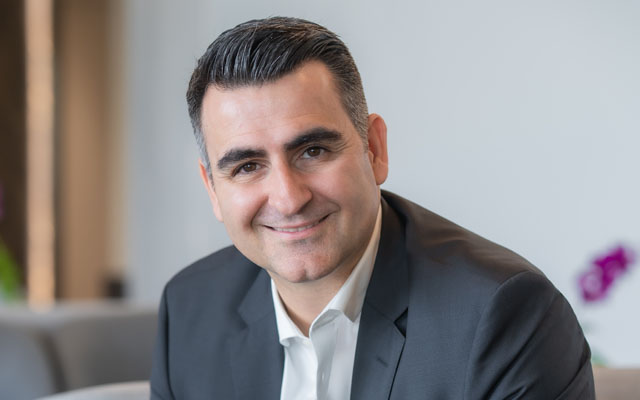
 Fluent in English, French and Italian, he also has extensive global management experience with large multinational organisations.


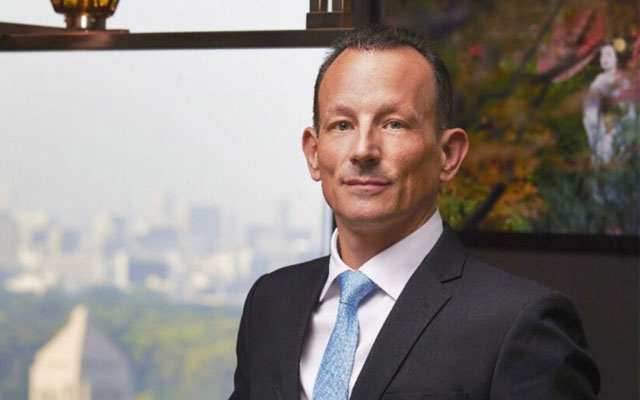 The German national has over 25 years of experience with IHG Hotels & Resorts across Europe, the Middle East, Africa and Asia, and brings extensive knowledge and expertise to his new role.