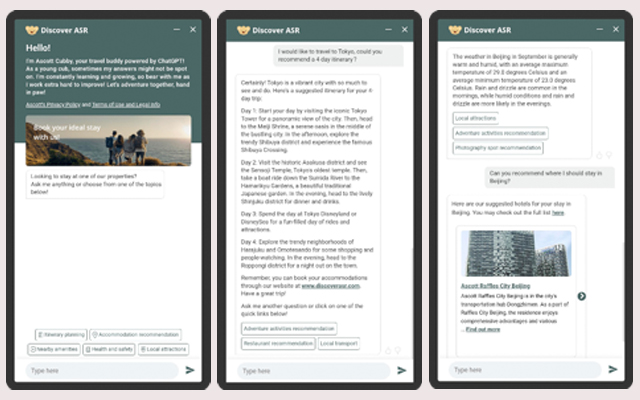
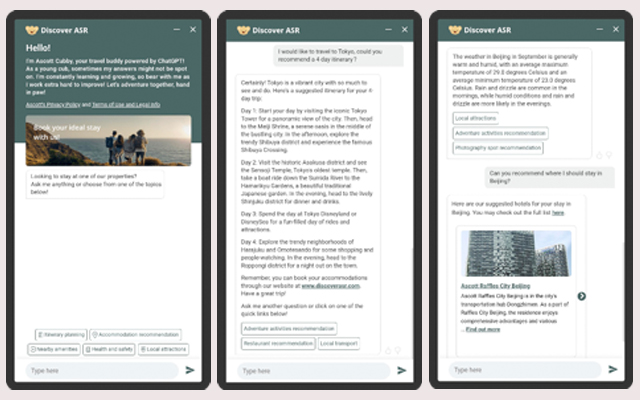
The Ascott Limited (Ascott) has launched a generative artificial intelligence (AI) powered web chatbot to enhance the travel stages of planning and booking as part of the guest journey.
Named after Ascott’s mascot, Cubby, the chatbot is designed to play the role of a ‘travel buddy’ to all guests – it provides travel insights including destination highlights, accommodation recommendations, must-visit attractions, suggestions for shopping and adventure activities, and more.
Ascott’s chatbot aims to enhance the travel stages of planning and booking, as well as provide travel insights
Currently in its test-bedding stage, the ChatGPT-fuelled chatbot is built on Microsoft OpenAI and Azure Services, and leverages real-time data using Bing search and Azure services, alongside data and insights accessed via Ascott’s global website.
Ascott’s managing director for brand & marketing, Tan Bee Leng, said: “Cubby, with its AI prowess, taps into a vast treasure trove of data, enabling fast analysis of travel preferences, trends, and recommendations; from suggesting hidden gems to tailoring itineraries that match specific areas of interests. Every interaction with Cubby is set to unlock a realm of limitless possibilities in AI-driven travel planning.”
For a start, Cubby will be supporting Ascott’s live chat agents, so that the agents can focus on responding to more complex inquiries which require deeper and more thorough engagement with guests.
Cubby has the ability to generate personalised itineraries according to user input, which can be customised and amended according to the destination(s) selected, length of stay, travel preferences, and other criteria. The chatbot is also able to share travel tips as well as health and safety information alongside advice on visa requirements, travel budgets and packing checklists.
In anticipation of evolving guest expectations, Cubby will become multichannel in its later phase, seamlessly integrating with different applications for greater convenience. Improved language capabilities will also be implemented to ensure that Cubby is optimised for local use. This integration will allow Cubby to respond instantly across channels, using the guest’s preferred language and platform while handling an immense volume of guest inquiries simultaneously and consistently.
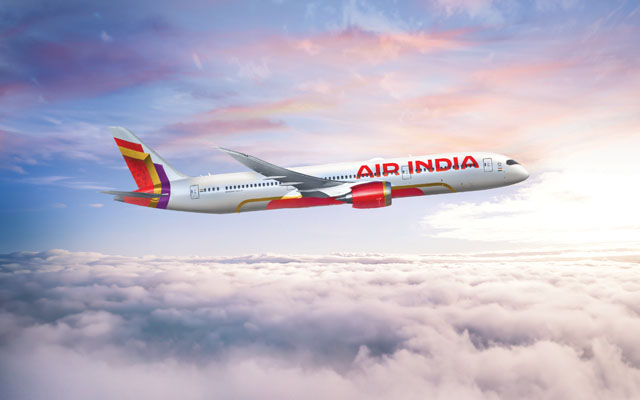
Air India, a Tata Group-owned airline, has revealed its new brand identity along with new aircraft livery, with a design that symbolises a ‘Window of Possibilities’.
Its new logo – The Vista – and aircraft livery don a palette of deep red, aubergine, and gold highlights, as well as a chakra-inspired pattern, signifies the airline’s bold, confident outlook for the future.
Travellers will see Air India’s new logo throughout their journey from December
Travellers will begin to see the new logo throughout their journey starting this December, when Air India’s first Airbus A350 enters the fleet in the new livery.
Campbell Wilson, Air India CEO & managing director, said: “Our transformative new brand reflects an ambition to make Air India a world class airline serving guests from around the globe, and that represents a new India proudly on the global stage. The new Air India is bold, confident, and vibrant, but also warm and deeply rooted to its rich history and traditions that make Indian hospitality a global benchmark for standards in service.”
Air India is also making significant investments throughout the guest experience to elevate its service and to strengthening its position as the preferred airline for travellers flying to, from, and within India.
The airline has confirmed historic purchase agreements to acquire 470 aircraft from Airbus and Boeing at US$70 billion with deliveries of the new aircraft starting November this year.
The transformation of Air India’s fleet has already begun with the airline leasing and buying 20 widebody aircraft this year. A US$400 million programme to completely refurbish the interiors of its legacy fleet of 43 widebody aircraft commences mid-2024, which will lead to the installation of brand-new seats in every cabin, new inflight entertainment systems, and inflight Wi-Fi internet connectivity.
By March 2024, 33 per cent of the airline’s widebody fleet will be upgraded, and over the next two-and-a-half years, its entire longhaul fleet will be reborn.
In addition, Air India has a new website and mobile app, and will launch a new 24/7 customer contact centre in nine Indian and foreign languages by year end, as well as completely redesigning its loyalty programme by early 2024.
It is also investing in building new lounges at Delhi and New York JFK airports, and plans to build aviation training academies in India that will upskill a massive number of aviation professionals.
Collinson has named Rishi Kapoor as chief transformation officer, who joins the company from British Airways.
Based in London, his appointment will strengthen Collinson’s transformation capability, with responsibility for driving a cohesive approach to overall business change, including supporting on existing transformation programmes across product, data and technology.
He has over twenty-five years’ experience of leading business transformation teams, and recently concluded a four-year secondment at the oneworld Alliance as chief transformation officer.
Oceania Cruises has appointed Jason Worth to the newly-created role of vice president, international sales.
Worth, currently vice president, sales & general manager, Asia Pacific, will assume the role with immediate effect, and will oversee sales teams in the UK, Europe, Latin America and Brazil, as well as Asia-Pacific.
He has held various positions with the company since joining in 2011, including vice president, sales, Australia & New Zealand, Oceania Cruises, from 2019 through to 2022, and vice president, finance & accounting – Asia Pacific at Norwegian Cruise Line Holdings.
Marked as one of Indonesia’s five Super Priority Destinations, Labuan Bajo, has already established itself as a leisure hotspot, but it is working towards positioning itself as an ideal destination for business events as well.
Located in East Nusa Tenggara, the harbour city stepped confidently into the limelight when it recently played host to the ASEAN Summit, a gathering of heads of state from member countries earlier in May.
Labuan Bajo successfully hosted the ASEAN Summit in May
Wiwin Kurniawan, director of marketing and operations at Pacto Convex, expressed that while there were some limitations when considering Labuan Bajo as an events destination, the successful hosting of the Summit demonstrated the city’s ability as a prime business events hub.
One such limitation was the lack of accommodations and meeting spaces suited for large-scale or high-profile events.
According to data from the Ministry of Tourism and Creative Economy, Labuan Bajo currently has 38 hotels offering over 1,500 rooms. Among these properties, only five are classified as upscale accommodations, such as the Ayana Komodo Waecicu Beach Hotel, Meruorah Komodo Labuan Bajo, and Plataran Komodo Resort & Spa.
For the 145-key Meruorah Komodo Labuan Bajo and 205-key Ayana Komodo Waecicu Beach Hotel, hosting national and international business events is not new.
Rizal Kasim, president director of Hotel Indonesia Group, the holding company of Meruorah Komodo Labuan Bajo, stated: “In fact, Meruorah was purposefully designed to target business events. Our meeting facilities are currently the largest on the island. Since its launch in 2019, we have successfully hosted several national and international events, including last year’s G20 meetings.”
The hotel ballroom can accommodate up to 375 people theatre-style and be further divided into three meeting rooms.
Golo Mori Convention Centre is ready to host business events (Photo by HIG)
Christian Hoechtl, general manager of Ayana Hospitality Group as well as Ayana Midplaza Jakarta, said: “MICE bookings accounted for 35 per cent of Ayana’s revenue in 2019. For 2023, MICE business has contributed 25 per cent thus far, and we are optimistic that our participation in this year’s ASEAN Summit will significantly boost revenue.”
Ayana Komodo Waecicu Beach Hotel’s function spaces include a ballroom with up to 220 people for reception and sits 150 theatre-style, as well as five breakout rooms amnd several outdoor venues.
Hochtl added that the Summit will enhance the promotion of local tourist destinations and domestic industries, showcasing Indonesia’s competitive advantage.
In a boost to Labuan Bajo’s event capability beyond five-star hotels’ ballrooms and venues, the Golo Mori Convention Centre (GMCC) was recently completed.
A standalone facility, GMCC is located a 30-minute drive away from the city centre on a 26-km long newly built road. The venue features an amphitheatre with a capacity of up to 1,500 people, a convention centre that can accommodate up to 500 people, and several boardrooms.
Ari Respati, president director of the Indonesia Tourism Development Corporation, also revealed plans for an integrated resort complex spanning 200 hectares around GMCC. A beach club and small dock have already been built, while several hotels and attractions are in the pipeline.
Rizal also pointed out that Labuan Bajo has several upscale hotels currently under development, and are set to come onlinethis year and next.
As such, Pacto’s Wiwin is immensly confident in Labuan Bajo’s business events potential, because aside from having suitable business events spaces, the area’s natural beauty is something that would appeal to many.
She stated: “Labuan Bajo has stunning and alluring natural surroundings, which will captivate visitors from the moment they step off the plane. Although the destination may not be suitable for large conventions due to current facility limitations, it will appeal to small and medium-sized corporate meetings and incentives.”
Possible additions to corporate itineraries include island hopping, sunset cruising, one-day trips to Komodo Island, diving, and enjoying the scenic views from Puncak Waringin Peak.
Terence Lee, general manager of Meruorah Komodo Labuan Bajo, agreed: “Labuan Bajo is good for combining meetings and incentives. You arrive in Labuan Bajo for meetings (on the first day), then go island hopping on the second and third days.”
Wiwin further pointed out that as demand for business events increases, investors will be keen to explore the further development of facilities and equipment, thereby reducing logistical costs.
To sustain the momentum of high demand for both leisure and business events, Lee expects an increase in seat capacity to the Labuan Bajo, which could lead to the expansion of Komodo Airport.
Currently, the airport is equipped with a 2,650m-long runway capable of accommodating A320 and B738 aircraft.
Hochtl is also optimistic, sharing that the government’s plans to establish Labuan Bajo as an international hub in the near future will further solidify the region’s position as a preferred business events destination.
With enhanced infrastructure and convenient access to Komodo National Park, Labuan Bajo would attract event planners seeking new and different experiences for their meetings and incentive travel, he said.
Klook’s Travel Pulse survey revealed that travellers are ready to spend big on travel. One in three millennial and Gen Z travellers are willing to spend more than double of the average monthly income in Asia (US$1,069) on their next holiday, which amounts to US$2,000 and more.
The survey was conducted in July this year with a total of 2,400 respondents across 12 markets including Hong Kong, Taiwan, Singapore, Malaysia, the Philippines, Thailand, Vietnam, South Korea, Japan, Australia, Mainland China and India.
Klook’s Travel Pulse survey revealed that travellers are willing to spend more on their next holiday
Eric Gnock Fah, chief operating officer and co-founder of Klook, said: “Embracing a new era of travel, experiences have emerged as a new coveted currency for the next generation of travellers, particularly among millennials and Gen Zs. Unique experiences and activities take precedence in their travel plans as the first thing they look at, with 85% of travellers willing to invest in experiences during their holidays.
“This remarkable shift is a testament to their increasing desire for authentic experiences, with their decisions fuelled by social media over traditional sources like search engines and travel guides before embarking on their next travel adventure.”
Experiences are millennials’ and Gen Zs’ new travel currency
As travel becomes more intentional, a majority of travellers are also prioritising experiences and making them a focal point of their trip, with 63% booking their experiences before they fly.
More than 90% of millennials and Gen Zs place importance on unique and memorable experiences during their travels, with 85% signalling a willingness to invest in them during their holiday. Notably, travellers from Thailand, Vietnam, Mainland China, and India lead the pack across Asia-Pacific, with a strong desire to spend more on nature and outdoor experiences like island tours, and cultural experiences such as visiting historical sites.
Surprisingly, Gen Zs, who are just beginning to embark on their careers, are not far behind their millennial counterparts in splurging on travel. One in five Gen Zs are willing to spend over US$3,000, slightly trailing one in four millennials who share the same sentiment. The biggest spenders across Asia-Pacific emerge from Mainland China (58%) and Hong Kong (39%), taking the top spots in willingness to spend beyond US$3,000 on their next holiday.
More price-conscious travellers originate from India, Vietnam, and the Philippines with the majority willing to spend below US$2,000, still more than double their average monthly income.
Social media will soon overtake traditional sources
Social media is the top inspiration tool for Gen Z travellers, with more than half using the platform to discover new destinations and experiences, favouring it over search engines and travel guides. While millennials still prefer to use search engines (59%), social media comes a very close second (55%) indicating its rising influence over how travellers seek out information.
In fact, nine out of 10 millennials and Gen Zs check online reviews before making their bookings, and rely on travel content recommendations on social media when planning holidays. Findings show that creating social media-worthy content is of utmost importance for a large majority of travellers (87%) – especially for travellers from India, the Philippines and Mainland China – and one of the main reasons for travel.
“The rise of social media as a travel inspiration and planning tool is largely due to their interactive nature, especially with short-form videos and mobile apps,” shared Fah.
“It has undeniably become a powerful and dynamic source of travel inspiration among millennials and Gen Zs. This lies in its ability to offer authentic storytelling and personalised real-time recommendations. This paradigm shift is indicative for the demographic’s desire for meaningful connections and seamless exploration.”
Millennials and Gen Zs opt for more intentional shorthaul trips
Majority of millennials and Gen Zs across Asia-Pacific are becoming more intentional travel planners, with 65% planning their holidays at least two to six months in advance. Travellers ranking highest among this bracket come from Singapore (74%) and Australia (57%), while nearly half of travellers from Mainland China, Vietnam, and Thailand prefer to make holiday plans in less than two months.
Additionally, millennials and Gen Zs are increasingly opting to travel closer to home domestically (60%) and within Asia-Pacific (30%). The top three destinations on the travel wish list are Japan, Thailand and Singapore. These findings indicate a rising trend of younger explorers putting focus on the desire to explore and seek new experiences over the actual destination itself.
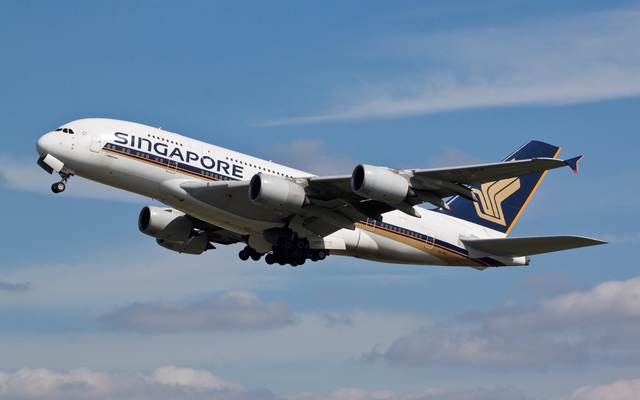
Singapore Airlines (SIA) will ramp up services to destinations across its network during the Northern Summer 2024 operating season (March 31, 2024 to October 26, 2024).
This includes restoring Airbus A380 services between Singapore and Frankfurt, deploying widebody Airbus A350-900 medium-haul aircraft on services to Cairns and Male, reinstating direct services between Singapore and Barcelona, and increasing flight frequencies to pre-pandemic levels across multiple points.
Singapore Airlines will ramp up services to destinations across its network for the Northern Summer 2024 season
Destinations that will reach or exceed pre-pandemic levels of flight frequencies include Ahmedabad (India); Beijing and Shanghai (China); Copenhagen (Denmark); Danang (Vietnam); Darwin, Melbourne, and Perth (Australia); Dubai (the UAE); Tokyo-Haneda (Japan); as well as Seattle and Houston (the US).
JoAnn Tan, senior vice president marketing planning, Singapore Airlines, said: “With the release of SIA’s Northern Summer schedules, our customers can plan ahead and start to make their travel plans for 2024.”
Marriott International has made several new appointments to its Asia Pacific (excluding China) leadership team – Christina Chan as its chief financial officer, and John Toomey as its chief sales and marketing officer.
Chan, a 23-year veteran of the company, will oversee finance operations, asset management, compliance and owner relations; while providing counsel for the administrative finance, business analysis, and feasibility teams in the region.
Having been with the company for 27 years, Toomey will oversee the consumer strategy for Marriott International in the region in his new role, which includes brand management, marketing, sales, distribution, revenue management, loyalty, customer experience, digital and communications.
Andrew Newmark has also been appointed chief human resources officer, Asia Pacific (excluding China). With more than 30 years with Marriott, Newmark has been tasked with strengthening Marriott’s ‘People first’ culture and ensuring the business attracts, engages, and develops best-in-class talent and leaders at all levels.
Lastly, with over 25 years of experience in the industry, Oriol Montal has been appointed managing director, luxury, Asia Pacific (excluding China). This newly-created role underscores the company’s commitment to the growth and leadership of its luxury brand portfolio which include The Ritz-Carlton, Ritz-Carlton Reserve, Bulgari Hotels & Resorts, St. Regis Hotels & Resorts, EDITION, The Luxury Collection, JW Marriott and W Hotels Worldwide.
Raffles Hotels & Resorts has appointed Andrew Hartley as its new cluster director of sales and marketing, overseeing Raffles Hotel Le Royal and Raffles Grand Hotel d’Angkor in South-east Asia.
Based in Phnom Penh, Cambodia, Hartley brings more than 20 years of experience in luxury hotels around the world. He was most recently assistant vice president of strategic sales and marketing for Banyan Tree Hotels & Resorts in the Asia-Pacific based in Singapore.


 He was most recently the general manager at Kempinski Hotel Grand Arena in Bansko, Bulgaria.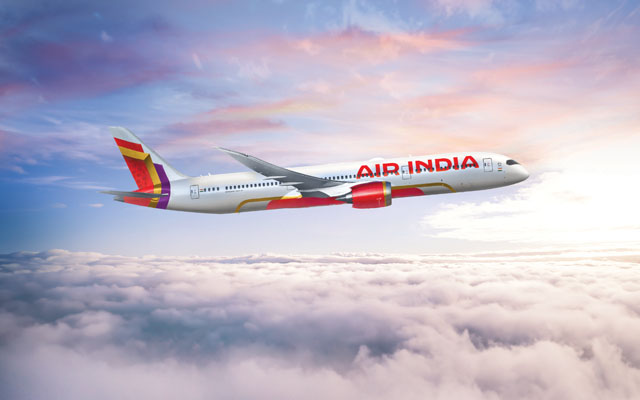

 He has over twenty-five years’ experience of leading business transformation teams, and recently concluded a four-year secondment at the oneworld Alliance as chief transformation officer.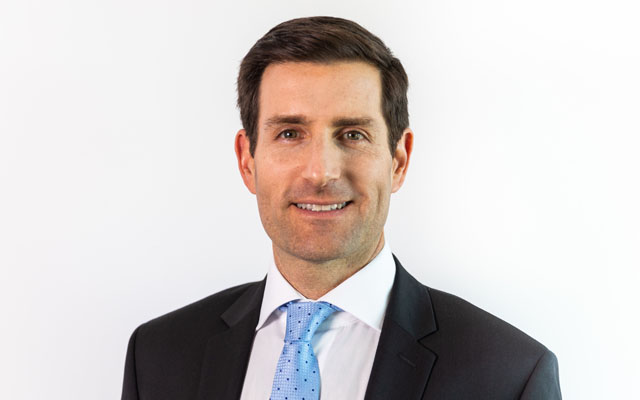
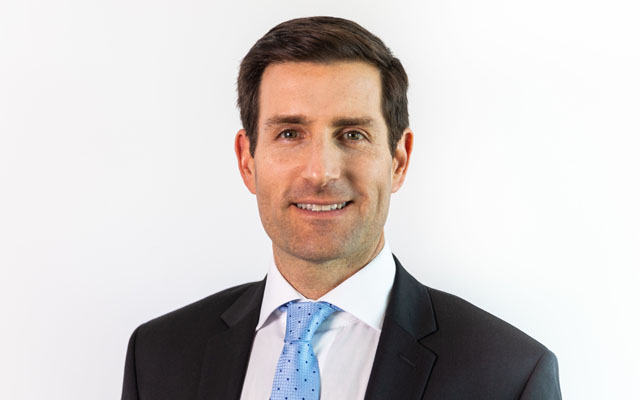 He has held various positions with the company since joining in 2011, including vice president, sales, Australia & New Zealand, Oceania Cruises, from 2019 through to 2022, and vice president, finance & accounting – Asia Pacific at Norwegian Cruise Line Holdings.






 Having been with the company for 27 years, Toomey will oversee the consumer strategy for Marriott International in the region in his new role, which includes brand management, marketing, sales, distribution, revenue management, loyalty, customer experience, digital and communications.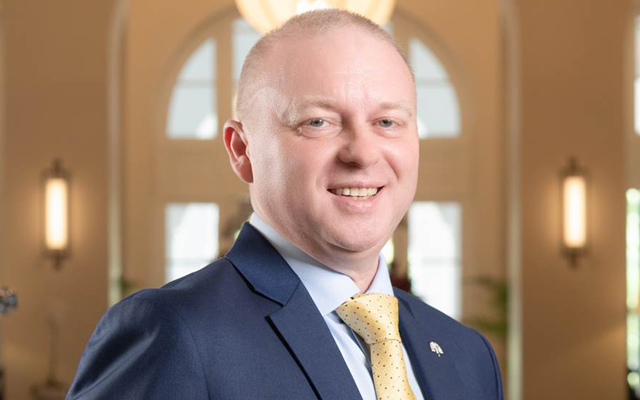
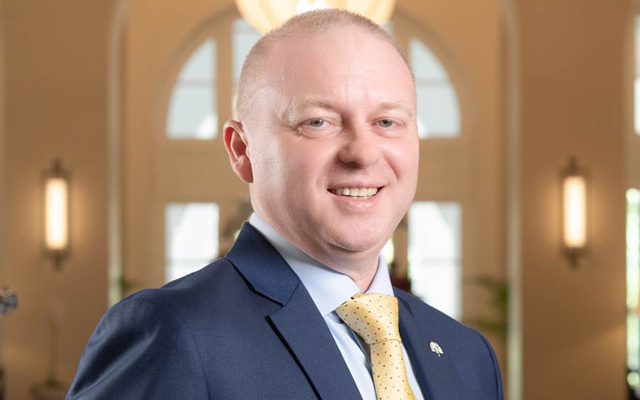 Based in Phnom Penh, Cambodia, Hartley brings more than 20 years of experience in luxury hotels around the world. He was most recently assistant vice president of strategic sales and marketing for Banyan Tree Hotels & Resorts in the Asia-Pacific based in Singapore.