

Asia/Singapore Monday, 27th April 2026
Page 217

New head in town

0

What are your immediate plans in this new role?
My immediate plan is to bring greater stability to the organisation, as 2020-2022 has been a transitional period after Covid-19. In this regard, I look forward to working with the PATA Executive Board on the critical areas for the association to achieve this in the short and medium term. Meanwhile, my 100-days goal will be around the five topics from the Expert Task Forces’ (ETFs) recommended by the PATA Executive Board covering Digitalisation & Technology Adoption, Events & PATA Travel Mart, Organisational Design, Voice & Brand Image and Membership Engagement.

How do you intend to amplify the voices of Asia-Pacific members and the broader travel community?
Over the first week of my appointment, I was able to meet the membership and industry leaders from around the region. The engagement with the Executive Board, Board Members, Life Members, members from all sectors and regions, as well as partners and media members, are crucial for me to understand the key issues for the travel and tourism industry. In the coming months, I look forward to meeting more people, especially the broader travel and tourism industry fraternity. I need to understand the challenges that they are facing and what their primary focus areas are – only then will we be able to serve them better. Our PATA team in the head office in Bangkok can play a huge role in advocacy through our events and through all media channels available. It is my aim to give back the voice to the Asia-Pacific region and PATA will be the champion to do just this.

What are the primary challenges confronting the Asia-Pacific travel community, and how can PATA offer support and assistance?
In terms of recovery, the Asia-Pacific travel and tourism industry is a bit lagging behind its counterparts in the west, namely Europe and the Americas. This is due to various factors including a softening global economic outlook with rising inflation and the increased costs of international travel, as well as human capital development and the shortage of labour and talent in the region.

Therefore, PATA is committed to helping our members addresses these various issues by providing research and insights from our network of experts, partners and members, as well as providing opportunities for knowledge sharing through case studies and dialogue.

This region is known for its diversity in terms of cultures, economies, and tourism offerings. How will you work to ensure that PATA’s initiatives and strategies are inclusive and adaptable to the varying needs and market conditions across different countries in the region?
PATA is unique in that our membership spans the entire spectrum of the travel and tourism industry, including governments (national, state/province, and city), hotels, airlines and airports, tour agencies and advisors, tour operators and DMCs, educational institutions and students. In addition, the PATA network also embraces the grassroots activism of the PATA Chapters and Student Chapters across the world.

By working closely and regularly engaging with all of our members, partners, chapter members and student chapters, we can ensure that our initiatives are inclusive and adaptable across all regions.

What strategies is PATA implementing to promote sustainable and responsible tourism in the Asia-Pacific region, and what impact do you foresee these efforts having on the future of travel and tourism in the region?
In 2021, PATA launched the Tourism Destination Resilience (TDR) Programme to provide a pathway for tourism destinations to build resilience and increase their adaptive capacity.

At PATA we believe that resilience is essential for moving towards the achievement of the United Nations Sustainable Development Goals. Without resilience, a destination would never be able to maintain its sustainability efforts. Years of progress on regenerating an ecosystem or eliminating poverty, for example, could be lost in one disaster or financial crisis. This is why we advocate that for a tourism destination to be sustainable, it must first be resilient.

This year, with the support of our key partner, Visa, we have expanded the Tourism Destination Resilience (TDR) Programme to continue to help build a more resilient and sustainable tourism industry. The partnership with Visa focuses specifically on building the capacity of small- and medium-sized enterprises (SMEs).

In addition to the online modules, PATA and Visa also conducted in-person trainings for SMEs, which took place in Cambodia, Indonesia, Vietnam, and the Philippines.

So far, the programme has been well received, and PATA will continue to expand this programme in both scope, region and outreach.

With the ongoing digital transformation in the travel industry, what role does PATA envision technology playing in enhancing the overall travel experience for both travellers and businesses in the Asia-Pacific region?
At PATA, we continually highlight the importance of a seamless travel experience and believe that technology can play a huge role towards this goal, from digital passports to cashless payments. Not only do they help provide a more user-friendly experience, but it also creates greater efficiency for businesses in the Asia-Pacific region. For this, the expertise of PATA members is abundant and we believe they will be able to transform the travel and tourism industry with the leadership of PATA.

In light of the recent pandemic, what measures has PATA taken to ensure the resilience and recovery of the Asia-Pacific travel and tourism sector, and what lessons have been learned from this challenging period for the future of the industry?
Our TDR Programme is an important part of our sustainability activities. Even before the pandemic, we saw that many businesses and organisations were more reactive when it came to crises and disasters as opposed to being proactive to these unforeseen incidents.

The pandemic only highlighted the need for more education and work towards a more resilient industry, particularly as we face more severe and frequent natural disasters due to climate change.

Therefore, the PATA TDR programme will continue with new modules in keeping up with the post-lockdown situation. We believe such a programme can help our members and especially destination to move into the growth zone faster.
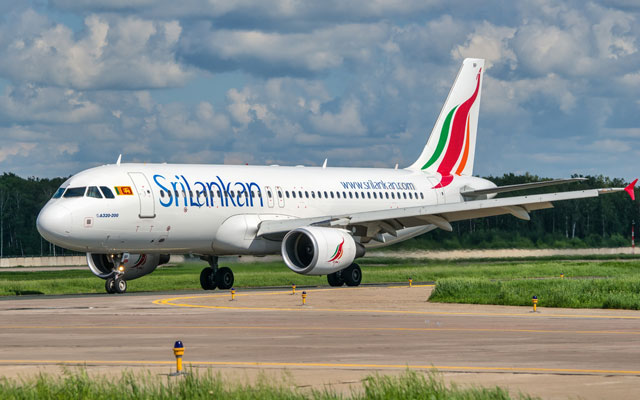
Sri Lanka to part-sell its national carrier

0

The Sri Lankan government this week invited bids from the global industry to run and manage the island’s national carrier, SriLankan Airlines, which has been suffering accumulated losses over the years.

While the airline has reported an operating profit for the period April 2022 to end March 2023, its accumulated debt is US$1.2 billion.

The government will retain 51 per cent control of the airline while selling off the remaining 49 per cent to investors

The authorities are banking on enticing investors with the intention of creating Colombo, the capital of Sri Lanka, as a regional (South Asia) travel hub with a huge focus on operations to and from India and other regional cities.

For over four decades, the airline has been operating as a full service carrier covering Europe, the Middle East, Indian sub-continent, South-east Asia, the Far East and Australia.

In advertisements carried on local and foreign media on Tuesday, the government announced Invitations to Tenders (ITTs). The divestiture is planned to be completed through a two-stage competitive bidding process – namely RFQ (Request for Qualification) and RFP (Request for Proposals for the Proposed Transaction). World Bank-affiliate, the International Finance Corporation is the financial advisor of this process.

Founded in 1979, SriLankan Airlines operates a fleet of 24 Airbus A320 and A330 aircraft and has a route network of 126 destinations in 61 countries.

The part sale (the government will retain 51 per cent control while offering investors a 49 per cent state) which has been talked of for several months has attracted interest particularly from Indian airline operators, industry sources said.

“It is good that the government is inviting private sector engagement in the airline which would help the airline grow further with its strong links to India,” one industry source said. SriLankan Airlines is the biggest foreign operator in the Indian market operating multiple daily and weekly flights to Indian destinations. India is also Sri Lanka’s biggest tourism source market.

This is the third time the airline is seeking a foreign partner, having expertise from Singapore Airlines at the inception followed by a partnership during 1998 to mid-2008 with Emirates.

IATA reports progress in aviation industry’s accessibility

0

The IATA’s 2023 Global Passenger Survey (GPS) related to accessibility of air transport to passengers with disabilities, showed significant satisfaction levels among passengers who used special assistance services, with 80 per cent of travellers using special assistance services saying their expectations were met.

The survey also aligned with airline experience that more travellers than ever are requesting assistance. With aging populations in many key air transport markets, this trend is likely to continue, and aviation, like many other industries, will struggle to find the resources needed to cater to this important demographic.

IATA’s survey revealed that most passengers were satisfied with the special assistance services they received

IATA’s assistant director for external affairs Linda Ristagno said: “As demand for special assistance grows, we will need to find more tailored ways to meet the needs of travellers with special needs. At present, a special assistance request is almost always met with wheelchair services – but the actual requirement of the traveller may be very different. The traveller may simply need help with wayfinding through crowded airports, or only have difficulty negotiating stairs, or may be totally mobile but visually impaired.

“We are working on ways to ensure that wheelchairs are available when needed as well as the right options for the diversity of traveller needs.”

The survey also highlighted the need for clear information, with 20 per cent of travellers highlighting that improved website accessibility for booking and reservations should be a priority.

In response, IATA recently issued guidance material on ensuring airline websites provide easy access to all necessary information for travellers with disabilities. These includes developing a user-friendly gateway to the dedicated accessibility area of airlines’ websites, clarifying the criteria for assistance entitlement, and emphasising the importance of passengers requesting assistance early, preferably during the booking process.

The guidance will also enable travellers with disabilities to access crucial information with just one click from the homepage, providing clear and intuitive information pathways on airline websites for passengers with disabilities or reduced mobility, ensuring they have direct access to essential details about air travel arrangements and passenger rights.

“Clear information is crucial for anybody who wishes to travel. This is particularly relevant for persons with disabilities who require assistance and must carefully prepare their travel arrangements. While airlines have made strides in providing extensive guidance on their websites, there remains room for improvement, particularly in easing the search for specific information,” noted Ristagno.

Mastercard, Agoda to streamline B2B payments in travel industry

0

Mastercard is expanding its partnership with Agoda to enhance B2B payments in the travel and tourism industry, making it easier for digital travel platforms to make payments to hotels, airlines, suppliers and vendors globally.

The collaboration will also address the challenges of legacy payment processes and drive innovation beyond traditional card payments.

The partnership aims to enhance B2B payments in the travel and tourism industry

With B2B payments currently relying on manual and time-consuming processes such as paper invoices, Mastercard and Agoda recognise the urgent need to modernise these payment systems and streamline transactions between digital travel platforms, hotels, airlines, suppliers, and vendors globally.

Through the exclusive issuance of Mastercard virtual credit cards, Agoda will be able to make and receive B2B payments globally wherever Mastercard is accepted. The expanded partnership will also focus on driving smoother and smarter end-to-end travel experiences such as bringing timely and curated offers for Agoda customers using Mastercard’s data insights, joint-marketing propositions to further enhance customer satisfaction, and loyalty rewards when booking with Agoda using a Mastercard card.

Yunsok Chang, executive vice president, market development, Asia-Pacific, Mastercard, said: “Mastercard has been long-time partners with Agoda and is proud to expand on this decade-long partnership that harnesses the power of collaboration to simplify B2B payments and fortify defences against fraud, all while enhancing the customer experience and fostering greater loyalty.”

Mai-Linh Bui, chief financial officer at Agoda added: “Together, we are redefining the landscape of B2B payments within the travel and tourism sector. Recognising the challenges posed by outdated payment processes, our collaboration aims to revolutionise the way digital travel platforms engage with hotels, airlines, suppliers, and vendors worldwide.”

Philippines amps up dive tourism offerings

0

The Philippines is developing more dive spots and improving existing ones as part of an aggressive bid to sustain the inroads gained over the years.

The latest offering, Romblon-Boracay dive and island hopping circuit combining Romblon and Boracay, is showing great prospects, said Maria Margarita Nograles, chief operating officer of Tourism Promotions Board (TPB), the marketing arm of the Department of Tourism (DoT).

Philippines is seeing more foreigners coming to the country for diving activities

Emerging dive sites including Romblon, Marinduque, Batanes, Siquijor and Leyte are gaining popularity, she added.

“Diving is a priority product. Marketing and promotions over the years are paying off as the foreign market is responding very well with more divers coming to the Philippines,” shared Nograles.

Indeed, the DoT reported that foreign dive visitors last year contributed 37 billion pesos (US$651.41 million) or over 17.5 per cent of the Philippines’ total tourism receipts.

Philippines as a divers’ paradise is strong in Europe and North Asia given the endless possibilities in the country with over 7,000 islands, as well as its location in the Coral Triangle.

To sustain existing markets and tap new ones, Nograles said the country participated in eight international dive shows and will participate in two more this year – the Diving Equipment and Marketing Association in the US, and the Dive, Resort and Travel Show in Hong Kong.

TPB is also organising fam trips for tour operators, DMCs and influencers to showcase various diving products in the country.

At the recent first Dive Dialogue initiated by the DoT in Cebu, tourism secretary Christina Garcia Frasco shared that to ensure that scuba divers will have access to affordable treatment for decompression sickness, hyperbaric chambers have been provided in popular dive sites in Mabini, Batangas; Panglao, Bohol; Mandaue, Cebu; and Puerto Princesa, Palawan.

Additional hyperbaric chambers will be placed in Dumaguete, Boracay, Puerto Galera, and Daanbantayan Island, Frasco said.

The country’s own dive expo brand, the Philippine International Dive Expo – combining a dive travel exchange, B2B meeting programme, dive conferences and seminars, exhibition booths, and fam tours to key and emerging dive destinations – will enter its fourth edition next year.

Asia-Pacific is the next frontier for Yotel

0

Yotel has kickstarted its ambitious expansion plans, with 14 properties in the global pipeline set to open within the next three years, a number of which will be located in Asia-Pacific.

“Our next two properties, which will open in 4Q2024, will be located in Bangkok and Tokyo. Each will have around 250 keys, and both will be our two new flagships, being the first in their respective countries,” Hubert Viriot, CEO of Yotel, told TTG Asia.

Viriot: we help hotel owners maximise their piece of real estate, while catering to current travel trends

He added that both Thailand and Japan are “critical” markets, with plans for expansion in both countries. Japan will also be getting a new development office to “boost Yotel’s growth”.

Kuala Lumpur will get two new properties – a Yotel and a Yotelpad. The latter is a serviced apartment brand that targets the long-stay market.

“They will be in different locations. Yotelpad in Malaysia will also be the first in Asia-Pacific,” he added.

When asked why Singapore did not get first dibs on Yotelpad (Yotel Singapore opened in 2017, and YotelAir Changi Airport in 2019), Viriot laughed and said: “The opportunity came up in Malaysia, and it doesn’t mean we’re not interested in Singapore. We should have a third brand here soon.”

In fact, he highlighted that both Singapore properties are doing well, stating that 2023 was the “best year ever” both in terms of room rate and occupancy. For these two properties, 80 per cent of the guests are Asian.

Development opportunities in Australia and New Zealand also abound.

Viriot said: “We have another project in Perth coming up. We are actively looking for opportunities in Sydney as well. Given the price of real estate in most cities in Australia, our concept makes complete sense. We help hotel owners maximise their piece of real estate, while catering to current travel trends.

“We will also have our first project in New Zealand, though I can’t name which city or brand yet.”

Noticeably, the three largest countries in the region – China, India and Indonesia – will not be getting a Yotel yet, because “these countries are so large, they require a specific strategy”.

“We’ve got good headwind ahead of us, and Asia-Pacific holds massive potential. The brand is well-recognised, and the concept is accepted by a variety of customers. This is what we are expanding as rapidly as we can,” concluded Viriot.

TBO.com holds bold vision for Asia-Pacific

0

Travel distribution platform, TBO.com, is actively expanding its presence in Asia-Pacific, in alignment with its ambitious goal of becoming the largest travel distribution platform in the region by 2025.

Vijayeta James, who assumed the role of commercial director for Asia-Pacific and China in 2022, has been instrumental in driving this growth strategy.

Vijayeta: from 2H2024, there will be substantial growth in longhaul business, both inbound and outbound

She told TTG Asia that plans are right on track.

TBO.com’s Asia expansion began with the establishment of a fully equipped office in Kuala Lumpur in November 2022, dedicated to sales, contracting, and local operations.

A mere three months later, an office was opened in Indonesia; an office in Seoul follows this month.

Notably, TBO.com has maintained a presence in Shanghai since 2019, despite challenging times during the Covid-19 pandemic.

Next year, there are plans to establish three more full-fledged offices in Asia-Pacific – details will come later.

Simultaneously, there are intentions to double the workforce in existing offices, with the aim of significantly improving client services.

Additionally, TBO.com has broadened its offerings this year by introducing Umra packages, targeting agents selling pilgrimage arrangements to travellers in Malaysia, the Philippines, and Southern Thailand.

The company is also actively exploring potential acquisitions in the market, including local DMCs and regional travel distribution companies.

Vijayeta highlighted significant opportunities in the region: “Presently, 80 per cent of travellers are regional, but with the gradual addition of longhaul capacity to the market, we envision that from 2H2024, there will be substantial growth in longhaul business, both inbound and outbound.”

This aligns well with TBO.com’s strong presence in the Middle East, Africa, and Latin America.

Singapore Grand Prix 2024 sees overwhelming demand for tickets

0

With Early Bird tickets to the Formula 1 Singapore Airlines Singapore Grand Prix 2024 already sold out, Singapore GP will start sales of regular priced tickets earlier than originally planned to November 1 to meet the demand.

Sales across all hospitality categories have also been equally strong, with dedicated suites at the Formula 1 Paddock Club, Sky Suite, and Lounge@Turn 3 for next year’s race almost fully taken up.

Regular priced tickets will be up for sale earlier than originally planned due to high demand (Photo: Singapore GP)

All tickets to the Formula 1 Singapore Airlines Singapore Grand Prix 2024 provide access to the concerts at the Padang Stage in Zone 4.

“After a record year in 2023, interest across all hospitality products remain extremely strong. With a return rate of over 70 per cent, many categories are already close to selling out for 2024,” said Shamini Suppiah, director of hospitality and sponsorship sales, Singapore GP.

Air India expands partnership with Amadeus and Travelport

0

Air India has extended its partnership with Amadeus to include local domestic content for travel sellers at points of sale in India through the Amadeus Travel Platform. The airline also expanded its multi-year distribution agreement with Travelport to include New Distribution Capability (NDC) content and servicing.

Building on an existing agreement with Amadeus to distribute international content, the deal will see Air India’s NDC content integrated into the Amadeus Travel Platform with the content being made available to travel sellers in 2024. With NDC technology, the airline will be able to further enhance the shopping experience for travellers by providing richer content and supporting better upsell of its branded and ancillary products.

Air India has extended its partnership with both Amadeus and Travelport

Nipun Aggarwal, chief commercial & transformation officer, Air India, commented that with this addition, Air India will be able to showcase its products on a global scale, access new markets, and grow its customer base across all platforms.

Meanwhile, the expanded agreement with Travelport confirms the future delivery of a complete NDC solution which will provide Travelport’s global network of travel agencies the ability to easily search, shop and service Air India’s product offerings.

Commenting on delivering a complete solution that makes it easy for agents to access and service Air India’s content and offers, Nipun Aggarwal, chief commercial and transformation officer at Air India said: “Travelport+ will elevate our technology investment and the future roll out of NDC-sourced content, so that together, we can ensure agents and travellers have a seamless, modern retailing experience.”

This renewed agreement between Travelport and Air India ensures that Travelport subscribers continue to have simplified access to Air India’s extensive network of destinations, which will continue to expand and evolve.

M&E costs forecasted to surge in 2024

0

The cost of travel soared in 2023, as prices on airfare, hotels, and F&B as pent-up demand fuelled an eager return to in-person events. Moving into 2024, it appears that a cocktail of demand and supply side pressures will continue to push meetings and events (M&E) prices up significantly.

“Although demand from group travel, meetings and events has rebounded strongly, and there is growth in incentive travel as companies seek to motivate and reward employees, volatile fuel prices, labour shortages, inflation, and capacity restrictions have put upward pressure on prices across the whole travel and M&E supply chain,” said Petrina Goh, regional commercial director, South-east Asia & Hong Kong, CWT Meetings & Events.

Meeting planners will have their plates full with inflation, rising fuel costs, and supply chain issues next year

According to CWT’s 2024 Global Business Travel Forecast, the average daily cost per attendee for meetings and events rose 58 per cent in 2022 vs 2021. CWT expects to see the cost per attendee climb a further 5.6 per cent this year, followed by a three per cent increase in 2024.

In tier-one cities in Thailand and Vietnam such as Bangkok, Phuket, and Ho Chi Minh City, CWT is also reporting group accommodation and meeting package prices around 15 to 20 per cent higher than 2019 levels. Meanwhile, in destinations like Japan and South Korea, group accommodation rates are currently 20 to 30 per cent above 2019 levels.

Moreover, with the persistent inflation in food prices, the average F&B cost per attendee is forecast to increase 6.9 per cent this year and 2.2 per cent in 2024. Meanwhile, the average daily rate for group hotel bookings is projected to climb 4.4 per cent in 2023 and 3.5 per cent in 2024.

Manpreet Bindra, president of FCM India Meetings & Events, expects 2024 to be more expensive for M&E too. He said: “Increased energy costs, fuel costs, airfares, and global inflation are all impacting in-person events. The rapid surge back to live events has been a challenge for venues, hotels, airlines, and event planners. Travel constraints, capacity issues, labour shortages, supply chain issues and travel disruptions are all easing, but they are factors that are not expected to fully stabilise until 2024.”

This is despite global airline capacity tracking at 100 per cent for October 2023, according to Flight Centre Travel Group’s Cirium Data as of October 9, 2023. Although clocking in at 100 per cent, this is being driven by domestic capacity at 102 per cent, while international is still just below 97 per cent. Overall, carriers are seemingly more optimistic with 2024 travel, and capacity in December has increased.

For FCM, two M&E markets in Asia-Pacific stand out – India and Japan.

This comes as FCM Meetings and Events India achieved better performance than pre-Covid levels by more than 50 per cent.

“While the 2023 travel uptick reflects the removal of country restrictions coupled with a deep desire to travel, we envisage that as capacity and pricing stabilise, 2024 will be a better indicator of the true demand,” said Bindra.

Over in Japan, FCM Meetings and Events Japan finds that most four- to five-star hotels plan to raise their prices in 2024, by more than 20 per cent per room a night on top of the current rate and 50 per cent up during peak seasons. Even with higher room rates this year, hotel rooms sold out very quickly.

Many travel agencies were not able to get contract rates until the last minute, as hotels were waiting and checking their competitor’s rates. Some hotels even changed to the BAR rate instead of the contract rate. According to FCM Meetings and Events Japan, its hotel partners feel that their room rates will cool down only by the end of next year.

Inbound groups into Japan should also expect higher ground-handling in 2024, as the Ministry of Land, Infrastructure, Transport and Tourism has decided to raise the minimum rate from 10 per cent to 22 per cent, and remove the cap on maximum rates. This means that bus companies can set however high a price they want. For example, in the Kanto area, most of the bus companies raised an average of 26 per cent for all new requests from October 2023.

To combat higher prices in the coming year, Goh recommends that planners consider secondary cities such as Pattaya, Koh Samui, Phu Quoc, Nha Trang and Yogyakarta for events.

“The crowds are smaller and there’s a greater sense of exploration, learning, and well-being availability. These locations are rich in culture, have diverse offsite activities, and offer great value for money,” she elaborated. Goh also encouraged meeting and event organisers to “begin the planning process early”.

“Include your travel partners early, this way, businesses can boost their bargaining power, increase the chances of better purchases, secure better deals, and reduce the strain on execution capabilities,” agreed Bindra.

“We are still seeing extremely short lead times for events. Organisers should be looking at 2024 with a 12-month planning cycle if they want to have a good choice of locations and keep prices at a reasonable level. If you start sourcing earlier, you are in a much stronger position to secure availability and negotiate on pricing,” added Goh.

Bindra is also seeing “last-minute bookings” and events with short lead times, resulting in problems securing venues. “All these factors mean that the cost of a meeting per attendee has increased during a time when business budgets are tight, and employees are working at capacity,” stated Bindra.

.sister-sites .sites a { padding: 14px; }