

Industry chatter is picking up about American Express Global Business Travel’s (Amex GBT) Monday announcement to acquire industry competitor CWT, with many concerned about disrupted services in the lead up to the conclusion of the acquisition in 2H2024.
In response to TTG India’s query about the follow-up impacts on its staff, brand presence, and customers, a CWT spokesperson said on Tuesday that the process was “still at an early stage”, and no information could yet be revealed about “changes… with regards to the CWT brand, products, and teams after the transaction has been completed”.

The spokesperson also echoed CWT CEO Patrick Andersen’s expectations that were expressed in the earlier Amex GBT statement. “We believe that joining forces with Amex GBT will bring exciting new opportunities and positive outcomes for our colleagues, customers, and other stakeholders,” said the spokesperson.
Kishore Rames, travel programme manager with National Oilwell Varco, based in Singapore, said the acquisition was a “big one” and is eager to see how it would play out.
“Will CWT be around, or will it be all Amex GBT only in the future? As far as we know, as we are working with CWT, it is still business as usual,” said Rames, adding that corporate buyers like himself should be concerned about monopolisation by a single big player.
“As a big agency, it can dictate the price and transaction fees, and they can choose the types of services that they will offer. We are watching this with a lot of interest,” he told TTG India.
While Rames predicted stiffer competition for smaller TMCs, he said there would still be corporates that prefer dealing with smaller agencies.
“If (the smaller agencies) play their cards right, if they are well organised, they can still do very well because some companies may not want a larger TMC servicing them. They may not have that much of travel spend to commit Amex GBT,” he reasoned.
Ani Tom, senior manager – administration with VA Tech Wabag in Chennai, India, said the acquisition could give Amex GBT a stronger presence in Southern India, where CWT has a good reputation for its “latest technology” and good sourcing network.
He, too, expects more intense competition in the managed travel marketplace, but said other TMCs could face off the giant by ensuring reliable technology, good prices and good service for their corporate clients.
Morgann Lesné, an expert in travel technology M&A from Cambon Partners, said the deal was “further proof that 2024 will turn out to be the biggest ever year for M&A in the travel technology space”.
“A wave of inevitable consolidation following Covid needs to take place while, at the same time, high interest rates have stalled start-up fundraising, leading to people having to merge or face closing. Meanwhile, record tourism figures for 2023 and a very positive outlook for 2024 are leaving many players feeling confident that now is the right time to acquire competitors,” he said.
Amex GBT had earlier acquired DER Business Travel in 2006, 30SecondsToFly in 2015, HRG in 2018 and Egencia from Expedia Group and Ovation Travel Group in 2021. – Additional reporting by Rosa Ocampo





 He brings nearly 40 years of global aviation experience to the role, and was Jetstar Japan’s executive chairman prior to joining Qantas.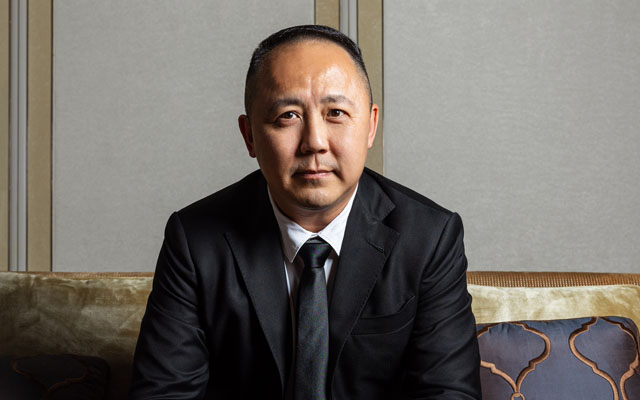
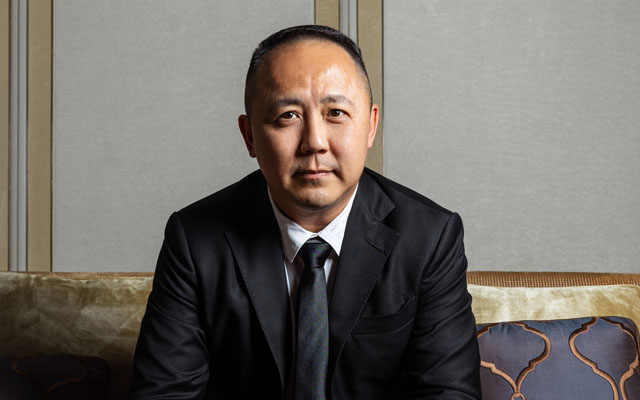 He will also steer the development and implementation of new technologies to enhance guest experiences and streamline business activities across the group’s portfolio of hotels and resorts.




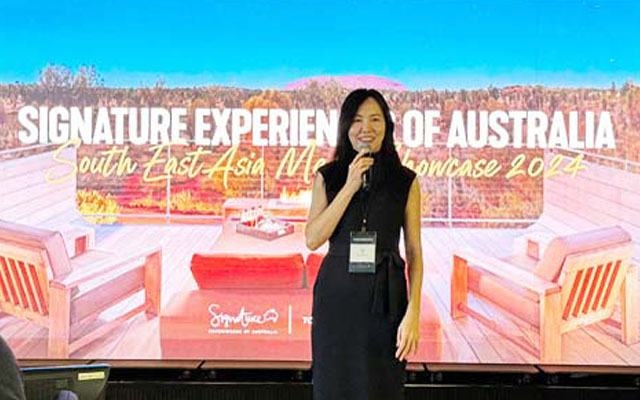
Tourism Australia’s Signature Experiences of Australia – a programme which supports industry collaboration across a variety of special interest sectors – made its debut in South-east Asia at a media showcase in Singapore on March 21.
Currently, the eight special interest sectors are golf holidays, guided walks, premium wineries, luxury lodges, fishing adventures, wildlife journeys, cultural attractions, and Aboriginal-guided experiences.
Karen Fitzgerald, general manager experiences, Tourism Australia, explained: “Each of these collectives represent a number of operators that specialise in their particular sector. What we have through (Signature Experiences of Australia) is access to over 190 businesses that altogether offer 750 experiences.
“The powerful thing about this programme is it is not just these businesses in the programme that benefit, but these (operators) collaborate and partner with another 8,000 businesses across Australia (especially in the regional areas), so the halo effect of this is really broad.”
There are plans to launch a new agri-tourism collective, focused on farmers and producers, in about a year’s time.
Fitzgerald elaborated: “One of the things that came out of our post-lockdown research was the desire for wellness and well-being, and understanding the provenance of our food. (We found that) travellers wanted to know what they were putting into their bodies, where was it from, and the food miles (it travels), as sustainability is important to all the collectives.”
Luxury travellers these days, Fitzgerald added, are not just looking to align their passion points, but also have transformational experiences. “I think it will be enticing for travellers to Australia to meet with the producers and farmers, and learn more about the broad range of local products available,” she opined.
When asked how could businesses apply to be part of their respective collectives, Tori Somerville, general manager of Luxury Lodges of Australia, said access was by invitation only.
In the case of the luxury lodges collective, a set of criteria must be met.
“For example, they need to have guided experiences, a restaurant onsite, and be trade-ready. We’re not about quantity. In fact, we only recently added the Odalisque III (an expedition-style cruise based in Tasmania), our newest member in nine years,” said Somerville.