
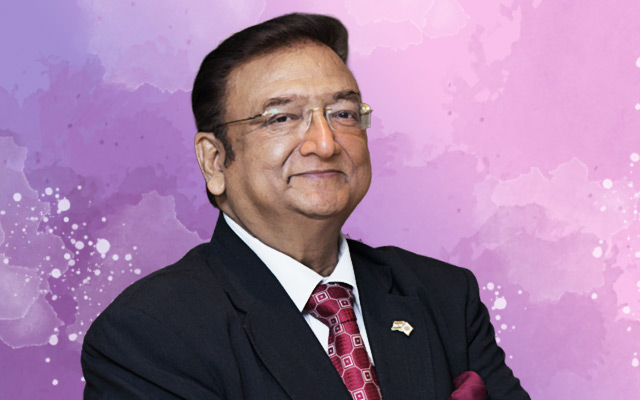
From an era of paperwork, foreign exchange restrictions and manually issued air tickets to today's technology-driven travel industry, Subhash Goyal, chairman of STIC Travel & Air Charter Group, has witnessed India's travel sector evolve over more than five decades and shares his views on the reforms needed to accelerate inbound tourism and the changing preferences of Indian travellers
 STIC Travel Group has witnessed the transformation of India’s travel industry over several decades. Looking back, what do you consider the biggest turning points that shaped the sector?
We started in 1973 when everything was manual. It was very difficult to get a passport, and to travel abroad we had to get a P Form filled, which had to be approved by the Reserve Bank of India (RBI). There was a shortage of foreign exchange. A foreigner could only buy tickets by encashing their foreign exchange from an authorised money changer, and the encashment certificate had to be attached to the coupons of the tickets, which were issued manually. All travel agents had to keep a huge fireproof safe where their ticket stock and all airline documents were kept.
The biggest turning points for India’s travel industry have been the 1991 economic liberalisation, which opened the market to global travel and aviation; the rise of low-cost airlines, which made air travel accessible to millions; the digital revolution, which transformed booking and customer experiences; and the post-pandemic recovery, which accelerated demand for experiential, sustainable and technology-driven travel.
India has set an ambitious goal of becoming a major global tourism destination. What, in your opinion, are most critical reforms needed to significantly boost inbound tourism?
To significantly boost inbound tourism, India should focus on simplifying visa processes by allowing visa-on-arrival reciprocally to all those countries which are extending a similar facility to the Indian nationals. There is a need of appointing tourism marketing agents in all the inbound tourism source markets which earlier had offices of India’s ministry of tourism. Moreover, strengthening tourism infrastructure, improving last-mile connectivity and promoting lesser-known destinations globally is also critical to grow inbound tourist numbers. Equally important are consistent destination branding, enhanced safety and hygiene standards and sustainable tourism practices. Together, these reforms can position India as a more accessible, competitive and attractive destination for international travellers.
What are the new developments in your travel agency?
At present, STIC represents 13 international airlines, including SriLankan Airlines, Ethiopian Airlines, United Airlines, Air China, Royal Brunei Airlines, Royal Jordanian, Cambodia Angkor Air, Croatia Airlines, Armenian Airlines, Georgian Wings, Nordwind Airlines, Philippine Airlines and Myanmar Airways International. We also represent major car rental companies, including Alamo Rent A Car, National Car Rental and Enterprise Rent-A-Car. We are strengthening our digital capabilities, expanding our portfolio of global travel and tourism partners, and enhancing personalised travel solutions across leisure, corporate, cruise and MICE segments. We are also focusing on sustainable travel initiatives and leveraging technology to deliver a more seamless customer experience. Since we are a 100 per cent B2B company, we are working on further automating our processes by using technology and artificial intelligence.
The aviation landscape in India is evolving rapidly with new airports, expanding airlines and growing international connectivity. How do you see these developments influencing tourism over the next five years?
The expansion of airports, increased airline capacity and improved international connectivity will make India more accessible and support the growth of both inbound and domestic tourism. However, several Indian states with international airports still lack international flight services. It is therefore important for the government to grant traffic rights to new airlines seeking to operate in India. Over the next five years, these developments could drive regional tourism, enhance visitor experiences and create new opportunities across leisure, business, cruise and MICE travel.
What trends are you observing among Indian outbound travellers?
Indian outbound travellers are increasingly seeking experiential, premium and customised holidays rather than traditional sightseeing trips. We are seeing strong demand for cruise vacations, luxury travel, multi-country itineraries, wellness tourism, and adventure experiences. Ease of visa access, direct flight connectivity and value-driven offerings continue to play a key role in influencing destination choices.
The travel trade has become increasingly competitive with online platforms and direct bookings. How can traditional travel companies continue to create value for customers?
Traditional travel companies can stay relevant by offering personalised expertise, end-to-end travel solutions and dedicated customer support that online platforms cannot always provide. Building strong global partnerships, leveraging technology and delivering tailored, value-added experiences will continue to differentiate trusted travel companies in an increasingly competitive market.
India’s tourism potential extends far beyond its well-known destinations. What role should the private sector play in developing and promoting emerging destinations?
The private sector plays a vital role in developing emerging destinations by creating innovative travel experiences, investing in local partnerships and promoting lesser-known regions through targeted marketing. Collaboration with government and local communities is essential to improve infrastructure, encourage sustainable tourism, and distribute tourism benefits more evenly across the country.