

- Businesses need resilient frameworks that can help them recover from shocks in a rapidly changing world
- Sustainable tourism development requires the involvement of multiple government agencies
- UN views a truly resilient destination as one where residents experience the benefits of tourism
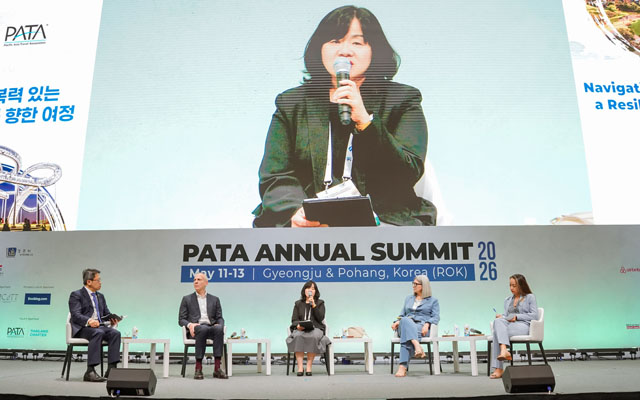
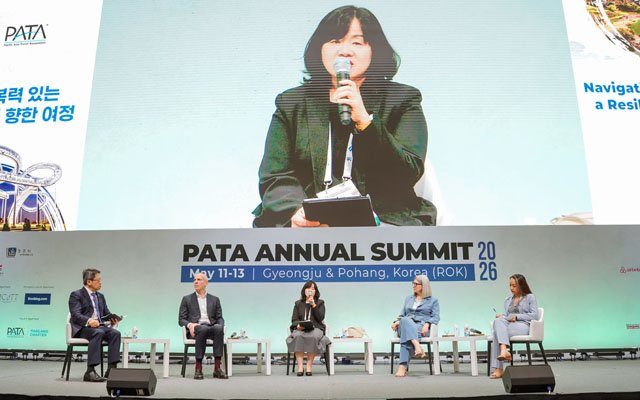
Discussions at the PATA Annual Summit 2026 this week on building a resilient future for the tourism industry highlighted a common view: a responsible approach to tourism development gives destinations the agility needed to navigate a volatile environment.
Natasha Montesalvo, principal consultant – destinations, strategy and insights at EarthCheck, told TTG Asia that sustainability and resilience go hand in hand.
“Businesses that are sustainable (in terms of environmental, social and governance considerations) are economically viable for the long term. That’s because they have the systems and structures in place to deliver what is needed to do stay in business.
“Governance reporting means that businesses have the right policies and procedures in place to protect themselves and that they are adhering to the right legislation in whichever jurisdiction they are operating within. When businesses fulfil social responsibilities, they build trust in their community and will be able to attract a skilled workforce. When businesses respect the natural environment, the community and other businesses will rely on them.
“So, by building and integrating ESG principles and broader sustainability goals into their business, they creating these resilient frameworks that can help them recover from some of the shocks that they would face in the future.”
Destination leaders echoed that a structured and responsible approach to tourism development can lead to lasting positive outcomes.
Florian Sengstschmid, CEO of Azerbaijan Tourism Board, said aligning destination development with the UN Sustainable Development Goals helps ensure accountability, rather than focusing on arrival numbers, which he described as “vanity metrics”.
With this approach, the Azerbaijan Tourism Board has shifted from destination marketing to destination management, focusing on stakeholder coordination across communities, businesses, government entities, and global markets.
As her destination experiences “fantastic growth”, Wrenelle Stander, CEO of Wesgro, representing Cape Town and the Western Cape, said public-private collaboration is essential to advance tourism development in a sustainable and resilient manner.
Stander identified three priorities: diversifying source markets to reshape demand, increasing connectivity and expanding carrying capacity, and facilitating the movement of travellers, including through visa-free access.
Insook Lee, executive director of the Korea MICE Bureau at the Korea Tourism Organization, noted that sustainable tourism development requires support beyond the tourism sector, including from national leadership.
This is particularly relevant as South Korea faces an imbalance in post-pandemic tourism performance. The country recorded 18.9 million international arrivals in 2025, but 80 per cent of visitors concentrated their time in Seoul.
“We are worried that this will limit the long-term sustainability of South Korea’s tourism industry,” Lee said.
She noted that the national tourism strategy meeting is now overseen by the president, rather than the prime minister, reflecting tourism’s growing economic importance.
“We have an ambitious goal of attracting 30 million inbound visitors by 2030 or earlier. To achieve this, our government has rolled out a two-pillar strategy: the first is to expand the inbound demand and the second is to revitalise regional tourism across South Korea. This strategy is reinforced by comprehensive reforms to the immigration procedures, regional airports, lodging infrastructure, and development of high-value tourism companies,” Lee added.
Sengstschmid said all government officials “should be made a tourism minister”, believing that policy decisions across sectors affect tourism outcomes.
He urged ministers to consider tourism’s contribution to GDP, job creation, business development, regional inclusion, and education.
Régine Lee, president and CEO of Guam Visitors Bureau, added that governments play a critical role “in communications and PR efforts, in creating policies that will lift our island up and provide the infrastructure for sustainable growth, and in shaping the kind of future that we want for our residents and visitors”.
Conditions for resilience
Shijun Liu, executive director of UN Tourism, outlined a vision for resilient tourism in his keynote at the summit.
“At UN Tourism, we see resilience taking place first in communities, not just cities. Yet, today, 80 per cent of international travellers are concentrated in a small number of destinations. This creates a significant concentration risk, where when a gateway city suffers, the entire tourism economy often suffers along with it,” Liu said.
He described rural tourism as a “structural solution”, provided it is approached thoughtfully.
“The objective is not simply to disperse visitor numbers, but to rethink how destinations function. A truly resilient destination is one where residents experience tourism as improving their lives, protecting their culture, and strengthening their community. Without this, sustainable cannot be achieved,” stated Liu.
He added that resilience requires investment in infrastructure, digital systems, workforce development and destination management, noting that “tourism remains underfunded relative to its contribution to GDP and employment”.
Liu also highlighted opportunities for tourism to align with global shifts towards greener infrastructure and digitalisation.
“Capital is increasingly flowing toward decarbonisation and climate resilience, and tourism can attract it if we make the right case,” he advised.
He further noted the importance of innovation, including AI and data-driven management, in strengthening destination operations.
He explained: “When external platforms define a destination story, they also shape its economic future. Preserving that autonomy is a strategic priority.”


