

- Asia’s aviation business most exposed to fuel shock compared to Europe and the US
- Extensive schedule adjustments across South-east Asia airlines will have “profound impact” on intra-Asia travel
- Changes to aviation structure possible – weaker airlines may consolidate, direct longhaul service launches are accelerated

More than 150,000 international flights have been cut worldwide between March and June 2026 compared to schedules before the US and Israel struck Iran on February 28, which led to the disruptive blockade of the Straits of Hormuz.
The closure of the Strait of Hormuz impacts the aviation industry, as it is the route taken by nearly 21 per cent of the world’s seaborne oil supply. Disruption of that flow has resulted in a price crisis and a physical supply constraint.
OAG Aviation’s Asia Pacific commercial and industry affairs lead, Mayur Patel, told TTG Asia that “the scale of the current disruption is significant and worsening”.
He detailed the impact: “Non-US airline capacity to and from US markets for the June quarter is expected to contract 2.3 per cent year-over-year, as higher fuel prices and possibly limited jet fuel availability led to significant capacity cuts.
“In Europe, the cuts are more dramatic: Lufthansa alone announced it would cut 20,000 flights from its schedule through the fall. SAS cancelled 1,000 flights in April, while KLM reduced capacity by 80 flights due to rising kerosene costs.
“In Asia, the impact is acute and, in some ways, structurally more exposed than Europe. The closure of the Strait of Hormuz has disrupted nearly 21 per cent of global seaborne jet fuel supply, forcing Asian carriers to carry extra fuel, add refuelling stops, and reduce flight schedules. Industry sources estimate at least 400,000 barrels per day of jet fuel normally produced in Asia-Pacific from Hormuz-transiting crude have been affected.”
Patel explained that “Asia’s exposure differs from Europe and the US because fuel hedging is weaker across the region, leaving more carriers directly exposed when crude and jet fuel surge”.
“Once jet fuel moved from US$85 to US$90 per barrel to approaching US$200, the impact on operating economics was immediate,” he stated.
A vicious combination of soaring jet fuel prices and supply woes has forced several Asian airlines to rethink their flight schedule.
In Vietnam, which is heavily reliant on imported energy, three airlines have adjusted their flight schedule to cope with potential supply constraints.
Nearly 20 per cent of international departures on 24 routes have been shaven off Vietjet Air’s schedule between March 29 and May 31 while 30 per cent in capacity reduction have been ordered by Bamboo Airways.
Vietjet Air said on March 25 that “proactive” schedule adjustments were necessary “to ensure stable operations across its network”.
Flag carrier Vietnam Airlines announced a two per cent capacity reduction between mid-May and June, with a suspension of seven domestic routes since April 1 and a removal of approximately 23 flights per week.
According to Vietnamese state media, Vietnam Airlines could cut up to 18 per cent of its international flights and as much as 26 per cent of its domestic operations should fuel conditions worsen.
In Malaysia, Batik Air has taken a 35 per cent hit on its domestic capacity, which Patel said was the “sharpest single-carrier domestic reduction in South-east Asia”. The airline cancelled flights to nine domestic cities from Kuala Lumpur International Airport. It also pulled out from Subang routes to Johor Bahru, Kota Kinabalu, Singapore and Jakarta.
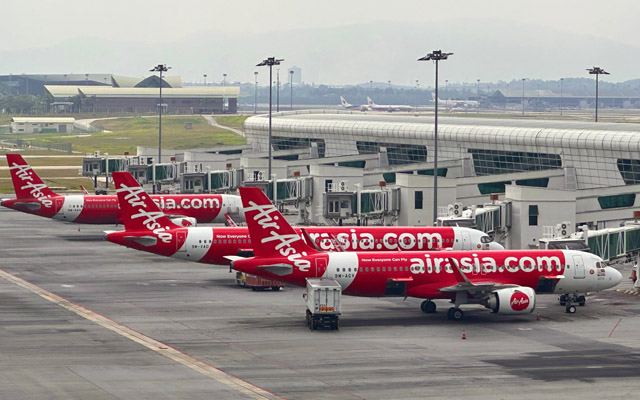
Low-cost carrier (LCC) AirAsia ordered a 10 per cent cut network-wide and raised its ticket prices by as much as 40 per cent. At a media briefing on April 6, AirAsia founder, Tony Fernandes, said the costlier airfares were “unavoidable” and untenable routes where the high cost of fuel cannot be covered would be cut.
In Thailand, Thailand AirAsia cut back on 26 regional routes while Thai AirAsia X suspended services to Shanghai and Riyadh through June and reduced services to Tokyo, Osaka, Almaty, and Delhi.
Philippine carriers also adjusted operations following the president’s declaration of a national energy emergency on March 25.
A certain end to the war remains elusive at press time, and so the impact on Asian air network continues.
Thai Airways announced last week plans to reduce and cancel more than 46 flights on both domestic and international routes from May 2026 due to mounting fuel cost and a decline in travel demand.
Thai Airways CEO Chai Eamsiri told the press that the airline needed to improve resource efficiency and reduce flights with large numbers of empty seats and merge some services.
He stressed that the move was not permanent, and services would be restored should travel demand return during the high season.
Hong Kong’s Cathay Pacific and HK Express will begin to operate a reduced schedule from May through June.
Impact on intra-Asia travel
Asia-Pacific’s travel and tourism performance is reliant on its own market. Here, 68.3 per cent of inbound travel to the region in 2025 came from within itself, according to Euromonitor International. The world’s top 10 busiest fight routes also exist within the region, according to OAG’s Busiest Flight Routes of 2025 analysis.
As such, ongoing flight adjustments across Asia-Pacific will undoubtedly dent arrivals into destinations within the region.
Patel said: “Intra-Asia travel’s fundamental dependency on air connectivity means it has no effective substitute when capacity contracts. The reduction in flight services is expected to have a profound impact on tourism across the region.
“Countries that rely heavily on inbound travellers from Thailand and neighbouring markets may experience a slowdown in visitor numbers, with hotels, tour operators, and local businesses facing challenges as connectivity weakens.”
He also warned that the LCC sector, which underpins much of the intra-Asia travel economy, is under disproportionate pressure.
“Low-cost airlines in South-east Asia face some of the harshest choices because their model depends on cheap fares, quick turnarounds, and high aircraft utilisation. A fuel shock of this scale can erode that model fast, especially when fare increases of 15 to 20 per cent risk pushing price-sensitive travellers away,” Patel added.
With flight cuts “falling precisely during peak travel periods”, the impact on airline performance is “damaging”.
Singapore-based aviation analyst Brendan Sobie added that the current environment gave little hope for “any prediction of growth for intra-Asia travel”.
Impact on airline structure
With Asian airlines operating on a thin margin – about three per cent in 2025 and barely three per cent this year, according to industry watchers, the unfolding challenges could alter the aviation landscape.
In March, OAG highlighted a profitability challenge for Asia-Pacific’s aviation sector. It projected a consolidation among weaker carriers as a means to overcome the sustained fuel shock, and noted that such an outcome, while disruptive, would be consistent with the evolutionary maturation of emergent markets.
Sobie opined that potential consolidation might not be limited to smaller airlines, “as there are some big players that are financially very vulnerable right now”.
Sobie added that the fuel shock impact on airlines varied, depending on their network – if they were heavily dependent on the Middle East or longhaul routes, how much they are hedged against fuel price increments, and the level of price-sensitivity of their home market.
He warned that the longer the war continues, the more “collapses” are likely.

On a positive note, the fuel shock is accelerating several long-term transitions already underway, observed OAG in late-March. It has strengthened the case for direct longhaul services that bypass Gulf hubs, an argument now reinforced by operational necessity, not just commercial strategy.
Airlines operating Airbus A321XLR and A350-1000 aircraft, as well as those with future Boeing 777X orders, including Cathay Pacific, Singapore Airlines and Qantas, have a structural advantage in a network landscape where Gulf transits can no longer be assumed.
Impact on Asian air hubs
In a March review of the Middle East conflict’s impact on aviation businesses, OAG stated that Cathay Pacific and Singapore Airlines are short-term beneficiaries, thanks to their direct Asia-Europe networks being in high demand as Gulf hubs go dark.
The OAG review added that Changi Airport has emerged as an alternative routing hub, with bookings on Singapore-London and Hong Kong-London rising sharply.
A month on, Patel told TTG Asia that OAG maintains its view of Singapore Airlines and Cathay Pacific granting their home base airports an important hub status.
He added: “As Gulf carrier capacity contracts, some displaced longhaul passengers naturally seek alternative South-east Asian hub routings and Changi is the prime beneficiary. Singapore Airlines has maintained its Bangkok services unaffected, offering a premium reliability alternative at a time when Thai carriers are under severe stress.”
However, Changi Airport’s hub advantage is “not immune to a deepening crisis”.
Patel said: “The deeper risk for Changi Airport is a multi-year structural consolidation of global airline capacity, reducing the total number of airlines willing to maintain Singapore as a spoke.
He added that “Changi Airport’s structural advantages – including geography, infrastructure, Singapore Airlines Group’s network and fuel security measures” leave it better positioned than most hubs to manage the crisis, but “no hub is fully insulated” if global flight supply contracts.
“The key watch point for Changi Airport will be whether Singapore’s relatively stronger fuel reserves and supply chain management can sustain airline operations while competitors are rationing. Right now, the evidence suggests Singapore is managing this better than most of the region.”
Sobie concluded that the situation is still fluid, but “this industry is used to navigating crises”.
He refrained from drawing a longer-term scenario for the region’s aviation industry, stating that “no one knows how long this will go on for” and that “everyone hopes for fuel prices to come back down soon and the geopolitical situation to improve”.