

Rising spiritual travel and new tourism projects are transforming Uttar Pradesh into one of India’s fastest-growing destinations, boosting arrivals and investment across key cities like Agra, Ayodhya and Varanasi
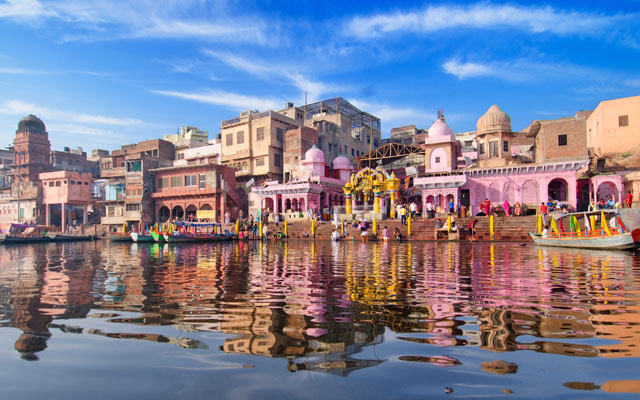
Spiritual tourism coupled with monuments like Taj Mahal in Agra are driving tourism growth in India’s northern state of Uttar Pradesh. As per industry stakeholders, the domestic arrivals have exponentially grown due to a huge surge of spiritual tourism.
“Three mega projects that became a game changer for tourism in Uttar Pradesh are Kashi Vishwanath Corridor, Ayodhya Development Project and Vindhyachal Corridor. All these are examples of urban planning with tourism in focus, proving that the Uttar Pradesh government sees tourism as an economic driver,” said Prateek Hira, president and CEO of Tornos.
Hira added that the recent Maha Kumbh (a religious gathering held every 12 years) in Prayagraj recorded a footfall of 660 million visitors in just 45 days adding to the remarkable tally of tourist footfall in the state.
As per statistics available with India’s ministry of tourism, Uttar Pradesh recorded 478.53 million domestic tourist arrivals in 2023. The Taj Mahal remained the top visited Archaeological Survey of India ticketed monument, attracting 6.10 million domestic and 0.68 million foreign tourists in the same year,
“The state has consistently retained the top position in domestic tourist footfall, driven by its rich cultural heritage, pilgrimage circuits and large events like the Kumbh Mela. This growing inflow of tourists is also pushing demand for better infrastructure, including roads, airports, hospitality and urban facilities,” said Subhash Goyal, chairman, STIC Travel & Air Charter Group.
Agra and Varanasi remain the biggest magnets for inbound travellers while Ayodhya has emerged as a strong growth destination in recent months, attracting a surge in pilgrim tourism according to Akshay Thusoo, senior vice president, commercial, Sarovar Hotel.
“Domestic travel is also on the rise in Prayagraj, Mathura, Vrindavan and Lucknow, which are gaining popularity for their blend of heritage, cuisine and religious experiences. We are seeing a healthy uptick in occupancy and forward bookings across our properties in the state with strong interest from both leisure and MICE segments,” added Thusoo.
Uttar Pradesh Tourism is also showcasing its prominent sacred Buddhist sites like Sarnath, Kapilvastu, Sankisa, Kaushambi, Shravasti and Kushinagar in international travel trade events like the recently concluded PATA Travel Mart 2025. Post PATA Travel Mart, the Embassy of India in Bangkok also hosted a roadshow where the department of tourism, government of Uttar Pradesh delivered a presentation on the Buddhist circuit and the state’s diverse tourism experiences.
Mukesh Kumar Meshram, principal secretary, tourism and culture added: “The enthusiastic response at PATA has reaffirmed our vision to establish Uttar Pradesh as the global hub of Buddhist tourism. We expect that the partnerships created by our 20 co-exhibitors will strengthen itineraries, extend visitor stays and create shared opportunities for local communities and service providers.”
According to Goyal, Agra still draws many international tourists for the Taj Mahal, and places like Kushinagar and Kapilvastu are now becoming well-known as part of the Buddhist circuit.
“Gorakhpur is also seeing more pilgrims, especially at the Gorakhnath Temple. Together, these places are making Uttar Pradesh one of the fastest-growing tourism spots in India,” noted Goyal.
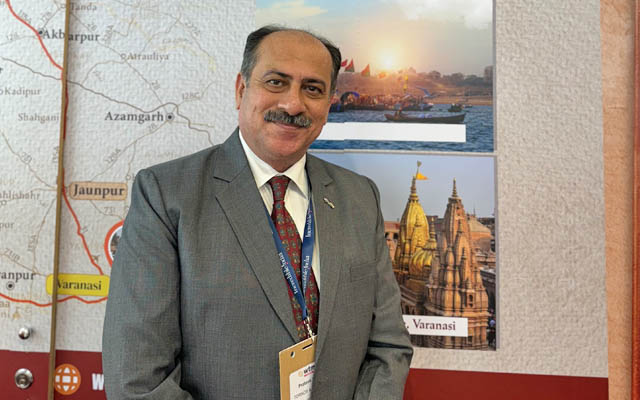
The Uttar Pradesh government is also looking to develop rural tourism and home stays in the state. It recently unveiled Anand Bhawan Palace in Kannauj, which has been positioned as the state’s first luxury heritage home stay.
“With Anand Bhawan Palace opening as a heritage home stay, we are adding a new dimension to the tourism appeal,” added Meshram.
Sarbendra Sarkar, managing director and founder of Cygnett Hotels & Resorts, shared that the Uttar Pradesh government is actively enabling hotel expansion through high-impact measures in its tourism policy.
“The policy offers capital investment subsidies, stamp duty exemptions and waivers on land-use conversion charges for setting up or expanding hotels, especially in heritage or religious destinations. It also promotes adaptive reuse of pre-1950 properties, allowing forts, palaces and havelis to be converted into boutique hotels with financial incentives. Additionally, projects in Tier-2 and Tier-3 cities enjoy extra subsidies, encouraging hotels to move beyond metros. In my view, these targeted incentives are directly reducing costs and accelerating expansion,” said Sarkar.
Agreeing with Sarkar, Hira recalled that in 2018 and later in 2022, the Uttar Pradesh government came up with a forward-looking tourism policy that has attracted huge investments in the state.
“The policy not only incentivises tourism projects but also pays huge attention to quantifiable employment generation, participation of women in tourism and skilling youth for entering the sector,” said Hira.
Thusoo agreed, saying that the Uttar Pradesh government has been proactive in positioning the state as a leading tourism hub. “Infrastructure development – be it road connectivity, new airports or improved rail links – has been a game-changer for the hospitality industry. Initiatives such as developing tourism circuits (Ramayana, Buddhist and Braj circuits), heritage conservation and the promotion of cultural festivals are creating new demand drivers,” he added.
Industry stakeholders are also seeing new trends in the state’s tourism sector like religious travellers also exploring leisure activities.
“Visitors now look to extend pilgrimages with experiences like exploring heritage sites, indulging in local cuisine or visiting natural sites such as Dudhwa National Park which is steadily gaining visibility,” said Sarkar.
“This growth pattern is encouraging hospitality players to expand. We are strengthening our footprint in Uttar Pradesh with new signings in Kanpur and Vrindavan, adding to the existing presence in key destinations like Ayodhya.”
“There is also rising interest in experiential tourism with travellers eager to explore local culture, food and crafts beyond traditional landmarks. Short-stay travel and weekend getaways from nearby metros like Delhi and Lucknow are also on the rise, driving demand in Agra, Mathura, and Vrindavan,” concluded Thusoo.