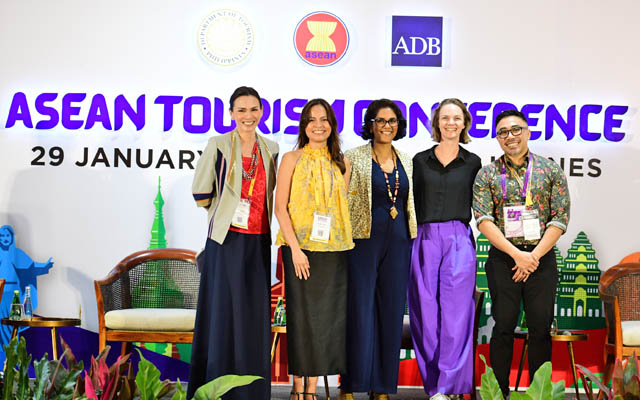
The region’s tourism industry is seeing strong growth in immersive, culture-led and digitally driven travel experiences, according to panellists at the ASEAN Tourism Conference’s recent forum on digital innovation and market diversification in tourism.
The conference was hosted by the Department of Tourism Philippines as part of the recently concluded ASEAN Tourism Forum in Cebu City.
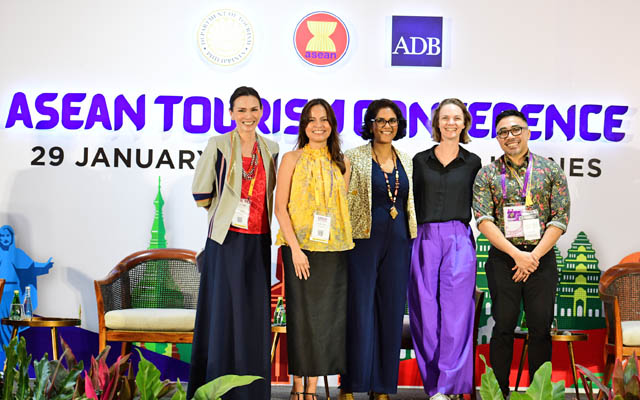
Michelle Ho, general manager of Klook Philippines, said young travellers are increasingly influenced by social media and peer recommendations when choosing destinations beyond traditional hotspots.
She cited growing interest in destinations such as Siquijor in the Philippines and Sapa in north-western Vietnam’s Lao Cai province.
Ho added that Klook is investing heavily in the digitalisation of content to improve how experiences are discovered by travellers, noting that online visibility has become essential as travel inspiration increasingly begins on social platforms.
“Being seen, discoverable, Google-able is non-negotiable for us,” she said.
She explained that Klook closely monitors online conversations across social media platforms to understand emerging travel interests and shifting demand, using these insights to guide product development.
This approach allows the platform to highlight lesser-known, land-based and immersive experiences in secondary and tertiary destinations, particularly during off-peak periods when travellers are more price-sensitive and open to alternatives to mainstream locations.
Airbnb’s head of South-east Asia public policy, Shanta Arul, said travellers are gravitating towards small-group activities that offer deeper cultural immersion.
“People are looking for culture-rich travel and gastronomy experiences. These are the things that are leading travellers to seek out experiences,” she shared.
She noted growing interest in curated offerings such as farm-to-table dining, culinary journeys and traditional art and handicraft workshops, explaining that these reflect a broader shift towards culture-rich travel that enables visitors to engage more meaningfully with local communities while moving beyond mass tourism.
Arul also stressed the importance of data sharing with governments to manage seasonality, noting that Airbnb works with tourism authorities through memoranda of understanding to share aggregate data that supports more flexible tourism planning.
She added that this approach helps destinations respond to both peak and off-peak demand while avoiding over-concentration in traditional hotspots.
From an adventure travel perspective, Hannah Pearson, regional director of the Adventure Travel Trade Association, noted that culture remains Asia’s strongest draw.
She emphasised that adventure travel is not limited to extreme sports, adding: “Adventure doesn’t have to be jumping off a cliff or diving. It could be an e-bike tour in the city, a gastronomy tour, or engaging with indigenous culture.”
Romey Louangvilay from the Tourism Study Team at the Asian Development Bank said destinations must understand traveller behaviour to tailor messaging more effectively.
He added that social media and influencer validation play an important role in decision-making, as travellers are more likely to book experiences that feel personally relevant and endorsed by trusted voices.
The session was moderated by Issa Litton, president and head trainer of 1Lit Corp, a Philippines-based company.