
Asia/Singapore Thursday, 9th April 2026
Page 97

Generative AI is top priority for travel sector, Amadeus study reveals

0

Generative AI (Gen AI) remains a central focus for the travel technology sector looking ahead to 2025 – but challenges are emerging as initial optimism begins to dissipate.

That is according to a new report released by Amadeus, Navigating the Future: How Generative Artificial Intelligence is transforming the travel industry, which surveyed experts in the field from across the travel ecosystem.
Digital assistants, tailored recommendations, and content generation are the top use cases for Gen AI

Among the 300+ industry leaders questioned, Gen AI was cited as a top priority for the coming year by 46 per cent – ahead of any other technology. This figure rose to 61 per cent in Asia-Pacific, suggesting the region may be ready to take the lead in this transformative technology.

Other technologies cited as a top priority for 2025 included data management (38 per cent), cloud architecture (36 per cent), non-generative AI IT infrastructure (34 per cent), and biometric technology (23 per cent).

Globally, over half of travel technology leaders (51 per cent) argue Gen AI already has a ‘significant presence’ in the travel industry in their country. A further 36 per cent expect this presence to emerge over the next year, while 11 per cent expect the process to take one to two years. Just two per cent of travel technology leaders think it will take three or more years for Gen AI to have a significant presence on the travel sector where they are.

Today, 41 per cent of travel companies say their organisation has the budget and resources in place to implement Gen AI, while 87 per cent are open to working with a third-party vendor to develop Gen AI-powered applications.

While support for the rollout of Gen AI in the travel technology sector remains undimmed, the study finds a number of challenges are emerging.

These comprise data security (35 per cent); lack of Gen AI expertise and training (34 per cent); data quality and inadequate technological infrastructure (33 per cent); ROI concerns, lack of use cases, or difficulty in estimating value (30 per cent); and difficulty in connecting with partners or vendors (29 per cent).

Today, Gen AI specialists are grappling to recruit experts and train existing workforces to bridge a skills gap, while working to secure data and convince senior leaders of the value of Gen AI investments.

How is Gen AI being used?
While the process of experimentation continues with the deployment of Gen AI, several use cases have emerged in the travel technology sector.

These are led by digital assistance for travellers during booking (53 per cent) and followed by recommendations for activities or venues (48 per cent), content generation (47 per cent), helping staff to better serve customers (45 per cent), and collecting and condensing post-travel feedback (45 per cent).

Study respondents were looking for, in ranked order, return on investment, customer satisfaction, efficiency and productivity improvements, performance metrics (accuracy, precision and relevance) and increases in key performance indicators.

Sylvain Roy, chief technology officer, Amadeus, said: “(Gen AI) is a technology that has the potential to transform every facet of what we do across the travel ecosystem, significantly enhancing the passenger experience at every step of the journey.

“While technology will be a key focus for the next year, questions are rightly being asked whether Gen AI will deliver sufficient returns on investment, while talent shortages are also coming under the spotlight.

“It is crucial that we use this new technology responsibly, ensuring data security, privacy, and content reliability. It is time for Gen AI to prove it can live up to the hype.”

Navigating the Future: How Generative Artificial Intelligence is transforming the travel industry can be viewed here.
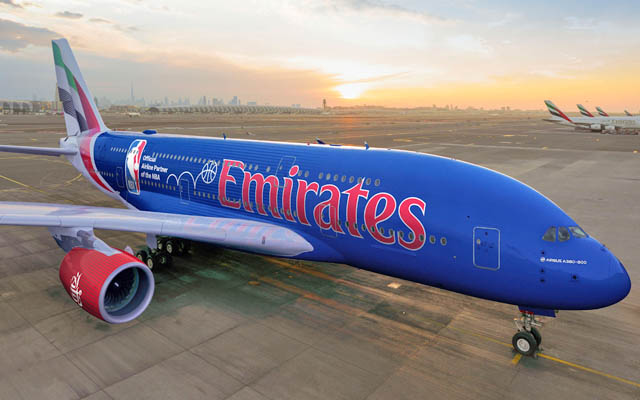
Emirates dons new NBA livery ahead of NBA season

0

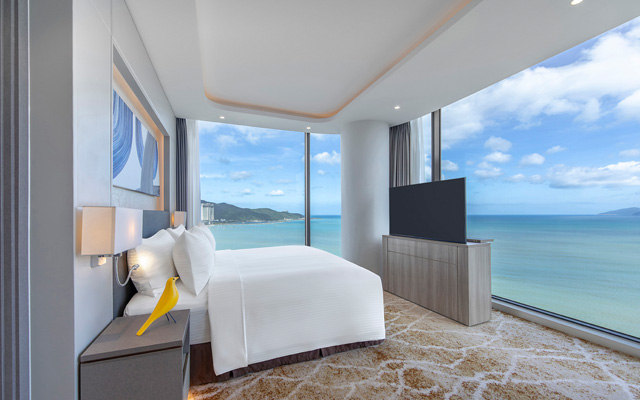
New romance experiences at The Anam Cam Ranh

0

David Martens leads as Centara Karon Resort Phuket’s VP operations and GM

0

Centara Hotels & Resorts has named David Martens as vice president of operations and general manager of Centara Karon Resort Phuket.

The Australian has over 30 years of hospitality experience and has been an integral part of the Centara family since 2012.

He most recently served as senior director of operations and general manager at the same property.
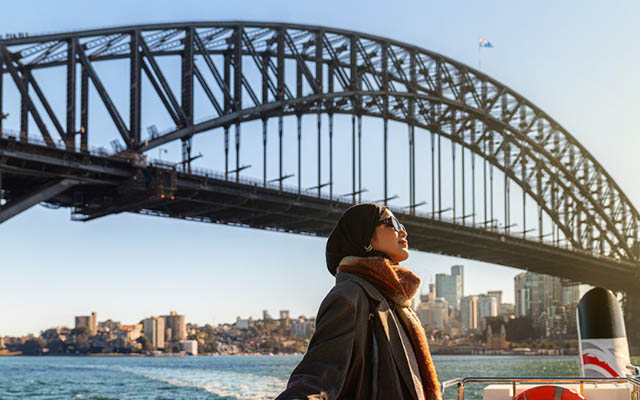
Tourism Australia launches first Muslim consortium in Indonesia

0

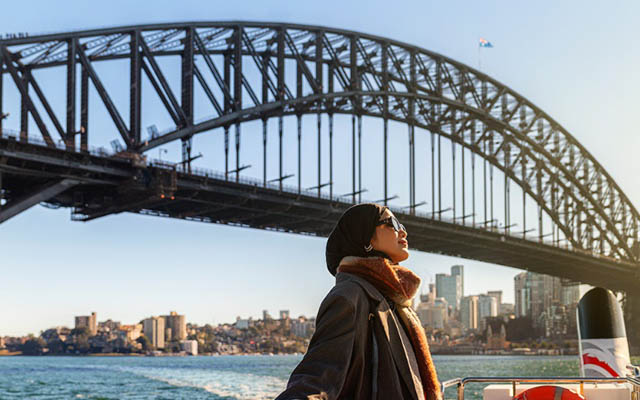
Tourism Australia is expanding its outreach to Muslim travellers in Indonesia with its first consortium of travel agencies, providing tour packages and itineraries that feature Australia’s array of Muslim-friendly experiences.

The consortium launches with four travel partners in Indonesia: AntaVaya Umroh, As-Salam by Dwidaya Tour, Cheria Holiday, and Ramah Umroh & Halal Tour. As part of this campaign, the agencies have launched a collection of itineraries across Australia featuring Muslim-friendly experiences, tailored for different traveller styles, seasons and Australian destinations – both familiar and undiscovered.

Tourism Australia aims to introduce more Muslim-friendly offerings in the destination with the launch of its first Muslim consortium in Indonesia

Travellers can enjoy stargazing in the Blue Mountains, get up close to the alpacas of Port Stephens, ride the iconic Puffing Billy in Melbourne, experience the Australian Gold Rush era in Ballarat’s Sovereign Hill, cruise along Sydney Harbour and indulge in retail therapy at Chadstone Shopping Centre – Australia’s largest shopping mall.

Itineraries depart next year on February 19, April 2, April 23 and May 28, with flights by airline partner Qantas Airways.

Tourism Australia has been marketing Muslim-friendly visitor experiences for more than 20 years, bringing the latest offerings and promotions to Muslim travellers through travel guides, media hosting programmes and key distribution partners who specialise in Muslim-friendly tourism.

Agitya Nuraini, country manager for Indonesia, Tourism Australia, said: “Indonesia is one of Australia’s top five recovery markets in rebuilding back to 2019 arrivals and trip expenditure levels. In the past financial year, Australia welcomed 213,000 Indonesian travellers – 96 per cent of 2019 levels – who collectively spent A$1.1 billion (US$737.36 million) which was 26 per cent more compared to 2019.

“Furthermore, Muslim travel from Indonesia is a huge segment for Tourism Australia. Around 80 per cent of Indonesia’s middle class is Muslim, and this population has a high discretionary income, a strong desire to travel, and are looking for authentic cultural experiences.”

She explained that tourism in Australia is focused on providing a diverse range of multicultural experiences, and with Islam as the second-largest religion in Australia, “visitors will find major supermarkets offering halal-certified products”.

She continued: “Our consortium is another leap in our ongoing efforts to extend Australia’s many Muslim-friendly experiences to Indonesians planning their next holiday – whether it’s their first time Down Under, or if they are looking for their next Aussie adventure. We will continue to work closely with our on-ground partners to uncover new destinations for our customers wanting to experience Australia’s Muslim-friendly travel offering.”

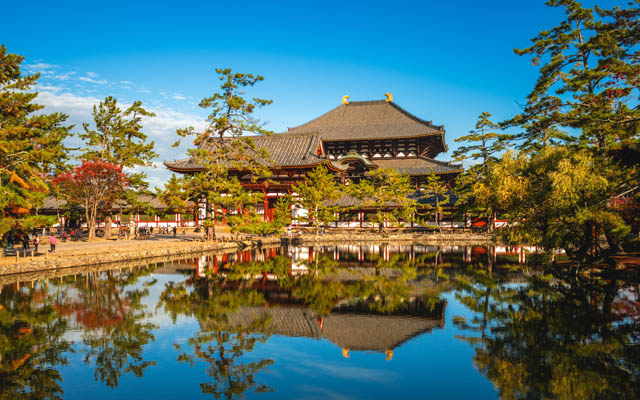
Japan opens government-subsidised hotels to boost overnight stays in Nara

0

Cathay Pacific unveils new Aria Suite

0

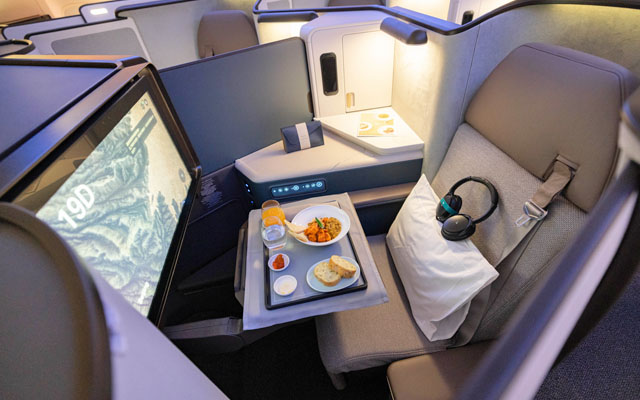
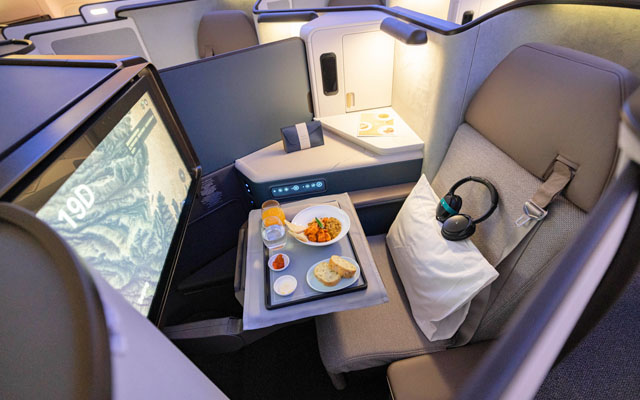
Cathay Pacific has unveiled of its all-new Business class, Aria Suite, together with its new Premium Economy and refreshed Economy onboard its retrofitted Boeing 777-300ER aircraft. ​

​The aircraft debuted on its Hong Kong-Beijing route on October 18, and will be progressively deployed on other regional and longhaul routes.

Cathay Pacific’s new Business class, Aria Suite, provides passengers with comfort, privacy and a sense of personal space

Soon to follow will be a new First Class experience onboard the airline’s 777-9s, and a brand-new flat-bed Business class product on its Airbus A330s.

Aria Suite passengers will be able to enjoy a holistic and immersive experience where comfort, privacy and a sense of personal space are completely reimagined.

Cathay Group chief customer and commercial officer Lavinia Lau said: “To solidify our role in both the industry and the community, we’ve committed a significant investment of over HK$100 billion over the next seven years into our fleet, cabin products, lounges, and digital and sustainability leadership, reflecting our confidence in Hong Kong’s long-term growth and its position as a key player in global aviation.”

Hotel Indigo Bangkok Wireless Road introduces new GM

0

Hotel Indigo Bangkok Wireless Road has named Nicolas Mercier as its general manager.

The French national has amassed over 20 years of experience in South-east Asia’s international luxury hospitality landscape, and was most recently the hotel manager at InterContinental Hotel & Residences Jakarta Pondok Indah.

Mercier will work on developing creating guest experiences, keeping sustainability goals and responsibility towards the community, as well as strengthening the hotel’s position in the competitive Bangkok market, such as culinary experiences.

Langham Hospitality Group names new senior VP – finance

0

The art of travelling nice and slow

0

The quest for immersive experiences through a slower pace of travel is feeding the rise of boutique cruises and rail journeys.

Belmond, an operator of luxury train voyages in different parts of the world, saw interest in its latest addition – The Eastern & Oriental Express, A Belmond Train that goes between Singapore and Malaysia – soar among several guest segments, from retirees and families to young couples and solo explorers. It has sold out most of its cabins on most voyages since its relaunch in March this year.

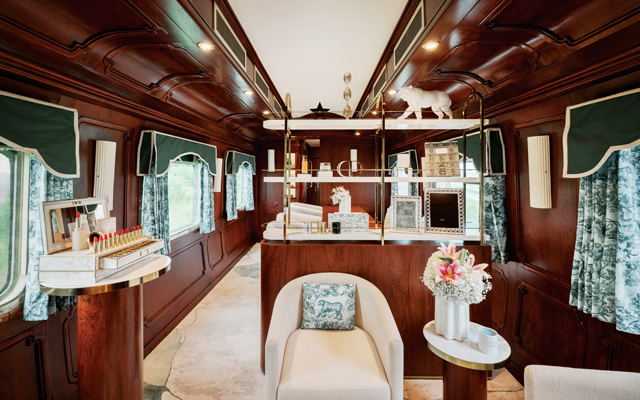
The Eastern & Oriental Express, A Belmond Train is home to Dior’s first ever spa in the region

Nicholas Streff, vice president of strategy and corporate communications, Belmond, believes that customers are drawn to the product concept – one that allows them to slow down and appreciate the value of personal time.

“It ticks all the boxes of what we call slow luxury travel, which is all about taking the time to explore, immerse yourself in the destination, and really understand the landscape, culture, etc,” he explained.

Guests on the all-inclusive Eastern & Oriental Express go on three-night voyages from Singapore through Malaysia. Along the way, they get to wine, dine and play onboard at no extra charge. They are also invited to join off-board excursions led by expert guides.

On July 22, Belmond elevated the Eastern & Oriental Express experience with the opening of Dior’s first-ever spa in the region. Housed in one of the train carriages, the Dior Spa offers five tailor-made wellness rituals.

Hotels, keen to extend guests experiences beyond their room and onsite facilities, have also crafted slow travel opportunities.

In March this year, luxury resort Ayana Komodo Waecicu Beach in Labuan Bajo, Indonesia sailed out its very own ship, Ayana Lako di’a, to offer a two-day-one-night adventure through the UNESCO World Heritage-listed Komodo National Park for up to 14 guests. The modern phinisi offers nine fully air-conditioned suites, and features a library, lounge, bar, an indoor dining area and daybeds on the main deck.

The Ritz-Carlton has just announced plans to set its 794-foot Luminara luxury cruise liner off in Asia-Pacific, with 10 voyages scheduled between December 2025 and May 2026. The journeys range from 10 to 15 nights in length and depart from Tokyo, Hong Kong, or Singapore.

Minor Hotels’ Boheme will sail along the Mekong River

Minor Hotels, which has seen great interest in The Vietage by Anantara, its luxury train that takes hotel guests through the Vietnamese countryside, will soon launch Boheme, a cruise ship that will depart from Luang Prabang in Laos and journey down the Mekong river on four-day itineraries. Boheme is furnished with 12 suites and one stateroom.

Marion Walsh-Hédouin, vice president communication & public relations for Minor Hotels, told TTG Asia that Boheme would grant guests access to some spectacular locations and impressive experiences along the river, such as the Pak Ou Caves and villages of rice paper-making and silk-weaving craftsmen.

“People want more than just the hotel experience, more than just a nice turn-down amenity. Hence, Anantara Hotels & Resorts (a brand of Minor International) has chosen to offer brand extentions that deliver memorable destination experiences and community connections,” said Walsh-Hédouin.

In Thailand, Anantara Riverside Bangkok Resort’s Loy Pela Voyages takes guests down the Chao Phraya River on private cruises for up to eight people. Two ships in the fleet, Loy Dream and Loy River Song, offer destination exploration with creative gastronomy. Both ships are outfitted luxuriously.

Spurred by popular demand, The Vietage by Anantara recently launched a second railway carriage to operate a daily return journey between Nha Trang and Quy Nhon. The new five-hour journey through south-central Vietnam presents a slower way to appreciate the destination, with sightings of water buffalos in the countryside, coastal views of the East Sea, and more.

“These extensions provide our guests with opportunities to stay on longer with us and in the destination, and encourages them to stay with more than one property in our portfolio,” she added.