Minor Hotels has named industry veteran Omar Romero as its chief development and luxury officer, a newly-created position based in Bangkok, Thailand.
In his new role, Romero will drive the global development strategy of Minor Hotels, identifying new business opportunities, overseeing the planning and execution of projects, and managing relationships with key stakeholders. He will also play a pivotal part in shaping and supporting the curation of Minor Hotels’ luxury brands.
He brings over two decades of experience to Minor Hotels, and most recently served as chief development officer at Six Senses.
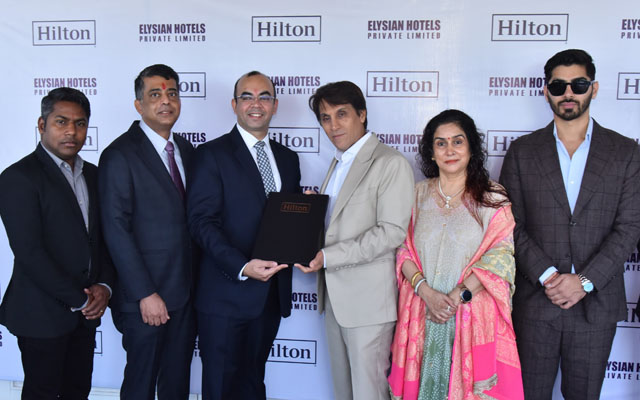
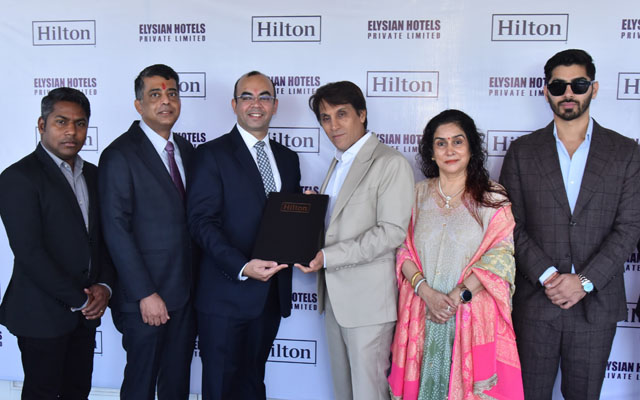
Hilton is launching its flagship Hilton Hotels & Resorts in Udaipur, marking its debut in the City of Lakes. Developed with Elysian Hotels, the 118-key Hilton Udaipur is set to open in early 2026.
Hilton currently operates two hotels in Rajasthan, namely Hilton Jaipur and DoubleTree by Hilton Jaipur Amer. This signing solidifies Hilton’s commitment to broadening its portfolio in the northwestern state, following the signings of its iconic Waldorf Astoria brand in 2023 and India’s third Conrad Hotels & Resorts property in Jaipur, earlier this year.
Hilton Hotels & Resorts will make its debut in Udaipur in 2026
The new-build Hilton Udaipur will offer views of the city’s lakes and palaces, including Lake Pichola and Fateh Sagar Lake, and easy access to Udaipur’s city centre, airport, and railway station will further boost the hotel’s appeal.
Upon completion, Hilton Udaipur will offer 118 guestrooms and suites, four dining outlets, outdoor pool, spa, fitness centre, and executive lounge. The hotel also boasts 1,850m2 of indoor event spaces and 438m2 of outdoor event spaces.
Zubin Saxena, senior vice president and regional head, Hilton, South Asia said: “Udaipur, often referred to as the Venice of the East, is a preferred destination for both international and domestic travellers for both tourism and weddings. This presents an exceptional opportunity for us to cater to the rising accommodation demands of the city. We found a wonderful partner in Elysian Hotels and together we will deliver exceptional hospitality experiences to guests in the charming city of Udaipur.”
“This hotel, situated in the city’s iconic lake precinct, will set a new benchmark for hospitality experiences reflective of the region’s regal splendour and will contribute to Udaipur’s growing appeal and desirability as a preferred tourist and wedding destination,” added Ravindra Singh, director, Elysian Hotels.
Booking.com has launched the latest evolution of its partner-focused sustainability programme, prioritising accommodation needs by testing an improved pathway to third-party certification.
Sustainability now plays a core role in business operations across the travel and tourism industry, and substantiating these efforts through third-party certifications is increasingly critical. Global travellers are also seeking new levels of clarity and consistency with 45 per cent sharing that coming across an accommodation labelled as more sustainable is increasingly appealing and 67 per cent agreeing that all travel booking sites should use the same sustainable certifications or labels.
Booking.com aims to empower travellers and accommodation partners alike in making more sustainable choices
However, certifications are not yet widespread across global accommodation supply; 63 per cent of Booking.com partners surveyed shared they would like to know which third-party certifications are available in their region, while 75 per cent would like to know which practises to implement – the new programme sets out to address these questions.
Partners will now be able to access tailored insights that guide them towards third-party certifications best suited to their property’s profile, needs and operations via their individual Booking.com extranet. During the early testing phase, a subset of third-party certifications will feature, with sustainability software provider BeCause making it easier for both accommodation partners and certification providers to share their data at scale.
In parallel, partners will also receive targeted tips and resources related to the actions they could start taking across categories including water, food waste, energy, plastic and local community. The guidance is generated based on their responses to a detailed survey that gathers the accommodation’s characteristics, location and existing sustainability efforts and credentials.
With almost a quarter of partners sharing concerns that the cost of third-party certification is too high, Booking.com will also provide information on organisations that provide funding, discounts on certifications and reduced fees for ongoing subscription. In addition, partners will maintain access to educational resources, from a wide variety of materials on the company’s Partner Hub, including a handbook on more sustainable hospitality, to online courses developed in partnership with UN Tourism.
Accommodation that have achieved a third-party certification will continue to have that information clearly displayed on Booking.com which, coupled with the ability to filter searches accordingly, further helps travellers easily identify corresponding properties.
Booking.com’s approach continues to be developed in consultation with independent experts and organisations such as the Global Sustainable Tourism Council, UN Tourism and Travalyst, with industry-wide collaboration playing a vital role in how best to address some of the challenges travellers face in making more sustainable choices and the operational barriers faced by accommodation and beyond.
Danielle D’Silva, director of sustainability at Booking.com, stated: “While many of our partners are already making great strides in their journey, for others it can be challenging knowing where to start or what certification may be best suited to their needs.
“In empowering partners to make more informed decisions and accelerate their progress, our ultimate goal is to help bridge the gap between the number of accommodation with third-party certifications and the breadth of choice available in the market.”
Traveloka has joined forces with Lotte Hotels & Resorts, South Korea’s largest hotel group, to unlock exclusive deals for visitors to South Korea.
From now to November 10, Traveloka users can book tickets and tour packages to South Korea on Traveloka and enjoy promotions for Lotte Hotels & Resorts, with properties located in Seoul, Busan, and Jeju.
Enjoy savings on luxurious stays in major cities like Seoul, Busan, and Jeju
Have a fun family holiday staying at Lotte Hotel World Seoul’s exclusive family rooms, and enjoy direct access to Lotte World Adventure Park.
For couples seeking a romantic getaway, Lotte Hotel Jeju lets lovebirds soak in the ocean views while indulging in the island’s culinary delights. Or, experience the vibrant coastal charm of Busan when staying at L7 Haeundae by Lotte, situated just steps away from the famous Haeundae Beach.
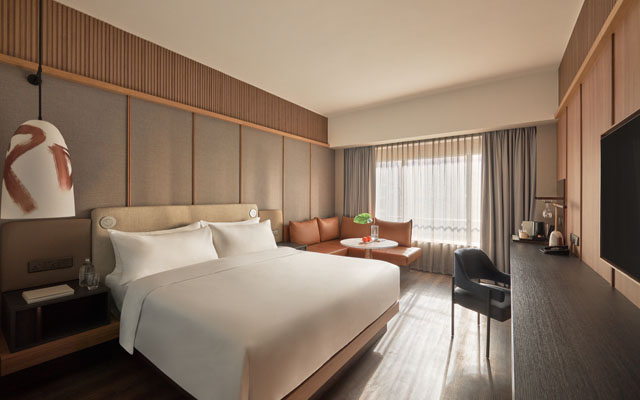
Hotel Muse Bangkok, Autograph Collection, Thailand
Hotel Muse Bangkok, Autograph Collection boasts 174 guestrooms and suites featuring panoramic views of the Bangkok skyline, and amenities such as F&B options, swimming pool, bar, fitness centre, and meeting venues.
Just 40 minutes by car from Suvarnabhumi International Airport and a 30-minute drive from Don Mueang International Airport, the hotel is set in the residential area of Langsuan. It is also nearby to Chidlom BTS station, offering connections to shopping areas such as Central Chidlom, Central Embassy, and Central World.
QT Singapore
QT Singapore, Singapore
QT Singapore is the latest boutique hotel located in the transformed Telegraph heritage building on Robinson Road.
The 134-key hotel offers guest suites and king rooms in several styles – Junior, Corner, Balcony, and Premier Suites – each with a large ensuite bathroom and separate walk-in rain shower, including iPad-controlled room functionality.
QT Singapore’s signature dining experiences, Cygnet and Rooftop at QT, have also opened. Guests can soak in the labyrinth rooftop pool and enjoy views of the Singapore skyline.
Hilton Garden Inn Bangkok Riverside
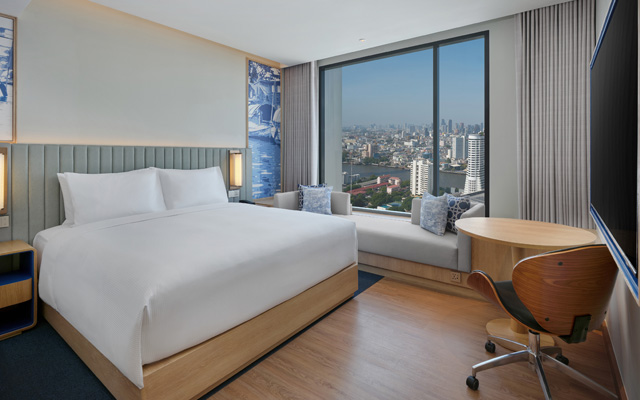
Hilton Garden Inn Bangkok Riverside, Thailand
The 241-room Hilton Garden Inn Bangkok Riverside is situated atop the ICS, a mixed-use lifestyle complex along the famed Chao Phraya River, just under an hour’s drive from Suvarnabhumi Airport.
Adjacent to the True Icon Hall Convention Center, the hotel also comes with easy access to the ICONSIAM shopping complex, and is conveniently connected to Charoen Nakhon BTS Station.
Facilities include an outdoor pool, fitness centre, all-day dining restaurant, grab-and-go station, and event venues.
Amara Singapore
Amara Singapore, Singapore
Amara Singapore, the iconic 38-year-old hotel in Tanjong Pagar, has completed an extensive 11-month renovation, offering refreshed guestrooms, public areas, event spaces, and dining venues that have been designed to celebrate the city’s rich heritage.
Guests can enjoy facilities like an outdoor pool, spa and gym.
The hotel has also launched a series of curated Singapore Heritage Experiences, where guests can savour local kopi (coffee) and teh (tea) traditions while learning the craft of traditional popiah making; head on a walking tour in the neighbourhood and learn about the city’s past gang culture; or immerse themselves in Singapore’s Peranakan culture with an exclusive tour of The Intan, a home museum showcasing intricate artefacts that reflect the city’s heritage.
Visitors to Japan can now purchase tours that immerse them in Japanese culture, starting from Sumida City, home of the Tokyo Skytree.
The tour includes a geisha performance, a sumo show, and a special photo session on the tower’s observation deck, where participants gain exclusive access before or after regular hours.
Have fun playing games with a geisha while admiring the Tokyo night view
Also included is the night plan, which allows tourists to enjoy the night view from the observation deck, followed by a traditional dance performance by geishas from Sumida City’s entertainment district, a cultural heritage dating back to the Edo Period (1603-1867).
Another tour option features an early morning itinerary, where participants can savour a specially prepared breakfast using local Tokyo ingredients while watching the sunrise from the observation deck. This experience also includes a sumo show with retired wrestlers, the chance to participate in a mock sumo match in a full-body costume, and professional photographs.
Additionally, the company offers a mini plan that provides priority entry to Tokyo Skytree, accompanied by a private guide, along with a souvenir Edo Kiriko shot glass.
The Hilton Global Foundation has committed US$5.3 million towards 16 non-profit organisations working to combat poverty, foster career development opportunities and protect the destinations where people live, work, and travel.
The foundation’s annual grant process allocates funds to organisations that support its primary funding pillars of environmental sustainability, career development and community resilience. It aims to make a positive social and environmental difference for communities, ensure a sustainable future for generations to come and supercharge Hilton’s progress towards its 2030 Travel with Purpose goals.
The funding will support 16 non-profits in their efforts to uplift communities around the world; The Felix Project in London, pictured
Since its launch in 2019, funding from the Hilton Global Foundation has provided more than 220,000 people with access to clean water, donated more than 18 million pounds of food to communities in need and created nearly 113,000 learning and career growth opportunities.
The Hilton Global Foundation aims to empower communities by funding projects that offer training, skill development, and career opportunities for all in the hospitality industry. For instance, Hilton has been partnering with the International Youth Foundation in Mexico since 2012, supporting its global efforts to connect young people with opportunities to transform their lives through training, skill-building workshops and career opportunities.
Other initiatives comprise empowering homeless individuals including veterans and prison leavers by offering training, career development and financial support to overcome barriers to employment in London, England; providing job coaching and training to individuals with Down Syndrome and other intellectual disabilities in Istanbul, Türkiye; supporting vulnerable youth in Vietnam, including orphans and trafficked individuals, by offering residential training programmes in hospitality and tourism in Danang, Vietnam; among others.
For the environment, the foundation supports projects that reduce waste, increase access to clean water in our communities, and protect the biodiversity in the destinations and communities served. One highlight is Scholars of Sustenance Indonesia, a food rescue organisation dedicated to fighting hunger and food waste by redistributing surplus food to vulnerable communities in Bali and Jakarta, including low-income villages, orphanages, and organisations supporting the elderly and disabled. Another is the World Wildlife Fund, which builds on a previous grant from the Hilton Global Foundation to collaborate with stakeholders on projects that focus on conserving and restoring biodiversity across vital landscapes in the Asia-Pacific region.
The Hilton Global Foundation also supports organisations that manage local initiatives, disaster recovery efforts, and create economic opportunities in their communities, including identifying partnerships that enhance responsible business practices and human rights initiatives. Some examples are the Kechara Soup Kitchen in Kuala Lumpur, which serves marginalised communities in Malaysia; and The Felix Project, a London-based food redistribution charity that provides meals to vulnerable communities in London like the homeless, children dependent on free school meals, the elderly, and those living in isolation.
In addition to the annual grants distributed by the Hilton Global Foundation, micro grants are being distributed to 100 local organisations nominated by Hilton hotel-based and corporate team members. These funds will be used to support volunteer efforts in communities that are home to Hilton properties around the world.
“Now more than ever, our communities need meaningful positive impact, and the Hilton Global Foundation is proud to be supporting these remarkable 16 grantees with the largest ever donation in our history,” said Katherine Lugar, executive vice president, corporate affairs, Hilton and president of Hilton Global Foundation.
“Together, we are working to address some of the world’s most urgent challenges, and we look forward to making a positive impact and ultimately a better world for travel.”
Skyscanner has published a new report exploring the latest trends in travel – titled Skyscanner Horizons: 2024/5 spending, planning and destination insights, the report unpacks and explores a combination of consumer survey and proprietary search data to provide a unique view of how travellers are thinking about their plans for the next 12 months.
Surveying 19,000 consumers across 16 markets, the report delves into key indicators such as travel propensity, spend, trip type, and the trip planning process, including the top sources of destination inspiration, AI use and views on overtourism. Of the total, there were 6,000 survey respondents from Asia-Pacific, including Australia, India, Japan, Singapore, and South Korea. Skyscanner’s search data further complements these insights by offering details on destination choice, average lead times, average trip length and year-on-year search volume comparisons.
Travellers in Asia-Pacific continue to prioritise travel and travel expenditure
Asia-Pacific travellers are continuing to prioritise travel and travel expenditure, with those from India planning to travel and spend the most. 80% of those in the region are planning as many, if not more trips in 2025 than in 2024.
Across the board, travel behaviour is being shaped by a desire for collective experiences, from sports events and immersive art installations to gaming ‘pilgrimages’ that bring people together. Seven travel trends were identified, consisting of Sport mode, Astro Adventurers, Reset Jetters, Art-Venture, Cowboy Core, Horti-Culture and Gami-Vacation.
Travel remains priority, with travellers expecting to spend more
72% of Asia-Pacific travellers are planning to spend more or the same on flights in 2025 versus the previous year. Similarly for accommodation and car hire related behaviour, 71% and 46% of travellers in the region are planning to spend more or the same, respectively.
For ancillaries spend, top flight upgrades were seat selection (38%), insurance (38%), better quality food (29%), access to airport lounge (25%) and extra baggage (23%). About 31% of travellers are willing to upgrade their hotel rooms – for example to a larger room or one with a sea view – and the same proportion would be open to upgrading accommodation for a higher star rating.
Food triumphs as top factor in travel planning
Outside of costs, food is the biggest decision-making factor when choosing a destination. Two thirds of Asia-Pacific travellers (67%) agreed that food is important when picking a holiday destination. Other top factors observed were the weather (55%), natural landscape (55%), the attractions (54%) and culture (54%).
Confidence in using AI for planning grows
46% of Asia-Pacific travellers express confidence in using AI tools to assist with travel planning and booking, with about 17% indicating they are very confident.
Top four applications of AI in travel include destination research (40%), the creation of travel itineraries (36%), comparison of options (33%), and destination inspiration (31%).
Attitudes towards overtourism and impact
When asked how they would change the way they travel in the future, more than one in four (27%) Asia-Pacific travellers said they would consider less touristy destinations and 25% would try to make a positive impact on the places they go.
South Korean travellers are observed to be especially interested in visiting quieter, less busy destinations, while Indian travellers are the most inclined to make a positive contribution to the destinations they visit.
When discussing factors that will influence their choice, travellers are increasingly interested in exploring lesser-known destinations, with 27% Asia-Pacific respondents expressing intentions to visit these less touristed areas.
59% of Asia-Pacific travellers cited safety as a top reason for hesitance to choose an under-touristed destination over a popular one. A high proportion of Singapore (67%), India (60%) and South Korea travellers (64%) contributed to this sentiment.
Additionally, understanding where to go (36%) and confidence in available activities at the destination (34%) were also significant factors influencing their decisions to travel to lesser-known locations.
Top sources of travel inspiration
Social media and word-of-mouth recommendations are the leading sources of travel inspiration for travellers worldwide. More than half of Asia-Pacific respondents (55%) look to social media for travel ideas, while 45% rely on word-of-mouth recommendations.
Other notable sources include online media (42%), films and television shows (40%) and guidebooks (28%), all of which play significant roles in shaping travel choices.
2025 destination trends and trip lengths
Travellers continue to seek inspiration through Skyscanner’s popular ‘Everywhere’ search feature, which ranks highly across all regions. The top destinations identified in Asia-Pacific revealed a preference for big cities across Asia.
Average trip length is short, peaking at six days, apart from London at two weeks. Across the board, trip lengths are down year-on-year (YoY) by around a day. Average lead times broadly fall between 30 and 70 days, with the highest being for London and Tokyo. Travellers are booking flights to New Delhi, on average, just 28 days before departure.
Trending destinations identified in Asia-Pacific showed a love for off-the-beaten path Asian destinations – with China’s Dayong and India’s Shillong both experiencing large YoY increases in search volume of over 800%.
Smaller destinations in India, Japan and Cambodia are seeing a surge in popularity, taking up six of the top 10. Average trip lengths are short – all in single digits – as travellers keep their visits brief.
“Our data shows that travel demand remains resilient, and travellers are adapting their itineraries as they seek out collective experiences. This blend of resilience, ingenuity and innovation from both travellers and airlines looks set to make next year a transformative one for all,” noted Hugh Aitkens, vice president, strategic relations and development at Skyscanner.
“Looking ahead, we expect the market to become more active with seat sales and promotions as airlines compete for share of wallet.”
Korean Air expands network to Japan and China
Korean Air will resume its Seoul Incheon-Kumamoto service from November 24, as well as introduce a new service from Seoul Incheon to Fuzhou, China from December 28.
The airline will commence daily flights on the Seoul Incheon-Kumamoto route after a 27-year suspension due to the Asian financial crisis in 1997. Korean Air has also increased frequency on the Seoul Incheon to Okayama and Kagoshima routes, while also resuming the Seoul Incheon-Nagasaki route with four weekly flights.
Meanwhile, its new service from Seoul Incheon to Fuzhou will operate three times a week, flying on Tuesdays, Thursdays and Saturdays.
Korean Air currently flies daily from Seoul Incheon to Xiamen, and operates four weekly flights to Kunming.
Hong Kong Airlines
Hong Kong Airlines introduces new daily direct service to Chiang Mai Hong Kong Airlines has inaugurated its new daily direct service to Chiang Mai, Thailand on October 27.
This new route marks the airline’s third destination in Thailand, joining Bangkok and Phuket, with daily flights now available.
The launch coincides perfectly with Thailand’s Loy Krathong (Festival of Light) in November, allowing travellers to experience the vibrant parades and celebrations.
Vietjet
Vietjet launches Danang-Ahmedabad service
Vietjet has commenced its direct service connecting Vietnam’s Danang to Ahmedabad in India.
The new service offers two round-trip flights per week. Travellers from North-east and South-east Asia can now transit through Danang more easily to reach India’s major cities, including New Delhi, Mumbai, Kochi, and now Ahmedabad, via Vietjet’s extensive network.
The airline has plans to launch new routes connecting Hanoi to Kuala Lumpur and Nha Trang to Daegu, as well as resume the Ho Chi Minh City-Tainan route, and increase flight frequencies throughout the region.
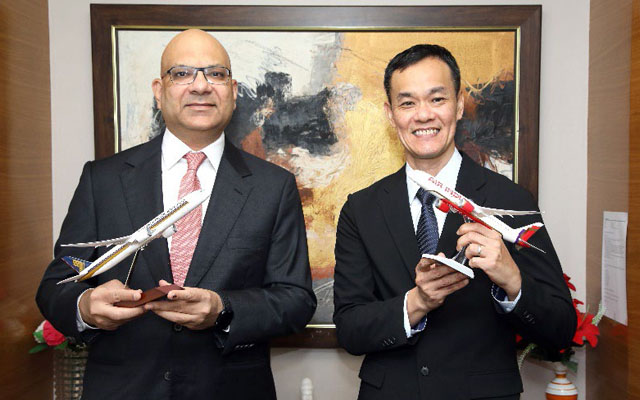
Air India and Singapore Airlines; photo by Air India
Air India, Singapore Airlines add 51 new codeshare destinations Air India and Singapore Airlines (SIA) have expanded their codeshare agreement, adding 11 Indian cities and another 40 international destinations to their network.
From October 27, Air India and SIA will codeshare on each other’s flights between Singapore and the Indian cities of Bengaluru and Chennai, increasing their total weekly scheduled codeshare services between the countries to 56 from 14.
SIA will codeshare on Air India’s domestic flights between Delhi and Amritsar, Bengaluru, Coimbatore, Lucknow, and Varanasi, between Mumbai and Ahmedabad, Amritsar, Bengaluru, Coimbatore, Goa, Jaipur, Kolkata, Lucknow, and Thiruvananthapuram, as well as between Kolkata and Guwahati.
Air India customers will be able to access 29 destinations across SIA’s network. These are Adelaide, Brisbane, Cairns, Darwin, Melbourne, Perth, and Sydney (Australia), Bandar Seri Begawan (Brunei), Phnom Penh and Siem Reap (Cambodia), Denpasar, Jakarta, Medan, and Surabaya (Indonesia), Fukuoka, Nagoya, Osaka, Tokyo-Haneda, and Tokyo-Narita (Japan), Busan and Seoul (South Korea), Kuala Lumpur and Penang (Malaysia), Auckland (New Zealand), Cebu and Manila (the Philippines), as well as Danang, Hanoi, and Ho Chi Minh City (Vietnam). This includes existing codeshare arrangements to Kuala Lumpur.
SIA customers will also be able to connect to Air India’s international services from Bengaluru, Delhi, and Mumbai to 12 destinations across Europe, the Middle East, and Africa. These are Copenhagen (Denmark), Paris (France), Frankfurt (Germany), Milan (Italy), Nairobi (Kenya), Amsterdam (the Netherlands), Jeddah and Riyadh (Saudi Arabia), Colombo (Sri Lanka), as well as Birmingham, London-Gatwick, and London-Heathrow (the UK).
Subject to regulatory approvals, the codeshare flights will be progressively made available for sale through the airlines’ respective booking channels.


 She will continue in her current role as chief people & culture officer.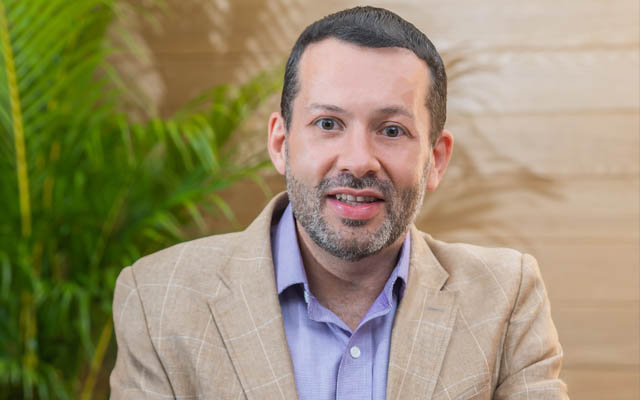
 He brings over two decades of experience to Minor Hotels, and most recently served as chief development officer at Six Senses.