
Asia/Singapore Thursday, 9th April 2026
Page 90

Westin Hotels & Resorts rolls out running programme across Asia-Pacific

0

Westin Hotels & Resorts has teamed up with Strava to offer travellers specially curated WestinWORKOUT routes across the Asia-Pacific (excluding China), helping them stay active and discover the sights of their destination while they travel.

The brand is dedicated to helping guests be their best selves while travelling, guided by its six pillars of well-being: Sleep Well, Eat Well, Move Well, Feel Well, Work Well, and Play Well. Through the Move Well pillar, Westin Hotels & Resorts encourages guests to stay active and maintain their fitness routines, regardless of where their travels take them.

Westin’s curated running routes helps travellers stay active while exploring their destination

The collaboration allows guests to access and explore WestinWORKOUT routes at their fingertips. These routes, carefully curated by the Westin Run Concierge at each hotel, provide guests with the chance to switch up their running routines or discover scenic hiking trails, all while showcasing the unique charm of the local area.

Some highlights include a 5km beach run in Bali to explore its coastal treasures from The Westin Resort Nusa Dua, Bali; a 6km route that blends history, culture, and the vibrant spirit of Pune from The Westin Pune Koregaon Park; a challenging 5km journey up the mountain in Hokkaido’s The Westin Rusutsu Resort; a 5km jog through the vibrant business and commercial district of West Surabaya in Indonesia from The Westin Surabaya; and a run, jog, or walk that starts from The Westin Singapore and takes runners through the lush greenery of Gardens by the Bay and the scenic Marina Bay and Marina Reservoir.

Furthermore, from November 29 to December 1, The Westin Singapore will be curating monthly run clinics and community runs leading up to the Standard Chartered Singapore Marathon weekend led by their Westin Run Concierge and appointed ambassadors.


Air India launches NDC content with Sabre

0

Darwin Waterfront redevelopment a boon for Northern Territory business events industry

0

Multiple winners in destinations when sports events come to town

0

Marina Bay Sands reveals new brand vision, completes Paiza Collection transformation

0

Aviation roundup: Cebu Pacific, Jetstar Asia and more

0

Robust developments across Jakarta set to sharpen city’s event-readiness

0

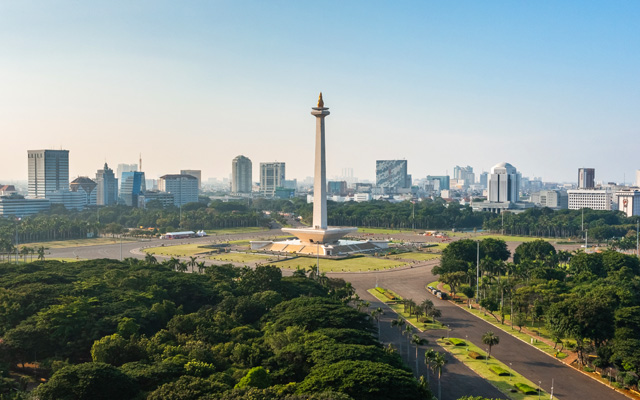
Change is sweeping across Jakarta as the city enhances its hardware to achieve its goal of becoming a global economic and business city. Key to these changes are new and expanded convention and exhibition centres.

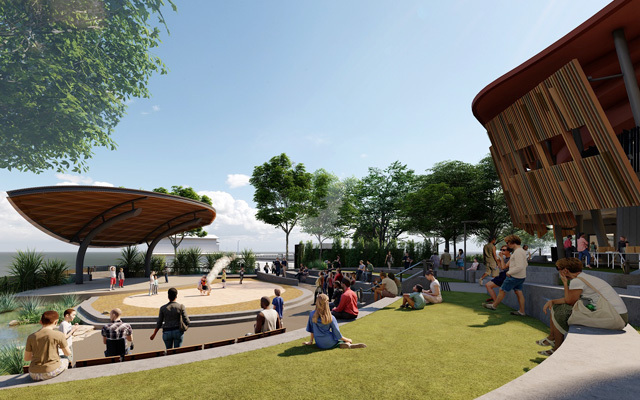
Agung Sedayu Group and Salim Group are jointly constructing the Nusantara International Convention Exhibition (NICE) and other event venues within the Pantai Indah Kapuk (PIK) 2 mixed-use mega project in Jakarta’s northern coastal area.

Jakarta is welcoming new and expanded convention and exhibition facilities

NICE will be built in phases, with phase one scheduled to commence operations in September 2025. The development, valued at US$2.6 million, will span over 40 hectares and comprise three exhibition buildings with 54,560m2 of space. Events will have a selection of 11 exhibition halls, a pre-function hall, and an 18,000m2 atrium along with VVIP and green rooms. There will also be 30,000m2 of outdoor space for concerts and festivals, and a 1.3-hectare courtyard for dining, leisure, and entertainment facilities.

Speaking to the media during a site visit, Ryan Adrian, managing director of Industri Pameran Nusantara, a joint venture venue management company of Agung Sedayu Group and Salim Group, said 17 anchor events have been lined up for NICE.

NICE’s phase two development has also been set for 2026. This will comprise a 30,000m2 convention building, 47 meeting rooms, and four- and five-star hotels.

“When completed, NICE will enable Indonesia to capture new opportunities in regional business events and contribute towards greater vibrancy of the PIK precinct,” he added.

NICE will be complemented by many other developments, including direct toll access to Soekarno–Hatta International Airport and the Inner and Outer Ring Road to reach Jakarta CBD, marina and jetty terminal, and lifestyle complex.

Both Agung Sedayu Group and Salim Group are also developing the Spike Air Dome, set to open in February 2025 to inject nine hectares of event spaces to the area. This will be located in a community park, where corporate and community gatherings are hosted.

Jakarta will also see the expansion of its Jakarta International Expo (JI Expo) in Kemayoran. Starting next year, the venue will add a three-storey building that will house a 3,000m2 Grand Ballroom, a 1,000m2 Junior Ballroom, 14 meeting rooms, and a Grand Theatre auditorium with 2,500 seats.

Ralph Sheunemann, marketing director of JI Expo Kemayoran told TTGmice: “Demand for events has been increasing exponentially after the pandemic. We have been experiencing a lack of space since last year, and our venues are full all year up to 2026, except for January when we are running 40 to 50 per cent occupancy. Therefore, we must expand.” – Additional reporting by Mimi Hudoyo

Cathay celebrates record growth in its corporate SAF programme

0

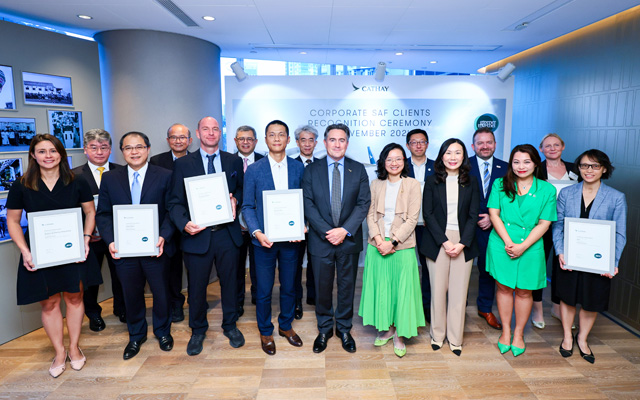
Since launching in 2022, Cathay’s Corporate Sustainable Aviation Fuel (SAF) Programme has achieved substantial growth and is becoming one of the biggest initiatives of its kind globally, marked by new global partnerships and a record commitment to SAF usage.

The Corporate SAF Programme has introduced a tiered structure, allowing customers to participate based on their SAF demand and business needs. It has the support of 15 corporate partners, with DB Schenker being the biggest contributor to the programme to date while Kuehne+Nagel is a Diamond partner; EQT, a Gold partner; Julius Baer and Lenton Group are Silver partners.

Cathay marks the third year of its successful Corporate Sustainable Aviation Fuel Programme

Notably, this year has seen multi-year commitments from partners as they view SAF as a long-term solution to their decarbonisation journey, reinforcing Cathay’s 2030 SAF target.

Cathay also recognises the continued commitment of some of its longstanding partners, including Airport Authority Hong Kong, AIA, Dimerco Express Group, Kintetsu World Express, Standard Chartered Bank, Swire Pacific, Yusen Logistics, and the Business Environment Council. This diverse partnership base reflects a strong commitment to reducing the climate impact from both business travel and airfreight services, and across different sectors in our community.

Programme partners in 2024 have committed to using 2,650 tonnes of SAF – equivalent to a reduction of approximately 8,060 tonnes of carbon emissions, three times the reduction achieved last year.

SAF remains the most crucial lever for decarbonising airline operations before alternatively powered aircraft can be widely deployed in commercial operations. Compared to conventional jet fuel, SAF can reduce over 80 per cent of carbon emissions on a lifecycle basis, depending on the SAF technology and feedstock used.

Cathay Pacific was among the first airlines in the world and the first in Asia to announce a target of 10 per cent SAF for its total fuel use by 2030. Since then, the airline has successfully conducted SAF uplifts at both Hong Kong International Airport and other airports overseas.

In addition to scaling up SAF adoption, Cathay also relies on fleet modernisation, operational efficiency improvements, leveraging on emerging technology breakthroughs to decarbonise aviation, and high-quality carbon offsets and removals to achieve the long-term net-zero carbon emissions goal by 2050.

IAPCO highlights the value accredited PCOs bring to the business events industry

0

BCD Travel rolls out end-to-end sustainability offering for corporate travel

0

BCD Travel has partnered with Squake, a climate-tech company, to launch a new, streamlined sustainability offering that allows corporate travel programmes to centrally set targets, decide upon sustainability policies to achieve them, and distribute these across online and offline booking channels for each employee.

This new offering, which is now being piloted with Siemens, is said to be relevant to all clients, regardless of their progress in sustainable business travel. It will be available to all other customers in 1Q2025.

Bridgeman: the new offering will simplify the process of achieving sustainable travel

Tools are available to encourage travellers to travel less and travel better, in addition to paying attention to air, train, hotel and ground transportation emissions. Using one of multiple calculation methodologies, the tool will show the carbon cost of each trip. This ensures a consistent representation of carbon emissions across point-of-sale, itineraries and invoices, and reporting.

For companies that have decided to allocate an actual carbon tax or require a traveller to invest in a carbon reduction project or sustainable aviation fuel (SAF) for each trip, BCD Travel now has automated solutions. The offering includes both point-of-sale and aggregated fee allocation options including SAF procurement or carbon compensation certificates.

In addition to driving traveller behaviour change, BCD Travel and Squake will provide carbon budgeting, forecasting, and reporting tools to help clients set and manage carbon targets. This is key to complying with regulatory reporting requirements like the Corporate Sustainability Reporting Directive.

Travel managers can also set the parameters for their policy as well as track and report on their progress.

BCD Travel’s consulting division, Advito, and its sustainability experts are on hand to help clients wanting sustainability strategy, change management support, and application of more sophisticated analytics tools.

April Bridgeman, senior vice president at BCD Travel and managing director at Advito, said: “BCD Travel prioritises sustainability. Yet, it has been challenging for our customers to make their travel programmes more sustainable. Until now, our clients have had to spend significant time and energy identifying, selecting, and deploying a range of sustainability providers that aren’t easy to integrate together or into their programmes.

Along with Squake and Advito, we decided to help by bringing what was once a fragmented set of features and suppliers together to simplify the process. And, we added some new features along the way.”