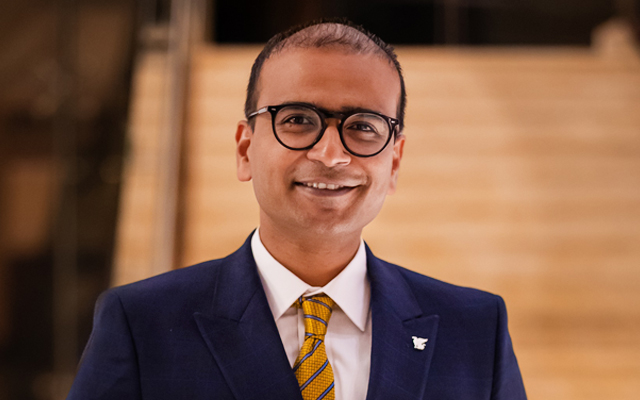
Srikant Kodali has been named the new director of sales & marketing of JW Marriott Hotel Bengaluru. He will be responsible for leading the sales and marketing team to achieve the hotel’s revenue goals, while further enhancing the brand’s presence and reputation.
With over 13 years of diverse experience in the hospitality industry, he brings extensive expertise across sales, marketing, and event operations. Prior to joining JW Marriott Hotel Bengaluru, Kodali held key leadership roles at various properties within Marriott International.
The 2025 Virtuoso Luxe Report, based on insights from Virtuoso’s global network of luxury travel advisors, has revealed key trends for the year ahead. It shows a rising demand for transformative experiences, fuelled by adventure and a desire to build deeper connections with family, friends, and new destinations.
In 2025, Virtuoso clients will continue to prioritise exploration and personalised experiences, but with a growing focus on maximising value without compromising quality. While luxury travellers are still willing to spend more, they are increasingly mindful of rising costs and want to ensure their investment enhances their travels, making their relationship with a trusted travel advisor even more essential. Half of Virtuoso advisors surveyed expect a slight rise in travel demand next year, with 20% anticipating a significant increase. Additionally, 55% predict a modest uptick in spending per trip, while 28% expect prices to remain steady.
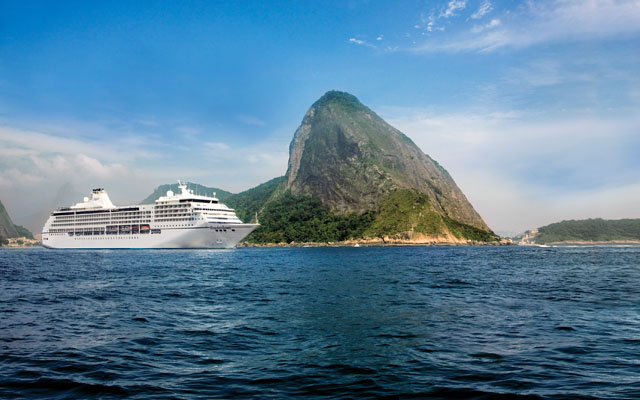
Portugal tops the destination list this year, thanks to its mild climate, cuisine, and scenery, especially in the Azores, pictured
The report identified five key trends highlighting how upscale globetrotters are establishing their influence in the travel-sphere for 2025.
1. Iceolated escapes The “coolcation” trend shows no signs of slowing down, as more travellers request cold-weather destinations to escape the rising temperatures and avoid crowds. Antarctica, with its expanding cruise options and icy landscapes, has surged in popularity, climbing from fifth place last year to second among the top destinations to watch. Norway and Iceland also rank in the top five, reemphasising the trend toward northern European countries. This shift is largely driven by climate change, with nearly half of advisors reporting that their clients are altering their plans due to its effects. 78% of advisors say clients are opting for shoulder season or off-peak travel, while 76% say they now favour destinations with more moderate weather – up five points from last year.
2. Sailing solo Travellers seeking freedom and flexibility have no hesitation going it alone, and cruising is proving to be a key trend among the solo set, with expedition, ocean and river cruises ranking among the top travel experiences for the coming year. Promoting personal growth and self-reliance, solo cruising allows individuals to navigate new adventures at their own pace, while also enjoying camaraderie with other passengers if desired. Solo cruising can provide a sense of security, as small-ship cruises allow excursions alongside like-minded companions in more intimate groups. Many cruise lines now cater to solo voyagers with special deals, dedicated hosts and fun social activities, making it easier to connect with fellow passengers.
3. Born to be mild Adventure and wellness continue to be significant motivators, but in 2025, upscale travellers will pursue a harmonious balance of exhilaration and relaxation. While some venture to the extreme frontiers of Antarctica and Alaska, others are drawn to destinations like Morocco, Costa Rica and Bhutan, where physical activity meets holistic wellness practices. These “softer” adventures not only cultivate personal accomplishment but give travellers the chance to unwind and recharge, leaving them refreshed and ready for their next big adventure.
4. You tell me travel
Rather than sticking to well-worn bucket lists, travellers are finding new inspiration in documentaries, books, beloved films and recommendations from friends and family. TikTok continues to wield significant influence, showcasing lesser-known destinations through rapid-fire clips. However, nothing compares to the expertise of travel advisors, who note that clients are increasingly asking, “Where to next?” instead of naming a specific destination.
5. Palate and place Culinary experiences have become a crucial element of luxury travel, and globetrotters are prioritising gastronomic discoveries that showcase the authentic local flavours and unique traditions of the places they visit. High-end visitors want meals that go beyond traditional dining, with an emphasis on experiences that immerse them in a destination’s culture through its cuisine – think food tours, hidden markets and one-of-a-kind eateries, like the best food trucks and street vendors. As a result, some advisors report spending weeks, even months, curating the ideal culinary immersion for their clients to savour.
Key findings from the 2025 Virtuoso Luxe Report, as measured across more than 50 countries, revealed that Portugal has risen to top the list of destinations after finishing fourth last year. The destination’s appeal has broadened thanks to its mild climate, flavourful cuisine and stunning scenery, particularly in the Azores.
Meanwhile, classic favourites – Italy, France and Greece – continue to dominate as top international destinations. Paris holds steady as the preferred city, but Tokyo’s momentum has carried it into this year’s top five. Japan was also named a favourite among families, offering unique cultural experiences like ryokan stays and tea ceremonies, alongside family-friendly attractions such as the upcoming Universal Expo and the Studio Ghibli Museum.
Croatia remains popular, with Dubrovnik still drawing crowds, but there’s growing interest in lesser-known spots like inland Istria, especially among gourmet enthusiasts who are looking to go beyond the obvious to enjoy truffle hunting and wine tasting.
The report also shared the top aspects of sustainable tourism, namely wildlife conservation/interaction, avoiding over-touristed destinations, booking with companies that employ locals, giving back to/supporting local communities, and conservation of land and the environment.
Qantas has launched a new model for travel agents to access fares, continuing its investment in distribution capabilities to better serve the evolving needs of agents and customers.
Launching mid-next year, the new model aligns with a global drive towards adoption of NDC technology, offering significant benefits for both travel agents and their customers.
Qantas has launched a new model to enhance distribution capabilities for travel agents and customers
The new model will replace the existing Qantas Channel agreements with agency partners.
Starting July 1, 2025, agents will have multiple options to access Qantas content, including surcharge-free options and varying ticket surcharges. These options will include traditional indirect booking systems (EDIFACT), standard NDC, and premium NDC.
Qantas has worked closely with its partners on this distribution transformation to ensure the new model supports agents’ success, including key GDS and Certified Technology Partners.
Qantas executive vice president Asia, Nick McGlynn, said: “NDC will bring massive benefits to Qantas customers here in Asia with better pricing, more fare options and a personalised experience. For agents, NDC unlocks new revenue opportunities through dynamic commission offers as well as the tools to create tailored trips that go far beyond a basic fare and itinerary.”
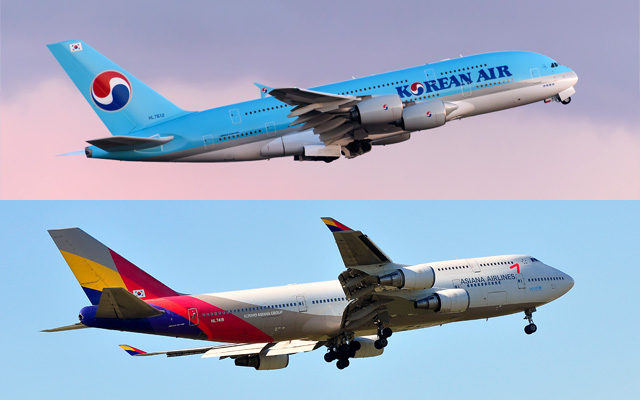
The European Commission (EC) has completed its review of Korean Air’s merger with Asiana Airlines on November 28, confirming that Korean Air has met all conditions set by the EU competition authority.
In February 2024, the EC granted conditional approval for the merger, with two key requirements: ensuring stable operations of a remedy carrier on four overlapping European routes (Barcelona, Frankfurt, Paris, and Rome) and the divestiture of Asiana’s freighter business.
Korean Air aims to conclude its merger with Asiana Airlines before the end of the year
Korean Air has designated T’way Air as the remedy carrier for the European routes, committing to provide operational support, including aircraft, flight crew, and maintenance services.
Additionally, Air Incheon has been approved as the purchaser of Asiana Airlines’ freighter business.
Korean Air has submitted the EC’s final approval to the US Department of Justice and plans to complete the transaction by end-December this year.
Oceania Cruises is revitalising its sales team in Asia with the promotion of James Sitters as director of sales Asia Pacific, and the appointment of Fiona Chu and Dominic Tan as business development managers in Hong Kong and Singapore, respectively.
Chu began her career in sales and marketing, and has worked in the travel industry since 2022. She will spearhead business development in Hong Kong.
From left: James Sitters, Fiona Chu, and Dominic Tan; photo by Oceania Cruises
Managing business development in Singapore in his new role, Tan has over 15 years of business experience in South-east Asian markets. His career in travel comprises roles in WTS Travel & Tours, Asia-Euro Holidays, Five Stars Tours, M Asia Travel and Focal Travel.
As for Sitters, he has been with the ultra-premium line for nearly eight years, and was formerly director of sales Australia & New Zealand.
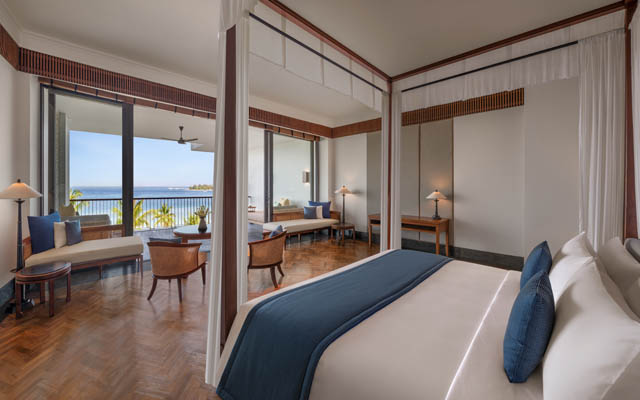
The Sira, a Luxury Collection Resort & Spa, Indonesia Nestled in the heart of West Nusa Tenggara province in Indonesia, The Sira, a Luxury Collection Resort & Spa stands overlooking Mount Agung, with places like Tiu Kelep Waterfall, Bayan Old Mosque, and Sukarara Weaving Village nearby for guests to explore.
Just a 90-minute drive from Zainuddin Abdul Madjid International Airport, the resort features 46 suites and 14 pool villas, as well as the 1,400m² Beach House that comes with three bedrooms and a private plunge pool with direct beach access, and the Presidential Suite that is a two-story sanctuary with a full-sized rooftop infinity pool and three bedrooms.
Facilities comprise F&B venues, fitness centre, outdoor infinity pool, spa, and a dedicated event space.
Homm Souvannaphoum Luang Prabang
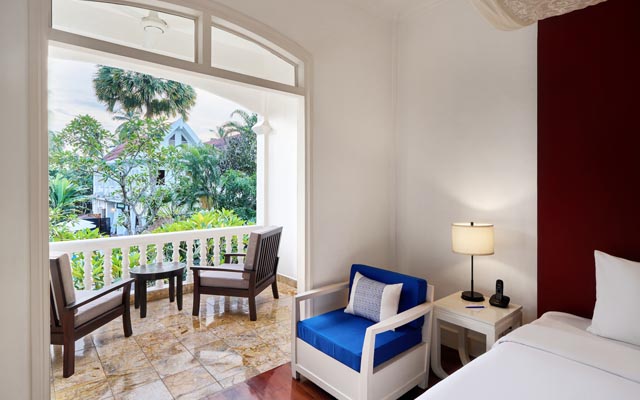
Homm Souvannaphoum Luang Prabang, Laos Once the residence of Prince Souvanna Phouma, Laos’ former prime minister, Homm Souvannaphoum Luang Prabang showcases a distinct blend of French colonial architecture with traditional Lao design.
Featuring 24 rooms with private balconies, the conserved mansion is surrounded by tropical gardens, a spa, and swimming pool – there is also an all-day-dining restaurant.
The nearest markets and local attractions such as the Mekong River and Mount Phou Si are minutes away by foot. Guests can also pedal around the UNESCO World Heritage site and nearby villages at their own pace through the hotel’s complimentary bicycle rental.
A key highlight is the large destination board on display in the lobby, which shows an atlas of travel collage and ideas from Hommates – associates who work in Homm hotels – with guests having the opportunity to share their own photos on to the board.
Four Points Flex by Sheraton Osaka Umeda
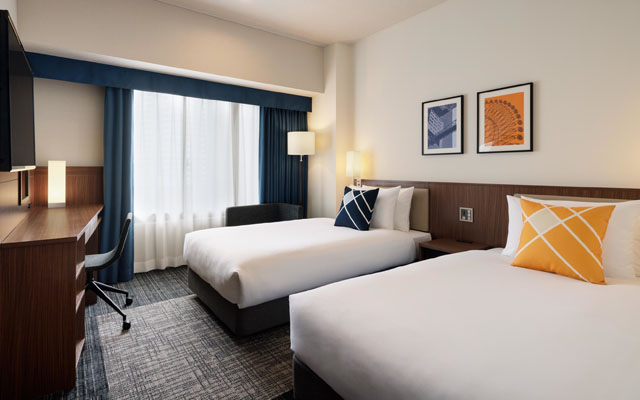
Four Points Flex by Sheraton Osaka Umeda, Japan Four Points Flex by Sheraton Osaka Umeda is situated right in the city, offering easy accessibility with both the subway and train services less than a five-minute walk away.
The hotel boasts 220 rooms with complimentary Wi-Fi, with a range of double, twin, or single rooms.
It also has a coin-operated laundry, vending machine, ice dispenser, and water dispenser on-site, as well as restaurant.
Modena by Fraser Vinh Yen
Modena by Fraser Vinh Yen, Vietnam Just a 50-minute drive from Hanoi, Modena by Fraser Vinh Yen is the first hotel residence in the Vinh Phuc province of Northern Vietnam, home to numerous cultural and historical sites, such as the Vinh Son Pagoda and the Hoa Lu Ancient Citadel.
The hotel features 88 serviced apartments comprising studios and one- to three-bedroom units, which are equipped with a kitchenette, separate large living and dining areas.
On-site are an all-day dining restaurant, a 160-seat cinema, outdoor pool, two sauna rooms, gym, and a kids’ indoor play area.
Foodies will enjoy exploring the famed Kim Ngoc Food Street, while golfers will appreciate the short 30-minute drive to three of the largest golf courses in Vinh Phuc, namely Thanh Lang Valley Golf & Resort, Dai Lai Golf Club, and Tam Dao Golf & Resort.
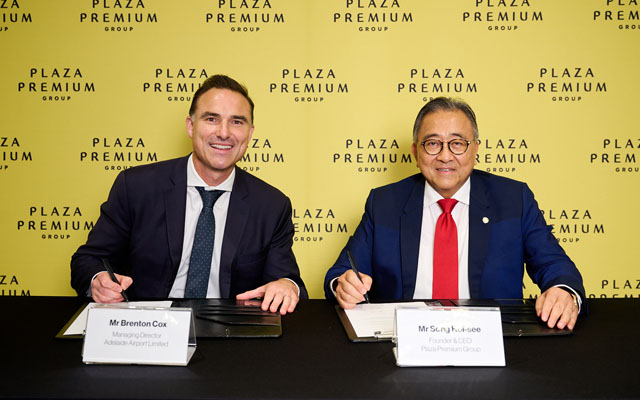
Plaza Premium Group (PPG) and Adelaide Airport have signed an agreement to launch Flight Club Adelaide, marking PPG’s first domestic terminal experience in Oceania and the debut of the Flight Club brand in the region.
Set to open in mid-2025, Flight Club Adelaide will be located in the domestic departure hall at Adelaide Airport, Flight Club Adelaide will provide travellers with a comfortable space to relax, dine, and recharge, complementing the success of the existing Plaza Premium Lounge in the international terminal – all at an affordable price.
Plaza Premium Group teams up with Adelaide Airport to launch Flight Club Adelaide, set to open in 2025
Aligned with PPG’s Proudly Local initiative, the Flight Club experience will feature a range of offerings crafted from locally sourced ingredients, giving guests a taste of the region in an aviation-inspired setting.
Song Hoi See, founder and CEO of PPG, stated: “Australia has always been an important market for PPG, and we have been growing since we opened Australia’s first independent international airport lounge in Brisbane in 2016. Given that a substantial proportion of flights flying through Adelaide are domestic and this market is still growing, we believe there is a rising demand for airport hospitality experiences.”
Poh Kiat Lee, regional general manager, Oceania, added: “This project marks another significant step in our expansion both domestically and globally. Our vision with Flight Club Adelaide is to create an innovative experience that captures the essence of South Australia and brings value to a diverse range of travellers.”
Further updates on Flight Club Adelaide will be shared closer to the launch date.
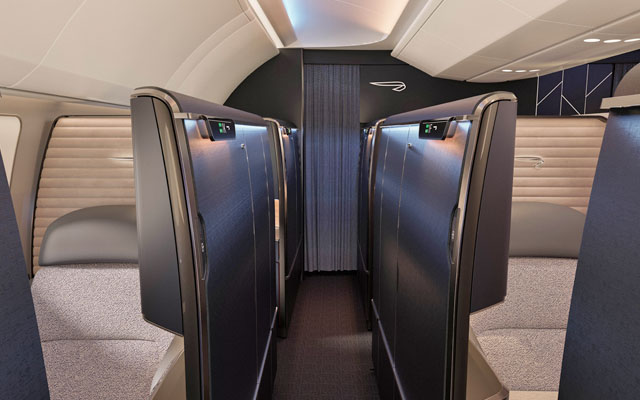
British Airways has introduced its brand-new First Class seat, part of the airline’s A380 retrofit plans, set to take flight in mid-2026.
The new seat features ultra-wide seating with a bed length of about two metres, a multi-purpose ottoman, a stowable table, a 32-inch 4K TV screen, and adjustable mood lighting. Passengers can fine-tune their comfort with the touch of a button within a cocooned 1.5m curved wall for maximum privacy.
British Airways’ flowing design enhances convenience while providing complete privacy
For those travelling together, the divider in the centre of the cabin slides open to create a shared lounge space, while the stowable tables enable ‘buddy dining’ with a companion.
The cabin’s flowing design also enhances convenience, with dedicated personal luggage space allowing passengers to easily settle in before their flight. The suite is further equipped with ambient lighting, window blinds, and soft panelling that helps absorb sound, providing a sense of total privacy.
Passengers can also take advantage of a new ‘do not disturb’ function via the wireless control tablet, notifying the crew if they wish to maximise rest during the flight.
Additionally, First Class customers enjoy exclusive benefits, including access to lounges, fast-track security, and use of the First Wing at Heathrow.
As part of its ongoing seven billion pounds (US$8.8 billion) transformation, British Airways has already rolled out over 120 initiatives aimed at enhancing the customer experience, from new shorthaul seats to free Wi-Fi messaging on board and refreshed lounges across its global network.
Airline operators from South-east Asia will be able to offer stopovers within ASEAN member states starting next year, once all 10 ASEAN countries sign Protocol 5 on Own Stopover Rights between Points within the Territory of Other ASEAN member states.
Malaysia’s transport minister Anthony Loke revealed on November 22 that South-east Asia based airlines are allowed to make stopovers at ASEAN member state airports before heading to another point in the region.
South-east Asian airline operators can offer stopovers within ASEAN member states starting next year; photo by umitc
In his explanation to The Star, Loke said: “If an airline flies from Kuala Lumpur to Singapore, that same flight can (then continue) on to Bali, Indonesia. From there, (it) can also proceed to other airports within ASEAN member states.'”
He added that the move would further boost regional air connectivity and benefit airlines. At the same time, it will enhance operational flexibility for carriers, promote tourism, and enhance trade by providing more seamless and convenient air travel options across the region.
To date, all ASEAN member states have signed Protocol 5 except for Myanmar and Indonesia.
The signing of Protocol 5 was held in conjunction with the 30th ASEAN Transport Ministers and 58th Senior Transport Officials Meetings held in Kuala Lumpur from November 18 to 22.
These meetings brought together South-east Asian transport leaders, policymakers, and industry experts to engage in high-level discussions on advancing both regional and global connectivity, as well as fostering economic prosperity.
Loke also shared that the ASEAN-New Zealand Air Services Agreement and its Protocol 1, resulting from the meeting, marked an important step in strengthening aviation relations between South-east Asia and New Zealand.
Under the agreement, the airlines designated by ASEAN member states and New Zealand will have greater opportunities to operate passenger and/or cargo services between and beyond South-east Asia and New Zealand.
The airlines will be able to operate such services with unlimited third and fourth freedom traffic rights, as specified in Protocol 1 of the ASEAN-New Zealand Air Services Agreement, which will lead to increased direct connections and the expansion of air transport services between the respective ASEAN member states and New Zealand.
Founded 13 years ago with a vision to transform tourism into a tool for community development, Local Alike has long pioneered community-based tourism in Thailand.
Now, Somsak Boonkam, founder and CEO of Local Alike, is inspiring a new generation of young volunteers through specialised voluntourism programmes for Gen Z.
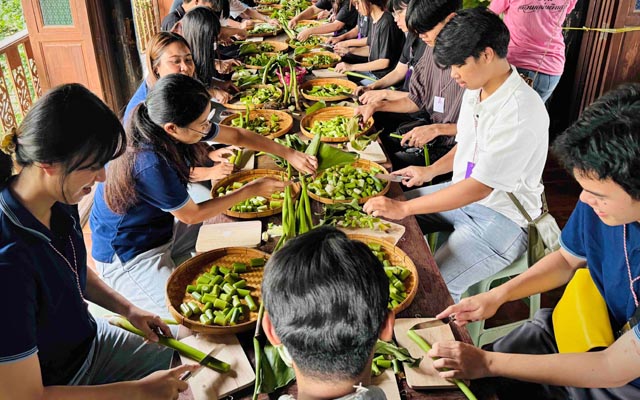
Student voluntourists help remove water hyacinth overgrowth at the Baan Laem community in Suphanburi; photo by Local Alike
For Somsak, the idea for Local Alike stems from personal experience.
“I grew up in a small village in Roi Et where I saw first-hand the challenges in community tourism. Local people were taken advantage of by the tourism industry, which used them without generating income for the community,” he recalled.
“I wanted to empower local communities to take charge and address this issue. After exploring various models, we developed a concept that combines tourism with community development, ensuring that a significant portion of the profits is reinvested into the community to strengthen its local economy,” he shared.
The idea of Gen Z voluntourism took root when Somsak noticed the enthusiasm of Thai university students for “volunteer camps,” or kai chid asa, a long-standing tradition in Thai education.
“In Thai culture, a volunteer camp is more than just a project; it’s a rite of passage for many students,” Somsak explained, adding that these camps “offer hands-on experience in rural or underserved areas, helping students connect with society while applying their knowledge”.
He recognised that elevating traditional voluntourism trips to align with the specific steps of community development plans could resonate deeply with Gen Z’s socially conscious values.
“By offering structured trips, we provide a platform for them to make a real impact while gaining skills. We use techniques like pre-trip assessments and community-led design to address real issues rather than creating ‘voluntourism’ for the sake of it,” noted Somsak.
For example, in Lampang’s Baan Opphayop community, a recent two-day-one-night camp empowered 150 university students from nearby universities to serve as storytellers, preserving local lore at risk of being lost due to ageing community members.
“These trips go beyond short-term efforts like painting or building. They are designed to help communities develop step-by-step, with voluntourism groups assisting at different stages,” Somsak pointed out.
Student voluntourists help address water hyacinth overgrowth at the Baan Laem community in Suphanburi, transforming the surplus into useful products like compostable plates for community tourism; photo by Local Alike
Communities are treated as the main stakeholders, with the option to decide whether to continue receiving voluntourism groups.
To ensure voluntourism generates meaningful outcomes, Local Alike has adopted an asset-based approach for impact assessment.
“We evaluate changes in community assets – financial, cultural, and educational – resulting from our programmes,” he said.
This includes financial data, surveys, and assessments to gauge whether residents have gained new skills or knowledge, aligning voluntourism efforts with community development goals.
The pilot programme, held in partnership with the Tourism Authority of Thailand (TAT) in September this year, brought over 500 tourism students from eight Thai universities to apply voluntourism efforts in Suphanburi and Lampang.
Local Alike, in partnership with the TAT, aims to expand nationwide and tap into inbound voluntourism, connecting exchange students and international visitors with communities for sustainable development.

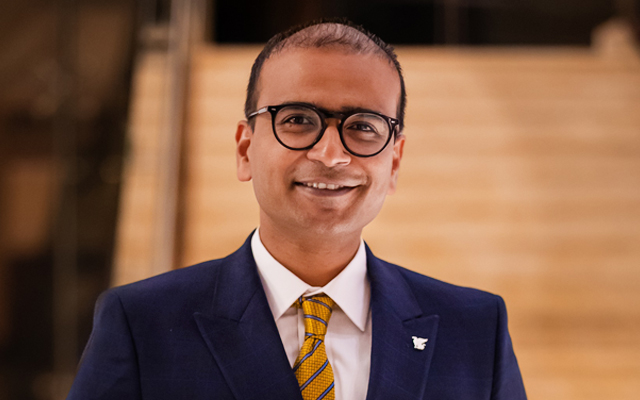 With over 13 years of diverse experience in the hospitality industry, he brings extensive expertise across sales, marketing, and event operations. Prior to joining JW Marriott Hotel Bengaluru, Kodali held key leadership roles at various properties within Marriott International.