Asia/Singapore Wednesday, 8th April 2026
Page 74

Study shows nature travel’s positive impact on local ecology

0

A recent prototype study by Nepal-based adventure travel specialist, Himalayan Adventure Therapy has found an intricate relationship between travel and ecological sustainability throughout the country’s diverse forest regions.

Research indicates that when human activities align with the preservation of natural environments, the results can be transformative. The Indigenous communities of Nepal, such as the Kirati, Magar, Gurung, and Brahmins, have long revered the elements of nature – fire, water, air – and their stewardship has fostered remarkable restoration of local flora and fauna. Their practices demonstrate that with respect for nature, ecosystems can heal and thrive, suggesting a pathway to mitigate the impacts of climate change.

Travellers in Nepal have the opportunity to engage with nature through treks that traverse the Himalayas and lush valleys while contributing to local conservation efforts

Remarkably, forest cover in Nepal has seen a resurgence of roughly 40 per cent over recent decades, largely due to community-based forest management initiatives and creative reforestation efforts that empower local populations. This rejuvenation has been essential in combating soil erosion, maintaining biodiversity, and enhancing the country’s ability to sequester carbon.

However, a critical concern arises with the Nepali government’s push for urbanisation, which jeopardises older forest ecosystems. The increase in forest cover can be misleadingly attributed to internal migration and societal shifts in a country grappling with deep-rooted corruption.

In this context, contributions from individuals across the globe hold significant value and merit careful consideration. Instead of directing funds to large institutions, travellers have the chance to support on-the-ground climate action that can lead to tangible results. By patronising reputable, impact-oriented local organisations and participating in conservation efforts, travellers can engage meaningfully with Nepalese communities.

Initiatives like reforestation, responsible waste management spearheaded by HAT, wildlife monitoring by WWF Nepal, and immersive experiences with local farmers highlight how travellers can enhance their experiences while positively impacting the environment.

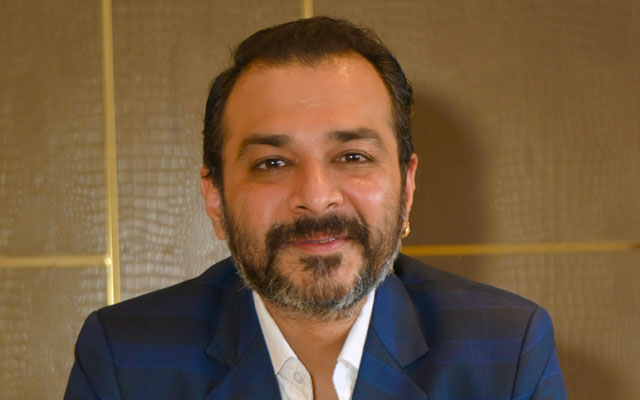
Nabin Dhital, CEO and trip operation in-charge of Himalayan Adventure Therapy, said: “Travelling in Nepal allows visitors to connect deeply with nature while making direct contributions to conservation efforts. We envision tourism as a driving force for positive change in the ecology and local communities of every destination.”

Exclusive meet-and-greet with Australian rugby legends in Hong Kong

0

Ahead of the Rugby Sevens return to Hong Kong, rugby fans can meet some legendary players at an exclusive party.

An exclusive chance to meet and chat with three Australian rugby legends

Boutique hotel Southside By Ovolo will be hosting Australian Wallaby rugby legends Drew Mitchell, Adam Ashley-Cooper and Matt Giteau, along with the team behind Kick Offs and Kick Ons (KOKO), one of the world’s most popular rugby podcasts.

The KOKO team will host the meet-and-greet party on March 27, 2025, from 5.30pm to 7.30pm. Now media personalities and rugby storytellers, these former Wallabies will be exchanging rugby banter, wild stories, pre-game hype over drinks with fans.

From now till March 30, guests who book their stays at Ovolo between March 26 to April 2, 2025, will be able to stay under the same roof as these rugby icons.

Each stay includes priority KOKO event admission and complimentary drink and daily transfers to Kai Tak Stadium.

Visit Ovolo for more information.

Indian tour operators decry sharp cut in overseas promotion budget

0

India’s inbound travel players have expressed deep disappointment over the drastic reduction in the government’s budget for overseas destination promotion and publicity.

The Union Budget for 2025-2026 allocated approximately US$346,800 for international tourism promotion and marketing, a sharp decline from around US$3,814,170 in financial year 2024-2025, and around US$5,900,000 in financial year 2023-2024.

India’s Union Budget allocation to destination marketing has fallen steeply from US$43,500,000 in 2019-2020 to a mere US$346,800 for 2025-2026

Industry experts warn that the steep cuts will severely impact India’s global tourism visibility, making it difficult for the country to compete with other Asian destinations.

Ravi Gosain, managing director, Erco Travels, told TTG Asia: “We have been advocating with the Ministry of Tourism that India needs visibility worldwide. If you want to sell India as a tourism product, you need to promote it in the international market.

“However, this budget offers hardly any support for overseas promotion. We were working hard to revive inbound tourism post-pandemic, but without adequate funds, it will be a struggle to compete globally.”

The scale of the budget reduction becomes more apparent when compared to previous allocations. In the Union Budget 2019-2020, approximately US$43,500,000 was allotted for overseas promotion and publicity, making the current allocation a staggering 99 per cent decline over six years.

A New Delhi-based hotelier, who wished to remain anonymous, shared concerns over the government’s shift in focus.

“Instead of investing in international marketing, we are now channelling our resources towards the domestic leisure, wedding and MICE segments,” he stated.

The Indian Association of Tour Operators (IATO) has written to the prime minister, the Ministry of Tourism, and the Ministry of Finance, urging the government to allocate substantial funds for international promotion. The association has also demanded the reinstatement of the Marketing Development Assistance (MDA) scheme, which previously provided financial aid to tour operators for participation in overseas travel trade exhibitions.

“Even the foreign tour operators who do group business to India are feeling the pinch, stating that they are not getting enquiries from the general public in their markets. The government needs to take corrective measures immediately to help the inbound tourism sector,” urged Rajiv Mehra, president, IATO.

Explora Journeys launches 2025 spring itineraries to the Mediterranean

0

Explora Journeys, the luxury ocean travel brand of the MSC Group, has launched its exclusive Mediterranean itineraries for spring on board the Explora I and Explora II.

Each voyage will take guests to vibrant coastal towns in the Mediterranean as they experience the intimacy of a private yacht. On board, guests will be treated to a curated programme of entertainment, cultural events, and culinary delights.

Explora Journeys launches Mediterranean itineraries for spring

Families can participate in ship-wide Easter egg hunts, themed festivities, and dining experiences designed to celebrate spring’s sense of renewal and togetherness.

All Explora journeys include nine inclusive culinary experiences, including in-suite dining, unlimited beverages including alcohol, spa access, fitness and wellbeing programmes, complimentary high-speed Wi-Fi, complimentary, and even a welcome bottle of champagne on arrival.

Easter itineraries on Explora I include departures from Barcelona to Barcelona, Barcelona to Piraeus (Athens), Barcelona to La Valetta.

Spring itineraries on Explora I and Explora II take guests to destinations such as Barcelona to Santa Cruz de Tenerife, Barcelona to Lisbon, and Istanbul to Fusina (Venice).

SOTC Travel: Expanding with a regional approach

0

What are your focus areas for 2025?
Our focus is on expanding beyond tier-one cities and embracing a strong regional-first approach. While we continue to offer a pan-India cosmopolitan product, we are making significant strides in catering to regional markets in a more customised and immersive way. To strengthen our regional presence, we have developed specialised sub-brands tailored to markets such as Gujarat, West Bengal and South India. Our sub-brand, Darshan, focuses on spiritual tourism.

A key difference between cosmopolitan and regional offerings is that our cosmopolitan tours cater to a diverse set of travellers, featuring English-speaking tour managers and a selection of pan-Indian cuisine to suit various tastes.

In contrast, our regional tours are designed to provide a more personalised and community-driven experience. They are tailored for passengers from the same region, tour managers speak the local language and cuisine is region-specific. For example, departures from Gujarat will feature traditional Gujarati meals. This approach allows travellers to choose an experience that best suits their preferences, whether they prefer a diverse group or a tour with people from their own cultural background.

Our international offerings follow the same philosophy, incorporating local touches to enhance the experience for regional travellers. Given the growing demand for such customised itineraries, we expect regional-focused departures to account for 40 per cent of our total volumes by the end of this year.

SOTC has been opening franchise outlets in different Indian cities. How are these outlets supporting your reach across the country? As many Indian travellers prefer to book travel products online, is there demand for travel retail outlets?
We have established a strong presence in over 80 cities through our franchise outlets and company-owned retail stores, ensuring accessibility to travellers across tier-two and tier-three markets. While we operate as an omni-channel brand with a robust online presence, we recognise that different customers have diverse booking preferences.

Some prefer booking online or via a phone call, while others value the in-person experience of visiting a store, interacting with our expert travel advisors and making an informed decision. Our retail outlets help us cater to this varied customer base effectively.

A significant step we have taken is to enhance accessibility by making our website multilingual. It now supports languages like Bengali, Kannada, Tamil and Marathi to serve a wider audience. Additionally, pricing remains consistent across all booking platforms whether online, over a call or at our physical stores.

At present, our physical retail outlets contribute a larger share of revenue compared to our online platform, reinforcing the continued demand for face-to-face consultation and expert travel planning.

Are spending patterns changing among Indian outbound travellers considering the growth of the Indian economy and the fact that the younger population are more willing to spend on travel?
The increase in travel spending can be observed in two key aspects – the frequency of travel and overall travel expenditure.

Travellers taking more holidays per year. Individuals now take two or more trips compared to just one a year. The duration of vacations has also increased. Travellers who take one trip per year are now considering two-week-long holidays, while those who prefer multiple holidays in a year are choosing shorter three- to four-night breaks.

On the cost side, there has been a rise in travel expenses, driven by post-pandemic price increases in hotel rates, airfare and overall travel costs. Indians travellers are also leaning towards experiential travel. They are no longer satisfied with just sightseeing and pre-arranged meals. Instead, they seek authentic local experiences, immersive activities and unique cultural engagements. As a result, the average travel spend of Indian travellers has increased by 20 to 25 per cent compared to pre-Covid levels.

In the past you have operated charter flights to destinations like Bhutan. Are you planning to do the same in 2025?
Last year we introduced charter flights to Paro, Bhutan from Bengaluru and that was a super success. This year, we increased the frequency of the charter flights from Bengaluru and have also started charter flights from Ahmedabad to Bhutan, which again have seen overwhelming response.

The Bhutan experience has made us look at other destinations where direct flights are a challenge. We have shortlisted three destinations to start charter flights and will share details once they are launched.

What trends do you expect from the Indian outbound incentive market this year?
2024 was our strongest year for MICE business, and 2025 is shaping up to be just as promising. We are witnessing significant growth across various industries that are driving demand in the MICE segment.

The paint industry, which previously had a limited number of key players, is now expanding with several new entrants. Similarly, while the automobile sector continues to be led by established companies, the rapid growth of electric vehicles is contributing to the sector’s expansion, making these industries major consumers of MICE travel.

In terms of destinations, Hong Kong is experiencing a resurgence in demand. We are also seeing growing interest in Japan, Georgia and Baku (capital of Azerbaijan), along with all-time favourites like Thailand and Singapore.

In the Middle East, Ras Al Khaimah is emerging as a preferred choice while in Europe, Spain and Switzerland continue to attract corporate groups. South Africa is also making a strong comeback in the MICE circuit.

Rajasthan: Tourism acceleration

0
principal tourist attraction in Jaipur

Rajasthan has long been one of India’s most sought-after tourist destinations, attracting both domestic and international visitors. Home to the iconic Pink City, Jaipur, which forms part of the renowned Golden Triangle tourist circuit along with Delhi and Agra, the state continues to enhance its tourism sector through infrastructure developments and progressive policies.

In a move to accelerate post-pandemic recovery, Rajasthan became the first Indian state to grant the tourism and hospitality sectors ‘industry’ status in 2022. Holding this status grants preferential Urban Development tax rates on industrial rates, which are 80 per cent lower than commercial rates, thereby supporting business growth and maintaining Rajasthan’s status as a premier tourist destination.

Amber Fort is an important tourist attraction in Jaipur, and other parts of Rajasthan offer plenty to discover

To further strengthen the tourism industry, Rajasthan recently unveiled the Rajasthan Tourism Unit Policy – 2024, which introduces a host of investor-friendly measures. Under this policy, new tourism units approved by the Department of Tourism will receive numerous benefits including exemption from conversion and development charges and expedited approval for land conversion and building plans.

“Rajasthan continues to remain a key tourist attraction in India. The state has been introducing investor-friendly policies to keep up with the infrastructure required for growing tourism demand. The state’s introduction of single-window clearance for all new tourism units will spur investment in the sector, allowing smooth business operations,” said Subhash Goyal, chairman of STIC Travel & Air Charter Group.

The surge in tourist numbers has helped in the growth of Rajasthan’s hospitality sector. According to the Hotelivate 2024 Indian Hospitality Trends & Opportunities report, Jaipur’s hospitality market expanded by 18.1 per cent, adding 1,132 rooms to its inventory in 2023/2024. The demand was largely driven by leisure, social and business events.

Udaipur, known for its opulent heritage hotels and luxury resorts, emerged as a leader in the premium hospitality space for the same period, recording an Average Daily Rate (ADR) of 15,093 Indian rupees (US$173.88).

“Last year was a remarkable period of growth for our property in Rajasthan, driven by a significant uptick in both domestic and international demand. The domestic market emerged as a cornerstone of our business, now accounting for 60 per cent of our overall business,” said Somesh Agarwal, chairman and managing director, Radisson Blu Palace Resort, Udaipur.

Looking ahead, industry experts predict continued growth in Rajasthan’s luxury tourism segment.

“In the luxury segment, we expect occupancy rates to inch closer to 70 per cent, reflecting sustained demand for high-end accommodation. We are also projecting a five per cent increase in average room rates (ARRs), signifying a favourable pricing environment and enhanced revenue potential,” added Agarwal.

Rajasthan is home to over 75 per cent of India’s heritage properties, making it a preferred location for destination weddings. More than 120 heritage properties across the state host weddings.

The state hosted India’s first Wed in India Expo in Jaipur last year, delivered in collaboration with the Ministry of Tourism. It attracted 16 international and 50 domestic wedding planners, strengthening Rajasthan’s reputation as a global wedding destination.

“Destination weddings have become a major growth driver for Rajasthan’s tourism industry. Events like the Wed in India Expo provide an excellent platform to showcase Rajasthan’s rich heritage and luxurious venues to a global audience,” said Ravi Jain, secretary-tourism, government of Rajasthan.

Rajasthan has also positioned itself as a key player in India’s inbound tourism market by hosting the Great Indian Travel Bazaar (GITB) for the past 13 years. The event attracts international travel operators and stakeholders, boosting the state’s global appeal.

GITB 2024 saw participation from 250 foreign tour operators from 52 countries.

Aamaghati Wildlife Resort’s Gaurav Mudgal says experiential pursuits are most in demand among travellers

On the other hand, Rajasthan’s diverse landscape, which includes lush forests and wildlife sanctuaries like Ranthambore National Park, remains a prime attraction for both domestic and international travellers.

“In 2025, we expect 68 to 72 per cent average occupancy with a 10 to 15 per cent growth in ARRs, driven by 70 per cent domestic and 30 per cent international tourists demand. Leisure travellers remain our key segment with growing interest in business events, product launches, and intimate weddings. Experiential stays, including curated safaris and unique jungle retreat experiences remain key attractions,” said Gaurav Mudgal, managing partner and vice president commercials, Aamaghati Wildlife Resort, Ranthambore.

Spiritual tourism is another significant segment Rajasthan is looking to enhance. In collaboration with the central government, the state is working on developing Pushkar – one of India’s most important pilgrimage sites along the lines of Kashi Vishwanath and Ayodhya. The plan includes the beautification of Pushkar Lake and its surrounding ghats (bathing places), aiming to make the site more attractive to pilgrims and tourists alike.

The annual Pushkar Fair, one of Rajasthan’s biggest cultural events, saw record-breaking footfall in 2024, with over 600,000 Indian visitors and 20,000 foreign tourists attending the seven-day festival.

According to the Department of Tourism, Rajasthan, the state received around 1.7 million foreign tourists in 2023 compared to 396,684 in 2022. In the same period, the state welcomed around 179.05 million domestic tourists, up from 108.33 million in 2022.

Virtuoso welcomes more than 30 new member agencies around the world

0

Virtuoso is expanding its global network of luxury and experiential travel specialists, with more than 30 travel agency members accepted since January 2024.

Virtuoso’s Asia regions led the way by welcoming 10 new agency members, including seven in Greater China alone. This growth reflects the region’s substantial influence in luxury travel. Last year, Virtuoso installed a dedicated team for North and South-east Asia, in addition to its established team within Greater China, allowing the network to better serve the varying needs of agencies, partners and travellers.

Virtuoso’s global network of luxury and experiential travel specialists is now bigger and better

The Middle East and Africa region also welcomed six agencies over the past year, which was its first year operating as a stand-alone market with the support of a dedicated Virtuoso team.

Further additions were seen to Continental Europe, Latin America and the Caribbean, the US, the UK, Australia and New Zealand.

The expansion of the Virtuoso network underscores the organisation’s global connectivity and ability to cater to elite advisors and travellers in all corners of the world.

Virtuoso’s senior vice president, global member & partner sales, Cory Hagopian, said in a statement: “Each new member agency brings valuable local market insights and an outstanding industry reputation that extends far beyond their region.”

Saudia expands network for 2025

0

Saudia, the national flag carrier of Saudi Arabia, has added 11 new destinations for 2025 to meet growing travel demand, fuelled by a 16 per cent increase in international guest numbers in 2024.

Saudia now flies to Bali, Indonesia as it continues to expand its global network

The additions to Saudia’s network include Vienna (Austria), Venice (Italy), Larnaca (Cyprus), Athens and Heraklion (Greece), Nice (France), Malaga (Spain), Bali (Indonesia), Antalya (Turkey), El Alamein (Egypt), and Salalah (Oman), joining Saudia’s existing network of over 100 destinations across four continents.

Ibrahim Al-Omar, director general of Saudia Group, said: “Following last year’s operational success, we’ve implemented a strategic plan for 2025 to ensure continued excellence and meet rising international travel demand. Our destination selection is based on comprehensive feasibility studies and guest preferences. We are committed to providing our international guests with exceptional travel experiences that combine comfort, efficiency, and authentic Saudi hospitality.”

Big impact in the skies

0

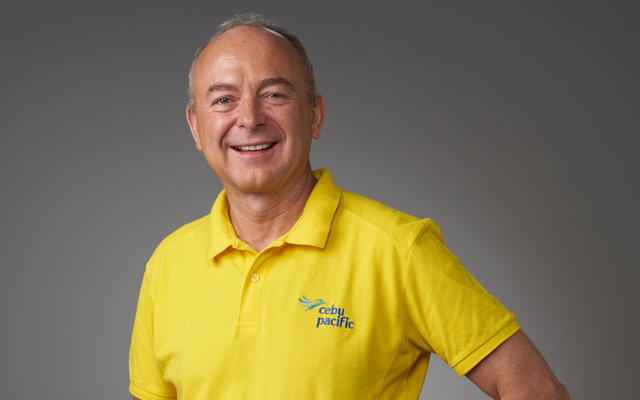
The Cebu Pacific story says the airline is committed to flying where Filipinos are since its beginnings in 1996. Is this still the reason driving the airline’s network decisions?
Our route strategy is really rather simple. We focus on the domestic market, which is huge. There’s 120 million people – thereabouts – in the country, and it’s an archipelago, so there isn’t any other way to get between those islands.

Hence, the LCC is a fundamental part of the Philippine economic fabric.

Cebu Pacific has the perfect model for that – we are a very reliable, very affordable, on time, and safe airline.

But we are a bus service in the sky. When our average sector length is an hour and a half, we don’t need to offer a fully-flat business class seat and a glass of ice. And we have to be affordable because the Philippine consumer is price sensitive.

The next consideration is, where do we fly? We like to focus on areas that are within a four-hour flight time around Manila. We serve short sectors really well. We want to focus on serving the two billion people living within that zone, as well as all the Filipinos in the Philippines who want to go to destinations within that four-hour zone.

Well, we do have a few destinations that sit outside of that zone. We now fly to Dubai, Sydney and Melbourne, where many overseas Filipino workers reside.

The airline most recently commenced thrice-weekly flights to Sapporo, Japan on January 16. It is outside of the four-hour fly zone. How well is this route doing so far?
It is already proving to be an extremely popular service, so we are very happy to be flying there year-round. We started the route with an A320neo, and within a couple of weeks we upgraded to an A321 because of the strong demand.

Filipinos love Japan. I mean, the world loves Japan at the moment, and that is due to the destination’s affordability.

Well, Sapporo lies beyond the four-hour radius, but it is still a short-haul flight. There is big demand for Japan and we do make route decisions based on demand – we are a business after all and have to make a living. (laughs)

Which routes are a big hit with Filipinos in the Philippines?
Filipinos love to travel. When you look at the demographic of the Philippines, you will see a lot of young people. That is rare, as the world is ageing. The Philippine demographic is a perfect pyramid, with a large population in the 20 to 35 year-old segment.

These young people want to travel. Affordability is important to them, but they also want to go for the experience and post it all on social media.

Of course, there is also great interest in domestic tourism.  Someone living in Manila would go to Boracay for a break.

Do you get a mix of leisure and business travellers and price-conscious travellers and wealthy ones? Does such segmentation matter to Cebu Pacific?
We get a mix, yes. More and more we’re getting business travellers coming on because we’re offering a good product and good service. We also get the wealthy ones.

You can go from the Philippines to Sapporo via Hong Kong with Cathay Pacific, which will cost an arm and a leg but you can get yourself a business class seat. However, you will have to connect. On Cebu Pacific, you and your ski gear can get to Sapporo direct in five hours. Cebu Pacific is comfortable, it is clean, it has good service, and it is on time. And you know what? It’s a lot cheaper, too. You can save on that flight and spend it all on the slopes.

Legacy carriers will go big on segmentation. We don’t tend to do that; we just want to make sure that we are available to everyone.

Airlines play a big part in enabling countries achieve their tourism goals. The Philippine Department of Tourism must love Cebu Pacific, as your airline operates the widest network in the country.
We operate 37 domestic and 26 international routes. We are touching 60 per cent of the domestic market share now. We have a lot of healthy discussions with the government. So, yeah, we’re probably quite important. And we don’t take that lightly. Because we’re important, we know we’ve got to be good.

Where else in the world could Cebu Pacific fly next to boost arrivals?
Well, anywhere in that four-hour flight radius! We are focusing on our normal catchment, and we’ll add frequencies and the odd new route. We commenced services to Thailand’s Chiang Mai last year and Don Mueang, which is the alternative entry point to Bangkok.

Will we look at more long-haul additions? The route has to be a real standout for us. Will we do another one in the Middle East? Saudi Arabia is becoming such a big market on its own, so it is something we might look at. India is another big market. Do we need to fly to India? We certainly need some analysis on that.

We have to be very careful about doing anything that steps outside of our normal catchment. If we were to decide on India, for example, we could do it on the A330neo, but that would be a lot of capacity to put into India. So, do we do it with a narrow body? If so, we would need to look at something like the A321LR.

Personally, I’m very biased; I want to stick to that four-hour zone. However, India is so big, so we can’t just dismiss (the possibility of flying there). Other airlines will have a go at a direct India-Manila flight. That is fine, we don’t need to be the first mover. If the route is a commercial success, we will go in and I am pretty certain that we’ll be a more efficient and lower-cost operator.

Cebu Pacific airline placed an order for 70 A321neo last October. Is there a timeline for delivery and how will they be deployed?
We have a lot of flexibility in terms of delivery, with a timetable that goes through 2034. The first of those will definitely come in 2029.

By the way, we’ve got lots of additional purchase rights, so it’s a minimum of 70 aircraft but up to 152. Our orders and delivery depends on when the Bulacan airport comes online.

(Editor’s note: Supply chain delays have caused the New Manila International Airport in Bulacan province to likely be operational in 2028 instead of initial projections for 2027)

Once Bulacan is ready, we will want to put 10 or 15 aircraft in and rapidly establish there. It is in the Manila catchment, and our new orders are in part linked to the new airport.

In terms of overall growth perspective for the next three or four years and with the uncertainty around the supply chain, it is likely that we might need to top up (our fleet) either from aircraft lessors or find other other creative means to bring some of our orders forward.

Generally, we are very pleased with our order and our timing was just right.

I’m curious – how quickly can a new aircraft be ready from the point an order is made, and how quickly can it be brought into service?
Our order will come in five years. With the ongoing supply chain backlog, you’d be lucky if you went to Airbus today for an A320 and it assigns you one in 2031. As for speed to deployment, we’d like it to be in operation as soon as it arrives in in the country. We don’t want the aircraft sitting on the ground.

How does your choice of aircraft for the fleet fit into your sustainable aviation goals?
The neo engines offer a fuel burn savings of 15 to 20 per cent. That’s massive.

We also utilise the floor space of the aircraft better than anybody else. We’re high density, and we make no apology for that. It is good for economics, helps keep the fares low for the consumer. It’s also good from an environmental perspective because it means that each passenger is travelling with a smaller footprint than if they were flying in business class or in their own private jet.

Cebu Pacific flew a sustainable aviation fuel (SAF)-powered flight from Singapore to Manila in September 2022 and from Narita to Manila in October 2023. How is the airline progressing with its plans to integrate blended SAF for its entire commercial network by 2030?
It was not done on a consistent basis, but to establish that we could do it. It is a step in the right direction, but you know we have another 100 steps in this ladder towards sustainable flight.

We are the only Philippine carrier that has flown with SAF. We got a few awards last year for our sustainability initiatives. One of them was our AA ESG rating from MSCI. We are the first local airline in the Philippines to receive this distinction, placing us among the top airlines globally in managing ESG risks and opportunities. There are only about five or six airlines in the world that have that AA rating.

There is not enough SAF (to do that consistently now) and it is so expensive. We are working with aircraft manufacturers and the likes of Neste (a leading producer of sustainable aviation fuel and renewable energy) to see what’s the long-term solution.

We do many other things to cut down on emissions. One of the things we do is to give our pilots a monthly report on how their performance is in terms of climb, cruise, descent, taxi, etc and the resulting fuel they’re uploading. I am a former pilot, and when I was flying, we used to do a single-engine taxi to save fuel. We don’t need to call them out on their fuel use; our pilots don’t want to stand out when it comes to fuel consumption, so they will do better.

We are also working on shortening routes to reduce fuel usage, and electrifying everything that we can, from office operations to groundhandling equipment.

Last question – many major travel suppliers are building a direct channel to the end customers. What is Cebu Pacific’s approach to relations with travel agents?
We like direct relationships, full stop. One of the advantages about direct relationships is that we have customer details, and that’s often the most difficult thing to obtain when working through third parties.

Don’t get me wrong – we value agents. The biggest single problem in customer management is when things happen and we cannot contact the passenger. It can become difficult when we are not able to service the needs of the customer.

We are not trying to see the end of travel agents and we don’t need us to own the customer – we just need to be able to get in touch when something happens.

Royal Caribbean adds a third chapter to its Icon Class story with Legend of the Seas

0

Royal Caribbean International will welcome the third ship into its Icon Class fleet, with Legend of the Seas setting sail on summer adventures from Barcelona in 2026. Its grand debut is set for November 2026, when it will head off on six-night journeys in Western Caribbean and eight-night journeys in Southern Caribbean.

Bookings have opened on February 20.

Royal Caribbean International has named its third Icon Class ship Legend of the Seas

Michael Bayley, president and CEO, Royal Caribbean International, said: “On the heels of celebrating one year of the record-breaking Icon Class and the memories made by vacationers of all ages on Icon, we are thrilled to announce the name of Royal Caribbean’s third Icon Class vacation.

Legend of the Seas is the next bold step in this exciting era of vacations and the continuation of the Icon Class legacy, and we look forward to bringing the revolutionary lineup of experiences to more families and adventurers across Europe, the Caribbean and beyond.”

Legend of the Seas, which is still under construction in Turku, Finland, will offer eight neighbourhoods onboard, with more than 40 ways to dine and drink, adrenaline-pumping thrills, unrivaled ways to chill, and plenty of ways for holiday-makers to make memories together and on their own, without compromise.

The ship will also be Royal Caribbean International’s fourth ship powered by liquefied natural gas (LNG) and feature a proven lineup of industry-leading environmental programmes.