
Asia/Singapore Wednesday, 8th April 2026
Page 71

Hotels need to embrace Gen Z travel trends for success, Agoda reveals

0

Agoda has outlined how hotels across Asia can embrace the preferences of Gen Z travellers to ensure they are adequately future-proofing their business.

The call comes as Agoda research reveals the top five travel habits of Asian Gen Z, highlighting a generation that finds inspiration in the digital realm, embraces spontaneity, and values shared experiences.

Gen Z travellers value connection, preferring to explore with a partner, group of friends or family

The survey, conducted on the Agoda platform between January 10 and 31, 2025, included over 15,000 participants from markets across Asia including Hong Kong, Indonesia, India, Japan, South Korea, Malaysia, the Philippines, Singapore, Taiwan, Thailand, and Vietnam. It highlights how travellers aged 18-27, or Gen Z, are shaping the future of travel in Asia, influencing trends and paving the way for future generations to explore the world in new ways.

To attract Gen Z travellers, hotels should focus on creating Instagrammable spaces that encourage guests to share their experiences, using hashtags that connect directly to the property. Additionally, hotels should stay proactive by incorporating upcoming concerts and festivals into marketing strategies early on, capturing the interests of this generation. Themed experiences, such as offering unique menus inspired by popular shows like White Lotus in Thailand, can further engage Gen Z.

Collaborating with social media influencers to showcase memorable moments at the property is another effective strategy for drawing attention. Staying on top of trending content, particularly on TikTok, and reflecting these trends in the hotel’s offerings will help attract experience-driven travellers. Finally, personalising the guest experience is key for ensuring Gen Z leaves positive reviews, as they are focused on self-expression and meaningful experiences.

Social media is the new travel guide
Gen Z is blazing a trail on social media, with TikTok leading the way as their top source for travel inspiration. While millennials lean on friends and family as their preferred source of recommendations, Gen Z is scrolling through TikTok (20%) and Instagram (14%) to discover their next adventure. Despite the digital influence, personal recommendations remain a close second (17%), proving that word-of-mouth still holds sway.

Last-minute bookings on the rise
In a world where plans can change in an instant, Gen Z embraces the thrill of last-minute travel more than any other generation. 20% of Gen Z say they book flights less than a week in advance, outpacing millennials, Gen X, and boomers. Accommodation follows suit, with one in four Gen Z travellers reporting they make bookings at the eleventh hour, showcasing their penchant for spontaneity.

Partnered adventures take the lead
For Gen Z, travel is a shared experience, with 38% preferring to explore the world with a partner. Group trips with friends and family vacations also rank high, highlighting the importance of connection and companionship in their journeys. Millennials, on the other hand, prioritise family trips, reflecting a generational shift in travel dynamics.

Spending habits align across generations
When it comes to travel spending, Gen Z and millennials are on the same page. Both generations prefer to keep accommodation costs under US$50 per person per night, with Gen Z more inclined to do so (56%) than their millennial counterparts (44%). Meanwhile, 32% of Gen Z plan to spend between US$51-100 per person per night compared to 41% of millennials. This trend underscores a shared commitment to affordable travel without compromising on experiences.

The desire to travel transcends generations
Despite differing preferences in where different generations find travel inspiration, when they book their travels, and who they go with, the desire to explore the world is universal. Nearly half of Gen Z and millennials plan to embark on one to three trips this year, while a third are aiming for four to six adventures. This shared wanderlust bridges generational gaps, proving that the love for travel knows no bounds.

“It’s hard to understate the importance of Gen Z in determining the future of travel,” said Andrew Smith, senior vice president supply, Agoda.

“This is the first generation never to have known the world without the internet and one that is developing increasing spending power, with Neilsen’s Spend Z report expecting US$12T growth by 2030. It is no surprise that they place a premium on opportunities to capture instaworthy content and are constantly looking for unforgettable experiences. The most forward-thinking hotels are those adapting their marketing strategies to thoughtfully cater to this group.”

Alma Resort welcomes HR director

0

Ngo Thi Thu Ngan has been appointed director of human resources at Alma Resort Cam Ranh.

A hospitality professional with two decades’ experience, the Vietnamese national joins the beachfront resort on Vietnam’s Cam Ranh peninsula after working as the director of talents and culture at Mövenpick Resort Cam Ranh.

Her extensive human resources experience comprises roles at Wyndham Grand KN Paradise Cam Ranh, Glow Scenia Nha Trang Bay Hotel, Sunrise Nha Trang Beach Hotel & Spa, Tan Viet Corporate, and Khanh Hoa Trading and Investment Company.


Megaworld Hotels and Resorts makes key appointments

0

Megaworld Hotels and Resorts has appointed Sophia ‘Khendy’ Altamirano as group director of revenue management, distribution and business development; Yvonne Villacorte has joined as general manager of Belmont Hotel Mactan; and Geraldine Gaw as general manager of Hotel Lucky Chinatown.

Altamirano has over 27 years of experience in the Asian hospitality industry, including 17 years with Accor Hotels Group. She was formerly the market director of sales and distribution and director of the national sales office at Marriott Philippines.

From left: Sophia Altamirano, Yvonne Villacorte, and Geraldine Gaw

Villacorte, with 30 years of experience, was previously the general manager of Best Western Ivywall Panglao and has worked with several hotel chains in Vietnam and the Philippines.

Gaw joins Hotel Lucky Chinatown after serving as the area director of sales and marketing at Megaworld Hotels and Resorts. With over three decades in the industry, she has primarily focused on sales and marketing before transitioning to operations.

PATA achieves carbon neutrality in 2024 through global offset initiatives

0

PATA has confirmed that all its activities in 2024 were carbon neutral, with emissions from events offset through projects in Cambodia, supported by Sustainable Travel International, and emissions from other operations, such as training, staff travel, and office activities, offset in Thailand through the Thailand Greenhouse Gas Management Organisation.

Since 2022, PATA has been offsetting the carbon footprint of in-person events while applying emission reduction strategies in line with its Climate Action Plan and Carbon Neutral Events Guidelines. However, certain emissions, such as those from transportation, electricity use, and waste, remain unavoidable. To address this, PATA continues to support credible carbon offset projects while implementing strategies to minimise emissions, such as exploring sustainable event design, optimising digital solutions, and collaborating with venues and suppliers prioritising sustainability.

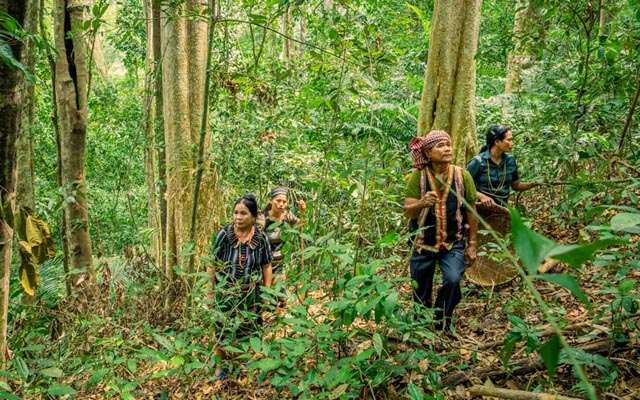
PATA’s Keo Seima project reduces emissions, protects biodiversity, supports the indigenous Bunong people, and creates sustainable income opportunities through ecotourism, farming, and skills training

PATA offset emissions from the PATA Annual Summit 2024 (PAS 2024) in Macau and the PATA Travel Mart 2024 (PTM 2024) in Bangkok through the Keo Seima Project, which protects Cambodia’s Keo Seima Wildlife Sanctuary. This project reduces emissions by preventing deforestation and supports biodiversity, while safeguarding the rights of the indigenous Bunong people and combating illegal activities like logging and poaching.

The project also addresses the socio-economic drivers of deforestation, creating income opportunities through climate-smart farming, ecotourism, and skills training, while improving access to clean water, healthcare, and education.

Through the Keo Seima Project, PATA offset 354.75 MTCO2e from PAS 2024 and 490.9 MTCO2e from PTM 2024.

Additionally, the Southern Cardamom Project in Cambodia offset emissions from the PATA Destination Marketing Forum 2024 (PDMF 2024) held in Thailand. This project protects one of South-east Asia’s last primary rainforests and provides alternative income through ecotourism, conservation employment, and sustainable agriculture. It also supports community-led forest protection, with over 130 rangers patrolling the area. PATA offset 120.91 MTCO2e from PDMF 2024 through this project.

A third initiative, the PSTC Solar Farm 10 MW Project in Thailand, offset emissions from PATA’s general operations. This renewable energy project, registered with the Thailand Greenhouse Gas Management Organisation, provides clean power, reduces fossil fuel reliance, and contributes to environmental sustainability in Thailand. PATA offset 95 MTCO2e from its operations and activities, including its capacity-building programmes in Kuching and Macau.

PATA CEO Noor Ahmad Hamid stated: “Sustainability is no longer an option; it is a responsibility. In 2024, for the first time, we achieved full carbon neutrality, offsetting emissions from all our events, operations, and capacity-building programmes.

“As the tourism industry works towards a more responsible future, we remain committed to reducing our footprint while supporting projects that protect biodiversity, empower local communities, and safeguard the future of travel, while also encouraging our members and partners to do the same. In 2025, we will take further steps to refine our sustainability strategies, enhance our Climate Action Plan, and explore third-party verification of our emissions to ensure transparency and accountability.”

What’s your impact story?

0

Over lunch with WTTC’s chief Julia Simpson when she was in Singapore for the Aviation Festival Asia last month, a journalist piped up: “Sustainability is not a sexy topic. We know not to put that word in the headlines.” There was a murmur of agreement.

Sustainability is a curious thing. To say that people don’t care for it would be wrong. Our meeting with Julia, for instance, drew conversations heavy on responsible tourism development and progress in sustainable aviation. Almost all government activations and budgets now have a segment on responsible development. Even the private sector has become more strategic about what they are doing in relation to the 17 United Nations Sustainable Development Goals, and employs teams responsible for these initiatives.

Sustainability isn’t just on the lips of policymakers and business leaders. In Singapore, sustainability concepts and importance are emphasised in schools – even in pre-schools – through projects and class discussions. I am certain the same is seen in other countries.

Yet, most people don’t want the pursuit of sustainability to be a personal burden. In the space of travel and tourism, there is a disconnect between what travellers say about sustainability and the choices they ultimately make. WTTC’s Bridging the Say-Do Gap report notes that while travellers care about sustainability, data shows that cost and quality remain the dominant purchasing priorities.

There is also a difference in how sustainability news attract readers. I noticed that TTG Asia content on our own and public channels relating to hotel and tour operator efforts are more popular than those about measures taken by airlines to cut emissions. Perhaps this is because hotels and tour operators have been able to package their sustainable efforts into appealing experiences – farm-to-table lunches in the hotel’s own herb garden, electric vehicle-friendly road trips, interactions with artists of disappearing trades, etc. In contrast, sustainable aviation fuel and fuel burn may be too far removed from the travel experience or too technical to be everyone’s cup of tea.

Two heads are better than one, and I see an opportunity for travel and tourism organisations to work closer with content creators to better package and deliver the impact story in order to close the cost and conscience gap, and have all consumers understand that their travel decisions can impact the world’s journey to net zero and accept that the cost of responsible travel must be shared.

In-flight use of power banks banned as airlines take greater caution

0

Air Astana, Singapore Airlines, Scoot, EVA Air, China Airlines, and Thai Airways are among airlines that have recently updated their policy on carrying and usage of power banks onboard their aircraft due to growing safety concerns.

In January, a malfunctioning power bank was blamed for a fire that devastated an Air Busan aircraft at South Korea’s Gimhae International Airport. The airline moved swiftly in February to prohibit passengers from keeping power banks in luggage stored in overhead cabins. Instead, power banks are to be kept close on hand so that immediate action could be taken should there be smoke or fire incidents.

Airlines tighten power bank rules after safety concerns

Rules have been tightened since, with South Korea authorities requiring passengers on all South Korean airlines to do the same starting March 1.

Air Astana Group will require all passengers to have their spare batteries, including power banks and electronic smoking devices, only in carry-on baggage, with effect from March 13.

In accordance with existing rules, the maximum allowable battery capacity is 100Wh. Batteries with a capacity between 100Wh and 160Wh require prior airline approval for transport, with a maximum of two per passenger. The transport of batteries exceeding 160Wh is prohibited. The capacity will be verified and the transportation of batteries without capacity markings or proper certification is prohibited.

Furthermore, the use of batteries to charge other devices, as well as charging the batteries themselves on board is strictly prohibited.

Over at Singapore Airlines and Scoot, the use of power banks to charge personal devices in flight will be banned from April 1. Passengers may carry power banks with a capacity of up to 100Wh on its aircraft without special approval, while those between 100Wh and 160Wh require airline approval.

Parent Singapore Airlines Group said in a statement that the new rules comply with  IATA’s Dangerous Goods Regulations regarding the carriage of power banks, which are classified as lithium batteries.

Scoot had its own share of power bank-related accidents. In 2023, an overheated power bank caught fire on flight TR993 as it was taxiing to take-off from Taiwan’s Taoyuan International Airport. The owner of the power bank and his companion sustained minor burns, and the flight was rescheduled.

Sentosa’s ridge-to-reef attraction marks first-year anniversary with new experience

0

Sensoryscape, Sentosa island’s 30,000m² green connector, which takes island visitors from Resorts World Sentosa to beaches, marks its first anniversary this month and demonstrates its strong contribution to visitor arrivals and satisfaction.

Sentosa Development Corporation’s CEO Thien Kwee Eng told TTG Asia that since its launch in March 2024, Sensoryscape has welcomed over five million footfalls and driven a one-hour increase in dwell time for visitors to Sentosa, reinforcing its status as a must-visit attraction.

Sensoryscape marks its first year with the launch of Senseri, a new AR feature in the ImagiNite app; photo by Sentosa Development Corporation

The attraction is the first milestone of the Greater Sentosa Master Plan and features over 200 species of trees and shrubs, offering immersive experiences that combine nature, design, and technology.

Thien noted that Sensoryscape’s night-time ImagiNite outdoor “phygital” experience – a combination of physical and digital characteristics – remains the first of its kind in South-east Asia. ImagiNite uses AR and other digital features to engage and entertain visitors through a mobile app compatible with both Apple and Android devices.

“This complements earlier efforts in enhancing Sentosa’s after-dark appeal, with guests now extending their evenings during their visit, cementing the island’s reputation as a day-to-night destination for both locals and tourists,” she added.

Sensoryscape’s first successful year of operation is celebrated with the launch of a new AR feature for the ImagiNite experience, unveiled at a media event on the island on March 13.

Taking flight across Sensoryscape in the night sky, the mystical super-being Senseri immerses guests in a fusion of tangible and virtual reality through the ImagiNite app. Senseri, whose name is derived from “Sen”, linking it directly to Sentosa, and “seri”, a word in Malay that means radiance, is inspired by the island’s free-roaming peacocks.

The media event also featured a symphony showcase by composer August Lum and a 16-piece orchestra. The showcase spotlighted Lum’s composition for Sensoryscape, which comprises an evocative soundtrack in the day that contributes to a differentiated day-to-night experience for visitors. Lum’s Sensoryscape soundscape is said to engage visitors’ sense of sound and amplifies the multi-sensory experience of the attraction.

Event attendees were also the first to view the new Sensoryscape Word Block, designed by local artist, Jooheng Tan, who is also behind the iconic Siloso Word Block on Siloso Beach.

Thien said continued efforts would be made to enhance the attraction experience.

Sensoryscape is open to the public daily, with the ImagiNite experience starting nightly from 19.30 to 21.15.

When asked about Sensoryscape’s potential to be featured in corporate and private events, Thien shared that the attraction’s “versatility” would be showcased at the upcoming WWF Earth Hour 2025 Festival and Sentosa Cares Week this year.

“As an ever-evolving space, Sensoryscape is well-positioned to be established as an experiential attraction and a holistic programming space,” she noted.

Sensoryscape has been “collaborating with local artists, creative minds and interest groups” to create spaces and experiences that “resonate with diverse communities”. Recent examples include illuminating the precinct in yellow and purple for the #ShineforDementia initiative last October.

Ennismore’s Mondrian to arrive in Maldives

0

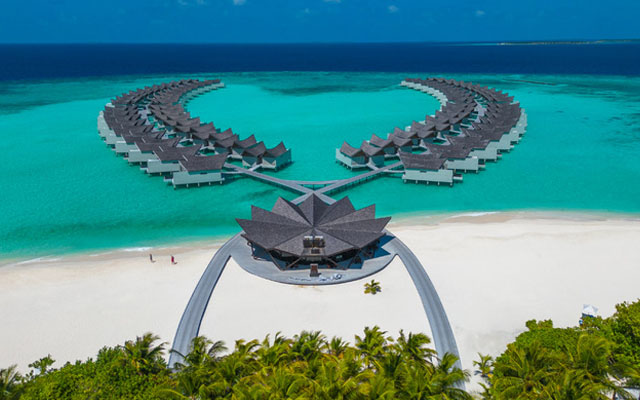
Ennismore has signed Mondrian Maldives, set to open on Kuredhivaru Island in 2026. Located just a 45-minute seaplane flight from Malé International Airport, the resort is situated on one of only a handful of exclusive islands within the Noonu Atoll.

Before being reimagined as a Mondrian, the property will operate as Kuredhivaru Resort & Spa under Ennismore’s management. Previously operating under the Mövenpick brand, Kuredhivaru Resort & Spa will remain part of ALL, Accor’s loyalty programme and booking platform.

Mondrian Maldives will open in 2026

Mondrian Maldives will unveil a series of spaces inspired by design, art, and culture. The aesthetic extends to the resort’s 105 villas, including 30 beach pool villas, 72 overwater pool villas, and three-bedroom beach pool residences offering direct access to the island’s beaches. Each villa features a private pool.

The resort will offer programming and experiences that reflect the Maldives’ culture. Guests can revitalise at the spa, recharge at the gym, or explore the Maldivian reefs at the diving centre. A yoga pavilion, tennis and volleyball courts, and swimming pools are available, while younger guests can enjoy the kids’ club. For food enthusiasts, there are four restaurants and bar venues offering culinary and mixology experiences.

Phil Zrihen, brand chief operating officer for Mondrian Hotels at Ennismore, said: “Surrounded by stunning beaches and turquoise waters, Mondrian Maldives will create the perfect sanctuary for our guests. In bringing Mondrian’s oversized imagination to the Maldives, we hope to raise the bar as a cultural and culinary destination in the islands.”

Manish Puri leads as new GM of Regent Bali Canggu

0

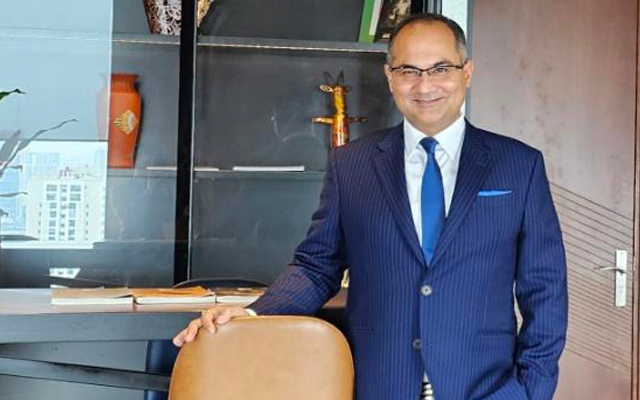
Regent Bali Canggu has appointed Manish Puri as its new general manager, tasked with ensuring the brand’s return marks not just a homecoming but a significant advancement in luxury travel.

With over 28 years of global hospitality experience, Puri has led luxury hotel brands such as Oberoi, Kempinski, Jumeirah, Grand Hyatt, Six Senses, and Potato Head.
Robinsons Hotels targets India for its expansion

0

Robinsons Hotels and Resorts (RHR) affirms its commitment to supporting the Philippine Department of Tourism in revitalising the Indian source market following the recent implementation of e-visa for Indian nationals and the direct flights between the two countries expected this year.

RHR’s senior vice president and business unit general manager, Barun Jolly, will assist with the initial groundwork by travelling to Delhi on March 25 to meet with travel agents, top MICE organisers, luxury wedding planners, and members of the media.

Jolly: the potential of the Indian market is huge

“The potential of the Indian market is huge. When it grows, it will grow exponentially. But for it to grow, we have to make sure the gateway into the two countries is easy and the ease of arrival is dependent on two key drivers – the ease of getting a visa and the launch of the direct flight,” he told TTG Asia.

While the e-visa for Indian nationals is already available in the Philippines, Jolly highlighted that the processing time remains lengthy, and the document requirements are more extensive compared to Asian competitors, where the only requirements for a visa application are a passport and a copy of the passport.

In comparison, Thailand and Malaysia have no visa requirements, while Indonesia offers a visa on arrival that Indian tourists can apply for online in just minutes. Vietnam’s e-visa, on the other hand, takes only two to three minutes to complete and is delivered online within a few days.

Although not officially confirmed, it is expected that a few weekly flights will be introduced between Delhi and Manila later this year, in contrast to Vietnam’s current schedule of over 35 weekly flights connecting to India, Thailand’s numerous flights from various tourist gateways, and Indonesia’s direct flights from Bali and Jakarta.

Once these two factors are in place, Jolly remarked that inbound tourism from India will start to increase, and “the numbers will grow by word of mouth” as the Philippines has many strengths – an abundance of tourist attractions, an English-speaking population, white beaches, and the warm, welcoming hospitality of Filipinos, among others.

Jolly also highlighted the country’s expanding range of hotels, from budget options to luxurious five-star establishments, catering to all types of tourists. He also pointed out the availability of Muslim-friendly accommodations and attractions, as well as halal and vegetarian cuisine, which should help attract emerging source markets such as Pakistan, Bangladesh, and the Middle East.

He said it could be a boon for Indian weddings, where the per capita spend is US$250 per guest, excluding hotel rooms. This brings the total spend to around US$500 per guest for weddings, which typically involve a large number of guests flying in.

However, he added that marketing promotions should extend beyond Delhi and Mumbai, as other cities, such as Ahmedabad, also have significant tourism spending.

Jolly revealed that RHR is looking to finalise a GSA agreement in India within the next few months: “It is a strong market, and with the scale that we have, we really want to be represented in markets like (South) Korea and India.”

RHR operates 30 hotels, ranging from home-grown brands such as Go, Fili, and Grand Summit to international brands like Westin and Dusit Thani Mactan.